Posted on Saturday, 10.06.12
Cuban dissident blogger Yoani Sanchez released after hours-long detention
By Los Angeles Times
MEXICO CITY—Cuba's best-known blogger was arrested Thursday to keep her
from covering a sensitive criminal trial involving the death of a famous
dissident. But then the world noticed.
News agencies blogged about the details of the arrest. Human rights
groups condemned it. By late Friday, the blogger, Yoani Sanchez, was
released.
So it goes in the Caribbean nation headed by Fidel Castro's younger
brother, Raul, whose government has released dozens of long-term
political dissidents in the last few years—but also has detained
government critics and troublemakers for brief periods in an apparent
effort to thwart negative news coverage and stifle public criticism.
The detention of Sanchez, who said she was held for about 30 hours,
became a telling footnote in the case of Angel Carromero, a conservative
Spanish politician who is accused of causing the death of a Cuban
dissident in a car crash this summer.
Sanchez was arrested along with her husband and fellow blogger, Reinaldo
Escobar, and a number of other antigovernment figures in the city of
Bayamo, about 400 miles east of Havana.
Sanchez had traveled to Bayamo to cover the Carromero's trial, which
began Friday.
Carromero, a member of Spain's conservative Popular Party, crashed his
rental car in the Bayamo area while visiting the island July 22. Cuban
officials have accused him of speeding and causing the deaths of
dissident Oswaldo Paya and another Cuban activist, who were riding in
the car. Carromero faces up to 10 years in prison.
Early Friday, the pro-government blog www.yohandry.com asserted that
Sanchez had traveled to Bayamo "to start a provocation and a media show
to harm the proper conduct of the trial."
News of her arrest quickly spread across the Internet. In addition to
her acclaimed "Generation Y" blog, Sanchez's work has appeared regularly
in the influential Spanish newspaper El Pais, among other international
publications. The Cuban government's wary tolerance of her writing has
in itself become a measure of its current stance on free-speech rights.
The arrests also sparked immediate condemnation from groups such as the
Committee to Protect Journalists.
"The arrest of these journalists clearly indicates that the Cuban
government continues its practice of punishing independent reporting,"
Carlos Lauria, the Americas senior program coordinator at the Committee
to Protect Journalists, said in a statement Friday. "Cuban authorities
must immediately and unconditionally release Sanchez … and allow all
Cuban reporters to report without fear of intimidation."
By Friday evening, Sanchez, whose voice had disappeared from Twitter
during her detention, was back on the social network with a message: "We
have been freed! Thank you to all of those who raised their voices and
their tweets, and allowed us to go home."
It was not clear from her Twitter messages how many others among those
arrested had been released. About half a dozen antigovernment activists
had been rounded up along with Sanchez and Escobar before the trial,
according to the independent Cuban Commission for Human Rights and
National Reconciliation.
But Sanchez said that at least one other blogger, Henry Constantin,
remained in government custody as of Friday evening.
Raul Castro, who took the reins of government from brother Fidel in
2006, has been tinkering with social and market reforms in the communist
nation while simultaneously maintaining a level of control over the
Cuban people and economy.
Drawing broad conclusions from Sanchez's arrest is a challenge, given
the government's opacity, but it may well have been an expression of the
delicate—and sometimes ungainly — balancing act that Castro is
attempting to pull off.
In a recent report, the Cuban Commission for Human Rights and National
Reconciliation noted that 2,074 "arbitrary detentions" like Sanchez's
were reported in Cuba in 2010. That number shot to 5,105 between January
and September of this year.
Although the government has also released numerous political prisoners
in the last three years, Human Rights Watch researcher Nik Steinberg
said dozens of other dissidents remained in prison.
Moreover, Steinberg said Friday, the arbitrary detentions, beatings and
harassment of dissidents continued to stifle freedom of expression.
At the same time, a space has been afforded to opinionated bloggers like
Sanchez—although they claim that they are occasionally harassed and
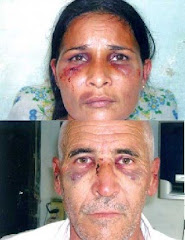
intimidated. Sanchez has said the government has denied her requests to
travel abroad 19 times since 2008. In November 2009, she alleged that
she was picked up by men in an unmarked car who called her a
"counterrevolutionary," punched her in the face and then released her.
Carromero, the Spaniard on trial, had been visiting Cuba to support Paya
and his reform group, the Christian Liberation Movement. Paya's widow
has rejected the government version of the car crash, saying that the
government had threatened to kill her husband on numerous occasions.
Other Paya supporters have alleged that the car was run off the road by
Cuban security agents.
Sanchez, in her previous coverage of the case, reported that Spanish
officials were hoping Carromero would end up being expelled from Cuba or
allowed to serve a sentence in Spain.
———
(Cecilia Sanchez of The Times' Mexico City bureau contributed to this
report.)
http://www.miamiherald.com/2012/10/06/v-fullstory/3037203/cuban-dissident-blogger-yoani.html

Subscribe to:
Post Comments (Atom)


No comments:
Post a Comment