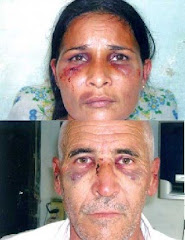
Taxi Driver Arrested In Havana After Being Accused Of Racism
14ymedio, Havana, 10 July 2017 – The driver of a private taxi was
arrested after being accused of racial discrimination by Yanay Aguirre
Calderín, according to a report Monday in the weekly paper Trabajadores
(Workers). The event has generated numerous articles in the official
press which is making an example of the case.
On 2 July, the same weekly published an article by Calderín, a law
student who is black, where she related how she engaged the taxi and was
treated aggressively by the drive due to the color of her skin.
According to prosecutor Rafael Ángel Soler López, head of the Office of
Attention to the Citizenry of the Attorney General's Office, "We cannot
yet anticipate what the end of the process will be," since they are now
"investigating to be able to prove the criminal act before the courts."
The Cuban Penal Code establishes a penalty of between six months and two
years of deprivation of liberty, or a fine of between 200 and 500 CUP,
to anyone who denies "on the grounds of sex, race, color or national
origin the exercise or enjoyment of the rights of equality established
in the Constitution."
Aguirre Calderín, who does not specify the exact date of the events,
took the private car on Avenida 41, in the Marianao municipality, but
when she wanted to change her destination, the driver reacted "very
upset" and "very violently." The young woman explains that at that
moment the driver shouted that "every time there is a black person in
his car it's the same" and that for that reason "he could not stand them."
Calderín then rebuked the driver, whom she accused of offending her, to
which the taxi driver responded by asking the passenger to get out of
the car before arriving at the place initially designated by her. At
that moment the complainant took a photograph of the car with her cell
phone and noted the number of the license plate, which facilitated the
arrest of the driver by the police.
Source: Taxi Driver Arrested In Havana After Being Accused Of Racism –
Translating Cuba -
http://translatingcuba.com/taxi-driver-arrested-in-havana-after-being-accused-of-racism/
Thursday, July 13, 2017

Cuban Government Fires Off One Lie After Another
Cuban Government Fires Off One Lie After Another / Iván García
Ivan Garcia, 3 July 2017 — The fan stopped turning around 3:30 in the
morning, when in the middle of a heat wave, a black out forced Ricardo,
his wife and their two children to sleep on a mat on the balcony of
their apartment in the Lawton neighborhood, a thirty minute drive from
central Havana.
Several areas were left dark and lit only by candles and lanterns,
dozens of neighbors complained with rude words and sharp criticisms of
of the poor performance of state electricity and water companies.
The blackout lasted for seven hours. "I couldn't iron my children's
school uniforms and they are in the midst of final exams. I sent them to
school in street clothes. Nor could my husband and I go to work. When I
the light came on, after ten in the morning, we lay in bed for a while.
The situation is already so bad no one can stand it. It's one problem
after another. The water crisis, which is still affecting us, public
transportation is the worst, food prices don't stop rising and now this
black out in the middle of this terrible heat," says Zoraida, Ricardo's
wife.
Almost a month after a break in one of the main pipes that brings
potable water to Havana, and then an intense information campaign on the
part of the office press, filled with justifications and an exaggerated
optimism, where radio, TV and newspapers report the hours there will be
water in each neighborhood, after the repairs, completed two weeks ago,
and with the promise that service would gradually return to normal in
the different zones of the capital, they are still suffering the affects
and the media doesn't offer any explanations.
"Some 200,000 people are still affected and are receiving water every
three days. By Thursday, June 22, it was expected to regularize the
service, but some problems have arisen," said an official of Aguas de La
Habana in the municipality Diez de Octubre, the most populated of the
capital's districts.
The affected Havanans don't stop complaining. "In my house, the tank
that we have on the roof does not have the capacity for the water to
last three days. Although we try to save it, in the bathroom, kitchen
and laundry, the water that we are able to collect is spent in two
days. The government comes up with one lie after another. First it was
reported that the break was a matter of a week, at most two. And we're
going on for a month now. Instead of responding with so much noise to
Trump's measures, they should focus on improving the living conditions
of Cubans," complains Mario, a resident of Luyanó, a working-class
neighborhood in the south of the city.
Rumors about the resurgence of the perennial economic crisis that Cubans
are experiencing, spread throughout the city. "I have it on good
authority, from a friend of my brother who is in the party, I know that
by summer the government is going to make new cuts in companies' fuel
consumption, and they will close unproductive factories and industries
until further notice. The scarcity is noticeable. The state farm
markets are empty and the shortages in the hard currency stores are
obvious. It is said that in the upcoming session of the National
Assembly of People's Power, on July 14, they are going to announce new
measures of cuts. Thing looks ugly," says Miriam, housewife, at the
entrance to a bodega in Cerro municipality.
Diario Las Américas could not verify those comments and rumors.
A banking official who prefers anonymity believes that the country's
financial situation is "quite delicate." He says, "There is not enough
currency liquidity. Even payments of the various debts contracted with
foreign companies are not being made. Tourism, which contributes about
$3 billion in revenue, devours almost 60 percent of that revenue in the
purchase of inputs. Remittances are the lifeline, but with shortages in
foreign exchange stores and high prices, many people are spending their
convertible pesos on the black market or in the parallel trade of the
'mules' that bring products from abroad. A large part of that money is
not being returned to the state coffers, as people involved in these
activities either save it or use it as an investment in their business."
To minimize reality, the olive-green autocracy uses anti-imperialist
discourse and condemnations of Donald Trump's new policy of restrictions
as a smokescreen.
"That narrative has always worked. But people on the street know that
this discourse is exhausted. They can't justify all the national
wreckage and the poor performance of the public services with the
economic blockade of the United States nor with the recent aggressive
policy of Trump. Cubans are at their limit with everything. It is not
advisable to think that Cubans will always be silent. Situations such as
blackouts and cuts in the water supply make people angry and their
reactions could be unpredictable," warns a sociologist.
With finances in the red, an economic recession that threatens to turn
into a crisis of incalculable consequences, and grandiose development
plans that sound like science fiction to ordinary Cubans, the
authorities are facing a dangerous precipice.
Six decades of selling illusions and with unfulfilled promises are
already coming to an end. And it could be less than happy.
Source: Cuban Government Fires Off One Lie After Another / Iván García –
Translating Cuba -
http://translatingcuba.com/cuban-government-fires-off-one-lie-after-another-ivn-garca/
Ivan Garcia, 3 July 2017 — The fan stopped turning around 3:30 in the
morning, when in the middle of a heat wave, a black out forced Ricardo,
his wife and their two children to sleep on a mat on the balcony of
their apartment in the Lawton neighborhood, a thirty minute drive from
central Havana.
Several areas were left dark and lit only by candles and lanterns,
dozens of neighbors complained with rude words and sharp criticisms of
of the poor performance of state electricity and water companies.
The blackout lasted for seven hours. "I couldn't iron my children's
school uniforms and they are in the midst of final exams. I sent them to
school in street clothes. Nor could my husband and I go to work. When I
the light came on, after ten in the morning, we lay in bed for a while.
The situation is already so bad no one can stand it. It's one problem
after another. The water crisis, which is still affecting us, public
transportation is the worst, food prices don't stop rising and now this
black out in the middle of this terrible heat," says Zoraida, Ricardo's
wife.
Almost a month after a break in one of the main pipes that brings
potable water to Havana, and then an intense information campaign on the
part of the office press, filled with justifications and an exaggerated
optimism, where radio, TV and newspapers report the hours there will be
water in each neighborhood, after the repairs, completed two weeks ago,
and with the promise that service would gradually return to normal in
the different zones of the capital, they are still suffering the affects
and the media doesn't offer any explanations.
"Some 200,000 people are still affected and are receiving water every
three days. By Thursday, June 22, it was expected to regularize the
service, but some problems have arisen," said an official of Aguas de La
Habana in the municipality Diez de Octubre, the most populated of the
capital's districts.
The affected Havanans don't stop complaining. "In my house, the tank
that we have on the roof does not have the capacity for the water to
last three days. Although we try to save it, in the bathroom, kitchen
and laundry, the water that we are able to collect is spent in two
days. The government comes up with one lie after another. First it was
reported that the break was a matter of a week, at most two. And we're
going on for a month now. Instead of responding with so much noise to
Trump's measures, they should focus on improving the living conditions
of Cubans," complains Mario, a resident of Luyanó, a working-class
neighborhood in the south of the city.
Rumors about the resurgence of the perennial economic crisis that Cubans
are experiencing, spread throughout the city. "I have it on good
authority, from a friend of my brother who is in the party, I know that
by summer the government is going to make new cuts in companies' fuel
consumption, and they will close unproductive factories and industries
until further notice. The scarcity is noticeable. The state farm
markets are empty and the shortages in the hard currency stores are
obvious. It is said that in the upcoming session of the National
Assembly of People's Power, on July 14, they are going to announce new
measures of cuts. Thing looks ugly," says Miriam, housewife, at the
entrance to a bodega in Cerro municipality.
Diario Las Américas could not verify those comments and rumors.
A banking official who prefers anonymity believes that the country's
financial situation is "quite delicate." He says, "There is not enough
currency liquidity. Even payments of the various debts contracted with
foreign companies are not being made. Tourism, which contributes about
$3 billion in revenue, devours almost 60 percent of that revenue in the
purchase of inputs. Remittances are the lifeline, but with shortages in
foreign exchange stores and high prices, many people are spending their
convertible pesos on the black market or in the parallel trade of the
'mules' that bring products from abroad. A large part of that money is
not being returned to the state coffers, as people involved in these
activities either save it or use it as an investment in their business."
To minimize reality, the olive-green autocracy uses anti-imperialist
discourse and condemnations of Donald Trump's new policy of restrictions
as a smokescreen.
"That narrative has always worked. But people on the street know that
this discourse is exhausted. They can't justify all the national
wreckage and the poor performance of the public services with the
economic blockade of the United States nor with the recent aggressive
policy of Trump. Cubans are at their limit with everything. It is not
advisable to think that Cubans will always be silent. Situations such as
blackouts and cuts in the water supply make people angry and their
reactions could be unpredictable," warns a sociologist.
With finances in the red, an economic recession that threatens to turn
into a crisis of incalculable consequences, and grandiose development
plans that sound like science fiction to ordinary Cubans, the
authorities are facing a dangerous precipice.
Six decades of selling illusions and with unfulfilled promises are
already coming to an end. And it could be less than happy.
Source: Cuban Government Fires Off One Lie After Another / Iván García –
Translating Cuba -
http://translatingcuba.com/cuban-government-fires-off-one-lie-after-another-ivn-garca/
If Trump Ends Our Remittances?
If Trump Ends Our Remittances? / Iván García
Ivan Garcia, 8 July 2017 — Without too much caution, the CUPET tanker
truck painted green and white begins to deposit fuel in the underground
basement of a gas station located at the intersection of Calle San
Miguel and Mayía Rodríguez, just in front of Villa Marista, headquarters
of State Security, in the quiet Sevillano neighborhood, south of Havana.
The gas station, with four pumps, belongs to the Ministry of the
Interior and all its workers, even civilians, are part of the military
staff. "To start working in a military center or company, be it FAR
(Revolutionary Armed Forces) or MININT (Ministry of the Interior),
besides investigating you in your neighborhood and demanding certain
qualities, you have to be a member of the Party or the UJC (Union of
Young Communists)," says one employee, who adds:
"But things have relaxed and not all those working in military companies
are 100 percent revolutionary. And like most jobs in Cuba, there are
those who make money stealing fuel, have family in the United States and
only support the government in appearances."
Let's call him Miguel. He is a heavy drinker of beer and a devotee of
Santeria.
"I worked at the gas station six years ago. It is true that they ask for
loyalty to the system and you have to participate in the May Day marches
so as not to stand out. But it is not as rigorous as three decades ago,
according to the older ones, when you could not have religious beliefs
or family in yuma (the USA). I do not care about politics, I'm a
vacilator. I have two sons in Miami, and although I look for my
shillings here, if Trump cuts off the remittances to those of us who
work in military companies, Shangó will tell me what to do," he says and
laughs.
If there is something that worries many Cubans it is the issue of family
remittances. When the Berlin Wall collapsed and the blank check of the
former USSR was canceled, Fidel Castro's Cuba entered a spiraling
economic crisis that 28 years later it still has not been able to overcome.
Inflation roughly hits the workers and retirees with a worthless and
devalued currency, barely enough to buy a few roots and fruits and to
pay the bills for the telephone, water and electricity.
Although the tropical autocracy does not reveal statistics on the amount
of remittances received in Cuba, experts say that the figures fluctuate
between 2.5 and 3 billion dollars annually. Probably more.
Foreign exchange transactions of relatives and friends living abroad,
particularly in the United States, are the fundamental support of
thousands of Cuban families. It is the second national industry and
there is a strong interest in managing that hard currency.
"Since the late 1970s, Fidel Castro understood the usefulness of
controlling the shipments of dollars from the so-called gusanos
('worms,' as those who left were called) to their families. When he
allowed the trips of the Cuban Community to the Island, the Ministry of
the Interior (MININT) had already mounted an entire industry to capture
those dollars.
"Look, you can not be naive. In Cuba, whenever foreign exchange comes
in, the companies that manage it are military, or the Council of State,
like Palco. That money is the oxygen of the regime. And they use it to
buy equipment, motorcycles and cars for the G-2 officials who repress
the opponents and to construct hotels, rather than to acquire medicines
for children with cancer. And since there is no transparency, they can
open a two or three million dollar account in a tax haven," says an
economist.
The dissection of the problem carried out by the openly anti-Castro
exile and different administrations of the White House is correct. The
problem is to find a formula for its application so that the stream of
dollars does not reach the coffers of the regime.
"The only way for the government not to collect dollars circulating in
Cuba, would be Trump completely prohibiting transfers of money. It's the
only way to fuck them. I do not think there is another. But using money
as a weapon of blackmail to make people demand their rights, I find
deplorable. I also have the rope around my neck. I want democratic
changes, better salaries, and I have no relatives in Miami. But I do not
have the balls to go out in the street and demand them," says an
engineer who works at a military construction company.
Twenty years ago, on June 27, 1997, the Internal Dissident Working Group
launched La Patria es de Todos (The Nation Belongs to Everyone), a
document that raised rumors within the opposition itself. Economist
Martha Beatriz Roque Cabello, along with the late Félix Antonio Bonne
Carcassés, Vladimiro Roca Antúnez and lawyer René Gómez Manzano, tried
to get those Cubans who received dollars to commit to not participate in
government activities or vote in the elections, all of them voluntary.
It is true that the double standards of a large segment of Cubans upset
the human rights activists. With total indifference, in the morning they
can participate in an act of repudiation against the Ladies in White and
in the afternoon they connect to the internet so that a family member
expedites the paperwork for them to emigrant or recharges their mobile
phone account.
This hypocrisy is repulsive. But these people are not repressive. Like
millions of citizens on the island, they are victims of a
dictatorship. In totalitarian societies, even the family estate is
perverted.
In Stalin's USSR a 'young pioneer' was considered a here for denouncing
the counterrevolutionary attitude of his parents. There was a stage in
Cuba where a convinced Fidelista could not befriend a 'worm', or have
anything to do with a relative who had left the country or receive money
from abroad.
I understand journalists like Omar Montenegro, of Radio Martí, who in a
radio debate on the subject, said that measures such as these can at
least serve to raise awareness of people who have turned faking it into
a lifestyle. But beyond whether regulation could be effective in the
moral order, in practice it would be a chaos for any federal agency of
the United States.
And, as much frustration as those of us who aspire to a democratic Cuba
may have, we can not be like them. It has rained a lot since then. The
ideals of those who defend Fidel Castro's revolution have been
prostituted. Today, relatives of senior military and government
officials have left for the United States. And the elite of the olive
green bourgeoisie that lives on the island likes to play golf, drink
Jack Daniel's and wear name-brand clothes.
If Donald Trump applies the control of remittances to people working in
GAESA or other military enterprises, it would affect more than one
million workers engaged in these capitalist business of the regime,
people who are as much victims of the dictatorship as the rest of the
citizenship.
The colonels and generals who changed their hot uniforms for white
guayaberas and the ministers and high officials, do not need to receive
remittances. Without financial controls or public audits, they manage
the state coffers at will. One day we will know how much they have
stolen in the almost sixty years they have been governing.
Source: If Trump Ends Our Remittances? / Iván García – Translating Cuba
- http://translatingcuba.com/if-trump-ends-our-remittances-ivn-garca/
Ivan Garcia, 8 July 2017 — Without too much caution, the CUPET tanker
truck painted green and white begins to deposit fuel in the underground
basement of a gas station located at the intersection of Calle San
Miguel and Mayía Rodríguez, just in front of Villa Marista, headquarters
of State Security, in the quiet Sevillano neighborhood, south of Havana.
The gas station, with four pumps, belongs to the Ministry of the
Interior and all its workers, even civilians, are part of the military
staff. "To start working in a military center or company, be it FAR
(Revolutionary Armed Forces) or MININT (Ministry of the Interior),
besides investigating you in your neighborhood and demanding certain
qualities, you have to be a member of the Party or the UJC (Union of
Young Communists)," says one employee, who adds:
"But things have relaxed and not all those working in military companies
are 100 percent revolutionary. And like most jobs in Cuba, there are
those who make money stealing fuel, have family in the United States and
only support the government in appearances."
Let's call him Miguel. He is a heavy drinker of beer and a devotee of
Santeria.
"I worked at the gas station six years ago. It is true that they ask for
loyalty to the system and you have to participate in the May Day marches
so as not to stand out. But it is not as rigorous as three decades ago,
according to the older ones, when you could not have religious beliefs
or family in yuma (the USA). I do not care about politics, I'm a
vacilator. I have two sons in Miami, and although I look for my
shillings here, if Trump cuts off the remittances to those of us who
work in military companies, Shangó will tell me what to do," he says and
laughs.
If there is something that worries many Cubans it is the issue of family
remittances. When the Berlin Wall collapsed and the blank check of the
former USSR was canceled, Fidel Castro's Cuba entered a spiraling
economic crisis that 28 years later it still has not been able to overcome.
Inflation roughly hits the workers and retirees with a worthless and
devalued currency, barely enough to buy a few roots and fruits and to
pay the bills for the telephone, water and electricity.
Although the tropical autocracy does not reveal statistics on the amount
of remittances received in Cuba, experts say that the figures fluctuate
between 2.5 and 3 billion dollars annually. Probably more.
Foreign exchange transactions of relatives and friends living abroad,
particularly in the United States, are the fundamental support of
thousands of Cuban families. It is the second national industry and
there is a strong interest in managing that hard currency.
"Since the late 1970s, Fidel Castro understood the usefulness of
controlling the shipments of dollars from the so-called gusanos
('worms,' as those who left were called) to their families. When he
allowed the trips of the Cuban Community to the Island, the Ministry of
the Interior (MININT) had already mounted an entire industry to capture
those dollars.
"Look, you can not be naive. In Cuba, whenever foreign exchange comes
in, the companies that manage it are military, or the Council of State,
like Palco. That money is the oxygen of the regime. And they use it to
buy equipment, motorcycles and cars for the G-2 officials who repress
the opponents and to construct hotels, rather than to acquire medicines
for children with cancer. And since there is no transparency, they can
open a two or three million dollar account in a tax haven," says an
economist.
The dissection of the problem carried out by the openly anti-Castro
exile and different administrations of the White House is correct. The
problem is to find a formula for its application so that the stream of
dollars does not reach the coffers of the regime.
"The only way for the government not to collect dollars circulating in
Cuba, would be Trump completely prohibiting transfers of money. It's the
only way to fuck them. I do not think there is another. But using money
as a weapon of blackmail to make people demand their rights, I find
deplorable. I also have the rope around my neck. I want democratic
changes, better salaries, and I have no relatives in Miami. But I do not
have the balls to go out in the street and demand them," says an
engineer who works at a military construction company.
Twenty years ago, on June 27, 1997, the Internal Dissident Working Group
launched La Patria es de Todos (The Nation Belongs to Everyone), a
document that raised rumors within the opposition itself. Economist
Martha Beatriz Roque Cabello, along with the late Félix Antonio Bonne
Carcassés, Vladimiro Roca Antúnez and lawyer René Gómez Manzano, tried
to get those Cubans who received dollars to commit to not participate in
government activities or vote in the elections, all of them voluntary.
It is true that the double standards of a large segment of Cubans upset
the human rights activists. With total indifference, in the morning they
can participate in an act of repudiation against the Ladies in White and
in the afternoon they connect to the internet so that a family member
expedites the paperwork for them to emigrant or recharges their mobile
phone account.
This hypocrisy is repulsive. But these people are not repressive. Like
millions of citizens on the island, they are victims of a
dictatorship. In totalitarian societies, even the family estate is
perverted.
In Stalin's USSR a 'young pioneer' was considered a here for denouncing
the counterrevolutionary attitude of his parents. There was a stage in
Cuba where a convinced Fidelista could not befriend a 'worm', or have
anything to do with a relative who had left the country or receive money
from abroad.
I understand journalists like Omar Montenegro, of Radio Martí, who in a
radio debate on the subject, said that measures such as these can at
least serve to raise awareness of people who have turned faking it into
a lifestyle. But beyond whether regulation could be effective in the
moral order, in practice it would be a chaos for any federal agency of
the United States.
And, as much frustration as those of us who aspire to a democratic Cuba
may have, we can not be like them. It has rained a lot since then. The
ideals of those who defend Fidel Castro's revolution have been
prostituted. Today, relatives of senior military and government
officials have left for the United States. And the elite of the olive
green bourgeoisie that lives on the island likes to play golf, drink
Jack Daniel's and wear name-brand clothes.
If Donald Trump applies the control of remittances to people working in
GAESA or other military enterprises, it would affect more than one
million workers engaged in these capitalist business of the regime,
people who are as much victims of the dictatorship as the rest of the
citizenship.
The colonels and generals who changed their hot uniforms for white
guayaberas and the ministers and high officials, do not need to receive
remittances. Without financial controls or public audits, they manage
the state coffers at will. One day we will know how much they have
stolen in the almost sixty years they have been governing.
Source: If Trump Ends Our Remittances? / Iván García – Translating Cuba
- http://translatingcuba.com/if-trump-ends-our-remittances-ivn-garca/
Cuban Government Extends Land Lease Period to 20 Years
Cuban Government Extends Land Lease Period to 20 Years
14ymedio, Havana, 30 June 2017 — The latest Council of Ministers,
chaired by Raul Castro, has extended the term of the country's land
leases under the usufruct system to 20 years, but the leases can be
cancelled if the beneficiaries use illicit funds, according to an
announcement today in the official press.
The meeting analyzed the economic performance of the first half of 2017
and included the announcement of new measures "to improve
self-employment" and the decision to consolidate the experiment of
non-agricultural cooperatives.
According to Ricardo Cabrisas Ruiz, Minister of Economy and Planning,
the national economy behaved as planned. For the second semester, higher
levels of execution are expected with "the arrival of imported supplies
and the completion of contracts."
Marino Murillo Jorge, head of the Permanent Commission for
Implementation and Development, announced that it will no longer be for
10 years, but rather for 20, that a 'natural person' will be able to
enjoy the use of the land in usufruct, although he pointed out that
these lands remain "nontransferable property of the State and must be
kept in operation."
If the authorities detect that the person leasing the land has used
illicit financing, it may cancel the usufruct agreement, a move that
could be an answer to the recent announcements of Donald Trump's
administration to support local entrepreneurs to the detriment of state-
or military-owned and operated businesses.
During the Council of Ministers it was also announced that to receive
land, "natural persons have to work and manage it in a personal and
direct manner."
As of September 2016, 4.7 million acres of land had been delivered in
usufruct, representing 31% of the country's agricultural area. Starting
now, the taxes provided in the Tax Law concerning the use, possession
and idleness of the land, will gradually begin to be applied.
The lack of growth in the delivery of land is due, as Murillo explained,
to the fact that the number of requests have declined, since the
currently available land extensions "are less productive, with high
infestation from the invasive marabou weed, are far from the population
settlements and basic services, or have difficulty accessing water sources."
The measures to "improve self-employment," which were not explained to
the press, will be aimed at increasing control over entrepreneurs.
There was no report of any decisions made about the longed-for wholesale
market, the ability to import, or an increase in authorized occupations.
However, concerns were expressed about "the use of raw materials,
materials and equipment of illicit origin" in the private sector, in
addition to "breaches of tax obligations and underreporting of income,"
among other irregularities.
The authorities acknowledged that the presence of more than half a
million people in self-employment activities "confirms its validity as a
source of employment, while increasing the supply of goods and services,
with acceptable levels of quality."
The update of the policy of non-agricultural cooperatives was limited to
"concentrating efforts on consolidating the 429 already constituted."
The government reproaches these types of entities for "deviations from
the original idea for which they were created," their tendency to
increase prices, and the use of bank loans for "purposes other than the
concepts for which they were granted."
However, the Government recognized that this type of management
structure, authorized three years ago, "constitutes an alternative that
frees the State from the administration of economic activities,
production and services that are not considered primary," which will
continue to be treated as "an experiment" going forward.
Source: Cuban Government Extends Land Lease Period to 20 Years –
Translating Cuba -
http://translatingcuba.com/cuban-government-extends-land-lease-period-to-20-years/
14ymedio, Havana, 30 June 2017 — The latest Council of Ministers,
chaired by Raul Castro, has extended the term of the country's land
leases under the usufruct system to 20 years, but the leases can be
cancelled if the beneficiaries use illicit funds, according to an
announcement today in the official press.
The meeting analyzed the economic performance of the first half of 2017
and included the announcement of new measures "to improve
self-employment" and the decision to consolidate the experiment of
non-agricultural cooperatives.
According to Ricardo Cabrisas Ruiz, Minister of Economy and Planning,
the national economy behaved as planned. For the second semester, higher
levels of execution are expected with "the arrival of imported supplies
and the completion of contracts."
Marino Murillo Jorge, head of the Permanent Commission for
Implementation and Development, announced that it will no longer be for
10 years, but rather for 20, that a 'natural person' will be able to
enjoy the use of the land in usufruct, although he pointed out that
these lands remain "nontransferable property of the State and must be
kept in operation."
If the authorities detect that the person leasing the land has used
illicit financing, it may cancel the usufruct agreement, a move that
could be an answer to the recent announcements of Donald Trump's
administration to support local entrepreneurs to the detriment of state-
or military-owned and operated businesses.
During the Council of Ministers it was also announced that to receive
land, "natural persons have to work and manage it in a personal and
direct manner."
As of September 2016, 4.7 million acres of land had been delivered in
usufruct, representing 31% of the country's agricultural area. Starting
now, the taxes provided in the Tax Law concerning the use, possession
and idleness of the land, will gradually begin to be applied.
The lack of growth in the delivery of land is due, as Murillo explained,
to the fact that the number of requests have declined, since the
currently available land extensions "are less productive, with high
infestation from the invasive marabou weed, are far from the population
settlements and basic services, or have difficulty accessing water sources."
The measures to "improve self-employment," which were not explained to
the press, will be aimed at increasing control over entrepreneurs.
There was no report of any decisions made about the longed-for wholesale
market, the ability to import, or an increase in authorized occupations.
However, concerns were expressed about "the use of raw materials,
materials and equipment of illicit origin" in the private sector, in
addition to "breaches of tax obligations and underreporting of income,"
among other irregularities.
The authorities acknowledged that the presence of more than half a
million people in self-employment activities "confirms its validity as a
source of employment, while increasing the supply of goods and services,
with acceptable levels of quality."
The update of the policy of non-agricultural cooperatives was limited to
"concentrating efforts on consolidating the 429 already constituted."
The government reproaches these types of entities for "deviations from
the original idea for which they were created," their tendency to
increase prices, and the use of bank loans for "purposes other than the
concepts for which they were granted."
However, the Government recognized that this type of management
structure, authorized three years ago, "constitutes an alternative that
frees the State from the administration of economic activities,
production and services that are not considered primary," which will
continue to be treated as "an experiment" going forward.
Source: Cuban Government Extends Land Lease Period to 20 Years –
Translating Cuba -
http://translatingcuba.com/cuban-government-extends-land-lease-period-to-20-years/
Cuban Couple Prefers to Face the Jungle Rather Than the Law in Cuba
Cuban Couple Prefers to Face the Jungle Rather Than the Law in Cuba
14ymedio, Mario J. Penton, Panama City, 2 July 2017 – They managed to
escape Cuba to leave behind traces of corruption and negligence that,
according to Yudenny Sao Labrado and her husband Yoendry Batista,
reflect the prevailing system on the island. From a neighborhood on the
outskirts of Panama City, the couple relates the story of their journey,
a long trek that they hope will end with their arrival in the United States.
Yudenny Sao (born in Puerto Padre in 1979) was born just three years
after the promulgation of Cuba's Socialist Constitution. Born under the
Revolution, she trained as a teacher and graduated from the University
of Mathematics and Physics. She left the classroom to administer one of
the thousands of bodegas spread across the island, in which the state
subsidizes some of the products of the basic market basket through the
ration book.
"I liked teaching, but the Ministry of Education pays very little," she
explains. In the bodega she had more opportunities to do business "under
the table."
"I made the decision to leave Cuba when they discovered a corruption
plot in Puerto Padre's retail network," said Sao. In 2016, a series of
audits revealed that several of the bodegas in Puerto Padre, where she
worked, had irregularities in their accounts. Although there were
invoices covering the sales, the money was never deposited in the bank.
The directors of the institution are serving sentences of up to eight
years for misappropriating state funds.
"I had nothing to do with that," said the woman from Las Tunas province,
defending herself. According to her, her business was to sell rice,
sugar, and contraband cigarettes she bought on the black market, instead
of the products sent by the state for "free" – that is unregulated –
sales, which covered articles outside the rationing system.
Although basically she did not alter the prices of the products, she
committed a crime because the rigid centralized economic system did not
allow her to market articles that were not sent through the channels
authorized by the authorities.
"I gathered my people and I told them about the situation, because the
big fish always eats the little one," she says. Sao's family includes
her husband, Yoendry Batista, a welder by profession, her three children
ages 19, 10 and 7 years, and her parents. They made the decision that
she should leave Cuba and asked relatives in Florida for $10,000.
"With that money I went to Havana. I wanted to go by boat to the United
States, but instead of paying a ticket on the speedboats that traffic
people to Miami, I learned that there were people who sold parts to
build a boat, and after a phone call my husband came to Havana and we
began to build the boat," she says.
In the heart of Havana, a few blocks from the Sanctuary of the Virgin of
Charity, they began the construction of the boat that would take them to
the United States. The materials cost $7,500 and each of those
interested in emigrating did their bit. All under strict secrecy, as the
construction of boats to leave the country is punishable by law.
"We made the boat with polyethylene and sheets of platinum [an alloy
so-called in popular slang] and iron. That's illegal, it could cost us
up to 15 years in jail," says Yoendry Batista, Yudenny's husband, who
had never built a boat in his life. After weeks of working under the
summer sun in a Havana courtyard the boat was ready.
"To take it to the coast we had to pretend we were moving. At three
o'clock in the morning we started to assemble furniture and parts of the
disassembled boat in a closed truck that carried supplies to the foreign
exchange stores," recalls Sao.
They headed towards the north coast, to the mouth of Arroyo
Caimito. There they spent eight days together with another 17 people
eating the bare minimum to conserve food for the trip. After weeks of
preparation they were finally about to leave for the United States.
"When we heard the sound of the engine we were happy, we shouted 'Adios,
comandante [Fidel]' and we embraced," recalls Sao. However, the
happiness was short-lived. The engine barely lasted 1 hour and 15
minutes. The swell flooded the electrical system and they were
adrift. They had to get rid of the engine that cost them $2,000 and the
gas drums they had for the trip. If the Coast Guard found them with that
equipment they could be in serious legal trouble.
"The Cuban Coast Guard appeared around noon. My wife had fainted from
lack of food and dehydration. They had us handcuffed and in the sun
picking up other rafters for hours. That August 12 they collected 32
rafters whose boats had broken down," explains Batista.
Dehydrated and hungry they were exposed to the sun all afternoon on the
deck of the boat and were taken to the port of Mariel. After being fined
3,000 pesos, they were released. "What saved you is that we are making
preparations for the Commander-in-Chief's birthday celebration," the
head of the military unit told them. August 13, 2016 was the culmination
of a program of celebrations to commemorate the 90 years of the old
ex-president Fidel Castro, who died three months later.
Without money, they returned to Havana to try to build a new boat. "We
spent sleepless nights thinking what to do with a debt of $10,000
without even having left the country. In Puerto Padre the investigations
began and Yudenny's time was running out. It occurred to them to bribe a
policeman to "throw them through the system." Because they had no
criminal records they could apply for a passport and travel legally to
Guyana.
"We paid $100 to the police and because we had no priors we got our
passports (which cost $100 per person). That's how we traveled to Guyana
and from there we embarked on the journey to the United States,"
explains Sao.
From Guyana they went to Brazil, where she was employed domestically
for some months. Her husband worked as a builder, not without being
cheated by those who saw undocumented migrants as cheap labor with no
rights.
"He worked in malls. On one occasion they promised 100 reals a week and
in the end they paid him 40," says Sao. Her husband, on the other hand,
has good memories of the towns where he spent the time. "You get another
image of these countries because it is not what they tell you in
Cuba. In these countries there are many people with good hearts and they
help the migrant," he says.
After collecting some money they left with another 60 Cubans via the
Amazon river and after more than 20 days of travel crossed Peru, Ecuador
and Colombia. The Darien jungle was the most difficult for Sao, diabetic
and hypertensive.
"I did not want to continue, but my family sent us 200 dollars from
Cuba. That, together with what we had earned, allowed us to pay the
guides who guided us through the jungle," explains Cao.
In Panama they took refuge with the Catholic charity Caritas, where they
received the news of the end of the wet foot/dry foot policy. They
stayed with Caritas until they were forced to leave for the eventual
transfer to the holding camp at Gualaca. "I don't care where, it can be
Haiti, but I cannot go back to Cuba," she says with regret.
The house where Sao and her husband took refuge in Panama City, after
escaping from Gualaca, belonged to some Panamanians they met through
Cáritas. During the weeks they stayed in it they refurbished, cleaned up
the gardens and planted bananas.
"We are not going to pick the crop. Of that you can be sure," says Batista.
A week after telling their story to this newspaper they left for Costa
Rica, where the authorities seized their passports. They continued their
journey and are now in Mexico, waiting for a humanitarian visa to
continue their way to the United States and seek political refuge.
"The Cuban government is responsible for everything we've been
through. Everything you have to do to have a decent life depends on
them. To buy a pair of shoes for your children you have go without
eating for five months," says Sao, adding that she never would have left
her village if it weren't for the crime imputed to her. "It's a macabre
system."
_________________________________________
This article is part of the series "A New Era in Cuban Migration"
produced by 14ymedio, Nuevo Herald and Radio Ambulante under the
auspices of the Pulitzer Center on Crisis Reporting.
Source: Cuban Couple Prefers to Face the Jungle Rather Than the Law in
Cuba – Translating Cuba -
http://translatingcuba.com/cuban-couple-prefers-to-face-the-jungle-rather-than-the-law-in-cuba/
14ymedio, Mario J. Penton, Panama City, 2 July 2017 – They managed to
escape Cuba to leave behind traces of corruption and negligence that,
according to Yudenny Sao Labrado and her husband Yoendry Batista,
reflect the prevailing system on the island. From a neighborhood on the
outskirts of Panama City, the couple relates the story of their journey,
a long trek that they hope will end with their arrival in the United States.
Yudenny Sao (born in Puerto Padre in 1979) was born just three years
after the promulgation of Cuba's Socialist Constitution. Born under the
Revolution, she trained as a teacher and graduated from the University
of Mathematics and Physics. She left the classroom to administer one of
the thousands of bodegas spread across the island, in which the state
subsidizes some of the products of the basic market basket through the
ration book.
"I liked teaching, but the Ministry of Education pays very little," she
explains. In the bodega she had more opportunities to do business "under
the table."
"I made the decision to leave Cuba when they discovered a corruption
plot in Puerto Padre's retail network," said Sao. In 2016, a series of
audits revealed that several of the bodegas in Puerto Padre, where she
worked, had irregularities in their accounts. Although there were
invoices covering the sales, the money was never deposited in the bank.
The directors of the institution are serving sentences of up to eight
years for misappropriating state funds.
"I had nothing to do with that," said the woman from Las Tunas province,
defending herself. According to her, her business was to sell rice,
sugar, and contraband cigarettes she bought on the black market, instead
of the products sent by the state for "free" – that is unregulated –
sales, which covered articles outside the rationing system.
Although basically she did not alter the prices of the products, she
committed a crime because the rigid centralized economic system did not
allow her to market articles that were not sent through the channels
authorized by the authorities.
"I gathered my people and I told them about the situation, because the
big fish always eats the little one," she says. Sao's family includes
her husband, Yoendry Batista, a welder by profession, her three children
ages 19, 10 and 7 years, and her parents. They made the decision that
she should leave Cuba and asked relatives in Florida for $10,000.
"With that money I went to Havana. I wanted to go by boat to the United
States, but instead of paying a ticket on the speedboats that traffic
people to Miami, I learned that there were people who sold parts to
build a boat, and after a phone call my husband came to Havana and we
began to build the boat," she says.
In the heart of Havana, a few blocks from the Sanctuary of the Virgin of
Charity, they began the construction of the boat that would take them to
the United States. The materials cost $7,500 and each of those
interested in emigrating did their bit. All under strict secrecy, as the
construction of boats to leave the country is punishable by law.
"We made the boat with polyethylene and sheets of platinum [an alloy
so-called in popular slang] and iron. That's illegal, it could cost us
up to 15 years in jail," says Yoendry Batista, Yudenny's husband, who
had never built a boat in his life. After weeks of working under the
summer sun in a Havana courtyard the boat was ready.
"To take it to the coast we had to pretend we were moving. At three
o'clock in the morning we started to assemble furniture and parts of the
disassembled boat in a closed truck that carried supplies to the foreign
exchange stores," recalls Sao.
They headed towards the north coast, to the mouth of Arroyo
Caimito. There they spent eight days together with another 17 people
eating the bare minimum to conserve food for the trip. After weeks of
preparation they were finally about to leave for the United States.
"When we heard the sound of the engine we were happy, we shouted 'Adios,
comandante [Fidel]' and we embraced," recalls Sao. However, the
happiness was short-lived. The engine barely lasted 1 hour and 15
minutes. The swell flooded the electrical system and they were
adrift. They had to get rid of the engine that cost them $2,000 and the
gas drums they had for the trip. If the Coast Guard found them with that
equipment they could be in serious legal trouble.
"The Cuban Coast Guard appeared around noon. My wife had fainted from
lack of food and dehydration. They had us handcuffed and in the sun
picking up other rafters for hours. That August 12 they collected 32
rafters whose boats had broken down," explains Batista.
Dehydrated and hungry they were exposed to the sun all afternoon on the
deck of the boat and were taken to the port of Mariel. After being fined
3,000 pesos, they were released. "What saved you is that we are making
preparations for the Commander-in-Chief's birthday celebration," the
head of the military unit told them. August 13, 2016 was the culmination
of a program of celebrations to commemorate the 90 years of the old
ex-president Fidel Castro, who died three months later.
Without money, they returned to Havana to try to build a new boat. "We
spent sleepless nights thinking what to do with a debt of $10,000
without even having left the country. In Puerto Padre the investigations
began and Yudenny's time was running out. It occurred to them to bribe a
policeman to "throw them through the system." Because they had no
criminal records they could apply for a passport and travel legally to
Guyana.
"We paid $100 to the police and because we had no priors we got our
passports (which cost $100 per person). That's how we traveled to Guyana
and from there we embarked on the journey to the United States,"
explains Sao.
From Guyana they went to Brazil, where she was employed domestically
for some months. Her husband worked as a builder, not without being
cheated by those who saw undocumented migrants as cheap labor with no
rights.
"He worked in malls. On one occasion they promised 100 reals a week and
in the end they paid him 40," says Sao. Her husband, on the other hand,
has good memories of the towns where he spent the time. "You get another
image of these countries because it is not what they tell you in
Cuba. In these countries there are many people with good hearts and they
help the migrant," he says.
After collecting some money they left with another 60 Cubans via the
Amazon river and after more than 20 days of travel crossed Peru, Ecuador
and Colombia. The Darien jungle was the most difficult for Sao, diabetic
and hypertensive.
"I did not want to continue, but my family sent us 200 dollars from
Cuba. That, together with what we had earned, allowed us to pay the
guides who guided us through the jungle," explains Cao.
In Panama they took refuge with the Catholic charity Caritas, where they
received the news of the end of the wet foot/dry foot policy. They
stayed with Caritas until they were forced to leave for the eventual
transfer to the holding camp at Gualaca. "I don't care where, it can be
Haiti, but I cannot go back to Cuba," she says with regret.
The house where Sao and her husband took refuge in Panama City, after
escaping from Gualaca, belonged to some Panamanians they met through
Cáritas. During the weeks they stayed in it they refurbished, cleaned up
the gardens and planted bananas.
"We are not going to pick the crop. Of that you can be sure," says Batista.
A week after telling their story to this newspaper they left for Costa
Rica, where the authorities seized their passports. They continued their
journey and are now in Mexico, waiting for a humanitarian visa to
continue their way to the United States and seek political refuge.
"The Cuban government is responsible for everything we've been
through. Everything you have to do to have a decent life depends on
them. To buy a pair of shoes for your children you have go without
eating for five months," says Sao, adding that she never would have left
her village if it weren't for the crime imputed to her. "It's a macabre
system."
_________________________________________
This article is part of the series "A New Era in Cuban Migration"
produced by 14ymedio, Nuevo Herald and Radio Ambulante under the
auspices of the Pulitzer Center on Crisis Reporting.
Source: Cuban Couple Prefers to Face the Jungle Rather Than the Law in
Cuba – Translating Cuba -
http://translatingcuba.com/cuban-couple-prefers-to-face-the-jungle-rather-than-the-law-in-cuba/
Drugs Play Increasing Role in the Battle for Cuban Teenagers’ Leisure Time
Drugs Play Increasing Role in the Battle for Cuban Teenagers' Leisure Time
14ymedio, Marcelo Hernandez, Havana, 7 July 2017 — He dries his sweat
and takes a drink of water from a bottle he carries in his backpack. "In
my time the young people spent the holidays in front of the television,"
says Ignacio, the father of two teenagers. As he moves along crowded
Avenida 10 de Octubre, in Havana, he looks for video games for sale. "So
that they stay at home, because in the streets there are more and more
drugs."
Ignacio's concern is shared by thousands of parents all over the Island.
The country where, decades ago, the government controlled how many
cigarettes an individual smoked, has given way to a more complex
reality. Authorities warn of increased drug use among young people and
call on families to be alert.
In recent years the official press has also begun to address the issue,
albeit with some hesitancy and clarifying that this problem is not as
serious as it is in the capitalist countries. However, there is no
neighborhood in the Cuban capital where a wide variety of preparations,
pills and powders for "flying" are not bought and sold.
Hannibal, 17, prefers to change his name to detail his relationship with
narcotics. He began using at age 12 and what, at the beginning, was a
game, later became an obsession. "I stopped going to school, I was only
interested in getting high," he relates to 14ymedio.
Over the last five years, Hannibal has been using and swearing off
drugs. A week ago he broke his longest stretch without using drugs. "I
was clean more than 80 days, but they invited me to a disco and I fell
back into it," he confesses.
His family life took a turn when, in mid-2015, his parents decided to
take the route to the United States through Central America and he was
left alone with his grandmother. In a short time, his consumption
doubled. "I had at least two overdoses, but only once did they take me
to the hospital."
Hannibal's friends did not want the doctors to report the case to the
police and feared they "would all end up prisoners," says the young man
who, at 17, weighs no more than 110 pounds and whose hands shake all the
time. "I lost interest in food and went for months almost without taking
a bath." He sold all the appliances in the house one by one to pay for
drugs.
"One day I sold the bathroom mirror over the sink because I needed money
and because I could not look at the face of how emaciated I was," he
says. At that moment he decided to seek help.
The young man went through the Provincial Center for Teen Withdrawal in
Havana, an institution that since 2005 has been serving patients who
have started taking drugs since very young ages. "I met others there
like me and I promised to stop killing myself with all this, but in the
street life is something else," he says.
On weekends the wall of the Malecon becomes a massive meeting point, an
open air brothel and display point for countless illegal substances. "I
just have to go there and I always find something." With the increase in
tourism "the supply has diversified and there is a lot of marijuana,"
although he says he prefers "faster and less adulterated" pills.
Synthetic drugs reign among the young and have become the currency with
which foreigners pay for sexual favors, either in tablets or "dust,"
says Hannibal. Although he says he has never sold his body to feed his
addiction, he does know many who have. "Who's going to pay for all these
bones?" he asks wryly.
A confidential phone line helps those looking for information on the
subject, although mistrust affects its reach. "Hello, you have contacted
103, Confidential Antidrug Line, we will soon help you," says a
voice. Claudia, 39, prefers to hang on. She has a daughter of 14 who has
become "aggressive, she spends long hours in a stupor and sometimes she
cannot get out of bed."
Data published by the Health Promotion and Disease Prevention Unit
report that last year 14,412 calls were received on the confidential
line, most of them in Havana, Pinar del Rio, Camagüey, Ciego de Ávila
and Las Tunas.
Claudia fears the worst about what her daughter does when she leaves the
house but does not want to "get her in trouble" by contacting a
specialist. She has thought of another kind of solution. "I spoke with a
cousin who lives in Quemado de Güines, in Villa Clara, about my daughter
spending some time there." The mother believes that "being in the
countryside, outside of Havana and away from her friends" will help her,
although no place in the national territory seems to be safe.
The entry of drugs into the country has been increasing in recent
years. For all of 2016, the General Customs of the Republic (AGR)
confiscated 67 pounds of drugs, however between January and May of this
year the amount seized has already reached 72 pounds, according to data
offered by Moraima Rodríguez Nuviola, AGR deputy director.
Ships are the main route of entry, especially of marijuana. Although the
latter is also sowed on private farms where the owners risk ending up in
jail with their land confiscated.
Drug trafficking is punished in the Cuban penal code with sanctions of
four to ten years, if it is considered small scale, but if it is large
amounts the sentence can reach 20 years. The size of the volume is
determined in practice, it is not fixed in the law. International
trafficking carries up to 30 years in prison and is aggravated if minors
are involved. Consumption is also seriously punished, with fines of up
to 10,000 pesos or deprivation of liberty of between six months and
eight years.
Despite the severity of the national legislation "consumption begins
very early," according to a psychiatrist who preferred anonymity. "In
Cuba initiation into these types of substances increasingly occurs at
younger ages." The specialist, who has treated about 100 patients, finds
that "marijuana, psychotropic drugs and some medications used as drugs
are displacing alcohol among adolescents."
Hannibal is determined to try. "I want to leave this garbage, go back to
study, redo my life and get married," he says. In the pocket of his
jeans he carries a small envelope with ten pills. "These are the last, I
promise."
Source: Drugs Play Increasing Role in the Battle for Cuban Teenagers'
Leisure Time – Translating Cuba -
http://translatingcuba.com/drugs-play-increasing-role-in-the-battle-for-cuban-teenagers-leisure-time/
14ymedio, Marcelo Hernandez, Havana, 7 July 2017 — He dries his sweat
and takes a drink of water from a bottle he carries in his backpack. "In
my time the young people spent the holidays in front of the television,"
says Ignacio, the father of two teenagers. As he moves along crowded
Avenida 10 de Octubre, in Havana, he looks for video games for sale. "So
that they stay at home, because in the streets there are more and more
drugs."
Ignacio's concern is shared by thousands of parents all over the Island.
The country where, decades ago, the government controlled how many
cigarettes an individual smoked, has given way to a more complex
reality. Authorities warn of increased drug use among young people and
call on families to be alert.
In recent years the official press has also begun to address the issue,
albeit with some hesitancy and clarifying that this problem is not as
serious as it is in the capitalist countries. However, there is no
neighborhood in the Cuban capital where a wide variety of preparations,
pills and powders for "flying" are not bought and sold.
Hannibal, 17, prefers to change his name to detail his relationship with
narcotics. He began using at age 12 and what, at the beginning, was a
game, later became an obsession. "I stopped going to school, I was only
interested in getting high," he relates to 14ymedio.
Over the last five years, Hannibal has been using and swearing off
drugs. A week ago he broke his longest stretch without using drugs. "I
was clean more than 80 days, but they invited me to a disco and I fell
back into it," he confesses.
His family life took a turn when, in mid-2015, his parents decided to
take the route to the United States through Central America and he was
left alone with his grandmother. In a short time, his consumption
doubled. "I had at least two overdoses, but only once did they take me
to the hospital."
Hannibal's friends did not want the doctors to report the case to the
police and feared they "would all end up prisoners," says the young man
who, at 17, weighs no more than 110 pounds and whose hands shake all the
time. "I lost interest in food and went for months almost without taking
a bath." He sold all the appliances in the house one by one to pay for
drugs.
"One day I sold the bathroom mirror over the sink because I needed money
and because I could not look at the face of how emaciated I was," he
says. At that moment he decided to seek help.
The young man went through the Provincial Center for Teen Withdrawal in
Havana, an institution that since 2005 has been serving patients who
have started taking drugs since very young ages. "I met others there
like me and I promised to stop killing myself with all this, but in the
street life is something else," he says.
On weekends the wall of the Malecon becomes a massive meeting point, an
open air brothel and display point for countless illegal substances. "I
just have to go there and I always find something." With the increase in
tourism "the supply has diversified and there is a lot of marijuana,"
although he says he prefers "faster and less adulterated" pills.
Synthetic drugs reign among the young and have become the currency with
which foreigners pay for sexual favors, either in tablets or "dust,"
says Hannibal. Although he says he has never sold his body to feed his
addiction, he does know many who have. "Who's going to pay for all these
bones?" he asks wryly.
A confidential phone line helps those looking for information on the
subject, although mistrust affects its reach. "Hello, you have contacted
103, Confidential Antidrug Line, we will soon help you," says a
voice. Claudia, 39, prefers to hang on. She has a daughter of 14 who has
become "aggressive, she spends long hours in a stupor and sometimes she
cannot get out of bed."
Data published by the Health Promotion and Disease Prevention Unit
report that last year 14,412 calls were received on the confidential
line, most of them in Havana, Pinar del Rio, Camagüey, Ciego de Ávila
and Las Tunas.
Claudia fears the worst about what her daughter does when she leaves the
house but does not want to "get her in trouble" by contacting a
specialist. She has thought of another kind of solution. "I spoke with a
cousin who lives in Quemado de Güines, in Villa Clara, about my daughter
spending some time there." The mother believes that "being in the
countryside, outside of Havana and away from her friends" will help her,
although no place in the national territory seems to be safe.
The entry of drugs into the country has been increasing in recent
years. For all of 2016, the General Customs of the Republic (AGR)
confiscated 67 pounds of drugs, however between January and May of this
year the amount seized has already reached 72 pounds, according to data
offered by Moraima Rodríguez Nuviola, AGR deputy director.
Ships are the main route of entry, especially of marijuana. Although the
latter is also sowed on private farms where the owners risk ending up in
jail with their land confiscated.
Drug trafficking is punished in the Cuban penal code with sanctions of
four to ten years, if it is considered small scale, but if it is large
amounts the sentence can reach 20 years. The size of the volume is
determined in practice, it is not fixed in the law. International
trafficking carries up to 30 years in prison and is aggravated if minors
are involved. Consumption is also seriously punished, with fines of up
to 10,000 pesos or deprivation of liberty of between six months and
eight years.
Despite the severity of the national legislation "consumption begins
very early," according to a psychiatrist who preferred anonymity. "In
Cuba initiation into these types of substances increasingly occurs at
younger ages." The specialist, who has treated about 100 patients, finds
that "marijuana, psychotropic drugs and some medications used as drugs
are displacing alcohol among adolescents."
Hannibal is determined to try. "I want to leave this garbage, go back to
study, redo my life and get married," he says. In the pocket of his
jeans he carries a small envelope with ten pills. "These are the last, I
promise."
Source: Drugs Play Increasing Role in the Battle for Cuban Teenagers'
Leisure Time – Translating Cuba -
http://translatingcuba.com/drugs-play-increasing-role-in-the-battle-for-cuban-teenagers-leisure-time/
The National Council of the Performing Arts under Scrutiny
The National Council of the Performing Arts under Scrutiny / Juan Juan
Almeida
Juan Juan Almeida, 26 June 2017 — Another legal trial is threatening the
invulnerability of the Ministry of Culture. This time the prosecutorial
gaze is focused on officials at the National Council of the Performing
Arts (CNAE) while overlooking the culpability of Cuban leaders who, were
they to fall, would make too big a noise.
The Cuban government maintains a "zero tolerance" policy against any
form of human trafficking or related crimes. Its measures are intended
to enhance prevention, confront offenders and severely punish those
found guilty. But the business is lucrative, involving hundreds of
thousands of dollars. Very conservative estimates indicate that more
than 5,000 Cubans have emigrated legally using fraudulent documents
procured for them by CNAE officials.
"The investigation is snowballing. After interviewing each new witness,
investigators have to expand the probe," says a source close to the
Office of the Attorney General of the Republic of Cuba.
"According to our documents, there are several ongoing investigations.
On the one hand, those presumed guilty remain silent for fear of
reprisals. On the other hand, the victims being questioned — people
willing to assist in the investigation — allege they consented to
bribery by CNAE officials in order to emigrate safely. Everything points
to the government as the sole culprit because it has not been able to
provide them with the opportunity to have a decent life or a decent job."
"Passing judgement should not be a political issue and we aren't even at
that stage yet. The question is: Did the people who committed these
crimes do so in every case with the consent and for the benefit of those
affected? Does it make sense to continue exploring the causes of the
problem when we all know what the solution is? Whom does it harm? The
law will have to wait but I imagine that in the end the case will be
dismissed."
Founded on April 1, 1989, the National Council of the Performing Arts is
a legally recognized, financially independent cultural institution whose
mission is to promote the development of theater, dance, pantomime,
humor and the circus. All these categories were used as a ruse by
non-artists to escape the fiefdom. For the time being, CNEA's practice
of issuing exit visas is "on hold" and the documents are in the
possession of the state prosecutor after being seized as evidence.
Some members of the council have been temporarily suspended from their
jobs. All of them are under investigation, accused of issuing visas and
emigration documents to people with no formal connection to the
institution who paid 90 to 300 CUC to secure a safe and guaranteed escape.
A former employee of the Ministry of the Interior — someone fired for
political reasons who is now self-employed — notes with no small degree
of irony, "Investigators are doing everything possible to keep news like
this away from people like you because the consequences could be wide
ranging."
Source: The National Council of the Performing Arts under Scrutiny /
Juan Juan Almeida – Translating Cuba -
http://translatingcuba.com/the-national-council-of-the-performing-arts-under-scrutiny-juan-juan-almeida/
Almeida
Juan Juan Almeida, 26 June 2017 — Another legal trial is threatening the
invulnerability of the Ministry of Culture. This time the prosecutorial
gaze is focused on officials at the National Council of the Performing
Arts (CNAE) while overlooking the culpability of Cuban leaders who, were
they to fall, would make too big a noise.
The Cuban government maintains a "zero tolerance" policy against any
form of human trafficking or related crimes. Its measures are intended
to enhance prevention, confront offenders and severely punish those
found guilty. But the business is lucrative, involving hundreds of
thousands of dollars. Very conservative estimates indicate that more
than 5,000 Cubans have emigrated legally using fraudulent documents
procured for them by CNAE officials.
"The investigation is snowballing. After interviewing each new witness,
investigators have to expand the probe," says a source close to the
Office of the Attorney General of the Republic of Cuba.
"According to our documents, there are several ongoing investigations.
On the one hand, those presumed guilty remain silent for fear of
reprisals. On the other hand, the victims being questioned — people
willing to assist in the investigation — allege they consented to
bribery by CNAE officials in order to emigrate safely. Everything points
to the government as the sole culprit because it has not been able to
provide them with the opportunity to have a decent life or a decent job."
"Passing judgement should not be a political issue and we aren't even at
that stage yet. The question is: Did the people who committed these
crimes do so in every case with the consent and for the benefit of those
affected? Does it make sense to continue exploring the causes of the
problem when we all know what the solution is? Whom does it harm? The
law will have to wait but I imagine that in the end the case will be
dismissed."
Founded on April 1, 1989, the National Council of the Performing Arts is
a legally recognized, financially independent cultural institution whose
mission is to promote the development of theater, dance, pantomime,
humor and the circus. All these categories were used as a ruse by
non-artists to escape the fiefdom. For the time being, CNEA's practice
of issuing exit visas is "on hold" and the documents are in the
possession of the state prosecutor after being seized as evidence.
Some members of the council have been temporarily suspended from their
jobs. All of them are under investigation, accused of issuing visas and
emigration documents to people with no formal connection to the
institution who paid 90 to 300 CUC to secure a safe and guaranteed escape.
A former employee of the Ministry of the Interior — someone fired for
political reasons who is now self-employed — notes with no small degree
of irony, "Investigators are doing everything possible to keep news like
this away from people like you because the consequences could be wide
ranging."
Source: The National Council of the Performing Arts under Scrutiny /
Juan Juan Almeida – Translating Cuba -
http://translatingcuba.com/the-national-council-of-the-performing-arts-under-scrutiny-juan-juan-almeida/
American Cruise Companies Stand To Benefit From U.S. Changes To Cuba Policy
American Cruise Companies Stand To Benefit From U.S. Changes To Cuba Policy
July 10, 20174:35 PM ET
Heard on All Things Considered
U.S. cruise operators are among those who stand to benefit from
President Trump's changes to the Obama administration's Cuba travel
policies. The new rules don't affect cruises, and may help them.
ARI SHAPIRO, HOST:
President Trump announced new restrictions on U.S. travel to Cuba last
month, but cruises were allowed to continue. The cruise industry saw a
big opportunity after the Obama administration began allowing Americans
to visit Cuba, and the business is growing. NPR's Greg Allen sent this
report from Miami.
GREG ALLEN, BYLINE: Nearly every day at the Port of Miami, cruise ships
pull away from the docks, headed to Caribbean destinations, places like
the Bahamas, Turks and Caicos and increasingly Cuba. Kim Bird of Dallas
was one of those waiting to board a liner to Havana.
KIM BIRD: Cruised many times. Cuba's a place I've always wanted to just see.
ALLEN: Bird was with her friend Alyssa Bain, a travel agent from Miami.
Bain is booking a lot of trips to Cuba for clients, and she wanted to
check it out for herself. When she heard last month President Trump was
getting ready to announce a new Cuba policy, she was concerned.
ALYSSA BAIN: At first but now no - as far as travel goes, cruises -
definitely no change at all.
ALLEN: What will change is that it largely ends individual travel.
Everyone except Cuban-Americans visiting family now can only go with
groups on humanitarian, cultural or educational trips. That's a policy
that leaves cruise ships in the clear. Cruisers are advised they need to
fill out an affidavit and take part in an educational or cultural
excursion. Many of those now going to Cuba are experienced travelers
who're looking for a new destination in the Caribbean but want the
amenities of a cruise ship. That's one reason Bain says she didn't
consider flying to Cuba.
BAIN: A lot more expensive, number one. So to just do a week would cost
you probably double. And I think that's why when the cruise lines have -
now are coming out with the four- and five-night cruises, people can
afford it. And they also have a place to go back to that's nice and
comfy, cozy in the evening and air conditioned (laughter).
ALLEN: Since Obama reopened travel to Cuba, the cruise business has
changed a lot. For its first sailings to Cuba, Carnival looked for
passengers who wanted to participate in volunteer activities on the
island. But Mike Driscoll, the editor of Cruise Week, a trade
publication, says that model was quickly shelved as Cuba blossomed into
a mainstream cruise destination.
MIKE DRISCOLL: Now it's going to the bigger players. Norwegian Cruise
Line have ships with 2,000 passengers going approximately. And now so
does Carnival. And now with Holland America going in, you have more
upper-end lines going to Cuba as sort of the next step.
ALLEN: During his campaign, Donald Trump vowed to roll back Obama's Cuba
policies, so people in the travel industry knew changes were coming.
When the president announced the restrictions in Miami last month, the
cruise lines were pleased but restrained in their reactions. Here's
Royal Caribbean CEO Richard Fain interviewed on CNBC.
RICHARD FAIN: Cuba has been good for us, and the changes he made had no
really negative effect. I don't think I would look for a positive
effect. I'd much rather understand exactly what they're doing, and that
would help us.
ALLEN: Cruise lines and the entire travel industry are now watching for
new regulations from the Trump administration that will lay out
important details of the president's Cuba policy. A key issue is a ban
on doing business with the Cuban military, which owns hotels, car rental
agencies and many restaurants and shops in Havana's old city. Depending
on how it's interpreted, the ban could leave cruise pastures with
nowhere to go in Old Havana. But John Kavulich with the U.S.-Cuba Trade
and Economic Council says cruise lines and others doing business in Cuba
have been somewhat reassured by recent comments from the Treasury
Department.
JOHN KAVULICH: So far they are saying that if a company, a cruise line
has relationships with entities in Cuba that are controlled by the Cuban
military, that those are not going to be disrupted.
ALLEN: For now the main restraint on cruise travel to Cuba is
infrastructure - facilities that can handle the estimated quarter
million people expected to visit the island over the next two years on
cruise ships. Greg Allen, NPR news, Miami.
Source: American Cruise Companies Stand To Benefit From U.S. Changes To
Cuba Policy : NPR -
http://www.npr.org/2017/07/10/536505300/american-cruise-companies-stand-to-benefit-from-u-s-changes-to-cuba-policy
July 10, 20174:35 PM ET
Heard on All Things Considered
U.S. cruise operators are among those who stand to benefit from
President Trump's changes to the Obama administration's Cuba travel
policies. The new rules don't affect cruises, and may help them.
ARI SHAPIRO, HOST:
President Trump announced new restrictions on U.S. travel to Cuba last
month, but cruises were allowed to continue. The cruise industry saw a
big opportunity after the Obama administration began allowing Americans
to visit Cuba, and the business is growing. NPR's Greg Allen sent this
report from Miami.
GREG ALLEN, BYLINE: Nearly every day at the Port of Miami, cruise ships
pull away from the docks, headed to Caribbean destinations, places like
the Bahamas, Turks and Caicos and increasingly Cuba. Kim Bird of Dallas
was one of those waiting to board a liner to Havana.
KIM BIRD: Cruised many times. Cuba's a place I've always wanted to just see.
ALLEN: Bird was with her friend Alyssa Bain, a travel agent from Miami.
Bain is booking a lot of trips to Cuba for clients, and she wanted to
check it out for herself. When she heard last month President Trump was
getting ready to announce a new Cuba policy, she was concerned.
ALYSSA BAIN: At first but now no - as far as travel goes, cruises -
definitely no change at all.
ALLEN: What will change is that it largely ends individual travel.
Everyone except Cuban-Americans visiting family now can only go with
groups on humanitarian, cultural or educational trips. That's a policy
that leaves cruise ships in the clear. Cruisers are advised they need to
fill out an affidavit and take part in an educational or cultural
excursion. Many of those now going to Cuba are experienced travelers
who're looking for a new destination in the Caribbean but want the
amenities of a cruise ship. That's one reason Bain says she didn't
consider flying to Cuba.
BAIN: A lot more expensive, number one. So to just do a week would cost
you probably double. And I think that's why when the cruise lines have -
now are coming out with the four- and five-night cruises, people can
afford it. And they also have a place to go back to that's nice and
comfy, cozy in the evening and air conditioned (laughter).
ALLEN: Since Obama reopened travel to Cuba, the cruise business has
changed a lot. For its first sailings to Cuba, Carnival looked for
passengers who wanted to participate in volunteer activities on the
island. But Mike Driscoll, the editor of Cruise Week, a trade
publication, says that model was quickly shelved as Cuba blossomed into
a mainstream cruise destination.
MIKE DRISCOLL: Now it's going to the bigger players. Norwegian Cruise
Line have ships with 2,000 passengers going approximately. And now so
does Carnival. And now with Holland America going in, you have more
upper-end lines going to Cuba as sort of the next step.
ALLEN: During his campaign, Donald Trump vowed to roll back Obama's Cuba
policies, so people in the travel industry knew changes were coming.
When the president announced the restrictions in Miami last month, the
cruise lines were pleased but restrained in their reactions. Here's
Royal Caribbean CEO Richard Fain interviewed on CNBC.
RICHARD FAIN: Cuba has been good for us, and the changes he made had no
really negative effect. I don't think I would look for a positive
effect. I'd much rather understand exactly what they're doing, and that
would help us.
ALLEN: Cruise lines and the entire travel industry are now watching for
new regulations from the Trump administration that will lay out
important details of the president's Cuba policy. A key issue is a ban
on doing business with the Cuban military, which owns hotels, car rental
agencies and many restaurants and shops in Havana's old city. Depending
on how it's interpreted, the ban could leave cruise pastures with
nowhere to go in Old Havana. But John Kavulich with the U.S.-Cuba Trade
and Economic Council says cruise lines and others doing business in Cuba
have been somewhat reassured by recent comments from the Treasury
Department.
JOHN KAVULICH: So far they are saying that if a company, a cruise line
has relationships with entities in Cuba that are controlled by the Cuban
military, that those are not going to be disrupted.
ALLEN: For now the main restraint on cruise travel to Cuba is
infrastructure - facilities that can handle the estimated quarter
million people expected to visit the island over the next two years on
cruise ships. Greg Allen, NPR news, Miami.
Source: American Cruise Companies Stand To Benefit From U.S. Changes To
Cuba Policy : NPR -
http://www.npr.org/2017/07/10/536505300/american-cruise-companies-stand-to-benefit-from-u-s-changes-to-cuba-policy
Venezuela oil exports to Cuba drop, energy shortages worsen
Venezuela oil exports to Cuba drop, energy shortages worsen
Marianna Parraga and Marc Frank
HOUSTON/HAVANA (Reuters) - Venezuela's crude and fuel deliveries to Cuba
have slid almost 13 percent in the first half this year, according to
documents from state-run oil company PDVSA viewed by Reuters,
threatening to worsen gasoline and power shortages in the communist-run
island.
Cuba's government since 2016 has reduced fuel allocations 28 percent to
most state-run companies, and has cut electricity consumption. Public
lighting was cut 50 percent, while residential electric use was spared.
Beginning in March, Cubans also have reported minor gasoline and diesel
shortages at service stations.
Cuba's economy depends heavily on Venezuelan crude shipments under a
series of bilateral agreements started in 2000 by the South American
country's late President Hugo Chavez. In return, the island nation has
provided Venezuela with Cuban doctors and other services.
Venezuela's shipments of crude for Cuba's refineries dropped 21 percent
to 42,310 bpd, the documents showed. Last year, Venezuela made up for a
shortfall in crude shipments by sending Cuba more fuels, but this year's
data showed refined products sent to Cuba remained almost unchanged at
around 30,040 bpd.
In total, PDVSA sent Cuba an average of 72,350 barrels per day (bpd) of
crude and refined products in the first half of 2017, down almost 13
percent from the same period of last year, according to the data from
internal PDVSA trade reports. (Link to Graphic: tmsnrt.rs/2tf4Fk8)
The source who provided the documents to Reuters asked not to be named.
"Cuba needs at least 70,000 bpd from Venezuela to cover its energy
deficit and avoid deeper rationing. A larger or total loss of the
Venezuelan supply would have a high political and financial cost for
Cuba," which has been gearing up to welcome more tourists, said Jorge
Pinon, a Cuban energy expert at the University of Texas in Austin.
Cuba suffered severe energy rationing in the 1990s after the collapse of
the Soviet Union, an ally that had provided cheap fuel. In 2016, Cuba's
economy went into recession for the first time since those days,
declining almost 1 percent as shrinking export earnings left it short of
funds to import oil on the open market and replace declining Venezuelan
supplies.
With Venezuela's crude production sliding in 2017 for the sixth year in
a row, the OPEC nation has had less oil to send Cuba and other customers
in regions from Asia to North America and the Caribbean.
Cuba, which produces extremely heavy crude used by industry and power
plants, received 103,226 bpd of oil from Venezuela in the first half of
2015, according to the same data.
PDVSA, whose full name is Petroleos de Venezuela SA, did not reply to a
request for comment.
Venezuela's oil shipments to Cuba have been falling since 2008, when
they peaked at 115,000 bpd mainly due to a decline in crude exports. The
poor shape of Venezuelan refineries cut into fuel exports this year, and
Venezuela has also had to boost fuel imports to meet domestic demand.
Cuba, in addition to rationing fuel, is seeking oil cargoes from other
producers including Russia, something it had not done for more than a
decade.
In one of several recent shipments, the Ocean Quest tanker loaded with
fuel oil at Russia's Tuapse terminal, arrived in Havana on July 9 and is
waiting to discharge, according to Thomson Reuters vessel tracking data.
The Tuapse terminal is operated by state-run Rosneft.
Cuba's three aged refineries have been operating at reduced rates since
last year due to a shortage of light crude, which also affects
Venezuela's 1.3-million-bpd refining network.
Reporting by Marianna Parraga in Houston and Marc Frank in Havana.
Editing by Gary McWilliams and David Gregorio
Source: IEA says OPEC compliance with oil cuts at lowest in six months -
https://www.reuters.com/article/us-iea-oil-idUSKBN19Y0Q0
Marianna Parraga and Marc Frank
HOUSTON/HAVANA (Reuters) - Venezuela's crude and fuel deliveries to Cuba
have slid almost 13 percent in the first half this year, according to
documents from state-run oil company PDVSA viewed by Reuters,
threatening to worsen gasoline and power shortages in the communist-run
island.
Cuba's government since 2016 has reduced fuel allocations 28 percent to
most state-run companies, and has cut electricity consumption. Public
lighting was cut 50 percent, while residential electric use was spared.
Beginning in March, Cubans also have reported minor gasoline and diesel
shortages at service stations.
Cuba's economy depends heavily on Venezuelan crude shipments under a
series of bilateral agreements started in 2000 by the South American
country's late President Hugo Chavez. In return, the island nation has
provided Venezuela with Cuban doctors and other services.
Venezuela's shipments of crude for Cuba's refineries dropped 21 percent
to 42,310 bpd, the documents showed. Last year, Venezuela made up for a
shortfall in crude shipments by sending Cuba more fuels, but this year's
data showed refined products sent to Cuba remained almost unchanged at
around 30,040 bpd.
In total, PDVSA sent Cuba an average of 72,350 barrels per day (bpd) of
crude and refined products in the first half of 2017, down almost 13
percent from the same period of last year, according to the data from
internal PDVSA trade reports. (Link to Graphic: tmsnrt.rs/2tf4Fk8)
The source who provided the documents to Reuters asked not to be named.
"Cuba needs at least 70,000 bpd from Venezuela to cover its energy
deficit and avoid deeper rationing. A larger or total loss of the
Venezuelan supply would have a high political and financial cost for
Cuba," which has been gearing up to welcome more tourists, said Jorge
Pinon, a Cuban energy expert at the University of Texas in Austin.
Cuba suffered severe energy rationing in the 1990s after the collapse of
the Soviet Union, an ally that had provided cheap fuel. In 2016, Cuba's
economy went into recession for the first time since those days,
declining almost 1 percent as shrinking export earnings left it short of
funds to import oil on the open market and replace declining Venezuelan
supplies.
With Venezuela's crude production sliding in 2017 for the sixth year in
a row, the OPEC nation has had less oil to send Cuba and other customers
in regions from Asia to North America and the Caribbean.
Cuba, which produces extremely heavy crude used by industry and power
plants, received 103,226 bpd of oil from Venezuela in the first half of
2015, according to the same data.
PDVSA, whose full name is Petroleos de Venezuela SA, did not reply to a
request for comment.
Venezuela's oil shipments to Cuba have been falling since 2008, when
they peaked at 115,000 bpd mainly due to a decline in crude exports. The
poor shape of Venezuelan refineries cut into fuel exports this year, and
Venezuela has also had to boost fuel imports to meet domestic demand.
Cuba, in addition to rationing fuel, is seeking oil cargoes from other
producers including Russia, something it had not done for more than a
decade.
In one of several recent shipments, the Ocean Quest tanker loaded with
fuel oil at Russia's Tuapse terminal, arrived in Havana on July 9 and is
waiting to discharge, according to Thomson Reuters vessel tracking data.
The Tuapse terminal is operated by state-run Rosneft.
Cuba's three aged refineries have been operating at reduced rates since
last year due to a shortage of light crude, which also affects
Venezuela's 1.3-million-bpd refining network.
Reporting by Marianna Parraga in Houston and Marc Frank in Havana.
Editing by Gary McWilliams and David Gregorio
Source: IEA says OPEC compliance with oil cuts at lowest in six months -
https://www.reuters.com/article/us-iea-oil-idUSKBN19Y0Q0
Eight Things You Need to Know about President Trump’s New Cuba Policy
Eight Things You Need to Know about President Trump's New Cuba Policy
07/13/2017 09:20 am ET
William M. LeoGrande
Professor of Government at American University
President Donald J. Trump signs the National Security Presidential
Memorandum on Strengthening the Policy of the United States Toward Cuba,
Miami, June 16, 2017
On June 16, 2017, President Donald Trump announced his new Cuba policy
in a speech in Miami, declaring that he was "canceling" President Barack
Obama's opening to Havana. Here are eight things you need to know about
what Trump did—and didn't –do.
(1) National Security Presidential Memorandum on Cuba (NSPM)
During President Trump's appearance in Miami, he signed a new National
Security Presidential Memorandum on Cuba which formalized elements of
his new policy and replaced President Obama's Presidential Directive on
Cuba signed in October 2016. Obama's directive laid out the rationale
for a policy of engagement with Cuba and directed executive branch
agencies to work toward its implementation. Rescinding it has no
immediate practical effect, but signals that President Trump is no
longer interested in a policy of normalization—something that was also
clear from the confrontational tone of his Miami speech.
(2) Travel Opportunities
One of the main policy changes President Trump announced was tightening
restricts on travel to Cuba and stepping up enforcement to be sure that
travelers are going for a legally approved purpose. There are 12
categories of legal travel to Cuba, but the most popular one for
non-Cuban Americans is "people-to-people" educational travel, offered by
cruise ships and travel providers like National Geographic and Classic
Journeys. President Obama legalized individual people-to-people trips,
which meant travelers could go on their own and pursue a personalized
itinerary. President Trump canceled that. Now, to go on a
people-to-people trip, you'll have to go in an organized group led by a
licensed traveler provider, and follow a set itinerary. But you can
still bring back rum and cigars.
(3) Transactions Benefiting the Cuban Military
The other major policy change President Trump announced was a ban on any
direct transactions with entities that would benefit the Cuban military
disproportionately. The terms "direct" and "disproportionate" haven't
been defined yet. That will happen when the Treasury Department issues
the implementing regulations. This could get complicated, because a lot
of enterprises in the tourism sector, including hotels, restaurants,
tourist taxis, rental cars, and retail stores are controlled by the
Cuban armed forces ministry. The State Department will produce a list of
prohibited enterprises, which should clarify who you can do business
with in Cuba and who you can't. The good news: ports, airports, and
telecommunications are exempt from the new regulations, so cruise ships,
airlines, and Google are all safe. Existing contracts are exempt, too.
(4) Remittances
At first glance, Trump's National Security Presidential Memorandum
(NSPM) seems to say that remittances will be unaffected, but another
section of the NSPM expands the definition of "prohibited government
officials" of Cuba from a few dozen people to hundreds of thousands.
That's important because under existing regulations, Americans cannot
send remittances to any Cuban who is a prohibited person. We'll just
have to wait and see how the Treasury Department sorts that out when it
writes the regulations.
(5) Diplomatic Relations
Despite a very tough speech in Miami that denounced the Cuban
government, President Trump did not break diplomatic relations with
Havana. The United States and Cuba restored diplomatic relations on July
20, 2015. President Obama nominated career foreign service officer
Jeffrey DeLaurentis, who was already serving in Havana as chief of the
U.S. embassy, as ambassador, but he was never confirmed by the Senate.
President Trump has not named an ambassador, but in his Miami speech, he
indicated that he intended to keep the embassy open. So if you're
traveling to Cuba or doing business there, the embassy will still
provide consular services as needed.
(6) Terrorism List
President Trump has not put Cuba back on the State Department's list of
countries that support international terrorism. Cuba was on that list
until 2015, when the U.S. intelligence community concluded that it met
the conditions for being removed and President Obama removed it. Since
then, U.S. and Cuban law enforcement officials have been cooperating on
counter-terrorism, counter-narcotics, and cyber crime. President Trump's
NSPM mentions law enforcement as an area where engagement with Cuba
serves U.S. national interest.
(7) Immigration Policy
President Trump is not restoring the wet foot/dry foot immigration
policy that gave Cubans arriving in the United States a fast track to
permanent residence and citizenship that no other immigrants enjoyed.
President Obama ended wet foot/dry foot just before leaving office and
President-elect Trump did not object at the time. Cuban immigrants are
now treated no differently than immigrants from other countries. In his
Miami speech, President Trump specifically said that he would not be
changing that policy.
(8) Bilateral Accords
Between December 17, 2014, When President Obama announced the
normalization of relations with Cuba, and the time he left office two
years later, Cuba and the United States signed almost two dozen
bilateral agreements on issues of mutual interest ranging from
environmental protection to commercial air service. global health, and
law enforcement. President Trump has not abrogated any of those
agreements, and his NSPM lists many of the fields in which agreements
have been signed as fields in which the United States will continue to
engage with Cuba because it is in the national interest.
Source: Eight Things You Need to Know about President Trump's New Cuba
Policy | HuffPost -
http://www.huffingtonpost.com/entry/eight-things-you-need-to-know-about-president-trumps_us_59677038e4b07b5e1d96ed8f
07/13/2017 09:20 am ET
William M. LeoGrande
Professor of Government at American University
President Donald J. Trump signs the National Security Presidential
Memorandum on Strengthening the Policy of the United States Toward Cuba,
Miami, June 16, 2017
On June 16, 2017, President Donald Trump announced his new Cuba policy
in a speech in Miami, declaring that he was "canceling" President Barack
Obama's opening to Havana. Here are eight things you need to know about
what Trump did—and didn't –do.
(1) National Security Presidential Memorandum on Cuba (NSPM)
During President Trump's appearance in Miami, he signed a new National
Security Presidential Memorandum on Cuba which formalized elements of
his new policy and replaced President Obama's Presidential Directive on
Cuba signed in October 2016. Obama's directive laid out the rationale
for a policy of engagement with Cuba and directed executive branch
agencies to work toward its implementation. Rescinding it has no
immediate practical effect, but signals that President Trump is no
longer interested in a policy of normalization—something that was also
clear from the confrontational tone of his Miami speech.
(2) Travel Opportunities
One of the main policy changes President Trump announced was tightening
restricts on travel to Cuba and stepping up enforcement to be sure that
travelers are going for a legally approved purpose. There are 12
categories of legal travel to Cuba, but the most popular one for
non-Cuban Americans is "people-to-people" educational travel, offered by
cruise ships and travel providers like National Geographic and Classic
Journeys. President Obama legalized individual people-to-people trips,
which meant travelers could go on their own and pursue a personalized
itinerary. President Trump canceled that. Now, to go on a
people-to-people trip, you'll have to go in an organized group led by a
licensed traveler provider, and follow a set itinerary. But you can
still bring back rum and cigars.
(3) Transactions Benefiting the Cuban Military
The other major policy change President Trump announced was a ban on any
direct transactions with entities that would benefit the Cuban military
disproportionately. The terms "direct" and "disproportionate" haven't
been defined yet. That will happen when the Treasury Department issues
the implementing regulations. This could get complicated, because a lot
of enterprises in the tourism sector, including hotels, restaurants,
tourist taxis, rental cars, and retail stores are controlled by the
Cuban armed forces ministry. The State Department will produce a list of
prohibited enterprises, which should clarify who you can do business
with in Cuba and who you can't. The good news: ports, airports, and
telecommunications are exempt from the new regulations, so cruise ships,
airlines, and Google are all safe. Existing contracts are exempt, too.
(4) Remittances
At first glance, Trump's National Security Presidential Memorandum
(NSPM) seems to say that remittances will be unaffected, but another
section of the NSPM expands the definition of "prohibited government
officials" of Cuba from a few dozen people to hundreds of thousands.
That's important because under existing regulations, Americans cannot
send remittances to any Cuban who is a prohibited person. We'll just
have to wait and see how the Treasury Department sorts that out when it
writes the regulations.
(5) Diplomatic Relations
Despite a very tough speech in Miami that denounced the Cuban
government, President Trump did not break diplomatic relations with
Havana. The United States and Cuba restored diplomatic relations on July
20, 2015. President Obama nominated career foreign service officer
Jeffrey DeLaurentis, who was already serving in Havana as chief of the
U.S. embassy, as ambassador, but he was never confirmed by the Senate.
President Trump has not named an ambassador, but in his Miami speech, he
indicated that he intended to keep the embassy open. So if you're
traveling to Cuba or doing business there, the embassy will still
provide consular services as needed.
(6) Terrorism List
President Trump has not put Cuba back on the State Department's list of
countries that support international terrorism. Cuba was on that list
until 2015, when the U.S. intelligence community concluded that it met
the conditions for being removed and President Obama removed it. Since
then, U.S. and Cuban law enforcement officials have been cooperating on
counter-terrorism, counter-narcotics, and cyber crime. President Trump's
NSPM mentions law enforcement as an area where engagement with Cuba
serves U.S. national interest.
(7) Immigration Policy
President Trump is not restoring the wet foot/dry foot immigration
policy that gave Cubans arriving in the United States a fast track to
permanent residence and citizenship that no other immigrants enjoyed.
President Obama ended wet foot/dry foot just before leaving office and
President-elect Trump did not object at the time. Cuban immigrants are
now treated no differently than immigrants from other countries. In his
Miami speech, President Trump specifically said that he would not be
changing that policy.
(8) Bilateral Accords
Between December 17, 2014, When President Obama announced the
normalization of relations with Cuba, and the time he left office two
years later, Cuba and the United States signed almost two dozen
bilateral agreements on issues of mutual interest ranging from
environmental protection to commercial air service. global health, and
law enforcement. President Trump has not abrogated any of those
agreements, and his NSPM lists many of the fields in which agreements
have been signed as fields in which the United States will continue to
engage with Cuba because it is in the national interest.
Source: Eight Things You Need to Know about President Trump's New Cuba
Policy | HuffPost -
http://www.huffingtonpost.com/entry/eight-things-you-need-to-know-about-president-trumps_us_59677038e4b07b5e1d96ed8f
Cuba's 'elections': asking the man on the street
Cuba's 'elections': asking the man on the street
OSMEL RAMÍREZ ÁLVAREZ | Holguín | 13 de Julio de 2017 - 11:51 CEST.
On June 14 the Council of State announced general elections. In this
first stage (September 2017) only partial elections will be held, in
which district delegates are to be elected.
It is obvious that the "elections" are not usually a crucial phenomenon
in Cubans' lives. People are hardly excited, nor is the monotonous tempo
of life altered in the country by this event, which ought to be momentous.
"Elections? Well yes, I think so. I've heard about that. It seems to me
that this year we are to choose the delegates," says a carriage driver
who covers the Cocal route, in the city of Mayarí.
"I don't care who it is. In the end no one can do anything for anyone.
It's always the same old thing, and nothing is solved. The few times I
go to the meetings is when they hook me and I can't get away," one
passenger said.
A hospital nurse stated firmly: "You go to the meetings so you don´t
stand out, which is not a good idea, for many reasons. Who thinks it's
important? Nobody! Even getting any candidates is difficult because
people are proposed, and they almost all refuse, with 20 different
excuses. Even active members of the Party refuse. It's a pain in neck;
the only thing they can do later is to tell people 'That can't be done.'
They don't even get paid for that tough job, which takes a lot of time,
listening to the people and going to thousands of meetings. I was a
neighbor of a delegate, and it's a pain in the neck."
In a small survey of 25 people of different ages and social groups, this
same view predominated, with different nuances. Only two (8%) saw the
Cuban elections as important: 2It is a key moment for us Cubans and for
the Revolution. Even more now, with that crazy new president, Trump, who
insists on returning to aggression against Cuba. We will participate
again, massively, like no other country in the world," were the words of
one of them.
A significant figure was that 17 respondents (68%) did not even know
that the elections had already been scheduled. Neither were they aware
that they form part of a general election process that will renew even
the national Government.
Only one of them (4%) knew that this time independent candidates would
run in some districts of the country.
"Yes, the opposition wants to change its strategy: instead of not
participating, like before, they will now try to gain ground within the
system. Maybe it will work. I am a whole-hearted opponent of the system,
although I have not been politically active for many years," he said.
"Here in Mayarí the movement was dismantled, and I was starving. But I
still have a lot of relationships, and I found out about the elections.
I would even like to run because I think the strategy makes sense, but
I'm hesitant to go to the meeting. I haven't participated in anything
for 20 years!" explained the respondent.
Most, however, responded with expressions of surprise: "First I've heard
of it!" "Dissenters as delegates? You think? Is that even possible? They
must be crazy!"
It was interesting that, in general, there were no expressions rejecting
or deriding dissenters - something significant in a country where the
regime has described them as stateless and dismissed them as mercenaries
and terrorists. Nor is there any legal framework to accommodate
plurality, and the State-Party monopolizes all the media. It denies them
access to political opponents and discredits them, sullying their public
image. Hence, their plans and proposals are barely known.
The survey revealed apathy towards the election process. Although the
news and press announced the commencement of this process, people are
not enthusiastic. They just don't care. Most people do not even remember
hearing about it. There is no electoral atmosphere in the streets.
Everything remains the same. Obviously, there is a lack of a civic
culture or confidence in voting as a mechanism for change and democratic
social mobility.
Nonetheless, although the people are generally unaware of it, this year
the "elections" do have a different connotation, for two reasons: one,
because Raúl Castro is expected to abandon the government, and, for the
first time under this Constitution the president of Cuba may be someone
without the surname "Castro." Second, because for the first time the
opposition will actively participate and put Cuban electoral laws,
purportedly non-partisan, to the test.
Undoubtedly, a true challenge for Cuba today.
Source: Cuba's 'elections': asking the man on the street | Diario de
Cuba - http://www.diariodecuba.com/cuba/1499939492_32535.html
OSMEL RAMÍREZ ÁLVAREZ | Holguín | 13 de Julio de 2017 - 11:51 CEST.
On June 14 the Council of State announced general elections. In this
first stage (September 2017) only partial elections will be held, in
which district delegates are to be elected.
It is obvious that the "elections" are not usually a crucial phenomenon
in Cubans' lives. People are hardly excited, nor is the monotonous tempo
of life altered in the country by this event, which ought to be momentous.
"Elections? Well yes, I think so. I've heard about that. It seems to me
that this year we are to choose the delegates," says a carriage driver
who covers the Cocal route, in the city of Mayarí.
"I don't care who it is. In the end no one can do anything for anyone.
It's always the same old thing, and nothing is solved. The few times I
go to the meetings is when they hook me and I can't get away," one
passenger said.
A hospital nurse stated firmly: "You go to the meetings so you don´t
stand out, which is not a good idea, for many reasons. Who thinks it's
important? Nobody! Even getting any candidates is difficult because
people are proposed, and they almost all refuse, with 20 different
excuses. Even active members of the Party refuse. It's a pain in neck;
the only thing they can do later is to tell people 'That can't be done.'
They don't even get paid for that tough job, which takes a lot of time,
listening to the people and going to thousands of meetings. I was a
neighbor of a delegate, and it's a pain in the neck."
In a small survey of 25 people of different ages and social groups, this
same view predominated, with different nuances. Only two (8%) saw the
Cuban elections as important: 2It is a key moment for us Cubans and for
the Revolution. Even more now, with that crazy new president, Trump, who
insists on returning to aggression against Cuba. We will participate
again, massively, like no other country in the world," were the words of
one of them.
A significant figure was that 17 respondents (68%) did not even know
that the elections had already been scheduled. Neither were they aware
that they form part of a general election process that will renew even
the national Government.
Only one of them (4%) knew that this time independent candidates would
run in some districts of the country.
"Yes, the opposition wants to change its strategy: instead of not
participating, like before, they will now try to gain ground within the
system. Maybe it will work. I am a whole-hearted opponent of the system,
although I have not been politically active for many years," he said.
"Here in Mayarí the movement was dismantled, and I was starving. But I
still have a lot of relationships, and I found out about the elections.
I would even like to run because I think the strategy makes sense, but
I'm hesitant to go to the meeting. I haven't participated in anything
for 20 years!" explained the respondent.
Most, however, responded with expressions of surprise: "First I've heard
of it!" "Dissenters as delegates? You think? Is that even possible? They
must be crazy!"
It was interesting that, in general, there were no expressions rejecting
or deriding dissenters - something significant in a country where the
regime has described them as stateless and dismissed them as mercenaries
and terrorists. Nor is there any legal framework to accommodate
plurality, and the State-Party monopolizes all the media. It denies them
access to political opponents and discredits them, sullying their public
image. Hence, their plans and proposals are barely known.
The survey revealed apathy towards the election process. Although the
news and press announced the commencement of this process, people are
not enthusiastic. They just don't care. Most people do not even remember
hearing about it. There is no electoral atmosphere in the streets.
Everything remains the same. Obviously, there is a lack of a civic
culture or confidence in voting as a mechanism for change and democratic
social mobility.
Nonetheless, although the people are generally unaware of it, this year
the "elections" do have a different connotation, for two reasons: one,
because Raúl Castro is expected to abandon the government, and, for the
first time under this Constitution the president of Cuba may be someone
without the surname "Castro." Second, because for the first time the
opposition will actively participate and put Cuban electoral laws,
purportedly non-partisan, to the test.
Undoubtedly, a true challenge for Cuba today.
Source: Cuba's 'elections': asking the man on the street | Diario de
Cuba - http://www.diariodecuba.com/cuba/1499939492_32535.html
Wednesday, July 12, 2017
With materials scarce, Cuban designers master recycling chic
With materials scarce, Cuban designers master recycling chic
Sarah Marsh
HAVANA (Reuters) - Olaff Alejo's salt lamps are eerily beautiful and
designed to purify the air.
Yet the Cuban designer must rummage through trash bins and scour the
sidewalks of Havana for scraps of wood and obsolete electrical devices
to manufacture them.
In Communist-run Cuba, designers of clothes and household goods say the
absence of wholesale stores as well as the expense and scarcity of raw
materials have forced them to get creative. Many turn to repurposing and
recycling the materials at hand.
These pioneers of the island's fledgling private sector say they are
turning a competitive disadvantage into an asset, while yielding unique,
ecologically-friendly designs.
"It's not easy to get the materials so we have to adapt and improvise a
lot," said Alejo, 37, whose lamps contain salt crystals. "Some 50-60
percent is recycled material."
Alejo said he asks carpenters for their leftover scraps and uses the
frames of discarded windows and doors in order to make the wooden bases
for his lamps. He also salvages the switches, plugs and cables from old
electrical devices.
"They are extremely expensive, and there isn't a regular supply in
stores," he said, adding his company Luzvi still must import some inputs
- like lightbulbs with a softer glow than Cuba's starkly white,
energy-saving ones.
The new lamps sell for between $25 and $50, a relatively hefty sum in a
country where the average monthly state salary is around $30. Lower
input costs would enable Alejo to cut prices, he said.
The government has allowed more Cubans to set up their own businesses in
recent years as part of its plan to update its ailing, Soviet-style
economy and cut the bloated state payroll.
The number of Cuba's self-employed more than tripled in six years to
above 500,000 by the end of 2016, official data shows.
Some entrepreneurs complain, however, that the government has not
followed through on certain reforms. For example, the country's small,
private businesses still do not have access to the wholesale market.
Raw materials are often in short supply and expensive, although Havana
puts that down to the half-century-old U.S. trade blockade.
Caridad Limonta, whose family firm Procle sells women's apparel and home
goods, said new textiles were costly so she mostly bought clothes or
hotel curtains and sheets at state-run, second-hand stores and recycled
them.
"I transform trousers for example into bags," said the 60-year-old
entrepreneur. "The backs of shirts don't damage as much so I cut them,
stick them together and make patchwork quilts."
Limonta said Cubans are not in the habit of throwing things away, and
find new uses for them instead. At Procle, shoulder pads become sponges
for the kitchen, while old curtains are reinvented as tablecloths.
While Limonta said she wished it were easier to buy textiles, she also
does not want Cuba to adopt the same kind of "fast fashion" prevalent in
consumerist economies where clothes are cheap but often disposable,
generating trash.
In the business district of Vedado, just around the corner from Procle,
is the Vintage Bazar, a shop that refurbishes old lamps as well as
designs quirky new ones with anything from plumbing pipes to water bottles.
"In other countries you would throw away the lamp and buy a new one,"
said designer Gretel Serrano, 32, who is currently refurbishing a large
batch of lamps for a hotel. "Here people bring them to the shop and we
restore them like new."
Reporting by Sarah Marsh, editing by G Crosse
Source: Giant iceberg breaks off Antarctica -
http://www.reuters.com/article/us-antarctica-iceberg-idUSKBN19X19Z?feedType=RSS&feedName=environmentNews&utm_source=feedburner&utm_medium=feed&utm_campaign=Feed%3A+reuters%2Fenvironment+%28News+%2F+US+%2F+Environment%29&utm_content=Yahoo+Search+Results
Sarah Marsh
HAVANA (Reuters) - Olaff Alejo's salt lamps are eerily beautiful and
designed to purify the air.
Yet the Cuban designer must rummage through trash bins and scour the
sidewalks of Havana for scraps of wood and obsolete electrical devices
to manufacture them.
In Communist-run Cuba, designers of clothes and household goods say the
absence of wholesale stores as well as the expense and scarcity of raw
materials have forced them to get creative. Many turn to repurposing and
recycling the materials at hand.
These pioneers of the island's fledgling private sector say they are
turning a competitive disadvantage into an asset, while yielding unique,
ecologically-friendly designs.
"It's not easy to get the materials so we have to adapt and improvise a
lot," said Alejo, 37, whose lamps contain salt crystals. "Some 50-60
percent is recycled material."
Alejo said he asks carpenters for their leftover scraps and uses the
frames of discarded windows and doors in order to make the wooden bases
for his lamps. He also salvages the switches, plugs and cables from old
electrical devices.
"They are extremely expensive, and there isn't a regular supply in
stores," he said, adding his company Luzvi still must import some inputs
- like lightbulbs with a softer glow than Cuba's starkly white,
energy-saving ones.
The new lamps sell for between $25 and $50, a relatively hefty sum in a
country where the average monthly state salary is around $30. Lower
input costs would enable Alejo to cut prices, he said.
The government has allowed more Cubans to set up their own businesses in
recent years as part of its plan to update its ailing, Soviet-style
economy and cut the bloated state payroll.
The number of Cuba's self-employed more than tripled in six years to
above 500,000 by the end of 2016, official data shows.
Some entrepreneurs complain, however, that the government has not
followed through on certain reforms. For example, the country's small,
private businesses still do not have access to the wholesale market.
Raw materials are often in short supply and expensive, although Havana
puts that down to the half-century-old U.S. trade blockade.
Caridad Limonta, whose family firm Procle sells women's apparel and home
goods, said new textiles were costly so she mostly bought clothes or
hotel curtains and sheets at state-run, second-hand stores and recycled
them.
"I transform trousers for example into bags," said the 60-year-old
entrepreneur. "The backs of shirts don't damage as much so I cut them,
stick them together and make patchwork quilts."
Limonta said Cubans are not in the habit of throwing things away, and
find new uses for them instead. At Procle, shoulder pads become sponges
for the kitchen, while old curtains are reinvented as tablecloths.
While Limonta said she wished it were easier to buy textiles, she also
does not want Cuba to adopt the same kind of "fast fashion" prevalent in
consumerist economies where clothes are cheap but often disposable,
generating trash.
In the business district of Vedado, just around the corner from Procle,
is the Vintage Bazar, a shop that refurbishes old lamps as well as
designs quirky new ones with anything from plumbing pipes to water bottles.
"In other countries you would throw away the lamp and buy a new one,"
said designer Gretel Serrano, 32, who is currently refurbishing a large
batch of lamps for a hotel. "Here people bring them to the shop and we
restore them like new."
Reporting by Sarah Marsh, editing by G Crosse
Source: Giant iceberg breaks off Antarctica -
http://www.reuters.com/article/us-antarctica-iceberg-idUSKBN19X19Z?feedType=RSS&feedName=environmentNews&utm_source=feedburner&utm_medium=feed&utm_campaign=Feed%3A+reuters%2Fenvironment+%28News+%2F+US+%2F+Environment%29&utm_content=Yahoo+Search+Results
Will Trump Open A Pandora’s Box Of Litigation Over Cuban Property?
Will Trump Open A Pandora's Box Of Litigation Over Cuban Property?
If the president fails to continue the suspension of Title III, business
relations will be disrupted far more severely and irreparably than they
would be by any regulatory change.
07/10/2017 02:34 pm ET
Long before the Departments of State, Treasury, and Commerce finish
writing the new regulations that President Trump ordered to restrict
trade and travel to Cuba, the president will face another decision on
relations with Havana that could be far more consequential for U.S.
businesses. By July 16, he will have to decide whether to continue
suspending certain provisions of Title III of the Cuban Liberty and
Democratic Solidarity Act of 1996 (also known as Helms-Burton, after its
sponsors).
If he allows Title III to go fully into effect, he will open the door to
as many as 200,0000 lawsuits by U.S. nationals whose property was taken
by the Cuban government after 1959.
U.S. courts would be swamped, the ability of U.S. companies to do
business on the island would be crippled, and allies abroad might
retaliate for U.S. suits brought against their companies in Cuba. The
tangle of resulting litigation would take years to unwind.
Title III allows U.S. nationals to file suit in U.S. courts against
anyone "trafficking" in their confiscated property in Cuba—that is,
anyone assuming an equity stake in it or profiting from it. The U.S.
Foreign Claims Settlement Commission has certified 5,913 claims of U.S.
nationals whose property was seized. These are the claims that Cuba and
the United States had begun to discuss during the Obama administration.
But Title III takes the unusual position of allowing naturalized Cuban
Americans who lost property to also file suit against alleged
traffickers. Normally, international law recognizes the sovereign right
of governments to dispose of the property of their own citizens.
According to the Department of State, by including Cuban Americans who
were not U.S. citizens when their property was taken, Title III creates
the potential for an estimated 75,000-200,000 claims worth "tens of
billions of dollars."
Back in 1996, angry opposition from U.S. allies Canada, Mexico, and
Western Europe, whose companies doing business in Cuba would be the
targets of Title III law suits, led President Bill Clinton to insist on
a presidential waiver provision in Title III when Congress was debating
the law. As a result, the president has the authority to suspend for six
months the right to file Title III law suits, and he can renew that
suspension indefinitely. Every six months since the Cuban Liberty and
Democratic Solidarity Act was passed, successive presidents, Democrat
and Republican alike, have continued the suspension of Title III.
If President Trump does not renew the suspension by July 16, however,
claimants will be free to file Title III law suits by the tens of
thousands. Once the suits have been filed, there will be no way to undo
the resulting legal chaos.
When the Cuban Liberty and Democratic Solidarity Act was passed, U.S.
allies in the Americas and Europe denounced its extraterritorial reach.
Mexico, Canada, and the United Kingdom passed laws prohibiting
compliance with it. The European Union filed a complaint with the World
Trade Organization, which it dropped after President Clinton suspended
Title III. In fact, the principal justification both President Clinton
and President George W. Bush offered for continuing the suspension was
the need to maintain cooperation with European allies.
If President Trump does not renew the suspension, all these old wounds
with allies will be reopened as U.S. claimants try to haul foreign
companies into U.S. courts for doing business in Cuba. We already have
enough tough issues on our agenda with Mexico, Canada, and Europe
without adding another one.
U.S. businesses would not be exempt from potential liability. A Cuban
American family in Miami claims to have owned the land on which José
Martí International Airport was built, so any U.S. carrier using the air
field could be sued under Title III. Another family that owned the Port
of Santiago could file suit against U.S. cruise ships docking there.
Moreover, it would be almost impossible for a U.S. company to know in
advance whether a proposed business opportunity in Cuba might become the
subject of Title III litigation. "This will effectively end for decades
any attempt to restore trade between the U.S. and Cuba," attorney Robert
Muse told the Tampa Bay Times.
Explaining the new trade and travel regulations that President Trump
announced on June 16, senior administration officials said they were
designed "to not disrupt existing business" that U.S. companies were
doing in Cuba. If the president fails to continue the suspension of
Title III, business relations will be disrupted far more severely and
irreparably than they would be by any regulatory change.
Source: Will Trump Open A Pandora's Box Of Litigation Over Cuban
Property? | HuffPost -
http://www.huffingtonpost.com/entry/will-trump-open-a-pandoras-box-of-litigation-over_us_5963b584e4b09be68c005468
If the president fails to continue the suspension of Title III, business
relations will be disrupted far more severely and irreparably than they
would be by any regulatory change.
07/10/2017 02:34 pm ET
Long before the Departments of State, Treasury, and Commerce finish
writing the new regulations that President Trump ordered to restrict
trade and travel to Cuba, the president will face another decision on
relations with Havana that could be far more consequential for U.S.
businesses. By July 16, he will have to decide whether to continue
suspending certain provisions of Title III of the Cuban Liberty and
Democratic Solidarity Act of 1996 (also known as Helms-Burton, after its
sponsors).
If he allows Title III to go fully into effect, he will open the door to
as many as 200,0000 lawsuits by U.S. nationals whose property was taken
by the Cuban government after 1959.
U.S. courts would be swamped, the ability of U.S. companies to do
business on the island would be crippled, and allies abroad might
retaliate for U.S. suits brought against their companies in Cuba. The
tangle of resulting litigation would take years to unwind.
Title III allows U.S. nationals to file suit in U.S. courts against
anyone "trafficking" in their confiscated property in Cuba—that is,
anyone assuming an equity stake in it or profiting from it. The U.S.
Foreign Claims Settlement Commission has certified 5,913 claims of U.S.
nationals whose property was seized. These are the claims that Cuba and
the United States had begun to discuss during the Obama administration.
But Title III takes the unusual position of allowing naturalized Cuban
Americans who lost property to also file suit against alleged
traffickers. Normally, international law recognizes the sovereign right
of governments to dispose of the property of their own citizens.
According to the Department of State, by including Cuban Americans who
were not U.S. citizens when their property was taken, Title III creates
the potential for an estimated 75,000-200,000 claims worth "tens of
billions of dollars."
Back in 1996, angry opposition from U.S. allies Canada, Mexico, and
Western Europe, whose companies doing business in Cuba would be the
targets of Title III law suits, led President Bill Clinton to insist on
a presidential waiver provision in Title III when Congress was debating
the law. As a result, the president has the authority to suspend for six
months the right to file Title III law suits, and he can renew that
suspension indefinitely. Every six months since the Cuban Liberty and
Democratic Solidarity Act was passed, successive presidents, Democrat
and Republican alike, have continued the suspension of Title III.
If President Trump does not renew the suspension by July 16, however,
claimants will be free to file Title III law suits by the tens of
thousands. Once the suits have been filed, there will be no way to undo
the resulting legal chaos.
When the Cuban Liberty and Democratic Solidarity Act was passed, U.S.
allies in the Americas and Europe denounced its extraterritorial reach.
Mexico, Canada, and the United Kingdom passed laws prohibiting
compliance with it. The European Union filed a complaint with the World
Trade Organization, which it dropped after President Clinton suspended
Title III. In fact, the principal justification both President Clinton
and President George W. Bush offered for continuing the suspension was
the need to maintain cooperation with European allies.
If President Trump does not renew the suspension, all these old wounds
with allies will be reopened as U.S. claimants try to haul foreign
companies into U.S. courts for doing business in Cuba. We already have
enough tough issues on our agenda with Mexico, Canada, and Europe
without adding another one.
U.S. businesses would not be exempt from potential liability. A Cuban
American family in Miami claims to have owned the land on which José
Martí International Airport was built, so any U.S. carrier using the air
field could be sued under Title III. Another family that owned the Port
of Santiago could file suit against U.S. cruise ships docking there.
Moreover, it would be almost impossible for a U.S. company to know in
advance whether a proposed business opportunity in Cuba might become the
subject of Title III litigation. "This will effectively end for decades
any attempt to restore trade between the U.S. and Cuba," attorney Robert
Muse told the Tampa Bay Times.
Explaining the new trade and travel regulations that President Trump
announced on June 16, senior administration officials said they were
designed "to not disrupt existing business" that U.S. companies were
doing in Cuba. If the president fails to continue the suspension of
Title III, business relations will be disrupted far more severely and
irreparably than they would be by any regulatory change.
Source: Will Trump Open A Pandora's Box Of Litigation Over Cuban
Property? | HuffPost -
http://www.huffingtonpost.com/entry/will-trump-open-a-pandoras-box-of-litigation-over_us_5963b584e4b09be68c005468
Fewer airplanes but more cruise ships going to Cuba after Norwegian adds second vessel
Fewer airplanes but more cruise ships going to Cuba after Norwegian adds
second vessel
BY CHABELI HERRERA
cherrera@miamiherald.com
Visiting Cuba by sea is turning into the preferred method for American
travelers — at least for now.
On Monday, Miami-based Norwegian Cruise Line announced it is adding a
second ship for four-day cruises to Havana, following a barrage of
announcements from airlines about reduced or canceled service to Cuba.
Norwegian, which already sails with the 2,004-passenger Norwegian Sky
from PortMiami, will now also add voyages with the 1,936-passenger
Norwegian Sun, but from Orlando's Port Canaveral, in the summer of 2018.
The Sun, like the Sky, will also offer all-inclusive sailings, which
means unlimited drinks.
"Our all-inclusive model aboard Norwegian Sky has been very
well-received and as we evaluated the opportunity to expand upon that
concept, we felt that Port Canaveral was the ideal location to offer our
guests a value-rich onboard experience and exciting action-packed
ports-of-call, including an overnight call in Havana, Cuba," said Andy
Stuart, president and CEO for Norwegian Cruise Line, in a statement.
The Sun's four-day cruises will also include a stop in Key West. The
ship will also sail three-day cruises to the Bahamas from Orlando. The
trips begin in May 2018.
Norwegian, as well as other major cruise lines including Carnival Cruise
Line and Royal Caribbean International, have continued to add sailings
to Cuba as other travel sectors have struggled to gauge demand to the
island. Airlines have concentrated most of their flights to Havana,
where demand has remained strong, and eliminated flights to other parts
of the island.
But cruise lines, experts say, have experienced continued growth largely
because they bring their own accommodations and coordinate tours, making
it easier for American travelers to follow the changing restrictions for
travel to the island.
American travelers must fit within one of the 12 categories of
authorized travel to Cuba, including the popular "people-to-people"
cultural visits that include most cruise passengers. President Donald
Trump recently amended some of those restrictions, barring Americans
from taking individual people-to-people trips and doing businesses with
entities that are owned and controlled by Cuba's military. Exactly how
the policy works will depend on regulations that have yet to be released.
Chabeli Herrera: 305-376-3730, @ChabeliH
Source: Norwegian Cruise Line adds second ship to Cuba from Orlando |
Miami Herald -
http://www.miamiherald.com/news/business/tourism-cruises/article160747149.html
second vessel
BY CHABELI HERRERA
cherrera@miamiherald.com
Visiting Cuba by sea is turning into the preferred method for American
travelers — at least for now.
On Monday, Miami-based Norwegian Cruise Line announced it is adding a
second ship for four-day cruises to Havana, following a barrage of
announcements from airlines about reduced or canceled service to Cuba.
Norwegian, which already sails with the 2,004-passenger Norwegian Sky
from PortMiami, will now also add voyages with the 1,936-passenger
Norwegian Sun, but from Orlando's Port Canaveral, in the summer of 2018.
The Sun, like the Sky, will also offer all-inclusive sailings, which
means unlimited drinks.
"Our all-inclusive model aboard Norwegian Sky has been very
well-received and as we evaluated the opportunity to expand upon that
concept, we felt that Port Canaveral was the ideal location to offer our
guests a value-rich onboard experience and exciting action-packed
ports-of-call, including an overnight call in Havana, Cuba," said Andy
Stuart, president and CEO for Norwegian Cruise Line, in a statement.
The Sun's four-day cruises will also include a stop in Key West. The
ship will also sail three-day cruises to the Bahamas from Orlando. The
trips begin in May 2018.
Norwegian, as well as other major cruise lines including Carnival Cruise
Line and Royal Caribbean International, have continued to add sailings
to Cuba as other travel sectors have struggled to gauge demand to the
island. Airlines have concentrated most of their flights to Havana,
where demand has remained strong, and eliminated flights to other parts
of the island.
But cruise lines, experts say, have experienced continued growth largely
because they bring their own accommodations and coordinate tours, making
it easier for American travelers to follow the changing restrictions for
travel to the island.
American travelers must fit within one of the 12 categories of
authorized travel to Cuba, including the popular "people-to-people"
cultural visits that include most cruise passengers. President Donald
Trump recently amended some of those restrictions, barring Americans
from taking individual people-to-people trips and doing businesses with
entities that are owned and controlled by Cuba's military. Exactly how
the policy works will depend on regulations that have yet to be released.
Chabeli Herrera: 305-376-3730, @ChabeliH
Source: Norwegian Cruise Line adds second ship to Cuba from Orlando |
Miami Herald -
http://www.miamiherald.com/news/business/tourism-cruises/article160747149.html
The impact of Trump's Cuba policy revisions will likely be small
The impact of Trump's Cuba policy revisions will likely be small
BY MARK FEIERSTEIN, OPINION CONTRIBUTOR - 07/11/17 05:40 PM EDT
As U.S. officials prepare to implement President Trump's Cuba policy,
the rancor over the revised course is masking an emerging bipartisan
consensus over American policy toward the island. Despite declaring he
was "cancelling" President Obama's deal with Cuba, Trump's approach
maintains the vast majority of steps the Obama Administration took.
Critics of Obama had protested his efforts to increase American
commercial and cultural interaction with Cuba. Hardliners excoriated him
for facilitating commerce with and travel to Cuba, removing the country
from a list of state sponsors of terrorism, reopening embassies in
Washington and Havana, and ending a migration policy that favored Cuban
immigrants over those from other countries. Yet, when two of Obama's
most vociferous congressional critics, Senator Marco Rubio and Rep.
Mario Diaz Balart, joined Trump in Miami last month for his Cuba
announcement, the Florida Republicans celebrated a policy that enshrines
all those steps.
Trump's limited policy changes, which complicate American travel and
limit certain commercial engagement, reflect the growing constituency
for engagement with Cuba. White House officials had initially
anticipated a groundswell of support to reverse Obama's Cuba moves. But
as debate over proposed changes to the policy ensued, officials
recognized the strong support to continue the bulk of the previous
Administration's approach and even to go further and lift all trade and
travel restrictions.
Polls showed that most Americans, including Republicans and
Cuban-Americans, favor normalizing relations with Cuba. Fifty-five
Senators supported a bill to eliminate all restrictions on travel to the
island the only country where tourist travel by Americans is illegal.
Republican Members of Congress lobbied the White House not to restrict
trade with Cuba, and the Chamber of Commerce and its member companies
advocated for maintaining commercial opportunities for American firms
rather than handing over that business to companies from such countries
as Russia, China, Spain, or Brazil.
Within the Administration, most policy makers favored a continuation of
some form of engagement and did not want to return to a policy of trying
to isolate and pressure Cuba which had failed for five decades to
produce change on the island. Policy makers valued collaboration with
Cuba in combating drug trafficking, protecting the environment, and
developing vaccines. They also recognized that re-imposing travel limits
to Cuba would hurt the people Trump says he wants to support:
independent Cuban entrepreneurs who run restaurants, bed and breakfasts
and markets frequented by American travelers.
Trump himself was naturally sympathetic to preserving business
opportunities for American companies. Jason Greenblatt, a senior White
House official, explored commercial deals in Cuba in his prior position
as counsel for the Trump Organization and Trump said privately during
the presidential transition that he favored Obama's commercial opening
to the island. Secretary of State Rex Tillerson, who is skeptical of the
utility of sanctions, and Commerce Secretary Wilbur Ross also advocated
for preserving commercial opportunities in Cuba for American companies.
A substantial rollback, therefore, was not politically or practically
feasible. As a Trump administration official conceded, "You can't put
the genie back in the bottle 100 percent." Nevertheless, Trump kept his
campaign pledge to modify U.S. policy toward Cuba, though his
announcement featured more harsh rhetoric and political theater than
actual substantive change.
To be sure, the Trump Administration rolled back two significant
elements of Obama's policy. First, Americans will no longer be allowed
to travel on individualized people-to-people educational itineraries;
they will be required to visit on more costly group tours. Second,
transactions that "disproportionately benefit" the military, which
manages much of the tourist sector, will be prohibited. It's not
surprising the administration settled on those policies to reverse:
allowing Americans to develop their own travel itineraries and
permitting transactions with military-run entities were initially
controversial ideas in the Obama Administration.
The impact of Trump's policy revisions, moreover, is likely to be small.
Most Americans travel to Cuba on trips that will not be affected by the
new rules, and most Cuban hotels are not managed by the military.
Further, airlines and cruise ships will continue to carry passengers to
Cuba.
Bureaucratic considerations also may limit the impact of Trump's policy
changes. The Treasury Department's Office of Foreign Assets Control is
understaffed, and its efforts are better spent administering sanctions
on countries such as North Korea, Russia and Iran than keeping Americans
off Cuban beaches and policing which hotels they can stay in.
Thus far, the government of Cuba has reacted to Trump's announcement
with relative restraint, understanding that those in the United States
who want to limit engagement represent a minority view, and confident of
the significant momentum for greater ties. Cuba's direction in any case
will be shaped more by its own transition — Raul Castro will step down
as president in February — than any measures the United States takes.
If economic and political reform advance under a new leader in Cuba,
that would give added impetus to the process of normalizing relations
between the two countries. Years from now, we might look back at Trump's
announcement in Miami not as a step backward in relations between the
two countries, but as the point when the divisive debate over U.S.
policy toward Cuba finally began to recede.
Mark Feierstein is a senior advisor at the Albright Stonebridge Group,
was special assistant to President Obama and senior director for Western
Hemisphere Affairs on the National Security Council.
The views expressed by contributors are their own ad are not the views
of The Hill.
Source: The impact of Trump's Cuba policy revisions will likely be small
| TheHill -
http://thehill.com/blogs/pundits-blog/international-affairs/341515-the-impact-of-trumps-cuba-policy-revisions-will
BY MARK FEIERSTEIN, OPINION CONTRIBUTOR - 07/11/17 05:40 PM EDT
As U.S. officials prepare to implement President Trump's Cuba policy,
the rancor over the revised course is masking an emerging bipartisan
consensus over American policy toward the island. Despite declaring he
was "cancelling" President Obama's deal with Cuba, Trump's approach
maintains the vast majority of steps the Obama Administration took.
Critics of Obama had protested his efforts to increase American
commercial and cultural interaction with Cuba. Hardliners excoriated him
for facilitating commerce with and travel to Cuba, removing the country
from a list of state sponsors of terrorism, reopening embassies in
Washington and Havana, and ending a migration policy that favored Cuban
immigrants over those from other countries. Yet, when two of Obama's
most vociferous congressional critics, Senator Marco Rubio and Rep.
Mario Diaz Balart, joined Trump in Miami last month for his Cuba
announcement, the Florida Republicans celebrated a policy that enshrines
all those steps.
Trump's limited policy changes, which complicate American travel and
limit certain commercial engagement, reflect the growing constituency
for engagement with Cuba. White House officials had initially
anticipated a groundswell of support to reverse Obama's Cuba moves. But
as debate over proposed changes to the policy ensued, officials
recognized the strong support to continue the bulk of the previous
Administration's approach and even to go further and lift all trade and
travel restrictions.
Polls showed that most Americans, including Republicans and
Cuban-Americans, favor normalizing relations with Cuba. Fifty-five
Senators supported a bill to eliminate all restrictions on travel to the
island the only country where tourist travel by Americans is illegal.
Republican Members of Congress lobbied the White House not to restrict
trade with Cuba, and the Chamber of Commerce and its member companies
advocated for maintaining commercial opportunities for American firms
rather than handing over that business to companies from such countries
as Russia, China, Spain, or Brazil.
Within the Administration, most policy makers favored a continuation of
some form of engagement and did not want to return to a policy of trying
to isolate and pressure Cuba which had failed for five decades to
produce change on the island. Policy makers valued collaboration with
Cuba in combating drug trafficking, protecting the environment, and
developing vaccines. They also recognized that re-imposing travel limits
to Cuba would hurt the people Trump says he wants to support:
independent Cuban entrepreneurs who run restaurants, bed and breakfasts
and markets frequented by American travelers.
Trump himself was naturally sympathetic to preserving business
opportunities for American companies. Jason Greenblatt, a senior White
House official, explored commercial deals in Cuba in his prior position
as counsel for the Trump Organization and Trump said privately during
the presidential transition that he favored Obama's commercial opening
to the island. Secretary of State Rex Tillerson, who is skeptical of the
utility of sanctions, and Commerce Secretary Wilbur Ross also advocated
for preserving commercial opportunities in Cuba for American companies.
A substantial rollback, therefore, was not politically or practically
feasible. As a Trump administration official conceded, "You can't put
the genie back in the bottle 100 percent." Nevertheless, Trump kept his
campaign pledge to modify U.S. policy toward Cuba, though his
announcement featured more harsh rhetoric and political theater than
actual substantive change.
To be sure, the Trump Administration rolled back two significant
elements of Obama's policy. First, Americans will no longer be allowed
to travel on individualized people-to-people educational itineraries;
they will be required to visit on more costly group tours. Second,
transactions that "disproportionately benefit" the military, which
manages much of the tourist sector, will be prohibited. It's not
surprising the administration settled on those policies to reverse:
allowing Americans to develop their own travel itineraries and
permitting transactions with military-run entities were initially
controversial ideas in the Obama Administration.
The impact of Trump's policy revisions, moreover, is likely to be small.
Most Americans travel to Cuba on trips that will not be affected by the
new rules, and most Cuban hotels are not managed by the military.
Further, airlines and cruise ships will continue to carry passengers to
Cuba.
Bureaucratic considerations also may limit the impact of Trump's policy
changes. The Treasury Department's Office of Foreign Assets Control is
understaffed, and its efforts are better spent administering sanctions
on countries such as North Korea, Russia and Iran than keeping Americans
off Cuban beaches and policing which hotels they can stay in.
Thus far, the government of Cuba has reacted to Trump's announcement
with relative restraint, understanding that those in the United States
who want to limit engagement represent a minority view, and confident of
the significant momentum for greater ties. Cuba's direction in any case
will be shaped more by its own transition — Raul Castro will step down
as president in February — than any measures the United States takes.
If economic and political reform advance under a new leader in Cuba,
that would give added impetus to the process of normalizing relations
between the two countries. Years from now, we might look back at Trump's
announcement in Miami not as a step backward in relations between the
two countries, but as the point when the divisive debate over U.S.
policy toward Cuba finally began to recede.
Mark Feierstein is a senior advisor at the Albright Stonebridge Group,
was special assistant to President Obama and senior director for Western
Hemisphere Affairs on the National Security Council.
The views expressed by contributors are their own ad are not the views
of The Hill.
Source: The impact of Trump's Cuba policy revisions will likely be small
| TheHill -
http://thehill.com/blogs/pundits-blog/international-affairs/341515-the-impact-of-trumps-cuba-policy-revisions-will
How President Trump can borrow from US Cuba policy to squeeze Beijing on North Korea
How President Trump can borrow from US Cuba policy to squeeze Beijing on
North Korea
Asia, Foreign and Defense Policy
The New York Times reports that "President Trump, frustrated by China's
unwillingness to lean on North Korea, has told the Chinese leader that
the United States is prepared to act on its own in pressuring the
nuclear-armed government in Pyongyang." Trump, the Times reports, wants
to take measures against China that "would spur Mr. Xi to reconsider his
reluctance to press the North."
Over at the Wall Street Journal, my old boss Bill McGurn has a great
idea on how Trump can do just that:
If the first Duke of Wellington were alive today, he might advise that
the battle for North Korea will be won or lost on Harvard Yard. Add
Stanford, Yale, Dartmouth, Chicago and other top-tier private American
universities so popular with China's "red nobility" i.e., the children
and grandchildren of Communist Chinese elites. For if the Trump
administration hopes to enlist an unwilling Beijing to check North
Korea's nuclear ambitions, visas for the children of China's ruling
class to attend these universities offer an excellent pressure point….
The advantage of starting with student visas is twofold: The unintended
harm done would be more limited than any military strike, and visas are
likely a more effective lever than sanctions.
Today 328,547 Chinese students attend American universities, according
to the Institute for International Education. The Chinese represent the
largest group of foreign students in America….
The Chinese taste for prestigious American universities goes right to
the top. Although President Xi Jinping rails against the corruption of
Western values, his daughter went to Harvard, which Mr. Xi managed to
swing on an official annual salary of roughly $20,000. A few years back,
the Washington Post noted that of the nine members of the standing
committee of China's Politburo, at least five had children or
grandchildren studying in the US. There are many, many more.
This is a brilliant idea, and there is legal precedent for it. In 1996,
Congress passed the Helms-Burton Act which tightened economic sanctions
on Cuba, including measures to bar the senior executives of European and
Canadian businesses that trafficked in stolen American property on the
island and their immediate families from entering the United States.
The bill declared these individuals "persona non grata" which meant no
family vacations in Disneyland, no shopping trips on 5th Avenue and
Rodeo Drive for their wives, and no American colleges and universities
for their children.
Of all the sanctions included in the Helms-Burton law — including
allowing Americans to sue the foreign investors for treble damages in US
courts — none stung like the visa restrictions. Just the threat of
preventing family members from entering the US deterred investment, for
one simple reason: The one thing CEOs fear more than angry shareholders
are angry wives and children. The Helms-Burton law turned the wives and
children of these executives into lobbyists for change in investment policy.
Visa restrictions relating to North Korea could have a similar effect
Chinese leaders. Congress should pass legislation authorizing the
president to declare any foreign person and their immediately family
members deemed to be complicit in enabling trade with North Korea to be
persona non-grata in the US.
Mr. Xi and his comrades may be reluctant to take serious action against
Pyongyang. But Madame Xi and her comrades may have other ideas.
Source: How President Trump can borrow from US Cuba policy to squeeze
Beijing on North Korea • AEI | Foreign and Defense Policy Blog » AEIdeas
-
https://www.aei.org/publication/how-president-trump-can-borrow-from-us-cuba-policy-to-squeeze-beijing-on-north-korea/
North Korea
Asia, Foreign and Defense Policy
The New York Times reports that "President Trump, frustrated by China's
unwillingness to lean on North Korea, has told the Chinese leader that
the United States is prepared to act on its own in pressuring the
nuclear-armed government in Pyongyang." Trump, the Times reports, wants
to take measures against China that "would spur Mr. Xi to reconsider his
reluctance to press the North."
Over at the Wall Street Journal, my old boss Bill McGurn has a great
idea on how Trump can do just that:
If the first Duke of Wellington were alive today, he might advise that
the battle for North Korea will be won or lost on Harvard Yard. Add
Stanford, Yale, Dartmouth, Chicago and other top-tier private American
universities so popular with China's "red nobility" i.e., the children
and grandchildren of Communist Chinese elites. For if the Trump
administration hopes to enlist an unwilling Beijing to check North
Korea's nuclear ambitions, visas for the children of China's ruling
class to attend these universities offer an excellent pressure point….
The advantage of starting with student visas is twofold: The unintended
harm done would be more limited than any military strike, and visas are
likely a more effective lever than sanctions.
Today 328,547 Chinese students attend American universities, according
to the Institute for International Education. The Chinese represent the
largest group of foreign students in America….
The Chinese taste for prestigious American universities goes right to
the top. Although President Xi Jinping rails against the corruption of
Western values, his daughter went to Harvard, which Mr. Xi managed to
swing on an official annual salary of roughly $20,000. A few years back,
the Washington Post noted that of the nine members of the standing
committee of China's Politburo, at least five had children or
grandchildren studying in the US. There are many, many more.
This is a brilliant idea, and there is legal precedent for it. In 1996,
Congress passed the Helms-Burton Act which tightened economic sanctions
on Cuba, including measures to bar the senior executives of European and
Canadian businesses that trafficked in stolen American property on the
island and their immediate families from entering the United States.
The bill declared these individuals "persona non grata" which meant no
family vacations in Disneyland, no shopping trips on 5th Avenue and
Rodeo Drive for their wives, and no American colleges and universities
for their children.
Of all the sanctions included in the Helms-Burton law — including
allowing Americans to sue the foreign investors for treble damages in US
courts — none stung like the visa restrictions. Just the threat of
preventing family members from entering the US deterred investment, for
one simple reason: The one thing CEOs fear more than angry shareholders
are angry wives and children. The Helms-Burton law turned the wives and
children of these executives into lobbyists for change in investment policy.
Visa restrictions relating to North Korea could have a similar effect
Chinese leaders. Congress should pass legislation authorizing the
president to declare any foreign person and their immediately family
members deemed to be complicit in enabling trade with North Korea to be
persona non-grata in the US.
Mr. Xi and his comrades may be reluctant to take serious action against
Pyongyang. But Madame Xi and her comrades may have other ideas.
Source: How President Trump can borrow from US Cuba policy to squeeze
Beijing on North Korea • AEI | Foreign and Defense Policy Blog » AEIdeas
-
https://www.aei.org/publication/how-president-trump-can-borrow-from-us-cuba-policy-to-squeeze-beijing-on-north-korea/
Panama’s migration chief says the country is not closing the door to Cubans but to illegal migration
Panama's migration chief says the country is not closing the door to
Cubans but to illegal migration
BY MARIO J. PENTÓN
mpenton@elnuevoherald.com
PANAMA CITY, PANAMA
Javier Carrillo Silvestri, Panama's head of migration services, is
accustomed to order and hierarchy. So he is matter-of-fact when he says
that his nation has nothing against Cuban migrants, but that those who
enter the country without the legal documents will be returned to the
island.
"The Cuban who wants to come is welcome, but we ask that you do it in an
orderly manner, legally, to avoid dealing with traffickers and the
trafficking of people," he says.
Panama grants 500 visas per month at its consulate in Havana. In a few
weeks, the number of visas will be doubled to 1,000. That is a much
higher number of legal entry permits issued to Cubans than other
citizens from Caribbean countries.
"These people enter and leave the country without any problem. Panama is
not closing the door to Cubans," Carrillo said. "Panama is closing the
door to irregular migration, no matter who it is. There is no distinction."
Carrillo, who has been in charge of migration since 2011, has been
dealing with a huge spike in the number of migrants crossing through
Central America to try reach the United States by crossing the border in
Mexico. The number of Cubans passing through escalated to the thousands.
"The crisis [of Cuban migrants] began in November 2015 when Nicaragua
closed its border. Since then, more than 40,000 undocumented Cubans have
passed through Panama," said Carrillo, who is known as "the bad cop"
among Cuban migrants because of his strong stance on deportations.
Following two organized airlifts to Mexico in which more than 4,400
Cubans were evacuated from Panama, Carrillo said that his country
fulfilled its obligation in an effort to resolve a brewing crisis.
"We decided to make a humanitarian gesture and that was done in an
orderly fashion, but we saw that in a few days there were more Cubans,"
he said. "After the second airlift it was decided that we could not be
the traveling agent for Cuban migrants, because that is not the role of
a state. We closed the border and began negotiating a deportation
agreement with the Cuban government because at that time we did not have
one."
For months, the Panamanian government provided food and shelter for the
thousands of Cubans who were stranded in the country following border
closures at various Central American nations. It also paid air fare for
almost 300 migrants who did not have the money to pay for the tickets on
planes that flew them took them to the U.S.-Mexico border.
"We have many needs here, we have many humble people who also need
humanitarian aid. We can't be using our resources solely on this
migratory issue," Carrillo said.
The deportation agreement was signed on March 1 in Havana, during the IV
Round of Migration Talks between both countries.
"The Cuban government did not ask us for anything," said Carrillo. "That
deportation agreement was an absolute initiative of the Panamanian
government to alleviate a crisis that we were living through with the
passage of undocumented migrants."
Since March 2017, 87 Cubans have been expelled or deported from Panama,
while 23 have returned voluntarily to the island, according to official
Panamanian statistics. Cubans are the second highest number of
deportees, surpassed only by Colombian nationals.
Following the deportation agreement with Havana, any Cuban national
discovered in Panama without documents who is recognized by the Cuban
government as its citizen is subject to deportation. Cubans who spend
more than 24 months abroad, are officially deemed as "emigrants" and
lose their rights in Cuba.
"The Cuban authorities explained that they did not retaliate against the
deportees. In fact, when we have sent Cubans, they always go with two
custodians and they are asked if there was any kind of problem, and they
always say that nothing happened," Carrillo said.
The Panama Embassy in Havana also has not received any allegations of
mistreatment or human rights violations of the deportees: "Many have
returned voluntarily and nothing has happened," he said.
Following the Jan. 12 termination of the so-called "wet foot, dry foot"
policy, which allowed most Cubans who made it onto U.S. soil to stay,
more than 300 Cubans en route to the U.S.-Mexico border became stranded
in Panama. Some 128 were transferred to a shelter in the province of
Chiriquí and dozens more are living and working as undocumented migrants
in the country.
"Cuban migrants did not come to stay in Panama, but rather to apply
pressure on the government to take them to their final destination,"
Carrillo said. "Panama can't be doing that on a permanent basis, much
less now that wet foot, dry foot no longer exists."
Panama's Deputy Minister of Security, Jonathan del Rosario, recently
made a final offer to the Cuban migrants in Gualaca: $1,650, a one-way
ticket to Havana and a multiple-entry visa to return to Panama as
visitors. The money is intended to help them launch a private enterprise
and become cuentapropistas or self-employed. Almost a dozen have since
left the shelter to continue their journey to the United States. The
others have until July 31 to decide whether to return to Cuba or remain
as undocumented migrants.
For Carrillo, the only viable option is for them to return to their
homeland.
"Like I said, Panama is fulfilling it's obligation. We have no issues
with Cubans coming here," he said. "But they need to do it correctly. We
can't foment disorder."
FOLLOW MARIO J. PENTÓN ON TWITTER: @MARIOJOSE_CUBA
THIS ARTICLE IS PART OF THE "NEW ERA IN CUBAN MIGRATION" SERIES, A
COLLABORATIVE PROJECT BETWEEN THE MIAMI HERALD, 14YMEDIO AND RADIO
AMBULANTE MADE POSSIBLE BY A GRANT FROM THE PULITZER CENTER ON CRISIS
REPORTING.
Source: Cubans are welcome if they enter legally, Panama's migration
chief says | Miami Herald -
http://www.miamiherald.com/news/nation-world/world/americas/cuba/article160670895.html
Cubans but to illegal migration
BY MARIO J. PENTÓN
mpenton@elnuevoherald.com
PANAMA CITY, PANAMA
Javier Carrillo Silvestri, Panama's head of migration services, is
accustomed to order and hierarchy. So he is matter-of-fact when he says
that his nation has nothing against Cuban migrants, but that those who
enter the country without the legal documents will be returned to the
island.
"The Cuban who wants to come is welcome, but we ask that you do it in an
orderly manner, legally, to avoid dealing with traffickers and the
trafficking of people," he says.
Panama grants 500 visas per month at its consulate in Havana. In a few
weeks, the number of visas will be doubled to 1,000. That is a much
higher number of legal entry permits issued to Cubans than other
citizens from Caribbean countries.
"These people enter and leave the country without any problem. Panama is
not closing the door to Cubans," Carrillo said. "Panama is closing the
door to irregular migration, no matter who it is. There is no distinction."
Carrillo, who has been in charge of migration since 2011, has been
dealing with a huge spike in the number of migrants crossing through
Central America to try reach the United States by crossing the border in
Mexico. The number of Cubans passing through escalated to the thousands.
"The crisis [of Cuban migrants] began in November 2015 when Nicaragua
closed its border. Since then, more than 40,000 undocumented Cubans have
passed through Panama," said Carrillo, who is known as "the bad cop"
among Cuban migrants because of his strong stance on deportations.
Following two organized airlifts to Mexico in which more than 4,400
Cubans were evacuated from Panama, Carrillo said that his country
fulfilled its obligation in an effort to resolve a brewing crisis.
"We decided to make a humanitarian gesture and that was done in an
orderly fashion, but we saw that in a few days there were more Cubans,"
he said. "After the second airlift it was decided that we could not be
the traveling agent for Cuban migrants, because that is not the role of
a state. We closed the border and began negotiating a deportation
agreement with the Cuban government because at that time we did not have
one."
For months, the Panamanian government provided food and shelter for the
thousands of Cubans who were stranded in the country following border
closures at various Central American nations. It also paid air fare for
almost 300 migrants who did not have the money to pay for the tickets on
planes that flew them took them to the U.S.-Mexico border.
"We have many needs here, we have many humble people who also need
humanitarian aid. We can't be using our resources solely on this
migratory issue," Carrillo said.
The deportation agreement was signed on March 1 in Havana, during the IV
Round of Migration Talks between both countries.
"The Cuban government did not ask us for anything," said Carrillo. "That
deportation agreement was an absolute initiative of the Panamanian
government to alleviate a crisis that we were living through with the
passage of undocumented migrants."
Since March 2017, 87 Cubans have been expelled or deported from Panama,
while 23 have returned voluntarily to the island, according to official
Panamanian statistics. Cubans are the second highest number of
deportees, surpassed only by Colombian nationals.
Following the deportation agreement with Havana, any Cuban national
discovered in Panama without documents who is recognized by the Cuban
government as its citizen is subject to deportation. Cubans who spend
more than 24 months abroad, are officially deemed as "emigrants" and
lose their rights in Cuba.
"The Cuban authorities explained that they did not retaliate against the
deportees. In fact, when we have sent Cubans, they always go with two
custodians and they are asked if there was any kind of problem, and they
always say that nothing happened," Carrillo said.
The Panama Embassy in Havana also has not received any allegations of
mistreatment or human rights violations of the deportees: "Many have
returned voluntarily and nothing has happened," he said.
Following the Jan. 12 termination of the so-called "wet foot, dry foot"
policy, which allowed most Cubans who made it onto U.S. soil to stay,
more than 300 Cubans en route to the U.S.-Mexico border became stranded
in Panama. Some 128 were transferred to a shelter in the province of
Chiriquí and dozens more are living and working as undocumented migrants
in the country.
"Cuban migrants did not come to stay in Panama, but rather to apply
pressure on the government to take them to their final destination,"
Carrillo said. "Panama can't be doing that on a permanent basis, much
less now that wet foot, dry foot no longer exists."
Panama's Deputy Minister of Security, Jonathan del Rosario, recently
made a final offer to the Cuban migrants in Gualaca: $1,650, a one-way
ticket to Havana and a multiple-entry visa to return to Panama as
visitors. The money is intended to help them launch a private enterprise
and become cuentapropistas or self-employed. Almost a dozen have since
left the shelter to continue their journey to the United States. The
others have until July 31 to decide whether to return to Cuba or remain
as undocumented migrants.
For Carrillo, the only viable option is for them to return to their
homeland.
"Like I said, Panama is fulfilling it's obligation. We have no issues
with Cubans coming here," he said. "But they need to do it correctly. We
can't foment disorder."
FOLLOW MARIO J. PENTÓN ON TWITTER: @MARIOJOSE_CUBA
THIS ARTICLE IS PART OF THE "NEW ERA IN CUBAN MIGRATION" SERIES, A
COLLABORATIVE PROJECT BETWEEN THE MIAMI HERALD, 14YMEDIO AND RADIO
AMBULANTE MADE POSSIBLE BY A GRANT FROM THE PULITZER CENTER ON CRISIS
REPORTING.
Source: Cubans are welcome if they enter legally, Panama's migration
chief says | Miami Herald -
http://www.miamiherald.com/news/nation-world/world/americas/cuba/article160670895.html
U.S. names interim charge d’affaires at embassy in Havana
U.S. names interim charge d'affaires at embassy in Havana
BY NORA GÁMEZ TORRES
ngameztorres@elnuevoherald.com
The U.S. Embassy in Cuba has a new interim chief at its seaside building
in Havana: career diplomat Scott Hamilton.
Hamilton, who has served as deputy chief of mission since July 2015,
replaces Jeffrey DeLaurentis as Chargé d'Affaires.
A brief notice posted on the embassy website does not specifically
mention the change of guard or reasons for DeLaurentis' departure,
although he has publicly stated that the island would likely be his
final post before retiring.
A spokesman for the embassy told el Nuevo Herald on Tuesday that
DeLaurentis completed his three-year cycle as head of the embassy on July 7.
"His departure is part of the normal rotation cycle of career
diplomats," a spokesman at the U.S. Embassy in Havana said in an
email."Deputy Chief of Mission Scott Hamilton will serve as the Chargé
d'Affaires, ad interim, until further notice. The President will decide
when and if we nominate an ambassador to Cuba or any country."
Regarding Ambassador DeLaurentis' next assignment, the spokesman said:
"I don't have an announcement to make on that at this time."
DeLaurentis, a longtime diplomat, became the first to head a U.S.
Embassy on Cuban soil in more than a half century, after both nations
reestablished diplomatic relations. DeLaurentis, who played a
fundamental role in mending relations with Havana, was nominated by
former President Barack Obama to serve as U.S. ambassador. But the
nomination was blocked in the Senate by Florida Republican Marco Rubio,
who said the post should not be filled until the Cuban government made
strides on the issues of human rights and claims for property
confiscated from the United States.
The State Department has not yet published a formal statement on
DeLaurentis' departure and he still appears as the person in charge on
the embassy's website.
A notice published by the island-based Cuba Posible website bidding
DeLaurentis farewell said he returned to the U.S. on July 8.
Hamilton, a senior foreign service officer, will lead the embassy under
President Donald Trump and a revamped Cuba policy, which, while not
relinquishing diplomatic relations with the Cuban government, seeks to
put more pressure on thorny issues such as human rights and the return
of U.S. fugitives living in Cuba.
Prior to his Havana post, Hamilton served as director of the Department
of State's Office of Central American Affairs between 2013 and 2015.
Follow Nora Gámez Torres on Twitter: @ngameztorres
Source: U.S. names a new interim charge d'affaires at embassy in Havana
| Miami Herald -
http://www.miamiherald.com/news/nation-world/world/americas/cuba/article160761564.html
BY NORA GÁMEZ TORRES
ngameztorres@elnuevoherald.com
The U.S. Embassy in Cuba has a new interim chief at its seaside building
in Havana: career diplomat Scott Hamilton.
Hamilton, who has served as deputy chief of mission since July 2015,
replaces Jeffrey DeLaurentis as Chargé d'Affaires.
A brief notice posted on the embassy website does not specifically
mention the change of guard or reasons for DeLaurentis' departure,
although he has publicly stated that the island would likely be his
final post before retiring.
A spokesman for the embassy told el Nuevo Herald on Tuesday that
DeLaurentis completed his three-year cycle as head of the embassy on July 7.
"His departure is part of the normal rotation cycle of career
diplomats," a spokesman at the U.S. Embassy in Havana said in an
email."Deputy Chief of Mission Scott Hamilton will serve as the Chargé
d'Affaires, ad interim, until further notice. The President will decide
when and if we nominate an ambassador to Cuba or any country."
Regarding Ambassador DeLaurentis' next assignment, the spokesman said:
"I don't have an announcement to make on that at this time."
DeLaurentis, a longtime diplomat, became the first to head a U.S.
Embassy on Cuban soil in more than a half century, after both nations
reestablished diplomatic relations. DeLaurentis, who played a
fundamental role in mending relations with Havana, was nominated by
former President Barack Obama to serve as U.S. ambassador. But the
nomination was blocked in the Senate by Florida Republican Marco Rubio,
who said the post should not be filled until the Cuban government made
strides on the issues of human rights and claims for property
confiscated from the United States.
The State Department has not yet published a formal statement on
DeLaurentis' departure and he still appears as the person in charge on
the embassy's website.
A notice published by the island-based Cuba Posible website bidding
DeLaurentis farewell said he returned to the U.S. on July 8.
Hamilton, a senior foreign service officer, will lead the embassy under
President Donald Trump and a revamped Cuba policy, which, while not
relinquishing diplomatic relations with the Cuban government, seeks to
put more pressure on thorny issues such as human rights and the return
of U.S. fugitives living in Cuba.
Prior to his Havana post, Hamilton served as director of the Department
of State's Office of Central American Affairs between 2013 and 2015.
Follow Nora Gámez Torres on Twitter: @ngameztorres
Source: U.S. names a new interim charge d'affaires at embassy in Havana
| Miami Herald -
http://www.miamiherald.com/news/nation-world/world/americas/cuba/article160761564.html
The Cuban regime and the Venezuelan transition
The Cuban regime and the Venezuelan transition
ARMANDO CHAGUACEDA | Ciudad de México | 12 de Julio de 2017 - 11:16
CEST.
In a recent interview Venezuelan analyst Rocío San Miguel, an expert on
military affairs, masterfully defined the role of Cuba in his country.
In this respect he stated: "The situation room where the most important
strategic decisions are made —political and military, but also economic
and social— is in Havana. Venezuela is a kind of fish bowl, a case
study, subject to permanent oversight by the Cuban leadership, to
maintain Venezuela as its economic lifesaver. Everything we are
witnessing at this time - among other things, the disproportionate use
of force - the accelerated partisanization of the National Armed Forces,
as well as this proposed Constituent Assembly, completely disgraceful
and spurious, is based on a Cuban model."
This kind of influence constitutes an anomaly. Few times in the history
of the Americas —with the exception of the nexus between monarchic Spain
and its Latin American colonies— has a lesser power exercised such
fierce control over a richer one. Combining the influence of
indoctrination (Maduro was educated by the Cuban Communist Party) police
control (including surveillance of Maduro regime elites) and feverish
diplomatic and propaganda activity (through embassies, intellectual
circles and agents of influence) Havana politically holds Caracas as a
sort of allied hostage. Havana needs Venezuelan oil to prop up the
island's economy and governability, as the country is poised for a
changing of the guard at the top.
That is to say: the Cuban regime is, at the same time, both an actor
(given its share of regional and international power) and a model (due
to its institutional design, with its Stalinist roots) for the
autocratic survival of its Venezuelan counterparts. Thus, it is a factor
to be reckoned with in any process for the redemocratization of the
South American nation. And no precedent —not even that of Central
America in the 1980s— offers similar lessons.
The question is whether Raúl Castro will agree, surrendering to the
evidence, to abandon his ally, in the same way that a parasite dares to
abandon the dying host whose fate he refuses to share. Because if anyone
has today a firm grasp of the situation in Venezuela today, it is Cuban
intelligence. But if —and only if— popular mobilization, the regime's
erosion, and international pressure are all sustained, and there are
fruitful political negotiations, perhaps the Cuban and Venezuelan
military will decide that a civil war is not worth it. And that a bad
solution is always better than a good fight.
In Latin America it would be worth learning some lessons from these
events, such as: For our delicate democracies, Cuba may constitute today
a meddling interference as detrimental as the US was during the Cold
War. And the project of a socially progressive state, under the rule of
law, still a pending task in our imbalanced region, is permanently
besieged not only by the impoverishing agenda of the neoliberals, but
also by the influence of the current Cuban model on various
antidemocratic wings of Latin American politics and society.
This article originally appeared in the Mexican newspaper La Razón. It
is published here with the author's permission.
Source: The Cuban regime and the Venezuelan transition | Diario de Cuba
- http://www.diariodecuba.com/cuba/1499850994_32512.html
ARMANDO CHAGUACEDA | Ciudad de México | 12 de Julio de 2017 - 11:16
CEST.
In a recent interview Venezuelan analyst Rocío San Miguel, an expert on
military affairs, masterfully defined the role of Cuba in his country.
In this respect he stated: "The situation room where the most important
strategic decisions are made —political and military, but also economic
and social— is in Havana. Venezuela is a kind of fish bowl, a case
study, subject to permanent oversight by the Cuban leadership, to
maintain Venezuela as its economic lifesaver. Everything we are
witnessing at this time - among other things, the disproportionate use
of force - the accelerated partisanization of the National Armed Forces,
as well as this proposed Constituent Assembly, completely disgraceful
and spurious, is based on a Cuban model."
This kind of influence constitutes an anomaly. Few times in the history
of the Americas —with the exception of the nexus between monarchic Spain
and its Latin American colonies— has a lesser power exercised such
fierce control over a richer one. Combining the influence of
indoctrination (Maduro was educated by the Cuban Communist Party) police
control (including surveillance of Maduro regime elites) and feverish
diplomatic and propaganda activity (through embassies, intellectual
circles and agents of influence) Havana politically holds Caracas as a
sort of allied hostage. Havana needs Venezuelan oil to prop up the
island's economy and governability, as the country is poised for a
changing of the guard at the top.
That is to say: the Cuban regime is, at the same time, both an actor
(given its share of regional and international power) and a model (due
to its institutional design, with its Stalinist roots) for the
autocratic survival of its Venezuelan counterparts. Thus, it is a factor
to be reckoned with in any process for the redemocratization of the
South American nation. And no precedent —not even that of Central
America in the 1980s— offers similar lessons.
The question is whether Raúl Castro will agree, surrendering to the
evidence, to abandon his ally, in the same way that a parasite dares to
abandon the dying host whose fate he refuses to share. Because if anyone
has today a firm grasp of the situation in Venezuela today, it is Cuban
intelligence. But if —and only if— popular mobilization, the regime's
erosion, and international pressure are all sustained, and there are
fruitful political negotiations, perhaps the Cuban and Venezuelan
military will decide that a civil war is not worth it. And that a bad
solution is always better than a good fight.
In Latin America it would be worth learning some lessons from these
events, such as: For our delicate democracies, Cuba may constitute today
a meddling interference as detrimental as the US was during the Cold
War. And the project of a socially progressive state, under the rule of
law, still a pending task in our imbalanced region, is permanently
besieged not only by the impoverishing agenda of the neoliberals, but
also by the influence of the current Cuban model on various
antidemocratic wings of Latin American politics and society.
This article originally appeared in the Mexican newspaper La Razón. It
is published here with the author's permission.
Source: The Cuban regime and the Venezuelan transition | Diario de Cuba
- http://www.diariodecuba.com/cuba/1499850994_32512.html
Subscribe to:
Posts (Atom)