The Cuban Regime Survives by Fear / Iván García
Iván García, 21 March 2017 — In the slum of Lawton, south of Havana, the
need for housing has converted an old collective residence with narrow
passageways into a bunkhouse. With dividers made from cardboard or
bricks recovered from demolished buildings, "apartments" have appeared
where a dozen families reside, living on the razor's edge.
Among the blasting Reggaeton music and illegal businesses, cane alcohol,
stolen the night before from a state distillery, is sold and later used
in the preparation of home-made rum; or clothing with pirated labels,
bought in bulk from stalls in Colón, a stone's throw from the Panama
Canal. A while back, when cattle were slaughtered in the Lawton or
Virgen del Camino slaughterhouses, you could get beef at the wholesale
price.
These overpopulated townships in the capital are cradles of
prostitution, drugs and illegal gambling. Lawton, like no other
neighborhood in Havana, is the "model" for marginalization and crime.
People live from robbing state institutions, selling junk or whatever
falls from a truck.
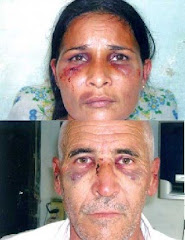
But don't talk to them about political reforms, ask them to endorse a
dissident party or protest about the brutal beatings that the political
police give a few blocks away to the Ladies in White, who every Sunday
speak about political prisoners and democracy in Cuba.
Let's call him Miguel, a guy who earns money selling marijuana,
psychotropic substances or cambolo, a lethal mix of cocaine with a small
dose of bicarbonate. He's been in prison almost a third of his life. He
had plans to emigrate to the United States but interrupted them after
Obama's repeal of the "wet foot-dry foot" policy.
Miguel has few topics of conversation. Women, sports, under-the-table
businesses. His life is a fixed portrait: alcohol, sex and "flying,"
with reddened eyes from smoking marijuana.
When you ask his opinion about the dissident movement and the continued
repression against the Ladies in White, he coughs slightly, scratches
his chin, and says: "Man, get off that channel. Those women are crazy.
This government of sons of bitches that we have, you aren't going to
bring it down with marches or speeches. If they don't grab a gun, the
security forces will always kick them down. They're brave, but it's not
going to change this shitty country."
Most of the neighbors in the converted bunkhouse think the same way.
They're capable of jumping the fence of a State factory to rob two
gallons of alcohol, but don't talk to them about politics, human rights
or freedom of expression.
"Mi amor, who wants to get into trouble? The police have gone nuts with
the businesses and prostitution. But when you go down the path of human
rights, you're in trouble for life," comments Denia, a matron.
She prefers to speak about her business. From a black bag she brings out
her Huawei telephone and shows several photos of half-nude girls while
chanting out the price. "Look how much money. Over there, whoever wants
can beat them up," says Denia, referring to the Ladies in White.
Generally, with a few exceptions, the citizens of the Republic of Cuba
have become immune or prefer to opt for amnesia when the subjects of
dissidence, freedom and democracy are brought up.
"There are several reasons. Pathological fear, which certainly infuses
authoritarian societies like the Cuban one. You must add to that the
fact that the Government media has known very well how to sell the story
of an opposition that is minimal, divided and corrupt, interested only
in American dollars," affirms Carlos, a sociologist.
Also, the dissidence is operating on an uneven playing field. It doesn't
have hours of radio or television coverage to spread its political
programs. The repression has obligated hundreds of political opponents
to leave the country. And State Security has infiltrated moles in almost
all the dissident groups.
"The special services efficiently short-circuit the relation of the
neighbors of the barrio and the people who support the dissidence. How
do you overcome that abyss? By expanding bridges to the interior of the
Island. I believe the opposition is more focused on political crusades
toward the exterior. The other is to amplify what the majority of Cubans
want to hear: There isn't food; to buy a change of clothing costs a
three months' salary; the terrible transport service; the water
shortage….There is a long list of subjects the dissidents can exploit,"
says Enrique.
I perceive that around 80 percent of the population has important common
ground with the local opposition. The timid economic openings and
repeals of absurd regulations were always claimed by the dissidence,
from greater autonomy for private work, foreign travel or being tourists
in their own country.
According to some dissidents, many neighbors approach them to say hello
and delve into the motives for their detentions after a brutal verbal
lynching or a beating. But there aren't enough.
Rolando Rodríguez Lobaina, the leader of the Alianza Democrática
Oriental (Eastern Democratic Alliance) and director of Palenque Visión
(Palenque Vision), felt frustrated when street protests demanding rights
for everybody were taking place, and people were only watching from the
curb of a sidewalk.
"One night I was in the hospital's emergency room, since my son had a
high fever, and I initiated a protest because of the poor medical
attention. Several patients were in the same situation. But no one
raised their voice when the patrols arrived and the political police
detained me by force. That night I realized that I had to change my
method to reach ordinary Cubans. Perhaps the independent press is a more
effective way," Lobaina told me several months ago in Guantánamo.
Although independent journalists reflect that other Cuba that the
autocracy pretends to ignore, their notes, reports or complaints have a
limited reach because of the lack of Internet service and the
precariousness of their daily lives.
For the majority of citizens, democracy, human rights and freedom of
expression are not synonymous with a plate of food, but with repression.
How to awaken a Cuban from indifference is a good question for a debate.
Translated by Regina Anavy
Source: The Cuban Regime Survives by Fear / Iván García – Translating
Cuba -
http://translatingcuba.com/the-cuban-regime-survives-by-fear-ivn-garca/
Tuesday, March 28, 2017

Cuba Holds World Record For Visa Applications Rejected By The United States
Cuba Holds World Record For Visa Applications Rejected By The United States
14ymedio, Luz Escobar/Mario Penton, Havana/Miami, 25 March 2017 – Maria,
59, has a daughter in Miami she hasn't seen for six years. Her visa
applications have been denied three times and she promised herself that
she would never "step foot in" the US consulate in Havana again.
Cuba is the country with the most denials of those who aspired to travel
to the United States in the last two years. In the midst of an abrupt
drop in the granting of visas under Barack Obama's administration, the
Department of State rejected 76% of the travel requests made by Cuban
citizens in fiscal 2015, according to figures released by the US press.
Cubans are followed on the US consulate most-rejected list by nationals
of Laos (67%), Guinea-Bissau (65%) and Somalia (65%). In the Americas,
the others most affected, although far behind Cubans, are Haitians (60%).
According to preliminary data released by the US State Department, the
situation has worsened in fiscal year 2016, with Cuban visa applications
rejected at a rate of 81.85%.
Each interview to request a visa cost Maria about 160 Cuban convertible
pesos (CUC), with no chance of reimbursement, nor has she ever received
any explanations about why her permission to travel was denied.
On each occasion the woman dressed in her best clothes, added an
expensive perfume that her daughter sent her, and practiced her possible
answers in front of the mirror. "No, I will not work during my stay,"
she repeated several times. "I want to see my granddaughter who is a
little girl," and "I can't live anywhere but Cuba," she loudly repeats
as a refrain.
She took with her the title to her house in Central Havana, a copy of
her bank statement and several photos with her husband in case they
asked her to provide reasons why she would not remain "across the pond."
Last year 14,291 Cubans received visas for family visits, to participate
in exchange programs, and for cultural, sports or business reasons,
among other categories. The figure contrasts with the 22,797 visas
granted in 2015 and, more strikingly, the 41,001 granted in 2014.
The State Department said that the reduction of visas granted in Havana
is because of no specific reason, but that because the valid time period
of the multi-entry visas was extended to five years in 2013, many
islanders don't need to return for new interviews to make multiple trips
to the United States.
But Maria did not figure among the fortunate in any of her three attempts.
The last time she headed to the imposing building that houses that US
consulate in the early morning hours, she prayed to the Virgin of
Mercedes, made a cross with the sole of her shoe and put flowers before
the portrait of her deceased mother.
She went to apply for a B2 Visa, the ones that allow multiple visits to
the United States to visit relatives and for tourism. It seemed like the
line lasted "an eternity" before they called her name, she said. Then
came the iron-clad security to enter the building.
"The interview room had an intimidating coldness," she recalls, and was
long and rectangular. Applicants talked to immigration officials through
shielded glass.
The woman's feet trembled and the clerk on the other side of the glass
gave her no time to explain much. He just made a mark on the form with
each answer. A man was crying ata nearby window and an octogenarian lady
sighed after hearing she was not approved.
Maria knows that the United States and Cuba have signed an agreement for
20,000 Cubans to receive immigrant visas every year. In 1995, President
Bill Clinton negotiated that agreement to end the Rafter Crisis, fueled
by the economic recession that hit the island after the fall of the
socialist camp.
In 2016, 9,131 Cubans obtained a visa to legally emigrate to the United
States, many of them under the Cuban Parole Family Reunification
Program, and others through the International Lottery of Diversity Visas
or the Cuban Parole program, among others.
More than two million Cubans reside in the United States, with an active
participation in the economy and politics, primarily in South Florida.
The Cuban Adjustment Act, approved in 1966, allows Cubans to obtain
permanent residence (a green card) if, after entering legally, they
spend one year in the United States. A special welcoming policy only for
Cubans known as wet foot/dry foot was cancelled in January; this policy
allowed any Cuban who stepped foot in the country, even without papers,
to remain, while Cubans who were intercepted at sea were returned to the
island. In the last five years 150,000 Cubans took advantage of this
policy to settle in the United States.
However, Mary's intention is not to emigrate. She does not want to live
in a country that is not her country, although her relatives have told
her that Miami "is full of Cubans" and that Hialeah is like Central Havana.
Despite her Afro-Cuban rites and trying to maintain a positive mental
attitude, in her last interview she didn't have any "luck" either.
She received a quick denial and was given no chance to display all the
answers she had rehearsed. In her opinion, the fact of being under 65
plays against her. "They approve older people who cannot work illegally
there," the lady assumes.
For Eloisa, a retired science teacher, that is not the reason, rather it
is "hostility toward Cubans" by the US Government.
"The Americans want to take over Cuba. It has always been their greatest
desire and because they cannot do it, they punish us by separating us
from our children," the woman says by phone. She has been a member of
the Cuban Communist Party for 25 years and has had two children living
in Houston for just over six years.
Although she only tried once, last year, the refusal from the consulate
made her not want to try again.
"My children work very hard and I wanted to give them the pleasure of
going to spend a little time with them. But hey, it's not to be, " she
says in a voice that is brittle and resigned.
Mary, however, does not tire. This year her daughter will gain American
citizenship and the woman hopes that this new condition will facilitate
a positive response to her next request. Although this new attempt will
leave her a little older and with almost $500 less in her pocket, in a
country where the average monthly salary does not exceed $28.
Source: Cuba Holds World Record For Visa Applications Rejected By The
United States – Translating Cuba -
http://translatingcuba.com/cuba-holds-world-record-for-visa-applications-rejected-by-the-united-states/
14ymedio, Luz Escobar/Mario Penton, Havana/Miami, 25 March 2017 – Maria,
59, has a daughter in Miami she hasn't seen for six years. Her visa
applications have been denied three times and she promised herself that
she would never "step foot in" the US consulate in Havana again.
Cuba is the country with the most denials of those who aspired to travel
to the United States in the last two years. In the midst of an abrupt
drop in the granting of visas under Barack Obama's administration, the
Department of State rejected 76% of the travel requests made by Cuban
citizens in fiscal 2015, according to figures released by the US press.
Cubans are followed on the US consulate most-rejected list by nationals
of Laos (67%), Guinea-Bissau (65%) and Somalia (65%). In the Americas,
the others most affected, although far behind Cubans, are Haitians (60%).
According to preliminary data released by the US State Department, the
situation has worsened in fiscal year 2016, with Cuban visa applications
rejected at a rate of 81.85%.
Each interview to request a visa cost Maria about 160 Cuban convertible
pesos (CUC), with no chance of reimbursement, nor has she ever received
any explanations about why her permission to travel was denied.
On each occasion the woman dressed in her best clothes, added an
expensive perfume that her daughter sent her, and practiced her possible
answers in front of the mirror. "No, I will not work during my stay,"
she repeated several times. "I want to see my granddaughter who is a
little girl," and "I can't live anywhere but Cuba," she loudly repeats
as a refrain.
She took with her the title to her house in Central Havana, a copy of
her bank statement and several photos with her husband in case they
asked her to provide reasons why she would not remain "across the pond."
Last year 14,291 Cubans received visas for family visits, to participate
in exchange programs, and for cultural, sports or business reasons,
among other categories. The figure contrasts with the 22,797 visas
granted in 2015 and, more strikingly, the 41,001 granted in 2014.
The State Department said that the reduction of visas granted in Havana
is because of no specific reason, but that because the valid time period
of the multi-entry visas was extended to five years in 2013, many
islanders don't need to return for new interviews to make multiple trips
to the United States.
But Maria did not figure among the fortunate in any of her three attempts.
The last time she headed to the imposing building that houses that US
consulate in the early morning hours, she prayed to the Virgin of
Mercedes, made a cross with the sole of her shoe and put flowers before
the portrait of her deceased mother.
She went to apply for a B2 Visa, the ones that allow multiple visits to
the United States to visit relatives and for tourism. It seemed like the
line lasted "an eternity" before they called her name, she said. Then
came the iron-clad security to enter the building.
"The interview room had an intimidating coldness," she recalls, and was
long and rectangular. Applicants talked to immigration officials through
shielded glass.
The woman's feet trembled and the clerk on the other side of the glass
gave her no time to explain much. He just made a mark on the form with
each answer. A man was crying ata nearby window and an octogenarian lady
sighed after hearing she was not approved.
Maria knows that the United States and Cuba have signed an agreement for
20,000 Cubans to receive immigrant visas every year. In 1995, President
Bill Clinton negotiated that agreement to end the Rafter Crisis, fueled
by the economic recession that hit the island after the fall of the
socialist camp.
In 2016, 9,131 Cubans obtained a visa to legally emigrate to the United
States, many of them under the Cuban Parole Family Reunification
Program, and others through the International Lottery of Diversity Visas
or the Cuban Parole program, among others.
More than two million Cubans reside in the United States, with an active
participation in the economy and politics, primarily in South Florida.
The Cuban Adjustment Act, approved in 1966, allows Cubans to obtain
permanent residence (a green card) if, after entering legally, they
spend one year in the United States. A special welcoming policy only for
Cubans known as wet foot/dry foot was cancelled in January; this policy
allowed any Cuban who stepped foot in the country, even without papers,
to remain, while Cubans who were intercepted at sea were returned to the
island. In the last five years 150,000 Cubans took advantage of this
policy to settle in the United States.
However, Mary's intention is not to emigrate. She does not want to live
in a country that is not her country, although her relatives have told
her that Miami "is full of Cubans" and that Hialeah is like Central Havana.
Despite her Afro-Cuban rites and trying to maintain a positive mental
attitude, in her last interview she didn't have any "luck" either.
She received a quick denial and was given no chance to display all the
answers she had rehearsed. In her opinion, the fact of being under 65
plays against her. "They approve older people who cannot work illegally
there," the lady assumes.
For Eloisa, a retired science teacher, that is not the reason, rather it
is "hostility toward Cubans" by the US Government.
"The Americans want to take over Cuba. It has always been their greatest
desire and because they cannot do it, they punish us by separating us
from our children," the woman says by phone. She has been a member of
the Cuban Communist Party for 25 years and has had two children living
in Houston for just over six years.
Although she only tried once, last year, the refusal from the consulate
made her not want to try again.
"My children work very hard and I wanted to give them the pleasure of
going to spend a little time with them. But hey, it's not to be, " she
says in a voice that is brittle and resigned.
Mary, however, does not tire. This year her daughter will gain American
citizenship and the woman hopes that this new condition will facilitate
a positive response to her next request. Although this new attempt will
leave her a little older and with almost $500 less in her pocket, in a
country where the average monthly salary does not exceed $28.
Source: Cuba Holds World Record For Visa Applications Rejected By The
United States – Translating Cuba -
http://translatingcuba.com/cuba-holds-world-record-for-visa-applications-rejected-by-the-united-states/
Russia will help Cuba recover its citrus sector
Russia will help Cuba recover its citrus sector
Russia is ready to help Cuba in the recovery and development of the
island's citrus sector, said the Russian Ministry of Agriculture at the
end of a meeting between Russian Deputy Evgueni Gromika and the Cuban
ambassador in Moscow, Emilio Lozada Garcia.
"Russia's participation in the recovery and development of Cuba's citrus
sector was discussed during the meeting," he stated, adding that Russia
could supply agricultural and transport equipment.
The Deputy Minister of Agriculture confirmed Russia's willingness to
help Cuba in this area, and the Cuban ambassador said his country was
willing to study Russia's proposals and conditions to supply the machinery.
The two officials highlighted the importance of examining the financial
sustainability of this project and agreed to continue working in this area.
Source: Sputnik News
Source: Russia will help Cuba recover its citrus sector -
http://www.freshplaza.com/article/172995/Russia-will-help-Cuba-recover-its-citrus-sector
Russia is ready to help Cuba in the recovery and development of the
island's citrus sector, said the Russian Ministry of Agriculture at the
end of a meeting between Russian Deputy Evgueni Gromika and the Cuban
ambassador in Moscow, Emilio Lozada Garcia.
"Russia's participation in the recovery and development of Cuba's citrus
sector was discussed during the meeting," he stated, adding that Russia
could supply agricultural and transport equipment.
The Deputy Minister of Agriculture confirmed Russia's willingness to
help Cuba in this area, and the Cuban ambassador said his country was
willing to study Russia's proposals and conditions to supply the machinery.
The two officials highlighted the importance of examining the financial
sustainability of this project and agreed to continue working in this area.
Source: Sputnik News
Source: Russia will help Cuba recover its citrus sector -
http://www.freshplaza.com/article/172995/Russia-will-help-Cuba-recover-its-citrus-sector
Downhole problem sinks Cuba well
Downhole problem sinks Cuba well
Canada-based Sherritt abandons lower part of Litoral-100 well after
encountering 'geological complexities'
Caroline Evans
27 Mar 2017 23:28 GMT Updated 27 Mar 2017 23:39 GMT
Canada-based Sherritt International has come up dry at its Litoral-100
in the Bay of Cardenas in Cuba after running into technical problems
with the well.
The exploration well aiming for the Lower Veloz formation failed to
reach its target because of wellbore instability caused by "unexpected
geological complexities when a zone of the less stable Vega Alta rock
formation repeated itself", Sherritt said in a release.
"This resulted in drilling problems and the lower section of the well
had to be abandoned."
The well is located on Sherritt's Block 10 production sharing contract
concession.
Sherrit had planned to drill the well to 5836 metres, but it only
reached 4232 metres.
The company did find "good" shows on a sidetrack drilled from the
existing wellbore into the Upper Veloz formation and was able to produce
oil, but not in commercial quantities, the company said.
"While this well was not successful at reaching its target of the Lower
Veloz, nothing has changed concerning our view of Block 10's potential,"
Sherritt chief executive David Pathe said.
"LT-100 has provided valuable data about the fold and thrust geology of
the basin that we are currently using to update our geological models
and drilling plans. We expect to be in a position to provide a further
update by the time we release first quarter 2017 results."
Source: Downhole problem sinks Cuba well | Upstream -
http://www.upstreamonline.com/live/1232589/downhole-problem-sinks-cuba-well
Canada-based Sherritt abandons lower part of Litoral-100 well after
encountering 'geological complexities'
Caroline Evans
27 Mar 2017 23:28 GMT Updated 27 Mar 2017 23:39 GMT
Canada-based Sherritt International has come up dry at its Litoral-100
in the Bay of Cardenas in Cuba after running into technical problems
with the well.
The exploration well aiming for the Lower Veloz formation failed to
reach its target because of wellbore instability caused by "unexpected
geological complexities when a zone of the less stable Vega Alta rock
formation repeated itself", Sherritt said in a release.
"This resulted in drilling problems and the lower section of the well
had to be abandoned."
The well is located on Sherritt's Block 10 production sharing contract
concession.
Sherrit had planned to drill the well to 5836 metres, but it only
reached 4232 metres.
The company did find "good" shows on a sidetrack drilled from the
existing wellbore into the Upper Veloz formation and was able to produce
oil, but not in commercial quantities, the company said.
"While this well was not successful at reaching its target of the Lower
Veloz, nothing has changed concerning our view of Block 10's potential,"
Sherritt chief executive David Pathe said.
"LT-100 has provided valuable data about the fold and thrust geology of
the basin that we are currently using to update our geological models
and drilling plans. We expect to be in a position to provide a further
update by the time we release first quarter 2017 results."
Source: Downhole problem sinks Cuba well | Upstream -
http://www.upstreamonline.com/live/1232589/downhole-problem-sinks-cuba-well
Cuban factory assembles first 7,000 tablets and laptops
Cuban factory assembles first 7,000 tablets and laptops
Published on March 25, 2017
HAVANA, Cuba (ACN) -- The Industrial Company for Informatics,
Communications and Electronics (GEDEME by its Spanish acronym) in Havana
has assembled the first 3,500 laptops and 3,583 tablets for Cuban
government agencies and organizations.
The initiative is part of an effort by the Cuban government to continue
expanding, within the limit of financial constraints, the secure
computerization of local society.
Fernando Fernandez, chief of the Computer Solutions Project, said that,
for the current year, the goal is to reach 50,000 units, from the
arrival of the parts and components provided by the Chinese company
Haier, with which agreements were signed for the transfer of technologies.
He noted that the training of personnel concluded on January 20 with the
participation of the Chinese experts, who were satisfied with the
competence of the operators who will take up this challenge.
Fernandez explained that currently the entity is immersed in the second
stage of the project that includes the assembly of 40 percent of the
equipment received from China.
The executive stated that facilities have been created to undertake the
manufacture of touch screens.
He recalled that this program also involves the University of Computer
Science which provides the Nova operating systems, computer applications
and their production processes.
GEDEME is in charge of the installation of the equipment, the production
process and commercialization through wholesale chains.
China provides all the technology, raw materials and guarantees the
processes of training and technical exchange with Cuban specialists.
The modern hybrid line installed in Cuba can assemble 120,000 laptops
annually, all sixth generation.
Source: Cuban factory assembles first 7,000 tablets and laptops |
Caribbean News Now -
http://www.caribbeannewsnow.com/headline-Cuban-factory-assembles-first-7%2C000-tablets-and-laptops-33898.html
Published on March 25, 2017
HAVANA, Cuba (ACN) -- The Industrial Company for Informatics,
Communications and Electronics (GEDEME by its Spanish acronym) in Havana
has assembled the first 3,500 laptops and 3,583 tablets for Cuban
government agencies and organizations.
The initiative is part of an effort by the Cuban government to continue
expanding, within the limit of financial constraints, the secure
computerization of local society.
Fernando Fernandez, chief of the Computer Solutions Project, said that,
for the current year, the goal is to reach 50,000 units, from the
arrival of the parts and components provided by the Chinese company
Haier, with which agreements were signed for the transfer of technologies.
He noted that the training of personnel concluded on January 20 with the
participation of the Chinese experts, who were satisfied with the
competence of the operators who will take up this challenge.
Fernandez explained that currently the entity is immersed in the second
stage of the project that includes the assembly of 40 percent of the
equipment received from China.
The executive stated that facilities have been created to undertake the
manufacture of touch screens.
He recalled that this program also involves the University of Computer
Science which provides the Nova operating systems, computer applications
and their production processes.
GEDEME is in charge of the installation of the equipment, the production
process and commercialization through wholesale chains.
China provides all the technology, raw materials and guarantees the
processes of training and technical exchange with Cuban specialists.
The modern hybrid line installed in Cuba can assemble 120,000 laptops
annually, all sixth generation.
Source: Cuban factory assembles first 7,000 tablets and laptops |
Caribbean News Now -
http://www.caribbeannewsnow.com/headline-Cuban-factory-assembles-first-7%2C000-tablets-and-laptops-33898.html
Perdue supports expanded trade with Cuba
Perdue supports expanded trade with Cuba
James Williams 8:35 p.m. CT March 27, 2017
USDA Secretary designate Sonny Perdue is an exceptionally qualified
nominee to lead the USDA. Mr. Perdue has long been an advocate of
expanding trade with Cuba's $2 billion agricultural import market. We're
very optimistic that Mr. Perdue will be confirmed by the Senate and will
continue to support American agribusiness by advancing efforts to lift
the U.S. embargo on Cuba.
In an exchange with committee member Senator John Boozman from Arkansas,
Perdue said, "with respect to Cuba, for those of you on the Gulf Coast
and those along the East Coast as well as those who have been mentioned
by your colleagues in the upper Midwest, I think we would love to have
Cuba as a customer in many things.
As Mr. Perdue notes, American producers are able to sell their products
to Cuba. However, they are unable to offer private financing for the
sale of agricultural commodities to Cuba. As a result, American farmers
have consistently lost market share in Cuba's market every year since
2009. While this restriction is codified in law and would require an act
of Congress, Mr. Perdue went on to announce his support for legislative
efforts to remove these financing restrictions.
"So I think we have the product they need and they would like the
product. The real issue I heard regarding Cuba was the financing part
and certainly that would come probably under another area, not the USDA,
but I would support their efforts if we could get private financing,"
Perdue said, referring to the bipartisan Cuba Agricultural Exports
Act which would remove restrictions on offering credit for the export of
agricultural commodities to Cuba.
That bill has been introduced by Congressman Rick Crawford from Arkansas
in the House and Senators Heidi Heitkamp from North Dakota and John
Boozman from Arkansas.
Williams is president of Engage Cuba
Source: Perdue supports expanded trade with Cuba -
http://www.wisfarmer.com/story/opinion/editorials/2017/03/27/perdue-supports-expanded-trade-cuba/99715716/
James Williams 8:35 p.m. CT March 27, 2017
USDA Secretary designate Sonny Perdue is an exceptionally qualified
nominee to lead the USDA. Mr. Perdue has long been an advocate of
expanding trade with Cuba's $2 billion agricultural import market. We're
very optimistic that Mr. Perdue will be confirmed by the Senate and will
continue to support American agribusiness by advancing efforts to lift
the U.S. embargo on Cuba.
In an exchange with committee member Senator John Boozman from Arkansas,
Perdue said, "with respect to Cuba, for those of you on the Gulf Coast
and those along the East Coast as well as those who have been mentioned
by your colleagues in the upper Midwest, I think we would love to have
Cuba as a customer in many things.
As Mr. Perdue notes, American producers are able to sell their products
to Cuba. However, they are unable to offer private financing for the
sale of agricultural commodities to Cuba. As a result, American farmers
have consistently lost market share in Cuba's market every year since
2009. While this restriction is codified in law and would require an act
of Congress, Mr. Perdue went on to announce his support for legislative
efforts to remove these financing restrictions.
"So I think we have the product they need and they would like the
product. The real issue I heard regarding Cuba was the financing part
and certainly that would come probably under another area, not the USDA,
but I would support their efforts if we could get private financing,"
Perdue said, referring to the bipartisan Cuba Agricultural Exports
Act which would remove restrictions on offering credit for the export of
agricultural commodities to Cuba.
That bill has been introduced by Congressman Rick Crawford from Arkansas
in the House and Senators Heidi Heitkamp from North Dakota and John
Boozman from Arkansas.
Williams is president of Engage Cuba
Source: Perdue supports expanded trade with Cuba -
http://www.wisfarmer.com/story/opinion/editorials/2017/03/27/perdue-supports-expanded-trade-cuba/99715716/
Never belonging - Random reflections on my last visit to Cuba
Never belonging: Random reflections on my last visit to Cuba
OPINIONMIGUEL DE LA TORRE | MARCH 28, 2017
Returning to the land which witnessed my birth is always a gut-wrenching
experience. Separation from my island has now been five times longer
than Odysseus' was from his. But unlike Odysseus, who was returning to a
place he was familiar with, I am attempting to piece together some type
of rootedness upon the shifting sands of my parents' false memories (sí,
porque los bichos no picaban, y los mangos eran más dulce; yes, because
the bugs were not biting, and mangoes were sweeter).
Every Cuban over a certain age lives with a particular trauma caused by
the hardships of being a refugee. Homesickness for a place that was
never home, mixed with nostalgia, romanticization and an
unnaturally-taught hatred towards various actors blamed for our
Babylonian captivity contributes to the trauma of not having a place, of
not ever being able to visit one's grandmother's garden to eat mangos
from its trees, nor enjoy the gentle sea breezes.
By the rivers of Miami we sat and wept at the memory of La Habana. There
on the palm trees we hung our conga drums. For there, those who stole
our independence with gunboat diplomacy, asked us for songs. Those who
forced on us the Platt Amendment demanded songs of joy. "Sing us one of
the mambo songs from Cuba." But how can we sing our rumba in a pagan
land? If I forget you, mi Habana, may my right hand wither. May my
tongue cling to the roof of my mouth if I do not remember you, if I do
not consider la Habana mi mayor alegría. Remember, Yahweh, what the
oppressors did. A blessing on him who seizes their infants and dashes
them against the rock!
As I stroll down el malecón, as I amble along calle Obispo, as I have a
daiquiri en el Floridita, I observe. I randomly gaze at my surroundings,
reflecting upon what I see, attempting to understand what occurs beneath
the surface. In no specific order, here are some of my musings:
- I notice many yuma lechers — old white men with young beautiful
mulatas on their arms, planning to do to them what the embargo has done
to the island.
- I notice yumas rushing to see Cuba before it changes, before it is
spoiled, fetishizing the misery and poverty of others, ignoring how much
the people want change because they hunger.
- I notice la buena presente, where the faces of tourism's
representatives have a light complexion, thus denying their darker
compatriots lucrative tourists' tips.
- I notice how liberals, from the safety of first-world middle-class
privilege, paint Cuba as some socialist paradise, ignoring how sexism
and racism continues to thrive, along with a very sophisticated and
not-so-well hidden classism connected to political power.
- I notice how conservatives, with an air of superiority, paint Cuba
with brushes which impose hues of oppression to color a portrait of
repression ignorant of the survival mentality of a people fluent in
doublespeak and sharp tongues of criticism.
- I notice tourists who can't salsa dancing in well-preserved streets
while a block away from the merriment are inhabited buildings on the
verge of collapsing.
- I notice Trumpites insisting on removing the human rights violation
splinter out of Cuba's eye while ignoring the log of Border Patrol
abuses against the undocumented, the log of black lives not mattering,
the log of grabbing women by their ——-, paying them lower wages than men
for the same job, the log of unthreading a safety net which keeps people
alive, and all the other human rights violation logs firmly lodged in
the USA's eye.
- I notice liberal yumas apotheosis of el Ché and Fidel, dismissing as
gusanos the critiques of those and the surviving families who have suffered.
- I notice the swagger of conservative yumas quick to dictate the
conditions under which they will recognize someone else's sovereignty,
holding on to the self-conceived hegemonic birthright of empire.
- I notice the false dichotomy created by bar stool pundits between
ending the genocidal U.S. embargo and the need for greater political
participation from the people. This is not an either/or issue; it's a
both/and.
The most painful thing I notice is how I am not fully accepted aquí o
allá — here or there. I am held in contempt and suspicion on both sides
of the Florida Straits. Here, I'm too Cuban to ever be American, and
there, I'm too American to ever be a Cuban. The trauma of which I speak
is never belonging.
As you contemplate these reflections, note I have again returned to la
isla de dolor. Like Odysseus I am struggling against the gods who decree
separation from the fantasy island I claim to love, an irrational love
toward a place where I am neither welcomed nor truly belong. I close
these reflections with that of another refugee, who also spent his life
wandering the earth where there was no place he could call home or where
he could rest his head. According to José Martí, "Let those who do not
[secure a homeland] live under the whip and in exile, watched over like
wild animals, cast from one country to another, concealing the death of
their souls with a beggar's smile from the scorn of free persons."
Source: Never belonging: Random reflections on my last visit to Cuba –
Baptist News Global -
https://baptistnews.com/article/random-reflections-on-my-last-visit-to-cuba/#.WNppUfmGP6Q
OPINIONMIGUEL DE LA TORRE | MARCH 28, 2017
Returning to the land which witnessed my birth is always a gut-wrenching
experience. Separation from my island has now been five times longer
than Odysseus' was from his. But unlike Odysseus, who was returning to a
place he was familiar with, I am attempting to piece together some type
of rootedness upon the shifting sands of my parents' false memories (sí,
porque los bichos no picaban, y los mangos eran más dulce; yes, because
the bugs were not biting, and mangoes were sweeter).
Every Cuban over a certain age lives with a particular trauma caused by
the hardships of being a refugee. Homesickness for a place that was
never home, mixed with nostalgia, romanticization and an
unnaturally-taught hatred towards various actors blamed for our
Babylonian captivity contributes to the trauma of not having a place, of
not ever being able to visit one's grandmother's garden to eat mangos
from its trees, nor enjoy the gentle sea breezes.
By the rivers of Miami we sat and wept at the memory of La Habana. There
on the palm trees we hung our conga drums. For there, those who stole
our independence with gunboat diplomacy, asked us for songs. Those who
forced on us the Platt Amendment demanded songs of joy. "Sing us one of
the mambo songs from Cuba." But how can we sing our rumba in a pagan
land? If I forget you, mi Habana, may my right hand wither. May my
tongue cling to the roof of my mouth if I do not remember you, if I do
not consider la Habana mi mayor alegría. Remember, Yahweh, what the
oppressors did. A blessing on him who seizes their infants and dashes
them against the rock!
As I stroll down el malecón, as I amble along calle Obispo, as I have a
daiquiri en el Floridita, I observe. I randomly gaze at my surroundings,
reflecting upon what I see, attempting to understand what occurs beneath
the surface. In no specific order, here are some of my musings:
- I notice many yuma lechers — old white men with young beautiful
mulatas on their arms, planning to do to them what the embargo has done
to the island.
- I notice yumas rushing to see Cuba before it changes, before it is
spoiled, fetishizing the misery and poverty of others, ignoring how much
the people want change because they hunger.
- I notice la buena presente, where the faces of tourism's
representatives have a light complexion, thus denying their darker
compatriots lucrative tourists' tips.
- I notice how liberals, from the safety of first-world middle-class
privilege, paint Cuba as some socialist paradise, ignoring how sexism
and racism continues to thrive, along with a very sophisticated and
not-so-well hidden classism connected to political power.
- I notice how conservatives, with an air of superiority, paint Cuba
with brushes which impose hues of oppression to color a portrait of
repression ignorant of the survival mentality of a people fluent in
doublespeak and sharp tongues of criticism.
- I notice tourists who can't salsa dancing in well-preserved streets
while a block away from the merriment are inhabited buildings on the
verge of collapsing.
- I notice Trumpites insisting on removing the human rights violation
splinter out of Cuba's eye while ignoring the log of Border Patrol
abuses against the undocumented, the log of black lives not mattering,
the log of grabbing women by their ——-, paying them lower wages than men
for the same job, the log of unthreading a safety net which keeps people
alive, and all the other human rights violation logs firmly lodged in
the USA's eye.
- I notice liberal yumas apotheosis of el Ché and Fidel, dismissing as
gusanos the critiques of those and the surviving families who have suffered.
- I notice the swagger of conservative yumas quick to dictate the
conditions under which they will recognize someone else's sovereignty,
holding on to the self-conceived hegemonic birthright of empire.
- I notice the false dichotomy created by bar stool pundits between
ending the genocidal U.S. embargo and the need for greater political
participation from the people. This is not an either/or issue; it's a
both/and.
The most painful thing I notice is how I am not fully accepted aquí o
allá — here or there. I am held in contempt and suspicion on both sides
of the Florida Straits. Here, I'm too Cuban to ever be American, and
there, I'm too American to ever be a Cuban. The trauma of which I speak
is never belonging.
As you contemplate these reflections, note I have again returned to la
isla de dolor. Like Odysseus I am struggling against the gods who decree
separation from the fantasy island I claim to love, an irrational love
toward a place where I am neither welcomed nor truly belong. I close
these reflections with that of another refugee, who also spent his life
wandering the earth where there was no place he could call home or where
he could rest his head. According to José Martí, "Let those who do not
[secure a homeland] live under the whip and in exile, watched over like
wild animals, cast from one country to another, concealing the death of
their souls with a beggar's smile from the scorn of free persons."
Source: Never belonging: Random reflections on my last visit to Cuba –
Baptist News Global -
https://baptistnews.com/article/random-reflections-on-my-last-visit-to-cuba/#.WNppUfmGP6Q
Monday, March 27, 2017
Cuba: more reliant on the US than ever
Cuba: more reliant on the US than ever
ROBERTO ÁLVAREZ QUIÑONES | Los Ángeles | 27 de Marzo de 2017 - 16:38 CEST.
The best way to appreciate how that Cuba's economy today depends on the
US more than ever before in its history is to engage in a very simple
mental exercise: imagine that Washington banned travel, remittances and
packages to the island, except for medicines and special visits by
Cubans to see very sick relatives.
What would happen? Can anyone even make a coherent assessment of a
scenario like this? Many shudder at even the notion. This is not going
to happen, but the mere thought places many's hair on end – especially
that of the Castroist political and military elite. Political science
also encompasses possible situations and potential scenarios.
For 60 years the regime's propaganda has been vociferously claiming that
before 1959 Cuba was a pseudo-colony of the US. Of course, media and
academic centers on the island have been prohibited from researching or
publishing anything about how, in fact, "revolutionary" Cuba was much
more dependent on the USSR than "bourgeois" Cuba ever was on the US.
And, what's worse, now it depends more than ever on American cash,
especially in the wake of the devastating economic crisis in Venezuela.
Hypocrisy in the regime's realpolitik and its two-faced policies are
evident. On the one hand, it waves the flag and stirs up enmity against
the "Empire" and the "criminal blockade", while simultaneously
supplicating, wheeling and dealing, and spreading its tentacles behind
the scenes, both in political circles on the left, and within the US
business community, to encourage travel and commercial flights to Cuba,
and for Congress to lift the embargo so that they can obtain access to
international loans and foreign investment.
The latter, getting loans, cash and investments, is vital to the
dictator and his military junta. The plans of the Government and elite
of the Communist Party (PCC) to pass power to a new generation of
leaders, military and civilians, starting in 2018, call for stabilizing
financial support that they currently lack.
More American money than ever
Between remittances, packages and trips to Cuba from the US, in 2016
Cuba brought in more than 7 billion dollars. According to experts that
figure has already surpassed the amount from Venezuelan subsidies. It is
triple the revenue from the Cuban tourist industry, almost double the
value of Cuban exports in 2016, which did not reach 4 billion, and 15
times the value of sugar exports. Incidentally, this last harvest in
2016 yielded only one third of the sugar produced back in 1925 (5.1
million tons).
From 1902 to 1958, although nearly 80% of Cuban sugar was exported to
the US (at rates higher than those on the world market) and the rest of
the Island's trade was largely with its northern neighbor, there were
two big differences to the situation today:
There were not, as there are today, almost 2,000,000 Cubans in the US,
furnishing the country with more money than all of Cuba's exports,
including sugar, nickel, tobacco, rum and pharmaceutical products,
combined. The funds obtained from goods exported from the island in 2016
came to half of total monies received from the US.
There were private enterprises in Cuba that generated the bulk of its
Gross Domestic Product (GDP), for a per capita GDP higher than Spain's
and almost equal to that of Italy.
Genetic parasitism
The problem is that, unlike a market economy, Cuba's is parasitic, due
to the congenital defect of its Marxist-Leninist statism, which is
contrary to human nature, such that it can only work if it is subsidized
from abroad; first by Moscow, and then by Caracas. Now, with the crisis
in Venezuela, the Cuban economy is sustained by "counterrevolutionaries"
in Miami. The profound irony is that the cash that meets most of Cuba's
needs today is "imperialist" in origin.
This had never happened before. According to official figures, in the
50s the US acquired 57% of Cuba's total exports. That is, the Island
sold almost half of its exportable goods to the rest of the world,
including cattle, coffee, pineapple and other products that the country
was later unable to export when the Castros rose to power. In that
pre-Castro decade Cuba produced 60,000 tons of coffee annually. In 2016
it produced a grand total of 5,687 tons. Incredible, but true.
With regards to dependence on the USSR, renowned Cuban economist
Professor Carmelo Mesa-Lago offers some impressive figures. In 1989,
Cuba received from the Soviet Union (and, to a far lesser degree, other
allied countries) 98% of its oil, 80% of its machinery, 57% of its
chemicals, and 53% of its food. 78.6% of all imports also came from
those Communist nations.
According to the few official figures available in this regard, since
Cuba joined the Council for Mutual Economic Assistance (CMEA) in 1972,
between 75 and 80% of its total trade (exports and imports) was with the
USSR and other Communist countries. The highpoint occurred between 1984
and 1991, during the zenith of Soviet subsidies, when Moscow paid Castro
45 cents for a pound of sugar – while the price on the world market was
at 4 or 5.
What few people know around the world is that Cuba got the lion's share
of these supplies for free, as it never paid its huge trade deficits. In
fact, it racked up a debt of 35 billion dollars with Moscow. 90% was
pardoned in 2014 by Vladimir Putin, aware that they would never collect.
He did try to force Castro to pay at least 3.5 billion, however. But
he's not going to get a penny.
I still have a yellowing paper teletype, an AFP report from back in
1995, indicating that between 1984 and 1991 Cuba had accumulated a trade
deficit of more than 16.08 billion dollars during those 8 years, an
average of over 2 billion per year, with a spike to 2.74 billion in
1989. And almost all that unbalanced trade was with the USSR.
Total subordination
Furthermore, the island received billions of dollars in weapons of every
type: planes, tanks, artillery, ships, rockets, vehicles, guns, and
equipment, allowing it to wield the largest and most powerful army in
Latin America after Brazil. Cuba even received 42 nuclear missiles (able
to reach Washington and New York), which put the world on the brink of
nuclear war in 1962.
But what takes the cake is that in the 80s (until 1986), then Economy
Minister Humberto Perez told me, off the record, that Moscow was selling
to capitalist countries almost three million tons of crude oil that Cuba
did not use, from its annual quota allocated by the CMEA, and then
sending the money to Havana, these funds exceeding the amount generated
by all its sugar mills.
We can clearly see that Cuba was not a pseudocolony of the USSR, but an
outright one, as we can add that the largest apparatus for intelligence
and repression in Latin America, the Castros', was organized and trained
by the KGB, with the help of East Germany's neo-Nazi Stasi. All for free.
Despite its trade dependence on the US before 1959, Cuba was never as
subordinate to its northern neighbor as it was later on the USSR, 19,000
km away, beyond the Mediterranean.
Given the parasitism endemic to Castroist socialism, Cuba today depends
on the US so profoundly that if the scenario described at the outset of
this article were to come to pass, the nation would come to an utter
standstill. It would be another Cambodia, with people eating out of
communal pots. Without "Yankee" money, Castroism would be unsustainable.
*In an earlier version of this text the caption stated that the image
was from Havana. The picture was, in fact, taken in Washington, DC.
Source: Cuba: more reliant on the US than ever | Diario de Cuba -
http://www.diariodecuba.com/cuba/1490629128_29947.html
ROBERTO ÁLVAREZ QUIÑONES | Los Ángeles | 27 de Marzo de 2017 - 16:38 CEST.
The best way to appreciate how that Cuba's economy today depends on the
US more than ever before in its history is to engage in a very simple
mental exercise: imagine that Washington banned travel, remittances and
packages to the island, except for medicines and special visits by
Cubans to see very sick relatives.
What would happen? Can anyone even make a coherent assessment of a
scenario like this? Many shudder at even the notion. This is not going
to happen, but the mere thought places many's hair on end – especially
that of the Castroist political and military elite. Political science
also encompasses possible situations and potential scenarios.
For 60 years the regime's propaganda has been vociferously claiming that
before 1959 Cuba was a pseudo-colony of the US. Of course, media and
academic centers on the island have been prohibited from researching or
publishing anything about how, in fact, "revolutionary" Cuba was much
more dependent on the USSR than "bourgeois" Cuba ever was on the US.
And, what's worse, now it depends more than ever on American cash,
especially in the wake of the devastating economic crisis in Venezuela.
Hypocrisy in the regime's realpolitik and its two-faced policies are
evident. On the one hand, it waves the flag and stirs up enmity against
the "Empire" and the "criminal blockade", while simultaneously
supplicating, wheeling and dealing, and spreading its tentacles behind
the scenes, both in political circles on the left, and within the US
business community, to encourage travel and commercial flights to Cuba,
and for Congress to lift the embargo so that they can obtain access to
international loans and foreign investment.
The latter, getting loans, cash and investments, is vital to the
dictator and his military junta. The plans of the Government and elite
of the Communist Party (PCC) to pass power to a new generation of
leaders, military and civilians, starting in 2018, call for stabilizing
financial support that they currently lack.
More American money than ever
Between remittances, packages and trips to Cuba from the US, in 2016
Cuba brought in more than 7 billion dollars. According to experts that
figure has already surpassed the amount from Venezuelan subsidies. It is
triple the revenue from the Cuban tourist industry, almost double the
value of Cuban exports in 2016, which did not reach 4 billion, and 15
times the value of sugar exports. Incidentally, this last harvest in
2016 yielded only one third of the sugar produced back in 1925 (5.1
million tons).
From 1902 to 1958, although nearly 80% of Cuban sugar was exported to
the US (at rates higher than those on the world market) and the rest of
the Island's trade was largely with its northern neighbor, there were
two big differences to the situation today:
There were not, as there are today, almost 2,000,000 Cubans in the US,
furnishing the country with more money than all of Cuba's exports,
including sugar, nickel, tobacco, rum and pharmaceutical products,
combined. The funds obtained from goods exported from the island in 2016
came to half of total monies received from the US.
There were private enterprises in Cuba that generated the bulk of its
Gross Domestic Product (GDP), for a per capita GDP higher than Spain's
and almost equal to that of Italy.
Genetic parasitism
The problem is that, unlike a market economy, Cuba's is parasitic, due
to the congenital defect of its Marxist-Leninist statism, which is
contrary to human nature, such that it can only work if it is subsidized
from abroad; first by Moscow, and then by Caracas. Now, with the crisis
in Venezuela, the Cuban economy is sustained by "counterrevolutionaries"
in Miami. The profound irony is that the cash that meets most of Cuba's
needs today is "imperialist" in origin.
This had never happened before. According to official figures, in the
50s the US acquired 57% of Cuba's total exports. That is, the Island
sold almost half of its exportable goods to the rest of the world,
including cattle, coffee, pineapple and other products that the country
was later unable to export when the Castros rose to power. In that
pre-Castro decade Cuba produced 60,000 tons of coffee annually. In 2016
it produced a grand total of 5,687 tons. Incredible, but true.
With regards to dependence on the USSR, renowned Cuban economist
Professor Carmelo Mesa-Lago offers some impressive figures. In 1989,
Cuba received from the Soviet Union (and, to a far lesser degree, other
allied countries) 98% of its oil, 80% of its machinery, 57% of its
chemicals, and 53% of its food. 78.6% of all imports also came from
those Communist nations.
According to the few official figures available in this regard, since
Cuba joined the Council for Mutual Economic Assistance (CMEA) in 1972,
between 75 and 80% of its total trade (exports and imports) was with the
USSR and other Communist countries. The highpoint occurred between 1984
and 1991, during the zenith of Soviet subsidies, when Moscow paid Castro
45 cents for a pound of sugar – while the price on the world market was
at 4 or 5.
What few people know around the world is that Cuba got the lion's share
of these supplies for free, as it never paid its huge trade deficits. In
fact, it racked up a debt of 35 billion dollars with Moscow. 90% was
pardoned in 2014 by Vladimir Putin, aware that they would never collect.
He did try to force Castro to pay at least 3.5 billion, however. But
he's not going to get a penny.
I still have a yellowing paper teletype, an AFP report from back in
1995, indicating that between 1984 and 1991 Cuba had accumulated a trade
deficit of more than 16.08 billion dollars during those 8 years, an
average of over 2 billion per year, with a spike to 2.74 billion in
1989. And almost all that unbalanced trade was with the USSR.
Total subordination
Furthermore, the island received billions of dollars in weapons of every
type: planes, tanks, artillery, ships, rockets, vehicles, guns, and
equipment, allowing it to wield the largest and most powerful army in
Latin America after Brazil. Cuba even received 42 nuclear missiles (able
to reach Washington and New York), which put the world on the brink of
nuclear war in 1962.
But what takes the cake is that in the 80s (until 1986), then Economy
Minister Humberto Perez told me, off the record, that Moscow was selling
to capitalist countries almost three million tons of crude oil that Cuba
did not use, from its annual quota allocated by the CMEA, and then
sending the money to Havana, these funds exceeding the amount generated
by all its sugar mills.
We can clearly see that Cuba was not a pseudocolony of the USSR, but an
outright one, as we can add that the largest apparatus for intelligence
and repression in Latin America, the Castros', was organized and trained
by the KGB, with the help of East Germany's neo-Nazi Stasi. All for free.
Despite its trade dependence on the US before 1959, Cuba was never as
subordinate to its northern neighbor as it was later on the USSR, 19,000
km away, beyond the Mediterranean.
Given the parasitism endemic to Castroist socialism, Cuba today depends
on the US so profoundly that if the scenario described at the outset of
this article were to come to pass, the nation would come to an utter
standstill. It would be another Cambodia, with people eating out of
communal pots. Without "Yankee" money, Castroism would be unsustainable.
*In an earlier version of this text the caption stated that the image
was from Havana. The picture was, in fact, taken in Washington, DC.
Source: Cuba: more reliant on the US than ever | Diario de Cuba -
http://www.diariodecuba.com/cuba/1490629128_29947.html
A Month Without Machado Ventura
A Month Without Machado Ventura
14ymedio, Reinaldo Escobar, Havana, 27 March 2017 — Just a month ago his
face disappeared from the Cuban government's family photo. The last time
he was seen, Vice President José Ramón Machado Ventura handed out orders
in an extensive agricultural area of Pinar del Río. Four weeks later,
no official media has offered an explanation for the absence of the
second most powerful man on the island.
Now 86, this man born in Villa Clara's San Antonio de las Vueltas, has
stood behind Raul Castro for more than five years, in his position as
the second secretary of the Cuban Communist Party (PCC), which the
Constitution of the Republic consecrates as the "the highest leading
force of society and the State."
The man who was never absent from our television screens and newspaper
pages for more than 48 hours has failed to appear since 27 February. An
absence that feeds rumors among a people accustomed to giving more
importance to a lack of news than to the news itself. But above all, it
is a disappearance that comes at a bad time for the Plaza of the Revolution.
It is less than a year before Raúl Castro leaves his office as president
and every day the uncertainty of who will relieve him in his post
increases. Machado Ventura's departure from the game would force the
hurried naming of a second secretary of the PCC and put a face to one of
the most jealously guarded mysteries of recent years.
The next few weeks could be of momentous importance for clearing up this
question. If the first vice-president, Miguel Díaz-Canel, assumes the
second position in the Party it will prolong the tradition of
concentrating in a single person the highest positions in the
country. To choose among other names, such as Bruno Rodríguez, Lázaro
Expósito or Salvador Valdés Mesa, could open a bicephalic route,
unprecedented in communist regimes.
For decades, all power was concentrated in Fidel Castro, who placed his
brother in the rearguard of his countless positions. In 2006, already
with serious health problems, the Maximum Leader had to step away from
public life and Raúl Castro inherited that conglomerate of faculties
that placed him at the head of the Party and the State.
Nevertheless, during the Raul era "second positions" have
bifurcated. The first vice-president is no longer the same person as the
second secretary of the PPC, among other reasons so that no one person
could completely replace the General-President. A measure of protection,
but also an evidence of the lack of confidence of the historical
generation in its relief team.
In this new structure, Machado Ventura remained second in the
Party. Machadito, as his friends call him, has cultivated a public image
as the ayatollah and custodian of ideological purity. An orthodoxy that
in the Cuban case does not cling to the dogmas of Marxism-Leninism but
to the voluntarist* doctrine of Fidelismo.
Analysts blame this iron-fisted goalkeeper's presence at the top of the
pyramid on Fidel Castro's express wish, placing him behind his brother
to prevent the latter from veering from the path. This is how a man who
once qualified in medicine became, according to Soviet terminology in
the times of perestroika, the "braking mechanism" on the reforms Raul
Castro might have pushed.
Machado Ventura earned his reputation for immobility through
prohibitions and punishments. He was in charge of leading the provincial
assemblies prior to the last Communist Party Congresses, confabs where
the principle agreements were hatched, the delegates chosen and where
the key points of the Party Guidelines that today are the "sacred
commandments" of Raulismo were committed to.
However, that role seems to have come to its end. The man who ordered
the dismissal of high-level cadres and for decades banned Christmas
trees in public establishments has left the scene. Missing with him are
his harangues calling for efficiency and his visits to workplaces where
he advocated greater discipline and sacrifice.
It remains possible that Machadito – the guardian of orthodoxy – will
reappear at any moment like the phoenix, and leap between the furrows to
explain to farmers how to plant sweet potatoes or arrive to instruct
the engineers of some industry how to make better use of their
resources. The followers of the hard line would receive that return with
relief.
Translator's note: Voluntarism is the view that revolutionaries can
change society by means of will, irrespective of economic conditions.
Source: David Priestland, Stalinism and the Politics of Mobilization.
Source: A Month Without Machado Ventura – Translating Cuba -
http://translatingcuba.com/a-month-without-machado-ventura/
14ymedio, Reinaldo Escobar, Havana, 27 March 2017 — Just a month ago his
face disappeared from the Cuban government's family photo. The last time
he was seen, Vice President José Ramón Machado Ventura handed out orders
in an extensive agricultural area of Pinar del Río. Four weeks later,
no official media has offered an explanation for the absence of the
second most powerful man on the island.
Now 86, this man born in Villa Clara's San Antonio de las Vueltas, has
stood behind Raul Castro for more than five years, in his position as
the second secretary of the Cuban Communist Party (PCC), which the
Constitution of the Republic consecrates as the "the highest leading
force of society and the State."
The man who was never absent from our television screens and newspaper
pages for more than 48 hours has failed to appear since 27 February. An
absence that feeds rumors among a people accustomed to giving more
importance to a lack of news than to the news itself. But above all, it
is a disappearance that comes at a bad time for the Plaza of the Revolution.
It is less than a year before Raúl Castro leaves his office as president
and every day the uncertainty of who will relieve him in his post
increases. Machado Ventura's departure from the game would force the
hurried naming of a second secretary of the PCC and put a face to one of
the most jealously guarded mysteries of recent years.
The next few weeks could be of momentous importance for clearing up this
question. If the first vice-president, Miguel Díaz-Canel, assumes the
second position in the Party it will prolong the tradition of
concentrating in a single person the highest positions in the
country. To choose among other names, such as Bruno Rodríguez, Lázaro
Expósito or Salvador Valdés Mesa, could open a bicephalic route,
unprecedented in communist regimes.
For decades, all power was concentrated in Fidel Castro, who placed his
brother in the rearguard of his countless positions. In 2006, already
with serious health problems, the Maximum Leader had to step away from
public life and Raúl Castro inherited that conglomerate of faculties
that placed him at the head of the Party and the State.
Nevertheless, during the Raul era "second positions" have
bifurcated. The first vice-president is no longer the same person as the
second secretary of the PPC, among other reasons so that no one person
could completely replace the General-President. A measure of protection,
but also an evidence of the lack of confidence of the historical
generation in its relief team.
In this new structure, Machado Ventura remained second in the
Party. Machadito, as his friends call him, has cultivated a public image
as the ayatollah and custodian of ideological purity. An orthodoxy that
in the Cuban case does not cling to the dogmas of Marxism-Leninism but
to the voluntarist* doctrine of Fidelismo.
Analysts blame this iron-fisted goalkeeper's presence at the top of the
pyramid on Fidel Castro's express wish, placing him behind his brother
to prevent the latter from veering from the path. This is how a man who
once qualified in medicine became, according to Soviet terminology in
the times of perestroika, the "braking mechanism" on the reforms Raul
Castro might have pushed.
Machado Ventura earned his reputation for immobility through
prohibitions and punishments. He was in charge of leading the provincial
assemblies prior to the last Communist Party Congresses, confabs where
the principle agreements were hatched, the delegates chosen and where
the key points of the Party Guidelines that today are the "sacred
commandments" of Raulismo were committed to.
However, that role seems to have come to its end. The man who ordered
the dismissal of high-level cadres and for decades banned Christmas
trees in public establishments has left the scene. Missing with him are
his harangues calling for efficiency and his visits to workplaces where
he advocated greater discipline and sacrifice.
It remains possible that Machadito – the guardian of orthodoxy – will
reappear at any moment like the phoenix, and leap between the furrows to
explain to farmers how to plant sweet potatoes or arrive to instruct
the engineers of some industry how to make better use of their
resources. The followers of the hard line would receive that return with
relief.
Translator's note: Voluntarism is the view that revolutionaries can
change society by means of will, irrespective of economic conditions.
Source: David Priestland, Stalinism and the Politics of Mobilization.
Source: A Month Without Machado Ventura – Translating Cuba -
http://translatingcuba.com/a-month-without-machado-ventura/
An Unfortunate Article
An Unfortunate Article / Fernando Dámaso
Fernando Damaso, 26 March 2017 — In a mis-timed article, a journalist
from the newspaper Juventud Rebelde (Rebel Youth), a self-proclaimed
Cuban youth, visits Hiroshima and unleashes her personal feeling about
the events of 6 August 1945. She says she "is pained," that "August in
Hiroshima is forever" and shocked that a survivor, after the passage of
71 years, bears no grudge, and that "in Japan forgiveness is
long-overdue subject."
Then, instead of understanding that forgiveness is a sign of wisdom, she
speaks about "the fiery blood of Cubans," and says "it is hard to
understand it."
She's right: We Cubans lack the wisdom necessary to forgive, and what's
more, to ask for forgiveness. To forgive and to ask for forgiveness are
pending subjects here, despite the fact that our mambises — the original
freedom fighters of a previous century — at the end of a real war, knew
how to forgive.
These last 58 years are filled with bad examples. In Cuba hatred has
overcome love, even though Jose Marti made it very clear that love
builds and hatred destroys. The problem is that the example of Marti is
used according to political convenience: one part of his thinking is
manipulated and published and the other is hidden.
The journalist, to ride the wave, goes even further and addresses the
visit and words of President Obama, when he was here. She says, "But
that a victim of the Holocaust leans on his words to talk about the most
painful moment? That's more than I can stand."
Despite everything, I understand it: if she were not spiteful, filled
with hatred and a practitioner of intolerance, it would be very
difficult for her to write for Juventud Rebelde.
It is striking that "at this stage of the game," when it is already lost
and it will end very soon, instead of drawing useful conclusions from
her visit, she shows herself to be so dogmatic. These are times to
forgive and not to accumulate rancor and historical hatreds that, as can
be seen, contribute absolutely nothing: Cuba is an example.
You have to know how to "turn the page" and not get stuck in the past.
Japan demonstrates this with its spectacular development without losing
its national dignity. It would be wise to learn from them.
Translated by Laura
Source: An Unfortunate Article / Fernando Dámaso – Translating Cuba -
http://translatingcuba.com/an-unfortunate-article-fernando-dmaso/
Fernando Damaso, 26 March 2017 — In a mis-timed article, a journalist
from the newspaper Juventud Rebelde (Rebel Youth), a self-proclaimed
Cuban youth, visits Hiroshima and unleashes her personal feeling about
the events of 6 August 1945. She says she "is pained," that "August in
Hiroshima is forever" and shocked that a survivor, after the passage of
71 years, bears no grudge, and that "in Japan forgiveness is
long-overdue subject."
Then, instead of understanding that forgiveness is a sign of wisdom, she
speaks about "the fiery blood of Cubans," and says "it is hard to
understand it."
She's right: We Cubans lack the wisdom necessary to forgive, and what's
more, to ask for forgiveness. To forgive and to ask for forgiveness are
pending subjects here, despite the fact that our mambises — the original
freedom fighters of a previous century — at the end of a real war, knew
how to forgive.
These last 58 years are filled with bad examples. In Cuba hatred has
overcome love, even though Jose Marti made it very clear that love
builds and hatred destroys. The problem is that the example of Marti is
used according to political convenience: one part of his thinking is
manipulated and published and the other is hidden.
The journalist, to ride the wave, goes even further and addresses the
visit and words of President Obama, when he was here. She says, "But
that a victim of the Holocaust leans on his words to talk about the most
painful moment? That's more than I can stand."
Despite everything, I understand it: if she were not spiteful, filled
with hatred and a practitioner of intolerance, it would be very
difficult for her to write for Juventud Rebelde.
It is striking that "at this stage of the game," when it is already lost
and it will end very soon, instead of drawing useful conclusions from
her visit, she shows herself to be so dogmatic. These are times to
forgive and not to accumulate rancor and historical hatreds that, as can
be seen, contribute absolutely nothing: Cuba is an example.
You have to know how to "turn the page" and not get stuck in the past.
Japan demonstrates this with its spectacular development without losing
its national dignity. It would be wise to learn from them.
Translated by Laura
Source: An Unfortunate Article / Fernando Dámaso – Translating Cuba -
http://translatingcuba.com/an-unfortunate-article-fernando-dmaso/
Evangelical Churches Booming In Cuba Amid Tensions
Evangelical Churches Booming In Cuba Amid Tensions
March 27, 2017 7:47 AM
HAVANA (CBSMiami/AP) — Fidel Castro's government punished Rev. Juan
Francisco Naranjo and sent him to two years of work camp for preaching
in Cuba where atheism was law. For years, Naranjo's church was almost
abandoned, with just a handful of people daring to attend services.
Naranjo died in 2000 but on a recent Sunday, his William Carey Baptist
Church was packed and noisy. Government doctors treated disabled
children at a clinic inside. A Bible study group discussed Scripture in
one corner of the building before a service attended by 200 of the faithful.
"In the 1960s, the few brothers and sisters who came here had to hide
their Bibles in brown-paper covers," said Esther Zulueta, a 57-year-old
doctor. "It's night and day."
Trump administration officials have repeatedly said religious freedom is
one of the key demands they will make of Cuba when they finish reviewing
former President Barack Obama's opening with the island. The
administration has never been more specific, but outside groups have
accused Cuba of systematically repressing the island's growing ranks of
evangelicals and other Protestants with acts including the seizure of
hundreds of churches across the island, followed by the demolition of many.
An Associated Press examination has found a more complicated picture.
Pastors and worshippers say Cuba is in the middle of a boom in
evangelical worship, with tens of thousands of Cubans worshipping
unmolested across the island each week.
While the government now recognizes freedom of religion, it doesn't
grant the right to build churches or other religious structures. It has
demolished a handful of churches in recent years, but allowed their
members to continue meeting in makeshift home sanctuaries. And like the
Roman Catholic Church, the island's dominant denomination, evangelical
churches have begun providing social services once monopolized by the
Communist government.
"There's a revival of these churches, of the most diverse denominations
in the country, and all of them are growing, not just in the number of
members, but in their capacity to lead and act in society," said
Presbyterian pastor Joel Ortega Dopica, president of Council of Churches
of Cuba, an officially recognized association of 32 Protestant
denominations. "There is religious freedom in Cuba."
Clergy and academics say Cuba's 11 million people include some 40,000
Methodists, 100,000 Baptists and 120,000 members of the Assemblies of
God, which had roughly 10,000 members in the early 1990s, when Cuba
began easing restrictions on public expressions of religious faith. The
church council estimates there are about 25,000 evangelical and other
Protestant houses of worship across the country. About 60 percent of the
population is baptized Catholic, with many also following Afro-Cuban
syncretic traditions such as Santeria.
Naranjo was part of that opening. After the work camp, he returned to a
church whose worshippers were barred from many state jobs. A thaw began
in 1984 when visiting American civil rights activist Jesse Jackson
stunned Cuba by taking Fidel Castro to a Protestant church service. In
1990, Naranjo was among a group of pastors who met with Castro to push
for a greater freedom, and his own church worked on building ties
between religious groups and the Communist Party.
The opening culminated in the 1998 visit of Pope John Paul II, which led
to new liberties for both Catholic and Protestant worshippers.
The Cuban constitution now recognizes freedom of religion, but the law
is silent on the issue of church construction. In a system where the
government has long monopolized public life, virtually all activities
are presumed illegal unless the law says otherwise. Authorities in some
areas have prohibited new churches, even as they allow worship in
religious buildings erected before Cuba's 1959 revolution.
The London-based advocacy group Christian Solidarity Worldwide issued a
report alleging the Cuban government committed 2,380 violations of
religious liberty in 2016, most linked to the declaration of 2,000
Assemblies of God churches as illegal, with 1,400 in process of
confiscation. The group says it based that information on a source
inside Cuba whom it would not name.
Juan Whitaker, the Assemblies of God's treasurer in Cuba, told The
Associated Press this month that none of its churches had been declared
illegal or were at risk of confiscation.
David Ellis, regional director for Latin America and Caribbean for world
missions of the Missouri-based General Council of the Assemblies of God,
told the AP, "We are in ongoing contact with the Cuba Assemblies of God
leadership and they have not reported any churches being confiscated.
Neither have they reported that churches have been threatened with
confiscation."
Kiri Kankhwende, a spokeswoman for Christian Solidarity Worldwide, said
its assessment hadn't changed and any statement to the contrary could be
explained by official pressure on churches in Cuba.
Christian Solidarity has also cited the case of Juan Carlos Nunez, a
minister in the Apostolic Movement in the eastern city of Las Tunas,
while other religious freedom advocates have cited the case of Bernardo
de Quesada, in the eastern city of Camaguey, as examples of religious
persecution.
Both men told the AP that churches they built in the yards of their
homes were demolished by the government because they were constructed
without permits. Both continue leading services inside their homes,
where hundreds of worshippers gather each week.
"They tolerate me, but they don't accept me," said de Quesada. "I'm not
shutting up or leaving. We have passion and no one will stop us."
Nunez said he was sentenced to a year of house arrest after neighbors
complained about speakers he set up to boost the sound of services in
his home. He blamed the situation on the vague status of new churches in
Cuban law.
"If there were a law on church activities, none of this would happen and
everything would be clear," he said.
Even so, churches are working on projects that once would have been
forbidden to them, including efforts on AIDS prevention, sustainable
agriculture, renewable energy, medicine distribution, training of farm
workers and disaster relief.
"The Cuban authorities have understood the necessity of our presence and
dialogue with the government, which still continues, even if we don't
always agree," said the Rev. Dorilin Tito, a 38-year-old pastor at
William Carey Baptist Church.
Source: Evangelical Churches Booming In Cuba Amid Tensions « CBS Miami -
http://miami.cbslocal.com/2017/03/27/evangelical-churches-booming-in-cuba-amid-tensions/
March 27, 2017 7:47 AM
HAVANA (CBSMiami/AP) — Fidel Castro's government punished Rev. Juan
Francisco Naranjo and sent him to two years of work camp for preaching
in Cuba where atheism was law. For years, Naranjo's church was almost
abandoned, with just a handful of people daring to attend services.
Naranjo died in 2000 but on a recent Sunday, his William Carey Baptist
Church was packed and noisy. Government doctors treated disabled
children at a clinic inside. A Bible study group discussed Scripture in
one corner of the building before a service attended by 200 of the faithful.
"In the 1960s, the few brothers and sisters who came here had to hide
their Bibles in brown-paper covers," said Esther Zulueta, a 57-year-old
doctor. "It's night and day."
Trump administration officials have repeatedly said religious freedom is
one of the key demands they will make of Cuba when they finish reviewing
former President Barack Obama's opening with the island. The
administration has never been more specific, but outside groups have
accused Cuba of systematically repressing the island's growing ranks of
evangelicals and other Protestants with acts including the seizure of
hundreds of churches across the island, followed by the demolition of many.
An Associated Press examination has found a more complicated picture.
Pastors and worshippers say Cuba is in the middle of a boom in
evangelical worship, with tens of thousands of Cubans worshipping
unmolested across the island each week.
While the government now recognizes freedom of religion, it doesn't
grant the right to build churches or other religious structures. It has
demolished a handful of churches in recent years, but allowed their
members to continue meeting in makeshift home sanctuaries. And like the
Roman Catholic Church, the island's dominant denomination, evangelical
churches have begun providing social services once monopolized by the
Communist government.
"There's a revival of these churches, of the most diverse denominations
in the country, and all of them are growing, not just in the number of
members, but in their capacity to lead and act in society," said
Presbyterian pastor Joel Ortega Dopica, president of Council of Churches
of Cuba, an officially recognized association of 32 Protestant
denominations. "There is religious freedom in Cuba."
Clergy and academics say Cuba's 11 million people include some 40,000
Methodists, 100,000 Baptists and 120,000 members of the Assemblies of
God, which had roughly 10,000 members in the early 1990s, when Cuba
began easing restrictions on public expressions of religious faith. The
church council estimates there are about 25,000 evangelical and other
Protestant houses of worship across the country. About 60 percent of the
population is baptized Catholic, with many also following Afro-Cuban
syncretic traditions such as Santeria.
Naranjo was part of that opening. After the work camp, he returned to a
church whose worshippers were barred from many state jobs. A thaw began
in 1984 when visiting American civil rights activist Jesse Jackson
stunned Cuba by taking Fidel Castro to a Protestant church service. In
1990, Naranjo was among a group of pastors who met with Castro to push
for a greater freedom, and his own church worked on building ties
between religious groups and the Communist Party.
The opening culminated in the 1998 visit of Pope John Paul II, which led
to new liberties for both Catholic and Protestant worshippers.
The Cuban constitution now recognizes freedom of religion, but the law
is silent on the issue of church construction. In a system where the
government has long monopolized public life, virtually all activities
are presumed illegal unless the law says otherwise. Authorities in some
areas have prohibited new churches, even as they allow worship in
religious buildings erected before Cuba's 1959 revolution.
The London-based advocacy group Christian Solidarity Worldwide issued a
report alleging the Cuban government committed 2,380 violations of
religious liberty in 2016, most linked to the declaration of 2,000
Assemblies of God churches as illegal, with 1,400 in process of
confiscation. The group says it based that information on a source
inside Cuba whom it would not name.
Juan Whitaker, the Assemblies of God's treasurer in Cuba, told The
Associated Press this month that none of its churches had been declared
illegal or were at risk of confiscation.
David Ellis, regional director for Latin America and Caribbean for world
missions of the Missouri-based General Council of the Assemblies of God,
told the AP, "We are in ongoing contact with the Cuba Assemblies of God
leadership and they have not reported any churches being confiscated.
Neither have they reported that churches have been threatened with
confiscation."
Kiri Kankhwende, a spokeswoman for Christian Solidarity Worldwide, said
its assessment hadn't changed and any statement to the contrary could be
explained by official pressure on churches in Cuba.
Christian Solidarity has also cited the case of Juan Carlos Nunez, a
minister in the Apostolic Movement in the eastern city of Las Tunas,
while other religious freedom advocates have cited the case of Bernardo
de Quesada, in the eastern city of Camaguey, as examples of religious
persecution.
Both men told the AP that churches they built in the yards of their
homes were demolished by the government because they were constructed
without permits. Both continue leading services inside their homes,
where hundreds of worshippers gather each week.
"They tolerate me, but they don't accept me," said de Quesada. "I'm not
shutting up or leaving. We have passion and no one will stop us."
Nunez said he was sentenced to a year of house arrest after neighbors
complained about speakers he set up to boost the sound of services in
his home. He blamed the situation on the vague status of new churches in
Cuban law.
"If there were a law on church activities, none of this would happen and
everything would be clear," he said.
Even so, churches are working on projects that once would have been
forbidden to them, including efforts on AIDS prevention, sustainable
agriculture, renewable energy, medicine distribution, training of farm
workers and disaster relief.
"The Cuban authorities have understood the necessity of our presence and
dialogue with the government, which still continues, even if we don't
always agree," said the Rev. Dorilin Tito, a 38-year-old pastor at
William Carey Baptist Church.
Source: Evangelical Churches Booming In Cuba Amid Tensions « CBS Miami -
http://miami.cbslocal.com/2017/03/27/evangelical-churches-booming-in-cuba-amid-tensions/
Christie Renews Call to Demand Cuba Return Convicted Killer
Christie Renews Call to Demand Cuba Return Convicted Killer
New Jersey Gov. Chris Christie is again calling on the federal
government to have Cuba return a woman convicted in the murder of a
state trooper.
March 25, 2017, at 5:45 p.m.
TRENTON, N.J. (AP) — New Jersey Gov. Chris Christie has again called on
the federal government to have Cuba return a woman convicted in the
murder of a state trooper.
Christie discussed Joanne Chesimard during an interview Friday with Fox
News Channel's Tucker Carlson. She is the state's most wanted fugitive,
with a $2 million bounty for information leading to her capture.
Saturday marked the 40th anniversary of Chesimard's conviction in the
death of Trooper Werner Foerster. He was killed during a gunfight after
a traffic stop on the New Jersey Turnpike in 1973.
Chesimard was sentenced to life in prison but escaped in November 1979
and eventually traveled to Cuba. Fidel Castro granted her asylum and she
has been living under the name Assata Shakur.
"Foerster gave his life. And his family has lived for the last 40 years
with the knowledge that his murderer has been living with impunity in an
island protected by that government," Christie said. "It's outrageous."
The Republican governor urged the Trump administration to make
Chesimard's return to the United States part of any change in Cuba
policy. Christie had made a similar request to former President Barack
Obama after the United States and Cuba restored full diplomatic relations.
"This is something that Secretary of State (Rex) Tillerson and others in
the Trump administration should make a top priority, in any dealings
they have with Cuba," Christie said.
Copyright 2017 The Associated Press. All rights reserved. This material
may not be published, broadcast, rewritten or redistributed.
Source: Christie Renews Call to Demand Cuba Return Convicted Killer |
New Jersey News | US News -
https://www.usnews.com/news/best-states/new-jersey/articles/2017-03-25/christie-renews-call-to-demand-cuba-return-convicted-killer
New Jersey Gov. Chris Christie is again calling on the federal
government to have Cuba return a woman convicted in the murder of a
state trooper.
March 25, 2017, at 5:45 p.m.
TRENTON, N.J. (AP) — New Jersey Gov. Chris Christie has again called on
the federal government to have Cuba return a woman convicted in the
murder of a state trooper.
Christie discussed Joanne Chesimard during an interview Friday with Fox
News Channel's Tucker Carlson. She is the state's most wanted fugitive,
with a $2 million bounty for information leading to her capture.
Saturday marked the 40th anniversary of Chesimard's conviction in the
death of Trooper Werner Foerster. He was killed during a gunfight after
a traffic stop on the New Jersey Turnpike in 1973.
Chesimard was sentenced to life in prison but escaped in November 1979
and eventually traveled to Cuba. Fidel Castro granted her asylum and she
has been living under the name Assata Shakur.
"Foerster gave his life. And his family has lived for the last 40 years
with the knowledge that his murderer has been living with impunity in an
island protected by that government," Christie said. "It's outrageous."
The Republican governor urged the Trump administration to make
Chesimard's return to the United States part of any change in Cuba
policy. Christie had made a similar request to former President Barack
Obama after the United States and Cuba restored full diplomatic relations.
"This is something that Secretary of State (Rex) Tillerson and others in
the Trump administration should make a top priority, in any dealings
they have with Cuba," Christie said.
Copyright 2017 The Associated Press. All rights reserved. This material
may not be published, broadcast, rewritten or redistributed.
Source: Christie Renews Call to Demand Cuba Return Convicted Killer |
New Jersey News | US News -
https://www.usnews.com/news/best-states/new-jersey/articles/2017-03-25/christie-renews-call-to-demand-cuba-return-convicted-killer
Sunday, March 26, 2017
“Adequate Social Behavior” Is The Requirement For A Sports Contract Abroad for a Cuban Athlete
"Adequate Social Behavior" Is The Requirement For A Sports Contract
Abroad for a Cuban Athlete
14ymedio, Marcelo Hernandez, Havana, 18 March 2017 — To the voices that
call for more autonomy for athletes, the Cuban government has just
responded with a clear message. "To enter into a contract abroad, the
athlete" must have "adequate social behavior," according to Ramiro
Domínguez, legal director of the National Institute of Sports, Physical
Education and Recreation (INDER), speaking to the press
The official's statement was accompanied by data about the number of
athletes residing on the island who obtained a contract in other
countries through the state entity. By the end of last year 61
agreements had been signed in different disciplines, and there are
"between 200 and 300 athletes engaged temporarily in tournaments,
training camps or leagues abroad," he said.
Domínguez explained that to achieve one of these contracts the athlete
must also have "good teaching and sports results, be of interest to his
national federation and receive authorization from the country where he
would perform."
INDER evaluates "the athlete's living conditions in the club" where he
will play, "the right to represent Cuba when asked and his safety," as
well as a "second medical opinion in case of injury or discomfort." The
official commented that he is studying to implement a scheme for
"economic compensation" that would go to the State for the training the
athlete received in Cuba, and that "can be a fixed economic amount or
the equivalent of 20% of the contract in question."
He clarified that in the case of baseball, the money that the Federation
collects in that way is not "to satisfy personal whims, but destined to
solve problems of the sport itself."
"One of our main goals is to prevent the athlete from being treated as
merchandise," and "every athlete hired leaves Cuba with a rigorous
medical examination, anti-doping test and aware of their contractual and
tax obligations, and in some cases accompanied by relatives," Domínguez
pointed out.
Alfredo Despaigne from Granma province is the emblematic example of an
athlete hired by a foreign club. The player achieved a million dollar
contract with the Japanese club Fukuoka Hawks of Softbank, and according
to Domínguez does not have to pay the Cuban Federation of Baseball, nor
INDER.
"Once he returns to the country, the athlete will comply with tax
obligations, like all Cuban citizens who receive income abroad,"
Domínguez had indicated in an earlier statement.
Source: "Adequate Social Behavior" Is The Requirement For A Sports
Contract Abroad for a Cuban Athlete – Translating Cuba -
http://translatingcuba.com/adequate-social-behavior-is-the-requirement-for-a-sports-contract-abroad-for-a-cuban-athlete/
Abroad for a Cuban Athlete
14ymedio, Marcelo Hernandez, Havana, 18 March 2017 — To the voices that
call for more autonomy for athletes, the Cuban government has just
responded with a clear message. "To enter into a contract abroad, the
athlete" must have "adequate social behavior," according to Ramiro
Domínguez, legal director of the National Institute of Sports, Physical
Education and Recreation (INDER), speaking to the press
The official's statement was accompanied by data about the number of
athletes residing on the island who obtained a contract in other
countries through the state entity. By the end of last year 61
agreements had been signed in different disciplines, and there are
"between 200 and 300 athletes engaged temporarily in tournaments,
training camps or leagues abroad," he said.
Domínguez explained that to achieve one of these contracts the athlete
must also have "good teaching and sports results, be of interest to his
national federation and receive authorization from the country where he
would perform."
INDER evaluates "the athlete's living conditions in the club" where he
will play, "the right to represent Cuba when asked and his safety," as
well as a "second medical opinion in case of injury or discomfort." The
official commented that he is studying to implement a scheme for
"economic compensation" that would go to the State for the training the
athlete received in Cuba, and that "can be a fixed economic amount or
the equivalent of 20% of the contract in question."
He clarified that in the case of baseball, the money that the Federation
collects in that way is not "to satisfy personal whims, but destined to
solve problems of the sport itself."
"One of our main goals is to prevent the athlete from being treated as
merchandise," and "every athlete hired leaves Cuba with a rigorous
medical examination, anti-doping test and aware of their contractual and
tax obligations, and in some cases accompanied by relatives," Domínguez
pointed out.
Alfredo Despaigne from Granma province is the emblematic example of an
athlete hired by a foreign club. The player achieved a million dollar
contract with the Japanese club Fukuoka Hawks of Softbank, and according
to Domínguez does not have to pay the Cuban Federation of Baseball, nor
INDER.
"Once he returns to the country, the athlete will comply with tax
obligations, like all Cuban citizens who receive income abroad,"
Domínguez had indicated in an earlier statement.
Source: "Adequate Social Behavior" Is The Requirement For A Sports
Contract Abroad for a Cuban Athlete – Translating Cuba -
http://translatingcuba.com/adequate-social-behavior-is-the-requirement-for-a-sports-contract-abroad-for-a-cuban-athlete/
On A Daily Basis I Prepare Around Fifty Lunches
"On A Daily Basis I Prepare Around Fifty Lunches" / Cubanet
Ay mi'jo, I would die of shame if I told you the things I've had to do,
to earn a living (…) Fortunately, the best thing about working on my own
is that even though beginnings are hard and there are always
difficulties, I have managed to find my business (…)
Since I'm from Bauta [municipality about 25 miles southwest of Havana] I
have to get up early almost every day, from Monday to Saturday, to be in
Havana from 7 to 8 AM at a friend's house who rents me her kitchen in
Cerro. Then I have until noon to cook the food I'll sell, and I have to
make it well (…)
On a daily basis I prepare around fifty lunches. I put them in the
containers I have, and around noon I go and sell them at a taxi stop by
Parque de la Fraternidad.
Afterwards, I'll go back to my friend's house and prepare for the next
day, buying anything I might need, or defrosting and seasoning meat. In
the afternoon, I'm off to Bauta once again (…)
It's been like that for five years (…) I've always been a dreamer, with
many hopes and aspirations, but now at my age I try to not expect much
from the future. Better to have it surprise me.
Translated by Leidy Johana Gonzalez and Brenda Rivera
Source: "On A Daily Basis I Prepare Around Fifty Lunches" / Cubanet –
Translating Cuba -
http://translatingcuba.com/on-a-daily-basis-i-prepare-around-fifty-lunches-cubanet/
Ay mi'jo, I would die of shame if I told you the things I've had to do,
to earn a living (…) Fortunately, the best thing about working on my own
is that even though beginnings are hard and there are always
difficulties, I have managed to find my business (…)
Since I'm from Bauta [municipality about 25 miles southwest of Havana] I
have to get up early almost every day, from Monday to Saturday, to be in
Havana from 7 to 8 AM at a friend's house who rents me her kitchen in
Cerro. Then I have until noon to cook the food I'll sell, and I have to
make it well (…)
On a daily basis I prepare around fifty lunches. I put them in the
containers I have, and around noon I go and sell them at a taxi stop by
Parque de la Fraternidad.
Afterwards, I'll go back to my friend's house and prepare for the next
day, buying anything I might need, or defrosting and seasoning meat. In
the afternoon, I'm off to Bauta once again (…)
It's been like that for five years (…) I've always been a dreamer, with
many hopes and aspirations, but now at my age I try to not expect much
from the future. Better to have it surprise me.
Translated by Leidy Johana Gonzalez and Brenda Rivera
Source: "On A Daily Basis I Prepare Around Fifty Lunches" / Cubanet –
Translating Cuba -
http://translatingcuba.com/on-a-daily-basis-i-prepare-around-fifty-lunches-cubanet/
Christie Renews Call to Demand Cuba Return Convicted Killer
Christie Renews Call to Demand Cuba Return Convicted Killer
New Jersey Gov. Chris Christie is again calling on the federal
government to have Cuba return a woman convicted in the murder of a
state trooper.
March 25, 2017, at 5:45 p.m.
TRENTON, N.J. (AP) — New Jersey Gov. Chris Christie has again called on
the federal government to have Cuba return a woman convicted in the
murder of a state trooper.
Christie discussed Joanne Chesimard during an interview Friday with Fox
News Channel's Tucker Carlson. She is the state's most wanted fugitive,
with a $2 million bounty for information leading to her capture.
Saturday marked the 40th anniversary of Chesimard's conviction in the
death of Trooper Werner Foerster. He was killed during a gunfight after
a traffic stop on the New Jersey Turnpike in 1973.
Chesimard was sentenced to life in prison but escaped in November 1979
and eventually traveled to Cuba. Fidel Castro granted her asylum and she
has been living under the name Assata Shakur.
"Foerster gave his life. And his family has lived for the last 40 years
with the knowledge that his murderer has been living with impunity in an
island protected by that government," Christie said. "It's outrageous."
The Republican governor urged the Trump administration to make
Chesimard's return to the United States part of any change in Cuba
policy. Christie had made a similar request to former President Barack
Obama after the United States and Cuba restored full diplomatic relations.
"This is something that Secretary of State (Rex) Tillerson and others in
the Trump administration should make a top priority, in any dealings
they have with Cuba," Christie said.
Source: Christie Renews Call to Demand Cuba Return Convicted Killer |
New Jersey News | US News -
https://www.usnews.com/news/best-states/new-jersey/articles/2017-03-25/christie-renews-call-to-demand-cuba-return-convicted-killer
New Jersey Gov. Chris Christie is again calling on the federal
government to have Cuba return a woman convicted in the murder of a
state trooper.
March 25, 2017, at 5:45 p.m.
TRENTON, N.J. (AP) — New Jersey Gov. Chris Christie has again called on
the federal government to have Cuba return a woman convicted in the
murder of a state trooper.
Christie discussed Joanne Chesimard during an interview Friday with Fox
News Channel's Tucker Carlson. She is the state's most wanted fugitive,
with a $2 million bounty for information leading to her capture.
Saturday marked the 40th anniversary of Chesimard's conviction in the
death of Trooper Werner Foerster. He was killed during a gunfight after
a traffic stop on the New Jersey Turnpike in 1973.
Chesimard was sentenced to life in prison but escaped in November 1979
and eventually traveled to Cuba. Fidel Castro granted her asylum and she
has been living under the name Assata Shakur.
"Foerster gave his life. And his family has lived for the last 40 years
with the knowledge that his murderer has been living with impunity in an
island protected by that government," Christie said. "It's outrageous."
The Republican governor urged the Trump administration to make
Chesimard's return to the United States part of any change in Cuba
policy. Christie had made a similar request to former President Barack
Obama after the United States and Cuba restored full diplomatic relations.
"This is something that Secretary of State (Rex) Tillerson and others in
the Trump administration should make a top priority, in any dealings
they have with Cuba," Christie said.
Source: Christie Renews Call to Demand Cuba Return Convicted Killer |
New Jersey News | US News -
https://www.usnews.com/news/best-states/new-jersey/articles/2017-03-25/christie-renews-call-to-demand-cuba-return-convicted-killer
When Pope Benedict was in Cuba, he added a politically charged word at the last minute
When Pope Benedict was in Cuba, he added a politically charged word at
the last minute
BY MIMI WHITEFIELD, KEVIN G. HALL AND FRANCO ORDOÑEZ
Miami Herald Archives
SANTIAGO, CUBA
From the Miami Herald archives: Five years ago, Pope Benedict visited
Cuba, greeting tens of thousands of Cubans on March 26, 2012 on the
first leg of his visit to the island. The last papal visit to Cuba had
been 14 years before by Pope John Paul II. Here is a look back:
Tens of thousands of Cuban well-wishers greeted Pope Benedict XVI Monday
on the first leg of his whirlwind tour of this communist island, a visit
aimed at building on the spiritual gains that his predecessor, John Paul
II, made during a historic visit 14 years ago.
Thousands lined the road from the airport to catch a glimpse of the
pontiff as he passed by in his "popemobile, " and tens of thousands more
gathered in Santiago's Plaza of the Revolution Antonio Maceo for a papal
Mass that began a half-hour late in the unrelenting afternoon sun. But
the hot weather and the delay did nothing to dampen the enthusiasm as
the crowd jumped with joy and roared its approval as a statue of Cuba's
patron saint made its way through the crowd of a Vatican-estimated
200,000 people.
"This is not political. You see, everybody here is happy, happy, happy,
" said Maria, a Santiago resident who asked that her surname not be used.
For 64-year-old Ana Cajigal and her daughter Mayra, 32, it was a chance
to hear their second pope.
"We are very emotional, happy, we want peace in the world, " said the
older Cajigal, flanked by her daughter wearing a USA cap, not common in
Cuba. Asked if she was sending a message as she posed for pictures, she
smiled coyly and said, "It's for the sun."
Politics, however, were not far away. Shortly after two white doves were
released as the Mass began, a man charged the stage, shouting in
Spanish, "Down with communism." He was quickly subdued, and none of it
was visible to television viewers. A video showed the crowd striking him
as he was hauled away.
The pope himself made little mention of politics in his homily until the
very end, when he called on Cubans to "strive to build a renewed and
open society, a better society, one more worthy of humanity, and which
better reflects the goodness of God."
Earlier, Benedict, 84, offered gentle criticism for both Cuba's
authoritarian government and a U.S. trade embargo on the island that's
more than 50 years old in remarks he gave when he arrived at Santiago's
airport at about 2:30 in the afternoon. He was greeted on the airport's
tarmac by Cuban leader Raúl Castro, who wore a business suit and sported
a red tie.
In his arrival remarks, Benedict said Cubans "wherever they may be" were
in his prayers. He said he prayed for guidance for "the future of this
beloved nation in the ways of justice, peace, freedom, liberty and
reconciliation."
The word liberty, a politically charged word, was not in the prepared
remarks that had been distributed to reporters in advance of the pope's
arrival and was added by the pope apparently at the last minute.
Tweaking the Castro government, Benedict said, "Greater progress can and
ought to be made" in relations between the church and state. In a
criticism of the United States and other developed countries, Benedict
said "not a few people regard" the world's current economic troubles "as
part of a profound spiritual and moral crisis" afflicting the developed
world.
For his part, Castro criticized the five-decade U.S. trade embargo on
Cuba and said Cuba was opening up and "changing all that needs to be
changed." Like his brother Fidel's welcoming speech to John Paul II in
1998, Raúl defended the pair's legacy of healthcare and education for all.
Benedict was scheduled to spend Monday night at a restored home for
retired priests in the small mining town of El Cobre, home to Cuba's
patron saint, Our Lady of Charity, where he was to sleep on a new
"memory foam" mattress donated by a furniture store in Miami. On Tuesday
morning, he'll pray at the Our Lady of Charity shrine before leaving for
Havana.
The pope's trip coincides with the 400th anniversary of the discovery of
the small, doll-like wooden statue of the Virgin Mary bobbing in the Bay
of Nipe after a violent storm. From that day forward, Catholics have
revered her as Our Lady of Charity. For centuries, the faithful have
prayed to Our Lady of Charity, now Cuba's patron saint, for her help.
"I, too, wish to go to El Cobre to kneel at the feet of the Mother of
God, " the pope said. "I want to ask her to guide the future of this
beloved nation in the ways of justice, peace, freedom and reconciliation."
He added: "I carry in my heart the just aspirations and legitimate
desires of all Cubans, wherever they may be, their sufferings and their
joys, their concerns and their noblest desires, those of the young and
the elderly, of adolescents and children, of the sick and workers, of
prisoners and their families, and of the poor and those in need.''
While the German-born Pope Benedict lacks the charm and charisma of his
Polish predecessor, his visit has stirred hopes among Cuban believers
and Cuban exiles in Miami and elsewhere for change in an island nation
that the Castro brothers have ruled for more than five decades, first
Fidel, and then, since 2006, Raul.
"We await the pope with much joy. The Cuban people love the pope. The
Cuban Catholic Church is very proud that the pope has shown a preference
for Cuba, because it's the second such visit in which a pope has come, "
said José Julio García, who was interviewed Sunday as his four-truck
caravan, carrying dozens of Roman Catholic worshippers from the city of
Camaguey, paused along the way to Santiago, Cuba's second-largest city.
Church leaders in Cuba and the United States are walking a fine line. On
one hand, they're trying to boost the influence of the Catholic Church
in Cuba, which has made gains in followers and charity work since John
Paul II's 1998 visit. On the other hand, they're under pressure from
staunchly Catholic Cuban exiles in the United States and Europe who
think the church should use its moral authority to pose a stronger
challenge to Cuba's autocratic regime and help bring about its end.
Even before he arrived, Pope Benedict caused a stir by suggesting during
his visit to Mexico that Cuba's Marxist ideology is outdated and the
country needs a new model. Overlooked were his comments that changes
should come slowly and in a deliberate process, not unlike the sorts of
openings already happening in a small scale under Raúl.Castro.
Raúl, 80, who assumed the presidency in 2006 when Fidel, now 85, fell
seriously ill, has expanded self-employment, shrunk government jobs and
scaled back subsidies to state enterprises. The communist government,
however, continues to have firm control over many aspects of public
life, and there are no opposition parties.
The government has been closely following the activities of the Ladies
in White, a small movement of women who wear white and gather at Masses
at Catholic churches in Cuba to protest the treatment of the island's
prisoners of conscience.
They're expected to protest sometime during the papal visit to Santiago,
and the dissident group is still holding out hope that it will be able
to speak with the pope when he arrives in Havana on Tuesday.
After a protest march Sunday outside the Santa Rita church in Havana's
Miramar neighborhood, the group's leader, Berta Soler, said that all
they wanted was "just a moment" with the pope to discuss human rights.
The Castro government doesn't want the Ladies in White to attend the
pope's Mass in Havana's José Martí Revolution Square, but Soler vowed
that the women will make their presence known.
"We will be there, all of us, dressed in white, " she said. "We won't
stop until human rights are respected."
Whitefield and McClatchy News Service correspondent Hall reported from
Santiago, and Ordonez of McClatchy reported from Havana.
Source: Miami Herald archive: Pope Benedict visited Cuba five years ago
| Miami Herald -
http://www.miamiherald.com/news/nation-world/world/americas/cuba/article140873393.html
the last minute
BY MIMI WHITEFIELD, KEVIN G. HALL AND FRANCO ORDOÑEZ
Miami Herald Archives
SANTIAGO, CUBA
From the Miami Herald archives: Five years ago, Pope Benedict visited
Cuba, greeting tens of thousands of Cubans on March 26, 2012 on the
first leg of his visit to the island. The last papal visit to Cuba had
been 14 years before by Pope John Paul II. Here is a look back:
Tens of thousands of Cuban well-wishers greeted Pope Benedict XVI Monday
on the first leg of his whirlwind tour of this communist island, a visit
aimed at building on the spiritual gains that his predecessor, John Paul
II, made during a historic visit 14 years ago.
Thousands lined the road from the airport to catch a glimpse of the
pontiff as he passed by in his "popemobile, " and tens of thousands more
gathered in Santiago's Plaza of the Revolution Antonio Maceo for a papal
Mass that began a half-hour late in the unrelenting afternoon sun. But
the hot weather and the delay did nothing to dampen the enthusiasm as
the crowd jumped with joy and roared its approval as a statue of Cuba's
patron saint made its way through the crowd of a Vatican-estimated
200,000 people.
"This is not political. You see, everybody here is happy, happy, happy,
" said Maria, a Santiago resident who asked that her surname not be used.
For 64-year-old Ana Cajigal and her daughter Mayra, 32, it was a chance
to hear their second pope.
"We are very emotional, happy, we want peace in the world, " said the
older Cajigal, flanked by her daughter wearing a USA cap, not common in
Cuba. Asked if she was sending a message as she posed for pictures, she
smiled coyly and said, "It's for the sun."
Politics, however, were not far away. Shortly after two white doves were
released as the Mass began, a man charged the stage, shouting in
Spanish, "Down with communism." He was quickly subdued, and none of it
was visible to television viewers. A video showed the crowd striking him
as he was hauled away.
The pope himself made little mention of politics in his homily until the
very end, when he called on Cubans to "strive to build a renewed and
open society, a better society, one more worthy of humanity, and which
better reflects the goodness of God."
Earlier, Benedict, 84, offered gentle criticism for both Cuba's
authoritarian government and a U.S. trade embargo on the island that's
more than 50 years old in remarks he gave when he arrived at Santiago's
airport at about 2:30 in the afternoon. He was greeted on the airport's
tarmac by Cuban leader Raúl Castro, who wore a business suit and sported
a red tie.
In his arrival remarks, Benedict said Cubans "wherever they may be" were
in his prayers. He said he prayed for guidance for "the future of this
beloved nation in the ways of justice, peace, freedom, liberty and
reconciliation."
The word liberty, a politically charged word, was not in the prepared
remarks that had been distributed to reporters in advance of the pope's
arrival and was added by the pope apparently at the last minute.
Tweaking the Castro government, Benedict said, "Greater progress can and
ought to be made" in relations between the church and state. In a
criticism of the United States and other developed countries, Benedict
said "not a few people regard" the world's current economic troubles "as
part of a profound spiritual and moral crisis" afflicting the developed
world.
For his part, Castro criticized the five-decade U.S. trade embargo on
Cuba and said Cuba was opening up and "changing all that needs to be
changed." Like his brother Fidel's welcoming speech to John Paul II in
1998, Raúl defended the pair's legacy of healthcare and education for all.
Benedict was scheduled to spend Monday night at a restored home for
retired priests in the small mining town of El Cobre, home to Cuba's
patron saint, Our Lady of Charity, where he was to sleep on a new
"memory foam" mattress donated by a furniture store in Miami. On Tuesday
morning, he'll pray at the Our Lady of Charity shrine before leaving for
Havana.
The pope's trip coincides with the 400th anniversary of the discovery of
the small, doll-like wooden statue of the Virgin Mary bobbing in the Bay
of Nipe after a violent storm. From that day forward, Catholics have
revered her as Our Lady of Charity. For centuries, the faithful have
prayed to Our Lady of Charity, now Cuba's patron saint, for her help.
"I, too, wish to go to El Cobre to kneel at the feet of the Mother of
God, " the pope said. "I want to ask her to guide the future of this
beloved nation in the ways of justice, peace, freedom and reconciliation."
He added: "I carry in my heart the just aspirations and legitimate
desires of all Cubans, wherever they may be, their sufferings and their
joys, their concerns and their noblest desires, those of the young and
the elderly, of adolescents and children, of the sick and workers, of
prisoners and their families, and of the poor and those in need.''
While the German-born Pope Benedict lacks the charm and charisma of his
Polish predecessor, his visit has stirred hopes among Cuban believers
and Cuban exiles in Miami and elsewhere for change in an island nation
that the Castro brothers have ruled for more than five decades, first
Fidel, and then, since 2006, Raul.
"We await the pope with much joy. The Cuban people love the pope. The
Cuban Catholic Church is very proud that the pope has shown a preference
for Cuba, because it's the second such visit in which a pope has come, "
said José Julio García, who was interviewed Sunday as his four-truck
caravan, carrying dozens of Roman Catholic worshippers from the city of
Camaguey, paused along the way to Santiago, Cuba's second-largest city.
Church leaders in Cuba and the United States are walking a fine line. On
one hand, they're trying to boost the influence of the Catholic Church
in Cuba, which has made gains in followers and charity work since John
Paul II's 1998 visit. On the other hand, they're under pressure from
staunchly Catholic Cuban exiles in the United States and Europe who
think the church should use its moral authority to pose a stronger
challenge to Cuba's autocratic regime and help bring about its end.
Even before he arrived, Pope Benedict caused a stir by suggesting during
his visit to Mexico that Cuba's Marxist ideology is outdated and the
country needs a new model. Overlooked were his comments that changes
should come slowly and in a deliberate process, not unlike the sorts of
openings already happening in a small scale under Raúl.Castro.
Raúl, 80, who assumed the presidency in 2006 when Fidel, now 85, fell
seriously ill, has expanded self-employment, shrunk government jobs and
scaled back subsidies to state enterprises. The communist government,
however, continues to have firm control over many aspects of public
life, and there are no opposition parties.
The government has been closely following the activities of the Ladies
in White, a small movement of women who wear white and gather at Masses
at Catholic churches in Cuba to protest the treatment of the island's
prisoners of conscience.
They're expected to protest sometime during the papal visit to Santiago,
and the dissident group is still holding out hope that it will be able
to speak with the pope when he arrives in Havana on Tuesday.
After a protest march Sunday outside the Santa Rita church in Havana's
Miramar neighborhood, the group's leader, Berta Soler, said that all
they wanted was "just a moment" with the pope to discuss human rights.
The Castro government doesn't want the Ladies in White to attend the
pope's Mass in Havana's José Martí Revolution Square, but Soler vowed
that the women will make their presence known.
"We will be there, all of us, dressed in white, " she said. "We won't
stop until human rights are respected."
Whitefield and McClatchy News Service correspondent Hall reported from
Santiago, and Ordonez of McClatchy reported from Havana.
Source: Miami Herald archive: Pope Benedict visited Cuba five years ago
| Miami Herald -
http://www.miamiherald.com/news/nation-world/world/americas/cuba/article140873393.html
Saturday, March 25, 2017
Chinese Company Huawei Dominates Cuban Cellphone Market
Chinese Company Huawei Dominates Cuban Cellphone Market
14ymedio, Marcelo Hernandez, Havana, 23 March 2017 — The mobile
telephone market is changing at a speed that leaves little time to get
used to new models. In Cuba, this dynamism is mostly seen in the
informal networks, where the Chinese brand dominates because of its low
prices and the preference it receives from the government.
Since 2008, when Raúl Castro's government authorized Cubans to have a
mobile phone contract, the number of customers with mobile lines has
skyrocketed. At the end of 2016, the Telecommunications Company of Cuba
(ETECSA) had more than 4 million subscribers to its cellphone service.
However, the sale of the handsets in the state network fails to satisfy
users, who complain of outdated models and high prices. To alleviate
this situation, the black market is greatly supported by those who want
to update their telephone technology.
ETECSA's offices sell Huawei Y3s and Huawei Y520s for 80 and 85 Cuban
convertible pesos (CUC) respectively. Catalogued as low-end terminals
with limited features, these devices are an option for those who can't
afford more complex models such as Huawei P7, which the company sells
for a whopping 472 CUC (roughly the same in dollars — about two years'
average salary in Cuba).
"I use it to connect to wifi and make videocalls with IMO," Havier
Morales, a technology student who owns a Y520 told 14ymedio. The young
man emphasizes that the front facing camera, which is the one that is
most used to talk with this application, is not very good quality, "but
for the rest it's an all-terrain phone."
In the ETECSA office located in the Miramar Trade Center complex, an
employee who preferred to remain anonymous offered more details. "We
sell a lot of these models to teenagers who can't afford a more
expensive device and also to people who want to use it to connect to the
internet," she says.
The employee acknowledges that "the competition is tough, because street
prices for mobile devices have dropped a lot," and informal sellers
frequently offer their merchandise outside the office. "They sell phones
with cases, extra batteries and high-capacity micro-SD cards, so they
have more attractive offerings than we do."
Huawei holds 17.2% of the Chinese market and is now the leading mobile
producer in that country. Outside its borders, for example in Spain,
where in 2016 the Chinese company provided 21% of the smartphones sold
in that country, the company has been very successful.
In late 2015, the company founded by Ren Zhengfei, who worked as an
engineer in the Chinese Army, signed an agreement with the Cuban state
monopoly to market smartphones on the island and to improve voice and
data services. The agreement includes the purchase of "parts, pieces and
technical training," according to a report at the time from the Cuban
News Agency.
In 2000, Huawei obtained a contract to install the national fiber optic
network. The Chinese company's equipment is also used in
wifi hotspots and in the newly opened Nauta Home service that provides
internet access from homes.
The presence of Huawei on the island goes back more than fifteen years,
according to Javier Villariño Ordoñez, sales director for the Chinese
firm. In its relationship with state entities, it emphasizes
"negotiating on the basis of mutual protection," the businessman told
the national press.
Official media has widely covered the company's presence, while they
have ironed out the scandal that enveloped the firm for some months
because of a security hole in its code that sent client information to
China. The problem was detected in other very popular brands in Cuba,
such as ZTE and BLU.
The Washington-based human rights organization Freedom House has
followed a number of allegations about the close ties between Huawei and
state power in China and warns that security and human rights issues
have been linked to the business.
In an open letter from Miami addressed to ETECSA, the Foundation for
Human Rights in Cuba stated its disagreement with the agreements between
Havana and Huawei, a firm that "has a long history of supporting closed
societies by improving the ability of your government to censor the
Internet. "
In the middle of last year, it was learned that US authorities were
investigating Huawei for its business in Cuba, Iran, North Korea, Sudan
and Syria. Its Chinese competitor, the telecommunications company ZTE
had already been sanctioned for the same reason and fined 1.2 billion
dollars.
However, the brand continues its expansion in the Cuban market. "Before
we sold more Samsung but now a lot of customers prefer BLU or Huawei,"
Rosa Ileana, an informal seller who sells smartphones from Panama and
the United States, told 14ymedio. "Three out of four phones I sell are
Chinese brands," she says.
Her most frequent clients are "young people in high school," but she
also says that recently her products have been sold to "many older
people who want to video-chat with relatives abroad," from the wifi
zones on the island.
The preferences are "a question of prices" but also because "as more
people get a Huawei others also want to have one," explains the seller.
"A lot of it is word of mouth, if a device is recommended to you because
of a long-lasting battery, stability and durability, then it's more
likely you'll reach into your pocket and buy it."
Source: Chinese Company Huawei Dominates Cuban Cellphone Market –
Translating Cuba -
http://translatingcuba.com/chinese-company-huawei-dominates-cuban-cellphone-market/
14ymedio, Marcelo Hernandez, Havana, 23 March 2017 — The mobile
telephone market is changing at a speed that leaves little time to get
used to new models. In Cuba, this dynamism is mostly seen in the
informal networks, where the Chinese brand dominates because of its low
prices and the preference it receives from the government.
Since 2008, when Raúl Castro's government authorized Cubans to have a
mobile phone contract, the number of customers with mobile lines has
skyrocketed. At the end of 2016, the Telecommunications Company of Cuba
(ETECSA) had more than 4 million subscribers to its cellphone service.
However, the sale of the handsets in the state network fails to satisfy
users, who complain of outdated models and high prices. To alleviate
this situation, the black market is greatly supported by those who want
to update their telephone technology.
ETECSA's offices sell Huawei Y3s and Huawei Y520s for 80 and 85 Cuban
convertible pesos (CUC) respectively. Catalogued as low-end terminals
with limited features, these devices are an option for those who can't
afford more complex models such as Huawei P7, which the company sells
for a whopping 472 CUC (roughly the same in dollars — about two years'
average salary in Cuba).
"I use it to connect to wifi and make videocalls with IMO," Havier
Morales, a technology student who owns a Y520 told 14ymedio. The young
man emphasizes that the front facing camera, which is the one that is
most used to talk with this application, is not very good quality, "but
for the rest it's an all-terrain phone."
In the ETECSA office located in the Miramar Trade Center complex, an
employee who preferred to remain anonymous offered more details. "We
sell a lot of these models to teenagers who can't afford a more
expensive device and also to people who want to use it to connect to the
internet," she says.
The employee acknowledges that "the competition is tough, because street
prices for mobile devices have dropped a lot," and informal sellers
frequently offer their merchandise outside the office. "They sell phones
with cases, extra batteries and high-capacity micro-SD cards, so they
have more attractive offerings than we do."
Huawei holds 17.2% of the Chinese market and is now the leading mobile
producer in that country. Outside its borders, for example in Spain,
where in 2016 the Chinese company provided 21% of the smartphones sold
in that country, the company has been very successful.
In late 2015, the company founded by Ren Zhengfei, who worked as an
engineer in the Chinese Army, signed an agreement with the Cuban state
monopoly to market smartphones on the island and to improve voice and
data services. The agreement includes the purchase of "parts, pieces and
technical training," according to a report at the time from the Cuban
News Agency.
In 2000, Huawei obtained a contract to install the national fiber optic
network. The Chinese company's equipment is also used in
wifi hotspots and in the newly opened Nauta Home service that provides
internet access from homes.
The presence of Huawei on the island goes back more than fifteen years,
according to Javier Villariño Ordoñez, sales director for the Chinese
firm. In its relationship with state entities, it emphasizes
"negotiating on the basis of mutual protection," the businessman told
the national press.
Official media has widely covered the company's presence, while they
have ironed out the scandal that enveloped the firm for some months
because of a security hole in its code that sent client information to
China. The problem was detected in other very popular brands in Cuba,
such as ZTE and BLU.
The Washington-based human rights organization Freedom House has
followed a number of allegations about the close ties between Huawei and
state power in China and warns that security and human rights issues
have been linked to the business.
In an open letter from Miami addressed to ETECSA, the Foundation for
Human Rights in Cuba stated its disagreement with the agreements between
Havana and Huawei, a firm that "has a long history of supporting closed
societies by improving the ability of your government to censor the
Internet. "
In the middle of last year, it was learned that US authorities were
investigating Huawei for its business in Cuba, Iran, North Korea, Sudan
and Syria. Its Chinese competitor, the telecommunications company ZTE
had already been sanctioned for the same reason and fined 1.2 billion
dollars.
However, the brand continues its expansion in the Cuban market. "Before
we sold more Samsung but now a lot of customers prefer BLU or Huawei,"
Rosa Ileana, an informal seller who sells smartphones from Panama and
the United States, told 14ymedio. "Three out of four phones I sell are
Chinese brands," she says.
Her most frequent clients are "young people in high school," but she
also says that recently her products have been sold to "many older
people who want to video-chat with relatives abroad," from the wifi
zones on the island.
The preferences are "a question of prices" but also because "as more
people get a Huawei others also want to have one," explains the seller.
"A lot of it is word of mouth, if a device is recommended to you because
of a long-lasting battery, stability and durability, then it's more
likely you'll reach into your pocket and buy it."
Source: Chinese Company Huawei Dominates Cuban Cellphone Market –
Translating Cuba -
http://translatingcuba.com/chinese-company-huawei-dominates-cuban-cellphone-market/
Bubble Bursts for Flights Between Cuba and the United States
Bubble Bursts for Flights Between Cuba and the United States
14ymedio, Zunilda Mata, Havana, 17 March 2017 — A year ago the headlines
left no doubt: Cuba was Americans' new destination and that country's
airlines fought for their piece of pie of flights to the island. After
the initial enthusiasm, several of these companies have cut back on the
frequency of their trips and others have seen a reduction in passengers.
In March 2016 the most important airlines in the United States requested
permission from the Department of Transportation to include the island
in its commercial destinations. Among them are big ones like American
Airlines and Delta Air Lines, as well as United Continental Airlines,
Southwest, JetBlue, Spirit Airlines, Alaska Air Group and Silver Airways.
Expectations grew and climaxed when JetBlue's 387 flight arrived in Cuba
on August 31, 2016 from Fort Lauderdale airport in southeastern
Florida. The plane arrived in Santa Clara in just over an hour,
completing the first commercial flight between the two countries in more
than half a century.
Everything was all positive predictions at the time, and the Cuban
ambassador to the United States, José Ramón Cabañas, cut the inaugural
tape of the flight with JetBlue CEO Robin Hayes. In all, the routes of
all the airlines reached 110 flights daily, 20 of them to Havana, the
most popular destination.
Earlier this year, American Airlines sounded the alarm when it cut its
daily service by 25% and decided to use smaller planes. At the end of
last year the company was operating two daily flights from Miami to
Havana, Varadero and Santa Clara and daily service to Camagüey and
Cienfuegos, but many of the aircraft flew with more than half of the
seats empty.
Americans are still banned from traveling to the island as tourists but
can travel within 12 other categories. The most used are cultural and
educational exchanges. In January 2017, Cuba received 43,200 visitors
from Cuba, a growth of 125% compared to the same period last
year, according to Cubadebate.
However, the numbers of travelers have not grown as expected. The causes
range from the slow economic changes implemented by Raúl Castro, up to
the arrival of Donald Trump and the fears that have been generated
before a possible reversal in diplomatic normalization between the two
countries.
The low number of customers also points to Cuban-Americans' caution in
visiting the island. "With the immigration changes implemented by the
Trump administration, many rumors have surfaced that exiles could have
problems if they travel," Idania Consuegra, a middle-aged Cuban living
in Miami for two decades, told 14ymedio.
Idania had plans to visit her family in the spring, but preferred to
"cancel everything until further notice, because you do not know what
will happen in this country."
For some airlines this is a test of persistance rather than
speed. "Patience is the word for now," said Gary Kelly, chief executive
of Southwest Airlines. The executive clarifies that the company had no
expectations about its six daily flights to Havana and two other cities
since this route had not be served for 50 years.
Silver Airways was forced to cut its weekly flights to six cities in
Cuba, according to Bloomberg. The inability to sell tickets to the
island through major online travel agencies such as Expedia and
Priceline are some of the causes of these cuts according to company
managers.
Frontier, a low-cost carrier based in Denver, Colorado, has announced
that it will operate its last daily flight from Miami to Havana on June 4.
The cruise ships stay afloat
On the other hand, the president of the Norwegian Cruise company, Frank
del Río, is elated due to the high sales levels of the cruises that
include Cuba in its itinerary. During the Seatrade Cruise conference
this week in Fort Lauderdale, the manager said he believes the island
"is going to be a home run" for his company.
The declarations come a few days after the company's first cruise
arrived at the port of Havana with 1,250 passengers on March 9 on
its inaugural trip to Cuba.
Norwegian plans to make nine more trips from the US during this year
with two other of the company's brands also participating: Oceania
Cruises and Regent Seven Seas Cruises.
The reception of the imposing ship was the occasion for the president of
the Enterprise Cuba Travel Group of the Ministry of Tourism of the
island, Jose Manuel Bisbé, to predict an increase in the number of trips
of this kind.
According to the official, during 2016 88,000 cruise trip passengers
visited the island and in the first two months of 2017 the number is
55,000. Visitors have arrived on the twelve cruise lines that have
agreements with the country.
For the first time in its history Cuba received 4 million tourists last
year, a record that represented a growth of 14.5%. For this year it is
expected that the numbers will exceed 4.2 million visitors.
Source: Bubble Bursts for Flights Between Cuba and the United States –
Translating Cuba -
http://translatingcuba.com/bubble-of-flights-between-cuba-and-the-united-states-bursts/
14ymedio, Zunilda Mata, Havana, 17 March 2017 — A year ago the headlines
left no doubt: Cuba was Americans' new destination and that country's
airlines fought for their piece of pie of flights to the island. After
the initial enthusiasm, several of these companies have cut back on the
frequency of their trips and others have seen a reduction in passengers.
In March 2016 the most important airlines in the United States requested
permission from the Department of Transportation to include the island
in its commercial destinations. Among them are big ones like American
Airlines and Delta Air Lines, as well as United Continental Airlines,
Southwest, JetBlue, Spirit Airlines, Alaska Air Group and Silver Airways.
Expectations grew and climaxed when JetBlue's 387 flight arrived in Cuba
on August 31, 2016 from Fort Lauderdale airport in southeastern
Florida. The plane arrived in Santa Clara in just over an hour,
completing the first commercial flight between the two countries in more
than half a century.
Everything was all positive predictions at the time, and the Cuban
ambassador to the United States, José Ramón Cabañas, cut the inaugural
tape of the flight with JetBlue CEO Robin Hayes. In all, the routes of
all the airlines reached 110 flights daily, 20 of them to Havana, the
most popular destination.
Earlier this year, American Airlines sounded the alarm when it cut its
daily service by 25% and decided to use smaller planes. At the end of
last year the company was operating two daily flights from Miami to
Havana, Varadero and Santa Clara and daily service to Camagüey and
Cienfuegos, but many of the aircraft flew with more than half of the
seats empty.
Americans are still banned from traveling to the island as tourists but
can travel within 12 other categories. The most used are cultural and
educational exchanges. In January 2017, Cuba received 43,200 visitors
from Cuba, a growth of 125% compared to the same period last
year, according to Cubadebate.
However, the numbers of travelers have not grown as expected. The causes
range from the slow economic changes implemented by Raúl Castro, up to
the arrival of Donald Trump and the fears that have been generated
before a possible reversal in diplomatic normalization between the two
countries.
The low number of customers also points to Cuban-Americans' caution in
visiting the island. "With the immigration changes implemented by the
Trump administration, many rumors have surfaced that exiles could have
problems if they travel," Idania Consuegra, a middle-aged Cuban living
in Miami for two decades, told 14ymedio.
Idania had plans to visit her family in the spring, but preferred to
"cancel everything until further notice, because you do not know what
will happen in this country."
For some airlines this is a test of persistance rather than
speed. "Patience is the word for now," said Gary Kelly, chief executive
of Southwest Airlines. The executive clarifies that the company had no
expectations about its six daily flights to Havana and two other cities
since this route had not be served for 50 years.
Silver Airways was forced to cut its weekly flights to six cities in
Cuba, according to Bloomberg. The inability to sell tickets to the
island through major online travel agencies such as Expedia and
Priceline are some of the causes of these cuts according to company
managers.
Frontier, a low-cost carrier based in Denver, Colorado, has announced
that it will operate its last daily flight from Miami to Havana on June 4.
The cruise ships stay afloat
On the other hand, the president of the Norwegian Cruise company, Frank
del Río, is elated due to the high sales levels of the cruises that
include Cuba in its itinerary. During the Seatrade Cruise conference
this week in Fort Lauderdale, the manager said he believes the island
"is going to be a home run" for his company.
The declarations come a few days after the company's first cruise
arrived at the port of Havana with 1,250 passengers on March 9 on
its inaugural trip to Cuba.
Norwegian plans to make nine more trips from the US during this year
with two other of the company's brands also participating: Oceania
Cruises and Regent Seven Seas Cruises.
The reception of the imposing ship was the occasion for the president of
the Enterprise Cuba Travel Group of the Ministry of Tourism of the
island, Jose Manuel Bisbé, to predict an increase in the number of trips
of this kind.
According to the official, during 2016 88,000 cruise trip passengers
visited the island and in the first two months of 2017 the number is
55,000. Visitors have arrived on the twelve cruise lines that have
agreements with the country.
For the first time in its history Cuba received 4 million tourists last
year, a record that represented a growth of 14.5%. For this year it is
expected that the numbers will exceed 4.2 million visitors.
Source: Bubble Bursts for Flights Between Cuba and the United States –
Translating Cuba -
http://translatingcuba.com/bubble-of-flights-between-cuba-and-the-united-states-bursts/
What I Want Most Is To Get Back To Volleyball
"What I Want Most Is To Get Back To Volleyball" / Cubanet
I was a volleyball player in the last golden era of the sport in Cuba. I
played alongside the best in the world: Marshal, Dennis, Pimienta,
Diago, Iosvany Hernández. I played on the national team in the 1999
Tournament of the Americas in the United States, and in 2000 I almost
went to Sydney, but right after that, during the best moment of my
career, the team changed coaches and volleyball practically finished for
me. They never called me again for the team and I decided to retire from
the sport (…)
Since then, I've tried a thousand times to get back in. I started
training young boys, and I was even on a sports mission to Portugal, but
I couldn't maintain myself financially with that, and I had no choice
but to start working as a security guard in various nightclubs, like so
many others. (…)
What I want most is to get back to volleyball, at least to train and
prepare the youth, but the way things are now, I believe I'm just going
to have to keep maintaining law and order in the Havana nights.
Translated by Jorge Vásquez, Aliaksandra Rabtsava, Vanessa Parra Henao
Source: "What I Want Most Is To Get Back To Volleyball" / Cubanet –
Translating Cuba -
http://translatingcuba.com/what-i-want-most-is-to-get-back-to-volleyball-cubanet/
I was a volleyball player in the last golden era of the sport in Cuba. I
played alongside the best in the world: Marshal, Dennis, Pimienta,
Diago, Iosvany Hernández. I played on the national team in the 1999
Tournament of the Americas in the United States, and in 2000 I almost
went to Sydney, but right after that, during the best moment of my
career, the team changed coaches and volleyball practically finished for
me. They never called me again for the team and I decided to retire from
the sport (…)
Since then, I've tried a thousand times to get back in. I started
training young boys, and I was even on a sports mission to Portugal, but
I couldn't maintain myself financially with that, and I had no choice
but to start working as a security guard in various nightclubs, like so
many others. (…)
What I want most is to get back to volleyball, at least to train and
prepare the youth, but the way things are now, I believe I'm just going
to have to keep maintaining law and order in the Havana nights.
Translated by Jorge Vásquez, Aliaksandra Rabtsava, Vanessa Parra Henao
Source: "What I Want Most Is To Get Back To Volleyball" / Cubanet –
Translating Cuba -
http://translatingcuba.com/what-i-want-most-is-to-get-back-to-volleyball-cubanet/
Task for Alejandro Castro: Protecting Cuba’s Disabled
Task for Alejandro Castro: Protecting Cuba's Disabled / Juan Juan Almeida
Juan Juan Almeida, 22 March 2017 — On March 17 of this year, a group of
NGO (non-governmental organization) representatives from Latin America
and the Caribbean celebrated in Havana Cuba's political agenda in
support of people with disabilities of every kind. The next day, for
the twentieth time, Cuban institutions honored the legacy of Terry Fox
by encouraging people to join in the traditional marathon. It is
interesting that, although the Cuban State and constitution guarantee
the right to free education without discrimination, there are neither an
educational policy nor laws designed to protect people with different
abilities.
According to official figures, approximately 3% of the Cuban population
lives with some limitation that keeps them from participating in the
labor market, and as a result, they cannot access the funds to confront
the many obstacles they face in life.
The present legislation regarding this issue is very clear, but not all
people with limitations possesses "special protection" status. In order
to prove need, a disabled person needs to be in a situation of
vulnerability or of economic dependence.
There is a logical explanation: having a deficiency is not synonymous
with being vulnerable. There are many types of disabilities: physical,
mental, motor, and even sensory, and not all necessarily make a person
incapable of work. However, in the particular circumstances of the
island of Cuba, this justification is very unjust. There is nobody
legally responsible for determining or regulating, according to whatever
conditions are established, exactly when a disabled person is considered
deserving of being included in, or excluded from, "special protection."
As a result, this right is being denied to all people with hinderances.
Furthermore, we should not forget that any individual receiving
subsidies from social security for labor disability continues to be
economically dependent. Simply getting a pension should not disqualify
one from "special protection" status. It is not a mathematical equation,
but rather question of applying formulas to the present reality in order
to be efficient and achieve the greatest social benefit. What products
or services are available to a person who receives 150 Cuban pesos a
month (about $6 US)?
I suffer from a disease that, without the right treatment, makes it
impossible for me to do certain things. I speak from the knowledge of
personal experience: I know that Cuban associations for the
physical-motor disabled, and for the visually or hearing impaired, such
as ACLIFIM. ANSI, and ANSOC, work for the equal rights of people with
handicaps, for recognition of their dignity, autonomy and social and
community integration. This, however, is pure publicity, because as
long as the Government does not push for a real legal policy designed to
stop us seeing disability as disease, they will not begin to tackle this
controversial issue from a more inclusive and less discriminatory social
perspective.
Perhaps, as Mariela Castro did for the LGBTI community, her brother
Alejandro Castro Espín, known for having a visual impairment, should
lead a campaign for the respect of equality and the rights of people
with disabilities. But, of course, the masses of handicapped, with
shameful frequency, fail to be a priority for a "great leader" who has
been held up as champion of human rights.
Translated by Claire Huttlinger
Source: Task for Alejandro Castro: Protecting Cuba's Disabled / Juan
Juan Almeida – Translating Cuba -
http://translatingcuba.com/task-for-alejandro-castro-protecting-cubas-disabled-juan-juan-almeida/
Juan Juan Almeida, 22 March 2017 — On March 17 of this year, a group of
NGO (non-governmental organization) representatives from Latin America
and the Caribbean celebrated in Havana Cuba's political agenda in
support of people with disabilities of every kind. The next day, for
the twentieth time, Cuban institutions honored the legacy of Terry Fox
by encouraging people to join in the traditional marathon. It is
interesting that, although the Cuban State and constitution guarantee
the right to free education without discrimination, there are neither an
educational policy nor laws designed to protect people with different
abilities.
According to official figures, approximately 3% of the Cuban population
lives with some limitation that keeps them from participating in the
labor market, and as a result, they cannot access the funds to confront
the many obstacles they face in life.
The present legislation regarding this issue is very clear, but not all
people with limitations possesses "special protection" status. In order
to prove need, a disabled person needs to be in a situation of
vulnerability or of economic dependence.
There is a logical explanation: having a deficiency is not synonymous
with being vulnerable. There are many types of disabilities: physical,
mental, motor, and even sensory, and not all necessarily make a person
incapable of work. However, in the particular circumstances of the
island of Cuba, this justification is very unjust. There is nobody
legally responsible for determining or regulating, according to whatever
conditions are established, exactly when a disabled person is considered
deserving of being included in, or excluded from, "special protection."
As a result, this right is being denied to all people with hinderances.
Furthermore, we should not forget that any individual receiving
subsidies from social security for labor disability continues to be
economically dependent. Simply getting a pension should not disqualify
one from "special protection" status. It is not a mathematical equation,
but rather question of applying formulas to the present reality in order
to be efficient and achieve the greatest social benefit. What products
or services are available to a person who receives 150 Cuban pesos a
month (about $6 US)?
I suffer from a disease that, without the right treatment, makes it
impossible for me to do certain things. I speak from the knowledge of
personal experience: I know that Cuban associations for the
physical-motor disabled, and for the visually or hearing impaired, such
as ACLIFIM. ANSI, and ANSOC, work for the equal rights of people with
handicaps, for recognition of their dignity, autonomy and social and
community integration. This, however, is pure publicity, because as
long as the Government does not push for a real legal policy designed to
stop us seeing disability as disease, they will not begin to tackle this
controversial issue from a more inclusive and less discriminatory social
perspective.
Perhaps, as Mariela Castro did for the LGBTI community, her brother
Alejandro Castro Espín, known for having a visual impairment, should
lead a campaign for the respect of equality and the rights of people
with disabilities. But, of course, the masses of handicapped, with
shameful frequency, fail to be a priority for a "great leader" who has
been held up as champion of human rights.
Translated by Claire Huttlinger
Source: Task for Alejandro Castro: Protecting Cuba's Disabled / Juan
Juan Almeida – Translating Cuba -
http://translatingcuba.com/task-for-alejandro-castro-protecting-cubas-disabled-juan-juan-almeida/
Lower On-Line Prices for Brazilian Meat While Cuban Government is Silent
Lower On-Line Prices for Brazilian Meat While Cuban Government is Silent
14ymedio, Zunilda Mata, Havana, 24 March 2017 – Cuba has reacted very
oddly to the scandal of adulterated meat from Brazil, the island's main
provider of beef products: silence on the part of the authorities, lower
prices on some on-line shopping sites, and very little public concern
about possible health risks.
At the corner of Monte and Cienfuegos several customers milled around
this Thursday, waiting for La Havana Butcher Shop to lower the prices on
its display. "My daughter told me they were going to lower prices,"
Carmen, a 78-year-old pensioner waiting on the sidewalk, told this
newspaper,
Carmen's daughter lives in Murcia, Spain and has kept abreast of all the
news about the adulteration of products by the Brazilian companies JBS
and BRF, the two most important in the country, which came to light
through an investigation by the Federal Police.
The Cuban press has been sparing in details about "Operation Weak Meat,"
but the issue has generated hopes among Cubans of a possible fall in
prices of these foods, in high demand on the nation's tables.
The digital sites that sell on the island have taken the first step and
this week some of them have dropped prices on beef. "Meats imported from
Brazil. With great discounts and better quality," announced Supermarket
Treew, one of the most popular internet sales sites.
The services of the company, based in Toronto, began in 1998 and are
widely used by emigrants living abroad to supply their families with
food, cleaning supplies and appliances; they place and pay for their
orders on line and the products are delivered in Cuba. Now
online products like roasts, ground beef, hamburgers and steak are
showing price reductions ranging from 5% to 15%.
However, Cuba's Ministry of Internal Commerce has not applied similar
discounts in the network of domestic stores nor withdrawn these products
from the shelves.
The Ministry of Internal Commerce has not applied similar discounts in
the network of national stores or withdrawn products from the sale
The Department of Attention to the Population of that state entity
confirmed to this newspaper, by telephone, that "no particular measure
has been taken with regards to that subject. We have not ordered the
suspension of the sale of meat from Brazil nor lowered prices, although
each store can do so autonomously."
The point of sale of frozen products located at Neptuno and Angeles
streets continued displaying the usual prices: 10.90 CUC per one
kilogram of beef, half of the monthly salary of a professional.
"I have the store's phone number and I have called every day to know if
they have put anything on sale, but nothing," says Ignacio Luaces, an
entrepreneur who runs errands for a private restaurant. "We are hoping
that the goods will go on sale, but so far, no," he told 14ymedio.
Others are concerned about the potential health implications. "Every day
on TV there are lots of announcements about mosquitoes and the dangers
of the diseases they transmit, but they have not said anything about
it," protests Liudmila, a medical student who plans to specialize in
gastroenterology.
"Food poisoning is very dangerous and most people who buy beef for
domestic consumption do it for children or the elderly," she says. "I
think it's time for the Ministry of Public Health to make a public
announcement telling people not to eat that meat."
Source: Lower On-Line Prices for Brazilian Meat While Cuban Government
is Silent – Translating Cuba -
http://translatingcuba.com/lower-on-line-prices-for-brazilian-meat-while-cuban-government-is-silent/
14ymedio, Zunilda Mata, Havana, 24 March 2017 – Cuba has reacted very
oddly to the scandal of adulterated meat from Brazil, the island's main
provider of beef products: silence on the part of the authorities, lower
prices on some on-line shopping sites, and very little public concern
about possible health risks.
At the corner of Monte and Cienfuegos several customers milled around
this Thursday, waiting for La Havana Butcher Shop to lower the prices on
its display. "My daughter told me they were going to lower prices,"
Carmen, a 78-year-old pensioner waiting on the sidewalk, told this
newspaper,
Carmen's daughter lives in Murcia, Spain and has kept abreast of all the
news about the adulteration of products by the Brazilian companies JBS
and BRF, the two most important in the country, which came to light
through an investigation by the Federal Police.
The Cuban press has been sparing in details about "Operation Weak Meat,"
but the issue has generated hopes among Cubans of a possible fall in
prices of these foods, in high demand on the nation's tables.
The digital sites that sell on the island have taken the first step and
this week some of them have dropped prices on beef. "Meats imported from
Brazil. With great discounts and better quality," announced Supermarket
Treew, one of the most popular internet sales sites.
The services of the company, based in Toronto, began in 1998 and are
widely used by emigrants living abroad to supply their families with
food, cleaning supplies and appliances; they place and pay for their
orders on line and the products are delivered in Cuba. Now
online products like roasts, ground beef, hamburgers and steak are
showing price reductions ranging from 5% to 15%.
However, Cuba's Ministry of Internal Commerce has not applied similar
discounts in the network of domestic stores nor withdrawn these products
from the shelves.
The Ministry of Internal Commerce has not applied similar discounts in
the network of national stores or withdrawn products from the sale
The Department of Attention to the Population of that state entity
confirmed to this newspaper, by telephone, that "no particular measure
has been taken with regards to that subject. We have not ordered the
suspension of the sale of meat from Brazil nor lowered prices, although
each store can do so autonomously."
The point of sale of frozen products located at Neptuno and Angeles
streets continued displaying the usual prices: 10.90 CUC per one
kilogram of beef, half of the monthly salary of a professional.
"I have the store's phone number and I have called every day to know if
they have put anything on sale, but nothing," says Ignacio Luaces, an
entrepreneur who runs errands for a private restaurant. "We are hoping
that the goods will go on sale, but so far, no," he told 14ymedio.
Others are concerned about the potential health implications. "Every day
on TV there are lots of announcements about mosquitoes and the dangers
of the diseases they transmit, but they have not said anything about
it," protests Liudmila, a medical student who plans to specialize in
gastroenterology.
"Food poisoning is very dangerous and most people who buy beef for
domestic consumption do it for children or the elderly," she says. "I
think it's time for the Ministry of Public Health to make a public
announcement telling people not to eat that meat."
Source: Lower On-Line Prices for Brazilian Meat While Cuban Government
is Silent – Translating Cuba -
http://translatingcuba.com/lower-on-line-prices-for-brazilian-meat-while-cuban-government-is-silent/
There's No Place To Skate So You Have To Adapt
"There's No Place To Skate So You Have To Adapt" / Cubanet
There's hardly anyplace left to skate. You can walk around here and the
only thing you can find are parks, which are really useless and
sometimes we bother people. Old people scold us. I have friends that
practice in the middle of the street because the ramps and installations
that once existed are in ruins and no one bothers to fix them.
I'm not a professional; those who are more involved with skateboarding
skate around Prado. I skate more often in Paseo. I do it as a pastime or
as a hobby, like they say in English. Sometimes before coming out I
watch extreme sport videos. There are even kids who win competitions
with incredible technique.
I don't know if there are competitions here in Havana. I don't think so.
It's difficult because there's no place to skate so you have to adapt.
My favorite athlete is Tony Hawk, one of the toughest skaters I have
seen. But personally I've never dreamed of skating seriously, I mean
professionally.
I am in 10th grade and there is not much entertainment here, or anywhere
else. While other kids my age are listening to reggaeton or, I don't
know, wasting time talking nonsense and telling lies, I grab my
skateboard and spend a few hours in the afternoon riding it.
Translated by Cynthia Vasquez Bermeo, Josselyn Lopez, Natalia Pardo
Source: "There's No Place To Skate So You Have To Adapt" / Cubanet –
Translating Cuba -
http://translatingcuba.com/theres-no-place-to-skate-so-you-have-to-adapt-cubanet/
There's hardly anyplace left to skate. You can walk around here and the
only thing you can find are parks, which are really useless and
sometimes we bother people. Old people scold us. I have friends that
practice in the middle of the street because the ramps and installations
that once existed are in ruins and no one bothers to fix them.
I'm not a professional; those who are more involved with skateboarding
skate around Prado. I skate more often in Paseo. I do it as a pastime or
as a hobby, like they say in English. Sometimes before coming out I
watch extreme sport videos. There are even kids who win competitions
with incredible technique.
I don't know if there are competitions here in Havana. I don't think so.
It's difficult because there's no place to skate so you have to adapt.
My favorite athlete is Tony Hawk, one of the toughest skaters I have
seen. But personally I've never dreamed of skating seriously, I mean
professionally.
I am in 10th grade and there is not much entertainment here, or anywhere
else. While other kids my age are listening to reggaeton or, I don't
know, wasting time talking nonsense and telling lies, I grab my
skateboard and spend a few hours in the afternoon riding it.
Translated by Cynthia Vasquez Bermeo, Josselyn Lopez, Natalia Pardo
Source: "There's No Place To Skate So You Have To Adapt" / Cubanet –
Translating Cuba -
http://translatingcuba.com/theres-no-place-to-skate-so-you-have-to-adapt-cubanet/
Venezuela increased fuel exports to allies even as supply crunch loomed
Exclusive: Venezuela increased fuel exports to allies even as supply
crunch loomed
Reuters March 24, 2017
By Marianna Parraga and Alexandra Ulmer
HOUSTON/CARACAS (Reuters) - A gasoline shortage in OPEC member Venezuela
was exacerbated by an increase in fuel exports to foreign allies such as
Cuba and Nicaragua and an exodus of crucial personnel from state-run
energy company PDVSA, according to internal PDVSA documents and sources
familiar with its operations.
Leftist-run Venezuela sells its citizens the world's cheapest gasoline.
Fuel supplies have continued flowing despite a domestic oil industry in
turmoil and a deepening economic crisis under President Nicolas Maduro
that has left the South American country with scant supplies of many
basic necessities.
That changed on Wednesday, when Venezuelans faced their first nationwide
shortage of motor fuel since an explosion ripped through one of the
world's largest refineries five years ago. At the time, the government
of then-President Hugo Chavez curbed exports to guarantee there was
enough fuel at home.
This week's shortage was also mainly due to problems at refineries, as a
mix of plant glitches and maintenance cut fuel production in half.
Unlike five years ago, Caracas has continued exporting fuel to political
allies and even raised the volume of shipments last month despite
warnings within the government-run company that doing so could trigger a
domestic supply crunch.
Shipments from refineries to the domestic market needed to be redirected
to meet those export commitments, the internal documents showed.
"Should this additional volume ... be exported, it would impact a cargo
scheduled for the local market," read one email sent from an official in
the company's domestic marketing department to its international trade unit.
Venezuela last month exported 88,000 barrels per day (bpd) of fuels -
equivalent to a fifth of its domestic consumption - to Cuba, Nicaragua
and other countries, according to internal PDVSA documents seen by Reuters.
That was up 22,000 bpd on the volumes Venezuela had been shipping to
those two countries under accords struck by Chavez to expand his
diplomatic clout by lowering their fuel costs through cheap supplies of
crude and fuel.
The order to increase exports came from PDVSA's top executives,
according to the internal emails seen by Reuters.
Venezuela's oil ministry and state-run PDVSA, formally known as
Petroleos de Venezuela SA, did not reply to requests for comment for
this story.
FUEL STRAIN, BRAIN DRAIN
The strain on the country's fuel system has been worsened by the
departure of staff in PDVSA's trade and supply unit who are key to
ensuring fuel gets to where it is needed and making payments for
imports, three sources close to the company said.
The unit has seen around a dozen key staffers depart since Maduro shook
up PDVSA's top management in January. Among those who left was the head
of budget and payments, two sources said.
"Every week someone leaves for one reason or another," said a PDVSA
source familiar with the unit's operations.
Some have been fired, while others have left since the shake-up inserted
political and military officials into top positions and bolstered
Maduro's grip on the company that powers the nation's economy.
The imposition of leaders with little or no experience in the industry
has further disillusioned some of the company's experienced
professionals and accelerated an exodus that had already taken hold as
economic and social conditions in Venezuela worsened.
A recent internal PDVSA report seen by Reuters mentioned "a low capacity
to retain key personnel," amid salaries of a few dozen dollars a month
at the black market rate.
UNPAID BILLS
The departure of staff responsible for paying suppliers, as well as a
cash crunch in the company and the country, have led to an accumulation
of unpaid bills for fuel imports into Venezuela.
Had those bills been paid, the supply crunch would have been less acute,
the company sources said.
About 10 tankers are waiting near PDVSA ports in Venezuela and the
Caribbean to discharge fuel for domestic consumption and for oil blending.
Only one vessel bringing fuel imports has been discharged since the
beginning of the week, shipping data showed.
PDVSA ordered some of the cargoes as it prepared alternative supplies
while refineries undergo maintenance.
The tankers sitting offshore will not unload until PDVSA pays for their
cargoes, said shippers and the company sources.
Should PDVSA pay - up to $20 million per cargo - shortages could blow
over relatively soon.
The cash-strapped company has struggled since the global oil price crash
that began in 2014 cut revenue for its crude exports. PDVSA is tight on
cash as it prepares for some $2.5 billion in bond payments due next month.
While the vessels sit offshore, lines of dozens of cars waited at gas
stations in central Venezuela on Wednesday and Thursday. The shortages
angered Venezuelans who already face long lines for scarce food and drugs.
PDVSA blamed the supply crunch on unspecified problems for shipping fuel
from domestic refineries to distribution centers. The company said it
was working hard to solve the gasoline situation by boosting deliveries
to the worst-hit regions.
A shortage of trucks to move refined products has also caused
bottlenecks, oil workers told PDVSA President Eulogio Del Pino during a
visit to a fuel facility this week, asking for help. Trucks are in short
supply because the country does not have enough funds to pay for imports
of spare parts.
It was unclear when fuel supplies would return to normal, although by
late Thursday PDVSA appeared to have distributed some fuel from storage
to Caracas and the eastern city of Puerto Ordaz. Lines to fill up at
gasoline stations shortened in both cities, according to Reuters witnesses.
Workers at the 335,000-bpd Isla refinery on the nearby island of Curacao
operated by PDVSA said on Friday that the refinery had begun restarting
its catalytic cracking unit, which could boost fuel supplies in the
coming days.
(Additional reporting by Mircely Guanipa in Punto Fijo and Maria Ramirez
in Puerto Ordaz; Editing by Simon Webb and Marguerita Choy)
Source: Exclusive: Venezuela increased fuel exports to allies even as
supply crunch loomed -
https://www.yahoo.com/news/exclusive-venezuela-increased-fuel-exports-173255182.html
crunch loomed
Reuters March 24, 2017
By Marianna Parraga and Alexandra Ulmer
HOUSTON/CARACAS (Reuters) - A gasoline shortage in OPEC member Venezuela
was exacerbated by an increase in fuel exports to foreign allies such as
Cuba and Nicaragua and an exodus of crucial personnel from state-run
energy company PDVSA, according to internal PDVSA documents and sources
familiar with its operations.
Leftist-run Venezuela sells its citizens the world's cheapest gasoline.
Fuel supplies have continued flowing despite a domestic oil industry in
turmoil and a deepening economic crisis under President Nicolas Maduro
that has left the South American country with scant supplies of many
basic necessities.
That changed on Wednesday, when Venezuelans faced their first nationwide
shortage of motor fuel since an explosion ripped through one of the
world's largest refineries five years ago. At the time, the government
of then-President Hugo Chavez curbed exports to guarantee there was
enough fuel at home.
This week's shortage was also mainly due to problems at refineries, as a
mix of plant glitches and maintenance cut fuel production in half.
Unlike five years ago, Caracas has continued exporting fuel to political
allies and even raised the volume of shipments last month despite
warnings within the government-run company that doing so could trigger a
domestic supply crunch.
Shipments from refineries to the domestic market needed to be redirected
to meet those export commitments, the internal documents showed.
"Should this additional volume ... be exported, it would impact a cargo
scheduled for the local market," read one email sent from an official in
the company's domestic marketing department to its international trade unit.
Venezuela last month exported 88,000 barrels per day (bpd) of fuels -
equivalent to a fifth of its domestic consumption - to Cuba, Nicaragua
and other countries, according to internal PDVSA documents seen by Reuters.
That was up 22,000 bpd on the volumes Venezuela had been shipping to
those two countries under accords struck by Chavez to expand his
diplomatic clout by lowering their fuel costs through cheap supplies of
crude and fuel.
The order to increase exports came from PDVSA's top executives,
according to the internal emails seen by Reuters.
Venezuela's oil ministry and state-run PDVSA, formally known as
Petroleos de Venezuela SA, did not reply to requests for comment for
this story.
FUEL STRAIN, BRAIN DRAIN
The strain on the country's fuel system has been worsened by the
departure of staff in PDVSA's trade and supply unit who are key to
ensuring fuel gets to where it is needed and making payments for
imports, three sources close to the company said.
The unit has seen around a dozen key staffers depart since Maduro shook
up PDVSA's top management in January. Among those who left was the head
of budget and payments, two sources said.
"Every week someone leaves for one reason or another," said a PDVSA
source familiar with the unit's operations.
Some have been fired, while others have left since the shake-up inserted
political and military officials into top positions and bolstered
Maduro's grip on the company that powers the nation's economy.
The imposition of leaders with little or no experience in the industry
has further disillusioned some of the company's experienced
professionals and accelerated an exodus that had already taken hold as
economic and social conditions in Venezuela worsened.
A recent internal PDVSA report seen by Reuters mentioned "a low capacity
to retain key personnel," amid salaries of a few dozen dollars a month
at the black market rate.
UNPAID BILLS
The departure of staff responsible for paying suppliers, as well as a
cash crunch in the company and the country, have led to an accumulation
of unpaid bills for fuel imports into Venezuela.
Had those bills been paid, the supply crunch would have been less acute,
the company sources said.
About 10 tankers are waiting near PDVSA ports in Venezuela and the
Caribbean to discharge fuel for domestic consumption and for oil blending.
Only one vessel bringing fuel imports has been discharged since the
beginning of the week, shipping data showed.
PDVSA ordered some of the cargoes as it prepared alternative supplies
while refineries undergo maintenance.
The tankers sitting offshore will not unload until PDVSA pays for their
cargoes, said shippers and the company sources.
Should PDVSA pay - up to $20 million per cargo - shortages could blow
over relatively soon.
The cash-strapped company has struggled since the global oil price crash
that began in 2014 cut revenue for its crude exports. PDVSA is tight on
cash as it prepares for some $2.5 billion in bond payments due next month.
While the vessels sit offshore, lines of dozens of cars waited at gas
stations in central Venezuela on Wednesday and Thursday. The shortages
angered Venezuelans who already face long lines for scarce food and drugs.
PDVSA blamed the supply crunch on unspecified problems for shipping fuel
from domestic refineries to distribution centers. The company said it
was working hard to solve the gasoline situation by boosting deliveries
to the worst-hit regions.
A shortage of trucks to move refined products has also caused
bottlenecks, oil workers told PDVSA President Eulogio Del Pino during a
visit to a fuel facility this week, asking for help. Trucks are in short
supply because the country does not have enough funds to pay for imports
of spare parts.
It was unclear when fuel supplies would return to normal, although by
late Thursday PDVSA appeared to have distributed some fuel from storage
to Caracas and the eastern city of Puerto Ordaz. Lines to fill up at
gasoline stations shortened in both cities, according to Reuters witnesses.
Workers at the 335,000-bpd Isla refinery on the nearby island of Curacao
operated by PDVSA said on Friday that the refinery had begun restarting
its catalytic cracking unit, which could boost fuel supplies in the
coming days.
(Additional reporting by Mircely Guanipa in Punto Fijo and Maria Ramirez
in Puerto Ordaz; Editing by Simon Webb and Marguerita Choy)
Source: Exclusive: Venezuela increased fuel exports to allies even as
supply crunch loomed -
https://www.yahoo.com/news/exclusive-venezuela-increased-fuel-exports-173255182.html
Subscribe to:
Posts (Atom)