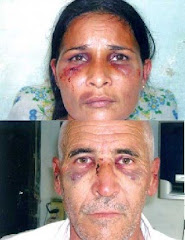
"That day, like the kids, I went out to play," says El Sexto / 14ymedio,
Luz Escobar
14ymedio, Luz Escobar, Havana, 27 January 2017 — Since late last
November Danilo Maldonado, El Sexto, has lived a nightmare. He passed
from one police station to another until he reached the dreaded
Combinado del Este jail in Havana. His crime: to write on several walls
a graffiti that read "He left," a few hours after the death of former
President Fidel Castro.
Last Saturday the street artist was released. A few hours after chatting
with 14ymedio, on Thursday, the Office Immigration and Aliens renewed
his passport and announced that he could leave the country. This
Friday, El Sexto traveled to Miami in the company of his romantic partner.
14ymedio. How did the news of the death of Fidel Castro hit you?
El Sexto. That day they woke me up with the news and I could not believe
it. The musician Gorki Aguila called me first, then other friends and
then my sister who told me, "Hey, Fidel died, really."
I dressed and, like the children, I went out to play. First I painted on
a wall of a bodega in the corner of 23 and F, and also in other places
until I arrived at the Habana Libre Hotel where a person who was
connected to the Wi-Fi zone transmitted it live by Facebook. From then,
the moment I made a graffiti with the phrase "He left" on the wall, spread.
Soon I went to my house, it was almost dawn and everything was very
quiet. When I was lying down, the police opened the door of the room and
took me by force. They beat me and threw me into their patrol car.
14ymedio. Did they ever explain the reason for the arrest?
El Sexto. They did not give me any explanation during the arrest and
they moved me to a unit in La Lisa, then to Guanabacoa, where they took
my phone, which has not yet reappeared. There they talked to me about a
crime of "damages. They then took me to the Zapata and C station, and
later to Vivac. From there to the prison in Valle Grande where on the
weekend of December 10, Human Rights Day, they put me in an isolation cell.
Then came Combinado del Este, where they received me with blows. They
practically hanged me and took all the civilian clothes I had. I was
forced to wear prison clothes.
14ymedio. Did you have any special surveillance in jail?
El Sexto. Every time I spoke on the phone, I was monitored. A
re-educator told me they would release me soon, but I realized that it
was to keep me calm and silent.
14ymedio. How did the other prisoners react?
El Sexto. They showed incredible solidarity. I painted a lot and tried
to get my drawings out of the jail. It was also good to know that so
many people were watching my case. In particular, I want to thank Yulier
Rodríguez, the graffiti artist, who was aware of my situation.
14ymedio. What plans do you have for now that you are back on the street?
El Sexto. The most immediate thing is to do everything to be able see my
daughter. In addition, I want to compile some of the drawings I did in
prison and make a book with those short texts and illustrations. The
children need to see other beautiful things, different from what they
see in that dogma with which they learn to read.
Source: "That day, like the kids, I went out to play," says El Sexto /
14ymedio, Luz Escobar – Translating Cuba -
https://translatingcuba.com/that-day-like-the-kids-i-went-out-to-play-says-el-sexto-14ymedio-luz-escobar/
Sunday, January 29, 2017

21 km for Cuban Political Prisoners
21 km for Cuban Political Prisoners / Luis Felipe Rojas
Luis Felipe Rojas, 21 January 2017 — This 29th of January I will be
running the Miami Half Marathon. It will be 21 kilometers of puffing and
panting while I think about the people who are in jail in Cuba because
of their opinions.
My legs and ankles will get unscrewed, my liver will tell me to stop
throughout the entire 13.1 miles of the run, which I will try to
survive. I come from an island where you are not allowed to criticise
whichever dictator happens to be there. Isn't 58 years a dreadfully long
time to dictate peoples' lives?
I am going to run for those who held up an anti-government
sign, those who uttered a slogan which clashed with the chorus of sheep
who say yes and think no. Also, for those who once took arms against the
oldest dictatorship in the west: the two Castro brothers.
I have spent exactly a year puffing away along the road for more than
two hours, in the stifling humidity of the Miami swamps, and the sun
which doesn't understand which season is which. Weights, treadmills,
long runs, speed runs, and running barefoot. I want to run through the
21 kilometers of this beautiful city and the endless alleys where you
can breathe the humidity of the Cuban jails.
I want to get to the 8 mile point, which will totally wear me out, like
somebody who gets put in the Guantánamo Penal Institution, "Combinado",
as it is known, the dismal jail in Boniato, Santiago de Cuba, or the
monstrous model prison at Km 8 in Camagüey.
I can do more, I know, but it's a gesture which will do for now. I only
want to invite you to watch the 15th Miami Marathon and Half Marathon. I
will run slowly, to savour and suffer every mile, every pace within the
pack of runners. This Sunday, more than a hundred Cuban political
prisoners will hear the shout Count! and some will be beaten.
The country that is Cuba which will be subdued by each kick, each
beating. A lock will be fastened. Someone will run along the road in
Miami to open it.
Translated by GH
Source: 21 km for Cuban Political Prisoners / Luis Felipe Rojas –
Translating Cuba -
https://translatingcuba.com/21-km-for-cuban-political-prisoners-luis-felipe-rojas/
Luis Felipe Rojas, 21 January 2017 — This 29th of January I will be
running the Miami Half Marathon. It will be 21 kilometers of puffing and
panting while I think about the people who are in jail in Cuba because
of their opinions.
My legs and ankles will get unscrewed, my liver will tell me to stop
throughout the entire 13.1 miles of the run, which I will try to
survive. I come from an island where you are not allowed to criticise
whichever dictator happens to be there. Isn't 58 years a dreadfully long
time to dictate peoples' lives?
I am going to run for those who held up an anti-government
sign, those who uttered a slogan which clashed with the chorus of sheep
who say yes and think no. Also, for those who once took arms against the
oldest dictatorship in the west: the two Castro brothers.
I have spent exactly a year puffing away along the road for more than
two hours, in the stifling humidity of the Miami swamps, and the sun
which doesn't understand which season is which. Weights, treadmills,
long runs, speed runs, and running barefoot. I want to run through the
21 kilometers of this beautiful city and the endless alleys where you
can breathe the humidity of the Cuban jails.
I want to get to the 8 mile point, which will totally wear me out, like
somebody who gets put in the Guantánamo Penal Institution, "Combinado",
as it is known, the dismal jail in Boniato, Santiago de Cuba, or the
monstrous model prison at Km 8 in Camagüey.
I can do more, I know, but it's a gesture which will do for now. I only
want to invite you to watch the 15th Miami Marathon and Half Marathon. I
will run slowly, to savour and suffer every mile, every pace within the
pack of runners. This Sunday, more than a hundred Cuban political
prisoners will hear the shout Count! and some will be beaten.
The country that is Cuba which will be subdued by each kick, each
beating. A lock will be fastened. Someone will run along the road in
Miami to open it.
Translated by GH
Source: 21 km for Cuban Political Prisoners / Luis Felipe Rojas –
Translating Cuba -
https://translatingcuba.com/21-km-for-cuban-political-prisoners-luis-felipe-rojas/
In Cuba Everyone Expects Favors From Trump
In Cuba Everyone Expects Favors From Trump / Iván García
Ivan Garcia, 28 January 2017 — Betting political capital or relying on
such an erratic guy as Donald Trump is not good business. Only the
desperate, shameless and amoral could argue that the New York magnate is
a convinced altruist or humanist.
Expecting the enraged Trump to negotiate strategies that address the
inefficient Cuban economy, or open doors to unstoppable emigration, or
give a blank check to the local opposition, is like throwing dice in a
casino to get national prosperity.
Until Wednesday, 25 January, when Raul Castro spoke at the 5th CELAC
Summit in the Dominican Republic, and said he was willing to maintain a
respectful dialog with Donald Trump, "but without making concessions,"
no official statement had been released in Cuba about the attitude of
the new president of the United States.
The silence of the state media and government spokespeople in the face
of Trump's insane projects was already embarrassing.
That a president, like the unpresentable Maduro or grizzly Castro, who
present themselves as socialists and communists, as a political strategy
would shut up or celebrate (in the case of Venezuela when Trump took
possession) the most retrograde and conservative of US presidents in the
last 30 years, was a contradiction.
On the other hand, where is the so-called "Latin America solidarity"
towards a nation like Mexico, at this moment when it is experiencing an
authentic low-intensity war, unfounded accusations and threats on the
part of Donald Trump.
Much of the current Latin America Left now in power is a fraud with no
more ideology or convictions that those emanating from its corrupt power
and the looting of the public treasury. Which is why they remain silent.
They prefer to establish a friendship with Trump to please their ally
Vladimir Putin, with an imperial strategy without dissembling, that
defends his fake doctrines of "humanism and social justice."
The new tenant of the White House has overturned the world order. He has
discredited many institutions, in his own country and internationally,
except those of the Kremlin. He is a threat to everyone. For the
establishment, the Republican Party and for liberal trade agreements
like the Trans-Pacific Partnership (TPP) and the North American Free
Trade Agreement (NAFTA).
Trump is not a Democrat. He is him. A great manipulator who has
conquered half of the American people with half truths and lies without
fundamentals. With his isolationism and protectionism, if he manages to
do it, the United States will regress to the level of Spain, at
least. His journey into the past is suicide.
People and societies grow. We no longer live in the stage of the
industrial revolution. The world has become a global village. Whether
Mr. Trump likes it or not.
A friend of mine who resides in Miami, a homeowner in the south of the
city, told me that she voted for Trump so that the clothing and toy
factories that once employed thousands would return to Florida.
To exemplify the horror of the new times, she mentioned that even the
fruit cocktail sold at Publix Supermarket is made in China. I am afraid
that this segment of deep America is rightly observing with dismay the
decapitalization of its cities and low wages.
But when the iPhone comes to be assembled in Cupertino, Apple's
California headquarters, and Fords are built in Detroit, then do not
complain about the skyrocketing prices. Global industries and brands
move to other countries because of the low costs.
Let's hope Trump solves the problem. Concerned as he is about fixing the
world in his own way and making America great again, he won't have much
room on his agenda for the Cuban issue.
Cuba is no longer a problem. Fidel Castro died and for decades the
regime has not subverted central America or Africa with arms and
guerrillas. The main ruling clan, five or six elders, who together have
been alive almost five hundred years, continue to hate "Yankee
imperialism" and bet on the end of modern capitalism.
They are by the book dictators. But power, money, family and the
biological factor have called them to change or come up with new
strategies. For one simple reason: if Cuba is still stranded between the
invasive marabou weed and lack of productivity, at some point social
conflicts will begin.
To pull the car forward you need a locomotive. Once it was Russia. Then
it was Chavez's petrodollars. Now they sigh for the green cash of the
former American enemy.
Meanwhile, on the Island, a wing of dissent is celebrating with the
arrival of Trump. With their political naivety they think that the new
president will increase the flow of dollars to the opposition and gain
them international recognition.
A serious error of not a few opponents: to believe that the problems in
Cuba can be solved by the United States. I tell you one thing: if we are
not able to conquer our universal rights, no one will do it for us.
Dependence always creates compromises. The fate of Cuba is a matter for
Cubans. Those of the diaspora and those of the island. No one else's. It
would be good for Trump to understand this.
Source: In Cuba Everyone Expects Favors From Trump / Iván García –
Translating Cuba -
https://translatingcuba.com/in-cuba-everyone-expects-favors-from-trump-ivn-garca/
Ivan Garcia, 28 January 2017 — Betting political capital or relying on
such an erratic guy as Donald Trump is not good business. Only the
desperate, shameless and amoral could argue that the New York magnate is
a convinced altruist or humanist.
Expecting the enraged Trump to negotiate strategies that address the
inefficient Cuban economy, or open doors to unstoppable emigration, or
give a blank check to the local opposition, is like throwing dice in a
casino to get national prosperity.
Until Wednesday, 25 January, when Raul Castro spoke at the 5th CELAC
Summit in the Dominican Republic, and said he was willing to maintain a
respectful dialog with Donald Trump, "but without making concessions,"
no official statement had been released in Cuba about the attitude of
the new president of the United States.
The silence of the state media and government spokespeople in the face
of Trump's insane projects was already embarrassing.
That a president, like the unpresentable Maduro or grizzly Castro, who
present themselves as socialists and communists, as a political strategy
would shut up or celebrate (in the case of Venezuela when Trump took
possession) the most retrograde and conservative of US presidents in the
last 30 years, was a contradiction.
On the other hand, where is the so-called "Latin America solidarity"
towards a nation like Mexico, at this moment when it is experiencing an
authentic low-intensity war, unfounded accusations and threats on the
part of Donald Trump.
Much of the current Latin America Left now in power is a fraud with no
more ideology or convictions that those emanating from its corrupt power
and the looting of the public treasury. Which is why they remain silent.
They prefer to establish a friendship with Trump to please their ally
Vladimir Putin, with an imperial strategy without dissembling, that
defends his fake doctrines of "humanism and social justice."
The new tenant of the White House has overturned the world order. He has
discredited many institutions, in his own country and internationally,
except those of the Kremlin. He is a threat to everyone. For the
establishment, the Republican Party and for liberal trade agreements
like the Trans-Pacific Partnership (TPP) and the North American Free
Trade Agreement (NAFTA).
Trump is not a Democrat. He is him. A great manipulator who has
conquered half of the American people with half truths and lies without
fundamentals. With his isolationism and protectionism, if he manages to
do it, the United States will regress to the level of Spain, at
least. His journey into the past is suicide.
People and societies grow. We no longer live in the stage of the
industrial revolution. The world has become a global village. Whether
Mr. Trump likes it or not.
A friend of mine who resides in Miami, a homeowner in the south of the
city, told me that she voted for Trump so that the clothing and toy
factories that once employed thousands would return to Florida.
To exemplify the horror of the new times, she mentioned that even the
fruit cocktail sold at Publix Supermarket is made in China. I am afraid
that this segment of deep America is rightly observing with dismay the
decapitalization of its cities and low wages.
But when the iPhone comes to be assembled in Cupertino, Apple's
California headquarters, and Fords are built in Detroit, then do not
complain about the skyrocketing prices. Global industries and brands
move to other countries because of the low costs.
Let's hope Trump solves the problem. Concerned as he is about fixing the
world in his own way and making America great again, he won't have much
room on his agenda for the Cuban issue.
Cuba is no longer a problem. Fidel Castro died and for decades the
regime has not subverted central America or Africa with arms and
guerrillas. The main ruling clan, five or six elders, who together have
been alive almost five hundred years, continue to hate "Yankee
imperialism" and bet on the end of modern capitalism.
They are by the book dictators. But power, money, family and the
biological factor have called them to change or come up with new
strategies. For one simple reason: if Cuba is still stranded between the
invasive marabou weed and lack of productivity, at some point social
conflicts will begin.
To pull the car forward you need a locomotive. Once it was Russia. Then
it was Chavez's petrodollars. Now they sigh for the green cash of the
former American enemy.
Meanwhile, on the Island, a wing of dissent is celebrating with the
arrival of Trump. With their political naivety they think that the new
president will increase the flow of dollars to the opposition and gain
them international recognition.
A serious error of not a few opponents: to believe that the problems in
Cuba can be solved by the United States. I tell you one thing: if we are
not able to conquer our universal rights, no one will do it for us.
Dependence always creates compromises. The fate of Cuba is a matter for
Cubans. Those of the diaspora and those of the island. No one else's. It
would be good for Trump to understand this.
Source: In Cuba Everyone Expects Favors From Trump / Iván García –
Translating Cuba -
https://translatingcuba.com/in-cuba-everyone-expects-favors-from-trump-ivn-garca/
Cuba Seeks to Have Defecting Physicians Return to Work in the Island
Cuba Seeks to Have Defecting Physicians Return to Work in the Island /
Juan Juan Almeida
Juan Juan Almeida, 27 January 2017 — With notable determination, the
Cuban government seeks to lure, or rather rope-in, physicians, nurses
and other healthcare workers who have defected while serving on medical
missions outside Cuba.
To this end, it has sent out a flyer in which it assures that the right
of return is guaranteed–just as long as they maintain a respectful
attitude toward the Revolution and have not joined counter-revolutionary
organizations.
Everyone knows that healthcare is a strategic factor in the development
and wellbeing of any society. The diplomacy of white coats, as the
export of medical services is also known, is among the principal revenue
sources of the Cuban state, and a very effective tool for political
influence.
Cuban medical doctors serve in remote areas. Cuba's contribution to the
fight against the Ebola virus in West Africa still resonates in the
memory of European, and even North American, politicians. For this
reason, any defection or escape poses a concern for the Island authorities.
A medical defector, besides becoming a bad investment for the country's
economy, also symbolizes the unquestionable link in the chain of
failures of the Cuban healthcare system. But a traitor who returns
signifies a social, economic and public relations triumph.
They must be induced to return. To this end–and to take advantage of the
tremendous uncertainty planted by the announced end of the "wet foot,
dry foot" policy and the Cuban medical professional parole program–the
government has started a campaign that covers every municipality of the
Island, visiting the families of every ungrateful malcontent health
worker, making them complete a form and using it as a communication link
or bait.
The form is as follows ("collaborator" in this case being a positive term):
Proposal to Exchange Information with Relatives of Ex-Collaborators
Date: Location:
Name and surnames of the ex-collaborator:
Name and surnames of the interviewed relative:
Relative's political affiliation:
Degree of kinship with the ex-collaborator:
Duty to Inform:
The family member is to inform the ex-collaborator regarding the Cuban
Government's disposition to guarantee the right of return to the
country, according to the requirements of the Migration Law, as long as
individual maintains an attitude of respect towards the Revolution, and
has not joined a counterrevolutionary organization.
Translated by: Alicia Barraqué Ellison
Source: Cuba Seeks to Have Defecting Physicians Return to Work in the
Island / Juan Juan Almeida – Translating Cuba -
https://translatingcuba.com/cuba-seeks-to-have-defecting-physicians-return-to-work-in-the-island-juan-juan-almeida/
Juan Juan Almeida
Juan Juan Almeida, 27 January 2017 — With notable determination, the
Cuban government seeks to lure, or rather rope-in, physicians, nurses
and other healthcare workers who have defected while serving on medical
missions outside Cuba.
To this end, it has sent out a flyer in which it assures that the right
of return is guaranteed–just as long as they maintain a respectful
attitude toward the Revolution and have not joined counter-revolutionary
organizations.
Everyone knows that healthcare is a strategic factor in the development
and wellbeing of any society. The diplomacy of white coats, as the
export of medical services is also known, is among the principal revenue
sources of the Cuban state, and a very effective tool for political
influence.
Cuban medical doctors serve in remote areas. Cuba's contribution to the
fight against the Ebola virus in West Africa still resonates in the
memory of European, and even North American, politicians. For this
reason, any defection or escape poses a concern for the Island authorities.
A medical defector, besides becoming a bad investment for the country's
economy, also symbolizes the unquestionable link in the chain of
failures of the Cuban healthcare system. But a traitor who returns
signifies a social, economic and public relations triumph.
They must be induced to return. To this end–and to take advantage of the
tremendous uncertainty planted by the announced end of the "wet foot,
dry foot" policy and the Cuban medical professional parole program–the
government has started a campaign that covers every municipality of the
Island, visiting the families of every ungrateful malcontent health
worker, making them complete a form and using it as a communication link
or bait.
The form is as follows ("collaborator" in this case being a positive term):
Proposal to Exchange Information with Relatives of Ex-Collaborators
Date: Location:
Name and surnames of the ex-collaborator:
Name and surnames of the interviewed relative:
Relative's political affiliation:
Degree of kinship with the ex-collaborator:
Duty to Inform:
The family member is to inform the ex-collaborator regarding the Cuban
Government's disposition to guarantee the right of return to the
country, according to the requirements of the Migration Law, as long as
individual maintains an attitude of respect towards the Revolution, and
has not joined a counterrevolutionary organization.
Translated by: Alicia Barraqué Ellison
Source: Cuba Seeks to Have Defecting Physicians Return to Work in the
Island / Juan Juan Almeida – Translating Cuba -
https://translatingcuba.com/cuba-seeks-to-have-defecting-physicians-return-to-work-in-the-island-juan-juan-almeida/
Ag to Trump - Help trade with Cuba
Ag to Trump: Help trade with Cuba
January 28, 2017 8:00 am • By Agriculture Coalition(0) Comments
On behalf of the undersigned U.S. agriculture, trade, commerce related
businesses and associations, we urge you to continue to show your
support for American agriculture by advancing the relationship between
the U.S. and Cuba and building on the progress that has already been made.
Net farm income is down 46 percent from just three years ago,
constituting the largest three-year drop since the start of the Great
Depression. This strain on the farm economy is felt across all sectors
of the industry and the thousands of small communities that make up
rural America.
The importance of trade to America's farmers and ranchers cannot be
overstated. The share of U.S. agricultural production exported overseas
is 20 percent by volume, with some sectors being much higher. For
example, exports account for over 70 percent of U.S. production of tree
nuts and cotton, over 60 percent of soybeans and over 50 percent of rice
and wheat. Positive farm income throughout America would not be possible
without increasing access to foreign markets, like Cuba.
Mr. President-elect, as an international business icon, you understand
how difficult it is to be competitive without the ability to extend
credit to your customers. We need the administration's support for
legislation that would remove these arbitrary and archaic restrictions
on extending credit for the purchase of agricultural commodities and
equipment.
Your support in removing outdated financing and trade barriers for
exporting agricultural products and equipment to our island neighbor
could significantly strengthen a U.S. industry which supports 17 million
jobs across the country, and can provide the Cuban people with
high-quality American-grown food.
Cuba imports nearly 80 percent of its food to feed a population of 11
million people and upwards of 3 million tourists annually. Cuba's $2
billion agriculture import market could provide tremendous benefits for
farmers across the country and help American agribusiness offset recent
losses.
In addition to the size of the Cuban market, its proximity to U.S. ports
allows for considerably lower shipping costs and shorter delivery times
than our foreign competitors. The logistical advantages alone should
make Cuba a common-sense partner for two-way commerce.
Instead, the federal government overreach has put American farmers at a
global disadvantage. U.S. agriculture continues to lose out to our
foreign competitors and our net sales have been steadily declining since
2009.
As a result of trade restrictions, the U.S. has fallen from its position
as the No. 1 supplier of agricultural products from 2003 to 2012, to now
the No. 5 supplier after the European Union, Brazil, Argentina and
Vietnam. The U.S. needs to be No. 1 again. Especially given many of
Cuba's imports, including rice, poultry, dairy, soy, wheat and corn,
make up more than 70 percent of what they import and they're all grown
right here in the U.S. by hardworking American farmers.
As a broad cross-section of rural America, we urge you not to take steps
to reverse progress made in normalizing relations with Cuba, and also
solicit your support for the agricultural business sector to expand
trade with Cuba to help American farmers and our associated industries.
It's time to put the 17 million American jobs associated with
agriculture ahead of a few hardline politicians in Washington.
We look forward to working closely with you and your team, and please
let us know if we can provide any assistance moving forward.
These comments are from a letter sent to President-elect Donald Trump by
a coalition of more than 100 U.S. organizations representing farmers and
agribusinesses. Full text of the letter is at http://bit.ly/2jFK3OL.
Source: Ag to Trump: Help trade with Cuba -
http://www.illinoisfarmertoday.com/news/opinion/ag-to-trump-help-trade-with-cuba/article_08c3d7b4-e3e5-11e6-a2b1-c7176da100df.html
January 28, 2017 8:00 am • By Agriculture Coalition(0) Comments
On behalf of the undersigned U.S. agriculture, trade, commerce related
businesses and associations, we urge you to continue to show your
support for American agriculture by advancing the relationship between
the U.S. and Cuba and building on the progress that has already been made.
Net farm income is down 46 percent from just three years ago,
constituting the largest three-year drop since the start of the Great
Depression. This strain on the farm economy is felt across all sectors
of the industry and the thousands of small communities that make up
rural America.
The importance of trade to America's farmers and ranchers cannot be
overstated. The share of U.S. agricultural production exported overseas
is 20 percent by volume, with some sectors being much higher. For
example, exports account for over 70 percent of U.S. production of tree
nuts and cotton, over 60 percent of soybeans and over 50 percent of rice
and wheat. Positive farm income throughout America would not be possible
without increasing access to foreign markets, like Cuba.
Mr. President-elect, as an international business icon, you understand
how difficult it is to be competitive without the ability to extend
credit to your customers. We need the administration's support for
legislation that would remove these arbitrary and archaic restrictions
on extending credit for the purchase of agricultural commodities and
equipment.
Your support in removing outdated financing and trade barriers for
exporting agricultural products and equipment to our island neighbor
could significantly strengthen a U.S. industry which supports 17 million
jobs across the country, and can provide the Cuban people with
high-quality American-grown food.
Cuba imports nearly 80 percent of its food to feed a population of 11
million people and upwards of 3 million tourists annually. Cuba's $2
billion agriculture import market could provide tremendous benefits for
farmers across the country and help American agribusiness offset recent
losses.
In addition to the size of the Cuban market, its proximity to U.S. ports
allows for considerably lower shipping costs and shorter delivery times
than our foreign competitors. The logistical advantages alone should
make Cuba a common-sense partner for two-way commerce.
Instead, the federal government overreach has put American farmers at a
global disadvantage. U.S. agriculture continues to lose out to our
foreign competitors and our net sales have been steadily declining since
2009.
As a result of trade restrictions, the U.S. has fallen from its position
as the No. 1 supplier of agricultural products from 2003 to 2012, to now
the No. 5 supplier after the European Union, Brazil, Argentina and
Vietnam. The U.S. needs to be No. 1 again. Especially given many of
Cuba's imports, including rice, poultry, dairy, soy, wheat and corn,
make up more than 70 percent of what they import and they're all grown
right here in the U.S. by hardworking American farmers.
As a broad cross-section of rural America, we urge you not to take steps
to reverse progress made in normalizing relations with Cuba, and also
solicit your support for the agricultural business sector to expand
trade with Cuba to help American farmers and our associated industries.
It's time to put the 17 million American jobs associated with
agriculture ahead of a few hardline politicians in Washington.
We look forward to working closely with you and your team, and please
let us know if we can provide any assistance moving forward.
These comments are from a letter sent to President-elect Donald Trump by
a coalition of more than 100 U.S. organizations representing farmers and
agribusinesses. Full text of the letter is at http://bit.ly/2jFK3OL.
Source: Ag to Trump: Help trade with Cuba -
http://www.illinoisfarmertoday.com/news/opinion/ag-to-trump-help-trade-with-cuba/article_08c3d7b4-e3e5-11e6-a2b1-c7176da100df.html
Cuba Needs Urgent and Substantial Reforms
Cuba Needs Urgent and Substantial Reforms
January 28, 2017
By Angel Vazquez Mourenza
HAVANA TIMES — I'd wanted to go to Cuba for a long time now, and I
finally went. I would have liked to have gone a long time ago, 25 years
ago for example, when the country seemed to be living better times
thanks to their relationship with the Soviet Union founded on mutual
interest. I decided to go now, understanding that it was now or never,
given the fact that it will soon be full of McDonalds.
Even though I was trying to think positively and excuse or justify all
of the negative and unpleasant things I saw, it really is hard to do so.
It is undoubtedly a beautiful country; we got a glimpse of Havana,
Vinales, Trinidad, Remedios and the Cayos. We saw Centro Habana,
practically in ruins, as if it had been struck by war, entire streets
lifted up, magnificent buildings without doors and windows.
It's true that the squares in Old Havana have been renovated, as well as
the main streets that go off them, but when you venture a little off of
these, we were back into what's normal here, that is to say, a
semi-destroyed city which has only been partially fixed up for foreign
tourists.
From a social point of view, I found many similar realities to those I
experienced when I traveled to Beijing, a country which doesn't have
private property and is experiencing a fierce Capitalism. I'm sure the
US blockade and the disappearance of the USSR had a lot to do with
Cuba's current situation, but you can't blame everything on external
enemies. A land where a hotel bell boy earns in a day the same as a
hospital surgeon would in a month isn't a decent country.
My impression of Cuba was that it was very expensive, even for tourists,
and inaccessible to Cubans who don't work closely to foreign tourists,
or don't deal on the black market. Nonetheless, it's surprising to see
Cubans in hotels which cost 120 euros/night, or in restaurants where you
spend 20 euros for a meal, which would mean 15 days of work for a
university professor. There is clearly corruption and nepotism involved.
On the other hand, you can't really expect much from a regime, where the
majority of its subjects are longing to leave and head towards the
enemy, and this is the feeling I went away with. I'm sure that this
longing to leave the island has a lot to do with the Cuban people's
difficult prospects of survival. The only industry I saw was that which
exploits tourists, and its main sector is firmly rooted in the past,
without technology, working the land with plows pulled by oxen and
cutting sugar cane with machetes.
Ultimately, this country, which apparently has great potential, is in
desperate need of immediate change, with political reforms and in its
productive system. It would be ideal for these reforms to come about
from the Cuban people's own freedom, for their own well-being, and not
those which are imposed on them by whoever wants to transform it into
their colony, casino or brothel.
Source: Cuba Needs Urgent and Substantial Reforms - Havana Times.org -
http://www.havanatimes.org/?p=123406
January 28, 2017
By Angel Vazquez Mourenza
HAVANA TIMES — I'd wanted to go to Cuba for a long time now, and I
finally went. I would have liked to have gone a long time ago, 25 years
ago for example, when the country seemed to be living better times
thanks to their relationship with the Soviet Union founded on mutual
interest. I decided to go now, understanding that it was now or never,
given the fact that it will soon be full of McDonalds.
Even though I was trying to think positively and excuse or justify all
of the negative and unpleasant things I saw, it really is hard to do so.
It is undoubtedly a beautiful country; we got a glimpse of Havana,
Vinales, Trinidad, Remedios and the Cayos. We saw Centro Habana,
practically in ruins, as if it had been struck by war, entire streets
lifted up, magnificent buildings without doors and windows.
It's true that the squares in Old Havana have been renovated, as well as
the main streets that go off them, but when you venture a little off of
these, we were back into what's normal here, that is to say, a
semi-destroyed city which has only been partially fixed up for foreign
tourists.
From a social point of view, I found many similar realities to those I
experienced when I traveled to Beijing, a country which doesn't have
private property and is experiencing a fierce Capitalism. I'm sure the
US blockade and the disappearance of the USSR had a lot to do with
Cuba's current situation, but you can't blame everything on external
enemies. A land where a hotel bell boy earns in a day the same as a
hospital surgeon would in a month isn't a decent country.
My impression of Cuba was that it was very expensive, even for tourists,
and inaccessible to Cubans who don't work closely to foreign tourists,
or don't deal on the black market. Nonetheless, it's surprising to see
Cubans in hotels which cost 120 euros/night, or in restaurants where you
spend 20 euros for a meal, which would mean 15 days of work for a
university professor. There is clearly corruption and nepotism involved.
On the other hand, you can't really expect much from a regime, where the
majority of its subjects are longing to leave and head towards the
enemy, and this is the feeling I went away with. I'm sure that this
longing to leave the island has a lot to do with the Cuban people's
difficult prospects of survival. The only industry I saw was that which
exploits tourists, and its main sector is firmly rooted in the past,
without technology, working the land with plows pulled by oxen and
cutting sugar cane with machetes.
Ultimately, this country, which apparently has great potential, is in
desperate need of immediate change, with political reforms and in its
productive system. It would be ideal for these reforms to come about
from the Cuban people's own freedom, for their own well-being, and not
those which are imposed on them by whoever wants to transform it into
their colony, casino or brothel.
Source: Cuba Needs Urgent and Substantial Reforms - Havana Times.org -
http://www.havanatimes.org/?p=123406
A look inside a growing private business in Cuba
A look inside a growing private business in Cuba
Packaging and printing company employs 35 workers, has provider in Hialeah
By Hatzel Vela - Reporter
Updated: 7:53 PM, January 27, 2017
HAVANA - A private business in Cuba is flourishing despite a lack in
materials.
Local 10 News reporter Hatzel Vela visited the small printing shop this
week in the Boyeros neighborhood, just outside of Havana.
The streets are not even paved yet, but Ruben Valladares has been able
to expand his business, Adorgraf, within five years.
The small packaging and printing company employs 35 workers, who press
logos on bags, shirts or whatever else.
Valladares started the business out of his home with a handful of people.
Now his business caters to hundreds of customers, most of them
state-owned industries.
Private business is a new world on the island, and Valladares said it's
a satisfying feeling for him to be able to employ other Cubans.
Yojani Cristin, who works at the business, said he makes about $70 a
week, $280 a month.
The average monthly salary in Cuba is $24.
Cristin lives close to his job and his wife works in the same shop as well.
Valladares said several American companies have helped him in business.
One of the companies is based in Pennsylvania and Valladares considers
it a sister company that has guided them from the beginning, helping
them learn business strategy.
He has also sent some of his workers to the U.S. for training.
He said their challenge remains getting the basic materials. The U.S.
embargo makes it harder, but they manage to get small quantities of
materials from the U.S. -- some of it from Hialeah.
Just in bags and packaging, Adorgraf has produced about $200,000 to
$300,000 annually.
"What matters is doing it with love," Valladares said.
Valladares hopes to move his business to a bigger space down the street.
Source: A look inside a growing private business in Cuba -
http://www.local10.com/news/cuba/a-look-inside-a-growing-private-business-in-cuba
Packaging and printing company employs 35 workers, has provider in Hialeah
By Hatzel Vela - Reporter
Updated: 7:53 PM, January 27, 2017
HAVANA - A private business in Cuba is flourishing despite a lack in
materials.
Local 10 News reporter Hatzel Vela visited the small printing shop this
week in the Boyeros neighborhood, just outside of Havana.
The streets are not even paved yet, but Ruben Valladares has been able
to expand his business, Adorgraf, within five years.
The small packaging and printing company employs 35 workers, who press
logos on bags, shirts or whatever else.
Valladares started the business out of his home with a handful of people.
Now his business caters to hundreds of customers, most of them
state-owned industries.
Private business is a new world on the island, and Valladares said it's
a satisfying feeling for him to be able to employ other Cubans.
Yojani Cristin, who works at the business, said he makes about $70 a
week, $280 a month.
The average monthly salary in Cuba is $24.
Cristin lives close to his job and his wife works in the same shop as well.
Valladares said several American companies have helped him in business.
One of the companies is based in Pennsylvania and Valladares considers
it a sister company that has guided them from the beginning, helping
them learn business strategy.
He has also sent some of his workers to the U.S. for training.
He said their challenge remains getting the basic materials. The U.S.
embargo makes it harder, but they manage to get small quantities of
materials from the U.S. -- some of it from Hialeah.
Just in bags and packaging, Adorgraf has produced about $200,000 to
$300,000 annually.
"What matters is doing it with love," Valladares said.
Valladares hopes to move his business to a bigger space down the street.
Source: A look inside a growing private business in Cuba -
http://www.local10.com/news/cuba/a-look-inside-a-growing-private-business-in-cuba
Saturday, January 28, 2017
Tania Bruguera Withdraws Her Work From the Bronx Museum - ‘A Moral Decision'
Tania Bruguera Withdraws Her Work From the Bronx Museum: 'A Moral
Decision' / 14ymedio
14ymedio, 27 January 2017 — The artist Tania Bruguera said Friday that
her withdrawal from the exhibition Wild Noise at the Bronx Museum "is a
moral decision." During a press conference in New York's Central Park,
the director of the Hannah Arendt International Institute of Artivism
(INSTAR) reported that "in Cuba there are artists who are ignored for
saying what they think."
This week Bruguera (born Havana, 1968) asked to withdraw her work Upside
Down in the exhibition that will open on Friday, February 17,
which includes pieces from some 30 artists from Cuba, including Los
Carpinteros, Glenda León, Ana Mendieta, Kcho, Wilfredo Prieto and
Humberto Díaz.
Initially the show was to be made up of works that Havana was going to
lend to the New York museum, but in the end it decide not to allow them
to be sent to the United States. US organizers tried to save the
situation with the presentation of 60 pieces of Cuban art collected from
other parts of the world.
Bruguera said it would be hypocritical that she is not allowed to
exhibit her work in Cuba, but that her work would be used to clean up
the image of what is happening on the island.
Bruguera said it would be hypocritical that she is not allowed to
exhibit her work in Cuba, but that her work would be used to clean up
the image of what is happening on the island. The artist pointed to the
director of the Holly Block museum, for playing an important role in
everything that happened.
This Friday, the artist stressed that her withdrawal from the show is
part of "a long tradition among artists in the case when a context
implies complicity or a political alliance that endangers the meaning of
the work."
"Being in this exhibition would be to obviate a part of history" that of
the censored. "The Wild Noise exposition is contaminated by the
political interests that hide the censorship that exists in Cuba," the
artist said.
At the press conference, Bruguera proposed donating to the victims of
Hurricane Matthew the $2.5 million that the Bronx Museum, along with
other institutions and individuals, "are collecting to reproduce a
sculpture in Central Park and donate it to a country which already has a
Martí on every corner."
"If it is to help the Cuban people, it is not helped by projects of
personal vanity," said Bruguera, who asked for "institutional
transparency from the Cuban government regarding the use and destination
of donations and aid from governments, non-governmental institutions and
individuals."
Source: Tania Bruguera Withdraws Her Work From the Bronx Museum: 'A
Moral Decision' / 14ymedio – Translating Cuba -
http://translatingcuba.com/tania-bruguera-withdraws-her-work-from-the-bronx-museum-a-moral-decision-14ymedio/
Decision' / 14ymedio
14ymedio, 27 January 2017 — The artist Tania Bruguera said Friday that
her withdrawal from the exhibition Wild Noise at the Bronx Museum "is a
moral decision." During a press conference in New York's Central Park,
the director of the Hannah Arendt International Institute of Artivism
(INSTAR) reported that "in Cuba there are artists who are ignored for
saying what they think."
This week Bruguera (born Havana, 1968) asked to withdraw her work Upside
Down in the exhibition that will open on Friday, February 17,
which includes pieces from some 30 artists from Cuba, including Los
Carpinteros, Glenda León, Ana Mendieta, Kcho, Wilfredo Prieto and
Humberto Díaz.
Initially the show was to be made up of works that Havana was going to
lend to the New York museum, but in the end it decide not to allow them
to be sent to the United States. US organizers tried to save the
situation with the presentation of 60 pieces of Cuban art collected from
other parts of the world.
Bruguera said it would be hypocritical that she is not allowed to
exhibit her work in Cuba, but that her work would be used to clean up
the image of what is happening on the island.
Bruguera said it would be hypocritical that she is not allowed to
exhibit her work in Cuba, but that her work would be used to clean up
the image of what is happening on the island. The artist pointed to the
director of the Holly Block museum, for playing an important role in
everything that happened.
This Friday, the artist stressed that her withdrawal from the show is
part of "a long tradition among artists in the case when a context
implies complicity or a political alliance that endangers the meaning of
the work."
"Being in this exhibition would be to obviate a part of history" that of
the censored. "The Wild Noise exposition is contaminated by the
political interests that hide the censorship that exists in Cuba," the
artist said.
At the press conference, Bruguera proposed donating to the victims of
Hurricane Matthew the $2.5 million that the Bronx Museum, along with
other institutions and individuals, "are collecting to reproduce a
sculpture in Central Park and donate it to a country which already has a
Martí on every corner."
"If it is to help the Cuban people, it is not helped by projects of
personal vanity," said Bruguera, who asked for "institutional
transparency from the Cuban government regarding the use and destination
of donations and aid from governments, non-governmental institutions and
individuals."
Source: Tania Bruguera Withdraws Her Work From the Bronx Museum: 'A
Moral Decision' / 14ymedio – Translating Cuba -
http://translatingcuba.com/tania-bruguera-withdraws-her-work-from-the-bronx-museum-a-moral-decision-14ymedio/
January Notes
January Notes / Fernando Dámaso
Fernando Damaso, 26 January 2017 — While the Cuban authorities exhaust
the citizens by talking about the past and the future, they are worried
about the absurd present, which they want to leave as quickly as possible.
Against it conspires the totalitarian regime in the country, and the old
age of the majority of its main leaders, clinging to power as if it were
a divine gift with an eternal character.
Nearly 58 years of demented experiments and failures, under the banner
of a "Biran-style*" tropical socialism, have permeated the personality
of Cubans, making them docile and fanatic, applauding those who oppress
them and thanking to those responsible for their misfortunes.
It is an unfortunate situation that, when these times are past, it will
take time to be overcome. Sometimes it even seems to strike a national
cowardice, which limits any action to change it.
Its main manifestation is widespread pessimism, the reacting to tensions
through flight, alcoholism, drug addiction, personal violence,
antisocial attitudes and disrespect. All this directly attacks the
health of society, making it an easy prey to extremisms and dogmatisms
of all kinds.
The lack of the components of a civil society, outside the officialdom,
such as independent social and political organizations, free unions and
legislative and judicial powers, independent of the executive, makes the
situation more complex.
*Translator's note: The Castro brothers were born in the town of Biran
in Eastern Cuba.
Source: January Notes / Fernando Dámaso – Translating Cuba -
http://translatingcuba.com/january-notes-fernando-dmaso/
Fernando Damaso, 26 January 2017 — While the Cuban authorities exhaust
the citizens by talking about the past and the future, they are worried
about the absurd present, which they want to leave as quickly as possible.
Against it conspires the totalitarian regime in the country, and the old
age of the majority of its main leaders, clinging to power as if it were
a divine gift with an eternal character.
Nearly 58 years of demented experiments and failures, under the banner
of a "Biran-style*" tropical socialism, have permeated the personality
of Cubans, making them docile and fanatic, applauding those who oppress
them and thanking to those responsible for their misfortunes.
It is an unfortunate situation that, when these times are past, it will
take time to be overcome. Sometimes it even seems to strike a national
cowardice, which limits any action to change it.
Its main manifestation is widespread pessimism, the reacting to tensions
through flight, alcoholism, drug addiction, personal violence,
antisocial attitudes and disrespect. All this directly attacks the
health of society, making it an easy prey to extremisms and dogmatisms
of all kinds.
The lack of the components of a civil society, outside the officialdom,
such as independent social and political organizations, free unions and
legislative and judicial powers, independent of the executive, makes the
situation more complex.
*Translator's note: The Castro brothers were born in the town of Biran
in Eastern Cuba.
Source: January Notes / Fernando Dámaso – Translating Cuba -
http://translatingcuba.com/january-notes-fernando-dmaso/
The Gran Teatro De La Habana Is Guarded Against Ticket Scalpers
The Gran Teatro De La Habana Is Guarded Against Ticket Scalpers / 14ymedio
14ymedio, Havana, 26 January 2016 — The National Council of the
Performing Arts has taken measures against the resale of tickets at the
Alicia Alonso Gran Teatro de La Habana. The Ministry of Culture,
which controls the theater, emphasized that the new controls have been
established jointly with the venue to eliminate "the unscrupulous action
of the resellers."
Each person who lines up to get seats can appear at the window only once
and must show their identity card. From now on, an individual can only
buy four tickets to one performance, or two for each event if they are
buying for two different events.
The Security and Institutions of Culture Company will increase the
number of agents around the ticket window and the theater doors when
there is a show of great interest to the public. In addition, the
National Revolutionary Police will identify possible resellers.
"We are confident that the planned measures will help us stop the
speculators in a decisive way, we will work so the Alicia Alonso Gran
Teatro de La Habana remains a referential place for young people," the
venue has stated in a note published in Juventud Rebelde (Rebel Youth)
newspaper.
Earlier this month, in the Letter to the Editor section of that
newspaper, the journalist Jose Alejandro Rodriguez complained that "the
Cuban State has financed an extremely costly repair of the Alicia Alonso
Gran Teatro de La Habana" and "it no more than reopens the doors of the
venue, and the traditional claque of resellers has regrouped and
exercises their hegemony in the line at the entrances for the
performances of the Cuban National Ballet."
The reporter published the letter of an indignant reader who explained
how the resellers would offer tickets to the place for 10 Cuban
convertible pesos (CUC – about $10 US), when the official price is 30
Cuban pesos (about $1.20 US). "If they try to sell them right before the
performance starts, it's 15 CUC," she complained.
In October of last year this newspaper mentioned an ad on the popular
classified site, Revolico, saying that "reasonably priced tickets for
the Ballet Festival" were for sale. In that case, in addition to those
sold by the so-called coleros (people at the line), tickets were also
available from ones given to intellectuals, artists and people linked to
the Cuban National Ballet, at a cost of between 20 and 25 Convertible pesos.
Source: The Gran Teatro De La Habana Is Guarded Against Ticket Scalpers
/ 14ymedio – Translating Cuba -
http://translatingcuba.com/the-gran-teatro-de-la-habana-is-guarded-against-ticket-scalpers-14ymedio/
14ymedio, Havana, 26 January 2016 — The National Council of the
Performing Arts has taken measures against the resale of tickets at the
Alicia Alonso Gran Teatro de La Habana. The Ministry of Culture,
which controls the theater, emphasized that the new controls have been
established jointly with the venue to eliminate "the unscrupulous action
of the resellers."
Each person who lines up to get seats can appear at the window only once
and must show their identity card. From now on, an individual can only
buy four tickets to one performance, or two for each event if they are
buying for two different events.
The Security and Institutions of Culture Company will increase the
number of agents around the ticket window and the theater doors when
there is a show of great interest to the public. In addition, the
National Revolutionary Police will identify possible resellers.
"We are confident that the planned measures will help us stop the
speculators in a decisive way, we will work so the Alicia Alonso Gran
Teatro de La Habana remains a referential place for young people," the
venue has stated in a note published in Juventud Rebelde (Rebel Youth)
newspaper.
Earlier this month, in the Letter to the Editor section of that
newspaper, the journalist Jose Alejandro Rodriguez complained that "the
Cuban State has financed an extremely costly repair of the Alicia Alonso
Gran Teatro de La Habana" and "it no more than reopens the doors of the
venue, and the traditional claque of resellers has regrouped and
exercises their hegemony in the line at the entrances for the
performances of the Cuban National Ballet."
The reporter published the letter of an indignant reader who explained
how the resellers would offer tickets to the place for 10 Cuban
convertible pesos (CUC – about $10 US), when the official price is 30
Cuban pesos (about $1.20 US). "If they try to sell them right before the
performance starts, it's 15 CUC," she complained.
In October of last year this newspaper mentioned an ad on the popular
classified site, Revolico, saying that "reasonably priced tickets for
the Ballet Festival" were for sale. In that case, in addition to those
sold by the so-called coleros (people at the line), tickets were also
available from ones given to intellectuals, artists and people linked to
the Cuban National Ballet, at a cost of between 20 and 25 Convertible pesos.
Source: The Gran Teatro De La Habana Is Guarded Against Ticket Scalpers
/ 14ymedio – Translating Cuba -
http://translatingcuba.com/the-gran-teatro-de-la-habana-is-guarded-against-ticket-scalpers-14ymedio/
We are very afraid
We are very afraid / Cubanet, Augusto Cesar San Martin and Rudy Cabrera
Cubanet, Augusto Cesar San Martin and Rudy Cabrera, Havana, 23 January
2017 – In 2014, Cuban doctor Nelson Cabrera Quinta, his wife and two
teenage children were declared illegal occupants of his home located at
No. 1705 – 200th Street in the Havana neighborhood of Siboney. The house
has been part of the family patrimony for 40 years and they have been
been permanently residing in it for 12 years.
Six months after Dr. Cabrera left on an official Cuban medical mission
in Saudi Arabia, his wife Bisaida Azahares received a notification from
the Ministry of Construction to evacuate the house immediately.
"In the resolution it says: Leave the house [and go to] to your place of
origin. We do not have options and much less a place to go… We are
afraid, we have been told so many things about the eviction, that they
are very violent people who open the doors, they break them down, they
come in and they just put you out and that's it. Imagine yourself, alone
with two children," says Bisaida.
Dr. Cabrera was warned that when he traveled abroad as a health worker,
that they were going to evict his family from the house. For a long time
that was the reason he rejected the chance to serve on several
collaboration missions, and continued to direct one of the polyclinics
in the Playa municipality. The doctor lowered his guard when the
municipal president of the People's Power assured him that while he was
on a government mission, there would be no "forced extraction" at his house.
The right to reside in a garage
The resolution of "forced extraction", the Cuban "neo-eviction," is the
result of a claim filed five years ago by the University of Medical
Sciences of Havana (UCMH) against Nelson Cabrera Quintana and his
family. According to the institution, the family lives in one of the 17
houses owned by the school in the residential division of Siboney,
considered a "frozen zone," which means the family registered as living
in the residence must be "officially verified."
The Cabrera family resides in the garage of a mansion, divided into
three units. One-third of the house was granted in 1979 to the
grandfather Gilberto Falcón Darriba, because of his work; he was a
founder of UCMH, then the Institute of Medical Sciences of Havana, where
he worked for more than 40 years.
Falcón lacked the mental and physical health to claim his property
rights when he arrived at the end of 15 years residing in the
garage. According to the provisions of the Ministry of Public Health,
the houses are granted after having been leased for 15 years, giving the
property to the lessee. Librada Arancibia, Falcon's wife was on the
verge of gaining title after her husband died in the United States,
afflicted with Parkinson's Disease.
"My grandmother was not recognized as the owner even though she
initiated the process. I have documents from various UCMH lawyers who
explicitly say that they were being deprived of the house they lived in
for more than 20 years, and that they had paid the bank for in full,"
says Nelson.
However, UCMH recognized the right of the elderly woman to live until
the last day of her life in the residence transformed into a fortress.
Siboney, residential enclave
Each third of the residence has a different history, tied to its being
property of the UCMH. On the main floor of the house, lived Dr. Caridad
Dovale, retired from the UCMH, who emigrated to the United States in
2012. According to a document from the university center, her husband
stayed in Cuba, managing to obtain the right to the property. In 2016
Dovales returned to Cuba, was repatriated and regained ownership of the
house, as a university doctor.
The so-called "part behind," belonging to the third, was claimed by the
educational institution in 2013. Nelson affirms that Armando Hart
Dávalos (former Minister of Education and Culture) and his wife
interceded for those residents, and managed to get the eviction process
cancelled.
The Cabrera family asks: Why if Falcón emigrated to the US, his wife did
not get the benefit of housing, like the neighbors above? What has more
value in Cuba, citizen rights or a good godfather in the government?
The answer is clear in the Siboney area, a neighborhood full of
mansions built before 1959 by the so-called "bourgeoisie," but which
today is dominated by the government upper class.
Source: We are very afraid / Cubanet, Augusto Cesar San Martin and Rudy
Cabrera – Translating Cuba -
http://translatingcuba.com/we-are-very-afraid-cubanet-augusto-cesar-san-martin-and-rudy-cabrera/
Cubanet, Augusto Cesar San Martin and Rudy Cabrera, Havana, 23 January
2017 – In 2014, Cuban doctor Nelson Cabrera Quinta, his wife and two
teenage children were declared illegal occupants of his home located at
No. 1705 – 200th Street in the Havana neighborhood of Siboney. The house
has been part of the family patrimony for 40 years and they have been
been permanently residing in it for 12 years.
Six months after Dr. Cabrera left on an official Cuban medical mission
in Saudi Arabia, his wife Bisaida Azahares received a notification from
the Ministry of Construction to evacuate the house immediately.
"In the resolution it says: Leave the house [and go to] to your place of
origin. We do not have options and much less a place to go… We are
afraid, we have been told so many things about the eviction, that they
are very violent people who open the doors, they break them down, they
come in and they just put you out and that's it. Imagine yourself, alone
with two children," says Bisaida.
Dr. Cabrera was warned that when he traveled abroad as a health worker,
that they were going to evict his family from the house. For a long time
that was the reason he rejected the chance to serve on several
collaboration missions, and continued to direct one of the polyclinics
in the Playa municipality. The doctor lowered his guard when the
municipal president of the People's Power assured him that while he was
on a government mission, there would be no "forced extraction" at his house.
The right to reside in a garage
The resolution of "forced extraction", the Cuban "neo-eviction," is the
result of a claim filed five years ago by the University of Medical
Sciences of Havana (UCMH) against Nelson Cabrera Quintana and his
family. According to the institution, the family lives in one of the 17
houses owned by the school in the residential division of Siboney,
considered a "frozen zone," which means the family registered as living
in the residence must be "officially verified."
The Cabrera family resides in the garage of a mansion, divided into
three units. One-third of the house was granted in 1979 to the
grandfather Gilberto Falcón Darriba, because of his work; he was a
founder of UCMH, then the Institute of Medical Sciences of Havana, where
he worked for more than 40 years.
Falcón lacked the mental and physical health to claim his property
rights when he arrived at the end of 15 years residing in the
garage. According to the provisions of the Ministry of Public Health,
the houses are granted after having been leased for 15 years, giving the
property to the lessee. Librada Arancibia, Falcon's wife was on the
verge of gaining title after her husband died in the United States,
afflicted with Parkinson's Disease.
"My grandmother was not recognized as the owner even though she
initiated the process. I have documents from various UCMH lawyers who
explicitly say that they were being deprived of the house they lived in
for more than 20 years, and that they had paid the bank for in full,"
says Nelson.
However, UCMH recognized the right of the elderly woman to live until
the last day of her life in the residence transformed into a fortress.
Siboney, residential enclave
Each third of the residence has a different history, tied to its being
property of the UCMH. On the main floor of the house, lived Dr. Caridad
Dovale, retired from the UCMH, who emigrated to the United States in
2012. According to a document from the university center, her husband
stayed in Cuba, managing to obtain the right to the property. In 2016
Dovales returned to Cuba, was repatriated and regained ownership of the
house, as a university doctor.
The so-called "part behind," belonging to the third, was claimed by the
educational institution in 2013. Nelson affirms that Armando Hart
Dávalos (former Minister of Education and Culture) and his wife
interceded for those residents, and managed to get the eviction process
cancelled.
The Cabrera family asks: Why if Falcón emigrated to the US, his wife did
not get the benefit of housing, like the neighbors above? What has more
value in Cuba, citizen rights or a good godfather in the government?
The answer is clear in the Siboney area, a neighborhood full of
mansions built before 1959 by the so-called "bourgeoisie," but which
today is dominated by the government upper class.
Source: We are very afraid / Cubanet, Augusto Cesar San Martin and Rudy
Cabrera – Translating Cuba -
http://translatingcuba.com/we-are-very-afraid-cubanet-augusto-cesar-san-martin-and-rudy-cabrera/
Havana ’Paladares’, Between Glamor and Poverty
Havana 'Paladares', Between Glamor and Poverty / Iván García
Ivan Garcia 25 January 2017 — In the poor and mostly black neighborhood
of San Leopoldo, cradle of the picaresque, clandestine businesses and
the sex trade in Havana, is found La Guarida, probably the best private
restaurant in Cuba — which are known as "paladares."
The business is run by Enrique Nunez, a telecommunications engineer
converted into an empresario of the ovens, and dinner for four people,
wine included, is no less than 160 dollars, from the wallets of some
tourists dazzled by the opening of small family businesses on the part
of the Communist regime.
Folklore, poverty and glamor at times click. La Guarida is flanked by a
rundown tenement of narrow rooms and an ostentatious central staircase
with hints of art deco.
On the same street, where the neighbors sit in iron armchairs and on
little wooden benches in the doorways of their houses, brand new cars
with diplomatic plates park, with tourists or government heavyweights.
Romello, 65, born and raised on Virtudes Street, very close to the
prestigious paladar, remembers when "the Queen of Spain, Maradona and a
ton of famous people have come here to eat."
But asked if he has ever dined or had some drinks in La Guarida, the guy
smiles and shakes his head. "What it is man, this paladar is for
millionaires. They tell me a beer costs five bucks and a plate of shrimp
is no less than 15," he says, while walking over to the wall of the
Malecon with an improvised fishing pole.
Reservations at La Guardia can be made on the internet. "But it's a
hassle to book a table. It's always full," says a Spaniard. In paladares
like San Cristóbal, La Guarida or La Fontana, recommended by
international haute cuisine magazines, and where a family dinner can
cost more than 200 dollars, it is almost mission impossible to reserve a
table the same day.
There is a route in Havana, inserted into the usual tourist itineraries,
whether it is the area of the old city, El Vedado or Miramar, where
lunch in a private restaurant is at least 25 dollars a person.
The success of the paladares on the island is a combination of the
tenacity and creativity of their owners. Despite the scarcity of
supplies, traditional or international cuisine is given a touch of the
gourmet with a certain level of quality.
They have been catapulted to success thanks to the thunderous failure of
the state food service, full of idlers and thieves who are profiting
from the food they can steal from the diners.
Thomas, a Swiss tourist, says that in the Parque Central Hotel
restaurant, supposedly five stars, "a dinner for four people, with
tomato soup and sirloin steak which did not stand out in its
presentation, cost me 120 dollars. So when I visit Cuba I prefer to eat
in the paladares. Although the prices go up every year and sometimes the
quality doesn't. But it is always preferable to the state restaurants."
According to information published on 20 October 2016 in the state
newspaper Granma, in Havana there are more than 500 private restaurants.
But around 150 of them would be classified in the category of most
demanding and successful paladares.
And it is precisely in this category where the prices have increased by
30 percent in the last six years. "And if we compare the prices to 15 or
20 years ago, then it's an increase of 50 percent. In 2000, a person
could eat in a good quality paladar for 8 or 10 dollars. Now there's
nothing under 20 or 25," says an Italian married to a Cuban.
If a segment of tourists, businessmen and diplomats complain about the
rise in prices in the private restaurants of the capital, imagine the
Havanans. Most have never sat at a table in a five-star paladar. Many
can't even go to the smallest cafe. In Havana there are private food
businesses in classes A, B and C, depending on one's wallet.
Anselmo, retired, sells loose cigarettes in a nursing home just a
stone's throw from Villa Hernandez, a paladar next to Parque Córdoba, in
the populous neighborhood of La Viñora. "I've never bothered to look at
that paladar. What for, with my shitty pension I could never eat there.
What remains for us old people and those who earn miserable wages is
eating bread with a speck of fish or death-like pizzas from the little
stands run by the state."
In state coffee shops, almost always dirty, with poor service and poorly
prepared food, a pizza costs five Cuban pesos (about 20 cents US) and
it's fifteen pesos for a serving of congrí rice with a chicken
thigh. "That's the food bought by beggars, alcoholics, the old and
retired. Quality leaves a lot to be desired," says Mildred, a high schoo
student.
In the food businesses further away from Old Havana, Vedado or Miramar,
the areas most visited by tourists, the menu is usually cheaper but the
choices are very limited.
In general, plates are based on smoked chicken and pork. "But it is
common that the waiter, taking your order, tells you that 'off the menu'
there is seafood, beef, good fish, lamb and even loggerhead," says
Dianelis, a hairdresser, who usually eats at paladares in Santos Suarez,
Lyuano and Lawton — Havana neighborhoods farther from the center.
And there is a wide sector of private businesses, who, to improve their
profits, use double bookkeeping or financial tricks as a way to avoid taxes.
To eat even medium quality food in Cuba it is recommended you visit a
private restaurant. At special dates — birthdays, weddings,
quinceañeras, families go to paladares to celebrate. If they are short
of money they go to the cheapest ones or places that serve more food.
"Gourmet food is for foreigners. When we Cubans have to eat on the
street, we want to fill our bellies," says Ignacio. But there are not
many who can afford to do so.
Source: Havana 'Paladares', Between Glamor and Poverty / Iván García –
Translating Cuba -
http://translatingcuba.com/havana-paladares-between-glamor-and-poverty-ivn-garca/
Ivan Garcia 25 January 2017 — In the poor and mostly black neighborhood
of San Leopoldo, cradle of the picaresque, clandestine businesses and
the sex trade in Havana, is found La Guarida, probably the best private
restaurant in Cuba — which are known as "paladares."
The business is run by Enrique Nunez, a telecommunications engineer
converted into an empresario of the ovens, and dinner for four people,
wine included, is no less than 160 dollars, from the wallets of some
tourists dazzled by the opening of small family businesses on the part
of the Communist regime.
Folklore, poverty and glamor at times click. La Guarida is flanked by a
rundown tenement of narrow rooms and an ostentatious central staircase
with hints of art deco.
On the same street, where the neighbors sit in iron armchairs and on
little wooden benches in the doorways of their houses, brand new cars
with diplomatic plates park, with tourists or government heavyweights.
Romello, 65, born and raised on Virtudes Street, very close to the
prestigious paladar, remembers when "the Queen of Spain, Maradona and a
ton of famous people have come here to eat."
But asked if he has ever dined or had some drinks in La Guarida, the guy
smiles and shakes his head. "What it is man, this paladar is for
millionaires. They tell me a beer costs five bucks and a plate of shrimp
is no less than 15," he says, while walking over to the wall of the
Malecon with an improvised fishing pole.
Reservations at La Guardia can be made on the internet. "But it's a
hassle to book a table. It's always full," says a Spaniard. In paladares
like San Cristóbal, La Guarida or La Fontana, recommended by
international haute cuisine magazines, and where a family dinner can
cost more than 200 dollars, it is almost mission impossible to reserve a
table the same day.
There is a route in Havana, inserted into the usual tourist itineraries,
whether it is the area of the old city, El Vedado or Miramar, where
lunch in a private restaurant is at least 25 dollars a person.
The success of the paladares on the island is a combination of the
tenacity and creativity of their owners. Despite the scarcity of
supplies, traditional or international cuisine is given a touch of the
gourmet with a certain level of quality.
They have been catapulted to success thanks to the thunderous failure of
the state food service, full of idlers and thieves who are profiting
from the food they can steal from the diners.
Thomas, a Swiss tourist, says that in the Parque Central Hotel
restaurant, supposedly five stars, "a dinner for four people, with
tomato soup and sirloin steak which did not stand out in its
presentation, cost me 120 dollars. So when I visit Cuba I prefer to eat
in the paladares. Although the prices go up every year and sometimes the
quality doesn't. But it is always preferable to the state restaurants."
According to information published on 20 October 2016 in the state
newspaper Granma, in Havana there are more than 500 private restaurants.
But around 150 of them would be classified in the category of most
demanding and successful paladares.
And it is precisely in this category where the prices have increased by
30 percent in the last six years. "And if we compare the prices to 15 or
20 years ago, then it's an increase of 50 percent. In 2000, a person
could eat in a good quality paladar for 8 or 10 dollars. Now there's
nothing under 20 or 25," says an Italian married to a Cuban.
If a segment of tourists, businessmen and diplomats complain about the
rise in prices in the private restaurants of the capital, imagine the
Havanans. Most have never sat at a table in a five-star paladar. Many
can't even go to the smallest cafe. In Havana there are private food
businesses in classes A, B and C, depending on one's wallet.
Anselmo, retired, sells loose cigarettes in a nursing home just a
stone's throw from Villa Hernandez, a paladar next to Parque Córdoba, in
the populous neighborhood of La Viñora. "I've never bothered to look at
that paladar. What for, with my shitty pension I could never eat there.
What remains for us old people and those who earn miserable wages is
eating bread with a speck of fish or death-like pizzas from the little
stands run by the state."
In state coffee shops, almost always dirty, with poor service and poorly
prepared food, a pizza costs five Cuban pesos (about 20 cents US) and
it's fifteen pesos for a serving of congrí rice with a chicken
thigh. "That's the food bought by beggars, alcoholics, the old and
retired. Quality leaves a lot to be desired," says Mildred, a high schoo
student.
In the food businesses further away from Old Havana, Vedado or Miramar,
the areas most visited by tourists, the menu is usually cheaper but the
choices are very limited.
In general, plates are based on smoked chicken and pork. "But it is
common that the waiter, taking your order, tells you that 'off the menu'
there is seafood, beef, good fish, lamb and even loggerhead," says
Dianelis, a hairdresser, who usually eats at paladares in Santos Suarez,
Lyuano and Lawton — Havana neighborhoods farther from the center.
And there is a wide sector of private businesses, who, to improve their
profits, use double bookkeeping or financial tricks as a way to avoid taxes.
To eat even medium quality food in Cuba it is recommended you visit a
private restaurant. At special dates — birthdays, weddings,
quinceañeras, families go to paladares to celebrate. If they are short
of money they go to the cheapest ones or places that serve more food.
"Gourmet food is for foreigners. When we Cubans have to eat on the
street, we want to fill our bellies," says Ignacio. But there are not
many who can afford to do so.
Source: Havana 'Paladares', Between Glamor and Poverty / Iván García –
Translating Cuba -
http://translatingcuba.com/havana-paladares-between-glamor-and-poverty-ivn-garca/
Taking Stock of the Flood Damage in Havana
Taking Stock of the Flood Damage in Havana / 14ymedio
14ymedio, Luz Escobar, Havana, 24 January 2017 — The hectically busy
residents of the areas bordering Havana's Malecón, on Tuesday, tried to
repair the damages left by seawater flooding over the seawall the
previous day. The strong northwestern winds associated with an extensive
extratropical low pressure over the state of South Carolina have
submerged the dreams of many families.
"It was strong and very fast, not as moderate as they said on
television. There was a lot of water flowing," says Lázaro, a resident
of Arcos Passage on 3rd Avenue and A Street in the Vedado district.
"It was not like other years because this time they did not warn us in
time and the team of people who always help with the evacuation did not
show up."
Victoria, a resident of the same street, is sweeping the sand that
reached to her doorway. At the same time last year there was something
similar in the area, "but not so intense," she says, tired of all the
hustle and bustle.
Wet mattresses, refrigerators damaged by salt and humidity, and the
lamentations of the unprepared state, are part of the scene along the
Malecon.
While taking a break, Victoria tells her neighbor that the water once
again reached Calzada but this year it also got as far as Linea Street.
She says that in her house "all night I couldn't sleep because of the
beating of the waves," and regrets that "they have not cleaned the
streets as they are doing in front of the Meliá Cohiba hotel."
The floods went from moderate to strong in a few hours on the north
coast, including the Havana Malecon, taking many unawares. Just after
four in the afternoon one could see cars drifting on the water, and the
sewers were black holes where the currents swirled.
On A and B Streets water penetrated more than four blocks into the
city. Several warehouses, like the one at 3rd and C, lost part of
their merchandise because the workers did not have time to raise up all
the sacks of rice, sugar or beans.
One family has lost everything because their house was a garage turned
into a home because of the deficit of housing. "We didn't see it coming
and by the time we realized, everything was underwater," was all that
the woman managed to repeat, as she rescued swollen chairs from a
mixture of seawater, mud and garbage.
In front of the Labiofam offices at 1st and B, cars "had all four tires
in the air," explains Ramiro, a resident, while pumping out the water
that entered his garage. The man, who lives in the 110 building behind
the Presidente Hotel, complains that those in charge of decontaminating
the water tanks are "delayed" and in similar situations "they let some
three days go by to force the residents to solve the problems on our own."
In many private businesses the employees were busy from the early hours
of the morning cleaning, getting the water out, and trying to save what
wasn't washed away with the current, while repairing the damage.
A group of people who had approached the seawall to enjoy the waves
breaking over it were alerted by the whistles of police officers who
guarded each block; the law enforcement officials explained to the
reckless that it is very dangerous because "a stone can fly up and hit you."
As reported by the Forecast Center of the Institute of Meteorology,
coastal flooding began to decrease "gradually" from this morning, but in
the early hours of the afternoon there were still heavy tidal waves.
Source: Taking Stock of the Flood Damage in Havana / 14ymedio –
Translating Cuba -
http://translatingcuba.com/taking-stock-of-the-flood-damage-in-havana-14ymedio/
14ymedio, Luz Escobar, Havana, 24 January 2017 — The hectically busy
residents of the areas bordering Havana's Malecón, on Tuesday, tried to
repair the damages left by seawater flooding over the seawall the
previous day. The strong northwestern winds associated with an extensive
extratropical low pressure over the state of South Carolina have
submerged the dreams of many families.
"It was strong and very fast, not as moderate as they said on
television. There was a lot of water flowing," says Lázaro, a resident
of Arcos Passage on 3rd Avenue and A Street in the Vedado district.
"It was not like other years because this time they did not warn us in
time and the team of people who always help with the evacuation did not
show up."
Victoria, a resident of the same street, is sweeping the sand that
reached to her doorway. At the same time last year there was something
similar in the area, "but not so intense," she says, tired of all the
hustle and bustle.
Wet mattresses, refrigerators damaged by salt and humidity, and the
lamentations of the unprepared state, are part of the scene along the
Malecon.
While taking a break, Victoria tells her neighbor that the water once
again reached Calzada but this year it also got as far as Linea Street.
She says that in her house "all night I couldn't sleep because of the
beating of the waves," and regrets that "they have not cleaned the
streets as they are doing in front of the Meliá Cohiba hotel."
The floods went from moderate to strong in a few hours on the north
coast, including the Havana Malecon, taking many unawares. Just after
four in the afternoon one could see cars drifting on the water, and the
sewers were black holes where the currents swirled.
On A and B Streets water penetrated more than four blocks into the
city. Several warehouses, like the one at 3rd and C, lost part of
their merchandise because the workers did not have time to raise up all
the sacks of rice, sugar or beans.
One family has lost everything because their house was a garage turned
into a home because of the deficit of housing. "We didn't see it coming
and by the time we realized, everything was underwater," was all that
the woman managed to repeat, as she rescued swollen chairs from a
mixture of seawater, mud and garbage.
In front of the Labiofam offices at 1st and B, cars "had all four tires
in the air," explains Ramiro, a resident, while pumping out the water
that entered his garage. The man, who lives in the 110 building behind
the Presidente Hotel, complains that those in charge of decontaminating
the water tanks are "delayed" and in similar situations "they let some
three days go by to force the residents to solve the problems on our own."
In many private businesses the employees were busy from the early hours
of the morning cleaning, getting the water out, and trying to save what
wasn't washed away with the current, while repairing the damage.
A group of people who had approached the seawall to enjoy the waves
breaking over it were alerted by the whistles of police officers who
guarded each block; the law enforcement officials explained to the
reckless that it is very dangerous because "a stone can fly up and hit you."
As reported by the Forecast Center of the Institute of Meteorology,
coastal flooding began to decrease "gradually" from this morning, but in
the early hours of the afternoon there were still heavy tidal waves.
Source: Taking Stock of the Flood Damage in Havana / 14ymedio –
Translating Cuba -
http://translatingcuba.com/taking-stock-of-the-flood-damage-in-havana-14ymedio/
Cuban State Telecommunications Company Used to Accuse Challenger in Brazil’s Presidential Elections of Drug Trafficking
Cuban State Telecommunications Company Used to Accuse Challenger in
Brazil's Presidential Elections of Drug Trafficking / 14ymedio
14ymedio, Miami, 25 January 2017 – The services of the
Telecommunications Company of Cuba (ETECSA) were used to attack
Brazilian Congressman Aécio Neves, when he ran for president against
Dilma Rousseff, as reported Wednesday by the Brazilian newspaper Folha
de Sao Paulo.
Neves, a member of the Brazilian Social Democracy party, began a
judicial process more than three years ago that allowed him to uncover
the internet provider responsible for the false profiles that sought to
undermine his image on social networks.
The São Paulo court ruled in favor of the deputy and required the
companies providing internet to disclose the identity of 20 profiles
used to attack the former presidential candidate. One of these profiles
used the services of the Cuban state network, which has raised
suspicions about who is behind the defamatory campaign.
The profile connected to Cuba was used by three different people,
according to the newspaper. The main attacks against Neves are related
to accusations of gender violence and drug trafficking.
So far, it is not possible to know the real identity of the false
profiles that attacked Neves, although his lawyers are studying the
possibility of filing a lawsuit in Brazilian or Cuban courts to require
the company to deliver the data.
It is also not possible to establish whether access to the network was
made from a state institution, a hotel or a Cuban Wi-Fi zone.
ETECSA has not answered questions sent by Folha de Sao Paulo and the
Cuban embassy in that country has refused to provide statements.
Source: Cuban State Telecommunications Company Used to Accuse Challenger
in Brazil's Presidential Elections of Drug Trafficking / 14ymedio –
Translating Cuba -
http://translatingcuba.com/cuban-state-telecommunications-company-used-to-accuse-challenger-in-brazils-presidential-elections-of-drug-trafficking-14ymedio/
Brazil's Presidential Elections of Drug Trafficking / 14ymedio
14ymedio, Miami, 25 January 2017 – The services of the
Telecommunications Company of Cuba (ETECSA) were used to attack
Brazilian Congressman Aécio Neves, when he ran for president against
Dilma Rousseff, as reported Wednesday by the Brazilian newspaper Folha
de Sao Paulo.
Neves, a member of the Brazilian Social Democracy party, began a
judicial process more than three years ago that allowed him to uncover
the internet provider responsible for the false profiles that sought to
undermine his image on social networks.
The São Paulo court ruled in favor of the deputy and required the
companies providing internet to disclose the identity of 20 profiles
used to attack the former presidential candidate. One of these profiles
used the services of the Cuban state network, which has raised
suspicions about who is behind the defamatory campaign.
The profile connected to Cuba was used by three different people,
according to the newspaper. The main attacks against Neves are related
to accusations of gender violence and drug trafficking.
So far, it is not possible to know the real identity of the false
profiles that attacked Neves, although his lawyers are studying the
possibility of filing a lawsuit in Brazilian or Cuban courts to require
the company to deliver the data.
It is also not possible to establish whether access to the network was
made from a state institution, a hotel or a Cuban Wi-Fi zone.
ETECSA has not answered questions sent by Folha de Sao Paulo and the
Cuban embassy in that country has refused to provide statements.
Source: Cuban State Telecommunications Company Used to Accuse Challenger
in Brazil's Presidential Elections of Drug Trafficking / 14ymedio –
Translating Cuba -
http://translatingcuba.com/cuban-state-telecommunications-company-used-to-accuse-challenger-in-brazils-presidential-elections-of-drug-trafficking-14ymedio/
Mexico Deports Another Group Of Cubans
Mexico Deports Another Group Of Cubans / 14ymedio
14ymedio, Chiapas, 25 January 2017 — Mexican Government authorities have
reported the deportation of 70 Cuban migrants who were in the country
without visas or transit permits. Among the deportees were 22 women and
48 men who were sent back to Cuba on Wednesday on a plane belonging to
the Mexican Federal Police.
The returnees from the southern border of the country were gathered in
the state of Chiapas before being deported.
All of them were waiting to obtain the exit permit that allowed them to
travel freely and legally through Mexican territory for 20 days, in
order to reach the United States. The new US immigration policy,
initiated two weeks ago by the former Obama administration eliminated
preferential status, encapsulated in the wet foot/dry foot policy –
which was cancelled – and the Cuban Adjustment Act (which remains in
effect as only Congress can repeal it), which provides special benefits
to Cuban migrants once they reach the country.
Since the suspension of the previous immigration policy, the Mexican
Government offers Cubans without a visa the exit permit that would allow
them to reach the United States. In contrast, Mexican authorities have
since implemented the bilateral agreement with Havana, which allows the
return of citizens of the Caribbean country if the Cuban consulates in
Mexico agree to recognize them as Cuban citizens.
According to the National Institute of Migration (INM), all migrants
were deported "in good health and provided the necessary assistance in
strict compliance with their human rights."
With this latest deportation 161 Cubans have now been returned to the
island since January 20 when 91 other migrants were deported by the
Mexican INM following the same procedure.
Source: Mexico Deports Another Group Of Cubans / 14ymedio – Translating
Cuba -
http://translatingcuba.com/mexico-deports-another-group-of-cubans-14ymedio/
14ymedio, Chiapas, 25 January 2017 — Mexican Government authorities have
reported the deportation of 70 Cuban migrants who were in the country
without visas or transit permits. Among the deportees were 22 women and
48 men who were sent back to Cuba on Wednesday on a plane belonging to
the Mexican Federal Police.
The returnees from the southern border of the country were gathered in
the state of Chiapas before being deported.
All of them were waiting to obtain the exit permit that allowed them to
travel freely and legally through Mexican territory for 20 days, in
order to reach the United States. The new US immigration policy,
initiated two weeks ago by the former Obama administration eliminated
preferential status, encapsulated in the wet foot/dry foot policy –
which was cancelled – and the Cuban Adjustment Act (which remains in
effect as only Congress can repeal it), which provides special benefits
to Cuban migrants once they reach the country.
Since the suspension of the previous immigration policy, the Mexican
Government offers Cubans without a visa the exit permit that would allow
them to reach the United States. In contrast, Mexican authorities have
since implemented the bilateral agreement with Havana, which allows the
return of citizens of the Caribbean country if the Cuban consulates in
Mexico agree to recognize them as Cuban citizens.
According to the National Institute of Migration (INM), all migrants
were deported "in good health and provided the necessary assistance in
strict compliance with their human rights."
With this latest deportation 161 Cubans have now been returned to the
island since January 20 when 91 other migrants were deported by the
Mexican INM following the same procedure.
Source: Mexico Deports Another Group Of Cubans / 14ymedio – Translating
Cuba -
http://translatingcuba.com/mexico-deports-another-group-of-cubans-14ymedio/
Former Political Prisoner Arturo Pérez De Alejo Dies
Former Political Prisoner Arturo Pérez De Alejo Dies / 14ymedio
14ymedio, Miami, 25 January 2017 — The former political prisoner Arturo
Perez de Alejo, who was part of the Group of 75, died Wednesday in Miami
at 66, as reported by MartíNoticias .
Pérez Alejo was born in Manicaragua, in the then province of Las Villas,
on 23 May 1951 to a peasant family.
During the nineties, in the middle of the Special Period, he began his
dissident activity. He participated actively in the Democratic Action
Movement, the Nationalist Action Party and the Independent Democratic Front.
In addition, he founded the Escambray Independent Organization For The
Defense Of Human Rights, of which he held the presidency, and he was
noted for his dissemination of the Varela Project, a civic initiative
promoted by the late Oswaldo Payá to demand more liberties in the island.
In 2003 he was imprisoned in the 2003 repressive wave known as the Black
Spring. He was imprisoned for five years, and the conditions of his
imprisonment greatly undermined his health.
During his imprisonment he was recognized as a prisoner of conscience by
Amnesty International. In June 2010, through the efforts of the Catholic
Church, he was released and exiled to Spain.
He later moved to Miami, where he resided until his death. He spent his
last years closely linked to the work of organizations of the Cuban exile.
Source: Former Political Prisoner Arturo Pérez De Alejo Dies / 14ymedio
– Translating Cuba -
http://translatingcuba.com/former-political-prisoner-arturo-perez-de-alejo-dies-14ymedio/
14ymedio, Miami, 25 January 2017 — The former political prisoner Arturo
Perez de Alejo, who was part of the Group of 75, died Wednesday in Miami
at 66, as reported by MartíNoticias .
Pérez Alejo was born in Manicaragua, in the then province of Las Villas,
on 23 May 1951 to a peasant family.
During the nineties, in the middle of the Special Period, he began his
dissident activity. He participated actively in the Democratic Action
Movement, the Nationalist Action Party and the Independent Democratic Front.
In addition, he founded the Escambray Independent Organization For The
Defense Of Human Rights, of which he held the presidency, and he was
noted for his dissemination of the Varela Project, a civic initiative
promoted by the late Oswaldo Payá to demand more liberties in the island.
In 2003 he was imprisoned in the 2003 repressive wave known as the Black
Spring. He was imprisoned for five years, and the conditions of his
imprisonment greatly undermined his health.
During his imprisonment he was recognized as a prisoner of conscience by
Amnesty International. In June 2010, through the efforts of the Catholic
Church, he was released and exiled to Spain.
He later moved to Miami, where he resided until his death. He spent his
last years closely linked to the work of organizations of the Cuban exile.
Source: Former Political Prisoner Arturo Pérez De Alejo Dies / 14ymedio
– Translating Cuba -
http://translatingcuba.com/former-political-prisoner-arturo-perez-de-alejo-dies-14ymedio/
Leaving Cuba But Stranded on Another Island
Leaving Cuba But Stranded on Another Island / 14ymedio, Yoani Sanchez
14ymedio, Yoani Sanchez, Miami, 25 January 2017 — They left Cuba before
January 12 and are now stranded on the island of Trinidad and Tobago,
northeast of Venezuela. They arrived with the advantage of not needing a
visa, but they have lost hope of reaching the borders of the United
States after the cancellation of wet foot/dry foot policy.
Unofficial figures estimate that more than a thousand Cubans have
arrived in Trinidad and Tobago and are waiting to be able to leave for
the United States. Some received refugee status in this time, conferred
by the Office of the United Nations High Commissioner for Refugees
(UNHCR), but have difficulty obtaining a work permit.
Zenaida, a fictitious name, still has a son in Cuba and fears to give
her real identity to the story she has experienced in recent months, but
her desire to tell what happened demonstrates, at times, a touch of
recklessness.
"The word that they are offering asylum has gotten out, and if the
immigration authorities hadn't turned back a large number, there would
be considerably more of us." Those stuck there when their visas expire
are sent to jail.
Recently, 15 Cubans detained in Trinidad and Tobago for being
undocumented, among them 12 men and 3 women, declared that they would
rather die than return to their own country. They are trapped on one
island and trying to avoid being returned to another.
Zenaida had a job with the Cuban Workers Center (CTC) – nominally a
labor union, but entirely controlled by the government – but was
disillusioned with the official ideology. "Despite experiencing the time
of the mass exodus in the 1990s, I never thought to leave the country
because I'm very attached to my family and my only daughter," she says.
Her nonconformity started from the time she was a member of the Young
Communist Union. "I realized that Robertico Robaina, our leader at the
time, obeyed the principle of 'do what I say and not what I do'."
Zenaida worked on a poultry farm and one day discovered, "a great
embezzlement of the birds, where the records were falsified." On
confronting the people involved she learned that among the embezzlers
was the director general of the enterprise. Frustration washed over her.
She decided to attend the course for political cadres to get away from
the poultry farm. "I couldn't imagine I would go from one hell to
another." After being a witness to the opportunism and the double
standards of many of her colleagues, the little faith she still had in
the system was completely destroyed.
"I requested to be released from my job after witnessing the outrage
that the opposition figure Jorge Luis Perez 'Antunez' and his family
were subjected to," she tells 14ymedio. "That was the trigger that made
me decide not to continue there.
"I started working secretly in my aunt's paladar (private restaurant).
There they offered me 100 Cuban convertible pesos (roughly the same in
dollars) and the cost of my passport if I would go to Trinidad for seven
days in order to import clothing," she said.
But the fate of the "mule" took a turn when, passing through the airport
in Havana, she happened to greet and speak with the author of this
article. One of the women she was traveling with, who had witnessed the
exchange, returned to Cuba before her, and told one of Zenaida's
neighbors that she was now "one of those human rights people." "Small
town, big hell," she says, recalling that incident, "the news spread
like wildfire and even my husband was called in by State Security."
"My mother and my son were also questioned about my behavior," she says.
"I was aware of the consequences I would have to face if I returned to
Cuba."
She applied for political asylum and now her legal situation is complex.
"Immigration took my passport and gave me a card that's called a
supervision order, that allows me to be in the country freely, but
doesn't allow me to work." Zenaida has to work in the shadows to
survive. "I do it on my own and I do the hardest cleaning jobs that the
natives here reject."
For the moment, she is receiving some help from a Catholic organization,
Living Water Community, which consists of a food allocation that
includes rice, sugar, grains, flour, toilet paper, soap and some
clothing donated by others.
After some time she will have her first interview with United Nations
representatives and only then will she be able to obtain refugee status.
"There are families who have been stranded here waiting for a country to
take them for more than two years. I think the world isn't aware of the
drama Cubans experience," says Zenaida.
Although Zenaida has been optimistic since reuniting with her husband
and celebrates not being alone, her feelings are contradictory with
respect to emigration "I do not know if we are living in limbo, but only
now do I know that fleeing resolves nothing. We are left without our
customs, our families, our roots, and clash with the hard reality of the
immigrant. We will only be free when we don't cross jungles and oceans
looking for an answer that is only inside ourselves." And she concludes
with regret, "What a pity that it is only now that I understand all this!"
Source: Leaving Cuba But Stranded on Another Island / 14ymedio, Yoani
Sanchez – Translating Cuba -
http://translatingcuba.com/leaving-cuba-but-stranded-on-another-island-14ymedio-yoani-sanchez/
14ymedio, Yoani Sanchez, Miami, 25 January 2017 — They left Cuba before
January 12 and are now stranded on the island of Trinidad and Tobago,
northeast of Venezuela. They arrived with the advantage of not needing a
visa, but they have lost hope of reaching the borders of the United
States after the cancellation of wet foot/dry foot policy.
Unofficial figures estimate that more than a thousand Cubans have
arrived in Trinidad and Tobago and are waiting to be able to leave for
the United States. Some received refugee status in this time, conferred
by the Office of the United Nations High Commissioner for Refugees
(UNHCR), but have difficulty obtaining a work permit.
Zenaida, a fictitious name, still has a son in Cuba and fears to give
her real identity to the story she has experienced in recent months, but
her desire to tell what happened demonstrates, at times, a touch of
recklessness.
"The word that they are offering asylum has gotten out, and if the
immigration authorities hadn't turned back a large number, there would
be considerably more of us." Those stuck there when their visas expire
are sent to jail.
Recently, 15 Cubans detained in Trinidad and Tobago for being
undocumented, among them 12 men and 3 women, declared that they would
rather die than return to their own country. They are trapped on one
island and trying to avoid being returned to another.
Zenaida had a job with the Cuban Workers Center (CTC) – nominally a
labor union, but entirely controlled by the government – but was
disillusioned with the official ideology. "Despite experiencing the time
of the mass exodus in the 1990s, I never thought to leave the country
because I'm very attached to my family and my only daughter," she says.
Her nonconformity started from the time she was a member of the Young
Communist Union. "I realized that Robertico Robaina, our leader at the
time, obeyed the principle of 'do what I say and not what I do'."
Zenaida worked on a poultry farm and one day discovered, "a great
embezzlement of the birds, where the records were falsified." On
confronting the people involved she learned that among the embezzlers
was the director general of the enterprise. Frustration washed over her.
She decided to attend the course for political cadres to get away from
the poultry farm. "I couldn't imagine I would go from one hell to
another." After being a witness to the opportunism and the double
standards of many of her colleagues, the little faith she still had in
the system was completely destroyed.
"I requested to be released from my job after witnessing the outrage
that the opposition figure Jorge Luis Perez 'Antunez' and his family
were subjected to," she tells 14ymedio. "That was the trigger that made
me decide not to continue there.
"I started working secretly in my aunt's paladar (private restaurant).
There they offered me 100 Cuban convertible pesos (roughly the same in
dollars) and the cost of my passport if I would go to Trinidad for seven
days in order to import clothing," she said.
But the fate of the "mule" took a turn when, passing through the airport
in Havana, she happened to greet and speak with the author of this
article. One of the women she was traveling with, who had witnessed the
exchange, returned to Cuba before her, and told one of Zenaida's
neighbors that she was now "one of those human rights people." "Small
town, big hell," she says, recalling that incident, "the news spread
like wildfire and even my husband was called in by State Security."
"My mother and my son were also questioned about my behavior," she says.
"I was aware of the consequences I would have to face if I returned to
Cuba."
She applied for political asylum and now her legal situation is complex.
"Immigration took my passport and gave me a card that's called a
supervision order, that allows me to be in the country freely, but
doesn't allow me to work." Zenaida has to work in the shadows to
survive. "I do it on my own and I do the hardest cleaning jobs that the
natives here reject."
For the moment, she is receiving some help from a Catholic organization,
Living Water Community, which consists of a food allocation that
includes rice, sugar, grains, flour, toilet paper, soap and some
clothing donated by others.
After some time she will have her first interview with United Nations
representatives and only then will she be able to obtain refugee status.
"There are families who have been stranded here waiting for a country to
take them for more than two years. I think the world isn't aware of the
drama Cubans experience," says Zenaida.
Although Zenaida has been optimistic since reuniting with her husband
and celebrates not being alone, her feelings are contradictory with
respect to emigration "I do not know if we are living in limbo, but only
now do I know that fleeing resolves nothing. We are left without our
customs, our families, our roots, and clash with the hard reality of the
immigrant. We will only be free when we don't cross jungles and oceans
looking for an answer that is only inside ourselves." And she concludes
with regret, "What a pity that it is only now that I understand all this!"
Source: Leaving Cuba But Stranded on Another Island / 14ymedio, Yoani
Sanchez – Translating Cuba -
http://translatingcuba.com/leaving-cuba-but-stranded-on-another-island-14ymedio-yoani-sanchez/
Dumping medicine, faking patients - Cuban doctors describe a system that breeds fraud
Dumping medicine, faking patients: Cuban doctors describe a system that
breeds fraud
BY JIM WYSS
jwyss@miamiherald.com
BOGOTA, COLOMBIA
Since 2003, Cuba has been sending battalions of doctors to Venezuela in
exchange for cash and crude.
The program, known as Barrio Adentro, offers free medical care to some
of the nation's poorest. It's been credited with saving more than a
million lives and is one of the pillars of the socialist revolution.
But according to health workers who have defected from the program,
Barrio Adentro has been hollowed out by fraud. And they say they were
under such intense pressure to hit quotas that they've been faking
statistics for years.
As a dentist in the program, Thaymi Rodríguez said she was required to
see 18 patients a day, but often only a handful would make their way to
her clinic. Medical workers who didn't hit their daily quota were
threatened with having their pay docked, being transferred or, in
extreme cases, being sent back to Cuba.
To make up for the patient shortfall, Rodríguez said she and her
colleagues would routinely fake paperwork and reinforce the fiction by
throwing out anesthesia, dental molds and other supplies.
"I worked for three and a half years as a dentist in Venezuela, and it
was horrible dealing with the statistics," said Rodríguez, who defected
from the program late last year and is in Colombia awaiting a U.S. visa.
"I might see five patients a day, but I had to say I'd seen 18, and then
throw all that medicine away, because we simply had to."
Trashing medicine in a country where it's desperately needed was
painful, doctors said. But if they were caught giving it away — or even
worse, selling it — they would be kicked out of the mission and sent
back to Cuba. And regular audits of their supplies meant they needed
them to match their patient count.
The claims are difficult to verify, and calls to Venezuela's Ministry of
Health seeking comment went unanswered. But the Miami Herald spoke to
three different groups of health workers who had abandoned the program,
and all told similar stories.
Lucrative 'exports'
The quota pressure stems from Cuba's economics. Desperate for hard
currency, the government sends its legions of health workers abroad
under contracts that let the administration keep the lion's share of the
revenue.
According to an article published by the Wharton School at the
University of Pennsylvania, there were 37,000 Cuban health professionals
working in 77 countries during 2015. Citing unnamed Cuban officials, the
document claims the health workers generated about $8 billion in foreign
exchange revenue for the island that year.
Venezuela's state-run PDVSA oil company, which pays for the program,
says it pumped $28.8 billion into Barrio Adentro from 2003 through 2015.
There's no doubt the clinics (there were 7,287 of them in 2015) have
saved lives. The World Health Organization, among others, has praised
the program for helping reduce infant mortality, and President Nicolás
Maduro says the Cuban doctors have saved more than 1.4 million lives
since the program started.
But it's also clear the program is less effective than the
administration would like the world to believe.
Data breach
A Cuban IT expert who oversaw medical missions in four Venezuelan states
said it was his job to transmit patient logs and other statistics back
to Havana. The 34-year-old technician asked to remain anonymous because
he's been told he's facing arrest warrants in Venezuela and Cuba for
stealing data from the medical mission.
Venezuela pays Cuba based on the number of patients that are seen, or
educational workshops that are given, he said. And the island's
authorities simply don't want anemic patient turnout to get in the way
of the revenue.
"You have to understand that Venezuela pays Cuba based on statistics,
not based on what's really happening in the clinics," he explained.
In the four states under his purview — Aragua, Yaracuy, Guárico and
Carabobo — he said there were some 6,800 Cubans on different "missions,"
including 5,900 medical workers.
As he compiled his monthly reports, it was clear they were fabricated,
he said. Dentists were regularly logging 18 patients a day and doing
five educational workshops per week. In addition, they had to fill out
extensive paperwork on each patient. There simply weren't enough hours
in the day, he said.
"I'm an IT worker and a mathematician and like all my data to make
sense," he said. "And none of this made sense."
Patients needed
Dentists are particularly under the gun because Venezuela pays for their
services in cash, as opposed to crude, workers said. But nobody was
immune from the quotas.
Ibrahím Mustelier, an ophthalmologist, said he was required to deliver
six patients every Thursday for cataract surgery under a program known
as "Operation Miracle."
But the real miracle was finding that many people.
"What I would see in my practice were infections, conjunctivitis …
things that didn't need surgery," he explained.
When he didn't have enough cases, his bosses would send him out knocking
on doors to fill the beds.
"My supervisors would say 'Doctor, you know you're going to be punished
because we have to meet these quotas — and these orders are coming from
the highest levels,' " he recalls.
The pressure on doctors may be one of the reasons they've been defecting
in droves. Thousands of them received expedited visas to the United
States under the Cuban Medical Professional Parole program, which was
canceled Jan. 12.
The IT expert said that from January to October 2016, he had records of
90 doctors defecting from Aragua state alone.
But Barrio Adentro has also been a victim of Venezuela's economic
crisis, which features shortages of food and medicine. Doctors said that
even as they dumped some medicine others, particularly antibiotics, were
impossible to find.
In October, shortly before he abandoned his post, the technician said
Cuba recalled hundreds of doctors from the program because, he believed,
Venezuela was falling behind on payments. His IT department, for
example, was reduced from 22 to 12 workers.
But even as the program is struggling, both countries have a vested
interest in the program's success as it helps maintain the idea that
free healthcare is viable and thriving under Venezuela's socialism, he said.
"In the end," he said, "Venezuela and Cuba are just lying to each other."
FOLLOW JIM WYSS ON TWITTER: @JIMWYSS
Source: Cuban doctors defecting from Venezuela describe system of fraud
| Miami Herald -
http://www.miamiherald.com/news/nation-world/world/americas/cuba/article129125864.html
breeds fraud
BY JIM WYSS
jwyss@miamiherald.com
BOGOTA, COLOMBIA
Since 2003, Cuba has been sending battalions of doctors to Venezuela in
exchange for cash and crude.
The program, known as Barrio Adentro, offers free medical care to some
of the nation's poorest. It's been credited with saving more than a
million lives and is one of the pillars of the socialist revolution.
But according to health workers who have defected from the program,
Barrio Adentro has been hollowed out by fraud. And they say they were
under such intense pressure to hit quotas that they've been faking
statistics for years.
As a dentist in the program, Thaymi Rodríguez said she was required to
see 18 patients a day, but often only a handful would make their way to
her clinic. Medical workers who didn't hit their daily quota were
threatened with having their pay docked, being transferred or, in
extreme cases, being sent back to Cuba.
To make up for the patient shortfall, Rodríguez said she and her
colleagues would routinely fake paperwork and reinforce the fiction by
throwing out anesthesia, dental molds and other supplies.
"I worked for three and a half years as a dentist in Venezuela, and it
was horrible dealing with the statistics," said Rodríguez, who defected
from the program late last year and is in Colombia awaiting a U.S. visa.
"I might see five patients a day, but I had to say I'd seen 18, and then
throw all that medicine away, because we simply had to."
Trashing medicine in a country where it's desperately needed was
painful, doctors said. But if they were caught giving it away — or even
worse, selling it — they would be kicked out of the mission and sent
back to Cuba. And regular audits of their supplies meant they needed
them to match their patient count.
The claims are difficult to verify, and calls to Venezuela's Ministry of
Health seeking comment went unanswered. But the Miami Herald spoke to
three different groups of health workers who had abandoned the program,
and all told similar stories.
Lucrative 'exports'
The quota pressure stems from Cuba's economics. Desperate for hard
currency, the government sends its legions of health workers abroad
under contracts that let the administration keep the lion's share of the
revenue.
According to an article published by the Wharton School at the
University of Pennsylvania, there were 37,000 Cuban health professionals
working in 77 countries during 2015. Citing unnamed Cuban officials, the
document claims the health workers generated about $8 billion in foreign
exchange revenue for the island that year.
Venezuela's state-run PDVSA oil company, which pays for the program,
says it pumped $28.8 billion into Barrio Adentro from 2003 through 2015.
There's no doubt the clinics (there were 7,287 of them in 2015) have
saved lives. The World Health Organization, among others, has praised
the program for helping reduce infant mortality, and President Nicolás
Maduro says the Cuban doctors have saved more than 1.4 million lives
since the program started.
But it's also clear the program is less effective than the
administration would like the world to believe.
Data breach
A Cuban IT expert who oversaw medical missions in four Venezuelan states
said it was his job to transmit patient logs and other statistics back
to Havana. The 34-year-old technician asked to remain anonymous because
he's been told he's facing arrest warrants in Venezuela and Cuba for
stealing data from the medical mission.
Venezuela pays Cuba based on the number of patients that are seen, or
educational workshops that are given, he said. And the island's
authorities simply don't want anemic patient turnout to get in the way
of the revenue.
"You have to understand that Venezuela pays Cuba based on statistics,
not based on what's really happening in the clinics," he explained.
In the four states under his purview — Aragua, Yaracuy, Guárico and
Carabobo — he said there were some 6,800 Cubans on different "missions,"
including 5,900 medical workers.
As he compiled his monthly reports, it was clear they were fabricated,
he said. Dentists were regularly logging 18 patients a day and doing
five educational workshops per week. In addition, they had to fill out
extensive paperwork on each patient. There simply weren't enough hours
in the day, he said.
"I'm an IT worker and a mathematician and like all my data to make
sense," he said. "And none of this made sense."
Patients needed
Dentists are particularly under the gun because Venezuela pays for their
services in cash, as opposed to crude, workers said. But nobody was
immune from the quotas.
Ibrahím Mustelier, an ophthalmologist, said he was required to deliver
six patients every Thursday for cataract surgery under a program known
as "Operation Miracle."
But the real miracle was finding that many people.
"What I would see in my practice were infections, conjunctivitis …
things that didn't need surgery," he explained.
When he didn't have enough cases, his bosses would send him out knocking
on doors to fill the beds.
"My supervisors would say 'Doctor, you know you're going to be punished
because we have to meet these quotas — and these orders are coming from
the highest levels,' " he recalls.
The pressure on doctors may be one of the reasons they've been defecting
in droves. Thousands of them received expedited visas to the United
States under the Cuban Medical Professional Parole program, which was
canceled Jan. 12.
The IT expert said that from January to October 2016, he had records of
90 doctors defecting from Aragua state alone.
But Barrio Adentro has also been a victim of Venezuela's economic
crisis, which features shortages of food and medicine. Doctors said that
even as they dumped some medicine others, particularly antibiotics, were
impossible to find.
In October, shortly before he abandoned his post, the technician said
Cuba recalled hundreds of doctors from the program because, he believed,
Venezuela was falling behind on payments. His IT department, for
example, was reduced from 22 to 12 workers.
But even as the program is struggling, both countries have a vested
interest in the program's success as it helps maintain the idea that
free healthcare is viable and thriving under Venezuela's socialism, he said.
"In the end," he said, "Venezuela and Cuba are just lying to each other."
FOLLOW JIM WYSS ON TWITTER: @JIMWYSS
Source: Cuban doctors defecting from Venezuela describe system of fraud
| Miami Herald -
http://www.miamiherald.com/news/nation-world/world/americas/cuba/article129125864.html
What does Trump mean to Cubans? It’s complicated
What does Trump mean to Cubans? It's complicated
By STEVE LIPSHER
January 27, 2017 at 12:00 pm
My hostess in Havana, speaking in English, frequently invoked a phrase:
"It's complicated."
Whether giving directions to navigating the narrow streets of historic
Habana Vieja or describing the intricacies of operating a private hostel
in an officially socialistic country, Aida would start her response
with: "It's complicated."
And don't even get her started on what thawing relations between the
United States and Cuba — and whether they will continue under Donald
Trump's administration — could mean to her business.
It's complicated.
These days, Cubans are allowed the greatest freedoms since La Revolución
57 years ago — when Fidel Castro came to power — now that his brother
Raul has ascended to the presidency and economic and social pressures
both outside the country and inside have loosened government restrictions.
They're allowed, like Aida, to own some small enterprises (although the
government still runs most of the "establishment" businesses, including
hotels, restaurants, gas stations and stores), they're allowed to buy
and sell their homes, and many even are winning permission to travel abroad.
Groceries and everyday necessities, once subject to shortages and long
waits, now are readily available, although the choices are limited.
(Cubans still queue up for any number of government services, including
banking. But I had been forewarned by friends to bring sports bars, and
toilet paper, and baseballs for the kids; only the latter ended up
serving any purpose.)
Meanwhile, a growing wave of Americans is washing ashore, lured by
Cuba's famous white-sand beaches and vibrant Havana's decaying colonial
buildings, infectious live music and classic 1950s cars.
While most Yanquis still travel in legal, organized groups established
for cultural exchange, language immersion and religious activities, a
growing number are visiting independently and only pseudo-legally,
emboldened by the Obama administration's signals and lax enforcement of
the Cold War-era U.S. trade embargo.
All of that could change under Trump, the Cubans well know, although
most seemed optimistic and hopeful that he doesn't clamp down. "He is
supposed to be a good businessman, and we are open for business," one
Havana cab driver told me, echoing the voices I heard regularly.
Of course, every single fellow traveler I encountered said they were in
Cuba now "before it changes." It is a country not so much caught in a
time warp — the fantastic tail fins and hood ornaments notwithstanding —
as it is relatively unsullied by the American influences of McDonald's
and Starbucks and the stereotypical "ugly American" tourists who expect
sanitized Disneyland experiences and English-speaking locals.
The Cubans have survived the U.S. embargo by their own pluck, by trading
with other countries in Latin America and by hosting tourists from
Canada and Europe, who have been showing up all along. Opening the doors
fully to the United States would only accelerate the rising standard of
living, they say.
A 2 ½-hour bus ride from the joyful squalor of Havana, the sleepy
waterfront village of Playa Larga has the laid-back feel of any
Caribbean beach town. Here, at the head of the infamous Bay of Pigs
— site of Cuba's proudest military victory, over CIA-backed Cuban exiles
— crystal-clear turquoise water and a wonderfully healthy coral reef
attract scuba divers and snorkelers from around the world.
Nearly every cinderblock home within walking distance of the bay
displays the official sign as a sanctioned "casa particular" — private
homes where travelers can stay for an average of $30 a night (many
booked and paid for, in American dollars, online). At least a dozen new
homes are under construction.
"Is good," my host there said, using English for emphasis, about the new
development, as he showed off a modern beachside resort hotel built just
a couple of years ago. A horse-drawn wagon loaded with children — the
equivalent of a school bus — trundled past as it headed out to
more-remote homes scattered throughout the mangroves.
We talked about how, when circumspectly criticizing Fidel Castro, Cubans
would stroke their chins to pantomime his beard and avoid mentioning his
name. Then — acknowledging that Trump is a controversial figure who
makes overtures of imposing Castro-like restrictions on American
liberties and the media — he joked that perhaps we'll start our own
version, running our fingers along imaginary combed-back hair.
He asked me if I thought Trump would make changes in Cuban policy.
I answered: "It's complicated."
Steve Lipsher (slipsher@comcast.net) of Silverthorne writes a monthly
column for The Denver Post.
Source: What does Trump mean to Cubans? It's complicated -
http://www.denverpost.com/2017/01/27/what-does-trump-mean-to-cubans-its-complicated/
By STEVE LIPSHER
January 27, 2017 at 12:00 pm
My hostess in Havana, speaking in English, frequently invoked a phrase:
"It's complicated."
Whether giving directions to navigating the narrow streets of historic
Habana Vieja or describing the intricacies of operating a private hostel
in an officially socialistic country, Aida would start her response
with: "It's complicated."
And don't even get her started on what thawing relations between the
United States and Cuba — and whether they will continue under Donald
Trump's administration — could mean to her business.
It's complicated.
These days, Cubans are allowed the greatest freedoms since La Revolución
57 years ago — when Fidel Castro came to power — now that his brother
Raul has ascended to the presidency and economic and social pressures
both outside the country and inside have loosened government restrictions.
They're allowed, like Aida, to own some small enterprises (although the
government still runs most of the "establishment" businesses, including
hotels, restaurants, gas stations and stores), they're allowed to buy
and sell their homes, and many even are winning permission to travel abroad.
Groceries and everyday necessities, once subject to shortages and long
waits, now are readily available, although the choices are limited.
(Cubans still queue up for any number of government services, including
banking. But I had been forewarned by friends to bring sports bars, and
toilet paper, and baseballs for the kids; only the latter ended up
serving any purpose.)
Meanwhile, a growing wave of Americans is washing ashore, lured by
Cuba's famous white-sand beaches and vibrant Havana's decaying colonial
buildings, infectious live music and classic 1950s cars.
While most Yanquis still travel in legal, organized groups established
for cultural exchange, language immersion and religious activities, a
growing number are visiting independently and only pseudo-legally,
emboldened by the Obama administration's signals and lax enforcement of
the Cold War-era U.S. trade embargo.
All of that could change under Trump, the Cubans well know, although
most seemed optimistic and hopeful that he doesn't clamp down. "He is
supposed to be a good businessman, and we are open for business," one
Havana cab driver told me, echoing the voices I heard regularly.
Of course, every single fellow traveler I encountered said they were in
Cuba now "before it changes." It is a country not so much caught in a
time warp — the fantastic tail fins and hood ornaments notwithstanding —
as it is relatively unsullied by the American influences of McDonald's
and Starbucks and the stereotypical "ugly American" tourists who expect
sanitized Disneyland experiences and English-speaking locals.
The Cubans have survived the U.S. embargo by their own pluck, by trading
with other countries in Latin America and by hosting tourists from
Canada and Europe, who have been showing up all along. Opening the doors
fully to the United States would only accelerate the rising standard of
living, they say.
A 2 ½-hour bus ride from the joyful squalor of Havana, the sleepy
waterfront village of Playa Larga has the laid-back feel of any
Caribbean beach town. Here, at the head of the infamous Bay of Pigs
— site of Cuba's proudest military victory, over CIA-backed Cuban exiles
— crystal-clear turquoise water and a wonderfully healthy coral reef
attract scuba divers and snorkelers from around the world.
Nearly every cinderblock home within walking distance of the bay
displays the official sign as a sanctioned "casa particular" — private
homes where travelers can stay for an average of $30 a night (many
booked and paid for, in American dollars, online). At least a dozen new
homes are under construction.
"Is good," my host there said, using English for emphasis, about the new
development, as he showed off a modern beachside resort hotel built just
a couple of years ago. A horse-drawn wagon loaded with children — the
equivalent of a school bus — trundled past as it headed out to
more-remote homes scattered throughout the mangroves.
We talked about how, when circumspectly criticizing Fidel Castro, Cubans
would stroke their chins to pantomime his beard and avoid mentioning his
name. Then — acknowledging that Trump is a controversial figure who
makes overtures of imposing Castro-like restrictions on American
liberties and the media — he joked that perhaps we'll start our own
version, running our fingers along imaginary combed-back hair.
He asked me if I thought Trump would make changes in Cuban policy.
I answered: "It's complicated."
Steve Lipsher (slipsher@comcast.net) of Silverthorne writes a monthly
column for The Denver Post.
Source: What does Trump mean to Cubans? It's complicated -
http://www.denverpost.com/2017/01/27/what-does-trump-mean-to-cubans-its-complicated/
Friday, January 27, 2017
Artist Pulls Her Work From Bronx Museum of the Arts Cuba Exhibition
Artist Pulls Her Work From Bronx Museum of the Arts Cuba Exhibition
JAN. 26, 2017
A long-planned exchange of works between the Bronx Museum of the Arts
and the Cuban national collection, recently scrambled by the
complexities of international relations, has hit another snag.
Tania Bruguera, a prominent Cuban-born performance artist and activist
who has clashed in recent years with the Cuban authorities, is demanding
that her work not be included in the second half of the two-country
show, "Wild Noise/Ruido Salvaje," and the museum has agreed to her request.
The Bronx Museum's director, Holly Block, announced this week that the
exhibition's second half, which was to have been a selection of works
lent to the Bronx from the National Museum of Fine Arts in Cuba, would
not take place as expected, after Cuban officials declined to allow
works to travel to the United States. In the summer of 2015, the Bronx
museum had lent more than 80 works from its permanent collection to the
National Museum to initiate the exchange. But Cuban museum officials
have demurred on continuing to cooperate, possibly because of questions
about whether state-owned art works from Cuba could be in danger of
being seized while in the United States to satisfy legal claims by
Americans whose property was confiscated in Cuba after Fidel Castro took
power in 1959.
The Bronx Museum decided to replace this half of the show with another
exhibition, scheduled to open Feb. 17, made up of some 60 pieces drawn
from public and private collections outside Cuba, representing many of
the artists whose works would have come from the national collection.
But Ms. Bruguera, one of the marquee artists in the new lineup, said in
an interview Thursday that she did not want her work to be included in
the show because she felt that Ms. Block's exchange initiative relied
too closely on the Cuban government, which she opposes. (She has been
detained and questioned several times in Cuba during art performances
and other activities, most recently this month.) She added that she was
prevented by Cuban authorities, in 2015, from entering the national
museum in Havana to attend the exhibition for the first half of the
exchange and that Ms. Block did not intercede to help her.
"We asked her but she never signed anything protesting what was
happening to me or any of the artists in Cuba at the time who were being
oppressed," Ms. Bruguera said. Her 1996 video performance, "Cabeza
Abajo/Head Down," which is in the Bronx museum's permanent collection,
was scheduled to be featured in the Bronx show.
Ms. Block, in an interview, said that she had interceded,
unsuccessfully, with National Museum officials in 2015 to try to help
Ms. Bruguera gain entry, though Ms. Block said that Ms. Bruguera had
been seeking to attend a different exhibition at the time, not "Wild
Noise/Ruido Salvaje."
In a statement, Ms. Block said that the museum continued to support Ms.
Bruguera, but would honor her request. "The Museum has long recognized
and admired Tania Bruguera's work," the statement said. "We have
exhibited her artwork, presented programs with her and have been
instrumental in recommending her for awards."
Source: Artist Pulls Her Work From Bronx Museum of the Arts Cuba
Exhibition - The New York Times -
https://www.nytimes.com/2017/01/26/arts/design/tania-bruguera-bronx-museum-cuba-exhibition.html?_r=0
JAN. 26, 2017
A long-planned exchange of works between the Bronx Museum of the Arts
and the Cuban national collection, recently scrambled by the
complexities of international relations, has hit another snag.
Tania Bruguera, a prominent Cuban-born performance artist and activist
who has clashed in recent years with the Cuban authorities, is demanding
that her work not be included in the second half of the two-country
show, "Wild Noise/Ruido Salvaje," and the museum has agreed to her request.
The Bronx Museum's director, Holly Block, announced this week that the
exhibition's second half, which was to have been a selection of works
lent to the Bronx from the National Museum of Fine Arts in Cuba, would
not take place as expected, after Cuban officials declined to allow
works to travel to the United States. In the summer of 2015, the Bronx
museum had lent more than 80 works from its permanent collection to the
National Museum to initiate the exchange. But Cuban museum officials
have demurred on continuing to cooperate, possibly because of questions
about whether state-owned art works from Cuba could be in danger of
being seized while in the United States to satisfy legal claims by
Americans whose property was confiscated in Cuba after Fidel Castro took
power in 1959.
The Bronx Museum decided to replace this half of the show with another
exhibition, scheduled to open Feb. 17, made up of some 60 pieces drawn
from public and private collections outside Cuba, representing many of
the artists whose works would have come from the national collection.
But Ms. Bruguera, one of the marquee artists in the new lineup, said in
an interview Thursday that she did not want her work to be included in
the show because she felt that Ms. Block's exchange initiative relied
too closely on the Cuban government, which she opposes. (She has been
detained and questioned several times in Cuba during art performances
and other activities, most recently this month.) She added that she was
prevented by Cuban authorities, in 2015, from entering the national
museum in Havana to attend the exhibition for the first half of the
exchange and that Ms. Block did not intercede to help her.
"We asked her but she never signed anything protesting what was
happening to me or any of the artists in Cuba at the time who were being
oppressed," Ms. Bruguera said. Her 1996 video performance, "Cabeza
Abajo/Head Down," which is in the Bronx museum's permanent collection,
was scheduled to be featured in the Bronx show.
Ms. Block, in an interview, said that she had interceded,
unsuccessfully, with National Museum officials in 2015 to try to help
Ms. Bruguera gain entry, though Ms. Block said that Ms. Bruguera had
been seeking to attend a different exhibition at the time, not "Wild
Noise/Ruido Salvaje."
In a statement, Ms. Block said that the museum continued to support Ms.
Bruguera, but would honor her request. "The Museum has long recognized
and admired Tania Bruguera's work," the statement said. "We have
exhibited her artwork, presented programs with her and have been
instrumental in recommending her for awards."
Source: Artist Pulls Her Work From Bronx Museum of the Arts Cuba
Exhibition - The New York Times -
https://www.nytimes.com/2017/01/26/arts/design/tania-bruguera-bronx-museum-cuba-exhibition.html?_r=0
Google entering Cuba is 'Trojan Horse' that could reinforce regime, residents say
Google entering Cuba is 'Trojan Horse' that could reinforce regime,
residents say
By Marta Dhanis Published January 25, 2017 FoxNews.com
HAVANA, Cuba – In signing a deal with the Cuban authorities last
December, Google took on the challenge of improving internet access in
what many consider to be one of the worst places in the world to go online.
But Havana residents are taking the development with a grain of salt.
Recently Fox News spoke with some islanders who expressed doubts Google
will make a success of it, at least anytime soon.
"We call the internet a 'Trojan Horse.' The success of this government
has been possible thanks to the people's lack of information," said a
57-year-old retired professor who requested anonymity for fear of
retribution by the communist regime.
"I would have a patrol car at my door tomorrow to monitor my life," he said.
On the other hand, he and others contend, this Trojan Horse is also
providing the communist regime with technology that will empower the
secret police with detailed reports of the users' searches and profiles,
right down to their location.
"This means that Cubans generally, and Cuban dissidents in particular,
will not only have their entire online lives to the last detail
available, but also where they travel, who they meet with in the real
world and many other details made available to Castro's intelligence
services," said John Suarez, an activist.
Cubans starving for connection in Havana
Google would not provide any comment on this and suggested visiting its
blog for further details. The blog broadly states that the deal allows
the state-owned telecommunications company ETECSA to use Google's
technology "to reduce latency by caching … popular high-bandwidth
content like YouTube videos at a local level."
Google has additionally partnered with Havana's Museo Orgánico
Romerillo, a museum in Miramar, an upscale neighborhood dotted with
embassies and mansions. The agreement is that the museum provides Google
a space to showcase some of its products through the ETECSA network, but
commits to grant internet access to all visitors.
"We know, from the experience of many countries around the world, that
new technologies and improved internet access can help people in their
daily lives, provide new information and experiences, and help harness a
country's creativity and ingenuity," Google says in its blog.
However, connectivity in the communist nation continues to be extremely
limited to the lucky few. In my visit to the island in early January I
was mentally prepared to disconnect from the world -- which actually
felt quite nice for a couple days.
This is how it went down for me: My quest for internet started at the
José Martí International Airport, where I started looking for the
prepaid ETECSA card I had been told was the only way to get connection.
The card costs around $5 and gives you approximately an hour of internet
per dollar.
ETECSA is an acronym for Empresa de Telecomunicaciones de Cuba Sociedad
Anonima, and is the sole provider of internet access in the island.
The day I landed, the airport had run out of the coveted cards so I had
to manage to buy one the next day at one of the city's hotels. They are
not easy to find. There are just a bunch of "official stores" that sell
them, and luxury hotels also offer them but for five times the price.
So, to my puzzlement, for the same $5 and the same exact card, I got
access to only one hour online.
Around Havana, there are a few places where you can get Wi-Fi for your
device. Your best bet are the "upscale" hotels, but even there be
prepared for a signal too weak to make a call through WhatsApp, watch
videos or even upload and download pictures.
You can tell you have found an oasis by the dozens of people – both
locals and tourists – glued to their phones for hours in front of these
hotels. The government also approved some hotspots in public parks where
you'll also find internet junkies, but with very weak connection.
"The access is very limited and we can't enter opposition websites or
read, for example, The New York Times," said the retired college
professor. "At home, all we can get to work is an email account. The
government doesn't want us to have internet."
The government, however, blames the U.S. saying the embargo has
prevented the country from developing its telecoms infrastructure.
In any event, so far Google's deal doesn't seem to have changed things
much, as all the company has done is provide faster access to their
services, like Gmail or YouTube -- and that's only available to the
privileged few who belong to the government elite anyway.
To critics such as activist John Suarez, Google's deal with the Cuban
government is a "disturbing development" that will only modernize
Castro's totalitarian regime.
"Any technological improvements are illusions to us," the retired
professor added.
Marta Dhanis is a field producer for the Fox News Channel. She can be
reached @MartaDhanis.
Source: Google entering Cuba is 'Trojan Horse' that could reinforce
regime, residents say | Fox News -
http://www.foxnews.com/tech/2017/01/25/google-entering-cuba-is-trojan-horse-that-could-reinforce-regime-residents-say.html
residents say
By Marta Dhanis Published January 25, 2017 FoxNews.com
HAVANA, Cuba – In signing a deal with the Cuban authorities last
December, Google took on the challenge of improving internet access in
what many consider to be one of the worst places in the world to go online.
But Havana residents are taking the development with a grain of salt.
Recently Fox News spoke with some islanders who expressed doubts Google
will make a success of it, at least anytime soon.
"We call the internet a 'Trojan Horse.' The success of this government
has been possible thanks to the people's lack of information," said a
57-year-old retired professor who requested anonymity for fear of
retribution by the communist regime.
"I would have a patrol car at my door tomorrow to monitor my life," he said.
On the other hand, he and others contend, this Trojan Horse is also
providing the communist regime with technology that will empower the
secret police with detailed reports of the users' searches and profiles,
right down to their location.
"This means that Cubans generally, and Cuban dissidents in particular,
will not only have their entire online lives to the last detail
available, but also where they travel, who they meet with in the real
world and many other details made available to Castro's intelligence
services," said John Suarez, an activist.
Cubans starving for connection in Havana
Google would not provide any comment on this and suggested visiting its
blog for further details. The blog broadly states that the deal allows
the state-owned telecommunications company ETECSA to use Google's
technology "to reduce latency by caching … popular high-bandwidth
content like YouTube videos at a local level."
Google has additionally partnered with Havana's Museo Orgánico
Romerillo, a museum in Miramar, an upscale neighborhood dotted with
embassies and mansions. The agreement is that the museum provides Google
a space to showcase some of its products through the ETECSA network, but
commits to grant internet access to all visitors.
"We know, from the experience of many countries around the world, that
new technologies and improved internet access can help people in their
daily lives, provide new information and experiences, and help harness a
country's creativity and ingenuity," Google says in its blog.
However, connectivity in the communist nation continues to be extremely
limited to the lucky few. In my visit to the island in early January I
was mentally prepared to disconnect from the world -- which actually
felt quite nice for a couple days.
This is how it went down for me: My quest for internet started at the
José Martí International Airport, where I started looking for the
prepaid ETECSA card I had been told was the only way to get connection.
The card costs around $5 and gives you approximately an hour of internet
per dollar.
ETECSA is an acronym for Empresa de Telecomunicaciones de Cuba Sociedad
Anonima, and is the sole provider of internet access in the island.
The day I landed, the airport had run out of the coveted cards so I had
to manage to buy one the next day at one of the city's hotels. They are
not easy to find. There are just a bunch of "official stores" that sell
them, and luxury hotels also offer them but for five times the price.
So, to my puzzlement, for the same $5 and the same exact card, I got
access to only one hour online.
Around Havana, there are a few places where you can get Wi-Fi for your
device. Your best bet are the "upscale" hotels, but even there be
prepared for a signal too weak to make a call through WhatsApp, watch
videos or even upload and download pictures.
You can tell you have found an oasis by the dozens of people – both
locals and tourists – glued to their phones for hours in front of these
hotels. The government also approved some hotspots in public parks where
you'll also find internet junkies, but with very weak connection.
"The access is very limited and we can't enter opposition websites or
read, for example, The New York Times," said the retired college
professor. "At home, all we can get to work is an email account. The
government doesn't want us to have internet."
The government, however, blames the U.S. saying the embargo has
prevented the country from developing its telecoms infrastructure.
In any event, so far Google's deal doesn't seem to have changed things
much, as all the company has done is provide faster access to their
services, like Gmail or YouTube -- and that's only available to the
privileged few who belong to the government elite anyway.
To critics such as activist John Suarez, Google's deal with the Cuban
government is a "disturbing development" that will only modernize
Castro's totalitarian regime.
"Any technological improvements are illusions to us," the retired
professor added.
Marta Dhanis is a field producer for the Fox News Channel. She can be
reached @MartaDhanis.
Source: Google entering Cuba is 'Trojan Horse' that could reinforce
regime, residents say | Fox News -
http://www.foxnews.com/tech/2017/01/25/google-entering-cuba-is-trojan-horse-that-could-reinforce-regime-residents-say.html
Cuba Water Hassles
Cuba Water Hassles
By Barbara Gutierrez
01-18-2017
An interdisciplinary study at UM is looking at how Cubans on the island
cope with water issues that result in health and hygiene concerns.
When Evaristo lived in his native Cuba, hardly a day went by where he
wasn't dealing with water-related problems such as contaminated drinking
water, leaky pipes or streets flooded with raw sewage.
The 60-year-old emigrated to the United States two years ago, leaving
those problems behind. But when he returned to Cuba recently to visit
his daughter in Havana, he discovered matters hadn't improved
but worsened—he still had to drink bottled water, shower late at night
when the water pressure was sufficient, and avoid swimming in dirty
rivers and streams.
"Everything in the island needs refurbishing," he told University of
Miami student Nancy Mendoza while waiting for a friend at Miami
International Airport (MIA). "Water is no different."
His story is a recurring one for Mendoza, a Miami Law student who for
the past year has been conducting surveys of newly arriving travelers
from Cuba to document the water problems on the Communist island.
Her work is part of an interdisciplinary study by College of Engineering
Professor Helena Solo-Gabriele, School of Communication Professor Joseph
B. Treaster and Catholic University of America sociologist Enrique Pumar
to determine the state of the water in Cuba.
"The information we have on Cuban water is old and the data that is
available is not peer-reviewed," said Solo-Gabriele, who is of Cuban
descent but has not visited the island. "We wanted to know the state of
the water on the island."
Initially funded by the UM Center for International Business Education
and Research (CIBER) and the Center for Communication, Culture and
Change at the School of Communication, the study hopes to quantify the
availability of water, its quality and the impact it may have on
people's health, said Solo-Gabriele.
Nancy Mendoza, a Miami Law L.L.M. student from Venezuela, interviews a
Cuban resident in Miami as he waits for family to arrive from Havana at
the Miami International Airport.
So far Mendoza and other UM students participating in the study have
logged 500 interviews through a 43-question questionnaire. They hope to
finish 100 more for the study to be completed. The interviews are taking
place at Miami International Airport so as to avoid the restrictions
Cuba would impose on external scrutiny of the country's infrastructure,
said the scholars.
Cuba water issues stem from an obsolete and deteriorating
infrastructure. The original water and sewage systems on the island were
installed prior to the Cuban Revolution in 1959. Very little maintenance
has been done on the system in the five decades since, said Solo-Gabriele.
Daily water shortages, leaky pipes, non-working toilets and contaminated
water is common. This may surprise many people, especially tourists who
are visiting the island by the thousands since renewed relations between
the U.S. and Cuba were established in 2014, said Treaster, who has
worked on other water-related projects and visited Cuba many times in
the '80s and '90s as a reporter for the New York Times.
"First thing I thought was Cuba has a great reputation for public
health, what water problems could there be," said Treaster, but then he
remembered that as a visiting journalist he only drank bottled water.
Tourists who visit the island encounter a very different reality with
water issues. Hot baths and potable water is available around the clock
for those who visit Cuba and stay at hotels, said Solo-Gabriele. But for
every day citizens the reality of dealing with water issues can be
daunting.
A large part of the problem in Havana stems from the aquifer underneath
the Almendares River, said Solo-Gabriele. "The river is receiving all of
the sewage and river water infiltrates into the aquifer, putting the
drinking water at risk."
Among the initial findings of the study:
- Water scarcity affects Cuban citizens almost daily.
- The outdated pipes are so corroded that often the water is contaminated.
- Most Cubans have cisterns or water tanks in their yards to store water
because official water systems usually provide running water for a few
hours a day.
- Water pressure is an issue in many buildings, requiring residents to
use buckets to bathe themselves.
- Disposal of garbage is spotty. Often, the trash ends up in the water,
causing health problems.
Pumar, who was born in Cuba, and has visited the island in the '70s and
'80s, said that he was surprised by the extent of the water problems,
noting that their interviews of newly arrived visitors cover folks who
have come from several cities on the island.
"We have even heard of people getting sick from bottled water that they
bought on the black market," he said. "One journalist got sick because
he ordered ice in a restaurant."
Often, water bottles sold on street are filled with tap water and
sometimes ice cubes are made with purified water, but they become
contaminated by bartenders and waiters who failed to wash their hands
after using the bathroom, said Treaster.
The scholars have an invitation to present at the Miami Institute for
Advanced Study of the Americas at UM in the spring. Their study will be
published in the journal Cuba in Transition, and they will write an
article on the study for the journal Cuban Affairs.
Pumar said the scholars presented their findings at the July 2016
conference of the Study of the Cuban Economy in Miami.
They plan to launch a website with all the data to help organizations
and businesses interested in investing in the island to become
acquainted with the challenges.
On the practical side, the researchers want the website to be useful to
the Cubans on the island and Cuban-Americans who visit their families
and friends. Pumar believes that a push to educate both populations with
tips such as how they should boil water and store it and the use of
water filters would be very beneficial.
Source: Cuba Water Hassles -
https://news.miami.edu/stories/2017/01/cuba-water-hassles.html
By Barbara Gutierrez
01-18-2017
An interdisciplinary study at UM is looking at how Cubans on the island
cope with water issues that result in health and hygiene concerns.
When Evaristo lived in his native Cuba, hardly a day went by where he
wasn't dealing with water-related problems such as contaminated drinking
water, leaky pipes or streets flooded with raw sewage.
The 60-year-old emigrated to the United States two years ago, leaving
those problems behind. But when he returned to Cuba recently to visit
his daughter in Havana, he discovered matters hadn't improved
but worsened—he still had to drink bottled water, shower late at night
when the water pressure was sufficient, and avoid swimming in dirty
rivers and streams.
"Everything in the island needs refurbishing," he told University of
Miami student Nancy Mendoza while waiting for a friend at Miami
International Airport (MIA). "Water is no different."
His story is a recurring one for Mendoza, a Miami Law student who for
the past year has been conducting surveys of newly arriving travelers
from Cuba to document the water problems on the Communist island.
Her work is part of an interdisciplinary study by College of Engineering
Professor Helena Solo-Gabriele, School of Communication Professor Joseph
B. Treaster and Catholic University of America sociologist Enrique Pumar
to determine the state of the water in Cuba.
"The information we have on Cuban water is old and the data that is
available is not peer-reviewed," said Solo-Gabriele, who is of Cuban
descent but has not visited the island. "We wanted to know the state of
the water on the island."
Initially funded by the UM Center for International Business Education
and Research (CIBER) and the Center for Communication, Culture and
Change at the School of Communication, the study hopes to quantify the
availability of water, its quality and the impact it may have on
people's health, said Solo-Gabriele.
Nancy Mendoza, a Miami Law L.L.M. student from Venezuela, interviews a
Cuban resident in Miami as he waits for family to arrive from Havana at
the Miami International Airport.
So far Mendoza and other UM students participating in the study have
logged 500 interviews through a 43-question questionnaire. They hope to
finish 100 more for the study to be completed. The interviews are taking
place at Miami International Airport so as to avoid the restrictions
Cuba would impose on external scrutiny of the country's infrastructure,
said the scholars.
Cuba water issues stem from an obsolete and deteriorating
infrastructure. The original water and sewage systems on the island were
installed prior to the Cuban Revolution in 1959. Very little maintenance
has been done on the system in the five decades since, said Solo-Gabriele.
Daily water shortages, leaky pipes, non-working toilets and contaminated
water is common. This may surprise many people, especially tourists who
are visiting the island by the thousands since renewed relations between
the U.S. and Cuba were established in 2014, said Treaster, who has
worked on other water-related projects and visited Cuba many times in
the '80s and '90s as a reporter for the New York Times.
"First thing I thought was Cuba has a great reputation for public
health, what water problems could there be," said Treaster, but then he
remembered that as a visiting journalist he only drank bottled water.
Tourists who visit the island encounter a very different reality with
water issues. Hot baths and potable water is available around the clock
for those who visit Cuba and stay at hotels, said Solo-Gabriele. But for
every day citizens the reality of dealing with water issues can be
daunting.
A large part of the problem in Havana stems from the aquifer underneath
the Almendares River, said Solo-Gabriele. "The river is receiving all of
the sewage and river water infiltrates into the aquifer, putting the
drinking water at risk."
Among the initial findings of the study:
- Water scarcity affects Cuban citizens almost daily.
- The outdated pipes are so corroded that often the water is contaminated.
- Most Cubans have cisterns or water tanks in their yards to store water
because official water systems usually provide running water for a few
hours a day.
- Water pressure is an issue in many buildings, requiring residents to
use buckets to bathe themselves.
- Disposal of garbage is spotty. Often, the trash ends up in the water,
causing health problems.
Pumar, who was born in Cuba, and has visited the island in the '70s and
'80s, said that he was surprised by the extent of the water problems,
noting that their interviews of newly arrived visitors cover folks who
have come from several cities on the island.
"We have even heard of people getting sick from bottled water that they
bought on the black market," he said. "One journalist got sick because
he ordered ice in a restaurant."
Often, water bottles sold on street are filled with tap water and
sometimes ice cubes are made with purified water, but they become
contaminated by bartenders and waiters who failed to wash their hands
after using the bathroom, said Treaster.
The scholars have an invitation to present at the Miami Institute for
Advanced Study of the Americas at UM in the spring. Their study will be
published in the journal Cuba in Transition, and they will write an
article on the study for the journal Cuban Affairs.
Pumar said the scholars presented their findings at the July 2016
conference of the Study of the Cuban Economy in Miami.
They plan to launch a website with all the data to help organizations
and businesses interested in investing in the island to become
acquainted with the challenges.
On the practical side, the researchers want the website to be useful to
the Cubans on the island and Cuban-Americans who visit their families
and friends. Pumar believes that a push to educate both populations with
tips such as how they should boil water and store it and the use of
water filters would be very beneficial.
Source: Cuba Water Hassles -
https://news.miami.edu/stories/2017/01/cuba-water-hassles.html
Cuban delegation arrives amid threats by Gov. Scott to cut funding to ports that sign pacts
Cuban delegation arrives amid threats by Gov. Scott to cut funding to
ports that sign pacts
BY MIMI WHITEFIELD, AMY SHERMAN AND PATRICIA MAZZEI
mwhitefield@miamiherald.com
A high-level Cuban business delegation toured Port Everglades and met
with port officials Thursday, although the planned highlight — the
signing of a cooperation pact — was canceled after Gov. Rick Scott
threatened to cut off state funding to any port that entered into an
agreement with the communist-ruled island nation.
The Port of Palm Beach also called off its plans to ink a Cuba deal
Friday, citing the governor's stance.
Scott said Wednesday that he would ask Florida legislators to restrict
funds for ports that "enter into any agreement with [the] Cuban
dictatorship." That risked $37 million over the next five years for Port
Everglades, which is in Fort Lauderdale, and $920,000 over the same
period for the Port of Palm Beach.
Although the Legislature, which sets the state budget, could ignore the
governor's request, the possibility was worrisome enough that Port
Everglades leaders huddled for most of the day Wednesday considering
their options.
At issue was a non-binding memorandum of understanding that was to be
signed with the National Port Administration of Cuba. It was to cover
future cooperation and could have led to joint marketing studies and
training, sharing of data helpful in forecasting future trade flows, and
perhaps even joint marketing of Cuban ports and Port Everglades,
according to Jim Pyburn, the port's director of business development.
Port Everglades issued a statement Thursday morning bowing out of the deal.
"The National Port Administration of Cuba has indicated to Port
Everglades administration that there is no need for a memorandum of
understanding at this time," the port said. "However, today's business
meeting and related activities will continue as planned."
The Port of Palm Beach quickly canceled its signing too, citing "a
recent request from Governor Rick Scott."
"The Port of Palm Beach plans to welcome the Cuban Delegation and looks
forward to having our tenants learn more about opportunities to expand
their businesses," the port said in a statement. "The Port's intent and
purpose behind receiving the delegation has always been to explore
possibilities to expand commerce and trade for our tenants."
Cuban Ambassador José Ramón Cabañas tweeted a photo Thursday of the
Cuban delegation's Port Everglades visit.
"The Governor appreciates the port choosing not to do business with the
Castro dictatorship," Scott spokeswoman Jackie Schutz said in an email
to the Miami Herald.
After a meeting with Port Everglades Director Steve Cernak, the
seven-member Cuban delegation toured the facilities, viewing the site
where the port hopes to dredge so it can handle the big ships that now
traverse the expanded Panama Canal, and its cruise facilities.
"I think the event went well ultimately. It was really about putting the
business community together for a discussion," said Cernak.
After discussing the MOU with the Cuban delegation, he said, "We agreed
to put off the signing." But he said the flap over the MOU pointed up
the need for more dialogue.
Members of the Cuban delegation said they would still like to see the
MOU signed when it's possible.
"The United States is our natural market and very close to us," said
Eradis González de la Peña, president of Almacenes Universales, a Cuban
logistics company that oversees the Mariel Container Terminal and the port.
"Our interest is to insert the port of Mariel and the Mariel Economic
Development Zone into the logistical corridors of the ports of the
United States and become part of their supply chains," she said.
"We thought signing the MOU would be a first step in realizing this
goal. We'll keep on working on it," said González.
As for Scott's comments, she said: "As a governor, he has the right –
and what's more we respect that."
The Cubans lunched with executives from the cruise lines and Crowley
Maritime, which has been offering shipping service to Cuba for the past
15 years, and planned to cap the day with a "Doing Business with Cuba"
seminar for about 150 members of the local business community.
"The port director was a little upset the way things transpired.
Nevertheless he understood the governor's position," Broward County
Commissioner Chip LaMarca said Thursday morning, minutes after speaking
with Cernak. "With respect to the MOU, it was canceled yesterday
afternoon once the governor's position was made."
The draft of the two-page memo of understanding, obtained by the Herald
under Florida's public records law, says "the parties believe it is in
their mutual interest to establish an alliance of cooperation aimed at
generating new business by promoting the all water route between Port
Everglades" and the ports of Cuba.
"Such new business would help to increase the present level of economic
growth by increasing job opportunities and revenues at Port Everglades
and increasing revenues at the Ports in Cuba."
Ellen Kennedy, a Port Everglades spokeswoman, called it a "goodwill
gesture" similar to sister seaport agreements that the port has in place
with five other ports around the world. "It's something we were hoping
to have," she said.
When port officials picked the Cuban delegation up at the airport
Thursday morning, "they said the MOU wasn't a big deal," Kennedy said.
"It seemed like they were more interested in the business meeting and
forming business alliances and promoting the port of Mariel."
All container traffic that previously went to Havana has been shifted to
the deep-water Port of Mariel. Adjacent to that port, the Cuban
government also is developing the Mariel Special Economic Development
Zone, where it hopes to attract foreign investment and companies with
cutting-edge production capabilities.
Crowley Maritime, Port Everglades' largest customer, offers a Port
Everglades-to-Mariel route three times a month with continuing service
to Honduras and Guatemala. It has been offering service from the Fort
Lauderdale port to Cuba for the past 15 years, mainly transporting
frozen chicken parts.
Cuba trade is hardly new for Florida.
Under exceptions to the embargo that allow food and other humanitarian
exports to Cuba, the United States has exported more than 4,806,368
metric tons of products to the island since 2010.
Of that amount, more than 737,155 metric tons have been transported from
ports located in Florida, according to John Kavulich, president of the
U.S.-Cuba Trade and Economic Council. This represents more than 15
percent of the total transported since 2010.
"Gov. Scott's comments focus upon the ethics of exporting to countries
where the United States has diplomatic and commercial relations but does
not share the same political system," Kavulich said. "For consistency,
would the governor oppose port funding for those that assist with
exports to China, Vietnam, Turkey and countries throughout the Middle East?"
But over three posts on Twitter Wednesday, Scott said he would ask state
lawmakers to restrict dollars for ports that "enter into any agreement
with [the] Cuban dictatorship."
Scott's tweets came a day after the first legal cargo from Cuba in more
than half a century — artisanal charcoal — arrived Tuesday in Port
Everglades aboard a Crowley ship. The two containers of hardwood
charcoal were produced by private Cuban worker cooperatives, making the
Cuban exports legal under rules issued by former President Barack Obama
in his quest to normalize relations with Cuba.
The Cuban delegation has already paid visits to ports in Houston and New
Orleans, and plans on calling on the Port of Palm Beach, Port Tampa Bay
and the Port of Virginia in Norfolk before returning to Cuba in early
February.
Source: Two Florida ports cancel plans to sign deals with Cuba | Miami
Herald -
http://www.miamiherald.com/news/local/community/broward/article128866679.html
ports that sign pacts
BY MIMI WHITEFIELD, AMY SHERMAN AND PATRICIA MAZZEI
mwhitefield@miamiherald.com
A high-level Cuban business delegation toured Port Everglades and met
with port officials Thursday, although the planned highlight — the
signing of a cooperation pact — was canceled after Gov. Rick Scott
threatened to cut off state funding to any port that entered into an
agreement with the communist-ruled island nation.
The Port of Palm Beach also called off its plans to ink a Cuba deal
Friday, citing the governor's stance.
Scott said Wednesday that he would ask Florida legislators to restrict
funds for ports that "enter into any agreement with [the] Cuban
dictatorship." That risked $37 million over the next five years for Port
Everglades, which is in Fort Lauderdale, and $920,000 over the same
period for the Port of Palm Beach.
Although the Legislature, which sets the state budget, could ignore the
governor's request, the possibility was worrisome enough that Port
Everglades leaders huddled for most of the day Wednesday considering
their options.
At issue was a non-binding memorandum of understanding that was to be
signed with the National Port Administration of Cuba. It was to cover
future cooperation and could have led to joint marketing studies and
training, sharing of data helpful in forecasting future trade flows, and
perhaps even joint marketing of Cuban ports and Port Everglades,
according to Jim Pyburn, the port's director of business development.
Port Everglades issued a statement Thursday morning bowing out of the deal.
"The National Port Administration of Cuba has indicated to Port
Everglades administration that there is no need for a memorandum of
understanding at this time," the port said. "However, today's business
meeting and related activities will continue as planned."
The Port of Palm Beach quickly canceled its signing too, citing "a
recent request from Governor Rick Scott."
"The Port of Palm Beach plans to welcome the Cuban Delegation and looks
forward to having our tenants learn more about opportunities to expand
their businesses," the port said in a statement. "The Port's intent and
purpose behind receiving the delegation has always been to explore
possibilities to expand commerce and trade for our tenants."
Cuban Ambassador José Ramón Cabañas tweeted a photo Thursday of the
Cuban delegation's Port Everglades visit.
"The Governor appreciates the port choosing not to do business with the
Castro dictatorship," Scott spokeswoman Jackie Schutz said in an email
to the Miami Herald.
After a meeting with Port Everglades Director Steve Cernak, the
seven-member Cuban delegation toured the facilities, viewing the site
where the port hopes to dredge so it can handle the big ships that now
traverse the expanded Panama Canal, and its cruise facilities.
"I think the event went well ultimately. It was really about putting the
business community together for a discussion," said Cernak.
After discussing the MOU with the Cuban delegation, he said, "We agreed
to put off the signing." But he said the flap over the MOU pointed up
the need for more dialogue.
Members of the Cuban delegation said they would still like to see the
MOU signed when it's possible.
"The United States is our natural market and very close to us," said
Eradis González de la Peña, president of Almacenes Universales, a Cuban
logistics company that oversees the Mariel Container Terminal and the port.
"Our interest is to insert the port of Mariel and the Mariel Economic
Development Zone into the logistical corridors of the ports of the
United States and become part of their supply chains," she said.
"We thought signing the MOU would be a first step in realizing this
goal. We'll keep on working on it," said González.
As for Scott's comments, she said: "As a governor, he has the right –
and what's more we respect that."
The Cubans lunched with executives from the cruise lines and Crowley
Maritime, which has been offering shipping service to Cuba for the past
15 years, and planned to cap the day with a "Doing Business with Cuba"
seminar for about 150 members of the local business community.
"The port director was a little upset the way things transpired.
Nevertheless he understood the governor's position," Broward County
Commissioner Chip LaMarca said Thursday morning, minutes after speaking
with Cernak. "With respect to the MOU, it was canceled yesterday
afternoon once the governor's position was made."
The draft of the two-page memo of understanding, obtained by the Herald
under Florida's public records law, says "the parties believe it is in
their mutual interest to establish an alliance of cooperation aimed at
generating new business by promoting the all water route between Port
Everglades" and the ports of Cuba.
"Such new business would help to increase the present level of economic
growth by increasing job opportunities and revenues at Port Everglades
and increasing revenues at the Ports in Cuba."
Ellen Kennedy, a Port Everglades spokeswoman, called it a "goodwill
gesture" similar to sister seaport agreements that the port has in place
with five other ports around the world. "It's something we were hoping
to have," she said.
When port officials picked the Cuban delegation up at the airport
Thursday morning, "they said the MOU wasn't a big deal," Kennedy said.
"It seemed like they were more interested in the business meeting and
forming business alliances and promoting the port of Mariel."
All container traffic that previously went to Havana has been shifted to
the deep-water Port of Mariel. Adjacent to that port, the Cuban
government also is developing the Mariel Special Economic Development
Zone, where it hopes to attract foreign investment and companies with
cutting-edge production capabilities.
Crowley Maritime, Port Everglades' largest customer, offers a Port
Everglades-to-Mariel route three times a month with continuing service
to Honduras and Guatemala. It has been offering service from the Fort
Lauderdale port to Cuba for the past 15 years, mainly transporting
frozen chicken parts.
Cuba trade is hardly new for Florida.
Under exceptions to the embargo that allow food and other humanitarian
exports to Cuba, the United States has exported more than 4,806,368
metric tons of products to the island since 2010.
Of that amount, more than 737,155 metric tons have been transported from
ports located in Florida, according to John Kavulich, president of the
U.S.-Cuba Trade and Economic Council. This represents more than 15
percent of the total transported since 2010.
"Gov. Scott's comments focus upon the ethics of exporting to countries
where the United States has diplomatic and commercial relations but does
not share the same political system," Kavulich said. "For consistency,
would the governor oppose port funding for those that assist with
exports to China, Vietnam, Turkey and countries throughout the Middle East?"
But over three posts on Twitter Wednesday, Scott said he would ask state
lawmakers to restrict dollars for ports that "enter into any agreement
with [the] Cuban dictatorship."
Scott's tweets came a day after the first legal cargo from Cuba in more
than half a century — artisanal charcoal — arrived Tuesday in Port
Everglades aboard a Crowley ship. The two containers of hardwood
charcoal were produced by private Cuban worker cooperatives, making the
Cuban exports legal under rules issued by former President Barack Obama
in his quest to normalize relations with Cuba.
The Cuban delegation has already paid visits to ports in Houston and New
Orleans, and plans on calling on the Port of Palm Beach, Port Tampa Bay
and the Port of Virginia in Norfolk before returning to Cuba in early
February.
Source: Two Florida ports cancel plans to sign deals with Cuba | Miami
Herald -
http://www.miamiherald.com/news/local/community/broward/article128866679.html
Subscribe to:
Posts (Atom)