Tuesday, December 27, 2011

Cuba to rent out workshops to private sector

Cuba to rent out workshops to private sector

Cuban authorities will rent workshop equipment and facilities so that
private workers can use their skills for their own benefit.
By Isaac Risco
Deutsche Presse-Agentur

HAVANA — Cuban authorities will rent out state-owned workshops to the
country's growing private sector, the Cuban Communist Party daily Granma
reported Monday.

Carpenters, photographers, jewelers and locksmiths are among those who
will be able to rent public facilities.

The move is among other measures that the communist government has put
in place in recent months to improve the island's stalling economy.

The authorities will rent workshop equipment and facilities so that
workers can use their skills for their own benefit, as they did earlier
in sectors like hairdressing. Workers will be allowed to set their own
opening hours and prices, Granma said.

At first, beginning Sunday, the shops will be available in six of Cuba's
15 provinces, including Havana. The plan is to extend the program to the
rest of the country.

Critics of recent changes have demanded that more qualified
professionals also be allowed to work privately. Cuba has, for example,
many well-trained doctors who are paid wages well below those available
in the private sector.

Last week, President Raul Castro signaled his willingness to relax
Cuba's strict travel restrictions for its citizens, though no date was
set. Banks started lending money to farmers and others in the country's
private sector.

There has been an easing of limits on state-owned firms, allowing them
more flexibility to subcontract private-sector firms for their services.
Such operations were previously only allowed for very small amounts of
money.

New rules set by the Cuban Central Bank and the Finance Ministry allow
banks to grant personal loans to stimulate private consumption.

Other changes introduced over the past wo years include allowing people
to buy and sell their cars and homes for the first time in more than 50
years. Cubans have been allowed to stay in the island's luxury hotels,
previously only for foreigners, and to own computers and mobile phones.

http://seattletimes.nwsource.com/html/nationworld/2017100628_cuba27.html

Cuban Dissident Freed Hours After Violent Arrest

Cuban Dissident Freed Hours After Violent Arrest

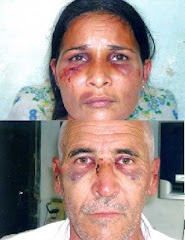
HAVANA – Prominent Cuban dissident Guillermo Fariñas was released
without charges several hours after his "violent" arrest in the central
city of Santa Clara, his family and colleagues said Monday.

Fariñas was headed for church on Sunday together with a group of 10
opposition members when "three (police) patrol cars blocked their way
and the cops began to push and shove them inside," Ramon Jimenez,
spokesman for the dissident group United Anti-Totalitarian Forum, told Efe.

"The police were violent with them and Guillermo was treated worst of
all," Jimenez said.

Fariñas' mother Alicia Hernandez confirmed Monday the account of her
son's detention and said that, after returning home around 7:30 p.m. on
Sunday, he had to go to the doctor "because he was in a lot of pain."

The 49-year-old psychologist and independent journalist went on a hunger
strike last year for more than four months following the death of
opposition prisoner Orlando Zapata Tamayo, to demand the release of
political prisoners suffering severe illnesses.

Guillermo Fariñas, recipient of the European Parliament's 2010 Sakharov
Prize for the defense of human rights, was arrested briefly on several
occasions this year, the last time in mid-September during a wave of
detentions of dissidents in Santa Clara and other towns in central Cuba.

According to the opposition Cuban Commission on Human Rights and
National Reconciliation, the Communist government has intensified the
"interior repression" against dissidence over the last month, and
estimates that 380 people were arrested for political reasons in
December. EFE


http://www.laht.com/article.asp?ArticleId=456174&CategoryId=14510

A Red Scooter in Cuba

A Red Scooter in Cuba
December 27, 2011
Osmel Almaguer

HAVANA TIMES, Dec 27 — My mother's scooter is red not only in color, but
also because it belongs to the socialist state, that being an
abstraction of what we are all supposed to be a part. That's why the
scooter doesn't belong to her. This contradiction of socialist property
is something I've always found more difficult to understand than the
Holy Trinity.

There are many scooters like my mother's in the streets. There are
scooters and motorcycles of all colors, yet they're all "red." Most of
them are in poor condition; with it assumed that in the workplaces that
provide them, there simply isn't money for maintenance.

People repair them the best they can, using their own money. They need
them to get around, given how difficult the transportation situation is.

Most of them are old, having undergone five, ten, twenty or more years
of use. I understand that some of them that are manufactured in Eastern
Europe are still being imported today, as is the world famous Lada, the
car that's imported from Russia.

My mother is one of the few honest people I know. She's not chauvinistic
and doesn't tend toward exaggeration.

She's incapable of stealing the smallest thing from her job, where's
she's been a manager for five years. And I should point out that the
moral codes have transformed out of necessity in recent years here, with
people becoming more tolerant of the "diversion" (theft) of government
resources.

Therefore my mother's red scooter continues to operate thanks to the
charity of her friends. Not even the gasoline that she's allocated by
her job is enough to get her around to her various work functions.

At this very moment the rear tire assembly, with all its components,
need to be changed, it's completely worn out. The tire alone — without
counting the inner tube or the metal rim — costs about 30 or 35 CUCs
(about $35 or $40 USD), the money equivalent to two or three months of
work.

http://www.havanatimes.org/?p=58370

National Heritage: Who Gives More? / Iván García

ational Heritage: Who Gives More? / Iván García
Iván García, Translator: Unstated

Between the 2nd and 3rd of November in the Taganana salon of the ancient
Hotel Nacional, within walking distance of Havana's waterfront, works
from the giants of Cuban art were auctioned off.

The sale, which took in some $600,000, was a part of the tenth edition
of the Havana Auction, an annual art auction on the island, this time
consisting of 110 lots with a total starting value of $1.2 million.

They included pictures from notable artists such as Wilfredo Lam,
Wilfredo Lam, Mario Carreno, Rene Portocarrero, Amelia Pelaez, Servando
Cabrera Moreno and Tomás Sánchez.

The Havana Auction leaves many unanswered questions. Its director, Luis
Miret, curator and gallery owner, in an interview with the digital
edition of the journal Arteamérica, made known that the initial idea
started a decade ago with the National Arts Council.

In expert language with a feeling of business, capitalism style, this
gentleman, or comrade(?), in various segments of the conversation
justified the decision of State institutions to undertake these sales,
with the assertion that the works of Cuban artists are severely
under-valued in the prestigious international auction houses, New York's
Christie's and London's Sotheby's, commercial centers for art worldwide.

Cuban art is not the only one sold at low prices. If we look at Latin
American painting, we see that it is also undervalued. The sale of 61
works by the most sought-after Latin American painters — a list that is
led by the Mexicans Rufina Tamayo and Frida Kahlo, and on which figure
the Cubans Mario Carrreño and Wifredo Lam — brought in just over $122
million. A minimal figure, if we take into account that on May 4, 2010,
a single painting, Nude, Green Leaves and Bust, painted in 1932 by the
Malagan Pablo Picasso, brought $110.2 million at auction.

Mr. Miret's other excuse is how they embrace him for his kindness. In
the interview, the curator notes that these auctions are a good way to
get a fair price for the works of the "poor little" painters of the
patio, who usually sell to independent patrons at bargain prices.

And, he alleges — imagine it after drying your tears — that he has
created a fund of two million pesos (I don't know how many valuable
pieces you can buy for such little money), for the acquisition of key
works of today's artists, paying 50% of their value.

The "goodagent" Miret also looks as if he is acting for different
auction houses in the world. It's a question of business. Nothing more.
What the official media hides, as does, of course, its fervent promotor,
is that part of the money coming in is credited to the "artists of the
people."

Nor are we informed what the Ministry of Culture does with the dough
obtained in the ten editions of the Havana Auction.

Do they repair the theaters closed dozens of years ago? Do they put some
paint on and seal the leaks of the Houses of Culture? Maybe they think
about rehabilitating municipal museums. But I'm afraid not. There are no
good intentions hidden behind this artistic looting.

Almost all the works auctioned are from key painters on the cultural map
of the green caiman. They are not run-of-the-mill paintings. The
majority are from already deceased artists and their legacy forms a part
of the national patrimony.

Just over $600,000, according to the announced sales figures, is chump
change for any government, no matter how poor it is, as is the case with
Cuba. Even hundreds of millions of dollars would not justify raffling
off the creative treasure of a nation.

It's nothing new that the Castro brothers' regime uses artwork and
jewelry to obtain hard currency. Since the late 1980s, in the so-called
"gold houses," valuable paintings, porcelain and top quality gold and
silver jewelry were exchanged for color televisions, audio equipment and
Russian cars.

Cuban intellectuals should oppose these depredations of local and
national heritage.

And the charitable Luis Miret, who wants us to see that beneath his
brand-name shirt is hidden a noble heart, incapable of harming anyone,
banged the gavel after the conclusion of the sale of a work of Cuban
art. Indeed, his name sounds familiar.

Photo: Guitarist, by Mario Carreño, was picture most quoted the Havana
Auction 2011. Its starting price was set at $200,000, but we don't know
how much they finally paid for it.

November 14 2011

http://translatingcuba.com/?p=13035

Red Christmases / Yoani Sánchez

Red Christmases / Yoani Sánchez
Translator: Unstated, Yoani Sánchez

What was that object? What purpose was served by its polished surface,
its rounded shape? Why did Grandma keep it at the bottom of a drawer
with her most intimate clothes and some letters written to her half a
century earlier by her first boyfriend?

My sister and I occasionally stole the box — lined with black felt —
where this object that looked like a lightbulb or the handle of delicate
door resided. When our younger cousins came from a provincial town, we
boasted to them of our Havana slang that rang out in the slum, of the
black and white TV displayed in the living room, and especially of that
golden ball of glass, around which we wove a mountain of inventions.

Without its cantankerous owner seeing us, we decided the delicate sphere
owned by our mother's mother had once belonged to a princess. We
fantasized that this possession was all that remained of a past life,
the only clue connecting our family to the lost lineage of its
predecessors. And extremely naive kids that we were, we believed,
looking at our reflections, that something like this could only have
belonged to an exalted family like that of Scheherazade, or the Queen of
Sheba, or even of King Tut himself.

One afternoon it slipped from our hands and shattered on the floor of
the tiny room where we had grown up. The crystal had a bright layer of
dust inside and that night our grandmother's slipper left marks on our
backs. When August came around and our "peasant" relatives returned, we
now knew that the beautiful golden ball had been only an ornament, a
simple decoration for a festive tree we had never seen. I was about to
turn eight and it would be nine more years before I would approach, for
the first time, a Christmas creche.

But the anticipation, the herald that something that existed beyond the
blunt reality, had come to me with that painted glass that a Spanish
immigrant had saved among her most cherished possessions. This same
Galician, now settled on the Island, told us in secret of a child born
in the hay among the lowing of goats. She narrated the story of Jesus in
a whisper, because our parents, at that time, were passing through their
period of greatest atheistic bigotry.

The building, the neighborhood, the school, the whole city, lived hiding
scapulars, praying in whispers, covering up the images of the Virgin
behind some book about Marxism or a red flag. In their bras, under their
blouses — sewn in or fastened with pins — old women carried crucifixes
with the image of another bearded outlaw, one who had not come down from
the Sierra Maestra. To show even the slightest faith in Him was one of
the fastest ways to make problems for yourself, surpassed only by the
act of professing another ideology. So we learned religion and suspicion
at the same time, discovering a cosmology and its denial together.

Months after the ball broke against the floor tiles, my sister and I
lived through another gray December that ended with neither tiaras nor
crowns. On December 24 we got itchy, because we knew that in other
places green branches stood in the middle of living rooms, surrounded by
lights. However, in our prudish Real Socialism, on our Sovietized
Island, nothing betrayed the hidden celebrations that many held indoors.
We went to bed early.

The following morning Grandma took longer than usual in the bath, and
through the blinds we managed to hear a brief "Amen." Christmas was
over. All that was left was to wait for the end of the year, when,
between spoonfuls of rice and beans, a piece of pork awaited the first
light of January and the anniversary of the Revolution. This is what our
December was reduced to, a national holiday, a man in olive green
proclaiming the start of a new historical era that never fulfilled its
promises of redemption.

But the restless girls who had broken that crystal orb, that
quasi-magical object, would never be the same. Some of the golden dust
that flew from the broken glass settled over our lives. It made us wary,
not with credulity but with skepticism, suspicious of the masks of
materialism rather than of the poses of religious dogma. It turned us
into beings distrustful of that red card that forced one to hide a cross
near your breast, to cover it with the black felt of fear.

Originally published in Letres Libre

25 December 2011

http://translatingcuba.com/?p=13021

Monday, December 26, 2011

Chronicle of Asclepius in Cuba (Part 1) / Jeovany J. Vega

Chronicle of Asclepius in Cuba (Part 1) / Jeovany J. Vega
Jeovany J. Vega, Translator: Unstated

Asclepius is the ancient Greek god of Healing and Medicine

The Cuban Revolution has always raised great passions. Millions within
and outside the island are split between those who applaud and offering
moving excuses, or those who clench their fists and launch incendiary
accusations. But without a doubt, among the picturesque barbarities that
flourish under the tropical sky there is one that is particularly
atrocious: the condition of semi-slavery affecting public health
professionals. To shed some light on the matter, I suggest you follow me
through this attempt at a chronicle.

Imagine for a moment you decided to study medicine in Havana and
graduated in 1994, during the worst economic crisis in our history. Some
of your friends from high school, who take life a little more lightly,
decided to raise and sell pigs, open their own businesses, or start
working in tourism. Once you graduate, after six years of personal
sacrifice, you naturally aspire to live honestly on your salary, but it
starts at 231 Cuban pesos a month, that is you receive less than two
dollars for a whole month's work for almost two years.

From time to time you run into a friend from high school, who has
bought an elegant car, as compared to your raggedy bicycle. But you want
to get ahead so you devote four more years of your youth to study. After
a total of ten years study (combining medical school and your
specialty), you end up as a specialist in internal medicine, with which,
given that specialty, your salary will be around 531 Cuban pesos a
month, Meaning you will work a full month for a salary equivalent to $21
U.S. Meanwhile, a barman at a hotel earns $200 U.S., on one shift! The
customs official at the airport earns $500 U.S. extorting the tourists,
and this is 25 times the monthly salary of a doctor, again, on one shift!

This abysmal difference in living standards is the root of our dramas.
Painfully, in Cuba, the well-being of your family doesn't depend on your
dedication to work or on your desire to excel, nor on the respect shown
your profession, which also illustrates the chaos that has ruled our
lives for the last 20 years. It is in this jungle where our doctors
"fight," not living in the encouraging world of International Cubavision
TV, where the Revolution continues strong and victorious, with GDP
growing 10% a decade, while the little guy suffers an economy in ruins,
a complete divorce from reality, as if we are talking about two
different countries.

Faced with such a hostile reality, our doctors have to invent miracles
in their free time to feed their families, badly; make "magic" in the
black market, work as a photographer, clown, carpenter, shoemaker or
cosmonaut, always illegal, because up to a few months ago the Ministry
of Labor prohibited, by Resolution, access to self-employment.

Suppose that you, a specialist in internal medicine, decide to go for a
second specialty. After another four years of great sacrifice you
graduate, for example, as a surgeon and now your monthly salary is
augmented with 50 Cuban pesos (just over $2.00 U.S.), which is enough to
buy four bars of soap. Thus, while a surgeon's monthly salary is 623
Cuban pesos ($27.00 U.S.), a guard in the Specialized Protection
Services, after a one month course, earns about 1,500 Cuban pesos
monthly in cash, plus extra food and toiletries, while a cop on the beat
receives up to 1,600 Cuban pesos, plus other benefits. For some obscure
reason our government believes that doctors don't merit such deference.

After getting over your shock, you say, "But come on man! If a salary
isn't even enough to buy toilet paper, become a barman, a customs
inspector, even the security guard at the hospital will make out
better!" I would respond: My friend, the leaders of my country literally
turned the sacred practice of medicine into the famous tunic of Nessus —
the poisoned shirt that killed Heracles; our doctors cannot work outside
the Ministry of Public Health (MINSAP) because a Labor Ministry
resolution categorically forbids it. No entity outside MINSAP is
permitted to offer a doctor work. Can you comprehend it? But you
meditate on this and your face lights up: "Emigrate! To some country
that needs doctors, at least temporarily, while things improve."

Then I ask you to make yourself comfortable and listen carefully to the
good part, because here it comes…

Everything you're read up to this point will seem like a game of little
girls playing in the convent garden, compared to how you will live if
you decide to travel outside Cuba as a doctor and Cuban citizen. In July
1999 the Minister of Public Health issued Resolution 54, still in force,
whose details I don't know and nor do our workers, as they are hidden
from us with the zeal of a State Secret. This Resolution of Ignominy, as
we call it, is the most humiliating insult inflicted upon those who
embrace the medical profession in Cuba since the coming of Columbus. It
states that if you want to permanently leave the country, or even do so
temporarily, you must ask the Minister of Public Health for "liberation"
from the sector.

That is, if the happy idea occurs to you to visit your family or friends
abroad during your vacation, you must wait an obligatory five years of
your life at a minimum (!!), during which you will be held against your
will by the Ministry of Public Health, with no options. It doesn't
matter if you just graduated or if you've been working for 30 years,
both have to wait five years! I know, personally, cases held for 7 years
before their "liberation." Even retired doctors and dentists are held
for three years before being allowed to travel; even a nurse faces this
aberration!

Let's clarify that from the moment that you begin the paperwork to
travel, you will automatically be placed on a list of the "unreliable,"
and will be relieved of all your administrative posts and teaching
positions, if you have any, and you will be transferred from your job to
one further away and that is a demotion. As the years pass marriages
break up, children are traumatized, parents die without seeing their
children again.

I can't adequately describe the human suffering that is caused by the
monster to those who see their rights undermined, but none of this
concerns the Union or Parliament: they can always blame the Cuban
Adjustment Act for your death if instead of resigning yourself you
improvise a raft and end up devoured by the sharks. As you can see,
under such circumstances to speak of semi-slavery is much more than a
euphemism.

*Footnote: As of two decades ago, two currencies circulate in Cuba: the
Cuban peso (CUP), also called "national money" — in which workers
receive their wages — and the convertible peso (CUC), also called
"convertible currency" — which is used in the chain of hard-currency
stores that accept only this money.

EXCHANGE RATES:

1994: 1 CUC = 1 USD = 140 CUP

Since the late 1990s to 2001: 1 CUC = 1 USD = 21 CUP

September 2001 to today: 1 CUC = 25 CUP

(To be continued …)

August 17 2011

http://translatingcuba.com/?p=13008

Vigil Planned For American Held in Cuba

Vigil Planned For American Held in Cuba
Alan Gross not among 2,900 prisoners released by Cuban regime
Monday, Dec 26, 2011 | Updated 10:22 AM EST

Supporters of a Maryland man who is entering his third year of captivity
in Cuba are holding a vigil Monday in downtown Washington.

Alan Gross, 62, of Potomac, was arrested at the Havana airport in 2009
and was sentenced to 15 years in jail by a Cuban court for crimes
against the state. At the time of his arrest, Gross was working for a
Bethesda company called Development Alternatives, which recently won a
government contract to promote democracy in Cuba. Family and U.S.
officials said that Gross' job was to distribute computer and satellite
phone equipment to Cuba's small Jewish community. The Cuban government
claims that such programs, which are sponsored by the U.S. Agency for
International Development (USAID), are aimed at undermining the
Communist government of Raul Castro.

The most recent vigil comes after Cuba announced Friday that it was
releasing 2,900 prisoners in advance of a visit by Pope Benedict XVI
early next year. A Foreign Ministry official confirmed to the Associated
Press that Gross was not among those who would be released.

U.S. officials have been lobbying for Gross' release on humanitarian
grounds, citing his deteriorating health and the cancer diagnoses that
his elderly mother and daughter have both received. American Jewish
leaders have also stepped up calls for Gross' release, which would have
coincided with the beginning of Hannukah.

Today's vigil begins at noon, and will be held at the Cuban Interests
Section at 2630 16th Street, Northwest.

Copyright Associated Press / NBC4 Washington

http://www.nbcwashington.com/news/local/Demonstration-Planned-For-American-Held-in-Cuba-136223848.html

Sunday, December 25, 2011

Iran, Venezuela, Cuba and the Cyber Threat

Iran, Venezuela, Cuba and the Cyber Threat
Posted by Ryan Mauro on Dec 23rd, 2011

Cuban, Iranian and Venezuelan officials have been caught actively
considering cyber attacks on the U.S., including ones that would be
"worse than the World Trade Center." In the frightening documentary, the
U.S.-based Spanish language Univision also exposes subversive operations
by Iran in Latin America.

The undercover operation began after a former computers instructor at
Mexico's National Autonomous University was recruited by another
professor in 2006 for a cyber terror plot requested by the Cuban embassy
in Mexico City. The instructor, Juan Carlos Munoz Ledo, turned the
tables on the Cuban government and later, its Iranian and Venezuelan
allies. He said he'd go along with the plot and get some students
involved to carry it out. In reality, he and his partners were starting
a seven-month investigation that would expose the evils contemplated by
these governments against the U.S.

Ledo and his team approached Mohamed Hassan Ghadiri in 2007, who was
then Iran's ambassador to Mexico. They discussed a plot to hack into
American computer systems at nuclear power plants, the White House, the
CIA, the FBI, the NSA and other critical sites from Mexico. A "digital
bomb" would be implanted that would be "worse than the World Trade
Center." The footage of Ghadiri shows his excitement over the plot. He
emphasized that the hackers should retrieve classified information
because Iran needed to know if the U.S. was planning an attack. Ghadiri
admits to having met with the students but claims that the Iranian
regime rejected their offer to attack the U.S.

In 2008, the team approached Livia Acosta, the cultural attaché of the
Venezuelan embassy in Mexico City. Like Ghadiri, she was interested in
the cyber plot. She promised to put any information they provide into
the hands of Hugo Chavez. She was particularly pleased when the team
claimed it could access the computers of nuclear power plants,
specifically Florida's Turkey Point and Arkansas' Nuclear One.

The documentary also revealed covert Iranian activities in Latin
America. The journalists obtained footage from a failed terrorist attack
against New York's JFK Airport in 2007. It is widely known that Al-Qaeda
was tied to the plot, but the involvement of Iran and Venezuela is less
known.

The film reveals that the Iranian regime is still using Edgardo Ruben
Assad, an operative involved in the 1992 bombing of Israel's embassy in
Argentina that killed 29 and the 1994 bombing of a Jewish cultural
center in Argentina that killed 85. Ghadiri worked to try to get this
terrorist operative into Mexico. One team member was recruited by
Ghadiri to go to Iran to study Islam for two months so he could come
back and preach the regime's ideology. He bravely went there and he met
Muslim converts from Venezuela, Ecuador, Argentina and Bolivia who all
arrived for the same reason.

The filmmakers found out that Iran is financing mosques in Venezuela and
Islamic terrorists are being trained in camps in the country. In 2010,
Antonio Salas traveled to Venezuela by posing as a Palestinian jihadist.
He learned of six camps in Venezuela and joined a Hezbollah branch in
the country. He even met members of FARC, Hezbollah and Hamas in these
camps. Univision's investigators found out that the Iranian-backed
terrorists in Venezuela engage in money-laundering and drug trafficking.

More evidence recently came out that Hezbollah and the Mexican and
Colombian drug cartels have a three-way partnership in narcotics. A
judge unsealed the case against Ayman Joumaa, who is accused of being
involved in dealings between Colombian and Mexican cartels, specifically
the Zetas. Joumaa used the Lebanese-Canadian Bank to launder money,
which the Treasury Department has sanctioned for its Hezbollah ties.

The State Department said it found the documentary's information
"disturbing" but that the U.S. government doesn't have any proof to
confirm its allegations. President Obama has not commented on the
matter, but did criticize Chavez's alliances with Cuba and Iran in an
interview with a Venezuelan newspaper. He said that Chavez is too busy
"revisiting the ideological battles of the post." Chairman of the Senate
Foreign Relations Committee's Western Hemisphere subcommittee, Senator
Robert Menendez (D-NJ) and Rep. Ileana Ros-Lehtinen (R-FL), chairwoman
of the House Foreign Affairs Committee, say they will hold hearings on
Iran's activities in Latin America.

The cyber plot may date back to 2007, but Iran's interest in cyber
warfare did not end then. Iran has decided to spend $1 billion
bolstering its cyber warfare capabilities. Earlier this year, an Iranian
defector reported that the Revolutionary Guards assessed that the U.S.
power grid would be the best potential target for a cyber assault.

Apologists of Chavez and Iran will point to the fact that they did not
conceive of the terror plot, but they did entertain it. This
demonstrates a keen interest in doing harm to the U.S. through non-state
proxies. If these are the types of actions being considered by Iran,
Venezuela and Cuba that we know about, then what are they doing that we
don't know about?

http://frontpagemag.com/2011/12/23/iran-venezuela-cuba-and-the-cyber-threat/

Cuban Parliament Criticizes the Construction Industry

Cuban Parliament Criticizes the Construction Industry
December 23, 2011

HAVANA TIMES, Dec 23 — One of the commissions of Cuba's National
Assembly of Popular Power (parliament) was dissatisfied yesterday with
the low efficiency and poor quality of public works as well as the
failure to integrate that industry with the manufacturing of needed
equipment.

According to reports in the Granma newspaper today, the legislators were
presented with the proposed municipalization of the production of
building materials, which was previously approved by the leadership of
the National Assembly.

The article also referred to the lack of drugs in pharmacies throughout
the country, verified by the commission overseeing that area of the
economy.

http://www.havanatimes.org/?p=58180

Saturday, December 24, 2011

Of Pardons and Forgetting / Yoani Sánchez

Of Pardons and Forgetting / Yoani Sánchez
Translator: Unstated, Yoani Sánchez

"Don't be naive," "You're going to be left with a packed suitcase,"
friends everywhere tell me, with the best of intentions. But an inmate
always dreams that the door will open, that the jailer himself will take
the keys and draw back the bars. Instead of immigration reform, the
highlight of what was announced in the National Assembly yesterday was
limited to a pardon for 2,900 prisoners. A subtle way of telling us that
real cells are easier to eliminate than bureaucratic ones, that a
certificate of release can be signed more quickly than the repeal of the
exit permit. I don't know if Raul Castro could comprehend the
frustration caused by his words yesterday, the discouragement generated
by the absence of the announcement his own spokespeople had predicted.

I put my suitcase back in the corner of the room, rearranged my plans
for Christmas Eve and called my mother to confirm that I am staying. I
imagine that in thousands of Cuban homes today they are celebrating
because their relatives will soon leave some sordid penitentiary. But I
also know that on this December 24th there are many who feel cheated,
once again deceived. How much time does government need to erase the
limitations on movement that it itself imposed on its citizens? Is it
possible that in this country the word "gradually," or the phrase "we
are working to implement this or that measure," is, in reality,
synonymous with "never." How can they continue to justify something that
no longer has any ethical or legal form to sustain it? When will a
presidential pardon arrive for those condemned not to enter or leave
their own country?

But I don't want the government's immobility to make me sad in these
days, nor let the stubbornness of our authorities spoil my Christmas
festivities. Instead, at midnight I will empty my glass, hug my son,
outline my future plans for 2012. For a short time, I will forget the
bars, erase from my mind the image of a General who grants indulgences,
who plays with the life of whole nation, and calls what is simply fear:
Taking small steps.

24 December 2011

http://translatingcuba.com/?p=13363

Diversity vs. Demagoguery / Rosa María Rodríguez Torrado

Diversity vs. Demagoguery / Rosa María Rodríguez Torrado
Rosa María Rodríguez Torrado, Translator: Unstated

For some time here the leaders of the Cuban government have been given
to talking about diversity and defending the importance of respecting
this in different groups of people in our national home. It's a positive
discourse, of course, but something rather "tricky" if we take into
account that it only refers to the social and cultural which in our
country is always imposed with militaristic criteria from the seats of
power. But perhaps it is the sowing of a seed — I tell myself — of the
context for a transition towards which Cuba seems to be beginning to
"crawl," toward a society of openness in which we all can walk. I don't
want to be too innocent, but neither do I want to be too skeptical about
some curtains that seem to be moving, although they still won't let us
open the window.

The Cuban government is going to integrate "in its own way" into the
world and needs to legitimize itself with slow and calculated steps,
into the community of democratic nations in the world, most concretely
in Latin American, where it is the only one that currently has a
single-party system. With its radar focused on this hemisphere — keeping
in mind the recent creation of the Community of Latin American and
Caribbean States, CELAC; its partial reconciliation with the Catholic
Church which covers the majority of the continent and is a force for
action — although with great fear of losing power; timidly instructing
and ordering as Party concession the spaces and socio-economic
achievements and policies we used to enjoy in society and that they took
from us on violently coming into power.

After almost fifty-three years, these steps are the tacit acknowledgment
that their model failed and they are preparing the society for its
incorporation into the democratic world when they are no longer.
However, it is illogical to talk about diversity only for a part of the
social fabric. For a people subjected for decades to assimilate this
concept, it should cover the entire spectrum of national life, including
the political. It should legitimize political parties and respect for
the human rights established by the United Nations. Diversity in
everything and for everyone should be the motto, which is synonymous
with pluralism and rule of law; if not it is a euphemism for the
repression of progress. To offer it in a partial sense, according to the
interests of the state is demagoguery, at least I think so.

December 13 2011

http://translatingcuba.com/?p=13058

Cuba wraps up dramatic year of economic change

Cuba wraps up dramatic year of economic change
By PAUL HAVEN | AP

A year at the vanguard of Cuba's economic revival has not brought Julio
Cesar Hidalgo riches. The fledgling pizzeria owner has had his good
months, but the restaurant he opened with his girlfriend often runs at a
loss. At times, they can't afford to buy basic ingredients.

Yet the wide-faced 31-year-old says he is grateful to be in business at
all. A year ago, Hidalgo was concocting chalky pastries in a Spartan
state-run bakery where employees and managers competed to pilfer eggs,
flour and olive oil, the only way to make ends meet on salaries of just
$15 a month. Today, he is his own boss, a taxpayer, employer and
entrepreneur.

"I think my expectations were met because in Cuba today I couldn't have
hoped for anything more," he said one recent December afternoon as his
girlfriend, Giselle de la Noval, served customers. "We survived."

Hidalgo's story is mirrored by many of the entrepreneurs The Associated
Press has followed since January in a yearlong effort to document
Communist Cuba's awkward embrace of free-market reforms.

Their experiences — like the reforms themselves — cannot be described as
an unmitigated success. Of the dozen fledgling business owners,
including restaurateurs, a DVD salesman, two cafe owners, a seamstress,
a manicurist and a gymnasium operator, three have closed down or begun
working for someone else, and one has been harassed by her former state
employers. None could be considered successful by non-Cuban standards.

But despite their struggles, many tell of lives transformed, dreams
realized, attitudes changed, and doors opened that had been closed for
more than half a century.

For Hidalgo, personal hardships have added to the challenges of starting
a business on a Marxist island that has looked askance at
entrepreneurship since Fidel Castro's 1959 revolution turned a one-time
capitalist playground into a Soviet satellite.

After suffering through a slow, hot, summer when nobody wanted a pizza,
Hidalgo had to close for two months to care for his grandmother, who has
Alzheimer's disease. Even while the business was shuttered, he and de la
Noval had to make tax and social security payments, wiping out the few
hundred dollars they had saved.

They reopened in late November with so little money they can't always
afford to serve their house special.

"We've had to start from scratch, but the only reason we didn't lose the
business altogether is because we were disciplined," said de la Noval,
23. "Before we did anything, we always put away the money we needed to
pay the state."

A year that President Raul Castro described as make or break for the
revolution is ending after a dramatic flurry of once-unthinkable reforms
that are transforming economic and social life.

In October, the government legalized a used car market, and a month
later extended it to real estate, sweeping away decades of prohibitions.
On Tuesday, the state began extending bank credits to new business
owners and those hoping to repair their homes.

But one of the most powerful reforms was Castro's decision last year to
greatly expand the ranks of the self-employed, part of a somewhat
unsuccessful effort to trim bloated state payrolls.

Some 355,000 people have received licenses to start their own
businesses, and the results can be seen and heard everywhere. On nearly
every street in Havana and in thousands of hamlets and towns across
Cuba, makeshift signs and bright parasols mark the entrances of new
businesses, and the long-lost cries of curbside vendors hawking
everything from fruit and vegetables to mops and household repair
services fill the warm Caribbean air.

"The reforms have advanced, perhaps not quickly enough considering the
problems that have accumulated, but they have advanced, one after
another, and there is no sign that they will stop or be rolled back,"
said Omar Everleny Perez, the head of Havana University's Center for
Cuban Economic Studies.

The government has declined to release any statistics on tax revenue or
payroll savings from the reforms, except for an October report in the
Communist Party newspaper Granma that said tax revenue from new
businesses had tripled.

Cuban leaders this month lowered their forecast for economic growth for
2011 to just 2.7 percent — from the 3 percent originally hoped for — an
extremely poor showing for a developing country. By contrast, China is
forecast to grow by about 9 percent in 2011, Vietnam by between 6 and
6.5 percent and Brazil by 3.8 percent.

Private business owners have complained about the high taxes they must
pay, the lack of raw materials and the fact they are suddenly surrounded
by competitors. Because most entrepreneurs don't have the capital to
start innovative businesses, many have opened cafeterias, nail parlors,
small roadside kiosks and the like.

Anisia Cardenas, a seamstress, is among more than 100,000 Cubans who
have held private business licenses since the 1990s, the island's last
experiment with the free market. In the latest reform, she decided to
expand, paying $2 a day to rent the front porch space of a neighbor's
house to set up her sewing machine.

But business was slow — and competition from new license holders fierce.
Within a few months she had to retreat to her tiny apartment. By the
summer, she began to wonder if she might have to close down, unable to
meet the $19 monthly tax payments. By December, she had gone to work as
an employee for another seamstress.

"Things are hard," said Cardenas, who is trying to save money for her
daughter's 15th birthday party in January. "Everything is very expensive."

Others complain of rules that are often illogical, and state employers
who still view entrepreneurship with suspicion.

Maria Regla Saldivar is a black belt in taekwondo who got a license to
give private lessons to neighborhood kids in a scruffy park across the
street from her job. She began the year with dreams of persuading the
government to let her turn an abandoned dry-cleaning warehouse into a
private recreation center.

But the government refused to grant her a lease. Then her bosses at
Cuba's National Sports Institute docked her pay because they said her
outside work was affecting her performance. She quit. Finally, her
former boss prohibited her from using the park for martial arts lessons,
which are technically prohibited. The government considers it
potentially deadly training, even though most of Saldivar's students are
not even teenagers yet.

"It's called envy," Saldivar said of her boss.

She insists she is not teaching taekwondo, slyly calling the discipline
"Quimbumbia" — a word of her own invention. She has moved classes for
her 14 students into the tiny covered patio in the back of the apartment
she shares with her teenage daughter.

But Saldivar says she has no regrets about how the year has unfolded.
She says making business decisions for herself has increased her
self-esteem, and she is thrilled that she's managed to put away 2,000
pesos ($80), about four months salary at an average state job.

"You may laugh, but for me it's a lot of money," she said, running her
coarse fingers over the stripes on a pair of sky-blue track suit bottoms
she bought. "I've wanted these for so long and now I have them. I look
like a proper trainer now, not someone out picking mangoes from a tree."

Rafael Romeu, the head of the Washington, D.C.-based Association for the
Study of the Cuban Economy, said Castro has "changed the conversation"
since taking over from his ailing brother in 2006, pushing the
leadership to get the island's economic house in order rather than
blaming external factors such as the 49-year U.S. travel and trade embargo.

But so far, the changes don't go far enough to revive Cuba's moribund
economy.

"These are positive steps but when you say them out loud, just think
about it. ... You are allowed to have a cellphone, you are allowed to
buy a home, you are allowed to buy a car or have a microenterprise. This
is not the fall of the Berlin Wall. These are not major changes," he
said. "Cuba has tremendous difficulties. This is a marathon, and they
are taking baby steps."

Romeu, who has worked around the world studying emerging economies, said
that Cuba is moving much more deliberately than the Chinese did when
they began opening their economy in the late 1970s, or the Vietnamese a
decade later.

Cuba's predicament is somewhat different, as well. Both China and
Vietnam were deeply agrarian economies whose challenge was lifting tens
of millions out of crushing poverty, Romeu said. Cuba is a more urban
country with an aging population whose citizens have gotten used to
benefits including health care and education, but who have grown
accustomed to a system that doesn't make them work for such middle-class
perks.

"In Cuba, the challenge is sustaining the middle class, not creating
one," Romeu said.

Still, some reforms seem to be moving along more quickly than many
analysts had hoped.

Business is booming at a street corner long known as the center of
Havana's informal real estate market. Only now, the handwritten listings
on trees openly advertise legal home sales, instead of disguising them
as property "swaps."

Mendez Rodriguez, an unofficial real estate broker, said the buying and
selling is aboveboard, controlled by a relatively untangled bureaucracy.

"Everything is by the law now," said Rodriguez, even if his profession
is not officially licensed. He and other so-called facilitators work for
"gifts" left to the discretion of their clients, he said.

Rumors that real estate brokers would be the latest addition to the list
of 181 licensed entrepreneurial activities have not come to pass, but
there's still hope the profession will be added in 2012. Rodriguez said
the opening seems to have led to a steep increase in prices, with a home
worth $20,000 a couple of months ago going for 50 percent more today.

That's the kind of price jump many of the new struggling business owners
say they could use.

Javier Acosta has sunk more than $30,000 he saved as a waiter into his
own upscale establishment, and says business is far from booming.

"This has been a hard year, a year of sacrifice," he said. "There are
days when nobody comes, or when I have just one or two tables, and then
there are days when the place is filled."

He said his costs run to about $1,000 a month, and when business is slow
he struggles to break even.

Yet the reforms, he says, have changed the face of Cuba, and cynical
countrymen who doubt the opening will be lasting must wake up to a new
reality.

"After 50 years where everything was prohibited it takes time to change
people's minds and make them understand that this time is different," he
said, sitting in his empty second-floor restaurant one recent afternoon.
"If you don't work, you don't eat."

Despite his struggles, Acosta says he would take the risk again if given
the chance, a sentiment shared by Hidalgo and de la Noval. They had
hoped to close on New Year's Eve, which Cubans of means celebrate with a
traditional feast of pork leg, yucca, black beans and sweets.

Hidalgo said the family simply doesn't have enough saved to take the
night off after its year of trials and tribulations. Instead, he's
planning to keep the pizzeria open late and celebrate on the job with
his girlfriend and his aunt at his side.

"We're thinking of making a small meal for the three of us," he said.
"If we can afford a leg of pork it'll be to sell, not to eat ourselves."

___

Associated Press writers Peter Orsi, Andrea Rodriguez and Anne-Marie
Garcia contributed to this report.

http://news.yahoo.com/cuba-wraps-dramatic-economic-change-150750760.html;_ylt=A0wNcnL6ePZOMSEB1Qb9SpZ4

They…the dissidents / Miriam Celaya

They…the dissidents / Miriam Celaya
Miriam Celaya, Translator: Norma Whiting

If it were possible to classify years the same way winemakers catalogue
wine, I would say that 2011 has been a good harvest, good for those
Cubans who aspire to a future of civility and of transformations in
Cuba, who have seen a gradual but sustained approach among different
groups of the alternative civil society, mutual recognition of places
and rights common to all, but not so for the government.

I don't want to be at fault for any unfair or unintended omission, so I
will avoid making a list of the ever-growing list of people with
different tendencies, generations, professions and backgrounds, who are
breaking the isolation of a society long contorted by fear or mistrust
between this or that group or individual. Suffice to note that in the
course of this year that network of free spaces has emerged
spontaneously and freely, and one might surmise that many hopes and
aspirations are pinned to that social fabric of an inevitably different
and better Cuba.

In fact, I would say that, this year, the very one-party government is
the one that has gone to the opposition; not because I say it, but
because of the methods and procedures that it employs in its belated
intent to resurrect, and in its obvious fear of the unstoppable process
to weaken both new and old generations' faith in the "revolution." An
example of this was the conspiracy orchestrated to… celebrate? the Sixth
Congress of the Cuban Communist Party, based on some guidelines
developed in secrecy. An event that was unexpectedly and surprisingly
announced, even for the members of the single party, with the additional
constraint of an agenda limited to purely economic issues. This gave the
high leadership of the party an image of weakness and insecurity, and
projected a climate of mistrust and reservation among grassroots
activism, while it exhibited the paradox of trying to promote a campaign
against "secrecy" from the standpoint of a conspiracy.

In stark contrast, sectors of the alternative civil society have been
launching programs and open proposals, have held meetings and events
prior to public announcement –even under the harassment and hounding of
the political police- unvarnished and without dissimulation or
exclusions, and they have been attracting support and good will,
especially of those young people who are not attracted by the "new"
official promises. The fatuous fires that loosen the frayed olive green
epaulets don't have the appeal of the future that they dream of
realizing by themselves, without masters, without dogmas.

Let's look at today's Cuba, the one where we have lived this year 2011,
and let's recap: who hides in order to devise compromises, conferences
and alliances without consultation? who denies information to the
people? who maintains the monopoly of the press and media and seeks to
monopolize access to the Internet? who insists on distributing and
managing, enforcing the limits and the pace of the transformations they
are urging to apply? who harasses free citizens? who offers resistance
to the multiparty and the full participation of all Cubans in the search
for solutions? who opposes democratic change? does the power of the
government legitimize retaining authority by force? Why, then do they
say we are "the opposition"?

Translated by Norma Whiting

December 12, 2011

http://translatingcuba.com/?p=13284

U.S. regrets Cuba failure to free American citizen

U.S. regrets Cuba failure to free American citizen
WASHINGTON | Sat Dec 24, 2011 3:03pm EST

(Reuters) - The State Department said on Saturday it deplored Cuba's
failure to free Alan Gross - a U.S. citizen serving a 15-year prison
term in a case that has stalled progress in U.S.-Cuba relations - as
part of an announced humanitarian release of some 2,900 prisoners.

"If this is correct, we are deeply disappointed and deplore the fact
that the Cuban government has decided not to take this opportunity to
extend this humanitarian release to Mr. Gross this holiday season,
especially in light of his deteriorating health, and to put an end to
the Gross family's long plight," Mark Toner, a State Department
spokesman, said Saturday.

The Cuban government said on Friday it would free 2,900 prisoners in
coming days for humanitarian reasons ahead of a visit next spring by
Pope Benedict XVI.

Those to be pardoned do not include Gross, a government spokesman said
in Havana. He was imprisoned after setting up Internet equipment as a
subcontractor in a U.S.-funded program promoting political change in Cuba.

The Cuban government considered his work subversive. His arrest halted a
brief warming in U.S.-Cuba relations that have been hostile since Fidel
Castro embraced Soviet Communism after his 1959 revolution.

In a statement, Toner reiterated a U.S. call on Cuban authorities to
release Gross "and return him to his family, where he belongs." The
State Department has said in the past that Gross was merely providing
Internet access for Jewish groups in Cuba and should be released
immediately.

(Reporting by Jim Wolf; additional reporting by Arshad Mohammed; Editing
by Sandra Maler)

http://www.reuters.com/article/2011/12/24/us-cuba-usa-gross-idUSTRE7BN0E720111224

US Coast Guard repatriates 149 Haitians, Cubans

Posted on Saturday, 12.24.11

US Coast Guard repatriates 149 Haitians, Cubans

The U.S. Coast Guard said Saturday it had returned almost 150 migrants
to their Caribbean homelands after intercepting their boats at sea.

A total of 112 Haitian migrants were returned to Cap-Haitien, Haiti, on
Friday.

A Coast Guard crew on the St. Petersburg based Cutter Resolute,
conducting a routine patrol in the Caribbean, discovered their sail
freighter west of Great Inagua, Bahamas.

The vessel was "grossly overloaded" with 87 men, 19 women and six
children, according to Coast Guard Capt. Brendan McPherson, 7th Coast
Guard District chief of enforcement. The migrants were given life
jackets and transferred to the Coast Guard cutter.

The Coast Guard says it also returned eight Cuban migrants Wednesday and
29 Cuban migrants Friday to Bahia de Cabañas, Cuba. Officials say the
migrants were picked up at sea in two separate incidents.

All the migrants received food, water and medical care aboard Coast
Guard vessels before being repatriated.

http://www.miamiherald.com/2011/12/24/2560431/us-coast-guard-repatriates-149.html

Cuba to pardon close to 3,000 prisoners

Politics | 24.12.2011

Cuba to pardon close to 3,000 prisoners

Cuba's President Raul Castro has announced his country will release some
3,000 prisoners on "humanitarian grounds," and "gradually" reform its
strict foreign travel laws.

Cuban President Raul Castro announced on Friday, December 24, the
release of 2,900 prisoners, while hinting that his government may be
ready to lift strict travel restrictions on the country's citizens.

The amnesty, which is to include 86 foreign nationals and is due to take
place in the coming days, was a "humanitarian" gesture, Castro said in a
closing address to the National Assembly.

Castro said factors that played into the pardon decision included
requests from the Catholic Church and various Protestant churches, and
the anticipation of the visit by Pope Benedict XVI in 2012.

The pardon is the largest ever under the communist regime, much larger
that the 299 prisoners released ahead of the visit of the late pope John
Paul II in January 1998.

Long-awaited reform

Cubans were intensely and emotionally keen to hear about migration
reform, which Castro - the ex-defense chief who took over from his
brother, revolutionary icon Fidel Castro, in July 2006 - has promised
but not yet delivered.

"I reaffirm my unswerving will to gradually introduce the changes
required in this complicated area," Raul Castro said, though neither the
communist government nor the state-run media have given details of the
reforms being considered.

Many people "consider a new migratory policy an urgent issue, forgetting
the exceptional circumstances that Cuba is going through," he added.

Local experts believe Castro intends to end the requirement of exit
visas (for Cubans on the island), entrance visas (for Cubans living
overseas who return home) and the legal status of "permanent emigrant."

Cubans usually can only leave the country when they have received a
letter of invitation from overseas. Then they have to file a request for
an exit visa, just at the start of a maze-like bureaucratic process that
costs about 500 euros ($650).

That fee is nearly unaffordable in Cuba, where doctors and street
cleaners alike make about 20 dollars a month.

Author: Gabriel Borrud (AFP, dpa)
Editor: Toma Tasovac

http://www.dw-world.de/dw/article/0,,15625237,00.html

Raul Castro's Daughter Launches Blog

Raul Castro's Daughter Launches Blog
Published December 22, 2011
EFE

Just a few weeks after going tweet-to-tweet with dissident Yoani Sánchez
in a bracing welcome to the open debate that reigns online, Mariela
Castro, the daughter of Cuban President Raul Castro and director of the
National Sexual Education Center, has launched a blog.

"El blog de Mariela Castro" featured Castro's first two posts on
Wednesday, although readers have not yet been provided with the chance
to leave responses or comments.

Castro, well-known in Cuba for her work in favor of the rights of sexual
minorities, published her first blog article on the visit she made in
October to Amsterdam and another on the discussions in the Cuban
legislature concerning the "racial problem" on the Communist-ruled island.

In the second piece, Castro says that she was invited on Tuesday to a
working meeting of the National Assembly at which lawmakers discussed
racism and in which Culture Minister Abel Prieto and parliament speaker
Ricardo Alarcon also participated.

According to what she said in her blog post, the 53 years of the Cuban
Revolution confirm that the country must work on an ongoing basis on
educational and social communication strategies to achieve "cultural
changes" in society and "full justice."

The second and last plenary session of the National Assembly this year
will take place on Friday.

Mariela Castro last month opened her first Twitter account
(@CastroEspinM), which in just a few hours engendered debate and a
controversial exchange of messages with independent blogger Yoani
Sanchez, who has - over time - been critical of the Cuban regime.

http://latino.foxnews.com/latino/politics/2011/12/22/raul-castros-daughter-launches-blog/

Cuba’s oil plans raise red flags

Posted on Saturday, 12.24.11

ENVIRONMENT

Cuba's oil plans raise red flags
BY MELISSA BERT
mbert@cfr.org

Scarabeo-9 is en route Cuban to waters, 70 miles from Florida. This
mobile offshore drilling unit (MODU) is a Chinese-built, Spanish-owned
oil rig set to drill for oil along Cuba's northern coast. Cuba is
counting on offshore drilling to wean itself from Venezuelan energy
dependence. Experts estimate Cuba's continental shelf contains 5 to 20
billion barrels of oil and more than 8 billion cubic feet of natural gas.

Cuba's plans raise red flags. The Scarabeo-9 drilling scenario is a
reprise of Deepwater, with similar drilling depth and distance from U.S.
shores, and a worst-case discharge even higher than Macondo. An oil
blowout in Cuban waters could send crude to the beaches of Florida,
Georgia, and South Carolina.

Repsol, a Spanish company, is running the show. Unlike BP, Repsol is not
subject to U.S. law. Although Repsol has a strong record, it is not
accountable to U.S. citizens in a disaster. Another cause for concern is
that U.S. sanctions against Cuba prohibit U.S. companies from drilling
in Cuba, supplying equipment to or effecting safety regulations in Cuba,
or even responding to an oil spill in its waters.

Cuba's pollution response capability is unknown. The Deepwater Horizon
response was the largest and most sophisticated in history, but was
conducted on site before the oil reached shore, with hundreds of
vessels, thousands of responders, and state of the art technology.
Waiting until oil coats America's beaches is too late.

Responses off Cuba are particularly challenging. The surface currents
are three to four times faster than off Florida's Panhandle. Skimming
oil or burning it may not be possible. Dispersants, which break down oil
for biodegradation, may be the only option, but must be applied at the
source within 96 hours. Otherwise, slicks could overwhelm coastal
containment booms, which are damaging to the coral reefs, marshes, and
sea grass of the Southeast. Getting to the oil at the well head, as was
done in Deepwater, will be the key to preventing massive oil onshore.

Yet instead of working directly with Cuba to prepare, the U.S. is
restrained by sanctions policy. This needs to end. Repsol is only the
first to develop the hydrocarbon potential of the region. Cuba is
already negotiating contracts with Russia, Brazil, China, and India to
lease major portions of its waters.

Preparation is key. Domestically, the Coast Guard and other federal
agencies have been planning and exercising with state counterparts and
oil spill response organizations.

• It is time to incorporate Cuba, as the U.S. does throughout the
Caribbean, Mexico, and Canada, where operational agreements specify
routine exercises, emergency response coordination, communication
protocols, and joint operations.

• Next, the U.S. government should work through sanction hurdles. The
offshore gas and oil industry in the U.S. is the best source for
remotely operated submersibles and undersea containment technologies.
Currently, no U.S. companies are authorized to cap wells or conduct
relief drilling in Cuba waters. Licensing cannot wait. Now is the time
to issue an export only industry-wide general license for oil spill
response in Cuba waters — not in the maelstrom of a crisis.

• Finally, the U.S. must properly fund a response. Lawmakers should
amend the Oil Pollution Act to make all foreign sources of pollution
responsible like BP was in Deepwater, and to cover third party damage
claims. Caps must also be raised. At $50 million a fiscal year, the
first three days of the Deepwater Horizon response would have exhausted
the coffers had BP not paid.

The U.S. will examine Scarabeo-9 before it reaches Cuban waters, and the
government of Cuba participates in multi-lateral maritime safety
conferences. These are important steps, but not enough. Deepwater
Horizon occurred despite well-exercised and coordinated response plans,
superior technology, and an optimal legal framework. Ignoring these
issues with Cuban drilling risks an even greater catastrophic disaster.

Capt. Melissa Bert, U.S. Coast Guard, is a visiting fellow at the
Council on Foreign Relations and a member of the Florida Bar. She was
formerly stationed in Miami for eight years.

http://www.miamiherald.com/2011/12/24/2559723/cubas-oil-plans-raise-red-flags.html

Castro to free more prisoners, but not Alan Gross

Posted on Friday, 12.23.11
CUBA

Castro to free more prisoners, but not Alan Gross

Raul Castro said 2,900 prisoners would be 'pardoned,' but they do not
include the U.S. contractor Alan Gross.
By Juan Carlos Chavez and Juan O. Tamayo
jtamayo@ElNuevoHerald.com

Cuban ruler Raúl Castro announced a pardon for about 2,900 prisoners on
Friday, but he sharply disappointed many Cubans who had hoped for
another Christmas gift — the freedom to travel abroad.

Castro said the "humanitarian" pardon would include 86 foreigners from
25 nations. But a senior Cuban government official later said they did
not include Alan Gross, a U.S. government subcontractor jailed in Havana.

Gross has served two years of a 15-year sentence on a charge of
endangering the island's national security by delivering sophisticated
telecommunications equipment to Cuban Jews so they could access the
Internet more easily.

A Havana blogger who almost always reflects the government line,
Yohandry Fontana, tweeted that Castro's comments to the Cuban
legislature were a "message" to the U.S. government.

Cuban officials have said Gross would be freed earlier only if
Washington frees several Cuban spies arrested in Miami in 1996. Four are
serving long sentences in U.S. prisons, and one completed his jail term
this year but remains in the United States on parole.

The Obama administration has made it clear that until the 62-year-old
Potomac, Md., man is freed, there can be no improvements in key
U.S.-Cuba issues. Messages sent by El Nuevo Herald to Gross' family
representatives late Friday were not immediately answered.

In what was to be the most eagerly-awaited part of his speech Friday,
Castro did not fulfill predictions by foreign news agencies that he
would announce the easing of travel restrictions during a one-day
session of the rubberstamp National Assembly of People's Power.

Cuba requires its citizens to obtain expensive exit permits that are
usually difficult to obtain before they can travel abroad; and the
government seizes the properties of those who move to other countries
and makes it difficult for Cubans living abroad to visit the island.

Castro, who first acknowledged the need to reform migratory policy in
August, told lawmakers that many Cubans want changes to travel policy
and that his government remains committed to "slowly" introducing
required changes.

But he announced no changes at all, saying that the issue was "complex"
and that Cuba faces "exceptional circumstances" like "the siege created
by the subversive and meddlesome policies of the U.S. government." Any
Cuban who sets foot on U.S. territory is allowed to remain and receives
residency.

Cubans agree that hundreds of thousands of them, if not millions, want
to have the freedom to travel abroad — some to leave permanently, some
just to work abroad for a time and put away some savings, and some just
to visit relatives or tourist sites.

Havana blogger Yoani Sánchez, who has been denied several "exit permits"
to pick up some of the many foreign prizes she has won, had tweeted that
her bags were packed in case Castro announced a reform of the migration
policy.

"If a migration reform is announced. I am heading to the airport … Will
they let me out? We have to test the limits," she wrote. Sanchez added
that she would return to Cuba "because for me life is not anywhere but
in a different Cuba."

In other comments to lawmakers, Castro said corruption was the biggest
threat to Cuba's communist system, but he gave no details on the
half-dozen corruption scandals reported this year by foreign press.

Castro also said the Cuban economy is improving because of the reforms
that he has enacted, that his government is paying off foreign debts and
that the island will welcome Pope Benedict XVI's visit.

http://www.miamiherald.com/2011/12/23/2560001/castro-to-free-more-prisoners.html

Cuba says travel restrictions to remain in place

Posted on Friday, 12.23.11

Cuba says travel restrictions to remain in place
By PAUL HAVEN
Associated Press

HAVANA -- President Raul Castro on Friday put on ice highly-anticipated
plans to ease travel restrictions on Cubans, telling lawmakers the
nation would not be pressured into moving too fast and citing continued
aggression from the United States as the reason for his cautious approach.

Cuba has been awash in speculation the much-hated regulations, which
prevent most Cubans from leaving the island, might be lifted during
Friday's session of the National Assembly. But Castro said the time
still wasn't right, despite a year of free-market reforms that has seen
the Communist government legalize a real estate market and greatly
increase private business ownership.

"Some have been pressuring us to take the step ... as if we were talking
about something insignificant, and not the destiny of the revolution,"
Castro said, adding that those calling for an end to the travel
restrictions "are forgetting the exceptional circumstances under which
Cuba lives, encircled by the hostile policy ... of the U.S. government."

Castro criticized U.S. President Barack Obama, saying he was the 11th
American president since the 1959 revolution led by his brother Fidel,
and appeared "not to understand" the sacrifices Cuba had made in its
struggle for independence and sovereignty, including the Bay of Pigs
invasion and the Cuban Missile Crisis, as well as Washington's 49-year
trade and travel embargo.

"Sometimes, he (Obama) gives the impression he has not even been
informed of this reality," Castro said, repeating his willingness to
normalize relations with the U.S. under the right conditions.

Castro also announced an amnesty for 2,900 prisoners ahead of next
year's visit by Pope Benedict XVI, but a senior official told the
Associated Press that jailed American subcontractor Alan Gross would not
be among those freed.

The Cuban president told legislators he still hoped to enact the travel
reforms, but did not say when. If hopes were high among islanders that
Friday would be the big day, Castro had only himself to blame.

At parliament's last session, in August, he announced that the
government was committed to ease the travel restrictions. He said the
measures were originally adopted because many who left in the years
after the revolution were a threat to the nascent government, including
people backed by the United States who sought its overthrow.

Castro said in August that most of those who leave now do so for
economic reasons and are not enemies. He said removing travel
restrictions would help "increase the nation's ties to the community of
emigrants, whose makeup has changed radically since the early decades of
the revolution."

Cubans had been clamoring for the elimination of the "tarjeta blanca,"
or exit visa, which the government requires of all seeking to travel
abroad, even for vacation. Many people are denied, particularly doctors,
scientists and military officials whose departure would be considered a
threat to the state.

"The need for permission to leave should never have been invented in the
first place," Victor Salgado, a 73-year-old retiree, told the Associated
Press ahead of Castro's speech. "They should have eliminated this long
ago. Why should I have to ask permission if I want to leave my country?"

Another Havana resident, Yamila Baez, said she was hoping the
restrictions would be scrapped as soon as possible.

"It isn't normal that one has to ask the government for its okay," she
said. "If you have the money to buy a ticket you should be able to go."

Castro's speech was the highlight of an otherwise humdrum parliament
session in which legislators approved a budget for 2012 and heard from
senior officials on the state of the economy.

Economy Minister Adel Yzquierdo told lawmakers the government expected
economic growth to come in at 3.4 percent in 2012, a bit better than the
2.7 percent expected to be registered this year. Finance Minister Lina
Pedraza added that the government expects both revenue and costs to rise
in 2012, with the government running a deficit of about 3.8 percent.

Cuban officials also used the session to criticize Washington for its
trade and travel embargo, and to call on the U.S. to release four Cuban
agents still imprisoned there. A fifth left jail earlier this year, but
has been blocked from returning to Cuba until he completes parole.

Cuba is ending the first year of a drive by Castro to reform its
state-dominated economy. The government has allowed citizens to get
business licenses for nearly 200 approved jobs, and 355,000 have taken
them up on the offer. The state has also legalized a real estate market
for the first time in nearly half a century, begun extending bank
credits to entrepreneurs and those wishing to fix up their homes, and
removed restrictions on the sale of used cars.

A parallel effort to trim half a million workers from state payrolls
largely foundered.

http://www.miamiherald.com/2011/12/23/2559981/cuba-pours-cold-water-on-eased.html#storylink=misearch

Friday, December 23, 2011

Vaclav Havel: Without Fake Covers / Yoani Sánchez

Vaclav Havel: Without Fake Covers / Yoani Sánchez
Translator: Unstated, Yoani Sánchez

It came carefully wrapped in a page of the newspaper Granma, but bore no
relation to that official organ of the Communist Party of Cuba. The dull
wrapping was just camouflage, the mask under which a copy of The Power
of the Powerless by Vaclav Havel was hidden. The friend who first
brought it into our home had been ousted decades earlier and was
expiating his crime in some forgotten department of the public library.

Like the Czech playwright and politician, our supplier of "banned
literature" had shown his concern over the entry of Soviet tanks into
Czechoslovakia in 1968. For Havel, his position had cost him the banning
of his work, harassment, and even prison, while our acquaintance had
better luck and only lost his promotion, the possible Soviet-made Lada
car he might have earned, and his wife — who could not stand living with
someone without privileges.

This shared ordeal might have brought about the sympathy expressed by
that habanero in his fifties for the man who would become the first
president of the Czech Republic. He spoke of him as if they had shared
space in Tvar magazine or in Charter 77, with the camaraderie of a cellmate.

Punished politicians have an immediate predisposition to solidarity
among equals, and recognize and admire each other from afar. So, more
than once, in informal gatherings and conversation, the gift-giving
librarian declaimed fragments of Democratic Ideas: The Arms of Freedom.
It was his obsession and also became ours.

Words live fighting with power, culture rarely has access to the
political heights. Its creators wash their hands of it and assert – not
without a certain hypocrisy – that they aren't interested in public
office, that government is something dirty that ends up paralyzing the
pen and muddying the soul. And they have a good point, as the historical
misfortunes of president-writers and artist-ministers confirm.

But still, we must not settle for the reign of the ordinary and the
regency of the mediocre. Fortunately, once in a while creation and
political office are not mutually exclusive, ideological play and the
beauty of language come together in one individual. Coming from the
theater, Vaclav Havel was familiar with the deceitfulness of human
nature, with the certainty of its masks and its moods. Poetry provided
him spiritual armor, an essential inner courage to survive in a
totalitarianism whose favored weapon was the invasion of privacy.

His own literary work probably saved him from suicide, from being
paralyzed by the ostracism this kind of regime directs to
nonconformists. The man of letters never let the political animal get
the better of him. Nor did prison manage to convert him into screaming
leader demanding a rematch from the podium.

He knew that from the other side of the stage the audience could applaud
or whistle when the spectacle ended, he was prepared ahead of time for
the vagaries of popularity. Havel was a scriptwriter. He decided to
write the libretto of his days and left the secret police nothing but
the ability to scribble a few glosses on the margins of his life.

A portion of Cuban intellectuals – who even today won't admit it – was
captivated by this rare specimen of poetic writer and activist. Few
dared to publicly profess their admiration for the leader of Civic
Forum, or to acknowledge that they read his texts. But the truth is that
when certain breezes of Perestroika blew over the official media of this
island, he was one of the most common references among journalists,
novelists and playwrights.

The cult of Havel kept its voice down; only a few of the intrepid, like
our ousted friend, dared to leave the house with one of his books under
their arms… of course it was always wrapped. The Czech president
enlarged the pantheon of banned faces and censored figures. We lost
Havel, as we had lost Alexander Solzhenitsyn and Milan Kundera. Because,
as he himself said, "Between the plans of the post-totalitarian system
and the plans of life there is a deep abyss." We wanted to learn more of
Havel, but in the Plaza of the Revolution they always had other ideas
about what we should know.

Last weekend Vaclav Havel died, just at the time when he was most read
in Cuba. He left and we can't hear his voice in a classroom of our
University, nor listen to his extensive collection of anecdotes about
the years of Soviet control. Raul Castro's government still hasn't made
the slightest public allusion to the death of the Czech democrat, but it
decreed three days of official mourning for the death of the North
Korean dictator, Kim Jong Il.

Of this latter, the official media of his country say that he wrote more
than 1,500 books over the course of his life. None of them, today, is
reading material for us. However, the author of The Garden Party (1963)
and Temptation (1986) is increasingly well known and admired. Like
missionaries of a peculiar religion, many now distribute his works, and
spread his writings across the Island. But, in an irreverent and defiant
gesture, they no longer hide the covers with the monochromatic pages of
Granma.

http://translatingcuba.com/?p=13238

Cuban pharma exports could get a boost from UNASUR

Cuban pharma exports could get a boost from UNASUR

Cuba's pharmaceutical and medical exports could benefit from a decision
by the just-formed Union of South American Nations (UNASUR) to
centralize the purchasing of its member nations' government healthcare
systems.

The 12 member nations decided to consolidate their medical purchasing,
Rafael Follonier, coordinator of the UNASUR presidency, announced in a
speech in Argentina.

"In little time, in the healthcare area, the 12 countries will buy
medicine en bloc," Follonier said Dec. 22 in Tucumán.

Ecuador and Venezuela, which are both UNASUR members, are already buying
hundreds of millions of dollars worth of pharmaceuticals every year.
Cuba has had difficulties breaking into new markets with its
pharmaceutical products, due to regulatory obstacles.

http://www.cubastandard.com/2011/12/22/cuban-pharma-exports-could-get-a-boost-from-unasur/

Cuba’s Media and the “Spokespersons”

Cuba's Media and the "Spokespersons"
December 22, 2011
Fernando Ravsberg

HAVANA TIMES, Dec 22 — "I'm not very interested in numbers," is an
acceptable phrase from the mouth of a poet or a painter, but when spoken
by an official linked to foreign trade in the middle of a press
conference, the matter becomes worrisome.

Recently a Cuban politician not only refused to talk about numbers, he
also failed to mention the names of the countries to which Cuba exports
services. Instead, he recommended that we find that information on the
TV news or from the Statistics Office.

He told us: "2010 was an improvement over 2009, but in speaking of
improvements we want to improve more and more and much more, because
sometimes values are better, but you have to grow in value and quantity
because the quantities get better values."

On relations with Japan he stated, "Sales are bought, and when I say
that sales are bought, this is between two parties; the party that buys
needs to buy, and the party that sells has to adapt to those consumers.
But the seller is more responsible than the buyer."

Before the questions, he had read off a bunch of pages to us with the
names of exported Cuban products, mainly pharmaceuticals, but he did so
while keeping the secret as to how much money these bring in or where
they're sold.

He ended his presentation with an elaborate metaphor: "I see Cuba as a
hive where the bees — industrious and healthy — are working alongside
their beekeeper," making a subtle reference to the people and the
president, General Raul Castro.

Having just returned from vacation, I went to my first press conference
and felt at home. This is the reality we journalists experience here on
the island, and this is the type of official source that later complains
that "we don't write about the good things in Cuba."

That conference was a real shame because there was a great deal of
interesting information that could have been released on the sale of
Cuban services on the five continents, which has now become the main
source of income for the island.

On top of that, our editors require more than a simple "things are good
and will continue to improve." It may be true but it's impossible to
publish information without data.

But most importantly, readers demand more than the "faith" that can
stirred by the words of a politician.

This is not an attempt to crucify this man, because he's no exception.
I'd go so far as to say that even with his limitations, at least he was
able to sit down in front of us. Others avoid the press, claiming
unexpected trips or illnesses.

Besides, a good government official doesn't have to be a good
communicator, though there are some. The greater truth is that Cuba
today is dramatically sterile when it comes to taking advantage of the
opportunities it has to make its voice heard to the world.

Of course politicians in other countries can avail themselves of the
advantage of being assisted by press offices and spokespeople who take
the hit every time a blow is expected, an experience that works quite
well – even here.

For a while the Foreign Ministry had several spokes persons. The most
outstanding was an experienced diplomat, Miguel Alfonso, who always
filled the official information void, if only to say "no comment."

But Alfonso's work went beyond press conferences. He maintained a close
relationship with journalists. We knew him very well, just as he knew us
– to the point of calling us at any hour to discuss any topic.

Miguel spoke without fear; he wasn't afraid of making mistakes and would
say that spokespeople are "disposable," not only as a result of their
own mistakes but also for political strategies. I always had the
impression that he was more concerned about his country than his
individual position.

This isn't about journalists and spokespeople giving each other flowers,
to the contrary; never did so many sparks fly as in his press
conferences, but he was able to sit down afterwards for a cup of coffee
with any of the correspondents.

Unfortunately for us, the UN hired him as an expert and an early death
later took him away for good. Notwithstanding, he left behind a school,
a way of doing things that should be emulated for the benefit of all.

—

An authorized Havana Times translation of the original published by BBC
Mundo.

http://www.havanatimes.org/?p=58081

Cuba to use sugar cane in new electricity plant

Cuba to use sugar cane in new electricity plant
(AFP)

HAVANA — Cuba will open its first electricity plant using sugar cane as
a biofuel hoping eventually to meet 30 percent of its energy needs from
the fuel source, the official Granma daily said Thursday.

The plant, being built in Ciego de Avila province, some 400 kilometers
(240 miles) east of Havana, will use "biomass from sugar cane (the
residue from agricultural products) and forestry" particularly an
invasive hardwood species known as "marabu" which provides good quality
charcoal.

Initially the aim is to supply the energy needed to run sugar processing
plants, an official from the state Azcuba sugar group, Angel Mendez,
told a parliamentary committee.

"Increasing the production of sugar and electricity in a parallel
fashion is Azcuba's top priority," Granma added. "The aim is meet 30
percent of the electricity needs" of the country.

In 2005 Cuba launched an extensive program to expand and modernize its
electricity grid. The plan which hit a setback amid the economic crisis
in 2009 aims to install new generators, replace millions of appliances
to ensure they are more energy efficient and repair power lines.

http://www.google.com/hostednews/afp/article/ALeqM5jFzI9dtNHksQwWVIvSSf7eoZoKtg?docId=CNG.ab3b4941ed40505aa51ae2114f0f46c1.a01

Rouen Weekly Grain Shipments Slip 19% on Lack of Cuba Cargoes

Rouen Weekly Grain Shipments Slip 19% on Lack of Cuba Cargoes
By Rudy Ruitenberg - Dec 22, 2011 12:40 PM GMT+0100

Grain exports from the French port of Rouen, Europe's biggest
cereal-shipping hub, fell 19 percent in the week ended yesterday as
deliveries to Cuba and sub- Saharan Africa weren't repeated.

Outbound grain amounted to 160,573 metric tons from Dec. 15 to Dec. 21,
compared with 199,407 tons a week earlier, the Seine River port said in
an e-mailed report today. Export cargoes included 149,383 tons of wheat.

Morocco accounted for the bulk of shipments, taking 145,938 tons of
wheat, compared with 57,330 tons the previous week, as well as 5,040
tons of barley. Last week's shipments included 48,902 tons of wheat for
Cuba, compared with none in the most recent seven-day period.

Rouen accounted for 45 percent of France's maritime grain exports in
2009-10, ahead of La Pallice on the Bay of Biscay, which shipped out 19
percent, according to data from national crops office FranceAgriMer.

Rouen grain loadings by destination, in tons:

Dec. 15-21
Wheat
Morocco 145,938
U.K. 1,730
Ireland 1,715

Barley
Morocco 5,040
Russia 3,150
Portugal 3,000

http://www.bloomberg.com/news/2011-12-22/rouen-weekly-grain-shipments-slip-19-on-lack-of-cuba-cargoes.html