Central American Discontent Sparked by "First Class" Cuban Migrants /
14ymedio
Posted on January 1, 2016
14ymedio (with information from agencies), Mexico, 31 December 2015 –
The crisis of Cubans stranded in Central America on their way to the
United States, has exposed weaknesses in regional integration and caused
a certain discontent in the isthmus with regard to the privileges US
laws award to Cubans, as opposed to other migrants.
The fact that Cubans who touch US soil can legally stay in the country,
thanks to the Cuban Adjustment Act in effect since 1966, contrasts with
the reality of the thousands of Guatemalans, Hondurans and Salvadorans
who leave for the north every month, amid the uncertainty about whether
they will arrive and, if they manage to do so, if they will be allowed
to stay and for how long.
The situation was highlighted by the arrival of more than 8,000 Cuban
emigrants in Costa Rica, which they have not been able to leave since 15
November when Nicaragua closed its border, citing reasons of security.
The phenomenon is linked to the reestablishment of relations, in
December of 2014, between Washington and Havana, which led many to think
that sooner rather than later the "wet foot/dry foot" policy that
benefits the island's migrants would be repealed. The policy was enacted
at a time when the Castro government prevented the free exit and entry
of Cubans from and to their own country.
Managua's decision to close its border to Cubans coming from Costa Rica
also triggered a political crisis in the isthmus due to differences
arising within the Central American Integration System (SICA) with
regards to how to solve the situation.
The president of Costa Rica, Luis Guillermo Solis, suspended his
country's participation in SICA's political roundtable on 18 December,
citing his disappointment and frustration with the position of Guatemala
and Belize, which share land borders with Mexico, to block the passage
of Cubans heading north.
On Monday, Guatemala, the SICA countries and Mexico reached an agreement
for an early January "humanitarian transfer" of 50 Cubans stranded in
Costa Rica, who will travel by air to El Salvador, from where they will
continue by land to Mexico.
Panama said on Wednesday that it is negotiating with its neighbors so
that the 1,000 Cubans stranded in its territory can also follow any
route on their way to the "American dream."
This free arrival of Cubans into the United States contrasts with the
intentions of the US government toward hundreds of families, children
and young people who entered the country illegally starting in 2014.
According to a report in last week's Washington Post, sources close to
the operation said that a series of raids would be carried out to deport
these immigrants, also starting in the first days of January.
In a statement picked up by Reuters, the government of Guatemala
expressed "deep concern" about the plans and said it would be attentive
"to whether the operations were carried out under strict rules of
respect, professionalism and ethics."
El Salvador also lamented the operation in a statement over the weekend,
in which it warned that the measure does not provide a substantive
response to the fundamental immigration problem in the region.
The government of Honduras, meanwhile, said it was not officially aware
of the US plans.
In an interview with EFE, Nils Castro, former Panamanian ambassador to
Mexico and Belize and one of the founders of the Panamanian
Revolutionary Democratic Party, close to the Castro regime, said, "The
small crisis of Cuban migrants has uncovered several things," including
"the weakness of SICA as system of integration. "
"At the very least, there are double standards: first class and second
class migrants," Nils Castro affirmed, comparing the situations of Cuban
and Central American emigrants.
Thanks to the United States' "wet foot/dry foot" policy, he argues,
"Cubans go with God's blessing and no one doubts they will be able to
enter and settle in the United States." But Central Americans,
especially Guatemalans, Salvadorans and Hondurans, "travel with risk"
and the uncertainty about "whether they will be able to cross the
border, and if they do cross it, whether they will be able to stay,"
stressed the Panamanian diplomat.
The economies of the three Central American countries are plagued by
high poverty rates and gang related violence and drug trafficking,
relying heavily on remittances sent by their nationals in the United
States to family members in their native countries.
This context explains the position of Guatemala whose president,
Alejandro Maldonado, asked on 22 December for the suspension of the
Cuban Adjustment Act, which benefits a few, or, alternatively, extending
the Act "to all." Among other reasons, the president argued that the
provisions of the Act are a "stimulus" for Cubans to emigrate.
The Guatemalan Government, says Nils Castro, "expressed a widespread
feeling in Central America. All Central American migrants are treated
with extreme harshness in Mexico and also in the United States."
He explained that the figure of more than 9,000 Cubans now stranded in
Costa Rica and Panama "pales" against the number of Guatemalans,
Hondurans and Salvadorans deported from Mexico and the United States: as
of the first week of December, some 65,749 undocumented Hondurans were
deported from Mexico and the United States, according to the Government
of Honduras, while Guatemala cited a figure of at least 92,284 nationals
deported from the two countries between January and November.
"In recent years, Mexico is harshly deporting Central American migrants.
In the fiscal year just ended, Mexico deported more Central Americans
than the United States did," he said.
For his part, the former Ambassador of Panama to the Organization of
American States (OAS), Guillermo Cochez, told EFE that the problem of
Cuban migrants continues and "must be addressed at the United Nations."
"I think the authorities of Central America and the United Nations
should cooperate in this matter," said Cochez, who applauded Panama's
policy of allowing Cubans to transit through its territory.
Source: Central American Discontent Sparked by "First Class" Cuban
Migrants / 14ymedio | Translating Cuba -
http://translatingcuba.com/central-american-discontent-sparked-by-first-class-cuban-migrants-14ymedio/
Saturday, January 2, 2016

Cuba and Spain Work Together to Open Luxury Hotel in Varadero
Cuba and Spain Work Together to Open Luxury Hotel in Varadero / 14ymedio
Posted on January 1, 2016
14ymedio, Havana, 31 December 2015 — The powerful Gaviota Group, managed
by Cuba's Ministry of the Armed Forces, opened the five-star Ocean Vista
Azul Hotel this year-end, which it will operate jointly with the Spanish
H10 hotel chain. Construction of the 470-room building took 21 months.
The lobby is the highlight of the hotel, opening directly on the sea.
Much of the furniture was made in Cuba, according to a representative
from the constructure company.
In Cuba, the Spanish H10 chain manages the Ocean Varadero El Patriarcha
Hotel, and the H10 Habana Panoramo Hotel. The company expects to open
the five-star Ocean Casa del Mar resort in Cayo Santa Maria at the
beginning of 2016.
The Gaviota Group, leader of the Cuban tourist industry, reports an
annual growth of 12% in hotel capacity and in vacationers staying in its
facilities. The chain manages more than 24,000 rooms throughout the
country, and expects to reach 50,000 by 2020.
Throughout 2016, it will build several hotels in Varadero, including the
Conchas 1, with over 800 rooms, adjacent to the Ocean Vista Azul. In
addition, the giant 12-story Playa Azul will be built, and will be the
second largest spa hotel in the country, surpassed only by the 14-floor
Blau Varadero.
Throughout 2015, according to the latest official statistics, Varadero
hosted a historic record number of visitors, with over 1.3 million
vacationers, a significant jump compared to 1.2 million of the previous
year.
Source: Cuba and Spain Work Together to Open Luxury Hotel in Varadero /
14ymedio | Translating Cuba -
http://translatingcuba.com/cuba-and-spain-work-together-to-open-luxury-hotel-in-varadero-14ymedio/
Posted on January 1, 2016
14ymedio, Havana, 31 December 2015 — The powerful Gaviota Group, managed
by Cuba's Ministry of the Armed Forces, opened the five-star Ocean Vista
Azul Hotel this year-end, which it will operate jointly with the Spanish
H10 hotel chain. Construction of the 470-room building took 21 months.
The lobby is the highlight of the hotel, opening directly on the sea.
Much of the furniture was made in Cuba, according to a representative
from the constructure company.
In Cuba, the Spanish H10 chain manages the Ocean Varadero El Patriarcha
Hotel, and the H10 Habana Panoramo Hotel. The company expects to open
the five-star Ocean Casa del Mar resort in Cayo Santa Maria at the
beginning of 2016.
The Gaviota Group, leader of the Cuban tourist industry, reports an
annual growth of 12% in hotel capacity and in vacationers staying in its
facilities. The chain manages more than 24,000 rooms throughout the
country, and expects to reach 50,000 by 2020.
Throughout 2016, it will build several hotels in Varadero, including the
Conchas 1, with over 800 rooms, adjacent to the Ocean Vista Azul. In
addition, the giant 12-story Playa Azul will be built, and will be the
second largest spa hotel in the country, surpassed only by the 14-floor
Blau Varadero.
Throughout 2015, according to the latest official statistics, Varadero
hosted a historic record number of visitors, with over 1.3 million
vacationers, a significant jump compared to 1.2 million of the previous
year.
Source: Cuba and Spain Work Together to Open Luxury Hotel in Varadero /
14ymedio | Translating Cuba -
http://translatingcuba.com/cuba-and-spain-work-together-to-open-luxury-hotel-in-varadero-14ymedio/
Cuban TV Highlights National Assembly Attacks on the Self-employed
Cuban TV Highlights National Assembly Attacks on the Self-employed /
14ymedio, Pedro Campos
Posted on January 1, 2016
14ymedio, Pedro Campos, Havana, 1 January 2015 – December 29 was the
National Assembly of People's Power last day of work in its final
session of 2015. Cuban State television highlighted two moments: the
speech of a delegate, supported by president Raul Castro, blaming
intermediaries for the high prices of farm products, and another from a
delegate blaming non-State entities for the increase in corruption. Not
a single word about the 9,000 Cuban migrants stranded in Central America.
It was clearly the intention of Cuban State TV to focus public attention
on the "negative" work of non-state forms of production and markets, as
a way to divert attention from the bureaucracy which is to blame for the
entire disaster that is taking place.
About corruption in every sphere of the State, which we all hear about
every day, not one word. No one asked what happens to the billions of
dollars the government collects through taxing the remittances sent to
their families by Cubans abroad; no one asked about the State monopolies
in internal and external markets; nor about the exploitation of more
than four million workers providing services in other countries,
especially the thousands of doctors and specialists in different
professions working abroad on State contracts; nor about the high taxes
paid by the self-employed; nor the artists and athletes who sell their
works or provide services outside the country; nor how the State
benefits from other countries' debt forgiveness.
However, Cuban State TV couldn't avoid showing tiny bits of other
speeches, where the delegates addressed the problems of low production,
the absence of a wholesale market, and the permanence of the dual
currency system, all elements related to State policies.
Of course, we don't know it there were any speeches addressing the high
prices of food and other widely consumed products, because if there
were, they took care not to show it, and if there weren't, it would
demonstrate that the Assembly is very badly informed on economic issues,
as president Raul Castro indicated in one of his reflections.
They broadcast no speech, if there was one, that commented on the report
that 50% of potentially productive land continues to be covered with the
invasive marabou weed and is in the hands of the State; or that of those
who received land (via leasing and other arrangements) a good share of
them have not been able to make it productive because of the number of
obstacles the State throws in their way. Nor did they air any speeches
about the laughable prices the State pays for the large share of farm
production it claims, or that the State companies are often less
productive than individual farmers and cooperatives, or that the State
continues to pay miserable wages to its workers without adequate
stimuli; or that all the processed food – chicken, pasta, oils, sauces,
good quality beer, alcohol and others – is sold only through the
military monopoly of the "Hard Currency Collection Stores" (as they are
called) and in Cuban Convertible Pesos, which continue to trade at 1 for
25 of the measly Cuban pesos, the currency in which wages are paid.
If anyone commented about it, there was no broadcast saying that the
State blocks non-state forms of production – as they call the private
and cooperative economy – from receiving direct support, be it financing
or equipment, from international organizations, as everything has to
come through the Government and its system of companies.
Nor did we see any speeches about the high, abusive and absurd taxes the
self-employed are subjected to, or that these people have to plow the
earth, harvest it and move their supplies and goods in old transport
equipment, the cost of maintenance of which is unfathomable and requires
oil whose high prices have been maintained in the domestic market even
though worldwide prices have dropped by more than half.
Nor is anything said about the impact of the increases in retail prices,
the State's refusal to let farmers sell their products directly in
Havana, and forcing them to use markets concentrated on the outskirts,
where they have to pay taxes and work through intermediaries to get
their goods with the consequent increases in in the cost of transportation.
In what seemed like a direct allusion to his personal opposition to the
policies approved by the Cuban Communist Party (PCC) at its 6th
Congress, President Raul Castro directed Marino Murillo, the national
economic czar, to question whether some market formulas such as the law
of supply and demand should continue to be applied in the marketing of
farm products.
Murillo, raising his eyebrows behind his glasses, a gesture I don't know
if Raul was able to see but which was seen on television, said nothing
in response. It is not difficult to imagine the thoughts passing through
his brain, given that he studied economics. But he preferred not to
speak, and he knows why.
Behind it all is the silent war of the bureaucracy against work that is
independent of the State, which they label "non-state forms" to
discriminate against it and exclude it. It is not a coincidence that the
National Assembly, supposedly in charge of legislating, executing and
financing (all at the same time) the Government's plans, is filled with
leaders of the PCC, with bureaucrats from the central administration and
from provincial and municipal administrations, with high level officers
from the Revolutionary Armed Forces (FAR) and the Ministry of the
Interior (MININT), with leaders of the pro-government trade unions and
other mass organizations controlled by the PCC.
The bureaucracy gathered there is the same one that was incapable of
legislating and enforcing the Guidelines of the 6th Congress of the PCC
and, in addition, the one that mercilessly attacks the few measures that
managed to get through. I don't know if it was a coincidence: yesterday
afternoon, the self-employed who work in Maestranza Park in Old Havana –
toy sellers, photographers, children's cart-ride providers, light tattoo
artists, food vendors – some authorized and duly legalized and others
not, were informed that "the Party and the Government" had decided they
could no longer work there, without any further explanation.
There is no easy fix, gentlemen: this centralized political and economic
statist model should be changed if we want this country to emerge from
its current quagmire.
Source: Cuban TV Highlights National Assembly Attacks on the
Self-employed / 14ymedio, Pedro Campos | Translating Cuba -
http://translatingcuba.com/cuban-tv-highlights-national-assembly-attacks-on-the-self-employed-14ymedio-pedro-campos/
14ymedio, Pedro Campos
Posted on January 1, 2016
14ymedio, Pedro Campos, Havana, 1 January 2015 – December 29 was the
National Assembly of People's Power last day of work in its final
session of 2015. Cuban State television highlighted two moments: the
speech of a delegate, supported by president Raul Castro, blaming
intermediaries for the high prices of farm products, and another from a
delegate blaming non-State entities for the increase in corruption. Not
a single word about the 9,000 Cuban migrants stranded in Central America.
It was clearly the intention of Cuban State TV to focus public attention
on the "negative" work of non-state forms of production and markets, as
a way to divert attention from the bureaucracy which is to blame for the
entire disaster that is taking place.
About corruption in every sphere of the State, which we all hear about
every day, not one word. No one asked what happens to the billions of
dollars the government collects through taxing the remittances sent to
their families by Cubans abroad; no one asked about the State monopolies
in internal and external markets; nor about the exploitation of more
than four million workers providing services in other countries,
especially the thousands of doctors and specialists in different
professions working abroad on State contracts; nor about the high taxes
paid by the self-employed; nor the artists and athletes who sell their
works or provide services outside the country; nor how the State
benefits from other countries' debt forgiveness.
However, Cuban State TV couldn't avoid showing tiny bits of other
speeches, where the delegates addressed the problems of low production,
the absence of a wholesale market, and the permanence of the dual
currency system, all elements related to State policies.
Of course, we don't know it there were any speeches addressing the high
prices of food and other widely consumed products, because if there
were, they took care not to show it, and if there weren't, it would
demonstrate that the Assembly is very badly informed on economic issues,
as president Raul Castro indicated in one of his reflections.
They broadcast no speech, if there was one, that commented on the report
that 50% of potentially productive land continues to be covered with the
invasive marabou weed and is in the hands of the State; or that of those
who received land (via leasing and other arrangements) a good share of
them have not been able to make it productive because of the number of
obstacles the State throws in their way. Nor did they air any speeches
about the laughable prices the State pays for the large share of farm
production it claims, or that the State companies are often less
productive than individual farmers and cooperatives, or that the State
continues to pay miserable wages to its workers without adequate
stimuli; or that all the processed food – chicken, pasta, oils, sauces,
good quality beer, alcohol and others – is sold only through the
military monopoly of the "Hard Currency Collection Stores" (as they are
called) and in Cuban Convertible Pesos, which continue to trade at 1 for
25 of the measly Cuban pesos, the currency in which wages are paid.
If anyone commented about it, there was no broadcast saying that the
State blocks non-state forms of production – as they call the private
and cooperative economy – from receiving direct support, be it financing
or equipment, from international organizations, as everything has to
come through the Government and its system of companies.
Nor did we see any speeches about the high, abusive and absurd taxes the
self-employed are subjected to, or that these people have to plow the
earth, harvest it and move their supplies and goods in old transport
equipment, the cost of maintenance of which is unfathomable and requires
oil whose high prices have been maintained in the domestic market even
though worldwide prices have dropped by more than half.
Nor is anything said about the impact of the increases in retail prices,
the State's refusal to let farmers sell their products directly in
Havana, and forcing them to use markets concentrated on the outskirts,
where they have to pay taxes and work through intermediaries to get
their goods with the consequent increases in in the cost of transportation.
In what seemed like a direct allusion to his personal opposition to the
policies approved by the Cuban Communist Party (PCC) at its 6th
Congress, President Raul Castro directed Marino Murillo, the national
economic czar, to question whether some market formulas such as the law
of supply and demand should continue to be applied in the marketing of
farm products.
Murillo, raising his eyebrows behind his glasses, a gesture I don't know
if Raul was able to see but which was seen on television, said nothing
in response. It is not difficult to imagine the thoughts passing through
his brain, given that he studied economics. But he preferred not to
speak, and he knows why.
Behind it all is the silent war of the bureaucracy against work that is
independent of the State, which they label "non-state forms" to
discriminate against it and exclude it. It is not a coincidence that the
National Assembly, supposedly in charge of legislating, executing and
financing (all at the same time) the Government's plans, is filled with
leaders of the PCC, with bureaucrats from the central administration and
from provincial and municipal administrations, with high level officers
from the Revolutionary Armed Forces (FAR) and the Ministry of the
Interior (MININT), with leaders of the pro-government trade unions and
other mass organizations controlled by the PCC.
The bureaucracy gathered there is the same one that was incapable of
legislating and enforcing the Guidelines of the 6th Congress of the PCC
and, in addition, the one that mercilessly attacks the few measures that
managed to get through. I don't know if it was a coincidence: yesterday
afternoon, the self-employed who work in Maestranza Park in Old Havana –
toy sellers, photographers, children's cart-ride providers, light tattoo
artists, food vendors – some authorized and duly legalized and others
not, were informed that "the Party and the Government" had decided they
could no longer work there, without any further explanation.
There is no easy fix, gentlemen: this centralized political and economic
statist model should be changed if we want this country to emerge from
its current quagmire.
Source: Cuban TV Highlights National Assembly Attacks on the
Self-employed / 14ymedio, Pedro Campos | Translating Cuba -
http://translatingcuba.com/cuban-tv-highlights-national-assembly-attacks-on-the-self-employed-14ymedio-pedro-campos/
Structural Collapse at CIMEQ Hospital
Structural Collapse at CIMEQ Hospital / Juan Juan Almeida
Posted on January 1, 2016
Juan Juan Almeida, 29 December 2015 — More than six million dollars is
the tab to cover a 2015 collapse caused by a riotous orgy of negligence.
This is how they are describing the Cuban Ministry of Public Health's
most closely guarded secret. I will explain it but will try not to
burden you with too much scientific jargon.
Accompanying photos (click here) show the construction of an ultramodern
cyclotron unit within the confines of Havana's Medical Center for
Surgical Research (CIMEQ), which was intended for use in teaching and
research.
The collapse of a floor, the result of egregious violations of building
code regulations which cover such facilities, has led to losses that
have yet to be disclosed by Cuban authorities. The losses include a unit
for producing radionuclides for medical use, a radiopharmacy laboratory
for producing and storing radiopharmaceuticals and various chemical
synthesis modules.
A cyclotron is a particle accelerator that produces a short-lived
radioisotope that, when added to glucose, is injected into the
bloodstream and serves as a diagnostic imaging tool in nuclear medicine.
Cancer cells rapidly absorb the substance and then emit radiation, which
allows physicians to identify the cells' location through the use a
positron emission tomograph.
Once it became operational — something which of course will now not
happen (at least not as urgently as initially planned) — Cuba had
counted on being a world leader in the field of medical diagnosis
through nuclear molecular imaging.
In other words, it is an advanced technology which makes it possible to
safely and painlessly detect medical pathologies before the first
symptoms of a given illness manifest themselves.
For example, it allows doctors to diagnose early-stage and late-stage
cancers as well as residual and recurring tumors, and to qualify and
quantify myocardial metabolism and blood flow while identifying living
tissue in areas of infarction. It also enables physicians to diagnose
Parkinson's disease, Alzheimer's disease, epilepsy, benign brain tumors
as well as congenital and degenerative diseases, psychoses and/or mental
disorders such as schizophrenia.
It is worth noting that this type of equipment and testing generates
radioactivity. Accordingly, there are international accords designed to
regulate building standards that guarantee the basic safety of such
facilities and ensure protection against the dangers of radiation.
All facilities that process materials containing radionuclides are,
quite logically, governed by a single body of regulations. Except in
Cuba, on the grounds of CIMEQ, they were violated.
According to universally accepted building construction codes, such a
specialized and sophisticated structure requires micron steel plates,
reinforced concrete and other special materials. However, because of
irresponsible decisions to cut costs and find innovative solutions —
suggested and approved by members of a long chain of command that will
never be punished — these materials were not used. Or they were used but
not correctly, so the building collapsed.
All the commotion created by this unforeseen event attracted a lot of
attention. Local authorities, negligent but cautious, displayed extreme
indifference. They chose to play down the event, resorting to the trite
saying "We lost a lot more during the war." As part of their inspection,
they tirelessly scrutinized all the cell phones of workers and
eyewitnesses in order to — as they put it — prevent unauthorized photos
from appearing in the media and on social networks.
They tirelessly scrutinized all the cell phones of workers and
eyewitnesses in order to — as they put it — prevent unauthorized photos
from appearing in the media and on social networks.
Source: Structural Collapse at CIMEQ Hospital / Juan Juan Almeida |
Translating Cuba -
http://translatingcuba.com/structural-collapse-at-cimeq-hospital-juan-juan-almeida/
Posted on January 1, 2016
Juan Juan Almeida, 29 December 2015 — More than six million dollars is
the tab to cover a 2015 collapse caused by a riotous orgy of negligence.
This is how they are describing the Cuban Ministry of Public Health's
most closely guarded secret. I will explain it but will try not to
burden you with too much scientific jargon.
Accompanying photos (click here) show the construction of an ultramodern
cyclotron unit within the confines of Havana's Medical Center for
Surgical Research (CIMEQ), which was intended for use in teaching and
research.
The collapse of a floor, the result of egregious violations of building
code regulations which cover such facilities, has led to losses that
have yet to be disclosed by Cuban authorities. The losses include a unit
for producing radionuclides for medical use, a radiopharmacy laboratory
for producing and storing radiopharmaceuticals and various chemical
synthesis modules.
A cyclotron is a particle accelerator that produces a short-lived
radioisotope that, when added to glucose, is injected into the
bloodstream and serves as a diagnostic imaging tool in nuclear medicine.
Cancer cells rapidly absorb the substance and then emit radiation, which
allows physicians to identify the cells' location through the use a
positron emission tomograph.
Once it became operational — something which of course will now not
happen (at least not as urgently as initially planned) — Cuba had
counted on being a world leader in the field of medical diagnosis
through nuclear molecular imaging.
In other words, it is an advanced technology which makes it possible to
safely and painlessly detect medical pathologies before the first
symptoms of a given illness manifest themselves.
For example, it allows doctors to diagnose early-stage and late-stage
cancers as well as residual and recurring tumors, and to qualify and
quantify myocardial metabolism and blood flow while identifying living
tissue in areas of infarction. It also enables physicians to diagnose
Parkinson's disease, Alzheimer's disease, epilepsy, benign brain tumors
as well as congenital and degenerative diseases, psychoses and/or mental
disorders such as schizophrenia.
It is worth noting that this type of equipment and testing generates
radioactivity. Accordingly, there are international accords designed to
regulate building standards that guarantee the basic safety of such
facilities and ensure protection against the dangers of radiation.
All facilities that process materials containing radionuclides are,
quite logically, governed by a single body of regulations. Except in
Cuba, on the grounds of CIMEQ, they were violated.
According to universally accepted building construction codes, such a
specialized and sophisticated structure requires micron steel plates,
reinforced concrete and other special materials. However, because of
irresponsible decisions to cut costs and find innovative solutions —
suggested and approved by members of a long chain of command that will
never be punished — these materials were not used. Or they were used but
not correctly, so the building collapsed.
All the commotion created by this unforeseen event attracted a lot of
attention. Local authorities, negligent but cautious, displayed extreme
indifference. They chose to play down the event, resorting to the trite
saying "We lost a lot more during the war." As part of their inspection,
they tirelessly scrutinized all the cell phones of workers and
eyewitnesses in order to — as they put it — prevent unauthorized photos
from appearing in the media and on social networks.
They tirelessly scrutinized all the cell phones of workers and
eyewitnesses in order to — as they put it — prevent unauthorized photos
from appearing in the media and on social networks.
Source: Structural Collapse at CIMEQ Hospital / Juan Juan Almeida |
Translating Cuba -
http://translatingcuba.com/structural-collapse-at-cimeq-hospital-juan-juan-almeida/
Nearly two dozen Cuban migrants celebrate New Year with Florida Keys landing
Nearly two dozen Cuban migrants celebrate New Year with Florida Keys landing
They came ashore just east of Key Largo, first known rafters to reach
the U.S. this year
A surge is underway, apparently, out fear that the U.S. will end the
Cuban Adjustment Act
A passerby in the Florida Keys took a photo of some of the men, posing
in some foliage
ALFONSO CHARDY
achardy@elnuevoherald.com
Twenty-two Cuban migrants landed in the Florida Keys on Friday, the
first known island rafters to reach the United States in the new year.
The landing, first reported by WPLG-ABC 10, raised to more than 100 the
number of Cuban migrants who reached South Florida in the last two weeks.
Rafters who have been interviewed recently in Miami have told el Nuevo
Herald that an increasing number of Cuban migrants are leaving the
island because they fear that the Cuban Adjustment Act is going to be
abolished.
Under the wet-foot/dry-foot policy, a result of the Cuban Adjustment
Act, Cuban migrants who arrive on U.S. soil are allowed to stay while
those intercepted at sea are generally returned home.
Speculation has been growing about the possible end of the Cuban
Adjustment Act since President Barack Obama in December 2014 ordered the
restoration of U.S. relations with Cuba.
The Border Patrol confirmed Friday's Cuban migrant arrival in the
Florida Keys, but gave no other details.
However, figures from Customs and Border Protection (CBP) show an
increase in the number of Cuban migrants without visas showing up along
the U.S.-Mexican border and at international airports.
Almost 41,000 Cuban migrants arrived at the border, South Florida
beaches and international airport between Oct. 1, 2014 and Sept. 30,
2015. It was the largest number of Cuban migrants arriving in the United
States in one year over the last decade.
In its report, Local 10 News said CBP officers took the 22 Cuban
migrants into custody after they came ashore at about 10 a.m., three
miles south of Rodriguez Key, just east of Key Largo.
The TV report quoted a witness as saying she spotted seven of the men
climbing through the bushes, then gave them water and Gatorade. She
added that the men told her they had spent three days without food or
water on their small boat.
The Border Patrol said by email Friday that the men were being held at
their Marathon station pending their release.
Source: Nearly two dozen Cuban migrants celebrate New Year with Florida
Keys landing | Miami Herald -
http://www.miamiherald.com/news/local/community/florida-keys/article52661335.html
They came ashore just east of Key Largo, first known rafters to reach
the U.S. this year
A surge is underway, apparently, out fear that the U.S. will end the
Cuban Adjustment Act
A passerby in the Florida Keys took a photo of some of the men, posing
in some foliage
ALFONSO CHARDY
achardy@elnuevoherald.com
Twenty-two Cuban migrants landed in the Florida Keys on Friday, the
first known island rafters to reach the United States in the new year.
The landing, first reported by WPLG-ABC 10, raised to more than 100 the
number of Cuban migrants who reached South Florida in the last two weeks.
Rafters who have been interviewed recently in Miami have told el Nuevo
Herald that an increasing number of Cuban migrants are leaving the
island because they fear that the Cuban Adjustment Act is going to be
abolished.
Under the wet-foot/dry-foot policy, a result of the Cuban Adjustment
Act, Cuban migrants who arrive on U.S. soil are allowed to stay while
those intercepted at sea are generally returned home.
Speculation has been growing about the possible end of the Cuban
Adjustment Act since President Barack Obama in December 2014 ordered the
restoration of U.S. relations with Cuba.
The Border Patrol confirmed Friday's Cuban migrant arrival in the
Florida Keys, but gave no other details.
However, figures from Customs and Border Protection (CBP) show an
increase in the number of Cuban migrants without visas showing up along
the U.S.-Mexican border and at international airports.
Almost 41,000 Cuban migrants arrived at the border, South Florida
beaches and international airport between Oct. 1, 2014 and Sept. 30,
2015. It was the largest number of Cuban migrants arriving in the United
States in one year over the last decade.
In its report, Local 10 News said CBP officers took the 22 Cuban
migrants into custody after they came ashore at about 10 a.m., three
miles south of Rodriguez Key, just east of Key Largo.
The TV report quoted a witness as saying she spotted seven of the men
climbing through the bushes, then gave them water and Gatorade. She
added that the men told her they had spent three days without food or
water on their small boat.
The Border Patrol said by email Friday that the men were being held at
their Marathon station pending their release.
Source: Nearly two dozen Cuban migrants celebrate New Year with Florida
Keys landing | Miami Herald -
http://www.miamiherald.com/news/local/community/florida-keys/article52661335.html
Friday, January 1, 2016
Miami-Dade ready to ‘absorb’ thousands of Cubans stranded in Central America
Fabiola Santiago: Miami-Dade ready to 'absorb' thousands of Cubans
stranded in Central America
No regime change, but Cuba emergency plan in place for exodus
41,000 already in U.S.; 8,000 stranded expected to arrive
Criticism of 'first-class' status while other immigrants deported
BY FABIOLA SANTIAGO
fsantiago@miamiherald.com
How ironic is this juncture: The multi-agency emergency plan to deal
with a regime change in Cuba is being dusted off to tackle another exodus.
The now 8,000 Cubans stranded in Central America were told that they (or
their families abroad) can buy a San Jose-Mexico City plane ticket, then
take a bus to the U.S. border — and announce their arrival for
ready-made entry.
Miami, the capital of Cuban exiles, has no option but to stand ready for
resettlement.
Not everyone has family in the United States — and although the mayor of
Miami is concerned that the city's not prepared, at the county, there's
confidence. Que vengan. Let them come.
Miami-Dade stands prepped to receive the country-hopping Cuban
immigrants who end up here, a top county official tells me.
"We're keenly aware," Curtis Sommerhoff, the county's director of
Emergency Management says. "There is a federal plan, a state plan, and a
local plan. Local is a humanitarian plan."
Conceived after the balsero crisis of 1994 to handle immigration
resulting from a Cuba regime change, there are no qualms about putting
the plan to work on behalf of a continuing exodus of disaffected Cubans
who don't want to wait around for what may never come — and don't want
to lose out on residency privileges conferred by U.S. immigration law
only to Cubans.
In the last fiscal year, 41,000 Cubans made it by crossing the Mexican
border or arriving in South Florida in homemade boats. At one point, so
many arrived that refugee resettlement agencies were maxed out. Some
Cubans ended up homeless in Miami and Doral, where one agency is
located. The county offered to house the Cubans with the help of the
Homeless Trust. They refused, opting to sleep on the street until
Cuban-American Samaritans appeared with better options, which happened.
Sommerhoff points to the handling of 26,000 Haiti earthquake victims in
2010 as an example of successful handling of a sudden influx. The
assumption was that all were coming to Miami-Dade, he says, but
thousands went to New York and Los Angeles. Only 7,000 required
assistance from Florida, although 14,000 resettled here. So, "8,000 over
a span of time when they do have family members here, you know, at a
reasonable rate, our community has the ability to absorb that very
well," Sommerhoff says. "For people with children, we'll have to work
well with Miami-Dade Schools addressing that."
After the announcement that the Cubans would be able to realize their
expectations that the U.S. would open its doors, some were calling the
treatment "first-class immigration."
It was no compliment — and no wonder.
In the same breadth that the deal for a "humanitarian" resolution for
the stranded Cubans was reached, the Obama administration announced that
it will resume this month the deportation of undocumented Central
Americans — among them parents of U.S.-born children, relatives of
DREAMer students enrolled in schools. They're immigrants who, like the
Cubans, want to build better lives for their families.
If history serves as meter, a second act to the new Cuban immigration
will follow in 2016. A year of friendly relations later, the 57-year-old
dictatorship shows no signs of democratization — but flight is guaranteed.
Fabiola Santiago: fsantiago@miamiherald.com, @fabiolasantiago
Source: Fabiola Santiago: Miami-Dade ready to 'absorb' thousands of
Cubans stranded in Central America | Miami Herald -
http://www.miamiherald.com/news/local/news-columns-blogs/fabiola-santiago/article52513330.html
stranded in Central America
No regime change, but Cuba emergency plan in place for exodus
41,000 already in U.S.; 8,000 stranded expected to arrive
Criticism of 'first-class' status while other immigrants deported
BY FABIOLA SANTIAGO
fsantiago@miamiherald.com
How ironic is this juncture: The multi-agency emergency plan to deal
with a regime change in Cuba is being dusted off to tackle another exodus.
The now 8,000 Cubans stranded in Central America were told that they (or
their families abroad) can buy a San Jose-Mexico City plane ticket, then
take a bus to the U.S. border — and announce their arrival for
ready-made entry.
Miami, the capital of Cuban exiles, has no option but to stand ready for
resettlement.
Not everyone has family in the United States — and although the mayor of
Miami is concerned that the city's not prepared, at the county, there's
confidence. Que vengan. Let them come.
Miami-Dade stands prepped to receive the country-hopping Cuban
immigrants who end up here, a top county official tells me.
"We're keenly aware," Curtis Sommerhoff, the county's director of
Emergency Management says. "There is a federal plan, a state plan, and a
local plan. Local is a humanitarian plan."
Conceived after the balsero crisis of 1994 to handle immigration
resulting from a Cuba regime change, there are no qualms about putting
the plan to work on behalf of a continuing exodus of disaffected Cubans
who don't want to wait around for what may never come — and don't want
to lose out on residency privileges conferred by U.S. immigration law
only to Cubans.
In the last fiscal year, 41,000 Cubans made it by crossing the Mexican
border or arriving in South Florida in homemade boats. At one point, so
many arrived that refugee resettlement agencies were maxed out. Some
Cubans ended up homeless in Miami and Doral, where one agency is
located. The county offered to house the Cubans with the help of the
Homeless Trust. They refused, opting to sleep on the street until
Cuban-American Samaritans appeared with better options, which happened.
Sommerhoff points to the handling of 26,000 Haiti earthquake victims in
2010 as an example of successful handling of a sudden influx. The
assumption was that all were coming to Miami-Dade, he says, but
thousands went to New York and Los Angeles. Only 7,000 required
assistance from Florida, although 14,000 resettled here. So, "8,000 over
a span of time when they do have family members here, you know, at a
reasonable rate, our community has the ability to absorb that very
well," Sommerhoff says. "For people with children, we'll have to work
well with Miami-Dade Schools addressing that."
After the announcement that the Cubans would be able to realize their
expectations that the U.S. would open its doors, some were calling the
treatment "first-class immigration."
It was no compliment — and no wonder.
In the same breadth that the deal for a "humanitarian" resolution for
the stranded Cubans was reached, the Obama administration announced that
it will resume this month the deportation of undocumented Central
Americans — among them parents of U.S.-born children, relatives of
DREAMer students enrolled in schools. They're immigrants who, like the
Cubans, want to build better lives for their families.
If history serves as meter, a second act to the new Cuban immigration
will follow in 2016. A year of friendly relations later, the 57-year-old
dictatorship shows no signs of democratization — but flight is guaranteed.
Fabiola Santiago: fsantiago@miamiherald.com, @fabiolasantiago
Source: Fabiola Santiago: Miami-Dade ready to 'absorb' thousands of
Cubans stranded in Central America | Miami Herald -
http://www.miamiherald.com/news/local/news-columns-blogs/fabiola-santiago/article52513330.html
Cuba names young student to graying Council of State
Cuba names young student to graying Council of State
AFP
December 31, 2015
Cuba named a 23-year-old student to the Council of State, one of the
communist island's most powerful bodies, official media said Thursday,
the latest sign of a generational shift.
Student union president Jennifer Bello, who is studying to become a
teacher, takes the post vacated by 76-year-old General Abelardo Colome,
a founder of Cuba's powerful intelligence services, who stepped down in
October because of poor health.
"This is the first time a student leader has held a position on this
important leadership body, which confirms the Revolution's confidence in
its youth," said state newspaper Granma.
Bello was elected to the post with 552 votes for and six against in the
National Assembly of People's Power, the Cuban legislature.
The Council of State, headed by President Raul Castro, is a 31-member
body with vast powers to rule by decree and execute policies passed by
the legislature.
Bello's appointment comes as the aging leaders of the Cuban Revolution
contemplate the island's future after their retirement.
Castro, 84, took over from his older brother Fidel, 89, when the
long-time leader stepped down in 2006.
The president has announced he too will retire at the end of his second
term, in 2018.
The all-powerful Communist Party set a limit of two five-year terms for
the country's highest offices at its sixth congress in 2011, a sharp
break with the elder Castro's nearly half-century reign.
Raul Castro has undertaken gradual reforms since taking power, opening
up a small space for private enterprise and embarking on a historic
rapprochement with long-time enemy the United States.
Source: Cuba names young student to graying Council of State -
https://in.news.yahoo.com/cuba-names-young-student-graying-202144563.html
AFP
December 31, 2015
Cuba named a 23-year-old student to the Council of State, one of the
communist island's most powerful bodies, official media said Thursday,
the latest sign of a generational shift.
Student union president Jennifer Bello, who is studying to become a
teacher, takes the post vacated by 76-year-old General Abelardo Colome,
a founder of Cuba's powerful intelligence services, who stepped down in
October because of poor health.
"This is the first time a student leader has held a position on this
important leadership body, which confirms the Revolution's confidence in
its youth," said state newspaper Granma.
Bello was elected to the post with 552 votes for and six against in the
National Assembly of People's Power, the Cuban legislature.
The Council of State, headed by President Raul Castro, is a 31-member
body with vast powers to rule by decree and execute policies passed by
the legislature.
Bello's appointment comes as the aging leaders of the Cuban Revolution
contemplate the island's future after their retirement.
Castro, 84, took over from his older brother Fidel, 89, when the
long-time leader stepped down in 2006.
The president has announced he too will retire at the end of his second
term, in 2018.
The all-powerful Communist Party set a limit of two five-year terms for
the country's highest offices at its sixth congress in 2011, a sharp
break with the elder Castro's nearly half-century reign.
Raul Castro has undertaken gradual reforms since taking power, opening
up a small space for private enterprise and embarking on a historic
rapprochement with long-time enemy the United States.
Source: Cuba names young student to graying Council of State -
https://in.news.yahoo.com/cuba-names-young-student-graying-202144563.html
Shoes for kids on their way to Cuba with the help of the Southernmost Coconut Castaways
Shoes for kids on their way to Cuba with the help of the Southernmost
Coconut Castaways
BY ANTHONY CAVE
acave@keynoter.comDecember 29, 2015
A California family that is scheduled to leave for Cuba today on a
humanitarian trip is taking hundreds of pairs of shoes with them.
Isaac Greenstein, along with his wife and adult son, reached out to the
Southernmost Coconut Castaways, a "friend club" of Howard Livingston and
the Mile Marker 24 Band, last week to coordinate a shoe drive for
underprivileged children in Cuba.
Donations were dropped off through Tuesday afternoon at the KOA
campground on Sugarloaf Key and the Smokin' Tuna Saloon in Key West.
"It's just a family wanting to make the trip really nice," Southernmost
Coconut Castaways co-founder Marc Hollander said.
At least 100 pairs of new or gently used shoes were scheduled to be
delivered to Cuba by boat, according to Hollander. He spent Monday at
the Kmart in Key West buying new shoes for the children, since people
who donated to the shoe drive could also give cash or checks. Hollander
estimated that at least $700 was donated.
He said the Greensteins are also planning a humanitarian trip to Haiti.
Their trip to Cuba is made easier by the U.S. easing of diplomatic
relations with Cuba the past year. Travel to the island, which the U.S.
had banned for half a century, was eased in December 2014.
Americans who want to travel to Cuba now don't need to apply for a
specific license as long as they meet criteria under one of 12
categories, which includes humanitarian projects.
Source: Shoes for kids on their way to Cuba with the help of the
Southernmost Coconut Castaways | News | KeysNet -
http://www.keysnet.com/2015/12/29/506366_shoes-for-kids-on-their-way-to.html?rh=1
Coconut Castaways
BY ANTHONY CAVE
acave@keynoter.comDecember 29, 2015
A California family that is scheduled to leave for Cuba today on a
humanitarian trip is taking hundreds of pairs of shoes with them.
Isaac Greenstein, along with his wife and adult son, reached out to the
Southernmost Coconut Castaways, a "friend club" of Howard Livingston and
the Mile Marker 24 Band, last week to coordinate a shoe drive for
underprivileged children in Cuba.
Donations were dropped off through Tuesday afternoon at the KOA
campground on Sugarloaf Key and the Smokin' Tuna Saloon in Key West.
"It's just a family wanting to make the trip really nice," Southernmost
Coconut Castaways co-founder Marc Hollander said.
At least 100 pairs of new or gently used shoes were scheduled to be
delivered to Cuba by boat, according to Hollander. He spent Monday at
the Kmart in Key West buying new shoes for the children, since people
who donated to the shoe drive could also give cash or checks. Hollander
estimated that at least $700 was donated.
He said the Greensteins are also planning a humanitarian trip to Haiti.
Their trip to Cuba is made easier by the U.S. easing of diplomatic
relations with Cuba the past year. Travel to the island, which the U.S.
had banned for half a century, was eased in December 2014.
Americans who want to travel to Cuba now don't need to apply for a
specific license as long as they meet criteria under one of 12
categories, which includes humanitarian projects.
Source: Shoes for kids on their way to Cuba with the help of the
Southernmost Coconut Castaways | News | KeysNet -
http://www.keysnet.com/2015/12/29/506366_shoes-for-kids-on-their-way-to.html?rh=1
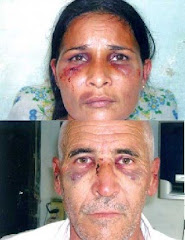
Cuba needs law against gender violence, activists say
Cuba needs law against gender violence, activists say
CARIBBEAN360 DECEMBER 31, 2015
LUIS BAÑOS/IPS)
By Patricia Grogg
HAVANA, Cuba, Thursday December 31, IPS – Activists and researchers
dedicated to the study of gender violence in Cuba insist on the need for
a comprehensive law to protect the victims and prevent the problem,
which was publicly ignored until only a few years ago in this socialist
Caribbean island nation.
Legislation is necessary "because even when the ideal in our society is
justice and equality, there are social expressions of violence against
women that have been kept invisible, which contributes to the impunity
enjoyed by the abusers," psychologist Valia Solís told IPS.
Solis, with the non-governmental Christian Centre for Reflection and
Dialogue – Cuba (CCRD), based in Cárdenas in the western province of
Matanzas, added that the law should not be limited to providing for
prison terms, because violence requires a preventive approach in order
to keep the behavior and its consequences from getting worse.
Several articles of the Cuban constitution, the penal code and other
legislation refer to gender equality. But there are no specific laws
aimed at fighting sexist violence, or adequate instruments to protect
the victims.
People who face gender-related mistreatment are "in a state of
vulnerability, and a law could attenuate this," said Aida Torralbas, a
professor and researcher at the university of the eastern province of
Holguín, who said the phenomenon is largely unnoticed and surrounded by
impunity.
In her view, although a punitive response is not the best option,
because it addresses the problem after the act, it is important because
it recognizes gender violence as something that must be punished and
that hurts the integrity of another person. Torralbas concurs with other
academics that education is an essential factor in combating the problem.
"That's why a law of this kind must also take into account the
possibility of educating society in non-patriarchal and non-sexist
values that modify ways of thinking and acting," she said. The expert
also argued that it is important to strengthen training of judicial
system and law enforcement personnel with respect to how to deal with
these issues.
"It's a fact that the police themselves do not know how to handle these
questions," Mercedes Abreu, a social worker with the Integral
Neighbourhood Transformation Workshop (TTIB) of Pogolotti, in the Havana
district of Marianao, told IPS.
The TTIBs were created in 1988 to carry out social work in poor
neighbourhoods in the capital, and are under municipal government
administration.
"Women themselves often do not know that they're the victims of violence
in the family, in the workplace, in the community. Ignorance leads us to
turn a blind eye to this problem," said Abreu, who also said the Cuban
population "has very little legal awareness."
The TTIBs and civil society organizations have helped pull out of the
closet a reality that is the product of Cuba's patriarchal culture,
which runs counter to the progress made towards equality such as equal
wages for men and women, the massive incorporation of girls and women in
education and the labour market, and free, universal access to abortion
on demand.
For example, since 2007, the "Oscar Arnulfo Romero" Centre for
Reflection and Solidarity (OAR) and other groups have been organizing an
annual National Day for Non-Violence Against Women, to coincide with the
16 days of global activism between November 25 and December 10.
Without underestimating the impact achieved by this activism, Abreu
believes the question of violence must be addressed continually from
different angles. "We can't just focus on it during the week of activism
against violence. Progress can't be made this way," said the social
worker, who has worked for several years in a low-income neighbourhood.
In her view, the efforts must involve families, schools, the family
doctor, social workers, the Federation of Cuban Women, decision-makers,
the media, churches, activists, lawyers, judges and the police.
Elaine Saralegui, a theologian and pastor of the Metropolitan Church in
Cuba, in the western province of Matanzas, told IPS that "violence has
to do with the established order and with the relations between people
or groups in unequal positions of power."
She said laws were needed to protect and promote free expression of
gender identity. "When we talk about gender, people generally think
about men and women, and we tend to ignore other expressions of gender
that don't fit in the heteronormative mindset," she said.
She said the country needs "laws that can offer legal protection across
the board, explicitly, where each one of the faces of the people hurt by
heteronormativity, patriarchal sexism and gender violence are taken into
consideration."
"So we're talking about heterosexual women, but also about people with
different sexual orientations and gender identities," she said.
In 2012, the first National Conference of the governing Communist Party
of Cuba (PCC) included the rejection of gender and domestic violence in
its objectives, in what was seen as an important official recognition of
the issue.
The PCC is organizing its seventh congress for April 2016, with an
agenda that includes assessment of compliance with the agreements
reached at the party's sixth congress and First National Conference. The
last congress, in 2011, approved a programme of reforms to update the
country's socialist model of development.
Next year, the governmental Women's Studies Centre and the National
Statistics and Information Office plan to carry out a national survey on
gender equality, although it is not clear whether gender violence will
be included in the questions.
According to the Economic Commission for Latin America and the Caribbean
(ECLAC), 20 countries in Latin America and the Caribbean now have laws
against gender violence, although only eight have earmarked specific
funds in the national budget.
Meanwhile, 14 countries have created a separate criminal classification
for femicide – gender-motivated murders – and two have established that
it is homicide aggravated by gender hostility in their legislation.
Source: Cuba needs law against gender violence, activists say |
Caribbean360 - http://www.caribbean360.com/news/1129185
CARIBBEAN360 DECEMBER 31, 2015
LUIS BAÑOS/IPS)
By Patricia Grogg
HAVANA, Cuba, Thursday December 31, IPS – Activists and researchers
dedicated to the study of gender violence in Cuba insist on the need for
a comprehensive law to protect the victims and prevent the problem,
which was publicly ignored until only a few years ago in this socialist
Caribbean island nation.
Legislation is necessary "because even when the ideal in our society is
justice and equality, there are social expressions of violence against
women that have been kept invisible, which contributes to the impunity
enjoyed by the abusers," psychologist Valia Solís told IPS.
Solis, with the non-governmental Christian Centre for Reflection and
Dialogue – Cuba (CCRD), based in Cárdenas in the western province of
Matanzas, added that the law should not be limited to providing for
prison terms, because violence requires a preventive approach in order
to keep the behavior and its consequences from getting worse.
Several articles of the Cuban constitution, the penal code and other
legislation refer to gender equality. But there are no specific laws
aimed at fighting sexist violence, or adequate instruments to protect
the victims.
People who face gender-related mistreatment are "in a state of
vulnerability, and a law could attenuate this," said Aida Torralbas, a
professor and researcher at the university of the eastern province of
Holguín, who said the phenomenon is largely unnoticed and surrounded by
impunity.
In her view, although a punitive response is not the best option,
because it addresses the problem after the act, it is important because
it recognizes gender violence as something that must be punished and
that hurts the integrity of another person. Torralbas concurs with other
academics that education is an essential factor in combating the problem.
"That's why a law of this kind must also take into account the
possibility of educating society in non-patriarchal and non-sexist
values that modify ways of thinking and acting," she said. The expert
also argued that it is important to strengthen training of judicial
system and law enforcement personnel with respect to how to deal with
these issues.
"It's a fact that the police themselves do not know how to handle these
questions," Mercedes Abreu, a social worker with the Integral
Neighbourhood Transformation Workshop (TTIB) of Pogolotti, in the Havana
district of Marianao, told IPS.
The TTIBs were created in 1988 to carry out social work in poor
neighbourhoods in the capital, and are under municipal government
administration.
"Women themselves often do not know that they're the victims of violence
in the family, in the workplace, in the community. Ignorance leads us to
turn a blind eye to this problem," said Abreu, who also said the Cuban
population "has very little legal awareness."
The TTIBs and civil society organizations have helped pull out of the
closet a reality that is the product of Cuba's patriarchal culture,
which runs counter to the progress made towards equality such as equal
wages for men and women, the massive incorporation of girls and women in
education and the labour market, and free, universal access to abortion
on demand.
For example, since 2007, the "Oscar Arnulfo Romero" Centre for
Reflection and Solidarity (OAR) and other groups have been organizing an
annual National Day for Non-Violence Against Women, to coincide with the
16 days of global activism between November 25 and December 10.
Without underestimating the impact achieved by this activism, Abreu
believes the question of violence must be addressed continually from
different angles. "We can't just focus on it during the week of activism
against violence. Progress can't be made this way," said the social
worker, who has worked for several years in a low-income neighbourhood.
In her view, the efforts must involve families, schools, the family
doctor, social workers, the Federation of Cuban Women, decision-makers,
the media, churches, activists, lawyers, judges and the police.
Elaine Saralegui, a theologian and pastor of the Metropolitan Church in
Cuba, in the western province of Matanzas, told IPS that "violence has
to do with the established order and with the relations between people
or groups in unequal positions of power."
She said laws were needed to protect and promote free expression of
gender identity. "When we talk about gender, people generally think
about men and women, and we tend to ignore other expressions of gender
that don't fit in the heteronormative mindset," she said.
She said the country needs "laws that can offer legal protection across
the board, explicitly, where each one of the faces of the people hurt by
heteronormativity, patriarchal sexism and gender violence are taken into
consideration."
"So we're talking about heterosexual women, but also about people with
different sexual orientations and gender identities," she said.
In 2012, the first National Conference of the governing Communist Party
of Cuba (PCC) included the rejection of gender and domestic violence in
its objectives, in what was seen as an important official recognition of
the issue.
The PCC is organizing its seventh congress for April 2016, with an
agenda that includes assessment of compliance with the agreements
reached at the party's sixth congress and First National Conference. The
last congress, in 2011, approved a programme of reforms to update the
country's socialist model of development.
Next year, the governmental Women's Studies Centre and the National
Statistics and Information Office plan to carry out a national survey on
gender equality, although it is not clear whether gender violence will
be included in the questions.
According to the Economic Commission for Latin America and the Caribbean
(ECLAC), 20 countries in Latin America and the Caribbean now have laws
against gender violence, although only eight have earmarked specific
funds in the national budget.
Meanwhile, 14 countries have created a separate criminal classification
for femicide – gender-motivated murders – and two have established that
it is homicide aggravated by gender hostility in their legislation.
Source: Cuba needs law against gender violence, activists say |
Caribbean360 - http://www.caribbean360.com/news/1129185
Tampa company hopes to open warehouse distribution center in Cuba
Tampa company hopes to open warehouse distribution center in Cuba
Florida Produce wants to lease warehouse for products that can legally
be exported to Cuba
It plans to head to Havana in late January for talks with Cuban government
The company has been exporting food to Cuba since 2001
BY MIMI WHITEFIELD
mwhitefield@miamiherald.com
A Tampa company is trying to win approval from the Cuban government to
open a warehouse distribution facility in Cuba that could potentially
supply the island's budding private sector and would stock U.S. products
allowed to be exported to Cuba under exceptions to the embargo.
Florida Produce, a veteran of exporting food to Cuba, first presented
the plan to Cuban officials in October and plans to head to Havana in
late January in hopes of winning approval to establish the warehouse
operation in a free zone on the outskirts of Havana. Initially the
company was interested in the Mariel Special Economic Zone, the
centerpiece of Cuban government efforts to attract foreign investment,
but was told that it was reserved for manufacturing only.
"They're cautiously looking at this," said Mike Mauricio, president of
Florida Produce. "The Cubans move very slowly; they don't move quickly
for anything." But he's optimistic that Florida Produce will be able to
reach a lease agreement on an existing warehouse after the company's
next meeting with Cuban officials.
The idea would be to stock the warehouse with food products, drinking
water, beer, wine and liquor, telecommunications, building, restaurant
and agricultural equipment and construction materials that would be
available for purchase at wholesale prices. Mauricio said the company's
license from Treasury's Office of Foreign Assets Control stipulates that
food and beverages must be sold in by-the-case quantities.
All the products Mauricio and partner Manuel Fernandez are proposing to
stock are legally allowed to be exported from the United States to Cuba.
"We want to bring in everything currently permitted under U.S.
regulations but with a focus on food and beverage," said Tim Hunt,
Florida Produce's lawyer.
Florida Produce and Cleber, an Alabama-based company that makes small
tractors, both applied for licenses in early 2015 to have a physical
presence in Cuba. "We received a formal green-light letter from OFAC — I
believe the only one," Hunt said Thursday.
Although Florida Produce now has a U.S. license in hand, a change in
U.S. regulations means that a specific license is no longer required for
companies that fall into categories authorized to do business with Cuba.
The new regulations announced in September not only allow U.S. companies
in certain categories to establish a physical presence in Cuba but also
permit them to open bank accounts there, hire Cuban nationals and employ
U.S. citizens to work in Cuba.
If the Cubans approve Florida Produce's proposal, it would be the first
such warehouse operation by a U.S. company in Cuba in more than five
decades.
"If we find success, we'll be helping the Cuban people," said Mauricio.
Private entrepreneurs have long complained about the dearth of wholesale
outlets in Cuba and the problems they have finding the products and
materials they need to run their businesses.
The Obama administration's limited commercial opening toward Cuba is
designed to engage and empower the Cuban people, but Treasury has said
it will allow trade with Cuban government importing agencies for many
products as long as they end up in the hands of the Cuban people.
The Florida Produce proposal calls for the Tampa company to operate the
warehouse facility itself, but initial conversations with Cuban
officials indicate they might be more interested in a joint venture,
said Hunt. "The question is whether the Cuban government wants to be the
gatekeeper and stay in control," he said.
Although U.S. regulations allow companies such as Florida Produce to
sell to private individuals and the Cuban government, Hunt said he
expects sales will probably be handled through government importing
entities.
Florida Produce is looking to lease a 75,000- to 100,000-square-foot
warehouse and has said it will cover the cost of warehouse refurbishing,
refrigeration units and trucks that would deliver the products, said Hunt.
"We're ready to come and negotiate. If it's a short-term lease what does
the Cuban government have to lose?" asked Hunt. "You've got to start
somewhere. Food and beverage to me is the easiest starting point. This
is a pretty straight-forward request."
But he said he's a bit concerned that some Cuban officials seem to have
taken the attitude that if U.S. companies can't get into Cuba to take
advantage of opportunities allowed under the new U.S. regulations, they
will go to Washington and put more pressure on Congress to lift the embargo.
"I personally think if the Cubans make it too difficult, U.S. companies
will go elsewhere," he said. "Time will tell but if they don't show some
willingness to give U.S. business a chance, I think a lot of people will
run out of gas."
But Mauricio has been selling food to Cuba, everything from fresh
produce and rice to beans, cereal and canned goods, since 2001 under the
Trade Sanctions Reform and Export Enhancement Act that allows U.S.
exports of humanitarian shipments. "He's pretty persistent," said Hunt.
Source: Tampa company hopes to open warehouse distribution center in
Cuba | Miami Herald -
http://www.miamiherald.com/news/business/international-business/article52523890.html
Florida Produce wants to lease warehouse for products that can legally
be exported to Cuba
It plans to head to Havana in late January for talks with Cuban government
The company has been exporting food to Cuba since 2001
BY MIMI WHITEFIELD
mwhitefield@miamiherald.com
A Tampa company is trying to win approval from the Cuban government to
open a warehouse distribution facility in Cuba that could potentially
supply the island's budding private sector and would stock U.S. products
allowed to be exported to Cuba under exceptions to the embargo.
Florida Produce, a veteran of exporting food to Cuba, first presented
the plan to Cuban officials in October and plans to head to Havana in
late January in hopes of winning approval to establish the warehouse
operation in a free zone on the outskirts of Havana. Initially the
company was interested in the Mariel Special Economic Zone, the
centerpiece of Cuban government efforts to attract foreign investment,
but was told that it was reserved for manufacturing only.
"They're cautiously looking at this," said Mike Mauricio, president of
Florida Produce. "The Cubans move very slowly; they don't move quickly
for anything." But he's optimistic that Florida Produce will be able to
reach a lease agreement on an existing warehouse after the company's
next meeting with Cuban officials.
The idea would be to stock the warehouse with food products, drinking
water, beer, wine and liquor, telecommunications, building, restaurant
and agricultural equipment and construction materials that would be
available for purchase at wholesale prices. Mauricio said the company's
license from Treasury's Office of Foreign Assets Control stipulates that
food and beverages must be sold in by-the-case quantities.
All the products Mauricio and partner Manuel Fernandez are proposing to
stock are legally allowed to be exported from the United States to Cuba.
"We want to bring in everything currently permitted under U.S.
regulations but with a focus on food and beverage," said Tim Hunt,
Florida Produce's lawyer.
Florida Produce and Cleber, an Alabama-based company that makes small
tractors, both applied for licenses in early 2015 to have a physical
presence in Cuba. "We received a formal green-light letter from OFAC — I
believe the only one," Hunt said Thursday.
Although Florida Produce now has a U.S. license in hand, a change in
U.S. regulations means that a specific license is no longer required for
companies that fall into categories authorized to do business with Cuba.
The new regulations announced in September not only allow U.S. companies
in certain categories to establish a physical presence in Cuba but also
permit them to open bank accounts there, hire Cuban nationals and employ
U.S. citizens to work in Cuba.
If the Cubans approve Florida Produce's proposal, it would be the first
such warehouse operation by a U.S. company in Cuba in more than five
decades.
"If we find success, we'll be helping the Cuban people," said Mauricio.
Private entrepreneurs have long complained about the dearth of wholesale
outlets in Cuba and the problems they have finding the products and
materials they need to run their businesses.
The Obama administration's limited commercial opening toward Cuba is
designed to engage and empower the Cuban people, but Treasury has said
it will allow trade with Cuban government importing agencies for many
products as long as they end up in the hands of the Cuban people.
The Florida Produce proposal calls for the Tampa company to operate the
warehouse facility itself, but initial conversations with Cuban
officials indicate they might be more interested in a joint venture,
said Hunt. "The question is whether the Cuban government wants to be the
gatekeeper and stay in control," he said.
Although U.S. regulations allow companies such as Florida Produce to
sell to private individuals and the Cuban government, Hunt said he
expects sales will probably be handled through government importing
entities.
Florida Produce is looking to lease a 75,000- to 100,000-square-foot
warehouse and has said it will cover the cost of warehouse refurbishing,
refrigeration units and trucks that would deliver the products, said Hunt.
"We're ready to come and negotiate. If it's a short-term lease what does
the Cuban government have to lose?" asked Hunt. "You've got to start
somewhere. Food and beverage to me is the easiest starting point. This
is a pretty straight-forward request."
But he said he's a bit concerned that some Cuban officials seem to have
taken the attitude that if U.S. companies can't get into Cuba to take
advantage of opportunities allowed under the new U.S. regulations, they
will go to Washington and put more pressure on Congress to lift the embargo.
"I personally think if the Cubans make it too difficult, U.S. companies
will go elsewhere," he said. "Time will tell but if they don't show some
willingness to give U.S. business a chance, I think a lot of people will
run out of gas."
But Mauricio has been selling food to Cuba, everything from fresh
produce and rice to beans, cereal and canned goods, since 2001 under the
Trade Sanctions Reform and Export Enhancement Act that allows U.S.
exports of humanitarian shipments. "He's pretty persistent," said Hunt.
Source: Tampa company hopes to open warehouse distribution center in
Cuba | Miami Herald -
http://www.miamiherald.com/news/business/international-business/article52523890.html
Year 57 and Raul tells Cubans to get ready for hard times
Year 57 and Raul tells Cubans to get ready for hard times
By Silvio Canto, Jr. January 1, 2016
For those who may not know, it was 57 years ago today that Batista fled
Cuba and Fidel Castro filled the vacuum created. It did not happen as
depicted in Godfather II, but he did leave in a military plane with Mrs.
Batista, a few friends, and lots of personal belongings. In other
words, people were not running for their boats or revolutionaries
willing to blow up themselves for the cause. In fact, most Cubans heard
the news on radio or TV, as my parents did.
On January 1st, the Cuban government will celebrate another anniversary.
Usually, Fidel Castro gave a multi-hour speech that you had to watch on
TV unless you had a radio that could pick up a Miami AM music station.
This year, Raul Castro, who is filling in for sick brother, is telling
Cubans to get ready for very hard times ahead. My friend Dr. Carlos Eire
brought this speech to my attention today and commented this:
Well…. as unpleasant as it is to say "we told you so," it's appropriate
to do so after reading today's article in the Washington Post.
As long as the Castro dynasty and its feudal hierarchy control Cuba, the
island's 11.5 million serfs and slaves will know nothing but abject misery.
And as long as the U.S. continues to support that regime, the misery
will only worsen. Read the last paragraph of the article below to get a
glimpse of one of the many reasons for this.
King Raul is taking his theater of the absurd taken to new levels of
absurdity. Call it post-absurdity or neo-absurdity or hyper-absurdity.
Unfortunately, the actors in this insane asylum theater have no choice
but to play their part or to flee.
And the rest of the world thinks that this theater is absolutely normal,
and quite wonderful for the exotic noble savages who are forced to act
in it.
This is from the Washington Post:
Castro appeared to be preparing Cubans for harder times ahead, saying
that "we must cut any unnecessary spending and make use of the resources
that we have with more rationality and with the goal of developing the
country."
He dedicated a lengthy section of his speech to Venezuela, where the
opposition to Cuba-backed socialist President Nicolas Maduro recently
took control of parliament amid widespread shortages and spiraling violence.
Cheap oil "has affected our relationship of mutual aid with various
countries, particularly the Bolivarian Republic of Venezuela, the target
of an economic war aimed at undermining popular support for its
revolution," Castro said.
He urged Cubans to avoid what he labeled "defeatism" in the face of a
drop in Venezuelan aid, saying "the history of our revolution is full of
glorious pages despite difficulties, risks and threats."
More than 3 million tourists visited in 2015, an increase of nearly 20
percent in the wake of President Barack Obama's declaration of detente
with Cuba. The surge in visitors pumped cash into the state-controlled
tourist economy and the growing sector of private bed-and-breakfasts and
restaurants, but it also drove up household inflation. In the absence of
a wholesale market for private businesses in Cuba's state-controlled
economy, entrepreneurs have been forced to compete with cash-strapped
consumers, driving up prices by driving off with cartloads of basic
foodstuffs like eggs and flour.
Raul Castro did not blame the embargo or Guantanamo. I guess that will
come in the next speech.
Year 57 of Castro starts today and Cuba has gone backward every single
year. Of course, I'm not speaking about the Castro family or their
Castro Inc. Not at all! Castro Inc. is doing better than ever,
especially now that President Obama's decision is putting more tourists
(cash) in the Castro Inc. hotels.
Year 57 will bring more misery and shortages to people in Cuba.
Source: Blog: Year 57 and Raul tells Cubans to get ready for hard times
-
http://www.americanthinker.com/blog/2015/12/year_57_and_raul_tells_cubans_to_get_ready_for_hard_times.html
By Silvio Canto, Jr. January 1, 2016
For those who may not know, it was 57 years ago today that Batista fled
Cuba and Fidel Castro filled the vacuum created. It did not happen as
depicted in Godfather II, but he did leave in a military plane with Mrs.
Batista, a few friends, and lots of personal belongings. In other
words, people were not running for their boats or revolutionaries
willing to blow up themselves for the cause. In fact, most Cubans heard
the news on radio or TV, as my parents did.
On January 1st, the Cuban government will celebrate another anniversary.
Usually, Fidel Castro gave a multi-hour speech that you had to watch on
TV unless you had a radio that could pick up a Miami AM music station.
This year, Raul Castro, who is filling in for sick brother, is telling
Cubans to get ready for very hard times ahead. My friend Dr. Carlos Eire
brought this speech to my attention today and commented this:
Well…. as unpleasant as it is to say "we told you so," it's appropriate
to do so after reading today's article in the Washington Post.
As long as the Castro dynasty and its feudal hierarchy control Cuba, the
island's 11.5 million serfs and slaves will know nothing but abject misery.
And as long as the U.S. continues to support that regime, the misery
will only worsen. Read the last paragraph of the article below to get a
glimpse of one of the many reasons for this.
King Raul is taking his theater of the absurd taken to new levels of
absurdity. Call it post-absurdity or neo-absurdity or hyper-absurdity.
Unfortunately, the actors in this insane asylum theater have no choice
but to play their part or to flee.
And the rest of the world thinks that this theater is absolutely normal,
and quite wonderful for the exotic noble savages who are forced to act
in it.
This is from the Washington Post:
Castro appeared to be preparing Cubans for harder times ahead, saying
that "we must cut any unnecessary spending and make use of the resources
that we have with more rationality and with the goal of developing the
country."
He dedicated a lengthy section of his speech to Venezuela, where the
opposition to Cuba-backed socialist President Nicolas Maduro recently
took control of parliament amid widespread shortages and spiraling violence.
Cheap oil "has affected our relationship of mutual aid with various
countries, particularly the Bolivarian Republic of Venezuela, the target
of an economic war aimed at undermining popular support for its
revolution," Castro said.
He urged Cubans to avoid what he labeled "defeatism" in the face of a
drop in Venezuelan aid, saying "the history of our revolution is full of
glorious pages despite difficulties, risks and threats."
More than 3 million tourists visited in 2015, an increase of nearly 20
percent in the wake of President Barack Obama's declaration of detente
with Cuba. The surge in visitors pumped cash into the state-controlled
tourist economy and the growing sector of private bed-and-breakfasts and
restaurants, but it also drove up household inflation. In the absence of
a wholesale market for private businesses in Cuba's state-controlled
economy, entrepreneurs have been forced to compete with cash-strapped
consumers, driving up prices by driving off with cartloads of basic
foodstuffs like eggs and flour.
Raul Castro did not blame the embargo or Guantanamo. I guess that will
come in the next speech.
Year 57 of Castro starts today and Cuba has gone backward every single
year. Of course, I'm not speaking about the Castro family or their
Castro Inc. Not at all! Castro Inc. is doing better than ever,
especially now that President Obama's decision is putting more tourists
(cash) in the Castro Inc. hotels.
Year 57 will bring more misery and shortages to people in Cuba.
Source: Blog: Year 57 and Raul tells Cubans to get ready for hard times
-
http://www.americanthinker.com/blog/2015/12/year_57_and_raul_tells_cubans_to_get_ready_for_hard_times.html
Two Iowa lawmakers leading trade mission to Cuba
Two Iowa lawmakers leading trade mission to Cuba
16 hours ago • By Rod Boshart
DES MOINES | Two Democratic state legislators announced Thursday they
will lead a delegation visiting Cuba next week looking to form
relationships between Cuba and Iowa in order to open up options for
potential future trade.
Sen. Steve Sodders, D-Marshalltown, and Rep. Kirsten Running-Marquardt,
D-Cedar Rapids, said they will be meeting with representatives from the
Cuban government and business leaders to focus on fostering new business
opportunities between Iowa and Cuba.
The four-day trade mission beginning next Tuesday also will include
representatives of economic development, tourism, and trade interests.
The timing will allow the two state legislators to be back in Iowa in
time for the Jan. 11 start of the Iowa General Assembly's 2016 session.
"These meetings in Cuba are part of ongoing efforts to improve
relationships with this emerging new market located just off the coast
of the United States," said Sodders, vice chairman of the Senate
Economic Growth Committee. "Iowans create many products which could find
a market in Cuba. Expanded trade can bring benefits to the people of
both countries."
Sodders and Running-Marquardt will be joined by Carlos Portes, a former
ambassador for Latin America. Portes – who came to the U.S. at the age
of 9 and was raised by a Marshalltown family -- later was appointed
Special Ambassador for Latin American affairs by President Jimmy Carter.
"These meetings will be an opportunity to showcase Iowa and develop
future economic growth, as well as build key relationships, " said
Running-Marquardt, ranking member of the House economic development
budget subcommittee. "The United States military has made this next step
possible. Without their sacrifice we would not be able to move forward
to build peaceful and beneficial relationships between Iowa and Cuba."
During last session, Sodders introduced a resolution approved by the
Iowa Senate that promoted efforts to develop support for an enhanced
trade relationship between Iowa and Cuba.
Source: Two Iowa lawmakers leading trade mission to Cuba -
http://wcfcourier.com/news/local/govt-and-politics/two-iowa-lawmakers-leading-trade-mission-to-cuba/article_d10e2592-43b1-5d6a-86bd-a4130b705157.html
16 hours ago • By Rod Boshart
DES MOINES | Two Democratic state legislators announced Thursday they
will lead a delegation visiting Cuba next week looking to form
relationships between Cuba and Iowa in order to open up options for
potential future trade.
Sen. Steve Sodders, D-Marshalltown, and Rep. Kirsten Running-Marquardt,
D-Cedar Rapids, said they will be meeting with representatives from the
Cuban government and business leaders to focus on fostering new business
opportunities between Iowa and Cuba.
The four-day trade mission beginning next Tuesday also will include
representatives of economic development, tourism, and trade interests.
The timing will allow the two state legislators to be back in Iowa in
time for the Jan. 11 start of the Iowa General Assembly's 2016 session.
"These meetings in Cuba are part of ongoing efforts to improve
relationships with this emerging new market located just off the coast
of the United States," said Sodders, vice chairman of the Senate
Economic Growth Committee. "Iowans create many products which could find
a market in Cuba. Expanded trade can bring benefits to the people of
both countries."
Sodders and Running-Marquardt will be joined by Carlos Portes, a former
ambassador for Latin America. Portes – who came to the U.S. at the age
of 9 and was raised by a Marshalltown family -- later was appointed
Special Ambassador for Latin American affairs by President Jimmy Carter.
"These meetings will be an opportunity to showcase Iowa and develop
future economic growth, as well as build key relationships, " said
Running-Marquardt, ranking member of the House economic development
budget subcommittee. "The United States military has made this next step
possible. Without their sacrifice we would not be able to move forward
to build peaceful and beneficial relationships between Iowa and Cuba."
During last session, Sodders introduced a resolution approved by the
Iowa Senate that promoted efforts to develop support for an enhanced
trade relationship between Iowa and Cuba.
Source: Two Iowa lawmakers leading trade mission to Cuba -
http://wcfcourier.com/news/local/govt-and-politics/two-iowa-lawmakers-leading-trade-mission-to-cuba/article_d10e2592-43b1-5d6a-86bd-a4130b705157.html
Cuba's Famous Tropicana Dancers Come to Miami For First Time
Cuba's Famous Tropicana Dancers Come to Miami For First Time
Written by Hayley Phelan December 31, 2015
As Cuba and the U.S. continue to warm up to each other, new Miami
hotspot El Tucan is set to add some serious sizzle to the courtship.
On December 30, 1939, at a villa on the outskirts of Havana, doors
opened at what would become one of the world's most famous cabarets. It
was called the Tropicana—and for the next 20 years, it became the
epicenter of hedonism, a veritable bacchanalian eden for the jet set.
Ernest Hemingway drank there. So did J.F.K. Marlon Brando supposedly
tried to buy the drum set right off the stage—before taking off with two
of the establishment's best showgirls instead. The performers became
celebrities and the show was so popular that, in 1956, the Tropicana
debuted its first promotional flight from Miami to Havana, entertaining
revelers on a Cubana de Aviación plane with in-air performances. Then,
toward the end of the 1950s, Fidel Castro took control of the country
and everything changed; the club's owners quickly fled (or were
imprisoned) and the showgirls' travel was greatly restricted. Americans,
needless to say, were no longer welcome.
Today, however, marks a new era for the Tropicana. The club's famous
entertainers are set to perform at new Miami hotspot El Tucan for a New
Year's Eve bash that's set to make history: When the feathered and
bedazzled dancers hit the stage tonight, it'll be the first time in 32
years they've done so in the United States.
"The arrival of the Tropicana dancers to the States is a sign," said
Havana-based filmmaker and producer of the show, Rolando Almirante. "It
is like a greeting from Cuba, which is why we called the show Ola
Havana. We wanted to use this moment to bring the roots of the two
shores together again."
The arrival of the Tropicana dancers to the States is a sign. It is like
a greeting from Cuba.
The performance is the culmination of a long, arduous—and
surprising—journey that began over a year ago, when nightlife
impresarios Mathieu Massa and Michael Ridard signed a 20-year lease on a
space in upcoming Miami neighborhood Brickell with plans to open a Cuban
cabaret. "We had no idea what was about to happen between the two
countries," said Massa, a French transplant who, along with partner
Ridard, owns Miami eateries Baoli and Marion. "A few weeks after we
signed, [President] Obama shook the hand of Raul Castro for the first
time in I don't know how many years."
Massa and Ridard had already teamed up with Cuban-American Emilia
Menocal (director of the Charlize Theron–produced doc East of Havana) to
create a dinner and show experience at El Tucan that would pay homage to
the glamorous Cuban cabarets of the 1940s and '50s. The trio, along with
their team of creatives, began visiting Cuba in late 2014 and early 2015
to conduct some very fun research: "We rented a house in Havana and
began going out every single night to every single live performance to
get inspiration for the atmosphere and performance," said Massa. The
biggest lesson he learned? "The personality of the characters and the
performers is key to getting the audience emotionally involved," he
said—which is why El Tucan's bartenders and waiters also had to audition
for the gig.
As Massa and his team got to work on the new space, Cuban-American
relationships continued to warm up. "I thought it would be a perfect
opportunity to create a bridge, to give the opportunity to the younger
Cuban-American generation to learn about their cultural heritage by
bringing the jewel of the country—the Tropicana—here," he said. Again,
his timing was impeccable: After tracking down the man in charge at the
Tropicana, Massa was informed that the cabaret was already planning a
world tour. It was decided then, that the tour would kick off in Miami
at the El Tucan.
"It's very symbolic that we're starting in Miami," said Almirante, who,
along with Massa, noted that there was plenty of red tape to cross.
"We've been working on this a long time. But we feel that all that work
will pay off."
The one-hour performance will feature 15 dancers, two live singers—and
12 outfit changes (fun fact: the costumes arrived in nine crates from
Cuba, weighing a staggering 850 pounds). And, if performer Alisbet Rebe
Reyes, aka La Santiaguera, has any say in it, it will indeed be truly
unforgettable.
"It is my first time in Miami and an absolute honor," she said. "I am
excited to share a piece of my culture and to give native Cubans in
Miami a taste of home. I am emotional and ready to give the best
performance Miami has ever seen. Get ready for some flavor!"
You can read more about the historic performance (and buy tickets) at El
Tucan's website. The Tropicana dancers will be performing through
January 2. Back in Cuba, catch one of El Tucan's regular cabaret shows,
every Thursday through Saturday. Diners are seated at 8 p.m. and 10
p.m., but walk-in guests are welcome to grab a drink at the bar and take
in the show from there.
Source: Cuba's Famous Tropicana Dancers Come to Miami For First Time -
Condé Nast Traveler -
http://www.cntraveler.com/stories/2015-12-31/cubas-famous-tropicana-dancers-come-to-miami-for-first-time
Written by Hayley Phelan December 31, 2015
As Cuba and the U.S. continue to warm up to each other, new Miami
hotspot El Tucan is set to add some serious sizzle to the courtship.
On December 30, 1939, at a villa on the outskirts of Havana, doors
opened at what would become one of the world's most famous cabarets. It
was called the Tropicana—and for the next 20 years, it became the
epicenter of hedonism, a veritable bacchanalian eden for the jet set.
Ernest Hemingway drank there. So did J.F.K. Marlon Brando supposedly
tried to buy the drum set right off the stage—before taking off with two
of the establishment's best showgirls instead. The performers became
celebrities and the show was so popular that, in 1956, the Tropicana
debuted its first promotional flight from Miami to Havana, entertaining
revelers on a Cubana de Aviación plane with in-air performances. Then,
toward the end of the 1950s, Fidel Castro took control of the country
and everything changed; the club's owners quickly fled (or were
imprisoned) and the showgirls' travel was greatly restricted. Americans,
needless to say, were no longer welcome.
Today, however, marks a new era for the Tropicana. The club's famous
entertainers are set to perform at new Miami hotspot El Tucan for a New
Year's Eve bash that's set to make history: When the feathered and
bedazzled dancers hit the stage tonight, it'll be the first time in 32
years they've done so in the United States.
"The arrival of the Tropicana dancers to the States is a sign," said
Havana-based filmmaker and producer of the show, Rolando Almirante. "It
is like a greeting from Cuba, which is why we called the show Ola
Havana. We wanted to use this moment to bring the roots of the two
shores together again."
The arrival of the Tropicana dancers to the States is a sign. It is like
a greeting from Cuba.
The performance is the culmination of a long, arduous—and
surprising—journey that began over a year ago, when nightlife
impresarios Mathieu Massa and Michael Ridard signed a 20-year lease on a
space in upcoming Miami neighborhood Brickell with plans to open a Cuban
cabaret. "We had no idea what was about to happen between the two
countries," said Massa, a French transplant who, along with partner
Ridard, owns Miami eateries Baoli and Marion. "A few weeks after we
signed, [President] Obama shook the hand of Raul Castro for the first
time in I don't know how many years."
Massa and Ridard had already teamed up with Cuban-American Emilia
Menocal (director of the Charlize Theron–produced doc East of Havana) to
create a dinner and show experience at El Tucan that would pay homage to
the glamorous Cuban cabarets of the 1940s and '50s. The trio, along with
their team of creatives, began visiting Cuba in late 2014 and early 2015
to conduct some very fun research: "We rented a house in Havana and
began going out every single night to every single live performance to
get inspiration for the atmosphere and performance," said Massa. The
biggest lesson he learned? "The personality of the characters and the
performers is key to getting the audience emotionally involved," he
said—which is why El Tucan's bartenders and waiters also had to audition
for the gig.
As Massa and his team got to work on the new space, Cuban-American
relationships continued to warm up. "I thought it would be a perfect
opportunity to create a bridge, to give the opportunity to the younger
Cuban-American generation to learn about their cultural heritage by
bringing the jewel of the country—the Tropicana—here," he said. Again,
his timing was impeccable: After tracking down the man in charge at the
Tropicana, Massa was informed that the cabaret was already planning a
world tour. It was decided then, that the tour would kick off in Miami
at the El Tucan.
"It's very symbolic that we're starting in Miami," said Almirante, who,
along with Massa, noted that there was plenty of red tape to cross.
"We've been working on this a long time. But we feel that all that work
will pay off."
The one-hour performance will feature 15 dancers, two live singers—and
12 outfit changes (fun fact: the costumes arrived in nine crates from
Cuba, weighing a staggering 850 pounds). And, if performer Alisbet Rebe
Reyes, aka La Santiaguera, has any say in it, it will indeed be truly
unforgettable.
"It is my first time in Miami and an absolute honor," she said. "I am
excited to share a piece of my culture and to give native Cubans in
Miami a taste of home. I am emotional and ready to give the best
performance Miami has ever seen. Get ready for some flavor!"
You can read more about the historic performance (and buy tickets) at El
Tucan's website. The Tropicana dancers will be performing through
January 2. Back in Cuba, catch one of El Tucan's regular cabaret shows,
every Thursday through Saturday. Diners are seated at 8 p.m. and 10
p.m., but walk-in guests are welcome to grab a drink at the bar and take
in the show from there.
Source: Cuba's Famous Tropicana Dancers Come to Miami For First Time -
Condé Nast Traveler -
http://www.cntraveler.com/stories/2015-12-31/cubas-famous-tropicana-dancers-come-to-miami-for-first-time
Political Prisoner ‘Freed’ by Cuba Deal on Day 81 of Prison Hunger Strike
Political Prisoner 'Freed' by Cuba Deal on Day 81 of Prison Hunger Strike
by FRANCES MARTEL 31 Dec 2015
Vladimir Morera Bacallao, a Cuban dissident allegedly freed as part of
President Obama's deal with Cuba but sentenced to four years in prison
shortly after being released, is currently on his 81st day of a hunger
strike that has left him in critical condition.
"He does not recognize us," his wife told the U.S.-based Martí noticias,
and is in extremely grave condition in a hospital in Villa Clara. He
reportedly weighs 93 pounds, and relatives expressed little hope for his
survival. "He is very grave… [but] they say he is a prisoner so we are
not allowed to see him," Morera's sister told AFP.
Morera was arrested in April for hanging a sign on his window condemning
the communist Castro dictatorship. The sign read "I vote for my freedom,
and not in one of those elections where I can't even choose a
president." The sign was mocking Cuba's legislative elections, in which
only Communist Party officials are allowed to compete. After his second
arrest, family members described the incident, noting that his children
and wife were also beaten by state police.
Morera had been freed in January from prison, where he was serving an
eight-year sentence for defending a fellow dissident from a violent
communist mob, as part of President Obama's "normalization" deal with
Cuba. International supporters of the Cuban government and human rights
groups that oppose isolating the Castro regime celebrated the liberation
of 53 political prisoners that months as a sign that President Obama's
attempt to make concessions to the regime would help dissidents. Most of
those dissidents, however, have been rearrested for crimes similar to
Morera's act of disobedience.
State Department spokesman Mark Toner issued a statement saying the
United States is "profoundly concerned" for Morera's health.
In the year since President Obama announced that the United States would
make a series of concessions to dictator Raúl Castro, including removing
Cuba from the list of State Sponsors of Terrorism, in exchange for, in
the words of Castro, "nothing at all," the situation for political
dissidents has deteriorated significantly. In addition to the re-arrests
of dozens of prisoners of conscience, leaders of dissident groups such
as the Patriotic Union of Cuba (UNPACU) and the Ladies in White (Damas
de Blanco) are arrested on an almost weekly basis, most for attending
Sunday Catholic Mass. Political arrests increased by 70 percent between
January and March 2015 in the immediate aftermath of the announcement.
The announcement also triggered a flood of Cuban refugees attempting to
flee to Central America, fearing that the Obama administration would
repeal the Cuban Adjustment Act, which allows the federal government to
treat all Cubans as political refugees. About 8,000 Cuban nationals are
currently stranded in Costa Rica after relying on a human trafficking
ring shut down by the Costa Rican government.
Morera previously survived a 68-day hunger strike in April 2014, which
he was forced to end after doctors found a tumor in his stomach.
Dissidents using Twitter have reported that a congregation of
anti-communist activists that had gathered in front of the hospital
currently treating Morera have been violently arrested.
CapitolHillCubans @CapitolCubans
Five Cuban dissidents arrested outside hospital where political
prisoner, Vladimir Morera Bacallao, is near death.
https://twitter.com/libradolinares1/status/682350389686091778 …
1:23 AM - 31 Dec 2015
Source: Political Prisoner 'Freed' by Cuba Deal on Hunger Strike -
http://www.breitbart.com/national-security/2015/12/31/political-prisoner-freed-by-cuba-deal-on-day-81-of-prison-hunger-strike/
by FRANCES MARTEL 31 Dec 2015
Vladimir Morera Bacallao, a Cuban dissident allegedly freed as part of
President Obama's deal with Cuba but sentenced to four years in prison
shortly after being released, is currently on his 81st day of a hunger
strike that has left him in critical condition.
"He does not recognize us," his wife told the U.S.-based Martí noticias,
and is in extremely grave condition in a hospital in Villa Clara. He
reportedly weighs 93 pounds, and relatives expressed little hope for his
survival. "He is very grave… [but] they say he is a prisoner so we are
not allowed to see him," Morera's sister told AFP.
Morera was arrested in April for hanging a sign on his window condemning
the communist Castro dictatorship. The sign read "I vote for my freedom,
and not in one of those elections where I can't even choose a
president." The sign was mocking Cuba's legislative elections, in which
only Communist Party officials are allowed to compete. After his second
arrest, family members described the incident, noting that his children
and wife were also beaten by state police.
Morera had been freed in January from prison, where he was serving an
eight-year sentence for defending a fellow dissident from a violent
communist mob, as part of President Obama's "normalization" deal with
Cuba. International supporters of the Cuban government and human rights
groups that oppose isolating the Castro regime celebrated the liberation
of 53 political prisoners that months as a sign that President Obama's
attempt to make concessions to the regime would help dissidents. Most of
those dissidents, however, have been rearrested for crimes similar to
Morera's act of disobedience.
State Department spokesman Mark Toner issued a statement saying the
United States is "profoundly concerned" for Morera's health.
In the year since President Obama announced that the United States would
make a series of concessions to dictator Raúl Castro, including removing
Cuba from the list of State Sponsors of Terrorism, in exchange for, in
the words of Castro, "nothing at all," the situation for political
dissidents has deteriorated significantly. In addition to the re-arrests
of dozens of prisoners of conscience, leaders of dissident groups such
as the Patriotic Union of Cuba (UNPACU) and the Ladies in White (Damas
de Blanco) are arrested on an almost weekly basis, most for attending
Sunday Catholic Mass. Political arrests increased by 70 percent between
January and March 2015 in the immediate aftermath of the announcement.
The announcement also triggered a flood of Cuban refugees attempting to
flee to Central America, fearing that the Obama administration would
repeal the Cuban Adjustment Act, which allows the federal government to
treat all Cubans as political refugees. About 8,000 Cuban nationals are
currently stranded in Costa Rica after relying on a human trafficking
ring shut down by the Costa Rican government.
Morera previously survived a 68-day hunger strike in April 2014, which
he was forced to end after doctors found a tumor in his stomach.
Dissidents using Twitter have reported that a congregation of
anti-communist activists that had gathered in front of the hospital
currently treating Morera have been violently arrested.
CapitolHillCubans @CapitolCubans
Five Cuban dissidents arrested outside hospital where political
prisoner, Vladimir Morera Bacallao, is near death.
https://twitter.com/libradolinares1/status/682350389686091778 …
1:23 AM - 31 Dec 2015
Source: Political Prisoner 'Freed' by Cuba Deal on Hunger Strike -
http://www.breitbart.com/national-security/2015/12/31/political-prisoner-freed-by-cuba-deal-on-day-81-of-prison-hunger-strike/
CASTROS GOT MORE OUT OF OBAMA'S CUBA DEAL THAN US DID
CASTROS GOT MORE OUT OF OBAMA'S CUBA DEAL THAN US DID
Is there any enemy of the United States who didn't benefit hugely from a
deal with Obama?
December 31, 2015 Daniel Greenfield
Is there any enemy of the United States who didn't benefit hugely from a
deal with Obama? Just as the Castro regime was in real trouble because
of the collapse of their Venezuelan Socialist sugar daddy, Obama swooped
in to rescue the Communist dictatorship.
US businesses have gotten little out of the deal, despite Obama's
promises. But Obama didn't do this for capitalism. He did it for the
totalitarian Cuban socialist regime.
When the U.S. and Cuba re-opened their embassies this year, American
businesses started to look for opportunities on the island. They are
quickly learning though that it will be a tough slog.
John Kavulich, president of the U.S.-Cuba Trade and Economic Council,
took a deep dive into the numbers and found that if you "make two
columns and you have what the U.S. has gained and what Cuba has gained,
Cuba has gained far more during the last year than has the U.S."
U.S. agricultural sales have been dropping steadily, falling by 37
percent, while U.S. travel to Cuba skyrocketed and U.S. dollar outflows
were up 150 percent.
Even in the area of telecommunications, a priority for the Obama
administration, U.S. companies have little to show but a couple of
roaming agreements on the island.
The Castros wanted Americans to spend money in Cuba. They're not
interested in opening up Cuba.
Progressives who want child prostitutes can always go to Cuba and enjoy
access to American financial institutions. Despite all the gushing NPR
pieces, there's not much to see in Cuba, except a functioning Communist
dictatorship, old cars, rundown buildings colorfully painted (you can
see that all across the continent) and the one thing that Cuba really
offers.
"Some Cuban children are reportedly pushed into prostitution by their
families, exchanging sex for money, food or gifts," it reads. The cost
of forbidden youth is startlingly cheap: as little as $30 for the night.
This is what American Express and Master Card are really helping for
when they operate in Cuba. Obama helped cover this up for obvious reasons.
Reuters reported on Monday that senior political leaders at the State
Department overruled the agency's trafficking experts on the rankings of
several countries that have failed to crack down on the modern slave
trade for humans, including for forced labor and prostitution.
Strategically important nations such as China, Cuba, and Malaysia—all of
which have been accused of sponsoring or overlooking forms of forced
labor and trafficking—received inflated assessments as a result. China
remained a "Tier 2" country despite J/TIP's recommendation to downgrade
it to "Tier 3," the lowest ranking. Both Cuba and Malaysia were upgraded
to Tier 2 amid objections from trafficking analysts.
Americans lose. Communist dictators win. Human rights loses. Abused
children lose. Obama wins.
ABOUT DANIEL GREENFIELD
Daniel Greenfield, a Shillman Journalism Fellow at the Freedom Center,
is a New York writer focusing on radical Islam.
Source: Castros Got More Out of Obama's Cuba Deal Than US Did |
Frontpage Mag -
http://www.frontpagemag.com/point/261303/castros-got-more-out-obamas-cuba-deal-us-did-daniel-greenfield
Is there any enemy of the United States who didn't benefit hugely from a
deal with Obama?
December 31, 2015 Daniel Greenfield
Is there any enemy of the United States who didn't benefit hugely from a
deal with Obama? Just as the Castro regime was in real trouble because
of the collapse of their Venezuelan Socialist sugar daddy, Obama swooped
in to rescue the Communist dictatorship.
US businesses have gotten little out of the deal, despite Obama's
promises. But Obama didn't do this for capitalism. He did it for the
totalitarian Cuban socialist regime.
When the U.S. and Cuba re-opened their embassies this year, American
businesses started to look for opportunities on the island. They are
quickly learning though that it will be a tough slog.
John Kavulich, president of the U.S.-Cuba Trade and Economic Council,
took a deep dive into the numbers and found that if you "make two
columns and you have what the U.S. has gained and what Cuba has gained,
Cuba has gained far more during the last year than has the U.S."
U.S. agricultural sales have been dropping steadily, falling by 37
percent, while U.S. travel to Cuba skyrocketed and U.S. dollar outflows
were up 150 percent.
Even in the area of telecommunications, a priority for the Obama
administration, U.S. companies have little to show but a couple of
roaming agreements on the island.
The Castros wanted Americans to spend money in Cuba. They're not
interested in opening up Cuba.
Progressives who want child prostitutes can always go to Cuba and enjoy
access to American financial institutions. Despite all the gushing NPR
pieces, there's not much to see in Cuba, except a functioning Communist
dictatorship, old cars, rundown buildings colorfully painted (you can
see that all across the continent) and the one thing that Cuba really
offers.
"Some Cuban children are reportedly pushed into prostitution by their
families, exchanging sex for money, food or gifts," it reads. The cost
of forbidden youth is startlingly cheap: as little as $30 for the night.
This is what American Express and Master Card are really helping for
when they operate in Cuba. Obama helped cover this up for obvious reasons.
Reuters reported on Monday that senior political leaders at the State
Department overruled the agency's trafficking experts on the rankings of
several countries that have failed to crack down on the modern slave
trade for humans, including for forced labor and prostitution.
Strategically important nations such as China, Cuba, and Malaysia—all of
which have been accused of sponsoring or overlooking forms of forced
labor and trafficking—received inflated assessments as a result. China
remained a "Tier 2" country despite J/TIP's recommendation to downgrade
it to "Tier 3," the lowest ranking. Both Cuba and Malaysia were upgraded
to Tier 2 amid objections from trafficking analysts.
Americans lose. Communist dictators win. Human rights loses. Abused
children lose. Obama wins.
ABOUT DANIEL GREENFIELD
Daniel Greenfield, a Shillman Journalism Fellow at the Freedom Center,
is a New York writer focusing on radical Islam.
Source: Castros Got More Out of Obama's Cuba Deal Than US Did |
Frontpage Mag -
http://www.frontpagemag.com/point/261303/castros-got-more-out-obamas-cuba-deal-us-did-daniel-greenfield
5 Facts About Radio Martí
Cuba News Radio Highlights: 5 Facts About Radio Martí
By Alisha McDarris | Thursday, 31 Dec 2015 12:29 PM
Radio Martí offers news, commentary, and entertainment for Cubans, by
Cubans, from America. Seven days a week the station broadcasts
"unbiased, objective information to all Cubans," according to the
Broadcasting Board of Governors, an independent, yet federal entity
responsible for international broadcasting.
But because of the hostile media atmosphere in Cuba, the station must
use unconventional means to reach citizens of Cuba where the government
often jams transmissions. The country may have one of the most
restrictive media atmospheres in the world, but Radio Martí pushes
onward. Now that relations between the U.S. and Cuba are thawing and
some travel bans have been lifted, Radio Martí is getting more attention
than ever. Here are some Cuba news radio facts about Radio Martí.
1. It's been around for three decades
Radio Martí was established in 1983 by the Reagan administration and the
Cuban American Broadcasting Foundation and sent its first transmission
across the airwaves in 1985. Now up to 20 percent of Cubans find a way
to listen in, according to the Broadcasting Board of Governors.
2. Getting news to the masses
The Cuban government often jams the Radio Martí signal because the
station believes in the free flow of information and its message isn't
supportive of the current government, The New York Times reported. Since
those living in Cuba aren't often able to listen, the station must find
other ways to inform the people. Included in those methods are the
ability to listen online, via discreetly distributed DVDs and flash
drives containing content, through satellite TV, and even an app so
those with cell phones have access.
3. They have a mission
According to Martí News, the station's goal is to promote "freedom and
democracy by providing objective information to the Cuban population
that would otherwise be unavailable. Its mission is to empower the Cuban
people to make their own educated decisions about their future without
coercion."
4. It's federally funded
The station was originally established by the Reagan administration and
the Cuban American Broadcasting Foundation and has remained a federally
funded program ever since, The New York Times said. But because of what
some consider a hopeless and expensive endeavor, not to mention one that
has strained U.S. and Cuban relations, the Obama administration favors
turning the station into a non-profit.
Tell Us: What Do You Think About the US Trade Embargo Against Cuba?
5. Radio Martí broadcasts the issues
More than an entertainment station that offers sports and event
coverage, Radio Martí covers news about the Cuban economy, health care,
women's issues, human rights, and the government, The Washington Post
reported. The station broadcast President Obama's speech the day he
announced his intentions to repair relations with Cuba, and Alan Gross'
news conference after the Cuban prisoner arrived in the U.S.
Source: Cuba News Radio Highlights: 5 Facts About Radio Martí -
http://www.newsmax.com/FastFeatures/Cuba-news-Radio-Marti-facts/2015/12/31/id/707751/
By Alisha McDarris | Thursday, 31 Dec 2015 12:29 PM
Radio Martí offers news, commentary, and entertainment for Cubans, by
Cubans, from America. Seven days a week the station broadcasts
"unbiased, objective information to all Cubans," according to the
Broadcasting Board of Governors, an independent, yet federal entity
responsible for international broadcasting.
But because of the hostile media atmosphere in Cuba, the station must
use unconventional means to reach citizens of Cuba where the government
often jams transmissions. The country may have one of the most
restrictive media atmospheres in the world, but Radio Martí pushes
onward. Now that relations between the U.S. and Cuba are thawing and
some travel bans have been lifted, Radio Martí is getting more attention
than ever. Here are some Cuba news radio facts about Radio Martí.
1. It's been around for three decades
Radio Martí was established in 1983 by the Reagan administration and the
Cuban American Broadcasting Foundation and sent its first transmission
across the airwaves in 1985. Now up to 20 percent of Cubans find a way
to listen in, according to the Broadcasting Board of Governors.
2. Getting news to the masses
The Cuban government often jams the Radio Martí signal because the
station believes in the free flow of information and its message isn't
supportive of the current government, The New York Times reported. Since
those living in Cuba aren't often able to listen, the station must find
other ways to inform the people. Included in those methods are the
ability to listen online, via discreetly distributed DVDs and flash
drives containing content, through satellite TV, and even an app so
those with cell phones have access.
3. They have a mission
According to Martí News, the station's goal is to promote "freedom and
democracy by providing objective information to the Cuban population
that would otherwise be unavailable. Its mission is to empower the Cuban
people to make their own educated decisions about their future without
coercion."
4. It's federally funded
The station was originally established by the Reagan administration and
the Cuban American Broadcasting Foundation and has remained a federally
funded program ever since, The New York Times said. But because of what
some consider a hopeless and expensive endeavor, not to mention one that
has strained U.S. and Cuban relations, the Obama administration favors
turning the station into a non-profit.
Tell Us: What Do You Think About the US Trade Embargo Against Cuba?
5. Radio Martí broadcasts the issues
More than an entertainment station that offers sports and event
coverage, Radio Martí covers news about the Cuban economy, health care,
women's issues, human rights, and the government, The Washington Post
reported. The station broadcast President Obama's speech the day he
announced his intentions to repair relations with Cuba, and Alan Gross'
news conference after the Cuban prisoner arrived in the U.S.
Source: Cuba News Radio Highlights: 5 Facts About Radio Martí -
http://www.newsmax.com/FastFeatures/Cuba-news-Radio-Marti-facts/2015/12/31/id/707751/
WHY IS RAHM EMANUEL VACATIONING IN REPRESSIVE CUBA?
WHY IS RAHM EMANUEL VACATIONING IN REPRESSIVE CUBA?
BY ELLIOTT ABRAMS ON 12/30/15 AT 6:22 PM
This article first appeared on the Council on Foreign Relations site.
Here's the news out of Chicago:
Mayor Rahm Emanuel is cutting short his family vacation in Cuba and will
return to Chicago on Tuesday to deal with the latest crisis involving
the city's Police Department.
While the press is paying attention to the shootings, I'd like to ask
another question: what is he doing taking a "family vacation" in a
viciously repressive communist country?
Think of it: the liberal Democrat ignores suppression of freedom of the
press and speech and religion. The elected mayor frolics in a place
where there has not been one free election since Fidel Castro took over
in 1959, nor will there be while he and his brother Raul live.
The island's prisons are full of political prisoners, but Emanuel
ignores this. There are plenty of human rights activists and former
political prisoners who would be happy to talk with him about Cuba's
future, but that won't happen: he's on a "family vacation," you see.
Can you imagine a "family vacation" on South Africa's beautiful beaches
while Nelson Mandela sat in prison on Robben Island? A fun time in
Russia while Sharansky was in the Gulag? No. So why is Cuba different?
Emanuel's visit to Cuba is an expression of indifference to human
freedom. Cuba is surrounded by democracies whose people do not live in a
police state and do not go to jail for asking to vote or trying to
publish a newspaper–and their beaches are equally beautiful.
Chicago's mayor chose to hand some badly needed cash to the Castro
regime, and there is simply no excuse for it. But there is a
considerable irony here: just as Amnesty International is pounding
Emanuel over protection of human rights in Chicago, he's off sunning
himself on an island that is famous precisely for the violation of human
rights.
Elliott Abrams is senior fellow for Middle Eastern Studies at the
Council on Foreign Relations.
Source: Why Is Rahm Emanuel Vacationing in Repressive Cuba? -
http://europe.newsweek.com/why-rahm-emanuel-vacationing-repressive-cuba-410142?rm=eu
BY ELLIOTT ABRAMS ON 12/30/15 AT 6:22 PM
This article first appeared on the Council on Foreign Relations site.
Here's the news out of Chicago:
Mayor Rahm Emanuel is cutting short his family vacation in Cuba and will
return to Chicago on Tuesday to deal with the latest crisis involving
the city's Police Department.
While the press is paying attention to the shootings, I'd like to ask
another question: what is he doing taking a "family vacation" in a
viciously repressive communist country?
Think of it: the liberal Democrat ignores suppression of freedom of the
press and speech and religion. The elected mayor frolics in a place
where there has not been one free election since Fidel Castro took over
in 1959, nor will there be while he and his brother Raul live.
The island's prisons are full of political prisoners, but Emanuel
ignores this. There are plenty of human rights activists and former
political prisoners who would be happy to talk with him about Cuba's
future, but that won't happen: he's on a "family vacation," you see.
Can you imagine a "family vacation" on South Africa's beautiful beaches
while Nelson Mandela sat in prison on Robben Island? A fun time in
Russia while Sharansky was in the Gulag? No. So why is Cuba different?
Emanuel's visit to Cuba is an expression of indifference to human
freedom. Cuba is surrounded by democracies whose people do not live in a
police state and do not go to jail for asking to vote or trying to
publish a newspaper–and their beaches are equally beautiful.
Chicago's mayor chose to hand some badly needed cash to the Castro
regime, and there is simply no excuse for it. But there is a
considerable irony here: just as Amnesty International is pounding
Emanuel over protection of human rights in Chicago, he's off sunning
himself on an island that is famous precisely for the violation of human
rights.
Elliott Abrams is senior fellow for Middle Eastern Studies at the
Council on Foreign Relations.
Source: Why Is Rahm Emanuel Vacationing in Repressive Cuba? -
http://europe.newsweek.com/why-rahm-emanuel-vacationing-repressive-cuba-410142?rm=eu
Beans, ah, the beans!
Beans, ah, the beans! / 14ymedio, Yoani Sanchez
Posted on December 31, 2015
14ymedio, Generation Y, Yoani Sanchez, 31 December 2015 – Tiny and
tasty, they seem to look at us from the plate and mock the work it takes
to get them. Beans are not only a part of our traditional cuisine, they
constitute an effective indicator to calculate the cost of living in
Cuba. The price increases these delicious little bits have experienced
in the past year is proof of the disastrous economic policy promoted by
Raul Castro.
When, in February of 2008, the former Minister of the Armed Forces
assumed the presidency of the country, many were betting on the
pragmatic character of his mandate. His sympathizers never stopped
reminding us of the phrase in which he asserted, "Beans are more
important than canons." They predicted that our national agriculture
would work like certain farms managed by the Ministry of the Armed
Forces and the Youth Labor Army.
Hopes that overlooked José Martí's accurate maxim, "A nation is not
founded like a military camp is commanded." The behavior of a soldier in
the trenches can never be equated with a farmer's day, and an officer's
command to bend one's back over the earth has nothing in common with the
efforts of a peasant to hire someone to bring in his harvest.
The harangues against the invasive marabou weed, launched by Raul Castro
in his first years as president, fueled expectations, as did his call to
put a glass of milk on every Cuban's breakfast table. The Raulistas
discerned in those statements the soaring of food production and the
bringing down to earth of prices, to be consistent with wages. But
neither occurred.
Instead, in recent months consumers have suffered a significant increase
in the cost of agricultural products. If the year started with a pound
of black beans costing between 12 and 15 Cuban pesos, at the close of
December the price varied between 15 and 20 pesos – the wages of an
entire working day – reaching the staggering price of 30 pesos in the
case of garbanzo beans.
Meanwhile, the average monthly wages in the country only grew from 581
to 640 Cuban pesos (roughly $25 US), a symbolic increase which,
expressed in a worker's purchasing power, equals about three more pounds
of beans a month. The results Raul Castro has achieved with his
much-vaunted methods are not far removed from the little his brother
Fidel Castro achieved with his grandiose agricultural and livestock
projects.
The usufruct leasing of land to farmers ran up against the bureaucracy,
excessive controls and the poor state of the leased land. El Trigal, the
experimental wholesale market, is a sequence of empty stalls, petulant
bananas and high prices. In reality, it is easier to find an apple
brought from thousands of miles away than an orange or chiromoya planted
in our own fields. For the coming year, the country will spend 1.94
billion dollars on food imports, and nobody even talks about the battle
against the invasive marabou weed any more.
"I have to earn my beans," says a teacher, as he justifies dedicating
his workday to cooking pork, along with a portion of"Moors and
Christians"– as we call black beans and rice – that he sells illegally
to the workers at a hospital. Because yes, our lives revolve, rise and
fall around those delicious little bits that we long to put on our
plates. Expensive and tasty, they are the best indicator of the
General's failure.
Source: Beans, ah, the beans! / 14ymedio, Yoani Sanchez | Translating
Cuba - http://translatingcuba.com/beans-ah-the-beans-14ymedio-yoani-sanchez/
Posted on December 31, 2015
14ymedio, Generation Y, Yoani Sanchez, 31 December 2015 – Tiny and
tasty, they seem to look at us from the plate and mock the work it takes
to get them. Beans are not only a part of our traditional cuisine, they
constitute an effective indicator to calculate the cost of living in
Cuba. The price increases these delicious little bits have experienced
in the past year is proof of the disastrous economic policy promoted by
Raul Castro.
When, in February of 2008, the former Minister of the Armed Forces
assumed the presidency of the country, many were betting on the
pragmatic character of his mandate. His sympathizers never stopped
reminding us of the phrase in which he asserted, "Beans are more
important than canons." They predicted that our national agriculture
would work like certain farms managed by the Ministry of the Armed
Forces and the Youth Labor Army.
Hopes that overlooked José Martí's accurate maxim, "A nation is not
founded like a military camp is commanded." The behavior of a soldier in
the trenches can never be equated with a farmer's day, and an officer's
command to bend one's back over the earth has nothing in common with the
efforts of a peasant to hire someone to bring in his harvest.
The harangues against the invasive marabou weed, launched by Raul Castro
in his first years as president, fueled expectations, as did his call to
put a glass of milk on every Cuban's breakfast table. The Raulistas
discerned in those statements the soaring of food production and the
bringing down to earth of prices, to be consistent with wages. But
neither occurred.
Instead, in recent months consumers have suffered a significant increase
in the cost of agricultural products. If the year started with a pound
of black beans costing between 12 and 15 Cuban pesos, at the close of
December the price varied between 15 and 20 pesos – the wages of an
entire working day – reaching the staggering price of 30 pesos in the
case of garbanzo beans.
Meanwhile, the average monthly wages in the country only grew from 581
to 640 Cuban pesos (roughly $25 US), a symbolic increase which,
expressed in a worker's purchasing power, equals about three more pounds
of beans a month. The results Raul Castro has achieved with his
much-vaunted methods are not far removed from the little his brother
Fidel Castro achieved with his grandiose agricultural and livestock
projects.
The usufruct leasing of land to farmers ran up against the bureaucracy,
excessive controls and the poor state of the leased land. El Trigal, the
experimental wholesale market, is a sequence of empty stalls, petulant
bananas and high prices. In reality, it is easier to find an apple
brought from thousands of miles away than an orange or chiromoya planted
in our own fields. For the coming year, the country will spend 1.94
billion dollars on food imports, and nobody even talks about the battle
against the invasive marabou weed any more.
"I have to earn my beans," says a teacher, as he justifies dedicating
his workday to cooking pork, along with a portion of"Moors and
Christians"– as we call black beans and rice – that he sells illegally
to the workers at a hospital. Because yes, our lives revolve, rise and
fall around those delicious little bits that we long to put on our
plates. Expensive and tasty, they are the best indicator of the
General's failure.
Source: Beans, ah, the beans! / 14ymedio, Yoani Sanchez | Translating
Cuba - http://translatingcuba.com/beans-ah-the-beans-14ymedio-yoani-sanchez/
Cuba - Downhill in 2015
Cuba: Downhill in 2015 / Miriam Leiva
Posted on December 31, 2015
Cubanet, Miriam Leiva, Havana, 29 December 2015 — Cubans greeted 2015
with joy and great expectations, but they are saying goodbye to it sadly
and without hope.
Cuban officials will not be able to blame the United States government
for the current crisis and the coming catastrophe that popular wisdom
senses is coming. Throughout the whole year many people of all ages were
heard to say, "Don't tell me that the fault lies with the Americans," as
well as, "the [Cuban] government does not create openings for Obama's
measures to benefit us."
Two news items have depressed the people even more: the Venezuelan
election results, and the announced supposed growth of 4% in Cuba's GDP.
The first is because Cubans sense the imminent repeat of the blackouts
and shortages of the 1990s,* and the second because daily life
conditions put the lie to this statistic. The majority of the population
has shown indifference toward Chavismo, but they fear that without
Venezuela's economic support, calamities will befall Cuba. Meanwhile,
the Cuban government has been seen to be squandering the foreign
investment interest that had gained momentum from the new possibilities
arising out of the Cuba/US thaw.
Only the top brass within their own environment, and a small number of
successful Cubans, were able to prepare holiday feasts with the
traditional foods, drinks and ornaments of the season, throwing
perhaps-lavish parties with gifts from Santa Claus or the Three Wise Men.
A 96-year-old woman, still a militant member of the Cuban Communist
Party, recounted that she receives a monthly pension of 270 Cuban pesos
(CUPs)–the equivalent of about US$10. Out of this she pays 57 CUPs
towards the financing of her refrigerator, which the government sold to
her on credit years ago. A professor for decades and a participant in
all the projects of the Revolution, this lady was convinced that Cuba
would achieve prosperity. Now she has no money to buy the needed
ingredients for a holiday dinner, and even less for a New Year's
celebration. Sometimes her relatives abroad send her remittances, and
her grandchildren help her out so that she can eat.
The Catholic churches were filled for Midnight Mass on Christmas Eve.
After a 40-year ban on religion, open evangelization began, thanks to
the visits by the three Popes (John Paul II, Benedict XVI and Francis)
and the rapprochement of Fidel and Raúl Castro, garnering international
recognition and support for restoring the ethical and moral values
destroyed by them. During the homily at the church I attended, the
priest explained the significance of the date and mentioned the great
adversities that Cubans endure daily, in an effort to fill the
congregants with the strength to face them.
In 2015, the population suffered increased prices for agricultural
products, brought about by continued low productivity. The government
announced that pork, a traditional part of the Christmas Eve meal, would
be sold at low prices. Even so, quantity and quality were scarce, which
drove the price up to 50 CUPs (about $US 2.00) per pound on the free
market, while the average monthly salary is the equivalent of some $25.00.
The shortages affected even the pricey hard-currency stores. All year
long, essential medications were unavailable, among them drugs for
diabetes, heart problems, and blood pressure, because those are produced
abroad were not imported on time, and nor were the raw materials for
producing them domestically. Aspirin has been rigorously rationed in
Cuba for years. These products were not available, either, in the
hard-currency pharmacies.
Regardless, the government produced its modern version of the Roman
circus, announcing with great fanfare a supposed opening: WiFi. The new
way of deceiving the world and lessening social pressure was to enable
precarious connectivity within 50 zones scattered throughout the
country, where people of all ages, with great emotion, have been able to
see and talk with their relatives and friends in Miami and other points
around the globe. For the first time, crowds were allowed to gather on
the sidewalks, in the parks, and at the fronts of
hotels—well-supervised, of course. In addition, much hard currency was
collected. Labeled a great accomplishment of the Cuban Internet, ETECSA
announced that new WiFi zones will be activated in 2016—although private
homes will remain unconnected.
President Raúl Castro, likely having been informed of popular
discontent, declared in the Council of Ministers on 18 December that
problems must be addressed, wherever they may be. "We must go where the
problems are, we must talk with the people affected, we cannot leave the
field open to defeatism," he said, according to media reports.
More than ever, Cubans are watching freedom and progress in the US,
while the Cuban government foments a migration crisis in Central
America, taking advantage of the intention of some US legislators to
modify policies regarding Cuban migration. Meanwhile, exit visas for
Cuban doctors are again restricted, changes are not being implemented
that would stimulate industrial and agricultural productivity; approved
categories of self-employment are not expanded to include creative work
and to compensate it well, it being a source of enrichment for all of
society; we have yet to see the multi-million-dollar foreign investments
that were predicted; the American president's measures are blocked,
beneficial as they would be for the average Cuban; and repression continues.
At the same time, the government ramped up its "ideological work" and
propaganda to counteract the spontaneous displays of the Stars and
Stripes that can be seen everywhere. Nevertheless, if Barack Obama were
to not modify the existing migration policies, and were he able to
ensure that his measures reached the people, he would be received with a
jubilation never before shown to any visitor to Cuba, and he could
increase the people's empowerment.
*Translator's Note: Leiva is referring here to Cuba's so-called Special
Period in the 1990s, a time of acute hardship in Cuba following the
collapse of the Soviet Union.
Translated by: Alicia Barraqué Ellison
Source: Cuba: Downhill in 2015 / Miriam Leiva | Translating Cuba -
http://translatingcuba.com/cuba-downhill-in-2015-miriam-leiva/
Posted on December 31, 2015
Cubanet, Miriam Leiva, Havana, 29 December 2015 — Cubans greeted 2015
with joy and great expectations, but they are saying goodbye to it sadly
and without hope.
Cuban officials will not be able to blame the United States government
for the current crisis and the coming catastrophe that popular wisdom
senses is coming. Throughout the whole year many people of all ages were
heard to say, "Don't tell me that the fault lies with the Americans," as
well as, "the [Cuban] government does not create openings for Obama's
measures to benefit us."
Two news items have depressed the people even more: the Venezuelan
election results, and the announced supposed growth of 4% in Cuba's GDP.
The first is because Cubans sense the imminent repeat of the blackouts
and shortages of the 1990s,* and the second because daily life
conditions put the lie to this statistic. The majority of the population
has shown indifference toward Chavismo, but they fear that without
Venezuela's economic support, calamities will befall Cuba. Meanwhile,
the Cuban government has been seen to be squandering the foreign
investment interest that had gained momentum from the new possibilities
arising out of the Cuba/US thaw.
Only the top brass within their own environment, and a small number of
successful Cubans, were able to prepare holiday feasts with the
traditional foods, drinks and ornaments of the season, throwing
perhaps-lavish parties with gifts from Santa Claus or the Three Wise Men.
A 96-year-old woman, still a militant member of the Cuban Communist
Party, recounted that she receives a monthly pension of 270 Cuban pesos
(CUPs)–the equivalent of about US$10. Out of this she pays 57 CUPs
towards the financing of her refrigerator, which the government sold to
her on credit years ago. A professor for decades and a participant in
all the projects of the Revolution, this lady was convinced that Cuba
would achieve prosperity. Now she has no money to buy the needed
ingredients for a holiday dinner, and even less for a New Year's
celebration. Sometimes her relatives abroad send her remittances, and
her grandchildren help her out so that she can eat.
The Catholic churches were filled for Midnight Mass on Christmas Eve.
After a 40-year ban on religion, open evangelization began, thanks to
the visits by the three Popes (John Paul II, Benedict XVI and Francis)
and the rapprochement of Fidel and Raúl Castro, garnering international
recognition and support for restoring the ethical and moral values
destroyed by them. During the homily at the church I attended, the
priest explained the significance of the date and mentioned the great
adversities that Cubans endure daily, in an effort to fill the
congregants with the strength to face them.
In 2015, the population suffered increased prices for agricultural
products, brought about by continued low productivity. The government
announced that pork, a traditional part of the Christmas Eve meal, would
be sold at low prices. Even so, quantity and quality were scarce, which
drove the price up to 50 CUPs (about $US 2.00) per pound on the free
market, while the average monthly salary is the equivalent of some $25.00.
The shortages affected even the pricey hard-currency stores. All year
long, essential medications were unavailable, among them drugs for
diabetes, heart problems, and blood pressure, because those are produced
abroad were not imported on time, and nor were the raw materials for
producing them domestically. Aspirin has been rigorously rationed in
Cuba for years. These products were not available, either, in the
hard-currency pharmacies.
Regardless, the government produced its modern version of the Roman
circus, announcing with great fanfare a supposed opening: WiFi. The new
way of deceiving the world and lessening social pressure was to enable
precarious connectivity within 50 zones scattered throughout the
country, where people of all ages, with great emotion, have been able to
see and talk with their relatives and friends in Miami and other points
around the globe. For the first time, crowds were allowed to gather on
the sidewalks, in the parks, and at the fronts of
hotels—well-supervised, of course. In addition, much hard currency was
collected. Labeled a great accomplishment of the Cuban Internet, ETECSA
announced that new WiFi zones will be activated in 2016—although private
homes will remain unconnected.
President Raúl Castro, likely having been informed of popular
discontent, declared in the Council of Ministers on 18 December that
problems must be addressed, wherever they may be. "We must go where the
problems are, we must talk with the people affected, we cannot leave the
field open to defeatism," he said, according to media reports.
More than ever, Cubans are watching freedom and progress in the US,
while the Cuban government foments a migration crisis in Central
America, taking advantage of the intention of some US legislators to
modify policies regarding Cuban migration. Meanwhile, exit visas for
Cuban doctors are again restricted, changes are not being implemented
that would stimulate industrial and agricultural productivity; approved
categories of self-employment are not expanded to include creative work
and to compensate it well, it being a source of enrichment for all of
society; we have yet to see the multi-million-dollar foreign investments
that were predicted; the American president's measures are blocked,
beneficial as they would be for the average Cuban; and repression continues.
At the same time, the government ramped up its "ideological work" and
propaganda to counteract the spontaneous displays of the Stars and
Stripes that can be seen everywhere. Nevertheless, if Barack Obama were
to not modify the existing migration policies, and were he able to
ensure that his measures reached the people, he would be received with a
jubilation never before shown to any visitor to Cuba, and he could
increase the people's empowerment.
*Translator's Note: Leiva is referring here to Cuba's so-called Special
Period in the 1990s, a time of acute hardship in Cuba following the
collapse of the Soviet Union.
Translated by: Alicia Barraqué Ellison
Source: Cuba: Downhill in 2015 / Miriam Leiva | Translating Cuba -
http://translatingcuba.com/cuba-downhill-in-2015-miriam-leiva/
Cuban Faces of 2015: Danilo Maldonado, ‘El Sexto’, Graffiti Artist
Cuban Faces of 2015: Danilo Maldonado, 'El Sexto', Graffiti Artist /
14ymedio
Posted on December 31, 2015
14ymedio, Havana, 29 December 2015 — Irreverent and daring, the graffiti
artist Danilo Maldonado, known as El Sexto (The Sixth)—in a satirical
reference to the 'Five Heroes'—organized a performance for Christmas
2014 under the title Animal Farm. In Havana's Central Park the artist
intended to release two pigs on which he had painted the names Fidel and
Raul, but he was never able to carry out the action because he was
arrested on the way there and imprisoned.
During the time he spent in prison, El Sexto managed to send out
drawings and letters that visually narrated the rigors of incarceration
and in which he ratified his decision to continue making rebellious art.
A hunger strike, through which he demanded to be released, led him to
the brink of losing his life and made his cause even more visible.
Amnesty International declared him a prisoner of conscience.
In mid-April of this year, 2015, this restless creator born in 1983
received the Vaclav Havel Award for Creative Dissent, in the midst of an
intense international campaign demanding his immediate release which
played out on the social networks with the hashtag #FreeElSexto.
In October of this year, El Sexto was released without ever having been
brought to trial, and is now on an international tour.
Source: Cuban Faces of 2015: Danilo Maldonado, 'El Sexto', Graffiti
Artist / 14ymedio | Translating Cuba -
http://translatingcuba.com/cuban-faces-of-2015-danilo-maldonado-el-sexto-graffiti-artist-14ymedio/
14ymedio
Posted on December 31, 2015
14ymedio, Havana, 29 December 2015 — Irreverent and daring, the graffiti
artist Danilo Maldonado, known as El Sexto (The Sixth)—in a satirical
reference to the 'Five Heroes'—organized a performance for Christmas
2014 under the title Animal Farm. In Havana's Central Park the artist
intended to release two pigs on which he had painted the names Fidel and
Raul, but he was never able to carry out the action because he was
arrested on the way there and imprisoned.
During the time he spent in prison, El Sexto managed to send out
drawings and letters that visually narrated the rigors of incarceration
and in which he ratified his decision to continue making rebellious art.
A hunger strike, through which he demanded to be released, led him to
the brink of losing his life and made his cause even more visible.
Amnesty International declared him a prisoner of conscience.
In mid-April of this year, 2015, this restless creator born in 1983
received the Vaclav Havel Award for Creative Dissent, in the midst of an
intense international campaign demanding his immediate release which
played out on the social networks with the hashtag #FreeElSexto.
In October of this year, El Sexto was released without ever having been
brought to trial, and is now on an international tour.
Source: Cuban Faces of 2015: Danilo Maldonado, 'El Sexto', Graffiti
Artist / 14ymedio | Translating Cuba -
http://translatingcuba.com/cuban-faces-of-2015-danilo-maldonado-el-sexto-graffiti-artist-14ymedio/
Havana’s “Little Hotel” For Parlementarians
Havana's "Little Hotel" For Parlementarians / 14ymedio
Posted on December 31, 2015
14ymedio, Havana, 30 December 2015 — Constructed at the beginning of
this century and known as the Tulip Hotel, it was intended initially to
house patients coming to Cuba under "Operation Miracle," to undergo
medical treatments and surgery. As the number of people coming to the
island for these services declined, the place was left empty.
Now, the property has had to open its hundreds of rooms to the tourist
market – with little success, given the ugliness of its architecture and
its distance from the historic district – and so it has been converted
into place that houses athletes, delegates to numerous congresses, and
deputies to the National Assembly of People's Power during their
meetings at the Place of Conventions in Havana.
This week "the little hotel," as it is known in the Nuevo Vedado
neighborhood where it is nestled, was closed to public access, and not
even pedestrians were allowed to pass along the street in front of the
facade. Meanwhile, its interior welcomes the 612 deputies participating
in the National Assembly's last session of the year.
Source: Havana's "Little Hotel" For Parlementarians / 14ymedio |
Translating Cuba -
http://translatingcuba.com/havanas-little-hotel-for-parlementarians-14ymedio/
Posted on December 31, 2015
14ymedio, Havana, 30 December 2015 — Constructed at the beginning of
this century and known as the Tulip Hotel, it was intended initially to
house patients coming to Cuba under "Operation Miracle," to undergo
medical treatments and surgery. As the number of people coming to the
island for these services declined, the place was left empty.
Now, the property has had to open its hundreds of rooms to the tourist
market – with little success, given the ugliness of its architecture and
its distance from the historic district – and so it has been converted
into place that houses athletes, delegates to numerous congresses, and
deputies to the National Assembly of People's Power during their
meetings at the Place of Conventions in Havana.
This week "the little hotel," as it is known in the Nuevo Vedado
neighborhood where it is nestled, was closed to public access, and not
even pedestrians were allowed to pass along the street in front of the
facade. Meanwhile, its interior welcomes the 612 deputies participating
in the National Assembly's last session of the year.
Source: Havana's "Little Hotel" For Parlementarians / 14ymedio |
Translating Cuba -
http://translatingcuba.com/havanas-little-hotel-for-parlementarians-14ymedio/
Media Campaign Aims to Discredit Rodiles
Media Campaign Aims to Discredit Rodiles / Angel Santiesteban
Posted on December 29, 2015
Angel Santiesteban Prats, 26 December 2015 — State Security is using all
the tools in its arsenal to denigrate Cuban dissident Antonio Rodiles,
who is currently the most uncomfortable thorn in the side of the regime,
in the court of national and international public opinion.
Rodiles is one of three organizers of the Forum for Rights and
Liberties. In conjunction with the Ladies in White and other human
rights organizations, the group promotes peaceful Sunday marches —
demonstrations which have been causing great harm to the regime — under
the hashtag #TodosMarchamos.
Following mass at St. Rita Church, the group meets — as coincidence
would have it — at Gandhi Park, and walks in a peaceful weekly
procession along 26th Street to Third Avenue. They do this knowing that
what awaits them, Sunday after Sunday, is one of those operations
mounted by the repressive forces of the Castro clan to which we have
become so accustomed. Fortunately, however, images of every repressive
attack are recorded, leaving no doubt as to what is really going on.
The reaction by the regime is clear evidence that Rodiles is hitting
them where they are most vulnerable: the nerve center from which they
have zealously maintained, for more than half a century in power, social
discipline. As usual, they have used nastiness, lies and posturing in an
attempt to strip him of his personal attributes, actions which have
caused outrage because of the cowardice which they have been concocted.
This is a well-known tactic, one that has been used many times before on
other opposition figures. The macabre plan is to first tarnish his image
and, once they have sown doubt about him in the public's mind, to then
imprison him, because putting Rodiles behind bars is a longstanding
dream the political police will always fight to achieve.
This smear campaign recently began after Rodiles returned from the
United States, where he was invited to speak at a congressional debate
in Washington on the topic of Cuba. He later met with prominent
Cuban-American congressional representatives, who are calling on the
government of Raul Castro to respect freedom and human rights on the
island as a prerequisite for progress in restoring diplomatic relations.
It is worth remembering that, upon returning home from his first such
visit last year, Rodiles' organization was the object of a cyber attack,
albeit a relatively minor one.
Those maneuvering to sully human rights activists are working hard to
dismantle the Forum for Rights and Freedoms. To do this, they need to
get Rodiles out of the way, dismember the Ladies in White organization
and remove the obstacles blocking their path to remaining in power, as
they have done for nearly six decades.
If the Castro dictatorship reacts this way to someone like Antonio
Rodiles, clearly it must be because he is doing something right.
Persecuting him is payback for his political activism, for his constant
defiance of the injustices that the regime perpetrates against those who
oppose its plans.
Neither the defamations aimed at vilifying him — in essence, because of
his pride — nor the entire army of followers that the terrorist state
uses to harass him will be enough. Nor will plotting to achieve spurious
benefits succeed in changing our standards or our ideas. On the
contrary, this shameful strategy convinces us even more of the need for
a clean and democratic government.
Angel Santiesteban-Prats
Havana, December 2015, "free" on parole.
Source: Media Campaign Aims to Discredit Rodiles / Angel Santiesteban |
Translating Cuba -
http://translatingcuba.com/media-campaign-aims-to-discredit-rodiles-angel-santiesteban/
Posted on December 29, 2015
Angel Santiesteban Prats, 26 December 2015 — State Security is using all
the tools in its arsenal to denigrate Cuban dissident Antonio Rodiles,
who is currently the most uncomfortable thorn in the side of the regime,
in the court of national and international public opinion.
Rodiles is one of three organizers of the Forum for Rights and
Liberties. In conjunction with the Ladies in White and other human
rights organizations, the group promotes peaceful Sunday marches —
demonstrations which have been causing great harm to the regime — under
the hashtag #TodosMarchamos.
Following mass at St. Rita Church, the group meets — as coincidence
would have it — at Gandhi Park, and walks in a peaceful weekly
procession along 26th Street to Third Avenue. They do this knowing that
what awaits them, Sunday after Sunday, is one of those operations
mounted by the repressive forces of the Castro clan to which we have
become so accustomed. Fortunately, however, images of every repressive
attack are recorded, leaving no doubt as to what is really going on.
The reaction by the regime is clear evidence that Rodiles is hitting
them where they are most vulnerable: the nerve center from which they
have zealously maintained, for more than half a century in power, social
discipline. As usual, they have used nastiness, lies and posturing in an
attempt to strip him of his personal attributes, actions which have
caused outrage because of the cowardice which they have been concocted.
This is a well-known tactic, one that has been used many times before on
other opposition figures. The macabre plan is to first tarnish his image
and, once they have sown doubt about him in the public's mind, to then
imprison him, because putting Rodiles behind bars is a longstanding
dream the political police will always fight to achieve.
This smear campaign recently began after Rodiles returned from the
United States, where he was invited to speak at a congressional debate
in Washington on the topic of Cuba. He later met with prominent
Cuban-American congressional representatives, who are calling on the
government of Raul Castro to respect freedom and human rights on the
island as a prerequisite for progress in restoring diplomatic relations.
It is worth remembering that, upon returning home from his first such
visit last year, Rodiles' organization was the object of a cyber attack,
albeit a relatively minor one.
Those maneuvering to sully human rights activists are working hard to
dismantle the Forum for Rights and Freedoms. To do this, they need to
get Rodiles out of the way, dismember the Ladies in White organization
and remove the obstacles blocking their path to remaining in power, as
they have done for nearly six decades.
If the Castro dictatorship reacts this way to someone like Antonio
Rodiles, clearly it must be because he is doing something right.
Persecuting him is payback for his political activism, for his constant
defiance of the injustices that the regime perpetrates against those who
oppose its plans.
Neither the defamations aimed at vilifying him — in essence, because of
his pride — nor the entire army of followers that the terrorist state
uses to harass him will be enough. Nor will plotting to achieve spurious
benefits succeed in changing our standards or our ideas. On the
contrary, this shameful strategy convinces us even more of the need for
a clean and democratic government.
Angel Santiesteban-Prats
Havana, December 2015, "free" on parole.
Source: Media Campaign Aims to Discredit Rodiles / Angel Santiesteban |
Translating Cuba -
http://translatingcuba.com/media-campaign-aims-to-discredit-rodiles-angel-santiesteban/
Cuban Faces of 2015 - Dionisio Guillermo García Ibáñez, Archbishop of Santiago de Cuba
Cuban Faces of 2015: Dionisio Guillermo García Ibáñez, Archbishop of
Santiago de Cuba / 14ymedio
Posted on December 30, 2015
14ymedio, Havana, 29 December 2015 — He was working as an electrical
engineer specializing in telecommunications when, in 1980, he decided to
assume the habit. Dionisio Guillermo García Ibáñez was born in 1945, and
as a deacon did his first outstanding work alongside Father Jose Conrado
Rodriguez in the preparations for the Cuban Ecclesial Reflection, which
concluded in 1985, when he was ordained as a priest. Eleven years later
he would be consecrated as a bishop.
The current Archbishop Primate of the Archdiocese of Santiago de Cuba
and President of the Conference of Catholic Bishops of Cuba is also the
custodian of the image of the Virgin of Charity venerated in the Shrine
of Cobre. During this year, and with the presence of Pope Francis in
Cuba, he announced the jubilee year that will end in September 2016, to
mark the centenary of the declaration of the Virgin as patroness of Cuba.
Those skilled in ecclesiastical intricacies consider him a likely
successor to Cardinal Jaime Ortega y Alamino as Archbishop of Havana,
which could happen around next Easter.
Source: Cuban Faces of 2015: Dionisio Guillermo García Ibáñez,
Archbishop of Santiago de Cuba / 14ymedio | Translating Cuba -
http://translatingcuba.com/cuban-faces-of-2015-dionisio-guillermo-garcia-ibanez-archbishop-of-santiago-de-cuba-14ymedio/
Santiago de Cuba / 14ymedio
Posted on December 30, 2015
14ymedio, Havana, 29 December 2015 — He was working as an electrical
engineer specializing in telecommunications when, in 1980, he decided to
assume the habit. Dionisio Guillermo García Ibáñez was born in 1945, and
as a deacon did his first outstanding work alongside Father Jose Conrado
Rodriguez in the preparations for the Cuban Ecclesial Reflection, which
concluded in 1985, when he was ordained as a priest. Eleven years later
he would be consecrated as a bishop.
The current Archbishop Primate of the Archdiocese of Santiago de Cuba
and President of the Conference of Catholic Bishops of Cuba is also the
custodian of the image of the Virgin of Charity venerated in the Shrine
of Cobre. During this year, and with the presence of Pope Francis in
Cuba, he announced the jubilee year that will end in September 2016, to
mark the centenary of the declaration of the Virgin as patroness of Cuba.
Those skilled in ecclesiastical intricacies consider him a likely
successor to Cardinal Jaime Ortega y Alamino as Archbishop of Havana,
which could happen around next Easter.
Source: Cuban Faces of 2015: Dionisio Guillermo García Ibáñez,
Archbishop of Santiago de Cuba / 14ymedio | Translating Cuba -
http://translatingcuba.com/cuban-faces-of-2015-dionisio-guillermo-garcia-ibanez-archbishop-of-santiago-de-cuba-14ymedio/
New Year’s Eve Fatalities
New Year's Eve Fatalities / Rebeca Monzo
Posted on December 30, 2015
Rebeca Monzo, 29 December 2015 — We are now almost at the end 2015 and
outside one can detect a distinctive feeling of sadness. People wander
the streets, going from poorly stocked farmers markets to stores in
their daily search for food. If they cross your path and you wish them a
"Merry Christmas," not only do they not return the greeting, they look
at you stunned, as though you were an extra-terrestrial.
Very few hard currency stores are decorated with lights or Christmas
trees. The others — the ones that price goods in the misnamed Cuban
peso, a currency that is almost worthless but the one in which salaries
and pensions are paid — do not even carry normal every-day light bulbs.
Their shelves are either unabashedly empty or are filled with the same
product. Their display windows are broken and grime covers the floors
and glass.
There is no media coverage of traditional celebrations, only stories
about the latest anniversary of the triumph of a revolution, which from
the beginning was already showing signs of what it would ultimately
become: a complete failure.
Never has the Cuban family been so divided and dispersed as it is now.
Christmas Eve passed without notice. The streets were as deserted and
dark as usual, and there were none of those enticing aromas of
yesteryear wafting from neighborhood kitchens that gave hints of a
pleasant meal to come.
If this is the socialism the government says it wants to "perfect," may
God help us!
Source: New Year's Eve Fatalities / Rebeca Monzo | Translating Cuba -
http://translatingcuba.com/new-years-eve-fatalities-rebeca-monzo/
Posted on December 30, 2015
Rebeca Monzo, 29 December 2015 — We are now almost at the end 2015 and
outside one can detect a distinctive feeling of sadness. People wander
the streets, going from poorly stocked farmers markets to stores in
their daily search for food. If they cross your path and you wish them a
"Merry Christmas," not only do they not return the greeting, they look
at you stunned, as though you were an extra-terrestrial.
Very few hard currency stores are decorated with lights or Christmas
trees. The others — the ones that price goods in the misnamed Cuban
peso, a currency that is almost worthless but the one in which salaries
and pensions are paid — do not even carry normal every-day light bulbs.
Their shelves are either unabashedly empty or are filled with the same
product. Their display windows are broken and grime covers the floors
and glass.
There is no media coverage of traditional celebrations, only stories
about the latest anniversary of the triumph of a revolution, which from
the beginning was already showing signs of what it would ultimately
become: a complete failure.
Never has the Cuban family been so divided and dispersed as it is now.
Christmas Eve passed without notice. The streets were as deserted and
dark as usual, and there were none of those enticing aromas of
yesteryear wafting from neighborhood kitchens that gave hints of a
pleasant meal to come.
If this is the socialism the government says it wants to "perfect," may
God help us!
Source: New Year's Eve Fatalities / Rebeca Monzo | Translating Cuba -
http://translatingcuba.com/new-years-eve-fatalities-rebeca-monzo/
Thursday, December 31, 2015
Alaska, Another Route for Cubans
Alaska, Another Route for Cubans / Juan Juan Almeida
Posted on December 30, 2015
Juan Juan Almeida, 1 December 2015 — As a part of the basket of measures
relating to the migration crisis concerning Cubans in Costa Rica, and
with the obvious intention of protecting human interests, starting from
1st December, Cubans wanting to travel to Ecuador will have to get a
visa to enter that country.
The regulation is an attempt to control the stampede; but already the
human traffickers, taking a bird's eye view and with financial
resources, are trying to find new routes to connect Havana with the
United States. Now it seems crossing the last frontier is the latest thing.
I would like to make it clear that not one single letter of what I am
writing here is any attempt to encourage illegal emigration; but, to
write about the matter with my eyes closed or making political points,
is to make myself a central part of the problem.
Crossing Central America, Cubans in the hands of traffickers have to
confront the dangers of the jungle, get around conflict zones ruled by
guerrillas and drug traffickers, and put up with the aggravation of
being constantly ripped off by corrupt locals. Things more improbable,
but just as dangerous as the Siberian steppes.
The latest madness also costs 10,000 – 12,000 CUC per person.
Cubans, conscious victims of people traffickers, fly Havana – Moscow by
Cubana de Aviación (CU0470) 1.156,00 €, or by Aeroflot Russian Airlines
(SU0151) 627,39 €.
Arriving, still a few at a time, at Sheremetyevo International Airport,
the Cubans are received by guides who put them up in previously-reserved
houses and hostels. I have been told that it is all quite a challenge,
they give them warm clothes, something to eat, and then, like polar bear
cubs, God knows in what conditions, they get onto a whaling ship and
cross the Bering Strait to arrive in Alaska, which is American territory.
We know the rest, the Cuban Adjustment Law.
The situation in Costa Rica, will eventually be sorted out. How? I
don't know. That is for governments and diplomats to work on. But let's
not kid ourselves. The problem exists and the exodus continues.
Already, Havana is whispering that Oceania is another way, heading
toward the Cook Islands, Niue, Tuvalu and Samoa, states which have
visa-free agreements with Cuba, nothing complicated, and from there
travel to American Samoa, which, as its name indicates, is also American
territory.
The person I was talking to told me something which shook me: "Water
should be free, drinking it is a vital part of a human being's
existence; but water gets bottled and sold. Don't you think that is
profiting from life? Getting people out of Cuba, people who are going to
flee anyway from that country, is less shameful than selling bottled water."
We did not dramatise the tragedy saying that in order to control the
migration the rules of a million dollar organisation are going to
change. It isn't like that, we know that the Cuban and United States
governments, and the whole region is working to trap the traffickers;
but this is tackling the effect without doing something about the cause.
The solution is to create a Cuba with rights, liberties and
opportunities. Then, no-one would want to escape.
As you know, when hope dies, so does love. That, for a disillusioned
people, the traffickers are seen as strange roses growing in the ashes
of a disaster; but, I think that the most dangerous thing is not the
traffic in Cubans, but that the island will be converted into the most
perfect location for the transit of people from many other countries,
who are seeking the same destiny; but with a different objective: Terrorism.
Translated by GH
Source: Alaska, Another Route for Cubans / Juan Juan Almeida |
Translating Cuba -
http://translatingcuba.com/alaska-another-route-for-cubans-juan-juan-almeida/
Posted on December 30, 2015
Juan Juan Almeida, 1 December 2015 — As a part of the basket of measures
relating to the migration crisis concerning Cubans in Costa Rica, and
with the obvious intention of protecting human interests, starting from
1st December, Cubans wanting to travel to Ecuador will have to get a
visa to enter that country.
The regulation is an attempt to control the stampede; but already the
human traffickers, taking a bird's eye view and with financial
resources, are trying to find new routes to connect Havana with the
United States. Now it seems crossing the last frontier is the latest thing.
I would like to make it clear that not one single letter of what I am
writing here is any attempt to encourage illegal emigration; but, to
write about the matter with my eyes closed or making political points,
is to make myself a central part of the problem.
Crossing Central America, Cubans in the hands of traffickers have to
confront the dangers of the jungle, get around conflict zones ruled by
guerrillas and drug traffickers, and put up with the aggravation of
being constantly ripped off by corrupt locals. Things more improbable,
but just as dangerous as the Siberian steppes.
The latest madness also costs 10,000 – 12,000 CUC per person.
Cubans, conscious victims of people traffickers, fly Havana – Moscow by
Cubana de Aviación (CU0470) 1.156,00 €, or by Aeroflot Russian Airlines
(SU0151) 627,39 €.
Arriving, still a few at a time, at Sheremetyevo International Airport,
the Cubans are received by guides who put them up in previously-reserved
houses and hostels. I have been told that it is all quite a challenge,
they give them warm clothes, something to eat, and then, like polar bear
cubs, God knows in what conditions, they get onto a whaling ship and
cross the Bering Strait to arrive in Alaska, which is American territory.
We know the rest, the Cuban Adjustment Law.
The situation in Costa Rica, will eventually be sorted out. How? I
don't know. That is for governments and diplomats to work on. But let's
not kid ourselves. The problem exists and the exodus continues.
Already, Havana is whispering that Oceania is another way, heading
toward the Cook Islands, Niue, Tuvalu and Samoa, states which have
visa-free agreements with Cuba, nothing complicated, and from there
travel to American Samoa, which, as its name indicates, is also American
territory.
The person I was talking to told me something which shook me: "Water
should be free, drinking it is a vital part of a human being's
existence; but water gets bottled and sold. Don't you think that is
profiting from life? Getting people out of Cuba, people who are going to
flee anyway from that country, is less shameful than selling bottled water."
We did not dramatise the tragedy saying that in order to control the
migration the rules of a million dollar organisation are going to
change. It isn't like that, we know that the Cuban and United States
governments, and the whole region is working to trap the traffickers;
but this is tackling the effect without doing something about the cause.
The solution is to create a Cuba with rights, liberties and
opportunities. Then, no-one would want to escape.
As you know, when hope dies, so does love. That, for a disillusioned
people, the traffickers are seen as strange roses growing in the ashes
of a disaster; but, I think that the most dangerous thing is not the
traffic in Cubans, but that the island will be converted into the most
perfect location for the transit of people from many other countries,
who are seeking the same destiny; but with a different objective: Terrorism.
Translated by GH
Source: Alaska, Another Route for Cubans / Juan Juan Almeida |
Translating Cuba -
http://translatingcuba.com/alaska-another-route-for-cubans-juan-juan-almeida/
Subscribe to:
Posts (Atom)