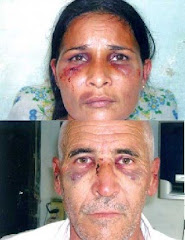
CUBA DETAINED ALMOST 1,000 DISSIDENTS IN JUNE, TORTURED POLITICAL PRISONERS
by FRANCES MARTEL 2 Jul 2014
While many in the mainstream media push the narrative that Cuba's
communist government is somehow more "open" than in the past, the Cuban
government is exploiting that good will to violently detain and torture
political dissidents. According to one NGO, 963 dissidents were
arbitrarily arrested in June.
The Cuban Commission of Human Rights and National Reconciliation, an NGO
dedicated to reporting on the torture and oppression of anti-communist
thought in Cuba, revealed in its monthly report that 963 individuals
were arrested for political reasons in June. While this number is
smaller than record-setting May, when 1,120 Cuban citizens are arrested
for political reasons, the alarming rate of detention indicates that the
Cuban government has no interest in a more-liberated society.
Several individual cases of arrests stand out. Serial hunger striker and
Sakharov Prize winner Guillermo Fariñas was arrested, according to the
group, "almost every Monday of June ... to impede scheduled meetings of
his organization." Fariñas has attempted to schedule meetings with
dissidents to organize a movement against the government and has used
Twitter to chronicle the beatings that he has received as the government
attempts to break up those weekly meetings. On this past Monday--the
last in June--Fariñas tweeted a photo of what appear to be stab wounds
on his arms, from Cuban police:
The Cuban Human Rights Commission reported that Fariñas was also
tortured while detained by "being confined in extremely cold temperatures."
Two other famous dissidents, Jorge Luís García Pérez (known as Antúnez)
and his wife, Yris Tamara Pérez Aguilera, were arrested this month yet
again, only to be confined later to house arrest for
counterrevolutionary activities. Like many, Antúnez was arrested
specifically on the charge of "public disorder," a catch-all for anyone
daring to criticize the government in public.
In addition to those arrested in June, the international community has
added to its list of Cuban political prisoners David Bustamante, an LGBT
rights activist arrested in May for public disorder after taking to a
rooftop and calling for an end to LGBT discrimination by the Castro
regime, which has a long history of attempting to "eradicate" such
behavior through mass murder and oppression. To suppress the reality of
LGBT individuals in Cuba, the Castro regime has routinely paraded out
Mariela Castro, daughter of dictator Raúl, who claims to be an LGBT
advocate despite being an inextricable part of the regime.
Below is a video of Bustamante's crime: inciting a crowd to chant
against the Castro regime:
The government of Cuba is not only a serial abuser of human rights, but
a mainstay on the United States' list of state sponsors of terrorism,
due to its support of the Revolutionary Armed Forces of Colombia, a
Marxist terror cell known for its kidnappings, drug links, and harrowing
violence.
Source: Cuba Detained Almost 1,000 Dissidents in June, Tortured
Political Prisoners -
http://www.breitbart.com/Big-Peace/2014/07/02/Cuba-Arbitrarily-Detained-Almost-1-000-Dissidents-in-June-Tortured-Political-Prisoners
Thursday, July 3, 2014

French bank handled $1.7 billion in illegal business with Cuba
Posted on Wednesday, 07.02.14
French bank handled $1.7 billion in illegal business with Cuba
BY JUAN O. TAMAYO
JTAMAYO@ELNUEVOHERALD.COM
The largest bank in France, BNP Paribas, disguised $1.75 billion in
illegal transactions with Cuban entities as part of a long string of
violations of U.S. sanctions that brought it a record $8.9 billion in
forfeitures and fines, according to U.S. prosecutors.
A prosecution document on the case said BNP already has corrected its
ways, "including terminating all business and prohibiting new business
in any currency with sanctioned entities" in Cuba, Iran and Sudan.
It was not clear how the case would impact Cuba, already restricted by
the U.S. embargo and U.S. laws and regulations on money laundering and
terrorism financing. BNP shuttered its Havana office last year, after it
came under U.S. investigation.
"This is a very important bank, but it doesn't mean other banks won't be
able to do transactions," said Luis F. Luis, a former chief economist at
the Organization of American States who follows Cuban banking.
The U.S. Justice Department on Monday announced an agreement with BNP,
under negotiation for several months, for the bank to forfeit $8.83
billion and pay a $140 million fine for violating U.S. sanctions on the
three countries from 2000 to 2010.
The bank pleaded guilty to criminal charges in New York State and is
expected to plead guilty to federal charges within a few weeks.
BNP officials knew and approved of repeated violations by leaving out
the names of the sanctioned countries from transactions sent to the
bank's New York office, according to the 36-page "Statement of Fact"
filed by U.S. prosecutors in New York.
"During the course of its illicit conduct, BNP processed thousands of
U.S. dollar-denominated financial transactions with Sanctioned Entities
located in Cuba, with a total value in excess of $1.747 billion," the
document said. The use of U.S. dollars anywhere is subject to U.S. laws
and regulations.
That amount included more than $300 million in transactions with an
enterprise identified only as "one of Cuba's largest state-owned
commercial companies" and one that is on the U.S. watch list of
"Specially Designated Nationals," the document added.
Bank employees "directed that transactions involving Cuba omit
references to Cuba in payment messages" to hide them from U.S.
watchdogs, it said. And after three transfers in 2006 were blocked
because they mentioned Cuba, BNP resubmitted them without mention of
Cuba and through different U.S banks.
"From at least 2000 up through and including 2010, BNP, through its
Paris headquarters, conspired with numerous Cuban banks and entities as
well as financial institutions outside of Cuba to provide U.S. dollar
financing to Cuban entities in violation of the U.S. embargo," the
document added.
The use of such large quantities of U.S. dollars in the BNP deals is
surprising because Cuban banks generally use euros to avoid U.S. blocks,
said a former Havana banker who defected in 2005 and asked to remain
anonymous because he still has family in Cuba.
Although the Statement of Fact did not identify the enterprises involved
in the violations, it included several examples of illegal "Cuban Credit
Facilities" that showed they covered a broad range of Cuban government
financial and commercial activities.
One of the facilities involved U.S. dollar loans to a company in
Netherlands to finance the company's purchase of crude oil products that
were to be refined in and sold to Cuba, according to the document.
Another facility involved U.S. dollar loans for "one of Cuba's largest
state-owned commercial companies" identified in the document only as
Cuban Corporation 1.
The facilities "were structured in highly complicated ways," it added.
And BNP employees confirmed to U.S. investigators that the complexities
"had no business purpose other than to conceal the connection to Cuba."
The $8.9 billion in forfeitures and fines amounts to the largest
sanctions violations case ever brought by the Justice Department, and
was reported to be the largest in any criminal case against a U.S. bank.
Several European and other banks have paid stiff fines in recent years
for violating U.S. regulations on business with Cuba, Iran, Sudan, Syria
and other countries sanctioned for weapons development, human rights
abuses and other issues.
In 2011, ING bank in the Netherlands agreed to pay $619 million to
settle allegations of illegal dealings with sanctioned countries. Two
years earlier, Credit Suisse Bank had paid $536 million and in 2004 the
Swiss UBS bank had paid $100 million for similar cases.
But BNP's violations were portrayed as more brazen and broader in the
Statement of Fact, agreed to by both U.S. prosecutors and bank officials.
Shortly after one Cuba-related transfer was blocked in 2006, a senior
bank attorney in Paris consulted with a U.S. law firm on whether the
block "could … trigger a retroactive investigation" by U.S. authorities,
the document said.
The U.S. law firm replied in a memorandum that "the risk of serious
regulatory sanction … is such that BNP Paribas should consider
discontinuing participation in any such U.S. dollar facility," according
to document said.
But after a junior BNP attorney forwarded the memorandum to a bank
officer in charge of complying with laws and regulations, he was
reprimanded by the senior attorney "who insisted that 'it was a draft
memo and should not have been distributed to just anyone.'"
"We now no longer have control over its status. Do not do anything more
on this file without talking to me about it," the senior lawyer told the
junior, according to the document.
The junior attorney, it added, responded that the compliance officer
would "delete the e-mail."
Source: French bank handled $1.7 billion in illegal business with Cuba -
Cuba - MiamiHerald.com -
http://www.miamiherald.com/2014/07/02/4215549/french-bank-handled-17-billion.html
French bank handled $1.7 billion in illegal business with Cuba
BY JUAN O. TAMAYO
JTAMAYO@ELNUEVOHERALD.COM
The largest bank in France, BNP Paribas, disguised $1.75 billion in
illegal transactions with Cuban entities as part of a long string of
violations of U.S. sanctions that brought it a record $8.9 billion in
forfeitures and fines, according to U.S. prosecutors.
A prosecution document on the case said BNP already has corrected its
ways, "including terminating all business and prohibiting new business
in any currency with sanctioned entities" in Cuba, Iran and Sudan.
It was not clear how the case would impact Cuba, already restricted by
the U.S. embargo and U.S. laws and regulations on money laundering and
terrorism financing. BNP shuttered its Havana office last year, after it
came under U.S. investigation.
"This is a very important bank, but it doesn't mean other banks won't be
able to do transactions," said Luis F. Luis, a former chief economist at
the Organization of American States who follows Cuban banking.
The U.S. Justice Department on Monday announced an agreement with BNP,
under negotiation for several months, for the bank to forfeit $8.83
billion and pay a $140 million fine for violating U.S. sanctions on the
three countries from 2000 to 2010.
The bank pleaded guilty to criminal charges in New York State and is
expected to plead guilty to federal charges within a few weeks.
BNP officials knew and approved of repeated violations by leaving out
the names of the sanctioned countries from transactions sent to the
bank's New York office, according to the 36-page "Statement of Fact"
filed by U.S. prosecutors in New York.
"During the course of its illicit conduct, BNP processed thousands of
U.S. dollar-denominated financial transactions with Sanctioned Entities
located in Cuba, with a total value in excess of $1.747 billion," the
document said. The use of U.S. dollars anywhere is subject to U.S. laws
and regulations.
That amount included more than $300 million in transactions with an
enterprise identified only as "one of Cuba's largest state-owned
commercial companies" and one that is on the U.S. watch list of
"Specially Designated Nationals," the document added.
Bank employees "directed that transactions involving Cuba omit
references to Cuba in payment messages" to hide them from U.S.
watchdogs, it said. And after three transfers in 2006 were blocked
because they mentioned Cuba, BNP resubmitted them without mention of
Cuba and through different U.S banks.
"From at least 2000 up through and including 2010, BNP, through its
Paris headquarters, conspired with numerous Cuban banks and entities as
well as financial institutions outside of Cuba to provide U.S. dollar
financing to Cuban entities in violation of the U.S. embargo," the
document added.
The use of such large quantities of U.S. dollars in the BNP deals is
surprising because Cuban banks generally use euros to avoid U.S. blocks,
said a former Havana banker who defected in 2005 and asked to remain
anonymous because he still has family in Cuba.
Although the Statement of Fact did not identify the enterprises involved
in the violations, it included several examples of illegal "Cuban Credit
Facilities" that showed they covered a broad range of Cuban government
financial and commercial activities.
One of the facilities involved U.S. dollar loans to a company in
Netherlands to finance the company's purchase of crude oil products that
were to be refined in and sold to Cuba, according to the document.
Another facility involved U.S. dollar loans for "one of Cuba's largest
state-owned commercial companies" identified in the document only as
Cuban Corporation 1.
The facilities "were structured in highly complicated ways," it added.
And BNP employees confirmed to U.S. investigators that the complexities
"had no business purpose other than to conceal the connection to Cuba."
The $8.9 billion in forfeitures and fines amounts to the largest
sanctions violations case ever brought by the Justice Department, and
was reported to be the largest in any criminal case against a U.S. bank.
Several European and other banks have paid stiff fines in recent years
for violating U.S. regulations on business with Cuba, Iran, Sudan, Syria
and other countries sanctioned for weapons development, human rights
abuses and other issues.
In 2011, ING bank in the Netherlands agreed to pay $619 million to
settle allegations of illegal dealings with sanctioned countries. Two
years earlier, Credit Suisse Bank had paid $536 million and in 2004 the
Swiss UBS bank had paid $100 million for similar cases.
But BNP's violations were portrayed as more brazen and broader in the
Statement of Fact, agreed to by both U.S. prosecutors and bank officials.
Shortly after one Cuba-related transfer was blocked in 2006, a senior
bank attorney in Paris consulted with a U.S. law firm on whether the
block "could … trigger a retroactive investigation" by U.S. authorities,
the document said.
The U.S. law firm replied in a memorandum that "the risk of serious
regulatory sanction … is such that BNP Paribas should consider
discontinuing participation in any such U.S. dollar facility," according
to document said.
But after a junior BNP attorney forwarded the memorandum to a bank
officer in charge of complying with laws and regulations, he was
reprimanded by the senior attorney "who insisted that 'it was a draft
memo and should not have been distributed to just anyone.'"
"We now no longer have control over its status. Do not do anything more
on this file without talking to me about it," the senior lawyer told the
junior, according to the document.
The junior attorney, it added, responded that the compliance officer
would "delete the e-mail."
Source: French bank handled $1.7 billion in illegal business with Cuba -
Cuba - MiamiHerald.com -
http://www.miamiherald.com/2014/07/02/4215549/french-bank-handled-17-billion.html
Company defends Canadian exec in Cuba graft case
Posted on Wednesday, 07.02.14
Company defends Canadian exec in Cuba graft case
BY PETER ORSI
ASSOCIATED PRESS
HAVANA -- The company and family of a Canadian business executive
awaiting a court ruling in Cuba defended him against accusations of
graft, arguing that what were in fact "legitimate commercial
transactions" were wrongly characterized as corrupt at trial.
A two-page statement sent to The Associated Press by the Tokmakjian
Group also complained that company president Cy Tokmakjian's trial,
which ended June 21, was unfairly stacked against him.
It said he was held without charge for two years while the results of
the investigation were kept secret, and then given just two months to
present a defense. Meanwhile 14 of 18 proposed defense witnesses,
including international tax experts, were rejected by the court without
explanation.
"We are concerned that the outcome of the trial is predetermined given
the reluctance by the Cuban authorities to rectify gross procedural
mistakes," the statement said.
Prosecutors are seeking 15 years for Tokmakjian and 8 to 20 for more
than a dozen others named as defendants. They include two more Canadians
as well as Cuban employees of the company, government officials and
workers at state-run businesses.
On Monday, Communist Party newspaper Granma said Tokmakjian was accused
of corruption to obtain benefits in contract negotiations, unauthorized
financial transactions, illegally taking large amounts of money out of
the country, falsifying documents to avoid taxes and payroll
irregularities. A ruling is expected soon.
Tokmakjian is among a number of foreigners and dozens of Cubans arrested
in 2011 as part of a high-profile crackdown on graft that targeted
multiple businesses operating in the country.
Another Canadian, Sarkis Yacoubian of Tri-Star Caribbean, was sentenced
to nine years in 2013 but freed earlier this year and allowed to return
home.
Saro Khatchadourian, a spokesman for Canada's Minister of State for
Foreign Affairs and Consular, said Ottawa is monitoring its citizens'
legal cases in Cuba and providing them with consular services, but
declined to comment further. Canada's ambassador to Havana attended
Tokmakjian's trial.
Cuban officials did not immediately respond to a request for comment
Wednesday.
The statement from the Tokmakjian Group, an international transportation
company based in Concord, Ontario, questioned why an individual was
being held liable for a corporate tax issue, and said any claims were
purely commercial and should have been handled in arbitration rather
than a criminal court.
"A simple and objective reading of recent court decisions will lead to
the conclusion that what is shown as 'corruption' is internationally
accepted business practices," it said. "Commercial activities such as
discounting bills of exchange or providing supplier credit appear as
'evidences of corruption.' Earning profits out of a commercial activity
is considered a 'crime against (the) economic interests of Cuba.'"
Tokmakjian's trial came to a close within days of a new law taking
effect that Cuba hopes will lure much-needed foreign investment.
Officials say it safeguards commercial and personal property rights.
Though Cuban authorities made no details publicly available while the
trial was ongoing, its outcome is sure to be scrutinized by the foreign
business community and likely by potential investors.
"Although no one will (dispute) the legitimacy of Cuba to combat
corruption," the Tokmakjian Group statement said, "this fight against
corruption has been used as an excuse to deprive companies operating in
Cuba of their rights and assets with no compensation."
---
Associated Press writer Rob Gillies in Toronto contributed.
Peter Orsi on Twitter: www.twitter.com/Peter-Orsi
Source: HAVANA: Company defends Canadian exec in Cuba graft case -
Business Breaking News - MiamiHerald.com -
http://www.miamiherald.com/2014/07/02/4214780/company-defends-canadian-exec.html
Company defends Canadian exec in Cuba graft case
BY PETER ORSI
ASSOCIATED PRESS
HAVANA -- The company and family of a Canadian business executive
awaiting a court ruling in Cuba defended him against accusations of
graft, arguing that what were in fact "legitimate commercial
transactions" were wrongly characterized as corrupt at trial.
A two-page statement sent to The Associated Press by the Tokmakjian
Group also complained that company president Cy Tokmakjian's trial,
which ended June 21, was unfairly stacked against him.
It said he was held without charge for two years while the results of
the investigation were kept secret, and then given just two months to
present a defense. Meanwhile 14 of 18 proposed defense witnesses,
including international tax experts, were rejected by the court without
explanation.
"We are concerned that the outcome of the trial is predetermined given
the reluctance by the Cuban authorities to rectify gross procedural
mistakes," the statement said.
Prosecutors are seeking 15 years for Tokmakjian and 8 to 20 for more
than a dozen others named as defendants. They include two more Canadians
as well as Cuban employees of the company, government officials and
workers at state-run businesses.
On Monday, Communist Party newspaper Granma said Tokmakjian was accused
of corruption to obtain benefits in contract negotiations, unauthorized
financial transactions, illegally taking large amounts of money out of
the country, falsifying documents to avoid taxes and payroll
irregularities. A ruling is expected soon.
Tokmakjian is among a number of foreigners and dozens of Cubans arrested
in 2011 as part of a high-profile crackdown on graft that targeted
multiple businesses operating in the country.
Another Canadian, Sarkis Yacoubian of Tri-Star Caribbean, was sentenced
to nine years in 2013 but freed earlier this year and allowed to return
home.
Saro Khatchadourian, a spokesman for Canada's Minister of State for
Foreign Affairs and Consular, said Ottawa is monitoring its citizens'
legal cases in Cuba and providing them with consular services, but
declined to comment further. Canada's ambassador to Havana attended
Tokmakjian's trial.
Cuban officials did not immediately respond to a request for comment
Wednesday.
The statement from the Tokmakjian Group, an international transportation
company based in Concord, Ontario, questioned why an individual was
being held liable for a corporate tax issue, and said any claims were
purely commercial and should have been handled in arbitration rather
than a criminal court.
"A simple and objective reading of recent court decisions will lead to
the conclusion that what is shown as 'corruption' is internationally
accepted business practices," it said. "Commercial activities such as
discounting bills of exchange or providing supplier credit appear as
'evidences of corruption.' Earning profits out of a commercial activity
is considered a 'crime against (the) economic interests of Cuba.'"
Tokmakjian's trial came to a close within days of a new law taking
effect that Cuba hopes will lure much-needed foreign investment.
Officials say it safeguards commercial and personal property rights.
Though Cuban authorities made no details publicly available while the
trial was ongoing, its outcome is sure to be scrutinized by the foreign
business community and likely by potential investors.
"Although no one will (dispute) the legitimacy of Cuba to combat
corruption," the Tokmakjian Group statement said, "this fight against
corruption has been used as an excuse to deprive companies operating in
Cuba of their rights and assets with no compensation."
---
Associated Press writer Rob Gillies in Toronto contributed.
Peter Orsi on Twitter: www.twitter.com/Peter-Orsi
Source: HAVANA: Company defends Canadian exec in Cuba graft case -
Business Breaking News - MiamiHerald.com -
http://www.miamiherald.com/2014/07/02/4214780/company-defends-canadian-exec.html
Wednesday, July 2, 2014
NH Hotel Group adds a new destination - Cuba.
NH Hotel Group adds a new destination: Cuba.
Wednesday, 2nd July 2014
Source : NH Hotel Group
NH Hotel Group brings back the emblematic Hotel Capri in collaboration
with the Gran Caribe Hotel Group; With this addition, NH Hotel Group is
reinforcing its presence in Latin America, a core target market, and
delivering on its pledge to offer quality properties in first-class
destinations.
With its era-depicting 1950s style, long considered one of the finest
hotel properties in Havana, NH Hotel Group is proud to add the iconic
Hotel Capri to its portfolio under a joint management agreement with the
hotel group Gran Caribe. Recently refurbished to reflect contemporary
trends without losing its original style, the NH Capri is without a
doubt one of the island's landmark hotels, offering deluxe quality and
service.
The official opening was held on May 9th with the traditional ribbon
cutting by NH Hotel Group CEO, Federico Gonzalez Tejera, and Cuban Vice
Minister of Tourism, D. Alexis Trujillo. Other dignitaries that attended
the Grand Opening were the President of Gran Caribe and the Spanish
Ambassador in Havana, as well as media, tourism stakeholders and
personalities from the cultural, arts and sciences spheres, among others.
NH Hotel Group attaches great significance to this development not only
because it establishes a bond with Cuba, a strategic tourist
destination, and the Gran Caribe hotel group, but also on account of the
growth it delivers to the group's Latin American portfolio.
In the words of Federico González Tejera, CEO of NH Hotel Group: "Cuba
is a strategic market with which we wanted to strengthen relationships
as part of our commitment with Latin America. That is why we are so
pleased about adding the NH Capri to our portfolio and having Gran
Caribe as our partner in this venture. This is not a simple management
agreement, it´s a project that goes beyond that and it involves
preserving the hotel and passing it on cared for and well-kept to the
next generation. And we eagerly accept this challenge."
According to Eduardo Costa de Arriba, President of Gran Caribe: "The
Gran Caribe hotel group, on the occasion of its 20th anniversary, is
pleased to reintroduce to the operation the magnificent Hotel Capri,
this time under the management of prestigious hotel chain NH as part of
an arrangement that will combine the best of both companies to give rise
to the new NH Capri".
Gilles Gonzalez, Managing Director of America Business Unit of NH Hotel
Group also added: "After 15 years in Latin America, with a presence in
10 destinations and solid future projects for the region, we are very
pleased to add the NH Capri hotel to our portfolio, something we know
will be greatly appreciated by consumers. Contributing to the tourism
development of Cuba is something of much importance for us and that we
support with enthusiasm."
The hotel is a 19-storey building with 220 exquisitely elegant yet
simple rooms and is located in the central Vedado district, just a
stone's throw from the popular boardwalk and right in the political and
administrative heart of the Cuban capital. The interior design is
painstaking - the rooms are spacious and boast sea views and views over
the Malecón esplanade, while the furniture and colour scheme evoke the
mood of the second half of the last century - enabling the NH Capri to
conserve its status as Havana's 50's icon.
There are 10 duplexes on the executive floor, as well as a business
centre and an exclusive check-in service, not to mention 2 deluxe
suites, 4 junior suites, 6 superior rooms and a spectacular rooftop pool
on the 18th floor, making it the only hotel on the island to offer these
features. Welcoming, comfortable and functional, the NH Capri is just as
ideally suited to business, events and incentive travel as it is to
leisure trips.
Particular attention has been paid to the gastronomic offering, one of
the hallmarks of NH Hotel Group, in order to guarantee a unique, vibrant
and premium dining experience. Under the steady hand of one of the
city's best known executive chefs, Jesús Rivero, the NH Capri will offer
guests an innovative fusion of Spanish, Mexican and Cuban cuisine.
The hotel has three restaurants which offer dining options that cater to
all tastes. La Florentina provides Italian and international dishes, El
Dorado offers breakfast service for the executive floor as well as a
snack and bar service in the afternoons, while the Anacapri offers a
day-long buffet service. It also has a prestigious in-house bakery and
patisserie run by Olga Lidia Sanchez Arsuaga, one snack-bar, two bars
and 24-hour room service.
On the environmental front, the hotel has worked hard to introduce
sustainable solutions by using technology designed to deliver energy
savings such as water-saving devices in the hotel's baths and showers,
LED lighting and energy-saving bulbs. It is wheelchair-friendly, offers
building-wide Wi-Fi and a spacious gym with large windows looking out
over the Malecón, not to mention a sauna, Turkish bath, massage room,
beauty salon and pharmacy.
The extraordinary level of guest service and its unrivalled location in
the heart of the city coupled with the best value for money, the
strategic pillars of the NH Hotel Group offering, complete what this
iconic hotel, a landmark in Havana and Cuba, has to offer.
Architectural heritage
The Hotel Capri is one of Havana's three emblematic hotels. On account
of its history and faithful representation of a bygone era, it shares
the honour with the Hotel Nacional and Hotel Riviera, already declared
national monuments.
The restoration of an emblematic hotel such as the Capri to its former
glory embodies the philosophy of both managers, Gran Caribe and NH Hotel
Group, of respecting and preserving architectural heritage in order to
clearly link tourism to local culture to create a mutually enriching
guest-city experience.
Pieces such as the chandeliers in the lobby, appliqués and the statue of
Aphrodite, also declared national heritage features, make this building
uniquely rich in cultural value.
In parallel, extending the commitment to promote local culture, the
hotel has been acquiring contemporary works of art by Cuban artists
which are on display at the hotel.
History of Hotel Capri
Built in late 1957, it was managed until the revolution by Charles
Tourine (The Blade), who ran the nightclub, and Nicholas di Costanzo
(The Fat Butcher), who managed the casino.
The hotel was inaugurated in high style on Thanksgiving Day in 1957, an
event attended by Hollywood star George Raft, the ambassador for the
casino and cabaret, who personally greeted guests at the main entrance.
Hotel Capri quickly became an icon in Havana, even to the point of
becoming a playground for American gangsters and other renowned
personalities. The hotel was even mentioned in the Godfather, the famous
film inspired by the Mario Puzo book.
Other stars of the silver screen, such as Errol Flynn, were regular
guests at the hotel and well-known movies such as Carol Reed's Our Man
in Havana and Mikhail Kalatozov's I am Cuba shot several scenes at the
hotel, specifically by the rooftop pool.
In its heyday, the Capri was one of the great hotel and casinos. Today
it is one of the three most architecturally important hotels in Havana.
Source: "NH Hotel Group adds a new destination: Cuba. ~ Wednesday, 2nd
July 2014 from 4Hoteliers" - http://www.4hoteliers.com/news/story/12762
Wednesday, 2nd July 2014
Source : NH Hotel Group
NH Hotel Group brings back the emblematic Hotel Capri in collaboration
with the Gran Caribe Hotel Group; With this addition, NH Hotel Group is
reinforcing its presence in Latin America, a core target market, and
delivering on its pledge to offer quality properties in first-class
destinations.
With its era-depicting 1950s style, long considered one of the finest
hotel properties in Havana, NH Hotel Group is proud to add the iconic
Hotel Capri to its portfolio under a joint management agreement with the
hotel group Gran Caribe. Recently refurbished to reflect contemporary
trends without losing its original style, the NH Capri is without a
doubt one of the island's landmark hotels, offering deluxe quality and
service.
The official opening was held on May 9th with the traditional ribbon
cutting by NH Hotel Group CEO, Federico Gonzalez Tejera, and Cuban Vice
Minister of Tourism, D. Alexis Trujillo. Other dignitaries that attended
the Grand Opening were the President of Gran Caribe and the Spanish
Ambassador in Havana, as well as media, tourism stakeholders and
personalities from the cultural, arts and sciences spheres, among others.
NH Hotel Group attaches great significance to this development not only
because it establishes a bond with Cuba, a strategic tourist
destination, and the Gran Caribe hotel group, but also on account of the
growth it delivers to the group's Latin American portfolio.
In the words of Federico González Tejera, CEO of NH Hotel Group: "Cuba
is a strategic market with which we wanted to strengthen relationships
as part of our commitment with Latin America. That is why we are so
pleased about adding the NH Capri to our portfolio and having Gran
Caribe as our partner in this venture. This is not a simple management
agreement, it´s a project that goes beyond that and it involves
preserving the hotel and passing it on cared for and well-kept to the
next generation. And we eagerly accept this challenge."
According to Eduardo Costa de Arriba, President of Gran Caribe: "The
Gran Caribe hotel group, on the occasion of its 20th anniversary, is
pleased to reintroduce to the operation the magnificent Hotel Capri,
this time under the management of prestigious hotel chain NH as part of
an arrangement that will combine the best of both companies to give rise
to the new NH Capri".
Gilles Gonzalez, Managing Director of America Business Unit of NH Hotel
Group also added: "After 15 years in Latin America, with a presence in
10 destinations and solid future projects for the region, we are very
pleased to add the NH Capri hotel to our portfolio, something we know
will be greatly appreciated by consumers. Contributing to the tourism
development of Cuba is something of much importance for us and that we
support with enthusiasm."
The hotel is a 19-storey building with 220 exquisitely elegant yet
simple rooms and is located in the central Vedado district, just a
stone's throw from the popular boardwalk and right in the political and
administrative heart of the Cuban capital. The interior design is
painstaking - the rooms are spacious and boast sea views and views over
the Malecón esplanade, while the furniture and colour scheme evoke the
mood of the second half of the last century - enabling the NH Capri to
conserve its status as Havana's 50's icon.
There are 10 duplexes on the executive floor, as well as a business
centre and an exclusive check-in service, not to mention 2 deluxe
suites, 4 junior suites, 6 superior rooms and a spectacular rooftop pool
on the 18th floor, making it the only hotel on the island to offer these
features. Welcoming, comfortable and functional, the NH Capri is just as
ideally suited to business, events and incentive travel as it is to
leisure trips.
Particular attention has been paid to the gastronomic offering, one of
the hallmarks of NH Hotel Group, in order to guarantee a unique, vibrant
and premium dining experience. Under the steady hand of one of the
city's best known executive chefs, Jesús Rivero, the NH Capri will offer
guests an innovative fusion of Spanish, Mexican and Cuban cuisine.
The hotel has three restaurants which offer dining options that cater to
all tastes. La Florentina provides Italian and international dishes, El
Dorado offers breakfast service for the executive floor as well as a
snack and bar service in the afternoons, while the Anacapri offers a
day-long buffet service. It also has a prestigious in-house bakery and
patisserie run by Olga Lidia Sanchez Arsuaga, one snack-bar, two bars
and 24-hour room service.
On the environmental front, the hotel has worked hard to introduce
sustainable solutions by using technology designed to deliver energy
savings such as water-saving devices in the hotel's baths and showers,
LED lighting and energy-saving bulbs. It is wheelchair-friendly, offers
building-wide Wi-Fi and a spacious gym with large windows looking out
over the Malecón, not to mention a sauna, Turkish bath, massage room,
beauty salon and pharmacy.
The extraordinary level of guest service and its unrivalled location in
the heart of the city coupled with the best value for money, the
strategic pillars of the NH Hotel Group offering, complete what this
iconic hotel, a landmark in Havana and Cuba, has to offer.
Architectural heritage
The Hotel Capri is one of Havana's three emblematic hotels. On account
of its history and faithful representation of a bygone era, it shares
the honour with the Hotel Nacional and Hotel Riviera, already declared
national monuments.
The restoration of an emblematic hotel such as the Capri to its former
glory embodies the philosophy of both managers, Gran Caribe and NH Hotel
Group, of respecting and preserving architectural heritage in order to
clearly link tourism to local culture to create a mutually enriching
guest-city experience.
Pieces such as the chandeliers in the lobby, appliqués and the statue of
Aphrodite, also declared national heritage features, make this building
uniquely rich in cultural value.
In parallel, extending the commitment to promote local culture, the
hotel has been acquiring contemporary works of art by Cuban artists
which are on display at the hotel.
History of Hotel Capri
Built in late 1957, it was managed until the revolution by Charles
Tourine (The Blade), who ran the nightclub, and Nicholas di Costanzo
(The Fat Butcher), who managed the casino.
The hotel was inaugurated in high style on Thanksgiving Day in 1957, an
event attended by Hollywood star George Raft, the ambassador for the
casino and cabaret, who personally greeted guests at the main entrance.
Hotel Capri quickly became an icon in Havana, even to the point of
becoming a playground for American gangsters and other renowned
personalities. The hotel was even mentioned in the Godfather, the famous
film inspired by the Mario Puzo book.
Other stars of the silver screen, such as Errol Flynn, were regular
guests at the hotel and well-known movies such as Carol Reed's Our Man
in Havana and Mikhail Kalatozov's I am Cuba shot several scenes at the
hotel, specifically by the rooftop pool.
In its heyday, the Capri was one of the great hotel and casinos. Today
it is one of the three most architecturally important hotels in Havana.
Source: "NH Hotel Group adds a new destination: Cuba. ~ Wednesday, 2nd
July 2014 from 4Hoteliers" - http://www.4hoteliers.com/news/story/12762
Cuban editors, pressured to leave magazine, announce new venture
Cuban editors, pressured to leave magazine, announce new venture
By Daniel Trotta and Rosa Tania Valdés
HAVANA (Reuters) - Two editors who helped turn a Roman Catholic magazine
into a rare forum for open debate in Communist-ruled Cuba, then resigned
under pressure this spring, announced on Tuesday that they will launch a
new forum to air a broad range of views.
Roberto Veiga and Lenier Gonzalez said their new project would be called
Cuba Posible. No start date was given for the venture, which they said
would be primarily online.
The editors resigned from the church magazine Espacio Laical this
spring, citing pressure from inside the church and raising concerns
about one of the most dynamic, non-official areas of public discourse in
a country where authorities monopolize the media, leaving little space
for critical voices.
Besides the printed magazine, Espacio Laical published on the Internet
and sponsored forums for public debate. The church said it will become
less political and put more emphasis on culture and the arts.
Veiga and Gonzalez said they intend to create "a project of transitional
change for our country," citing the words of a priest who inspired them,
the late Monsignor Carlos Manuel de Cespedes.
It would not be a political party or platform, but rather open to a wide
range of viewpoints, Gonzalez said in a separate statement.
They also promised to promote "the responsible exercise of freedom" and
"the continuous design of a democracy that is each day more complete,"
in addition to education, the arts and better Cuban relations with the
United States, Europe and Latin America.
"There are always fears referring to censorship, but we are not overly
worried about it," Gonzalez said, adding they would operate much as they
did for 10 years with Espacio Laical.
"We are here to serve, to help and be brothers, not to polarize or
destabilize," Gonzalez said.
While with Espacio Laical, Veiga and Gonzalez used the Internet to
promote debate on political issues such as the need for a multiparty
system, Internet expansion, reintegration with the diaspora and the
strengths and weaknesses of reforms under President Raul Castro.
They quit this spring after 10 years on the job. Their resignation
letter said they left not because of government pressure but due to
pressure from people inside the church hierarchy who did not want the
church to get involved in politics.
While Cuba's Catholic church is small by Latin American standards, it is
by far the largest and best organized institution on the Caribbean
island with a different ideology than the Communist Party.
(Editing by David Gregorio)
Source: "Cuban editors, pressured to leave magazine, announce new
venture - Yahoo News" -
http://news.yahoo.com/cuban-editors-pressured-leave-magazine-announce-venture-190934027.html;_ylt=AwrBJR_Ix7NTPV4AWXTQtDMD
By Daniel Trotta and Rosa Tania Valdés
HAVANA (Reuters) - Two editors who helped turn a Roman Catholic magazine
into a rare forum for open debate in Communist-ruled Cuba, then resigned
under pressure this spring, announced on Tuesday that they will launch a
new forum to air a broad range of views.
Roberto Veiga and Lenier Gonzalez said their new project would be called
Cuba Posible. No start date was given for the venture, which they said
would be primarily online.
The editors resigned from the church magazine Espacio Laical this
spring, citing pressure from inside the church and raising concerns
about one of the most dynamic, non-official areas of public discourse in
a country where authorities monopolize the media, leaving little space
for critical voices.
Besides the printed magazine, Espacio Laical published on the Internet
and sponsored forums for public debate. The church said it will become
less political and put more emphasis on culture and the arts.
Veiga and Gonzalez said they intend to create "a project of transitional
change for our country," citing the words of a priest who inspired them,
the late Monsignor Carlos Manuel de Cespedes.
It would not be a political party or platform, but rather open to a wide
range of viewpoints, Gonzalez said in a separate statement.
They also promised to promote "the responsible exercise of freedom" and
"the continuous design of a democracy that is each day more complete,"
in addition to education, the arts and better Cuban relations with the
United States, Europe and Latin America.
"There are always fears referring to censorship, but we are not overly
worried about it," Gonzalez said, adding they would operate much as they
did for 10 years with Espacio Laical.
"We are here to serve, to help and be brothers, not to polarize or
destabilize," Gonzalez said.
While with Espacio Laical, Veiga and Gonzalez used the Internet to
promote debate on political issues such as the need for a multiparty
system, Internet expansion, reintegration with the diaspora and the
strengths and weaknesses of reforms under President Raul Castro.
They quit this spring after 10 years on the job. Their resignation
letter said they left not because of government pressure but due to
pressure from people inside the church hierarchy who did not want the
church to get involved in politics.
While Cuba's Catholic church is small by Latin American standards, it is
by far the largest and best organized institution on the Caribbean
island with a different ideology than the Communist Party.
(Editing by David Gregorio)
Source: "Cuban editors, pressured to leave magazine, announce new
venture - Yahoo News" -
http://news.yahoo.com/cuban-editors-pressured-leave-magazine-announce-venture-190934027.html;_ylt=AwrBJR_Ix7NTPV4AWXTQtDMD
Former Cuban Vice-Minister Faces 20-Year Sentence
Former Cuban Vice-Minister Faces 20-Year Sentence
July 1, 2014
By Café Fuerte
HAVANA TIMES — The trial of Canadian businessman Vahe Cy Tokmakjian,
accused of corruption, traffic of hard currency and tax evasion in Cuba,
ended with a guilty verdict and a petition to incarcerate former Cuban
vice-minister Nelson Ricardo Labrada for 20 years, Cuban government
authorities reported.
According to a note published by Cuba's official newspaper Granma,
during the trial, held at Havana's Provincial Court from June 9 to 21,
charges were brought against Tokmakjian, Canadian businessmen Marco
Vinicio Puche Rodriguez and Claudio Franco Vetere, as well as against 14
high Cuban government officials and executives.
The press note is the first official statement about the Tokmakjian case
and the proceedings against him published in Cuba.
According to the report, charges of bribery, acts damaging of the
economy and employment, falsification of bank and commercial
instruments, fraud, traffic of hard currency and tax evasion were
brought against the 17 accused.
Considerable Financial Damage
"The Attorney General's Office of Cuba accused Vahe Cy Tokmakjian of
using fraudulent and corrupt mechanisms to secure benefits in
negotiations with Cuban entities, causing considerable financial damage
to our economy, acting as a financial intermediary without due
authorization, taking large sums of money out of the country illegally,
altering account books and sworn statements with a view to evading tax
obligations and making monetary payments to several employees who
performed duties different from those legally authorized or who had not
been hired by domestic companies," the official note explained.
The prosecution asked for a 15 year prison sentence for Tokmakjian,
president of the Tokmakjian Group, and a 20 year conviction for Labrada
Fernandez, who served as vice-minister of Cuba's former Ministry of
Sugar until his arrest in September of 2011.
The other Cuban officials implicated in the crimes (for whom the
prosecution requested between 8 and 12 years in prison) are:
1. Manuel Heriberto Fernandez Santiesteban (Ministry of Sugar)
2. Leonardo Fidel Delgado Dorta (Ministry of Sugar)
3, Jorge Luis Machado Perez (Ministry of Sugar)
4. Jose René Rubio Escobar (Ministry of Sugar)
5. Alberto Cirilo Panton Grahan ( former general manager of Cubaniquel)
6. Ernesto Gomez Cumplido (former president of Ferroníquel Minera S.A.)
7. Fidel Penin Oliva (former Ministry of Basic Industry)
8. Jorge Luis Melo Reyes (former president of the Asociación Economica
Internacional CISTUR, attached to the Ministry of Tourism)
9. Edmundo Javier Cabrera Díaz (Tokmakjian Group branch in Cuba)
10. Antonio Gilí Gonzaez (Tokmakjian Group branch in Cuba)
11. Boris Ernesto Barber Velis (Tokmakjian Group branch in Cuba)
12. Armando Enrique Martinez Ganfo (Tokmakjian Group branch in Cuba)
13. Elsa Fernandez Proenza (Tokmakjian Group branch in Cuba)
During the proceedings, the prosecution called the foreign companies
Tokmakjian Group Inc; Tokmakjian Limited, C.Y.M.C. and Tokmakjian
International Inc. to the stand as liable third parties.
According to the report, the declarations of the accused and numerous
items of evidence, testimonies and statements by experts of the Treasury
Inspector's Office, the National Tax Administration Bureau (ONAT) and
the Ministry for Foreign Trade and Investment were considered during the
oral hearing.
The prosecution also asked the court to request that the accused pay
over US $91 million for damages caused to several Cuban entities and
ONAT. This sum will be covered, in part, with the assets and money
confiscated from Tokmakjian and his companies during the proceedings.
Sentencing
The proceedings have concluded and the court will hand down the
sentences in the coming days. The information on the Tokmakjian case
published by the press sets it apart from the trial of another important
Canadian businessman, Sarkis Yacoubina, tried and convicted to nine
years in prison on similar charges (and released this past February).
The trial of Yacoubian was not reported on by Cuba's official media.
Tokmakjian, 74 years old and of Armenian origin, has been under arrest
since September of 2011, after Cuban State Security agents seized and
shut down the locales of his firm on the fourth floor of the Barcelona
building at Havana's Miramar Trade Center.
In April of 2013, during investigations, the Cuban government officially
shut down the operations of the Tokmakjian Group, one of the largest
foreign companies to have operated in Cuba over the past 25 years.
Based in Ontario, Canada, the Tokmakjian Group was second only to
Sherrit International in terms of the scope of its financial operations
in Cuba. It took in some US $ 80 million annually through the sale of
construction and mining equipment.
The company was also Hyundai's exclusive distributor in Cuba and had
partnered up with two other companies to replace the engines of
Soviet-era equipment on the island.
The Tokmakjian Group has filed a suit against the Cuban government
before the Supreme Court of Justice of Ontario, Canada. The company
alleges that the assets of the Tokmakjian Group were confiscated
illegally and accuses Cuban authorities of interfering in the company's
commercial dealings with its clients.
Source: "Former Cuban Vice-Minister Faces 20-Year Sentence - Havana
Times.org" - http://www.havanatimes.org/?p=104584
July 1, 2014
By Café Fuerte
HAVANA TIMES — The trial of Canadian businessman Vahe Cy Tokmakjian,
accused of corruption, traffic of hard currency and tax evasion in Cuba,
ended with a guilty verdict and a petition to incarcerate former Cuban
vice-minister Nelson Ricardo Labrada for 20 years, Cuban government
authorities reported.
According to a note published by Cuba's official newspaper Granma,
during the trial, held at Havana's Provincial Court from June 9 to 21,
charges were brought against Tokmakjian, Canadian businessmen Marco
Vinicio Puche Rodriguez and Claudio Franco Vetere, as well as against 14
high Cuban government officials and executives.
The press note is the first official statement about the Tokmakjian case
and the proceedings against him published in Cuba.
According to the report, charges of bribery, acts damaging of the
economy and employment, falsification of bank and commercial
instruments, fraud, traffic of hard currency and tax evasion were
brought against the 17 accused.
Considerable Financial Damage
"The Attorney General's Office of Cuba accused Vahe Cy Tokmakjian of
using fraudulent and corrupt mechanisms to secure benefits in
negotiations with Cuban entities, causing considerable financial damage
to our economy, acting as a financial intermediary without due
authorization, taking large sums of money out of the country illegally,
altering account books and sworn statements with a view to evading tax
obligations and making monetary payments to several employees who
performed duties different from those legally authorized or who had not
been hired by domestic companies," the official note explained.
The prosecution asked for a 15 year prison sentence for Tokmakjian,
president of the Tokmakjian Group, and a 20 year conviction for Labrada
Fernandez, who served as vice-minister of Cuba's former Ministry of
Sugar until his arrest in September of 2011.
The other Cuban officials implicated in the crimes (for whom the
prosecution requested between 8 and 12 years in prison) are:
1. Manuel Heriberto Fernandez Santiesteban (Ministry of Sugar)
2. Leonardo Fidel Delgado Dorta (Ministry of Sugar)
3, Jorge Luis Machado Perez (Ministry of Sugar)
4. Jose René Rubio Escobar (Ministry of Sugar)
5. Alberto Cirilo Panton Grahan ( former general manager of Cubaniquel)
6. Ernesto Gomez Cumplido (former president of Ferroníquel Minera S.A.)
7. Fidel Penin Oliva (former Ministry of Basic Industry)
8. Jorge Luis Melo Reyes (former president of the Asociación Economica
Internacional CISTUR, attached to the Ministry of Tourism)
9. Edmundo Javier Cabrera Díaz (Tokmakjian Group branch in Cuba)
10. Antonio Gilí Gonzaez (Tokmakjian Group branch in Cuba)
11. Boris Ernesto Barber Velis (Tokmakjian Group branch in Cuba)
12. Armando Enrique Martinez Ganfo (Tokmakjian Group branch in Cuba)
13. Elsa Fernandez Proenza (Tokmakjian Group branch in Cuba)
During the proceedings, the prosecution called the foreign companies
Tokmakjian Group Inc; Tokmakjian Limited, C.Y.M.C. and Tokmakjian
International Inc. to the stand as liable third parties.
According to the report, the declarations of the accused and numerous
items of evidence, testimonies and statements by experts of the Treasury
Inspector's Office, the National Tax Administration Bureau (ONAT) and
the Ministry for Foreign Trade and Investment were considered during the
oral hearing.
The prosecution also asked the court to request that the accused pay
over US $91 million for damages caused to several Cuban entities and
ONAT. This sum will be covered, in part, with the assets and money
confiscated from Tokmakjian and his companies during the proceedings.
Sentencing
The proceedings have concluded and the court will hand down the
sentences in the coming days. The information on the Tokmakjian case
published by the press sets it apart from the trial of another important
Canadian businessman, Sarkis Yacoubina, tried and convicted to nine
years in prison on similar charges (and released this past February).
The trial of Yacoubian was not reported on by Cuba's official media.
Tokmakjian, 74 years old and of Armenian origin, has been under arrest
since September of 2011, after Cuban State Security agents seized and
shut down the locales of his firm on the fourth floor of the Barcelona
building at Havana's Miramar Trade Center.
In April of 2013, during investigations, the Cuban government officially
shut down the operations of the Tokmakjian Group, one of the largest
foreign companies to have operated in Cuba over the past 25 years.
Based in Ontario, Canada, the Tokmakjian Group was second only to
Sherrit International in terms of the scope of its financial operations
in Cuba. It took in some US $ 80 million annually through the sale of
construction and mining equipment.
The company was also Hyundai's exclusive distributor in Cuba and had
partnered up with two other companies to replace the engines of
Soviet-era equipment on the island.
The Tokmakjian Group has filed a suit against the Cuban government
before the Supreme Court of Justice of Ontario, Canada. The company
alleges that the assets of the Tokmakjian Group were confiscated
illegally and accuses Cuban authorities of interfering in the company's
commercial dealings with its clients.
Source: "Former Cuban Vice-Minister Faces 20-Year Sentence - Havana
Times.org" - http://www.havanatimes.org/?p=104584
Opposition Group Slams Cuba’s 963 Political Arrests in June
Opposition Group Slams Cuba's 963 Political Arrests in June
HAVANA – The dissident Cuban Commission for Human Rights and National
Reconciliation (CCDHRN) said on Tuesday that at least 963 arrests were
made for political reasons last month on the Communist-ruled island.
In its monthly report, the commission noted the cases of independent
journalists Guillermo Fariñas and Roberto de Jesus Guerra, and of former
political prisoner Jose Daniel Ferrer Garcia.
The commission said that Fariñas, a resident of the central city of
Santa Clara, was detained almost every Monday in June, as he was during
the previous month, "to prevent his organization from holding the
meetings it had planned," and said that he was "submitted on almost
every one of those occasions to the torture of being confined in
extremely cold temperatures."
The group also said there have been "physical aggression and other forms
of intimidation" against members of the Ladies in White movement, and
that the members of the Cuban Network of Community Communicators,
directed by ex-political prisoner Maria Beatriz Roque, have been the
target of "systematic detentions and other forms of harassment."
Judging by that record, the opposition commission considers that
"political repression of peaceful dissidents and of the political
opposition continued, beyond any small variations of purely statistical
importance."
Another communique from the group, released in late June, said that the
number of political prisoners in Cuba has now risen to 114.
The Cuban government considers dissidents to be "counterrevolutionaries"
and "mercenaries" at the service of the United States.
Source: "Latin American Herald Tribune - Opposition Group Slams Cuba's
963 Political Arrests in June" -
http://www.laht.com/article.asp?ArticleId=2342333&CategoryId=14510
HAVANA – The dissident Cuban Commission for Human Rights and National
Reconciliation (CCDHRN) said on Tuesday that at least 963 arrests were
made for political reasons last month on the Communist-ruled island.
In its monthly report, the commission noted the cases of independent
journalists Guillermo Fariñas and Roberto de Jesus Guerra, and of former
political prisoner Jose Daniel Ferrer Garcia.
The commission said that Fariñas, a resident of the central city of
Santa Clara, was detained almost every Monday in June, as he was during
the previous month, "to prevent his organization from holding the
meetings it had planned," and said that he was "submitted on almost
every one of those occasions to the torture of being confined in
extremely cold temperatures."
The group also said there have been "physical aggression and other forms
of intimidation" against members of the Ladies in White movement, and
that the members of the Cuban Network of Community Communicators,
directed by ex-political prisoner Maria Beatriz Roque, have been the
target of "systematic detentions and other forms of harassment."
Judging by that record, the opposition commission considers that
"political repression of peaceful dissidents and of the political
opposition continued, beyond any small variations of purely statistical
importance."
Another communique from the group, released in late June, said that the
number of political prisoners in Cuba has now risen to 114.
The Cuban government considers dissidents to be "counterrevolutionaries"
and "mercenaries" at the service of the United States.
Source: "Latin American Herald Tribune - Opposition Group Slams Cuba's
963 Political Arrests in June" -
http://www.laht.com/article.asp?ArticleId=2342333&CategoryId=14510
US alarmed with Russia-Cuba oil exploration plans
1 July 2014, 05:48
US alarmed with Russia-Cuba oil exploration plans
Russia has agreed to join the search for oil in deep waters between Cuba
and Florida, thereby reviving fears among Americans of a possible
environmental catastrophe - a large oil spill. Last month, under the
supervision of Russian President Vladimir Putin, the Russian companies
Rosneft and Zarubezhneft signed an agreement with Cuba on the
exploration of offshore oil deposits off the coast of Cuba.
The agreement also covers the construction of the equipment of offshore
drilling rigs in the Cuban port of Mariel, as well as the creation of a
pipeline network and a helipad.
The drilling area is located north from Havana, on both sides of the
Gulf Stream. State Department spokesman has already announced that the
US officials "expressed their concerns" to Cuba and its partners,
however, the United States cannot do anything to stop drilling in Cuban
waters.
Certain US politicians were not as calm as their colleagues. Thus, US
Republican Mario Diaz-Balart, R-Miami, a leading critic of the Castro
regime, said the growing relationship "has damaged US interests and
invited cronies of Putin's oil and security industries to our doorstep."
He as well as many other officials believes that this agreement reflects
Putin's support to countries that had at one time, close ties with the
Soviet Union. Undoubtedly, this move recreates the Russian presence in
90 miles from Florida. Cuba, which once relied on the patronage of the
Soviets, now restores close ties with Russia.
Meanwhile, Russian President Vladimir Putin has indicated that many
resources are running dry and "therefore, we have to move to new areas,
often hard to access ... and develop reserves that were traditionally
considered economically less efficient and hard to reach."
According beforeitsnews.com, the Pentagon has suspicions that Russia
will deal not only with the Cuban intelligence oil. And that concerns
Pentagon to a great extent as it is a matter of the US national security.
Source: "US alarmed with Russia-Cuba oil exploration plans - News -
World - The Voice of Russia: News, Breaking news, Politics, Economics,
Business, Russia, International current events, Expert opinion,
podcasts, Video" -
http://voiceofrussia.com/2014_07_01/US-alarmed-with-Russia-Cuba-oil-exploration-plans-0016/
US alarmed with Russia-Cuba oil exploration plans
Russia has agreed to join the search for oil in deep waters between Cuba
and Florida, thereby reviving fears among Americans of a possible
environmental catastrophe - a large oil spill. Last month, under the
supervision of Russian President Vladimir Putin, the Russian companies
Rosneft and Zarubezhneft signed an agreement with Cuba on the
exploration of offshore oil deposits off the coast of Cuba.
The agreement also covers the construction of the equipment of offshore
drilling rigs in the Cuban port of Mariel, as well as the creation of a
pipeline network and a helipad.
The drilling area is located north from Havana, on both sides of the
Gulf Stream. State Department spokesman has already announced that the
US officials "expressed their concerns" to Cuba and its partners,
however, the United States cannot do anything to stop drilling in Cuban
waters.
Certain US politicians were not as calm as their colleagues. Thus, US
Republican Mario Diaz-Balart, R-Miami, a leading critic of the Castro
regime, said the growing relationship "has damaged US interests and
invited cronies of Putin's oil and security industries to our doorstep."
He as well as many other officials believes that this agreement reflects
Putin's support to countries that had at one time, close ties with the
Soviet Union. Undoubtedly, this move recreates the Russian presence in
90 miles from Florida. Cuba, which once relied on the patronage of the
Soviets, now restores close ties with Russia.
Meanwhile, Russian President Vladimir Putin has indicated that many
resources are running dry and "therefore, we have to move to new areas,
often hard to access ... and develop reserves that were traditionally
considered economically less efficient and hard to reach."
According beforeitsnews.com, the Pentagon has suspicions that Russia
will deal not only with the Cuban intelligence oil. And that concerns
Pentagon to a great extent as it is a matter of the US national security.
Source: "US alarmed with Russia-Cuba oil exploration plans - News -
World - The Voice of Russia: News, Breaking news, Politics, Economics,
Business, Russia, International current events, Expert opinion,
podcasts, Video" -
http://voiceofrussia.com/2014_07_01/US-alarmed-with-Russia-Cuba-oil-exploration-plans-0016/
Cuban diplomat promotes trade opportunities while in Pittsburgh
Cuban diplomat promotes trade opportunities while in Pittsburgh
July 1, 2014 10:11 PM
Michael Henninger/Post-Gazette
Jose Cabanas, top diplomat to the United States from Cuba, speaks to the
Pittsburgh Post-Gazette editorial board at the Post-Gazette building in
Downtown Pittsburgh on Tuesday.
The head of Cuba's diplomatic interest section in Washington was in
Pittsburgh the past two days meeting with business and academic groups,
taking in a little baseball, and hoping to promote a continuing thaw in
a relationship still profoundly chilled a generation after the end of
the Cold War.
Rep. Mike Doyle, D-Forest Hills, invited Ambassador Jose R. Cabanas to
visit the city.
In a meeting with Post-Gazette editors Tuesday, Mr. Cabanas promoted the
potential for trade and commerce that could follow some future change in
the ties between the two wary neighbors. He holds the diplomatic rank of
ambassador, but the U.S. and Cuba do not officially exchange
ambassadors. Instead, diplomats such as Mr. Cabanas operate under the
umbrella of the two capitals' Swiss embassies.
He described offshore drilling as one huge opportunity in the near
future. Alluding to the renewed surge of young undocumented immigrants
on the southern border, he said that only measures to spread prosperity
more broadly in Central American and the smaller islands of the
Caribbean would contain such unregulated immigration.
"There's the danger of lost opportunity," he said.
There is trade between the counties, but since the Kennedy
administration, a variety of legislation, notably the 1996 Helms-Burton
Act, has sharply restricted it. Mr. Cabanas acknowledged that political
circumstances, including the influence of a Florida Cuban community
strongly critical of Havana's human rights record, don't suggest the
likelihood of any imminent change in the the geopolitical realities. He
said he is optimistic that attitudes of younger citizens of both
countries will set the stage for closer ties in the future.
"What I have found this time is completely different from what I have
found before," he said, emphasizing that he was not comparing the
attitudes of Washington administrations but the attitudes of ordinary
Americans he encounters in a variety of unofficial contexts.
Mr. Cabanas had dinner Monday evening in Pittsburgh with Mr. Doyle and
met public officials including county Executive Rich Fitzgerald and
Mayor Bill Peduto. The rest of his Pittsburgh itinerary included a stop
at Carnegie Mellon University and meeting with a variety of business
executives.
Former U.S. Rep. Ron Klink, who accompanied the group, said he hoped the
trip would pave the way for future contacts including a trade mission to
Cuba for local officials and business leaders in October.
Asked whether he were considering the potential trade mission, Mr.
Fitzgerald said, "We are looking at it if there are economic
opportunities for our companies."
James P. O'Toole: jotoole@post-gazette.com or 412-263-1562.
Source: "Cuban diplomat promotes trade opportunities while in Pittsburgh
- Pittsburgh Post-Gazette" -
http://www.post-gazette.com/local/city/2014/07/02/Cuban-diplomat-takes-in-sites-scenes-of-Pittsburgh/stories/201407020072
July 1, 2014 10:11 PM
Michael Henninger/Post-Gazette
Jose Cabanas, top diplomat to the United States from Cuba, speaks to the
Pittsburgh Post-Gazette editorial board at the Post-Gazette building in
Downtown Pittsburgh on Tuesday.
The head of Cuba's diplomatic interest section in Washington was in
Pittsburgh the past two days meeting with business and academic groups,
taking in a little baseball, and hoping to promote a continuing thaw in
a relationship still profoundly chilled a generation after the end of
the Cold War.
Rep. Mike Doyle, D-Forest Hills, invited Ambassador Jose R. Cabanas to
visit the city.
In a meeting with Post-Gazette editors Tuesday, Mr. Cabanas promoted the
potential for trade and commerce that could follow some future change in
the ties between the two wary neighbors. He holds the diplomatic rank of
ambassador, but the U.S. and Cuba do not officially exchange
ambassadors. Instead, diplomats such as Mr. Cabanas operate under the
umbrella of the two capitals' Swiss embassies.
He described offshore drilling as one huge opportunity in the near
future. Alluding to the renewed surge of young undocumented immigrants
on the southern border, he said that only measures to spread prosperity
more broadly in Central American and the smaller islands of the
Caribbean would contain such unregulated immigration.
"There's the danger of lost opportunity," he said.
There is trade between the counties, but since the Kennedy
administration, a variety of legislation, notably the 1996 Helms-Burton
Act, has sharply restricted it. Mr. Cabanas acknowledged that political
circumstances, including the influence of a Florida Cuban community
strongly critical of Havana's human rights record, don't suggest the
likelihood of any imminent change in the the geopolitical realities. He
said he is optimistic that attitudes of younger citizens of both
countries will set the stage for closer ties in the future.
"What I have found this time is completely different from what I have
found before," he said, emphasizing that he was not comparing the
attitudes of Washington administrations but the attitudes of ordinary
Americans he encounters in a variety of unofficial contexts.
Mr. Cabanas had dinner Monday evening in Pittsburgh with Mr. Doyle and
met public officials including county Executive Rich Fitzgerald and
Mayor Bill Peduto. The rest of his Pittsburgh itinerary included a stop
at Carnegie Mellon University and meeting with a variety of business
executives.
Former U.S. Rep. Ron Klink, who accompanied the group, said he hoped the
trip would pave the way for future contacts including a trade mission to
Cuba for local officials and business leaders in October.
Asked whether he were considering the potential trade mission, Mr.
Fitzgerald said, "We are looking at it if there are economic
opportunities for our companies."
James P. O'Toole: jotoole@post-gazette.com or 412-263-1562.
Source: "Cuban diplomat promotes trade opportunities while in Pittsburgh
- Pittsburgh Post-Gazette" -
http://www.post-gazette.com/local/city/2014/07/02/Cuban-diplomat-takes-in-sites-scenes-of-Pittsburgh/stories/201407020072
Two South Florida women detained in Havana
Posted on Tuesday, 07.01.14
Two South Florida women detained in Havana
BY JUAN O. TAMAYO
JTAMAYO@ELNUEVOHERALD.COM
A young woman and a grandmother from South Florida have been detained in
Cuba on charges that they tried to smuggle synthetic marijuana when they
landed at the Havana airport over the weekend, relatives say.
Melissa Acosta, 20, and the older woman were arrested after they had
cleared customs and were about to leave the airport, the relatives said.
Acosta was being held in the Havana jail known by its street address as
"100 y Aldavoz."
Acosta's mother, Jenny Valdes of West Kendall, declined comment for El
Nuevo Herald, saying that she had been advised to make no further public
comments because of the sensitivity of the case.
But on Monday, she told CBS4 that Acosta was arrested Saturday after she
landed in Havana with her brother's fiancé, the couple's 5-month-old
baby and the fiancé's mother.
It was Acosta's third trip to Cuba in the past month because the
fiancé's family owns a business that charges South Florida customers to
deliver suitcases filled with belongings to relatives and friends in
Cuba, Valdes told the TV station.
"I haven't slept, I mean I'm scared, I want my daughter home. She's a
good girl. She's never been in any trouble and I'm just scared for her,"
the mother told CBS4 reporter Gaby Fleischman.
The three passengers and the baby made it through customs on arrival at
Havana's José Martí International Airport but authorities at a second
check as they were about to exit the building claimed to have found
synthetic marijuana, Valdes said.
Police first detained Acosta and later took the grandmother into custody
after the older woman declared that the luggage they were carrying were
hers, according to a family friend who alerted CBS4 to the case.
"I'm just shocked. I feel she's been set up," said Valdes. Her daughter
"has a learning disability and she's got the mind capacity of a 12- to
15-year-old, so imagine being over there not speaking a word of Spanish
and being strip-searched."
Valdes said she has not been able to speak to her daughter, who is a
U.S. citizen, or obtain a visa to visit her in Havana but is doing
whatever she can to bring Acosta home. Cuba's news media has not
reported on the case.
"I love her, I miss her (and) I want her home," Valdes told the
television station. "She's scared but we're going to figure it out.
We're going to find someone who will help her."
The family is trying to hire a defense lawyer in Cuba, has contacted
several U.S. government officials for help and is asking the public to
write to the government officials to support their requests for Acosta's
freedom.
The U.S. diplomatic mission in Havana said it was aware of reports on
the arrests of two U.S. citizens and was ready to provide them with
consular services. But it could not comment further because of privacy
restrictions.
Its Web page says the mission also "cannot negotiate or secure a U.S.
citizen's release from jail (as U.S. citizens in Cuba are subject to the
laws of Cuba), but the American Citizen Services Unit can help protect
your legitimate interests and ensure that you are not discriminated
against."
Source: "Two South Florida women detained in Havana - Cuba -
MiamiHerald.com" -
http://www.miamiherald.com/2014/07/01/4213570/two-south-florida-women-detained.html
Two South Florida women detained in Havana
BY JUAN O. TAMAYO
JTAMAYO@ELNUEVOHERALD.COM
A young woman and a grandmother from South Florida have been detained in
Cuba on charges that they tried to smuggle synthetic marijuana when they
landed at the Havana airport over the weekend, relatives say.
Melissa Acosta, 20, and the older woman were arrested after they had
cleared customs and were about to leave the airport, the relatives said.
Acosta was being held in the Havana jail known by its street address as
"100 y Aldavoz."
Acosta's mother, Jenny Valdes of West Kendall, declined comment for El
Nuevo Herald, saying that she had been advised to make no further public
comments because of the sensitivity of the case.
But on Monday, she told CBS4 that Acosta was arrested Saturday after she
landed in Havana with her brother's fiancé, the couple's 5-month-old
baby and the fiancé's mother.
It was Acosta's third trip to Cuba in the past month because the
fiancé's family owns a business that charges South Florida customers to
deliver suitcases filled with belongings to relatives and friends in
Cuba, Valdes told the TV station.
"I haven't slept, I mean I'm scared, I want my daughter home. She's a
good girl. She's never been in any trouble and I'm just scared for her,"
the mother told CBS4 reporter Gaby Fleischman.
The three passengers and the baby made it through customs on arrival at
Havana's José Martí International Airport but authorities at a second
check as they were about to exit the building claimed to have found
synthetic marijuana, Valdes said.
Police first detained Acosta and later took the grandmother into custody
after the older woman declared that the luggage they were carrying were
hers, according to a family friend who alerted CBS4 to the case.
"I'm just shocked. I feel she's been set up," said Valdes. Her daughter
"has a learning disability and she's got the mind capacity of a 12- to
15-year-old, so imagine being over there not speaking a word of Spanish
and being strip-searched."
Valdes said she has not been able to speak to her daughter, who is a
U.S. citizen, or obtain a visa to visit her in Havana but is doing
whatever she can to bring Acosta home. Cuba's news media has not
reported on the case.
"I love her, I miss her (and) I want her home," Valdes told the
television station. "She's scared but we're going to figure it out.
We're going to find someone who will help her."
The family is trying to hire a defense lawyer in Cuba, has contacted
several U.S. government officials for help and is asking the public to
write to the government officials to support their requests for Acosta's
freedom.
The U.S. diplomatic mission in Havana said it was aware of reports on
the arrests of two U.S. citizens and was ready to provide them with
consular services. But it could not comment further because of privacy
restrictions.
Its Web page says the mission also "cannot negotiate or secure a U.S.
citizen's release from jail (as U.S. citizens in Cuba are subject to the
laws of Cuba), but the American Citizen Services Unit can help protect
your legitimate interests and ensure that you are not discriminated
against."
Source: "Two South Florida women detained in Havana - Cuba -
MiamiHerald.com" -
http://www.miamiherald.com/2014/07/01/4213570/two-south-florida-women-detained.html
Google exec says Cuban internet is old and censored
Posted on Tuesday, 07.01.14
Google exec says Cuban internet is old and censored
BY JUAN O. TAMAYO
JTAMAYO@ELNUEVOHERALD.COM
Fresh from a visit to Havana, Google Executive Chairman Eric Schmidt has
described the Internet in Cuba as "trapped in the 1990s," heavily
censored and with a weak infrastructure dominated by Chinese equipment
because of the U.S. trade embargo.
The embargo "makes absolutely no sense to U.S. interests," Schmidt wrote
in a column. "If you wish [Cuba] to modernize the best way to do this is
to empower the citizens with smart phones [there are almost none today]
and encourage freedom of expression and put information tools into the
hands of Cubans directly."
Schmidt's column was posted on Google and dated Sunday, shortly after he
and three other company executives returned from a brief trip to Cuba,
where they met with government officials, blogger Yoani Sánchez and
visited the Information Sciences University in Havana.
The trip had "the goal of promoting a free and open Internet," he wrote,
without detailing how the visitors tried to do that in a country where
the government controls all access to the Internet and blocks "hostile"
pages. "The Internet is heavily censored," he acknowledged.
"The Internet of Cuba is trapped in the 1990s. About 20-25% of Cubans
have phone lines … and the cell phone infrastructure is very thin," he
wrote, adding that only 3-4 percent of Cubans "have access to the
Internet in internet cafes and in certain universities."
Information is passed hand to hand in USB flash drives and other digital
memories in "a type of sneakernet," the column noted, and youths have
been assembling mesh networks of Wi-Fi routers for file sharing and
private messaging.
Turning to U.S. policies on Cuba, Schmidt wrote that the
half-century-old embargo had opened the doors to Chinese equipment. "As
U.S. firms cannot operate in Cuba, their Internet is more shaped by
Cuban narrow interests than by global and open platforms," he argued.
The embargo and keeping Cuba on the U.S. State Department's list of
nations that support international terrorism "defy reason," Schmidt
wrote. "There are dozens of countries we call our allies and we are free
to travel to that present much worse threats and concerns to the U.S."
U.S. restrictions "make even less sense when you find out that Cuba
imports a great deal of food from the U.S. as compassionate trade. The
food imports to Cuba are important but so is importation of tools to
Cuba for the development of a knowledge economy," the Google chief said.
"Walking around [Havana] it's possible to imagine a new Cuba, perhaps a
leader of Latin America education, culture, and business," he wrote.
"Cuba will have to open its political and business economy, and the U.S.
will have to overcome our history and open the embargo. Both countries
have to do something that is hard to do politically, but it will be
worth it."
Schmidt seemed to be less clear on Cuba's domestic politics, misspelling
the name of Cuban ruler Raúl Castro as "Raoul" and writing that cars and
houses, which can be bought and sold relatively freely since 2011, "are
beginning to be tradeable with restrictions."
He wrote that "the two most successful parts of the Revolution, as they
call it," are the free and universal healthcare and "the clear majority
of women in the executive and managerial ranks in the country.
"The least successful part of the Revolution has been economic
development [not surprisingly] and it appeared to us a drop off in
tourism and recent farm issues have made things somewhat worse in Cuba,"
Schmidt wrote in his column.
"We were told that there is a fight between more liberal and
conservative leaders under Castro, and someone said that the military
was becoming more involved in economic development," he said. "A number
of people said the eventual model of Cuba would be more like China or
Vietnam than of Venezuela or Mexico."
Schmidt also wrote that the U.S. terror list also included North Korea,
Syria, Iran and "North Sudan." North Korea was removed from the list in
2008, and there is no North Sudan, just the countries of Sudan and South
Sudan.
Source: "Google exec says Cuban internet is old and censored - Cuba -
MiamiHerald.com" -
http://www.miamiherald.com/2014/07/01/4212761/google-exec-says-cuban-internet.html
Google exec says Cuban internet is old and censored
BY JUAN O. TAMAYO
JTAMAYO@ELNUEVOHERALD.COM
Fresh from a visit to Havana, Google Executive Chairman Eric Schmidt has
described the Internet in Cuba as "trapped in the 1990s," heavily
censored and with a weak infrastructure dominated by Chinese equipment
because of the U.S. trade embargo.
The embargo "makes absolutely no sense to U.S. interests," Schmidt wrote
in a column. "If you wish [Cuba] to modernize the best way to do this is
to empower the citizens with smart phones [there are almost none today]
and encourage freedom of expression and put information tools into the
hands of Cubans directly."
Schmidt's column was posted on Google and dated Sunday, shortly after he
and three other company executives returned from a brief trip to Cuba,
where they met with government officials, blogger Yoani Sánchez and
visited the Information Sciences University in Havana.
The trip had "the goal of promoting a free and open Internet," he wrote,
without detailing how the visitors tried to do that in a country where
the government controls all access to the Internet and blocks "hostile"
pages. "The Internet is heavily censored," he acknowledged.
"The Internet of Cuba is trapped in the 1990s. About 20-25% of Cubans
have phone lines … and the cell phone infrastructure is very thin," he
wrote, adding that only 3-4 percent of Cubans "have access to the
Internet in internet cafes and in certain universities."
Information is passed hand to hand in USB flash drives and other digital
memories in "a type of sneakernet," the column noted, and youths have
been assembling mesh networks of Wi-Fi routers for file sharing and
private messaging.
Turning to U.S. policies on Cuba, Schmidt wrote that the
half-century-old embargo had opened the doors to Chinese equipment. "As
U.S. firms cannot operate in Cuba, their Internet is more shaped by
Cuban narrow interests than by global and open platforms," he argued.
The embargo and keeping Cuba on the U.S. State Department's list of
nations that support international terrorism "defy reason," Schmidt
wrote. "There are dozens of countries we call our allies and we are free
to travel to that present much worse threats and concerns to the U.S."
U.S. restrictions "make even less sense when you find out that Cuba
imports a great deal of food from the U.S. as compassionate trade. The
food imports to Cuba are important but so is importation of tools to
Cuba for the development of a knowledge economy," the Google chief said.
"Walking around [Havana] it's possible to imagine a new Cuba, perhaps a
leader of Latin America education, culture, and business," he wrote.
"Cuba will have to open its political and business economy, and the U.S.
will have to overcome our history and open the embargo. Both countries
have to do something that is hard to do politically, but it will be
worth it."
Schmidt seemed to be less clear on Cuba's domestic politics, misspelling
the name of Cuban ruler Raúl Castro as "Raoul" and writing that cars and
houses, which can be bought and sold relatively freely since 2011, "are
beginning to be tradeable with restrictions."
He wrote that "the two most successful parts of the Revolution, as they
call it," are the free and universal healthcare and "the clear majority
of women in the executive and managerial ranks in the country.
"The least successful part of the Revolution has been economic
development [not surprisingly] and it appeared to us a drop off in
tourism and recent farm issues have made things somewhat worse in Cuba,"
Schmidt wrote in his column.
"We were told that there is a fight between more liberal and
conservative leaders under Castro, and someone said that the military
was becoming more involved in economic development," he said. "A number
of people said the eventual model of Cuba would be more like China or
Vietnam than of Venezuela or Mexico."
Schmidt also wrote that the U.S. terror list also included North Korea,
Syria, Iran and "North Sudan." North Korea was removed from the list in
2008, and there is no North Sudan, just the countries of Sudan and South
Sudan.
Source: "Google exec says Cuban internet is old and censored - Cuba -
MiamiHerald.com" -
http://www.miamiherald.com/2014/07/01/4212761/google-exec-says-cuban-internet.html
On the 20th aniversary of the tugboat massacre
Cuba: On the 20th aniversary of the tugboat massacre
[02-07-2014 09:55:43]
Maria C. Werlau
Directora Ejecutiva de la organización de derechos humanos sin fines de
lucro Cuba Archive
(www.miscelaneasdecuba.net).-
Summit, New Jersey. Among the most flagrant atrocities committed by the
Castro regime in its long history of human rights' abuses, two incidents
stand out that took place in the month of July —the Canimar River
Massacre of 1980 and the Tugboat Massacre of 1994. Perpetrated by the
Cuban regime still in power, they illustrate its profound disregard for
human life and fundamental freedoms. On this anniversary, we remember
the victims —their tragic loss is compounded by the continued impunity
the Cuban dictatorship enjoys for these and many other crimes against
humanity.
On July 13, 1994, a group of around seventy family members and friends
boarded the tugboat "13 de marzo" in the middle of the night hoping to
escape to the United States. As they made their way out of Havana's
harbor, three tugboats that had been waiting in the dark took up a
chase. Soon, they began to relentlessly spray the boat with
high-pressure water jets, ripping children from their parents' arms and
sweeping passengers off to sea. Finally, the tugboat was rammed to make
it sink. Passengers who had taken refuge in the cargo hold were pinned
down; they desperately pounded on the walls and the children wailed in
horror as the boat sank and they all drowned. The three pursuing
tugboats circled around survivors who clung to life, creating wave
turbulence to make them drown. The attack stopped suddenly, apparently
to conceal the crime, when a merchant ship with a Greek flag approached
Havana Harbor. Cuban Navy ships standing by began picking up survivors
and took them to shore. The traumatized women and children were
interrogated and sent home, the men imprisoned for months and given
psychotropic drugs.
Thirty-seven perished, including eleven children. None of the bodies
were returned to their families for burial. Survivors and relatives of
the dead were denied information and put under surveillance. Many were
dismissed from their jobs and systematically harassed by the
authorities, most eventually left for exile. It later transpired that an
infiltrator had helped plan the operation; the goal was to set them up
to serve as example and discourage future escapees. The Cuban government
claimed it had been an accident and, as usual, blamed it all on U.S.
immigration policies. An international outcry prompted the government to
promise an investigation, but instead it awarded the head of the
operation, tugboat pilot Jesús González Machín, a "Hero of the Cuban
Revolution" medal. Requests by international organizations for
information and redress were all disregarded.
Fourteen years earlier, on July 6th 1980, a similar incident had
transpired. Three youngsters had hijacked a recently inaugurated
excursion boat navigating inland along the scenic Canimar river flowing
into Matanzas Bay. Surprised passengers screamed their approval to go to
the U.S. but authorities commanded a chase, Navy boats and an Air Force
plane fired freely on the boatful of passengers and an industrial boat
was brought to ram and sink the vessel. There were at least 56 reported
victims, including four children. The actual number was kept secret,
recovered bodies were not handed to the families, and communal funerals
were forbidden. Survivors were silenced with the threat of prison and
kept under surveillance for years. The Cuban government claimed it had
been an accident.
The world community largely ignores that the Castro regime has for
decades systematically murdered civilians for trying to escape their
country. Even after a new migration law allowing more widespread travel
since January 2013, Cuba's Penal Code continues to punish attempts to
leave without government authorization with up to twenty years in prison
or death and authorities have reportedly shot at civilians trying to
leave by sea. In 55 years of the Castro brothers' dictatorship,
hundreds, perhaps thousands, have been killed by government authorities
for attempting to escape by sea, by seeking asylum in foreign embassies,
or by trying to cross into the U.S. Naval Base at Guantánamo. Today the
U.S. base remains sealed off by barbed wire and surrounded by mines,
with Cuban border guards ready to shoot to kill. Thousands have served
prison under very dire conditions over the course of decades for the
so-called crime of leaving without government authorization. Today, many
are serving long sentences for attempting to escape the country. We
highlight the case of five very young men who were part of a plot in
2003 to hijack a boat to escape Cuba. Though no one was harmed, the
three main conspirators were executed and five young men remain
imprisoned; four are serving life sentences —Harold Alcalá Aramburo,
Yoanny Thomas González, Ramón Henry Grillo, and Maikel Delgado Aramburo;
one, Wilmer Ledea Pérez, has 19 years to go of a 30-year sentence.
Cuba Archive calls on world governments, international organizations,
and all people of goodwill to hold the Cuban government accountable for
its crimes and demand respect for the fundamental rights of Cuba's
citizens to life, personal security, and the right to leave their
country at will. We extend an invitation to raise awareness of these
crimes and organize or join activities of remembrance worldwide.
Source: "Cuba: On the 20th aniversary of the tugboat massacre -
Misceláneas de Cuba" -
http://www.miscelaneasdecuba.net/web/Article/Index/53b3baff3a682e174465471e
[02-07-2014 09:55:43]
Maria C. Werlau
Directora Ejecutiva de la organización de derechos humanos sin fines de
lucro Cuba Archive
(www.miscelaneasdecuba.net).-
Summit, New Jersey. Among the most flagrant atrocities committed by the
Castro regime in its long history of human rights' abuses, two incidents
stand out that took place in the month of July —the Canimar River
Massacre of 1980 and the Tugboat Massacre of 1994. Perpetrated by the
Cuban regime still in power, they illustrate its profound disregard for
human life and fundamental freedoms. On this anniversary, we remember
the victims —their tragic loss is compounded by the continued impunity
the Cuban dictatorship enjoys for these and many other crimes against
humanity.
On July 13, 1994, a group of around seventy family members and friends
boarded the tugboat "13 de marzo" in the middle of the night hoping to
escape to the United States. As they made their way out of Havana's
harbor, three tugboats that had been waiting in the dark took up a
chase. Soon, they began to relentlessly spray the boat with
high-pressure water jets, ripping children from their parents' arms and
sweeping passengers off to sea. Finally, the tugboat was rammed to make
it sink. Passengers who had taken refuge in the cargo hold were pinned
down; they desperately pounded on the walls and the children wailed in
horror as the boat sank and they all drowned. The three pursuing
tugboats circled around survivors who clung to life, creating wave
turbulence to make them drown. The attack stopped suddenly, apparently
to conceal the crime, when a merchant ship with a Greek flag approached
Havana Harbor. Cuban Navy ships standing by began picking up survivors
and took them to shore. The traumatized women and children were
interrogated and sent home, the men imprisoned for months and given
psychotropic drugs.
Thirty-seven perished, including eleven children. None of the bodies
were returned to their families for burial. Survivors and relatives of
the dead were denied information and put under surveillance. Many were
dismissed from their jobs and systematically harassed by the
authorities, most eventually left for exile. It later transpired that an
infiltrator had helped plan the operation; the goal was to set them up
to serve as example and discourage future escapees. The Cuban government
claimed it had been an accident and, as usual, blamed it all on U.S.
immigration policies. An international outcry prompted the government to
promise an investigation, but instead it awarded the head of the
operation, tugboat pilot Jesús González Machín, a "Hero of the Cuban
Revolution" medal. Requests by international organizations for
information and redress were all disregarded.
Fourteen years earlier, on July 6th 1980, a similar incident had
transpired. Three youngsters had hijacked a recently inaugurated
excursion boat navigating inland along the scenic Canimar river flowing
into Matanzas Bay. Surprised passengers screamed their approval to go to
the U.S. but authorities commanded a chase, Navy boats and an Air Force
plane fired freely on the boatful of passengers and an industrial boat
was brought to ram and sink the vessel. There were at least 56 reported
victims, including four children. The actual number was kept secret,
recovered bodies were not handed to the families, and communal funerals
were forbidden. Survivors were silenced with the threat of prison and
kept under surveillance for years. The Cuban government claimed it had
been an accident.
The world community largely ignores that the Castro regime has for
decades systematically murdered civilians for trying to escape their
country. Even after a new migration law allowing more widespread travel
since January 2013, Cuba's Penal Code continues to punish attempts to
leave without government authorization with up to twenty years in prison
or death and authorities have reportedly shot at civilians trying to
leave by sea. In 55 years of the Castro brothers' dictatorship,
hundreds, perhaps thousands, have been killed by government authorities
for attempting to escape by sea, by seeking asylum in foreign embassies,
or by trying to cross into the U.S. Naval Base at Guantánamo. Today the
U.S. base remains sealed off by barbed wire and surrounded by mines,
with Cuban border guards ready to shoot to kill. Thousands have served
prison under very dire conditions over the course of decades for the
so-called crime of leaving without government authorization. Today, many
are serving long sentences for attempting to escape the country. We
highlight the case of five very young men who were part of a plot in
2003 to hijack a boat to escape Cuba. Though no one was harmed, the
three main conspirators were executed and five young men remain
imprisoned; four are serving life sentences —Harold Alcalá Aramburo,
Yoanny Thomas González, Ramón Henry Grillo, and Maikel Delgado Aramburo;
one, Wilmer Ledea Pérez, has 19 years to go of a 30-year sentence.
Cuba Archive calls on world governments, international organizations,
and all people of goodwill to hold the Cuban government accountable for
its crimes and demand respect for the fundamental rights of Cuba's
citizens to life, personal security, and the right to leave their
country at will. We extend an invitation to raise awareness of these
crimes and organize or join activities of remembrance worldwide.
Source: "Cuba: On the 20th aniversary of the tugboat massacre -
Misceláneas de Cuba" -
http://www.miscelaneasdecuba.net/web/Article/Index/53b3baff3a682e174465471e
Another Harvest Below Expectations
Cuba: Another Harvest Below Expectations
July 1, 2014
Vicente Morin Aguado
HAVANA TIMES — Today, Cuba produces as much sugar as it did a century
ago, when Mario Garcia Menocal, nicknamed "the foreman of Chaparra" (a
well-known factory he owned in the province of Las Tunas), was president
of the country. This year's harvest officially reported a little over
1.6 million tons of sugar, 12% below the planned amount.
According to Liobel Perez, spokesman for Cuba's sugar production company
Azcuba, only six of the country's provinces fulfilled the production
plan established for the 49 refineries in operation. Historical records
show that, when the revolution triumphed, more than 150 sugar refineries
(easily capable of producing over 6 million tons of this natural
sweetener) were in operation.
The agricultural yield reported – a figure that has particular
significance for Cuba – was of 43 tons of sugarcane per hectare. This
was hailed as a feat of Cuban agricultural workers, when the acceptable
average is over 60 tons anywhere in the world.
That said, officials at Azcuba can look back to even more disastrous
figures, lower than 30 tons of sugar raw material for every hundred
square meters of land (the 2010-2011 harvest average), a yield that is
unsustainable if one wishes to make a minimum profit.
Though a little more was produced in comparison to the previous harvest,
this is the second year in a row in which the country fails to meet the
production plan. In the 2012-2013 period, production came in 11 % below
the plan. The slight improvement this year is no success: it
demonstrates the inability of the industry – once the pride of the Cuban
nation – to recover its efficiency.
There is no shortage of the typical excuses that accompany the
declarations made by the high officials responsible. This time, they
again lay the blame on the hot and humid weather which hinders the
conversion of the sucrose contained in the sugarcane. The previous year,
a hurricane named Sandy was the culprit (the culprit one cannot capture
and make accountable).
A little over a decade ago, Cuba's top leadership made the hasty
decision of turning half of the country's sugar refineries into scrap
metal, in view of the industry's patent inability to accomplish
agricultural yields that were internationally competitive (and of the
low market price of sugar at the time).
The situation changed, beyond the control of those who manage Cuba's
economy through improvised measures. The price of food products,
particularly sugar and one of its essential derivatives, ethanol, is
growing steadily. Cuba's leaders now want to rectify the situation, but
are unable to maintain a productive pace that can bring in the profits
that the country's agroindustry (an industry that once turned Cuba into
the world's top sugar producer) deserves.
Source: "Cuba: Another Harvest Below Expectations - Havana Times.org" -
http://www.havanatimes.org/?p=104592
July 1, 2014
Vicente Morin Aguado
HAVANA TIMES — Today, Cuba produces as much sugar as it did a century
ago, when Mario Garcia Menocal, nicknamed "the foreman of Chaparra" (a
well-known factory he owned in the province of Las Tunas), was president
of the country. This year's harvest officially reported a little over
1.6 million tons of sugar, 12% below the planned amount.
According to Liobel Perez, spokesman for Cuba's sugar production company
Azcuba, only six of the country's provinces fulfilled the production
plan established for the 49 refineries in operation. Historical records
show that, when the revolution triumphed, more than 150 sugar refineries
(easily capable of producing over 6 million tons of this natural
sweetener) were in operation.
The agricultural yield reported – a figure that has particular
significance for Cuba – was of 43 tons of sugarcane per hectare. This
was hailed as a feat of Cuban agricultural workers, when the acceptable
average is over 60 tons anywhere in the world.
That said, officials at Azcuba can look back to even more disastrous
figures, lower than 30 tons of sugar raw material for every hundred
square meters of land (the 2010-2011 harvest average), a yield that is
unsustainable if one wishes to make a minimum profit.
Though a little more was produced in comparison to the previous harvest,
this is the second year in a row in which the country fails to meet the
production plan. In the 2012-2013 period, production came in 11 % below
the plan. The slight improvement this year is no success: it
demonstrates the inability of the industry – once the pride of the Cuban
nation – to recover its efficiency.
There is no shortage of the typical excuses that accompany the
declarations made by the high officials responsible. This time, they
again lay the blame on the hot and humid weather which hinders the
conversion of the sucrose contained in the sugarcane. The previous year,
a hurricane named Sandy was the culprit (the culprit one cannot capture
and make accountable).
A little over a decade ago, Cuba's top leadership made the hasty
decision of turning half of the country's sugar refineries into scrap
metal, in view of the industry's patent inability to accomplish
agricultural yields that were internationally competitive (and of the
low market price of sugar at the time).
The situation changed, beyond the control of those who manage Cuba's
economy through improvised measures. The price of food products,
particularly sugar and one of its essential derivatives, ethanol, is
growing steadily. Cuba's leaders now want to rectify the situation, but
are unable to maintain a productive pace that can bring in the profits
that the country's agroindustry (an industry that once turned Cuba into
the world's top sugar producer) deserves.
Source: "Cuba: Another Harvest Below Expectations - Havana Times.org" -
http://www.havanatimes.org/?p=104592
Tuesday, July 1, 2014
Children Screaming
Children Screaming / Armando Anel, Luis Felipe Rojas
Posted on June 30, 2014
By Armando Añel
What happened can be briefly summarised: on July 13th 1994 – 17 years
ago today – at the crack of dawn, 72 people tried to escape from the
island in a tug. When they were some 12 km from the coast of Havana,
three other tugs charged the vessel, spraying high pressure water jets
over its occupants. In succession they targetted the 13 de Marzo – which
was now flooded – until it gave up the ghost, broke up and sank, with a
total of 41 fatal victims, 23 of them children, including a 6 month old
baby.
Up to now, the Castro government has not shown the slightest willingness
to clarify what, from the start, it termed "an accident". In the Granma
daily newspaper, ten days after it sank, an article appeared – signed by
Guillermo Cabrera Alvarez – where it said that, among other things, "a
group of company workers took direct action to defend its interests.
They informed the Coastguard of the crime and took it upon themselves to
prevent them getting away." Earlier, the same newspaper had argued that
"in order to obstruct the theft (referring to taking the 13 de Marzo
towboat), three MITRANS boats tried to intercept it, and while they were
manoeuvring in order to achieve that, the unfortunate accident occurred,
in which the vessel sank."
Since then, the tone of the sporadic explanations given by the
government has remained the same: we were dealing with an irresponsible
act of piracy promoted by the "counter revolution" , in the face of
which people took the law into their own hands. Obviously, goes the
official line, the "people" taking the law into their own hands is
nothing punishable. As long as things turn out in their favour, any
crime is justifiable.
It's clear that the official version gives rise to various questions. If
we were looking at a spontaneous, uncoordinated action, why were various
tugs waiting at the entrance to the bay for the 13 de Marzo tugboat, at
the crack of dawn? And why tugs exactly, a type of boat which lends
itself perfectly to intercepting fugitives ? Why did these lookouts let
the vessel continue on its flight? Why did the interception take place
some seven miles off the coast, exactly where it could not be spotted
from the land by unwelcome witnesses, but while still in Cuban waters?
And how was it possible that, having been informed about the escape from
the start, the coastguard speedboats delayed for an hour and twenty
minutes before turning up at the scene, after the massacre had taken place?
But all these questions become irrelevant when you frame the fundamental
question: why don't they try the case to clarify once and for all if
what happened was an accident or a crime? Because, if it was the first,
the urgent, reasonable and normal course is to put the people involved
in front of a judge, a defence lawyer and a prosecutor, in order to see
justice done. That's what happens when any traffic accident occurs,
especially if there are fatalities: they don't take the driver's
innocence as a given; they investigate first. And, in Cuba, since 1959,
the accused have to prove their innocence.
Meanwhile, the massacre of passengers of the 13 de Marzo tugboat – more
than that of Canimar, Cojimar, Guantánamo base, etc. – has become lodged
in the collective memory of those who are exiled and even of many of
those who are stuck on the island. The image is horrific: a young woman
protects her baby from the Castro regime's high-pressure jets of water,
while she shrieks, almost in a whisper "they are going to kill the
children …they are going to kill the children … ". She surrendered, but
to no purpose. She surrendered , and her executioners mocked her. She
surrendered, but in an island's memory, it is exodus and memory, escape
and perennial return, the Tug does not surrender.
The screaming of the children continues to shake our ears.
Translated by GH
25 June 2014
Source: Children Screaming / Armando Anel, Luis Felipe Rojas |
Translating Cuba -
http://translatingcuba.com/children-screaming-armando-anel-luis-felipe-rojas/
Posted on June 30, 2014
By Armando Añel
What happened can be briefly summarised: on July 13th 1994 – 17 years
ago today – at the crack of dawn, 72 people tried to escape from the
island in a tug. When they were some 12 km from the coast of Havana,
three other tugs charged the vessel, spraying high pressure water jets
over its occupants. In succession they targetted the 13 de Marzo – which
was now flooded – until it gave up the ghost, broke up and sank, with a
total of 41 fatal victims, 23 of them children, including a 6 month old
baby.
Up to now, the Castro government has not shown the slightest willingness
to clarify what, from the start, it termed "an accident". In the Granma
daily newspaper, ten days after it sank, an article appeared – signed by
Guillermo Cabrera Alvarez – where it said that, among other things, "a
group of company workers took direct action to defend its interests.
They informed the Coastguard of the crime and took it upon themselves to
prevent them getting away." Earlier, the same newspaper had argued that
"in order to obstruct the theft (referring to taking the 13 de Marzo
towboat), three MITRANS boats tried to intercept it, and while they were
manoeuvring in order to achieve that, the unfortunate accident occurred,
in which the vessel sank."
Since then, the tone of the sporadic explanations given by the
government has remained the same: we were dealing with an irresponsible
act of piracy promoted by the "counter revolution" , in the face of
which people took the law into their own hands. Obviously, goes the
official line, the "people" taking the law into their own hands is
nothing punishable. As long as things turn out in their favour, any
crime is justifiable.
It's clear that the official version gives rise to various questions. If
we were looking at a spontaneous, uncoordinated action, why were various
tugs waiting at the entrance to the bay for the 13 de Marzo tugboat, at
the crack of dawn? And why tugs exactly, a type of boat which lends
itself perfectly to intercepting fugitives ? Why did these lookouts let
the vessel continue on its flight? Why did the interception take place
some seven miles off the coast, exactly where it could not be spotted
from the land by unwelcome witnesses, but while still in Cuban waters?
And how was it possible that, having been informed about the escape from
the start, the coastguard speedboats delayed for an hour and twenty
minutes before turning up at the scene, after the massacre had taken place?
But all these questions become irrelevant when you frame the fundamental
question: why don't they try the case to clarify once and for all if
what happened was an accident or a crime? Because, if it was the first,
the urgent, reasonable and normal course is to put the people involved
in front of a judge, a defence lawyer and a prosecutor, in order to see
justice done. That's what happens when any traffic accident occurs,
especially if there are fatalities: they don't take the driver's
innocence as a given; they investigate first. And, in Cuba, since 1959,
the accused have to prove their innocence.
Meanwhile, the massacre of passengers of the 13 de Marzo tugboat – more
than that of Canimar, Cojimar, Guantánamo base, etc. – has become lodged
in the collective memory of those who are exiled and even of many of
those who are stuck on the island. The image is horrific: a young woman
protects her baby from the Castro regime's high-pressure jets of water,
while she shrieks, almost in a whisper "they are going to kill the
children …they are going to kill the children … ". She surrendered, but
to no purpose. She surrendered , and her executioners mocked her. She
surrendered, but in an island's memory, it is exodus and memory, escape
and perennial return, the Tug does not surrender.
The screaming of the children continues to shake our ears.
Translated by GH
25 June 2014
Source: Children Screaming / Armando Anel, Luis Felipe Rojas |
Translating Cuba -
http://translatingcuba.com/children-screaming-armando-anel-luis-felipe-rojas/
Cuba prosecutors seek 15 years for Canadian man
Posted on Monday, 06.30.14
Cuba prosecutors seek 15 years for Canadian man
BY PETER ORSI
ASSOCIATED PRESS
HAVANA -- Prosecutors are seeking 15 years in prison for a Canadian
businessman who was arrested in a high-profile crackdown on corruption,
Cuban authorities said Monday.
The trial of Cy Tokmakjian, president of an automotive and
transportation company, the Tokmakjian Group, concluded June 12 and a
ruling is to be announced "in the coming days," according to an
announcement published by Communist Party newspaper Granma and other
official media.
The case is being watched closely by the foreign business community in
Cuba. President Raul Castro's government has said there is no place for
graft in the country, although foreign executives say gifts or cash
payments are often demanded in business dealings conducted with low-paid
government officials.
Tokmakjian is accused of using corrupt practices to obtain benefits in
business negotiations, carrying out unauthorized financial transactions,
illegally expatriating large sums of money, altering records to avoid
tax obligations and payroll irregularities.
Monday's announcement named for the first time two other Canadian
citizens among the accused, identifying them as Marco Vinicio Puche
Rodriguez and Claudio Franco Vetere.
A Canadian Foreign Affairs spokesman said diplomats in Havana are
monitoring the cases closely and providing them with consular services,
but would not comment further. Officials at the Tokmakjian Group's
Canada offices did not immediately return a message seeking comment.
Also named were more than a dozen Cubans — Tokmakjian Group employees,
government officials and executives at state-run businesses in the
tourism and nickel sectors.
Prosecutors are seeking the toughest prison sentence, 20 years, for
Nelson Ricardo Labrada Fernandez, a former vice-minister of the
now-defunct Sugar Ministry.
The other defendants face possible terms of 8 to 12 years.
The court was also asked to order more than $91 million in compensation
for "economic damage they caused to various Cuban entities and the Tax
Administration," to be paid for in part by money and assets seized
during the investigation.
A number of foreigners from several companies were swept up in the 2011
crackdown. Another Canadian, Sarkis Yacoubian of Tri-Star Caribbean, was
released earlier this year and returned home after serving 2 1/2 years
of a nine-year sentence in Cuba.
---
Associated Press writer Rob Gillies in Toronto contributed.
Peter Orsi on Twitter: www.twitter.com/Peter-Orsi
Source: HAVANA: Cuba prosecutors seek 15 years for Canadian man - Latest
News - MiamiHerald.com -
http://www.miamiherald.com/2014/06/30/4210461/cuba-prosecutors-seek-15-years.html
Cuba prosecutors seek 15 years for Canadian man
BY PETER ORSI
ASSOCIATED PRESS
HAVANA -- Prosecutors are seeking 15 years in prison for a Canadian
businessman who was arrested in a high-profile crackdown on corruption,
Cuban authorities said Monday.
The trial of Cy Tokmakjian, president of an automotive and
transportation company, the Tokmakjian Group, concluded June 12 and a
ruling is to be announced "in the coming days," according to an
announcement published by Communist Party newspaper Granma and other
official media.
The case is being watched closely by the foreign business community in
Cuba. President Raul Castro's government has said there is no place for
graft in the country, although foreign executives say gifts or cash
payments are often demanded in business dealings conducted with low-paid
government officials.
Tokmakjian is accused of using corrupt practices to obtain benefits in
business negotiations, carrying out unauthorized financial transactions,
illegally expatriating large sums of money, altering records to avoid
tax obligations and payroll irregularities.
Monday's announcement named for the first time two other Canadian
citizens among the accused, identifying them as Marco Vinicio Puche
Rodriguez and Claudio Franco Vetere.
A Canadian Foreign Affairs spokesman said diplomats in Havana are
monitoring the cases closely and providing them with consular services,
but would not comment further. Officials at the Tokmakjian Group's
Canada offices did not immediately return a message seeking comment.
Also named were more than a dozen Cubans — Tokmakjian Group employees,
government officials and executives at state-run businesses in the
tourism and nickel sectors.
Prosecutors are seeking the toughest prison sentence, 20 years, for
Nelson Ricardo Labrada Fernandez, a former vice-minister of the
now-defunct Sugar Ministry.
The other defendants face possible terms of 8 to 12 years.
The court was also asked to order more than $91 million in compensation
for "economic damage they caused to various Cuban entities and the Tax
Administration," to be paid for in part by money and assets seized
during the investigation.
A number of foreigners from several companies were swept up in the 2011
crackdown. Another Canadian, Sarkis Yacoubian of Tri-Star Caribbean, was
released earlier this year and returned home after serving 2 1/2 years
of a nine-year sentence in Cuba.
---
Associated Press writer Rob Gillies in Toronto contributed.
Peter Orsi on Twitter: www.twitter.com/Peter-Orsi
Source: HAVANA: Cuba prosecutors seek 15 years for Canadian man - Latest
News - MiamiHerald.com -
http://www.miamiherald.com/2014/06/30/4210461/cuba-prosecutors-seek-15-years.html
Critical forum may end with Cuban magazine changes
Posted on Monday, 06.30.14
Critical forum may end with Cuban magazine changes
BY ANDREA RODRIGUEZ
ASSOCIATED PRESS
HAVANA -- Launched as a bulletin for Catholic lay people, Espacio Laical
magazine became an unusually open and critical forum for debate in Cuba,
a rarity in a country where the state has controlled all media for five
decades.
Now, the sudden departure of its two longtime editors may have
endangered that status just as Cuba's Roman Catholic Church and the
Communist-run country embark on major changes.
First published in 2005, Espacio Laical's reflections on faith and daily
life were augmented by articles about politics, economics and society.
The magazine became a must-read for members of Cuba's academic and
intellectual elite — some of them the very architects of President Raul
Castro's ongoing reforms, such as allowing limited private enterprise
and decentralizing state-run businesses.
Espacio Laical "gave room to opinions from different points of view,"
said Cuban analyst and former diplomat Carlos Alzugaray, who has worked
with the magazine. "It is something that is very needed today in Cuba,
which is a public space for debate about the nation's problems."
But editors Roberto Veiga and Lenier Gonzalez resigned in early May,
later confirming they quit because the magazine's content was
controversial in the ecclesiastical community. The magazine's director,
Gustavo Andujar, said the editors left voluntarily.
Published four times a year with a press run of just 4,500, Espacio
Laical also has a website that is likely seen by few in a country where
Internet access is difficult and costly. Its footprint is much smaller
than a publications like the Communist Party newspaper Granma, published
daily and distributed to the masses across the island.
But its audience was influential, and its articles provoked debate.
In July 2013, Espacio Laical published a supplement titled "Cuba
Dreamed, Cuba Possible, Cuba Future," outlining what the country should
aspire to, including freedom of expression, political association and
private economic rights.
University of Havana religious historian Enrique Lopez Oliva said that
surely set off alarms both within the Catholic community, which is
divided over how much the church should involve itself in politics, and
for government and party officials, who say Raul Castro's reforms do not
contemplate change to Cuba's single-party system.
"These points constitute a platform for a political movement," Lopez
Oliva said. "They must have caused a certain amount of concern."
After the reforms began in earnest in 2010, Espacio Laical published
analyses by economists such as Omar Everleny Perez and Pavel Vidal, who
are associated with the government but have been relatively outspoken in
criticizing its programs. In one piece, they said there were not enough
approved free-market activities for half a million laid-off state
workers, and not enough white collar jobs for an educated population.
Other contributing writers have included academics, energy experts and
sociologists both inside and outside of Cuba. Espacio Laical also
organized gatherings with diverse participants including prominent Cuban
exile businessman Carlos Saladriegas.
Andujar told The Associated Press in an email interview that some
aspects of Espacio Laical won't change. But he also acknowledged there
will be more emphasis on topics like the arts, sciences and religious
ethics, rather than an overwhelming focus on economics and politics.
"It is not desirable that other, very broad and important aspects of the
cultural life of the country and the world find comparatively little
space," he said.
The changes at the magazine come as the church gets ready for a major
transition. Cardinal Jaime Ortega submitted his resignation in 2011 as
bishops customarily do upon turning 75. The Vatican has not yet accepted
it, but Ortega is widely assumed to be leaving soon.
Relations were hostile between the Catholic Church and the officially
atheist state for decades after Cuba's 1959 revolution. It was Ortega
that negotiated better ties, beginning the 1990s as Cuba removed
references to atheism in the constitution and Pope John Paul II visited
in 1998.
Ortega's successor will be named by Pope Francis, a Jesuit seen as a
reformer keen on social issues. Whoever takes his place as head of the
Havana Archdiocese will have to chart his own course between emphasizing
spiritual work and political involvement.
Catholic authorities want further concessions such as more access to
radio and TV airwaves, the return of more church property and permission
to begin some kind of religious education — causes that could be helped
by not antagonizing the government.
The changes at the magazine, Lopez Oliva said, "could be a shift toward
being more cautious in the political arena."
Gonzalez said neither he nor Veiga would comment on Espacio Laical
beyond their initial statement. But in a hint of their post-magazine
plans, he said Monday in a follow-up email to the AP that they are
launching a project called "Cuba Possible" — a clear echo of the
controversial 2013 supplement's title.
Gonzalez did not say whether it will be a new publication, entail more
seminars or even be affiliated with the church.
It involves a "platform that allows for the airing and channeling of
concerns and proposals from Cubans and foreigners that keep communion
with those principles," he wrote. "We hope that participants ...
interact with Cuban civil society, diaspora groups and other entities
abroad, always through open and pluralistic dialogue that seeks consensus."
Andrea Rodriguez on Twitter: www.twitter.com/ARodriguezAP
Source: HAVANA: Critical forum may end with Cuban magazine changes -
Latest News - MiamiHerald.com -
http://www.miamiherald.com/2014/06/30/4210589/critical-forum-may-end-with-cuban.html
Critical forum may end with Cuban magazine changes
BY ANDREA RODRIGUEZ
ASSOCIATED PRESS
HAVANA -- Launched as a bulletin for Catholic lay people, Espacio Laical
magazine became an unusually open and critical forum for debate in Cuba,
a rarity in a country where the state has controlled all media for five
decades.
Now, the sudden departure of its two longtime editors may have
endangered that status just as Cuba's Roman Catholic Church and the
Communist-run country embark on major changes.
First published in 2005, Espacio Laical's reflections on faith and daily
life were augmented by articles about politics, economics and society.
The magazine became a must-read for members of Cuba's academic and
intellectual elite — some of them the very architects of President Raul
Castro's ongoing reforms, such as allowing limited private enterprise
and decentralizing state-run businesses.
Espacio Laical "gave room to opinions from different points of view,"
said Cuban analyst and former diplomat Carlos Alzugaray, who has worked
with the magazine. "It is something that is very needed today in Cuba,
which is a public space for debate about the nation's problems."
But editors Roberto Veiga and Lenier Gonzalez resigned in early May,
later confirming they quit because the magazine's content was
controversial in the ecclesiastical community. The magazine's director,
Gustavo Andujar, said the editors left voluntarily.
Published four times a year with a press run of just 4,500, Espacio
Laical also has a website that is likely seen by few in a country where
Internet access is difficult and costly. Its footprint is much smaller
than a publications like the Communist Party newspaper Granma, published
daily and distributed to the masses across the island.
But its audience was influential, and its articles provoked debate.
In July 2013, Espacio Laical published a supplement titled "Cuba
Dreamed, Cuba Possible, Cuba Future," outlining what the country should
aspire to, including freedom of expression, political association and
private economic rights.
University of Havana religious historian Enrique Lopez Oliva said that
surely set off alarms both within the Catholic community, which is
divided over how much the church should involve itself in politics, and
for government and party officials, who say Raul Castro's reforms do not
contemplate change to Cuba's single-party system.
"These points constitute a platform for a political movement," Lopez
Oliva said. "They must have caused a certain amount of concern."
After the reforms began in earnest in 2010, Espacio Laical published
analyses by economists such as Omar Everleny Perez and Pavel Vidal, who
are associated with the government but have been relatively outspoken in
criticizing its programs. In one piece, they said there were not enough
approved free-market activities for half a million laid-off state
workers, and not enough white collar jobs for an educated population.
Other contributing writers have included academics, energy experts and
sociologists both inside and outside of Cuba. Espacio Laical also
organized gatherings with diverse participants including prominent Cuban
exile businessman Carlos Saladriegas.
Andujar told The Associated Press in an email interview that some
aspects of Espacio Laical won't change. But he also acknowledged there
will be more emphasis on topics like the arts, sciences and religious
ethics, rather than an overwhelming focus on economics and politics.
"It is not desirable that other, very broad and important aspects of the
cultural life of the country and the world find comparatively little
space," he said.
The changes at the magazine come as the church gets ready for a major
transition. Cardinal Jaime Ortega submitted his resignation in 2011 as
bishops customarily do upon turning 75. The Vatican has not yet accepted
it, but Ortega is widely assumed to be leaving soon.
Relations were hostile between the Catholic Church and the officially
atheist state for decades after Cuba's 1959 revolution. It was Ortega
that negotiated better ties, beginning the 1990s as Cuba removed
references to atheism in the constitution and Pope John Paul II visited
in 1998.
Ortega's successor will be named by Pope Francis, a Jesuit seen as a
reformer keen on social issues. Whoever takes his place as head of the
Havana Archdiocese will have to chart his own course between emphasizing
spiritual work and political involvement.
Catholic authorities want further concessions such as more access to
radio and TV airwaves, the return of more church property and permission
to begin some kind of religious education — causes that could be helped
by not antagonizing the government.
The changes at the magazine, Lopez Oliva said, "could be a shift toward
being more cautious in the political arena."
Gonzalez said neither he nor Veiga would comment on Espacio Laical
beyond their initial statement. But in a hint of their post-magazine
plans, he said Monday in a follow-up email to the AP that they are
launching a project called "Cuba Possible" — a clear echo of the
controversial 2013 supplement's title.
Gonzalez did not say whether it will be a new publication, entail more
seminars or even be affiliated with the church.
It involves a "platform that allows for the airing and channeling of
concerns and proposals from Cubans and foreigners that keep communion
with those principles," he wrote. "We hope that participants ...
interact with Cuban civil society, diaspora groups and other entities
abroad, always through open and pluralistic dialogue that seeks consensus."
Andrea Rodriguez on Twitter: www.twitter.com/ARodriguezAP
Source: HAVANA: Critical forum may end with Cuban magazine changes -
Latest News - MiamiHerald.com -
http://www.miamiherald.com/2014/06/30/4210589/critical-forum-may-end-with-cuban.html
French bank BNP guilty of US sanctions violations
Posted on Monday, 06.30.14
French bank BNP guilty of US sanctions violations
BY ERIC TUCKER
ASSOCIATED PRESS
WASHINGTON -- France's largest bank, BNP Paribas, has agreed to pay
nearly $9 billion to resolve criminal allegations that it processed
transactions for clients in Sudan and other blacklisted countries in
violation of U.S. trade sanctions, the Justice Department announced
Monday. The bank pleaded guilty to state charges in New York and plans
another guilty plea in federal court next month.
After months of negotiations, BNP admitted to violating U.S. trade
sanctions by processing billions of dollars in illegal transactions on
behalf of clients in Sudan, Cuba and Iran. The United States had imposed
sanctions on the countries to block their participation in the global
financial system.
The transactions, which prosecutors say were processed through its New
York branch office from at least 2004 through 2012, were handled at the
same time as human rights abuses — including the genocide in Sudan —
were occurring in those nations.
"Sanctions are a key tool in protecting U.S. national security
interests, but they only work if they are strictly enforced," Attorney
General Eric Holder said. "If sanctions are to have teeth, violations
must be strictly punished."
The goal of such sanctions is to cut off an enemy nation's access to
banks and other sources of capital, limiting its economic growth and
ability to buy weapons, food and other items available through global
trade. The restrictions on dealings with sanctioned countries generally
apply to U.S. banks and foreign banks with U.S. operations.
The roughly $8.9 billion deal is the largest sanctions case brought by
the Justice Department and the largest penalty in any criminal case
involving a bank. Prosecutors say the penalty was necessary not only
because of the sheer volume of the illicit transactions but also because
of the bank's efforts to hide them and executives' lack of cooperation
with the Justice Department.
As the BNP deal inched closer, French officials in recent weeks had
expressed deep concern about the punishment. They lobbied for White
House intervention and warned that a large penalty could affect the
entire European economy and hold up a trans-Atlantic free trade agreement.
The French economy minister last week asked the Justice Department to be
"fair and proportionate" in deciding on the potential penalty. President
Francois Hollande wrote to the Obama administration in April asking for
a "reasonable" solution, though President Barack Obama deflected calls
to get involved in the dispute.
Paris-based BNP on Monday entered a guilty plea in state court in New
York City to falsifying business records. The bank is expected to plead
guilty in federal court on July 9 for conspiring to violate the
International Emergency Economic Powers Act and the Trading With the
Enemy Act.
It has also agreed to fire multiple senior executives and will lose for
one year its ability to process certain transactions in U.S. dollars. No
individual BNP executives were charged.
"We deeply regret the past misconduct that led to this settlement,"
Jean-Laurent Bonnafe, CEO of BNP, said in a statement. "The failures
that have come to light in the course of this investigation run contrary
to the principles on which BNP Paribas has always sought to operate."
The bank said in addition to provisions it has already taken, it will
book a charge of 5.8 billion euros ($7.9 billion) in the second quarter.
"It is not hyperbole to say that the most important values in the
international community — respect for human rights, peaceful
coexistence, and a world free of terrorism — depend in large part on the
effectiveness of these sanctions," said Manhattan District Attorney
Cyrus Vance Jr., who said the investigation started with a tip to his
office.
U.S. authorities in recent years have pursued other multiple big foreign
banks for sanctions violations, though those matters have been resolved
for smaller dollar figures.
HSBC, Europe's largest bank, agreed to a $1.9 billion settlement with
U.S. and New York authorities in connection with the transfer of
billions of dollars on behalf of Iran, Cuba, Libya, Sudan and Myanmar.
Standard Chartered paid $340 million in a settlement with New York state
regulators, who accused the bank of scheming with the Iranian government
to launder billions of dollars. The bank also paid $327 million to
settle U.S. and New York charges related to currency transactions for
Iranian, Sudanese, Libyan and Burmese entities that were said to be
concealed from regulators.
Meanwhile, in two separate similar investigations in France, authorities
are also looking at Credit Agricole and Societe Generale, people
involved in the probe have said. Together with BNP Paribas, they
constitute France's top three banks.
The BNP announcement comes weeks after Credit Suisse struck a $2.6
billion plea deal with the Justice Department for helping wealthy
Americans avoid taxes. Shortly before that case was brought, Holder —
whose Justice Department has been accused of not being aggressive enough
in confronting bank misconduct — issued a video message declaring that
no bank was too large to prosecute.
Associated Press writers Marcy Gordon in Washington and Jennifer Peltz
in New York contributed to this report.
Source: WASHINGTON: French bank BNP guilty of US sanctions violations -
Business Breaking News - MiamiHerald.com -
http://www.miamiherald.com/2014/06/30/4211126/french-bank-bnp-guilty-of-us-sanctions.html
French bank BNP guilty of US sanctions violations
BY ERIC TUCKER
ASSOCIATED PRESS
WASHINGTON -- France's largest bank, BNP Paribas, has agreed to pay
nearly $9 billion to resolve criminal allegations that it processed
transactions for clients in Sudan and other blacklisted countries in
violation of U.S. trade sanctions, the Justice Department announced
Monday. The bank pleaded guilty to state charges in New York and plans
another guilty plea in federal court next month.
After months of negotiations, BNP admitted to violating U.S. trade
sanctions by processing billions of dollars in illegal transactions on
behalf of clients in Sudan, Cuba and Iran. The United States had imposed
sanctions on the countries to block their participation in the global
financial system.
The transactions, which prosecutors say were processed through its New
York branch office from at least 2004 through 2012, were handled at the
same time as human rights abuses — including the genocide in Sudan —
were occurring in those nations.
"Sanctions are a key tool in protecting U.S. national security
interests, but they only work if they are strictly enforced," Attorney
General Eric Holder said. "If sanctions are to have teeth, violations
must be strictly punished."
The goal of such sanctions is to cut off an enemy nation's access to
banks and other sources of capital, limiting its economic growth and
ability to buy weapons, food and other items available through global
trade. The restrictions on dealings with sanctioned countries generally
apply to U.S. banks and foreign banks with U.S. operations.
The roughly $8.9 billion deal is the largest sanctions case brought by
the Justice Department and the largest penalty in any criminal case
involving a bank. Prosecutors say the penalty was necessary not only
because of the sheer volume of the illicit transactions but also because
of the bank's efforts to hide them and executives' lack of cooperation
with the Justice Department.
As the BNP deal inched closer, French officials in recent weeks had
expressed deep concern about the punishment. They lobbied for White
House intervention and warned that a large penalty could affect the
entire European economy and hold up a trans-Atlantic free trade agreement.
The French economy minister last week asked the Justice Department to be
"fair and proportionate" in deciding on the potential penalty. President
Francois Hollande wrote to the Obama administration in April asking for
a "reasonable" solution, though President Barack Obama deflected calls
to get involved in the dispute.
Paris-based BNP on Monday entered a guilty plea in state court in New
York City to falsifying business records. The bank is expected to plead
guilty in federal court on July 9 for conspiring to violate the
International Emergency Economic Powers Act and the Trading With the
Enemy Act.
It has also agreed to fire multiple senior executives and will lose for
one year its ability to process certain transactions in U.S. dollars. No
individual BNP executives were charged.
"We deeply regret the past misconduct that led to this settlement,"
Jean-Laurent Bonnafe, CEO of BNP, said in a statement. "The failures
that have come to light in the course of this investigation run contrary
to the principles on which BNP Paribas has always sought to operate."
The bank said in addition to provisions it has already taken, it will
book a charge of 5.8 billion euros ($7.9 billion) in the second quarter.
"It is not hyperbole to say that the most important values in the
international community — respect for human rights, peaceful
coexistence, and a world free of terrorism — depend in large part on the
effectiveness of these sanctions," said Manhattan District Attorney
Cyrus Vance Jr., who said the investigation started with a tip to his
office.
U.S. authorities in recent years have pursued other multiple big foreign
banks for sanctions violations, though those matters have been resolved
for smaller dollar figures.
HSBC, Europe's largest bank, agreed to a $1.9 billion settlement with
U.S. and New York authorities in connection with the transfer of
billions of dollars on behalf of Iran, Cuba, Libya, Sudan and Myanmar.
Standard Chartered paid $340 million in a settlement with New York state
regulators, who accused the bank of scheming with the Iranian government
to launder billions of dollars. The bank also paid $327 million to
settle U.S. and New York charges related to currency transactions for
Iranian, Sudanese, Libyan and Burmese entities that were said to be
concealed from regulators.
Meanwhile, in two separate similar investigations in France, authorities
are also looking at Credit Agricole and Societe Generale, people
involved in the probe have said. Together with BNP Paribas, they
constitute France's top three banks.
The BNP announcement comes weeks after Credit Suisse struck a $2.6
billion plea deal with the Justice Department for helping wealthy
Americans avoid taxes. Shortly before that case was brought, Holder —
whose Justice Department has been accused of not being aggressive enough
in confronting bank misconduct — issued a video message declaring that
no bank was too large to prosecute.
Associated Press writers Marcy Gordon in Washington and Jennifer Peltz
in New York contributed to this report.
Source: WASHINGTON: French bank BNP guilty of US sanctions violations -
Business Breaking News - MiamiHerald.com -
http://www.miamiherald.com/2014/06/30/4211126/french-bank-bnp-guilty-of-us-sanctions.html
Just 50 cars sold in 6 months under new law
Posted on Monday, 06.30.14
Cuba: Just 50 cars sold in 6 months under new law
BY ANDREA RODRIGUEZ
ASSOCIATED PRESS
HAVANA -- Just 50 automobiles and four motorcycles have been sold in
Cuba in the nearly six months since a new law took effect that let
islanders buy vehicles from state-run dealerships without a special
permit for the first time in decades, authorities said Monday.
Sales totaled about $1.3 million, government news website Cubadebate
reported, for an average of some $23,800 per vehicle.
Cubadebate quoted Iset Vazquez Brizuela, first vice president of
state-owned vehicle distributor Cimex, as saying there are 11 licensed
auto dealerships nationwide.
About 11 million people live in Cuba.
Many Cubans were delighted when the new rules were announced in December
— and then left aghast by the sticker prices once they took effect the
following month.
A new Peugeot family car that listed for $262,000 in Havana would cost
$53,000 in the United Kingdom, for example, while a compact Kia Rio
hatchback that starts at $13,600 in the United States was on offer for
$42,000 in Cuba.
The licensed dealerships also sell used cars for significantly less,
often former rentals with high odometer readings. These would appear to
account for most or nearly all the sales reported by Cubadebate.
But even cheaply made Chinese sedans decommissioned from government
fleets list as used cars for well above what they command elsewhere
brand-new.
The prices were the subject of bitter and open complaint by many Cubans,
most of whom earn about $20 a month working for the government.
The state still employs the great majority of the labor force despite
President Raul Castro's economic reforms allowing some limited
private-sector enterprise. Person-to-person sale of used cars is also
now legal.
Before January, islanders who wanted to purchase a vehicle had to
acquire a "letter" of permission. The privilege was granted to the likes
of diplomats, technicians, doctors and others who served on foreign
missions and returned with hard currency saved up overseas.
Cubadebate said authorities intend for 75 percent of income from
automobile sales to be invested in public transportation.
Andrea Rodriguez on Twitter: www.twitter.com/ARodriguezAP
Source: HAVANA: Cuba: Just 50 cars sold in 6 months under new law -
Latest News - MiamiHerald.com -
http://www.miamiherald.com/2014/06/30/4211271/cuba-just-50-cars-sold-in-6-months.html
Cuba: Just 50 cars sold in 6 months under new law
BY ANDREA RODRIGUEZ
ASSOCIATED PRESS
HAVANA -- Just 50 automobiles and four motorcycles have been sold in
Cuba in the nearly six months since a new law took effect that let
islanders buy vehicles from state-run dealerships without a special
permit for the first time in decades, authorities said Monday.
Sales totaled about $1.3 million, government news website Cubadebate
reported, for an average of some $23,800 per vehicle.
Cubadebate quoted Iset Vazquez Brizuela, first vice president of
state-owned vehicle distributor Cimex, as saying there are 11 licensed
auto dealerships nationwide.
About 11 million people live in Cuba.
Many Cubans were delighted when the new rules were announced in December
— and then left aghast by the sticker prices once they took effect the
following month.
A new Peugeot family car that listed for $262,000 in Havana would cost
$53,000 in the United Kingdom, for example, while a compact Kia Rio
hatchback that starts at $13,600 in the United States was on offer for
$42,000 in Cuba.
The licensed dealerships also sell used cars for significantly less,
often former rentals with high odometer readings. These would appear to
account for most or nearly all the sales reported by Cubadebate.
But even cheaply made Chinese sedans decommissioned from government
fleets list as used cars for well above what they command elsewhere
brand-new.
The prices were the subject of bitter and open complaint by many Cubans,
most of whom earn about $20 a month working for the government.
The state still employs the great majority of the labor force despite
President Raul Castro's economic reforms allowing some limited
private-sector enterprise. Person-to-person sale of used cars is also
now legal.
Before January, islanders who wanted to purchase a vehicle had to
acquire a "letter" of permission. The privilege was granted to the likes
of diplomats, technicians, doctors and others who served on foreign
missions and returned with hard currency saved up overseas.
Cubadebate said authorities intend for 75 percent of income from
automobile sales to be invested in public transportation.
Andrea Rodriguez on Twitter: www.twitter.com/ARodriguezAP
Source: HAVANA: Cuba: Just 50 cars sold in 6 months under new law -
Latest News - MiamiHerald.com -
http://www.miamiherald.com/2014/06/30/4211271/cuba-just-50-cars-sold-in-6-months.html
Cayman Islands tells Cubans to move on or be detained
Posted on Monday, 06.30.14
Cayman Islands tells Cubans to move on or be detained
Two boats carrying 64 Cuban migrants were told they could not linger in
Cayman waters.
BY JUAN O. TAMAYO
JTAMAYO@ELNUEVOHERALD.COM
Getting tough with Cuban boatpeople who linger and resupply in the
waters of the Cayman Islands, authorities in the British territory have
ordered more than 60 Cubans to sail on or face detentions in less than
one week.
Witnesses said some of the 34 Cubans aboard a wooden boat were allowed
to go ashore and return to their craft Sunday after using bathrooms and
gathering up water in the touristy east end of Grand Cayman Island.
But the boat sailed away after Cayman authorities ordered the Cubans to
move on or be detained and eventual repatriation to their country, they
added. Another boat carrying 30 Cubans received the same orders and
sailed on Friday.
The problem arises from a 1999 agreement with Cuba that bans Cayman
officials from providing or allowing any aid to undocumented Cubans
found in territorial waters. They can allow the Cubans to continue their
voyages if their vessels are seaworthy, but if the boats are unsafe,
they detain and repatriate the migrants.
Cayman residents were quietly helping the Cubans with food, water and
boat repairs for several years until their government issued a stern
warning. But even authorities sometimes turn a blind eye to such
assistance, unless it becomes too public.
Most Cubans spotted in Cayman waters have set off from the eastern end
of their island, 125 miles to the north, and plan to ride the prevailing
currents and winds to Honduras. From there, they hope to travel by land
to the Mexican border with the United States, where they are legally
allowed to stay under the U.S. "wet foot, dry foot policy."
The wooden boat turned away Sunday from the East End Dock, in full view
of tourist bars and restaurants, appeared to be a homemade fishing
vessel, with an engine, no sail and a shark's jaws painted on its prow.
Inner tubes tied to outriggers were apparently designed to increase its
stability in rough seas, according to photos of the vessel.
Last week, another 30 Cubans were ordered to sail on or be detained
after their vessel, similar to the one on Sunday, had broken down and
drifted for nearly two weeks along the south side of Grand Cayman Island.
Residents had helped those Cubans to repair their boat and given them
food and water, according to the news Web site Cayman Compass. But
Interim Immigration Director Bruce Smith gave them 24 hours to continue
their journey or be detained. "We can't just let them float around out
there forever," Smith was quoted as saying.
Ten chose to be put ashore for repatriation to Cuba and the other 20
opted to continue the risky journey, according to Cayman Compass.
Cuban and Cayman officials have been trying to set a date for talks on
updating the 1999 agreement. Cayman has complained that Havana takes too
long to approve the repatriation of its citizens, keeping the migrant
detention center in the British territory filled with frustrated Cubans
who have staged several protests and escape attempts.
Source: Cayman Islands tells Cubans to move on or be detained - Cuba -
MiamiHerald.com -
http://www.miamiherald.com/2014/06/30/4211354/cayman-islands-tells-cubans-to.html
Cayman Islands tells Cubans to move on or be detained
Two boats carrying 64 Cuban migrants were told they could not linger in
Cayman waters.
BY JUAN O. TAMAYO
JTAMAYO@ELNUEVOHERALD.COM
Getting tough with Cuban boatpeople who linger and resupply in the
waters of the Cayman Islands, authorities in the British territory have
ordered more than 60 Cubans to sail on or face detentions in less than
one week.
Witnesses said some of the 34 Cubans aboard a wooden boat were allowed
to go ashore and return to their craft Sunday after using bathrooms and
gathering up water in the touristy east end of Grand Cayman Island.
But the boat sailed away after Cayman authorities ordered the Cubans to
move on or be detained and eventual repatriation to their country, they
added. Another boat carrying 30 Cubans received the same orders and
sailed on Friday.
The problem arises from a 1999 agreement with Cuba that bans Cayman
officials from providing or allowing any aid to undocumented Cubans
found in territorial waters. They can allow the Cubans to continue their
voyages if their vessels are seaworthy, but if the boats are unsafe,
they detain and repatriate the migrants.
Cayman residents were quietly helping the Cubans with food, water and
boat repairs for several years until their government issued a stern
warning. But even authorities sometimes turn a blind eye to such
assistance, unless it becomes too public.
Most Cubans spotted in Cayman waters have set off from the eastern end
of their island, 125 miles to the north, and plan to ride the prevailing
currents and winds to Honduras. From there, they hope to travel by land
to the Mexican border with the United States, where they are legally
allowed to stay under the U.S. "wet foot, dry foot policy."
The wooden boat turned away Sunday from the East End Dock, in full view
of tourist bars and restaurants, appeared to be a homemade fishing
vessel, with an engine, no sail and a shark's jaws painted on its prow.
Inner tubes tied to outriggers were apparently designed to increase its
stability in rough seas, according to photos of the vessel.
Last week, another 30 Cubans were ordered to sail on or be detained
after their vessel, similar to the one on Sunday, had broken down and
drifted for nearly two weeks along the south side of Grand Cayman Island.
Residents had helped those Cubans to repair their boat and given them
food and water, according to the news Web site Cayman Compass. But
Interim Immigration Director Bruce Smith gave them 24 hours to continue
their journey or be detained. "We can't just let them float around out
there forever," Smith was quoted as saying.
Ten chose to be put ashore for repatriation to Cuba and the other 20
opted to continue the risky journey, according to Cayman Compass.
Cuban and Cayman officials have been trying to set a date for talks on
updating the 1999 agreement. Cayman has complained that Havana takes too
long to approve the repatriation of its citizens, keeping the migrant
detention center in the British territory filled with frustrated Cubans
who have staged several protests and escape attempts.
Source: Cayman Islands tells Cubans to move on or be detained - Cuba -
MiamiHerald.com -
http://www.miamiherald.com/2014/06/30/4211354/cayman-islands-tells-cubans-to.html
Monday, June 30, 2014
Second boatload of Cuban migrants in 48 hours ordered off Cayman Islands
Second boatload of Cuban migrants in 48 hours ordered off Cayman Islands
Monday, 30 June 2014 - 11:30am IST | Place: Cayman Islands | Agency: Reuters
An open wooden boat carrying 34 Cuban migrants sought refuge at a dock
in the Cayman Islands on Sunday but was turned away, the second Cuban
migrant vessel to be rejected in a week.
Local law enforcement allowed the migrants to take on drinking water,
but no food, before ordering the group to depart immediately or be taken
into custody and repatriated to Cuba. Just a couple of days earlier,
another boat carrying 30 Cubans was ordered to leave the British territory.
The Cubans said they were mostly from the cities of Bayamo and
Manzanillo in eastern Cuba, and were headed for the coast of Central
America. Boats smuggling Cubans seeking to flee the communist-run island
are frequently seen off the Cayman Islands, located in the Caribbean
less than 100 miles (160 km) south of Cuba.
They are usually headed for Honduras, from where migrants make the long
journey overland to reach the US border with Mexico. Under the US
so-called "wet foot, dry foot policy," Cuban migrants who make it onto
United States soil are allowed to remain while those intercepted at sea
are turned back.
The oldest passenger, a 54 year-old who identified himself only as
Ariel, said he was a former chauffeur and decided to make the risky
voyage because of a lack of job opportunities in Cuba's weak economy.
Some of the refugees were allowed brief use of bathroom facilities on a
public beach at East End dock on Grand Cayman before returning to their
bench seats on the open 20-foot-long (6-meter-long) boat with an engine
but no sail, a faded Cuban flag hoisted in the rear and large inner
tubes serving as makeshift outriggers.
Another group of 30 Cubans spent almost two weeks drifting off the coast
of Grand Cayman before being given an ultimatum on Wednesday to depart
or be taken into custody and repatriated. Five Cubans chose to come
ashore and were detained, according to local officials. The rest
departed early on Friday.
Under an existing agreement between Cuba and the Cayman Islands
government, migrants who come ashore are usually repatriated. Cayman and
Cuban officials are due to meet later this year for delayed migration
talks. The current agreement, signed in 1999, says Cuban migrant boats
are allowed to pass through Cayman waters as long as they do not seek
any assistance.
Source: Second boatload of Cuban migrants in 48 hours ordered off Cayman
Islands | Latest News & Updates at Daily News & Analysis -
http://www.dnaindia.com/world/report-second-boatload-of-cuban-migrants-in-48-hours-ordered-off-cayman-islands-1998627
Monday, 30 June 2014 - 11:30am IST | Place: Cayman Islands | Agency: Reuters
An open wooden boat carrying 34 Cuban migrants sought refuge at a dock
in the Cayman Islands on Sunday but was turned away, the second Cuban
migrant vessel to be rejected in a week.
Local law enforcement allowed the migrants to take on drinking water,
but no food, before ordering the group to depart immediately or be taken
into custody and repatriated to Cuba. Just a couple of days earlier,
another boat carrying 30 Cubans was ordered to leave the British territory.
The Cubans said they were mostly from the cities of Bayamo and
Manzanillo in eastern Cuba, and were headed for the coast of Central
America. Boats smuggling Cubans seeking to flee the communist-run island
are frequently seen off the Cayman Islands, located in the Caribbean
less than 100 miles (160 km) south of Cuba.
They are usually headed for Honduras, from where migrants make the long
journey overland to reach the US border with Mexico. Under the US
so-called "wet foot, dry foot policy," Cuban migrants who make it onto
United States soil are allowed to remain while those intercepted at sea
are turned back.
The oldest passenger, a 54 year-old who identified himself only as
Ariel, said he was a former chauffeur and decided to make the risky
voyage because of a lack of job opportunities in Cuba's weak economy.
Some of the refugees were allowed brief use of bathroom facilities on a
public beach at East End dock on Grand Cayman before returning to their
bench seats on the open 20-foot-long (6-meter-long) boat with an engine
but no sail, a faded Cuban flag hoisted in the rear and large inner
tubes serving as makeshift outriggers.
Another group of 30 Cubans spent almost two weeks drifting off the coast
of Grand Cayman before being given an ultimatum on Wednesday to depart
or be taken into custody and repatriated. Five Cubans chose to come
ashore and were detained, according to local officials. The rest
departed early on Friday.
Under an existing agreement between Cuba and the Cayman Islands
government, migrants who come ashore are usually repatriated. Cayman and
Cuban officials are due to meet later this year for delayed migration
talks. The current agreement, signed in 1999, says Cuban migrant boats
are allowed to pass through Cayman waters as long as they do not seek
any assistance.
Source: Second boatload of Cuban migrants in 48 hours ordered off Cayman
Islands | Latest News & Updates at Daily News & Analysis -
http://www.dnaindia.com/world/report-second-boatload-of-cuban-migrants-in-48-hours-ordered-off-cayman-islands-1998627
Sunday, June 29, 2014
Cuban opposition is worried about post-Castro era
Posted on Saturday, 06.28.14
Cuban opposition is worried about post-Castro era
'What actually robs us of our sleep is . . . the reconstruction of our
national homeland,' a Cuban activist said.
BY NORA GAMEZ TORRES
NGAMEZ@ELNUEVOHERALD.COM
The opposition in Cuba has a young leadership that fights for human
rights and is already thinking about the reconstruction of the country
in the near future, according to Elizardo Sánchez Santa Cruz, president
of the Cuban Commission for Human Rights and National Reconciliation in
Havana.
"Our own [Vaclav] Havel and [Lech] Walesa are there in Cuban society,"
Sánchez said during an interview in Miami with el Nuevo Herald.
"Their names are irrelevant because leaders emerge," he said. "There are
young leaders who are very charismatic in the opposition. I see them and
it's very encouraging."
Although the Cuban internal opposition has been extremely persecuted and
its accomplishments have been limited, Sánchez said that it is "working
to dismantle the regime and is making gradual progress. What actually
robs us of our sleep is the post-Castro era, the reconstruction of our
national homeland."
"We have made progress reaching consensus," he said, and cited as an
example the meeting held by several opposition leaders Feb. 26 in
Madrid, where they demanded the unconditional release of all political
prisoners by the Cuban government, a halt to repression against
human-rights activists and compliance with the agreements of the
International Labor Organization on workforce and union rights. They
also demanded that all international agreements signed by Havana — such
as the U.N. Declaration of Human Rights — be respected.
Another new element cited by Sánchez is the plurality within the
opposition, though he indicated that the mainstream is liberal. "I will
always vote socialist, but that current is very discredited in Cuba," he
said.
The Cuban government has always depicted the internal opposition in the
state media as "mercenary," accusing it of being funded by foreign
governments, and part of the population agrees with that. Sánchez said
it has been difficult for activists to defend themselves from such
"slander" since the government has a media monopoly.
Though the dissident acknowledged that the opposition received help from
"Europe, the United States and to a certain extent from South America,"
he said that this was normal and that the "Cuban government itself has
spent its whole life receiving foreign funds that it uses to make the
Cubans miserable."
Sánchez, who was a member of the former Popular Socialist Party and
identifies himself as a "leftist man," said that for years he has not
worked on "political issues" in order to focus on human rights issues.
Following the model of the civil movements that developed in the former
Soviet bloc in Eastern Europe, the Cuban opposition has focused on
reclaiming human and civil rights "because it's a very important topic
now and in the transition that has already started," said Sánchez, who
also mentioned his efforts toward national reconciliation.
Sánchez also said that the arbitrary detentions that the Commission for
Human Rights and National Reconciliation, known by its Spanish-language
acronym CCDHRN, reports every month have increased because "the
repression has grown, together with people's discontent and
hopelessness. There is an iceberg of discontent whose visible part is
the growing movement of non-violent resistance."
According to Sánchez, "Thirty years ago the number of open, active
dissidents on the streets were barely 10; now we are thousands," but he
pointed out that those numbers are lower than potential migrants. "The
people are just thinking of leaving," he said.
The Commission also presents periodically a list of political prisoners,
which now contains 114 names, of which 80 are peaceful dissidents,
according to the report. Also on the list are former diplomats, state
security agents, and Alan Gross, an American sentenced for taking
technology to the Jewish community in Cuba to help it access the
Internet by satellite.
The list also contains eight inmates who attempted to bring weapons from
Florida to Cuba between 1991 and 2001. They received prison sentences of
25 to 30 years.
Sánchez said this was a controversial issue, since the Cuban government
considers them terrorists and some European governments question the use
of force. Yet "in the end, they are still political prisoners, armed
opposition activists. That's how Fidel Castro took power, and in Cuba,
using arms to topple governments is almost a tradition," he said.
In its report on human rights in Cuba for 2013, Amnesty International
corroborated the Commission's report on the practice of brief arrests
adopted by Cuban authorities to prevent opposition members from meeting
or attending a planned event. But only seven prisoners of conscience
were included that year on the organization's list.
Sánchez said he would continue to insist that Amnesty International
include more prisoners "who never used force or violence, especially
those who belong to the Patriotic Union of Cuba."
About the reform driven by Raúl Castro's government, Sánchez said the
changes are "limited, too late and too little." They are administrative
changes, not structural, merely designed to "buy time," he said.
"I don't believe there is a clear idea about a way out at the end of
Fidelism and Raulism," he concluded. "Castroism will not survive,
because when a caudillo [military-political leader] dies, the ideology
also dies."
Follow Nora Gámez Torres on Twitter @ngameztorres
Source: Cuban opposition is worried about post-Castro era - Miami-Dade -
MiamiHerald.com -
http://www.miamiherald.com/2014/06/28/4207865/cuban-opposition-is-worried-about.html
Cuban opposition is worried about post-Castro era
'What actually robs us of our sleep is . . . the reconstruction of our
national homeland,' a Cuban activist said.
BY NORA GAMEZ TORRES
NGAMEZ@ELNUEVOHERALD.COM
The opposition in Cuba has a young leadership that fights for human
rights and is already thinking about the reconstruction of the country
in the near future, according to Elizardo Sánchez Santa Cruz, president
of the Cuban Commission for Human Rights and National Reconciliation in
Havana.
"Our own [Vaclav] Havel and [Lech] Walesa are there in Cuban society,"
Sánchez said during an interview in Miami with el Nuevo Herald.
"Their names are irrelevant because leaders emerge," he said. "There are
young leaders who are very charismatic in the opposition. I see them and
it's very encouraging."
Although the Cuban internal opposition has been extremely persecuted and
its accomplishments have been limited, Sánchez said that it is "working
to dismantle the regime and is making gradual progress. What actually
robs us of our sleep is the post-Castro era, the reconstruction of our
national homeland."
"We have made progress reaching consensus," he said, and cited as an
example the meeting held by several opposition leaders Feb. 26 in
Madrid, where they demanded the unconditional release of all political
prisoners by the Cuban government, a halt to repression against
human-rights activists and compliance with the agreements of the
International Labor Organization on workforce and union rights. They
also demanded that all international agreements signed by Havana — such
as the U.N. Declaration of Human Rights — be respected.
Another new element cited by Sánchez is the plurality within the
opposition, though he indicated that the mainstream is liberal. "I will
always vote socialist, but that current is very discredited in Cuba," he
said.
The Cuban government has always depicted the internal opposition in the
state media as "mercenary," accusing it of being funded by foreign
governments, and part of the population agrees with that. Sánchez said
it has been difficult for activists to defend themselves from such
"slander" since the government has a media monopoly.
Though the dissident acknowledged that the opposition received help from
"Europe, the United States and to a certain extent from South America,"
he said that this was normal and that the "Cuban government itself has
spent its whole life receiving foreign funds that it uses to make the
Cubans miserable."
Sánchez, who was a member of the former Popular Socialist Party and
identifies himself as a "leftist man," said that for years he has not
worked on "political issues" in order to focus on human rights issues.
Following the model of the civil movements that developed in the former
Soviet bloc in Eastern Europe, the Cuban opposition has focused on
reclaiming human and civil rights "because it's a very important topic
now and in the transition that has already started," said Sánchez, who
also mentioned his efforts toward national reconciliation.
Sánchez also said that the arbitrary detentions that the Commission for
Human Rights and National Reconciliation, known by its Spanish-language
acronym CCDHRN, reports every month have increased because "the
repression has grown, together with people's discontent and
hopelessness. There is an iceberg of discontent whose visible part is
the growing movement of non-violent resistance."
According to Sánchez, "Thirty years ago the number of open, active
dissidents on the streets were barely 10; now we are thousands," but he
pointed out that those numbers are lower than potential migrants. "The
people are just thinking of leaving," he said.
The Commission also presents periodically a list of political prisoners,
which now contains 114 names, of which 80 are peaceful dissidents,
according to the report. Also on the list are former diplomats, state
security agents, and Alan Gross, an American sentenced for taking
technology to the Jewish community in Cuba to help it access the
Internet by satellite.
The list also contains eight inmates who attempted to bring weapons from
Florida to Cuba between 1991 and 2001. They received prison sentences of
25 to 30 years.
Sánchez said this was a controversial issue, since the Cuban government
considers them terrorists and some European governments question the use
of force. Yet "in the end, they are still political prisoners, armed
opposition activists. That's how Fidel Castro took power, and in Cuba,
using arms to topple governments is almost a tradition," he said.
In its report on human rights in Cuba for 2013, Amnesty International
corroborated the Commission's report on the practice of brief arrests
adopted by Cuban authorities to prevent opposition members from meeting
or attending a planned event. But only seven prisoners of conscience
were included that year on the organization's list.
Sánchez said he would continue to insist that Amnesty International
include more prisoners "who never used force or violence, especially
those who belong to the Patriotic Union of Cuba."
About the reform driven by Raúl Castro's government, Sánchez said the
changes are "limited, too late and too little." They are administrative
changes, not structural, merely designed to "buy time," he said.
"I don't believe there is a clear idea about a way out at the end of
Fidelism and Raulism," he concluded. "Castroism will not survive,
because when a caudillo [military-political leader] dies, the ideology
also dies."
Follow Nora Gámez Torres on Twitter @ngameztorres
Source: Cuban opposition is worried about post-Castro era - Miami-Dade -
MiamiHerald.com -
http://www.miamiherald.com/2014/06/28/4207865/cuban-opposition-is-worried-about.html
Google Chairman Visits Cuba
Google Chairman Visits Cuba / 14ymedio
Posted on June 28, 2014
The purpose of the visit is "to promote the virtues of a free and open
Internet"
14ymedio, Havana, 28 June 2014 – For two days several representatives of
the giant Google, including its executive chairman, paid an official
visit to Cuba. With the objective "to promote the virtues of a free and
open Internet," four well-known faces of the American company held
meetings with the official sector and also with the alternative scene
dedicated to technology and the digital world.
Jared Cohen, Brett Perlmutter, Dan Keyserling and Eric Schmidt – the
latter Google's executive chairman – met with young people at the
polytechnic schools, and this Saturday they toured the University of
Information Sciences (UCI). On Friday night they also contacted the
editors and reporters of our digital daily 14ymedio.
The visit took months of preparation and was the first time a
representative of Google had come to Havana to talk about technology and
access to the Internet. In 2013, Eric Schmidt mentioned his desire to
visit the Island in an interview with The Wall Street Journal. At that
time he said he would like to visit the Island to promote the free flow
of thought via the Internet and noted that Cuba was "at the top of the
list" of his priorities.
During the official program, the visitors were able to see the desire of
young people for more open access to the web. They also felt encouraged
by the technological and computer science potential on the Island,
although it is very limited right now because of problems with Internet
connectivity.
In 2011, a fiber optic cable was installed between Cuba and Venezuela to
facilitate access to the Internet. Three years after the cable
installation was completed there is still no home access to the world
wide web and one hour's connection from a public place costs a third of
a month's salary.
The hope of many Cubans lies in the possibilities of connecting through
Google's balloon-based Project Loon, which will bring the Internet to
several areas of the planet. However, the installation of these balloons
must be approved and authorized by local authorities, a difficult hurdle
in the case of Cuba.
Source: Google Chairman Visits Cuba / 14ymedio | Translating Cuba -
http://translatingcuba.com/google-chairman-visits-cuba-14ymedio/
Posted on June 28, 2014
The purpose of the visit is "to promote the virtues of a free and open
Internet"
14ymedio, Havana, 28 June 2014 – For two days several representatives of
the giant Google, including its executive chairman, paid an official
visit to Cuba. With the objective "to promote the virtues of a free and
open Internet," four well-known faces of the American company held
meetings with the official sector and also with the alternative scene
dedicated to technology and the digital world.
Jared Cohen, Brett Perlmutter, Dan Keyserling and Eric Schmidt – the
latter Google's executive chairman – met with young people at the
polytechnic schools, and this Saturday they toured the University of
Information Sciences (UCI). On Friday night they also contacted the
editors and reporters of our digital daily 14ymedio.
The visit took months of preparation and was the first time a
representative of Google had come to Havana to talk about technology and
access to the Internet. In 2013, Eric Schmidt mentioned his desire to
visit the Island in an interview with The Wall Street Journal. At that
time he said he would like to visit the Island to promote the free flow
of thought via the Internet and noted that Cuba was "at the top of the
list" of his priorities.
During the official program, the visitors were able to see the desire of
young people for more open access to the web. They also felt encouraged
by the technological and computer science potential on the Island,
although it is very limited right now because of problems with Internet
connectivity.
In 2011, a fiber optic cable was installed between Cuba and Venezuela to
facilitate access to the Internet. Three years after the cable
installation was completed there is still no home access to the world
wide web and one hour's connection from a public place costs a third of
a month's salary.
The hope of many Cubans lies in the possibilities of connecting through
Google's balloon-based Project Loon, which will bring the Internet to
several areas of the planet. However, the installation of these balloons
must be approved and authorized by local authorities, a difficult hurdle
in the case of Cuba.
Source: Google Chairman Visits Cuba / 14ymedio | Translating Cuba -
http://translatingcuba.com/google-chairman-visits-cuba-14ymedio/
Google Comes to Havana!
Google Comes to Havana! / 14ymedio, Yoani Sanchez
Posted on June 28, 2014
Yoani Sánchez, Havana, 28 June 2014 – Have you ever tried to explain
Google to someone who doesn't know what it is? This happened to me a few
days ago with a neighbor girl, barely 10, who asked me, "What's a search
engine?" I didn't want to get deep into technology so I didn't tell her
anything about the algorithm these services use to organize information,
nor did I talk about the "spiders" that travel the entire web to search
sites, and much less of the race for positions on their lists, which
obsesses so many. Instead, I explained it to her with a reference she
could understand: "Google is like the magic mirror in fairy tales. You
can ask it what you want and it will give you thousands of possible
answers."
Last night, Google knocked on our door. This isn't a metaphor, the
searcher came to find us. There were several representatives of the most
popular of the search engines, peering into our lives and work. Faced
with them, we couldn't resort to so-called text tags, "keywords" and
strict page ranks. These were human being, giving big hugs, laughing and
curiously exploring the home of our technological inventions and our
hairless dog. Jared Cohen, Brett Perlmutter and Dan Keyserling
cheerfully climbed to the fourteenth floor of our building and shared
with us our journalistic endeavor lacking in Internet, but with a strong
commitment to today's Cuban reality.
I asked if they had connected to the web from any public place. "Slow,
very slow"… they explained. Then we started talking about the future,
their commitment to Cuban internauts, and the relief of knowing they
were aware of the information difficulties we are facing on the island.
Before that we had talked with Eric Schmidt and understood that
something of the sharpness of his eyes and the certainty of his words
could already be guessed in the simple wisdom of Google's homepage.
It was a technological night without technology. No one took out their
cellphones to check the web – it's not possible in Cuba – and it didn't
occur to anyone to show us the latest doodle, nor to tell us in figures
the scale of the company in which they work. We had the immense good
fortune of standing in front of the magic mirror, but we didn't ask
questions nor did we want answers, we just described who we are and
where we are going.
Source: Google Comes to Havana! / 14ymedio, Yoani Sanchez | Translating
Cuba -
http://translatingcuba.com/google-comes-to-havana-14ymedio-yoani-sanchez/
Posted on June 28, 2014
Yoani Sánchez, Havana, 28 June 2014 – Have you ever tried to explain
Google to someone who doesn't know what it is? This happened to me a few
days ago with a neighbor girl, barely 10, who asked me, "What's a search
engine?" I didn't want to get deep into technology so I didn't tell her
anything about the algorithm these services use to organize information,
nor did I talk about the "spiders" that travel the entire web to search
sites, and much less of the race for positions on their lists, which
obsesses so many. Instead, I explained it to her with a reference she
could understand: "Google is like the magic mirror in fairy tales. You
can ask it what you want and it will give you thousands of possible
answers."
Last night, Google knocked on our door. This isn't a metaphor, the
searcher came to find us. There were several representatives of the most
popular of the search engines, peering into our lives and work. Faced
with them, we couldn't resort to so-called text tags, "keywords" and
strict page ranks. These were human being, giving big hugs, laughing and
curiously exploring the home of our technological inventions and our
hairless dog. Jared Cohen, Brett Perlmutter and Dan Keyserling
cheerfully climbed to the fourteenth floor of our building and shared
with us our journalistic endeavor lacking in Internet, but with a strong
commitment to today's Cuban reality.
I asked if they had connected to the web from any public place. "Slow,
very slow"… they explained. Then we started talking about the future,
their commitment to Cuban internauts, and the relief of knowing they
were aware of the information difficulties we are facing on the island.
Before that we had talked with Eric Schmidt and understood that
something of the sharpness of his eyes and the certainty of his words
could already be guessed in the simple wisdom of Google's homepage.
It was a technological night without technology. No one took out their
cellphones to check the web – it's not possible in Cuba – and it didn't
occur to anyone to show us the latest doodle, nor to tell us in figures
the scale of the company in which they work. We had the immense good
fortune of standing in front of the magic mirror, but we didn't ask
questions nor did we want answers, we just described who we are and
where we are going.
Source: Google Comes to Havana! / 14ymedio, Yoani Sanchez | Translating
Cuba -
http://translatingcuba.com/google-comes-to-havana-14ymedio-yoani-sanchez/
Subscribe to:
Posts (Atom)