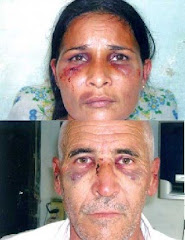
"The Lives of Others" Cuban Version / Lilianne Ruiz
Posted on July 9, 2013
HAVANA, Cuba, June 2013, Lilianne Ruiz, www.cubanet.org — On every
street in Cuba there are so-called "revolutionary vigilantes," people
who work independently for the Committees for the Defense of the
Revolution (CDR). They meet periodically with an official from the State
Security to inform and report on everything that is happening. But it is
not a state governed by the rule of law that protects this complex
apparatus of surveillance and repression. State security in Cuba is a
political policy meant to prevent political diversity and to guarantee
the stability of the country's sole political party.
As in the 2006 German film The Lives of Others, which had worldwide
impact due to the historical period it portrayed, this secret agency
relies on auxiliary divisions which are provided with the technical
means "to be able to operate in a personalized way and to maintain
effective control," says Raúl Borges Álvarez, who until 1989 served as a
counter-intelligence official.
"Sometimes there are people they cannot penetrate with an agent so they
are controlled through technical means. Up until 1989 there were more
than thirty departments in the General Counter-Intelligence Agency. One
of those departments was the 21st, which is in charge of dealing with
counter-revolution."
As a result of the imprisonment of his son, Ernesto Borges Pérez, on
political charges, Raúl Borges Álvarez got involved in protest
activities, which gradually led him to become part of the island's
political opposition.
He reports that there is a department of visual surveillance, which in
Cuba is referred to as K/J. It is involved in following individuals
either by trailing them physically or through the the use of
surveillance cameras, which are placed at nearby locations to monitor
those who enter or leave a building, often an individual's residence.
"They can even monitor private activities in order to blackmail someone
with information about which he might be embarrassed," adds the former
agent.
Surveillance of correspondence such as mail sent to dissidents, also
known as K/C, is handled by employees at 100th Street and Boyeros
Avenue. This surveillance center is referred to as International because
information from all over the world, as well as from inside the country,
is reviewed here. The name of the "person of operative interest" is part
of a list and the official to whom "the case" has been assigned is
informed of the content of the correspondence, according to Borges
Álvarez. "Later, copies are made of these letters and it is decided
afterwards whether or not to send them on to the addressee."
Telephone surveillance, or K/T, is carried out twenty-four hours a day.
There they are analyzing everything that happens, and transmitting it.
When it is communicated to the operative official "who attends the
dissident" depends on how interesting the conversation is.
"This way they can disconnect it to block a telephone interview that
might be reporting an incident to the foreign media, something that's
not reported in the national media because it is property of the State;
they can frustrate a meeting; they can try to sabotage a political
project; they can impede the organization of a protest to demand rights.
But above all," he says, "they are privately studying the profile of
that person, to then see how they can control him. From trying to
recruit him by means of intimidation and blackmail, to taking him out of
circulation."
Political police study individual profiles like a serial killer would
The appearance of State Security in the person of an official operative
can signify detention, threats, loss of liberty. All this complex,
repressive apparatus that has as its objective the dismantling of
efforts for non-violent change on the Island, tries to make believe in
the first instance that rights do not exist.
When that is not possible, given the determination of an opponent, they
will try then to destroy him. You have to remember that one of the
guarantees of the stability of a totalitarian system is maintaining on
an individual basis a crisis of identity where the person decides not to
take on initiatives that might contradict the views that originate from
the top, in this case the "Revolution."
As it deals with individual aspects like liberty, identity and the
demand for rights, the political police, having studied the phenomenon
of repression and submission (which was documented since the times of
Lenin and Stalin), directs itself to the destruction of the individual.
The most scandalous thing is that in order to carry out the
institutionalized rape of human rights in Cuba, the political police
study beforehand the profiles of people, as would a serial killer who
studies the routines, strengths, weaknesses, fears and hopes of his victims.
On the payroll of Department 21 are agents with violent behavior who are
then recognized by the government with orders of distinguished service,
rapid advancement, and perks. All those benefits, which stimulate
cruelty, are obtained by carrying out arbitrary arrests, surrounding
meeting places, doling out beatings which can leave subsequent
complications and consequences, mental and physical torture and
intimidation against opponents.
The ideological excuse for these abuses rests on the falsehood that
those people who engage in politics far from the Communist party, or
defend liberties and human rights, are "mercenaries and agents of
imperialism."
Some independent political and human rights organizations on the Island
advocate the creation of new legislation that prevents the system and
its agents from enjoying powers to seclude, detain, and punish human
beings who persevere in their dignity and inalienable rights.
Translated by mlk
6 July 2013
Source: ""The Lives of Others" Cuban Version / Lilianne Ruiz |
Translating Cuba" -
http://translatingcuba.com/the-lives-of-others-cuban-version-lilianne-ruiz-hemosoido/
Wednesday, July 10, 2013

The Feet Under the Covers
The Feet Under the Covers / Miriam Celaya
Posted on July 9, 2013
"The business is to deny visas, not grant visas" Granma newspaper, 28
June 2013
There is an old tale about a husband who comes home unexpectedly and
finds his wife in bed with a pair of men's feet sticking out from under
the covers. Angered by her infidelity, he challenges: "Slut!, whose feet
are those?" To which she, serenely, replies: "Oh, husband, you never ask
me where the food you enjoy so much comes from, which we could never
afford on your salary, or how I manage to pay all the bills with the
meager amount you give me, and how we get to the end of the month
without any hardships…" to which the husband, after pondering for a
minute, wisely answered: OK, wife, but at least cover those feet".
Obviously, the husband in this story was not exactly a two-timed
husband; he had simply miscalculated. Just like what happened to the
official organ of the Cuban Communist Party, the Granma Newspaper, when
it recently published an accusation, without names, proof, or
foundation, against executives of the Interest Section of the United
States in Cuba (SINA) for "having accepted bribes from Cuban citizens
for granting them visas" and to the US government in Washington for
"profiting from applicants who want to travel for family reasons".
The source Granma echoes, without investigation or process, is an
article published on the blog of one of the most perverse Talibans of
the regime, which is, so far, just a scam designed to create some new
intimation in the regime's ever-belligerent relations with the U.S.
government, who knows with what dark intentions.
But the net they cast is not entirely barren: the use of calculations
using the official media is always a good opportunity for reviewing
one's math, which never lies. Managing the numbers involves the
possibility of multiple interpretations about the same phenomenon, not
necessarily what the sources of the data intended, as in this case.
I would suggest to readers, for their entertainment, a practical
exercise: let's assume for a moment that Granma's information was
completely accurate and that the figures provided by the author of the
scam-article are also accurate. That is, in an infinite display of our
imagination let's play at pretending that Granma is a trustworthy
newspaper and let's do the same calculations from the opposite angle.
We would have to assume, then, a scene of 600 Cubans applying for visas
every day in the U.S. Interests Office in Havana, each of whom had paid
100 CUC at the offices of the Ministry of the Interior to get their
passports, leaving the regime a profit of 60,000 CUC per day, 300,000
weekly and 3,000,000 every ten weeks. All this in a country where 100
CUC is the equivalent of about six or seven times the average monthly
salary of ordinary Cubans. And these would be just those Cubans who
apply at the USIS and not all those who apply for visas in many other
diplomatic offices throughout the capital, who also must have spent
staggering amounts to acquire their Cuban passport.
We could add to that the minor detail that most of these Cubans who want
to emigrate received the US dollars needed to get their passports from
relatives living in the U.S., which turns the ugly little blue book
which officially makes you a Cuban traveler –always a potential emigrant
and a source of tension at each border where it's presented- into one of
the most lucrative businesses that the government has ever devised at
the expense of its peoples. Barely without investing any more than
cardboard and ink, with horrible print quality, the emigration industry
continues to contribute, directly or indirectly, to the gerontocracy's
juicy dividends, essential principle and reason of the existence of some
three million Cubans and their descendants scattered throughout the world.
And let's not discuss the additional revenues, such as the famous health
check to be performed on those wishing to emigrate permanently, at a
cost of 400 CUC per adult and 200 per child, which will go directly into
the Castro coffers. If the U.S. government approves 20,000 visas per
year, and we assume, hypothetically, that half of them are intended for
adults and half for minors: the Castro profit would be a total of 4
million CUC for adults and 2 million for children on an annual basis. We
would still need to add the title certificates and other documents, with
a cost of 200 CUC each in the International Consultancy. Add it up: the
result it a not so negligible currency harvest, I'm just saying.
But this is only an imaginary calculation, since we have no official
statistics from emigration offices. In fact, statistics in Cuba are like
diseases: they make use of them only when they want to realize some
advantage.
Now let's focus on the sociological aspect of the matter. There are no
precedents in Cuba's history of such a huge number of nationals who want
to travel, with a large percentage of those eager to emigrate
permanently. Without stopping to find out among categories of political
or economic émigrés, somewhat absurd in the case of Cuba, where the
policy of a dictatorship of more than half a century has devastated the
country's economy, the steady exodus of nationals of all ages and
backgrounds has become a plebiscite, especially since, for decades, most
of those who leave the country are not the representatives of the
clichéd "predatory oligarchies, sellers of the homeland and exploiters
of the humble masses," but the prospects of the New Man, born and raised
under the ideological doctrines of the communist party, planted into
power, i.e., the peoples; and because even those who only stay away from
the country temporarily are part of a family fractured by emigration, a
clear demonstration of the political and economic failure of the system.
Granma does itself quite a disservice with the publication of such an
unfortunate article. Not only because it is the most eloquent
manifestation of the huge levels of shamelessness achieved by the
regime, but because it honors that sentence about excessive pride
clouding reason.
At this point, I return to the story with which I began this review,
where the Cuban government parallels the "cheated on" husband, the
people: the wife whose favors ensure prosperity at home, and the
"imperialist enemy": the lover whose feet poke out from under the
covers. Wouldn't it be more appropriate if, instead of accusing someone,
the regime took care to cover its own feet?
Translated by Norma Whiting
1 July 2013
Source: "The Feet Under the Covers / Miriam Celaya | Translating Cuba" -
http://translatingcuba.com/the-feet-under-the-covers-miriam-celaya/
Posted on July 9, 2013
"The business is to deny visas, not grant visas" Granma newspaper, 28
June 2013
There is an old tale about a husband who comes home unexpectedly and
finds his wife in bed with a pair of men's feet sticking out from under
the covers. Angered by her infidelity, he challenges: "Slut!, whose feet
are those?" To which she, serenely, replies: "Oh, husband, you never ask
me where the food you enjoy so much comes from, which we could never
afford on your salary, or how I manage to pay all the bills with the
meager amount you give me, and how we get to the end of the month
without any hardships…" to which the husband, after pondering for a
minute, wisely answered: OK, wife, but at least cover those feet".
Obviously, the husband in this story was not exactly a two-timed
husband; he had simply miscalculated. Just like what happened to the
official organ of the Cuban Communist Party, the Granma Newspaper, when
it recently published an accusation, without names, proof, or
foundation, against executives of the Interest Section of the United
States in Cuba (SINA) for "having accepted bribes from Cuban citizens
for granting them visas" and to the US government in Washington for
"profiting from applicants who want to travel for family reasons".
The source Granma echoes, without investigation or process, is an
article published on the blog of one of the most perverse Talibans of
the regime, which is, so far, just a scam designed to create some new
intimation in the regime's ever-belligerent relations with the U.S.
government, who knows with what dark intentions.
But the net they cast is not entirely barren: the use of calculations
using the official media is always a good opportunity for reviewing
one's math, which never lies. Managing the numbers involves the
possibility of multiple interpretations about the same phenomenon, not
necessarily what the sources of the data intended, as in this case.
I would suggest to readers, for their entertainment, a practical
exercise: let's assume for a moment that Granma's information was
completely accurate and that the figures provided by the author of the
scam-article are also accurate. That is, in an infinite display of our
imagination let's play at pretending that Granma is a trustworthy
newspaper and let's do the same calculations from the opposite angle.
We would have to assume, then, a scene of 600 Cubans applying for visas
every day in the U.S. Interests Office in Havana, each of whom had paid
100 CUC at the offices of the Ministry of the Interior to get their
passports, leaving the regime a profit of 60,000 CUC per day, 300,000
weekly and 3,000,000 every ten weeks. All this in a country where 100
CUC is the equivalent of about six or seven times the average monthly
salary of ordinary Cubans. And these would be just those Cubans who
apply at the USIS and not all those who apply for visas in many other
diplomatic offices throughout the capital, who also must have spent
staggering amounts to acquire their Cuban passport.
We could add to that the minor detail that most of these Cubans who want
to emigrate received the US dollars needed to get their passports from
relatives living in the U.S., which turns the ugly little blue book
which officially makes you a Cuban traveler –always a potential emigrant
and a source of tension at each border where it's presented- into one of
the most lucrative businesses that the government has ever devised at
the expense of its peoples. Barely without investing any more than
cardboard and ink, with horrible print quality, the emigration industry
continues to contribute, directly or indirectly, to the gerontocracy's
juicy dividends, essential principle and reason of the existence of some
three million Cubans and their descendants scattered throughout the world.
And let's not discuss the additional revenues, such as the famous health
check to be performed on those wishing to emigrate permanently, at a
cost of 400 CUC per adult and 200 per child, which will go directly into
the Castro coffers. If the U.S. government approves 20,000 visas per
year, and we assume, hypothetically, that half of them are intended for
adults and half for minors: the Castro profit would be a total of 4
million CUC for adults and 2 million for children on an annual basis. We
would still need to add the title certificates and other documents, with
a cost of 200 CUC each in the International Consultancy. Add it up: the
result it a not so negligible currency harvest, I'm just saying.
But this is only an imaginary calculation, since we have no official
statistics from emigration offices. In fact, statistics in Cuba are like
diseases: they make use of them only when they want to realize some
advantage.
Now let's focus on the sociological aspect of the matter. There are no
precedents in Cuba's history of such a huge number of nationals who want
to travel, with a large percentage of those eager to emigrate
permanently. Without stopping to find out among categories of political
or economic émigrés, somewhat absurd in the case of Cuba, where the
policy of a dictatorship of more than half a century has devastated the
country's economy, the steady exodus of nationals of all ages and
backgrounds has become a plebiscite, especially since, for decades, most
of those who leave the country are not the representatives of the
clichéd "predatory oligarchies, sellers of the homeland and exploiters
of the humble masses," but the prospects of the New Man, born and raised
under the ideological doctrines of the communist party, planted into
power, i.e., the peoples; and because even those who only stay away from
the country temporarily are part of a family fractured by emigration, a
clear demonstration of the political and economic failure of the system.
Granma does itself quite a disservice with the publication of such an
unfortunate article. Not only because it is the most eloquent
manifestation of the huge levels of shamelessness achieved by the
regime, but because it honors that sentence about excessive pride
clouding reason.
At this point, I return to the story with which I began this review,
where the Cuban government parallels the "cheated on" husband, the
people: the wife whose favors ensure prosperity at home, and the
"imperialist enemy": the lover whose feet poke out from under the
covers. Wouldn't it be more appropriate if, instead of accusing someone,
the regime took care to cover its own feet?
Translated by Norma Whiting
1 July 2013
Source: "The Feet Under the Covers / Miriam Celaya | Translating Cuba" -
http://translatingcuba.com/the-feet-under-the-covers-miriam-celaya/
Cuba’s Film School Shaken by Corruption
Cuba's Film School Shaken by Corruption
July 9, 2013
HAVANA TIMES – An audit at the International School of Film and
Television (EICTV) of Cuba uncovered serious irregularities leading to
the arrest of three employees and the resignation of the director.
According to the La Jiribilla webpage Deputy Culture Minister Fernando
Rojas revealed that the employees were caught with "large sums of money
in various currencies, virtual warehouses of beverages in their homes,
cars bought with illegal income, and even a house completely renovated
with the profits from the criminal activity."
The deputy minister also denounced the illegal payment of wages, bank
withdrawals made "without authorization" and "unwarranted" expenses
unrelated to teaching at the EICTV, located in San Antonio de los Baños
on the outskirts of Havana.
The results of the investigation were presented to students and teachers
at the beginning of last week.
From the EICTV website.
According to EFE, EICTV sources confirmed Monday that its director,
Guatemalan filmmaker Rafael Rosal, no longer hold that position, and
that in the coming days the Advisory Board of the Foundation of New
Latin American Cinema will appoint his replacement.
The entry of new students for the next regular course has been postponed
until 2014, said the note. The EICTV is known for having given Latin
America some of its acclaimed filmmakers.
Source: "Corruption scandal shakes Cuba's famous film school" -
http://www.havanatimes.org/?p=96136
July 9, 2013
HAVANA TIMES – An audit at the International School of Film and
Television (EICTV) of Cuba uncovered serious irregularities leading to
the arrest of three employees and the resignation of the director.
According to the La Jiribilla webpage Deputy Culture Minister Fernando
Rojas revealed that the employees were caught with "large sums of money
in various currencies, virtual warehouses of beverages in their homes,
cars bought with illegal income, and even a house completely renovated
with the profits from the criminal activity."
The deputy minister also denounced the illegal payment of wages, bank
withdrawals made "without authorization" and "unwarranted" expenses
unrelated to teaching at the EICTV, located in San Antonio de los Baños
on the outskirts of Havana.
The results of the investigation were presented to students and teachers
at the beginning of last week.
From the EICTV website.
According to EFE, EICTV sources confirmed Monday that its director,
Guatemalan filmmaker Rafael Rosal, no longer hold that position, and
that in the coming days the Advisory Board of the Foundation of New
Latin American Cinema will appoint his replacement.
The entry of new students for the next regular course has been postponed
until 2014, said the note. The EICTV is known for having given Latin
America some of its acclaimed filmmakers.
Source: "Corruption scandal shakes Cuba's famous film school" -
http://www.havanatimes.org/?p=96136
Cuba’s Housing Situation: The Coming Collapse
Cuba's Housing Situation: The Coming Collapse
July 9, 2013
By Daniel Benitez (Café Fuerte)
HAVANA TIMES — According to a report by Cuba's National Housing
Institute (INV), over 1,170,000 homes in Cuba (39 percent of the
country's residences) are in merely adequate or frankly poor condition.
The official report was issued prior to the recently-concluded session
of the National Assembly of the People's Power (parliament), where a
considerable number of the deputies' discussions on socio-economic
matters centered on the issue of housing.
In its concluding remarks, the Parliamentary Commission on Industry,
Construction Work and Energy underscored the urgent need to restore and
maintain the country's residences and called on Cuba's parliament to
prioritize the development of the construction materials industry.
Deputies, the Commission declared, will devote particular attention to
housing development at the municipal level and to houses built in rural
or mountainous regions, especially those constructed by the residents
themselves, on the basis of credit and other facilities.
Non-government sources set the number of Cuban homes in poor or adequate
condition as high as 57 percent and report a housing deficit of 700
thousand residences.
Disquieting Figures
One of the main causes of Cuba's current housing situation identified by
the Housing Institute report is the frequent onslaught of meteorological
phenomena, said to "have damaged, in one way or another over the last 10
years, over one million dwellings on the island." Hurricane Sandy alone,
which lashed Cuba in October of 2012, caused damage to some 150 thousand
homes and resulted in the total collapse of 17 thousand residences in
the provinces of Santiago de Cuba and Holguin.
Statistics on new housing construction aren't very flattering either. In
2012, Cuba saw the construction of a mere 32,103 units, 28 percent of
which were erected through the population's own efforts. Figures, in
fact, reveal that the construction of houses has been dropping
continuously for six consecutive years, since 2006, when 111,273 units
were built.
This has been the general trend, despite the fact that salaries for
construction workers have been the highest in the country, some 580
Cuban pesos (CUP), or US $ 24, a month (the average salary in Cuba is
now at 466 CUP, 11 pesos higher than what it was in 2011).
Rubble of damaged buildings after Hurricane Sandy in Santiago de Cuba in
October 2012.
Figures for the first half of 2013 aren't much different. During his
remarks before Cuba's Parliament, Minister for the Economy and Planning
Adel Yzquierdo reported that the construction of housing had dropped by
3 percent this year and the plan was 500 units behind schedule, in a
province in such dear need of attention as Havana.
A Tense Situation
In view of this, the Minister added, the housing plan for Santiago de
Cuba, which is making headway but meeting with a "very tense situation"
in the midst of the damage caused by hurricane Sandy, must be urgently
fulfilled.
Yzquierdo also reported that the building of houses by the general
population had dropped by 6 percent, as people are using the materials
given them to repair their homes, not to construct new ones. The
government had planned for 13,000 units to be constructed in this fashion.
Owing to this precarious situation, the Cuban government has had to
implement urgent measures in the hopes of containing the deterioration
that decades of stagnation in the sector, and the near-paralysis of
construction and repair efforts, has brought about.
One of these measures has been to authorize the sale and purchase of
homes, after more than fifty years of strict control over the housing
market, a move which has unleashed a veritable avalanche of
advertisements, published in a broad range of places, and has increased
speculation, resulting in exorbitant real estate prices (which, many a
time, are not reflective of the properties' condition). Another measure
has been the granting of credits and subsidies, aimed at encouraging
"construction work through personal effort."
Building Materials in High Demand
The question remains: can these measures revitalize the market and
achieve considerable improvement in the sector? It doesn't seem likely
when we bear in mind that the subsidies granted for the construction of
a 25-square-meter home equipped with a bathroom and kitchen
(construction work included) do not exceed the figure of 80,000 CUP –
some 3,200 Cuban Convertible Pesos (CUCs) or 3,600 usd -, while even
less significant loans (from 5,000 to 10,000 CUP) are issued for smaller
construction efforts.
In any event, the country does not currently have a construction
industry capable of satisfying a greater demand for building materials.
Hence the fact that only specific establishments carry the P 350
concrete, bathroom fixtures, house paint and plumbing and electricity
accessories that can be bought with these State credits.
The INV report shows that, in the first half of the year, the sale of
these materials at the retail level exceeded the figure of 650,000,000
CUP (26 million USD) and that, at least up to March, some 33,000 people
benefited from these government program [an average of around US $ 800
each].
In 2011, a 24-episode program titled "With Your Own Hands: How to Build
and Repair your Home" ("Con tus propias manos: Como construir y mantener
tu vivienda") was aired on Cuban television, with the aim of "providing
the population with indispensable construction know-how for the building
of new homes or the repair of existing ones through the residents' own
efforts."
A Monumental Challenge
The challenge posed by Cuba's housing situation, however, is monumental
and will not be resolved through timid measures which do not fully
liberate all of the country's productive forces and allow for private
enterprise in the construction sector.
Sixty years ago, the right to housing was one of the issues which drove
Fidel Castro and the group of young revolutionaries who attacked
Santiago de Cuba's Moncada Barracks in the hopes of sparking off a
popular uprising in the country. In 1959, the Moncada program became
government policy.
To date, however, not only can we not speak of fulfilled promises, Cuba
cannot even claim to have guaranteed the minimum degree of maintenance
needed to prevent the destruction and collapse of its architectural
heritage.
During his closing remarks at the National Assembly this past Sunday,
Raul Castro declared that the 2.3 percent GDP growth reported for the
first half of 2013 "isn't felt by the household economy of the average
Cuban family."
This growth is even less evident if we consider the country's housing
situation, which may well be the greatest obstacle blocking our view of
the light at the end of the Cuban tunnel.
CONSTRUCTION OF NEW HOUSING UNITS IN CUBA (2000-2012)
2000 – 42,940
2001 – 35,805
2002 – 27,460
2003 – 15,590
2004 – 15,352
2005 – 39,919
2006 – 111,373
2007 – 52,607
2008 – 44,775
2009 – 35,085
2010 – 33,901
2011 – 32,540
2012 – 32,103
Source: ONE
Source: "Cuba's housing situation is critical" -
http://www.havanatimes.org/?p=96124
July 9, 2013
By Daniel Benitez (Café Fuerte)
HAVANA TIMES — According to a report by Cuba's National Housing
Institute (INV), over 1,170,000 homes in Cuba (39 percent of the
country's residences) are in merely adequate or frankly poor condition.
The official report was issued prior to the recently-concluded session
of the National Assembly of the People's Power (parliament), where a
considerable number of the deputies' discussions on socio-economic
matters centered on the issue of housing.
In its concluding remarks, the Parliamentary Commission on Industry,
Construction Work and Energy underscored the urgent need to restore and
maintain the country's residences and called on Cuba's parliament to
prioritize the development of the construction materials industry.
Deputies, the Commission declared, will devote particular attention to
housing development at the municipal level and to houses built in rural
or mountainous regions, especially those constructed by the residents
themselves, on the basis of credit and other facilities.
Non-government sources set the number of Cuban homes in poor or adequate
condition as high as 57 percent and report a housing deficit of 700
thousand residences.
Disquieting Figures
One of the main causes of Cuba's current housing situation identified by
the Housing Institute report is the frequent onslaught of meteorological
phenomena, said to "have damaged, in one way or another over the last 10
years, over one million dwellings on the island." Hurricane Sandy alone,
which lashed Cuba in October of 2012, caused damage to some 150 thousand
homes and resulted in the total collapse of 17 thousand residences in
the provinces of Santiago de Cuba and Holguin.
Statistics on new housing construction aren't very flattering either. In
2012, Cuba saw the construction of a mere 32,103 units, 28 percent of
which were erected through the population's own efforts. Figures, in
fact, reveal that the construction of houses has been dropping
continuously for six consecutive years, since 2006, when 111,273 units
were built.
This has been the general trend, despite the fact that salaries for
construction workers have been the highest in the country, some 580
Cuban pesos (CUP), or US $ 24, a month (the average salary in Cuba is
now at 466 CUP, 11 pesos higher than what it was in 2011).
Rubble of damaged buildings after Hurricane Sandy in Santiago de Cuba in
October 2012.
Figures for the first half of 2013 aren't much different. During his
remarks before Cuba's Parliament, Minister for the Economy and Planning
Adel Yzquierdo reported that the construction of housing had dropped by
3 percent this year and the plan was 500 units behind schedule, in a
province in such dear need of attention as Havana.
A Tense Situation
In view of this, the Minister added, the housing plan for Santiago de
Cuba, which is making headway but meeting with a "very tense situation"
in the midst of the damage caused by hurricane Sandy, must be urgently
fulfilled.
Yzquierdo also reported that the building of houses by the general
population had dropped by 6 percent, as people are using the materials
given them to repair their homes, not to construct new ones. The
government had planned for 13,000 units to be constructed in this fashion.
Owing to this precarious situation, the Cuban government has had to
implement urgent measures in the hopes of containing the deterioration
that decades of stagnation in the sector, and the near-paralysis of
construction and repair efforts, has brought about.
One of these measures has been to authorize the sale and purchase of
homes, after more than fifty years of strict control over the housing
market, a move which has unleashed a veritable avalanche of
advertisements, published in a broad range of places, and has increased
speculation, resulting in exorbitant real estate prices (which, many a
time, are not reflective of the properties' condition). Another measure
has been the granting of credits and subsidies, aimed at encouraging
"construction work through personal effort."
Building Materials in High Demand
The question remains: can these measures revitalize the market and
achieve considerable improvement in the sector? It doesn't seem likely
when we bear in mind that the subsidies granted for the construction of
a 25-square-meter home equipped with a bathroom and kitchen
(construction work included) do not exceed the figure of 80,000 CUP –
some 3,200 Cuban Convertible Pesos (CUCs) or 3,600 usd -, while even
less significant loans (from 5,000 to 10,000 CUP) are issued for smaller
construction efforts.
In any event, the country does not currently have a construction
industry capable of satisfying a greater demand for building materials.
Hence the fact that only specific establishments carry the P 350
concrete, bathroom fixtures, house paint and plumbing and electricity
accessories that can be bought with these State credits.
The INV report shows that, in the first half of the year, the sale of
these materials at the retail level exceeded the figure of 650,000,000
CUP (26 million USD) and that, at least up to March, some 33,000 people
benefited from these government program [an average of around US $ 800
each].
In 2011, a 24-episode program titled "With Your Own Hands: How to Build
and Repair your Home" ("Con tus propias manos: Como construir y mantener
tu vivienda") was aired on Cuban television, with the aim of "providing
the population with indispensable construction know-how for the building
of new homes or the repair of existing ones through the residents' own
efforts."
A Monumental Challenge
The challenge posed by Cuba's housing situation, however, is monumental
and will not be resolved through timid measures which do not fully
liberate all of the country's productive forces and allow for private
enterprise in the construction sector.
Sixty years ago, the right to housing was one of the issues which drove
Fidel Castro and the group of young revolutionaries who attacked
Santiago de Cuba's Moncada Barracks in the hopes of sparking off a
popular uprising in the country. In 1959, the Moncada program became
government policy.
To date, however, not only can we not speak of fulfilled promises, Cuba
cannot even claim to have guaranteed the minimum degree of maintenance
needed to prevent the destruction and collapse of its architectural
heritage.
During his closing remarks at the National Assembly this past Sunday,
Raul Castro declared that the 2.3 percent GDP growth reported for the
first half of 2013 "isn't felt by the household economy of the average
Cuban family."
This growth is even less evident if we consider the country's housing
situation, which may well be the greatest obstacle blocking our view of
the light at the end of the Cuban tunnel.
CONSTRUCTION OF NEW HOUSING UNITS IN CUBA (2000-2012)
2000 – 42,940
2001 – 35,805
2002 – 27,460
2003 – 15,590
2004 – 15,352
2005 – 39,919
2006 – 111,373
2007 – 52,607
2008 – 44,775
2009 – 35,085
2010 – 33,901
2011 – 32,540
2012 – 32,103
Source: ONE
Source: "Cuba's housing situation is critical" -
http://www.havanatimes.org/?p=96124
Salons or Not, Cyberspace Is Still a Distant Place for Most Cubans
Salons or Not, Cyberspace Is Still a Distant Place for Most Cubans
By VICTORIA BURNETT
Published: July 9, 2013
HAVANA — By the standards of many Cubans, Lazaro Noa García is an adept
internaut. He e-mails his daughter in Mexico a couple of times a week at
a cybersalon in an upscale suburb, and checks soccer scores and news on
Yahoo.
Until last month, though, the closest Mr. García, 59, had been to
cyberspace was the painfully slow e-mail service at his local post
office. Then on June 4, Etecsa, the state telecom company, opened 118
Internet salons around the island, expanding public Web access — by a
fraction, at least — in what is regarded as the least wired country in
the Western Hemisphere. Mr. García, a retired military officer,
immediately signed up.
"This is like a Three Kings' Day gift," Mr. García said of his newfound
Internet access, referring to the Jan. 6 holiday when people dressed as
the Magi hand out goodies to children.
But as gifts go, it is extremely expensive, he said. At $4.50 an hour, a
session at one of the new cybersalons costs almost as much as the
average state worker earns in a week, prompting many Cubans to wonder
whether President Raúl Castro is serious about bringing the Internet to
the masses, or just playing for time.
"At this price, hardly anyone is going to be using it," said Mr. García,
who figured he could afford to buy an hour or two a week because his
daughter helped him out and he had just sold his house.
Cuba's limited Internet access is a source of festering resentment among
Cubans, millions of whom have never been online. Some people — medics,
for example, or journalists — qualify for a dial-up connection at home.
Others use pirated connections, rent time on a neighbor's line or log on
at a hotel, where they pay about $8 an hour. Many trade information on
memory sticks or rely on stodgy state-run periodicals for news.
"We are living in the back of a cave," said Walfrido López, a Cuban
blogger and information technology specialist. "People here are asleep,
because they don't have information."
He added, "Having information is what enables you to make decisions,
take positions."
Government figures indicate 26 percent of Cubans had Internet access
last year, but this includes millions who entered only an intranet
linked to their work. The International Telecommunication Union, a
United Nations agency for information and communications technology,
puts the number of broadband subscriptions in Cuba at 0.04 per 100
inhabitants, or about one in 2,500. That is lower than in Haiti and
Sudan, two places that are not considered the least bit tech-friendly.
Even Cuba's new cybersalons, which operate under the brand name Nauta,
amount to just one for every 95,000 Cubans.
The new service is "a gesture of openness within a context of the
ability to have monopoly control," said Ted Henken, a professor at City
University of New York who closely follows the Cuban blogosphere, noting
that Etecsa requires users to sign a contract warning that they will be
monitored for subversive activity. Still, he added, the government has
"created a conversation around access that didn't exist before."
Harold Cárdenas Lema, 27, a blogger and philosophy teacher at the
University of Matanzas, said the cybersalons represented a
"transcendental" shift because they put a relatively fast, fairly
uncensored Internet service at the disposal of individuals.
However, the government risks a deep digital divide if it does not cut
prices in line with most Cubans' salaries, Mr. Cárdenas said. And
despite an official pledge to prioritize "social" use of the Internet,
he and others using university or hospital connections complained they
were as slow as ever.
Wilfredo González Vidál, vice minister of communications, in an
interview with the official news media in May, assured that "the market
will not regulate access to knowledge in our country." But Rogelio
Moreno Díaz responded in his acerbic blog, Bubusópia, that this was "the
final insult to the public's intelligence."
To be sure, prices seem to be containing demand: The lines to use the
hushed salons at some Etecsa offices in the capital were far shorter
than those for adding money to prepaid cellphones and paying landline
bills. At each office — air-conditioned rooms with banks of three to
eight computers — some screens sat idle.
At one office, Carlos Antonio, 25, a physiotherapist who would not give
his surname, helped his uncle navigate the browser next to his, while he
sent a message for his girlfriend in Miami, which he had written
beforehand on a neighbor's computer to save connection time. Next to
them, Leonel Correa, a slight man in his 20s with a thick gold chain who
runs a small 3-D movie business, was connecting with friends in Spain on
Facebook.
Then there was the rest of Cuba. Ana Maria Hernández, a retired nurse
who was waiting to pay her landline bill in downtown Havana last week,
smiled weakly when asked if she might use the new service.
"For me, Internet doesn't exist," said Ms. Hernández, 51. "I've never
seen it. I don't really know what it does."
On her pension of $11 a month, she said, she can barely afford her phone
bill, which was 80 cents in June.
"So where would I get $4.50?" she asked.
The Cuban government pins some blame for Cuba's technological isolation
on the United States embargo. In 2009, President Obama loosened
restrictions to allow American telecom providers to enter agreements
with Cuban providers, but so far none have.
Some Cubans and experts, however, blame a combination of government
paranoia, inefficiency and incompetence.
Two years ago, the government announced the arrival of a $70 million
underwater fiber-optic cable from Venezuela, ALBA-1, that they said
would speed up connections by a factor of 3,000.
But then officials fell silent and the fate of the cable became an
object of dark speculation.Was the government unnerved by the Arab
Spring? Was the project bogged down by corruption? That ended in
January, when Renesys, an Internet measurement company based in
Manchester, N.H., detected that it had sprung to life.
Now, the government has shown signs that it may be bowing to the
inevitability of the digital age.
Miguel Díaz-Canel Bermúdez, first vice president of the Council of State
and the man expected to succeed Mr. Castro, told a teachers' seminar in
May that prohibiting information in a world of technology and social
networks was "an impossible fantasy."
"Today, news from all sides, good and bad, manipulated and true, or
half-true, circulates on networks, reaches people — people hear it," he
said, according to accounts in official media. "The worst thing, then,
is silence."
Etecsa officials have said the company aims to offer broadband access to
people's homes and cellphones by the end of next year and will gradually
reduce the price of connectivity.
That is not soon enough for some.
"They talk of late 2014 as if it were an instant away," said Mr. López,
who has Internet access at work but not at home. Speaking of the goal of
broadband by late next year, he added, "That's another year and a
quarter of my life." If the government has the technology to open
Internet salons, he said, it would take little to turn them into Wi-Fi
hot spots.
Some experts, meanwhile, say that building a fiber-optic network would
be slow and expensive, and may make little sense given alternatives like
the mobile Internet.
"It would be way easier to put up a couple of towers and establish a 4G
network," said Doug Madory, a senior analyst at Renesys who first
blogged about activity on the ALBA-1 line. "There are countries in
Africa that have jumped into the 21st century" using mobile technology,
he said.
But the government may not be ready to jump that far, Professor Henken said.
In the end, it may not be up to the government whether Cubans get the
Internet access they crave, Mr. Cárdenas said. He pointed to initiatives
to bring the Internet to remote places using special satellites or even
balloons, and the fact that Cuba is only 90 miles from the mainland
United States.
"Internet is coming, it's just a question of when and how," he added.
"Either the state will bring it, or someone else will."
Source: "Salons or Not, Cyberspace Is Still a Distant Place for Most
Cubans - NYTimes.com" -
http://www.nytimes.com/2013/07/10/world/americas/salons-or-not-cyberspace-is-still-a-distant-place-for-most-cubans.html?_r=0
By VICTORIA BURNETT
Published: July 9, 2013
HAVANA — By the standards of many Cubans, Lazaro Noa García is an adept
internaut. He e-mails his daughter in Mexico a couple of times a week at
a cybersalon in an upscale suburb, and checks soccer scores and news on
Yahoo.
Until last month, though, the closest Mr. García, 59, had been to
cyberspace was the painfully slow e-mail service at his local post
office. Then on June 4, Etecsa, the state telecom company, opened 118
Internet salons around the island, expanding public Web access — by a
fraction, at least — in what is regarded as the least wired country in
the Western Hemisphere. Mr. García, a retired military officer,
immediately signed up.
"This is like a Three Kings' Day gift," Mr. García said of his newfound
Internet access, referring to the Jan. 6 holiday when people dressed as
the Magi hand out goodies to children.
But as gifts go, it is extremely expensive, he said. At $4.50 an hour, a
session at one of the new cybersalons costs almost as much as the
average state worker earns in a week, prompting many Cubans to wonder
whether President Raúl Castro is serious about bringing the Internet to
the masses, or just playing for time.
"At this price, hardly anyone is going to be using it," said Mr. García,
who figured he could afford to buy an hour or two a week because his
daughter helped him out and he had just sold his house.
Cuba's limited Internet access is a source of festering resentment among
Cubans, millions of whom have never been online. Some people — medics,
for example, or journalists — qualify for a dial-up connection at home.
Others use pirated connections, rent time on a neighbor's line or log on
at a hotel, where they pay about $8 an hour. Many trade information on
memory sticks or rely on stodgy state-run periodicals for news.
"We are living in the back of a cave," said Walfrido López, a Cuban
blogger and information technology specialist. "People here are asleep,
because they don't have information."
He added, "Having information is what enables you to make decisions,
take positions."
Government figures indicate 26 percent of Cubans had Internet access
last year, but this includes millions who entered only an intranet
linked to their work. The International Telecommunication Union, a
United Nations agency for information and communications technology,
puts the number of broadband subscriptions in Cuba at 0.04 per 100
inhabitants, or about one in 2,500. That is lower than in Haiti and
Sudan, two places that are not considered the least bit tech-friendly.
Even Cuba's new cybersalons, which operate under the brand name Nauta,
amount to just one for every 95,000 Cubans.
The new service is "a gesture of openness within a context of the
ability to have monopoly control," said Ted Henken, a professor at City
University of New York who closely follows the Cuban blogosphere, noting
that Etecsa requires users to sign a contract warning that they will be
monitored for subversive activity. Still, he added, the government has
"created a conversation around access that didn't exist before."
Harold Cárdenas Lema, 27, a blogger and philosophy teacher at the
University of Matanzas, said the cybersalons represented a
"transcendental" shift because they put a relatively fast, fairly
uncensored Internet service at the disposal of individuals.
However, the government risks a deep digital divide if it does not cut
prices in line with most Cubans' salaries, Mr. Cárdenas said. And
despite an official pledge to prioritize "social" use of the Internet,
he and others using university or hospital connections complained they
were as slow as ever.
Wilfredo González Vidál, vice minister of communications, in an
interview with the official news media in May, assured that "the market
will not regulate access to knowledge in our country." But Rogelio
Moreno Díaz responded in his acerbic blog, Bubusópia, that this was "the
final insult to the public's intelligence."
To be sure, prices seem to be containing demand: The lines to use the
hushed salons at some Etecsa offices in the capital were far shorter
than those for adding money to prepaid cellphones and paying landline
bills. At each office — air-conditioned rooms with banks of three to
eight computers — some screens sat idle.
At one office, Carlos Antonio, 25, a physiotherapist who would not give
his surname, helped his uncle navigate the browser next to his, while he
sent a message for his girlfriend in Miami, which he had written
beforehand on a neighbor's computer to save connection time. Next to
them, Leonel Correa, a slight man in his 20s with a thick gold chain who
runs a small 3-D movie business, was connecting with friends in Spain on
Facebook.
Then there was the rest of Cuba. Ana Maria Hernández, a retired nurse
who was waiting to pay her landline bill in downtown Havana last week,
smiled weakly when asked if she might use the new service.
"For me, Internet doesn't exist," said Ms. Hernández, 51. "I've never
seen it. I don't really know what it does."
On her pension of $11 a month, she said, she can barely afford her phone
bill, which was 80 cents in June.
"So where would I get $4.50?" she asked.
The Cuban government pins some blame for Cuba's technological isolation
on the United States embargo. In 2009, President Obama loosened
restrictions to allow American telecom providers to enter agreements
with Cuban providers, but so far none have.
Some Cubans and experts, however, blame a combination of government
paranoia, inefficiency and incompetence.
Two years ago, the government announced the arrival of a $70 million
underwater fiber-optic cable from Venezuela, ALBA-1, that they said
would speed up connections by a factor of 3,000.
But then officials fell silent and the fate of the cable became an
object of dark speculation.Was the government unnerved by the Arab
Spring? Was the project bogged down by corruption? That ended in
January, when Renesys, an Internet measurement company based in
Manchester, N.H., detected that it had sprung to life.
Now, the government has shown signs that it may be bowing to the
inevitability of the digital age.
Miguel Díaz-Canel Bermúdez, first vice president of the Council of State
and the man expected to succeed Mr. Castro, told a teachers' seminar in
May that prohibiting information in a world of technology and social
networks was "an impossible fantasy."
"Today, news from all sides, good and bad, manipulated and true, or
half-true, circulates on networks, reaches people — people hear it," he
said, according to accounts in official media. "The worst thing, then,
is silence."
Etecsa officials have said the company aims to offer broadband access to
people's homes and cellphones by the end of next year and will gradually
reduce the price of connectivity.
That is not soon enough for some.
"They talk of late 2014 as if it were an instant away," said Mr. López,
who has Internet access at work but not at home. Speaking of the goal of
broadband by late next year, he added, "That's another year and a
quarter of my life." If the government has the technology to open
Internet salons, he said, it would take little to turn them into Wi-Fi
hot spots.
Some experts, meanwhile, say that building a fiber-optic network would
be slow and expensive, and may make little sense given alternatives like
the mobile Internet.
"It would be way easier to put up a couple of towers and establish a 4G
network," said Doug Madory, a senior analyst at Renesys who first
blogged about activity on the ALBA-1 line. "There are countries in
Africa that have jumped into the 21st century" using mobile technology,
he said.
But the government may not be ready to jump that far, Professor Henken said.
In the end, it may not be up to the government whether Cubans get the
Internet access they crave, Mr. Cárdenas said. He pointed to initiatives
to bring the Internet to remote places using special satellites or even
balloons, and the fact that Cuba is only 90 miles from the mainland
United States.
"Internet is coming, it's just a question of when and how," he added.
"Either the state will bring it, or someone else will."
Source: "Salons or Not, Cyberspace Is Still a Distant Place for Most
Cubans - NYTimes.com" -
http://www.nytimes.com/2013/07/10/world/americas/salons-or-not-cyberspace-is-still-a-distant-place-for-most-cubans.html?_r=0
Cuba economy czar: Reforms entering critical phase
Cuba economy czar: Reforms entering critical phase
ANDREA RODRIGUEZ 9
PoliticsBudget, Tax & EconomyCuba
HAVANA (AP) — Communist-led Cuba's experiment with limited capitalism is
entering a crucial and transformative phase this year with the
decentralization of bloated state-run businesses, the island's economic
czar said Tuesday.
Marino Murillo said the goal is to improve efficiency of those
businesses and let the successful ones keep more of their profits.
Murillo said the next 18 months will be the "most complex" part of
President Raul Castro's reform program, which has already seen limited
openings to private entrepreneurship and a relaxation of many social
restrictions.
"The first stage of the reforms has so far, fundamentally, been the
elimination of prohibitions in society," Murillo said in just his second
face-to-face encounter with foreign journalists since he rose to
prominence three years ago.
"During what remains of the year 2013 and in 2014, we will work on ...
the most profound transformations," he added.
Castro's economic and social reforms, which began in 2010, aim to
resuscitate a flagging economy with a smattering of free-market
principles, though officials insist that a wholesale embrace of
capitalism is not planned.
After five decades of a state-dominated economy, hundreds of thousands
of people have legally gone into business for themselves, private
farmers are cultivating land with the government's blessing and dozens
of independent nonagricultural cooperatives were launched recently under
a pilot program.
Authorities have also approved home and used car sales, eased travel
restrictions and established mortgages and small-business credits.
Outside analysts have questioned the scope and pace of the reforms,
saying so far they have been insufficient to turn around the economy and
attract foreign investment. In a speech over the weekend, Castro himself
acknowledged that most Cubans have yet to feel the benefits of a slowly
growing economy.
Murillo did not give many details about the next stage of the reforms,
such as which companies will be decentralized and what will happen to
those that fail. An effort to give more autonomy to the sugar industry
in 2012 that included new leadership and a restructuring of the
once-powerful Sugar Ministry has yet to result in improved harvests.
Murillo said the changes contemplated over the coming months include
letting state enterprises keep up to 50 percent of revenue to reinvest.
Currently all earnings go to the government, which controls all spending
and distributes resources to successful and failing enterprises alike.
"We must remove all impediments that put the brakes on possibilities,"
Murillo said.
He acknowledged the island must attract more foreign investment, but
insisted that Cuba will do so on its own terms and will not accept
business proposals that don't contribute to the island in the way of
technology, financing or employment.
While some economists have argued that Cuba is in desperate need of an
injection of capital, Murillo insisted foreign investment is merely "a
complement" to the country's plan for economic development.
Cuba does not have access to international capital markets, and U.S.
economic sanctions in place since the 1960s freeze it out of some
potential lending sources.
However, the country has grown closer to countries such as China and
Venezuela and has received soft credits particularly from the latter,
which supplies enough oil to meet half of the island's consumption at
highly preferential terms.
Later Tuesday, Labor Ministry spokesman Carlos Mateu told reporters that
a plan to eliminate a half-million workers from bloated state payrolls,
announced by Castro in 2010, did not turn out as expected.
Mateu said that instead there was a kind of realignment of labor, with
many workers leaving government jobs to open or work for small
businesses. In other cases, redundant state workers were transferred to
posts where there was more of a need.
"We realized that a phenomenon of movement was occurring in the labor
force," Mateu said.
He added that 429,000 Cubans are now licensed as independent workers.
The government remains by far the largest employer, accounting for 77
percent of jobs among the island's 5 million-strong workforce.
The other 23 percent comprises private entrepreneurs, their employers,
independent farmers and cooperatives.
___
Andrea Rodriguez on Twitter: www.twitter.com/ARodriguezAP
Source: "Cuba economy czar: Reforms entering critical phase - Yahoo!
News" -
http://news.yahoo.com/cuba-economy-czar-reforms-entering-critical-phase-163810483.html
ANDREA RODRIGUEZ 9
PoliticsBudget, Tax & EconomyCuba
HAVANA (AP) — Communist-led Cuba's experiment with limited capitalism is
entering a crucial and transformative phase this year with the
decentralization of bloated state-run businesses, the island's economic
czar said Tuesday.
Marino Murillo said the goal is to improve efficiency of those
businesses and let the successful ones keep more of their profits.
Murillo said the next 18 months will be the "most complex" part of
President Raul Castro's reform program, which has already seen limited
openings to private entrepreneurship and a relaxation of many social
restrictions.
"The first stage of the reforms has so far, fundamentally, been the
elimination of prohibitions in society," Murillo said in just his second
face-to-face encounter with foreign journalists since he rose to
prominence three years ago.
"During what remains of the year 2013 and in 2014, we will work on ...
the most profound transformations," he added.
Castro's economic and social reforms, which began in 2010, aim to
resuscitate a flagging economy with a smattering of free-market
principles, though officials insist that a wholesale embrace of
capitalism is not planned.
After five decades of a state-dominated economy, hundreds of thousands
of people have legally gone into business for themselves, private
farmers are cultivating land with the government's blessing and dozens
of independent nonagricultural cooperatives were launched recently under
a pilot program.
Authorities have also approved home and used car sales, eased travel
restrictions and established mortgages and small-business credits.
Outside analysts have questioned the scope and pace of the reforms,
saying so far they have been insufficient to turn around the economy and
attract foreign investment. In a speech over the weekend, Castro himself
acknowledged that most Cubans have yet to feel the benefits of a slowly
growing economy.
Murillo did not give many details about the next stage of the reforms,
such as which companies will be decentralized and what will happen to
those that fail. An effort to give more autonomy to the sugar industry
in 2012 that included new leadership and a restructuring of the
once-powerful Sugar Ministry has yet to result in improved harvests.
Murillo said the changes contemplated over the coming months include
letting state enterprises keep up to 50 percent of revenue to reinvest.
Currently all earnings go to the government, which controls all spending
and distributes resources to successful and failing enterprises alike.
"We must remove all impediments that put the brakes on possibilities,"
Murillo said.
He acknowledged the island must attract more foreign investment, but
insisted that Cuba will do so on its own terms and will not accept
business proposals that don't contribute to the island in the way of
technology, financing or employment.
While some economists have argued that Cuba is in desperate need of an
injection of capital, Murillo insisted foreign investment is merely "a
complement" to the country's plan for economic development.
Cuba does not have access to international capital markets, and U.S.
economic sanctions in place since the 1960s freeze it out of some
potential lending sources.
However, the country has grown closer to countries such as China and
Venezuela and has received soft credits particularly from the latter,
which supplies enough oil to meet half of the island's consumption at
highly preferential terms.
Later Tuesday, Labor Ministry spokesman Carlos Mateu told reporters that
a plan to eliminate a half-million workers from bloated state payrolls,
announced by Castro in 2010, did not turn out as expected.
Mateu said that instead there was a kind of realignment of labor, with
many workers leaving government jobs to open or work for small
businesses. In other cases, redundant state workers were transferred to
posts where there was more of a need.
"We realized that a phenomenon of movement was occurring in the labor
force," Mateu said.
He added that 429,000 Cubans are now licensed as independent workers.
The government remains by far the largest employer, accounting for 77
percent of jobs among the island's 5 million-strong workforce.
The other 23 percent comprises private entrepreneurs, their employers,
independent farmers and cooperatives.
___
Andrea Rodriguez on Twitter: www.twitter.com/ARodriguezAP
Source: "Cuba economy czar: Reforms entering critical phase - Yahoo!
News" -
http://news.yahoo.com/cuba-economy-czar-reforms-entering-critical-phase-163810483.html
Tuesday, July 9, 2013
Accumulation of Power
Accumulation of Power / Fernando Damaso
Posted on July 8, 2013
When authoritarian, centralized and vertical power has been exercised
for such a long time and without any opposing counterpart, where
decisions are taking and implemented from above to below, without
effective citizen participation, as it is not in their compliance and
enforcement, it's tremendously difficult to set aside these habits and
to think and act in a democratic way.
In the case of Cuba, this is what has happened. As a result,
institutions and organizations created with the objective of offering
the world a "light" image of the Cuban "model," have not been able to
change anything, because they are simple bureaucratic constructs, where
everything is determined beforehand, both with regards to its selective
composition as well as for the issues authorized to be addressed and the
decisions taken.
Neither the National Assembly nor the Central Workers Union of Cuba, nor
any of the existing organizations (UNEAC, ANAP, FMC, FEU, FEEM, etc.)
respond to the interests of their members; rather they are no more than
chains of transmission of government policy, used to control and
manipulate the population.
As long as they don't produce economic, political and real social
changes, with laws and regulations that are legally binding on all
social subjects and, mainly, on the State and its institutions,
everything is simple words that blow away in the wind, whether or not
those who utter them are sincere or not.
This country, to save itself, needs a complete turnaround, that doesn't
necessarily have to be violent, but it has to be deep. The patches,
re-soles and mends are ineffective, and instead of solving problems,
they extend them and in time complicate them. Understanding this is not
that hard!
4 July 2013
Source: "Accumulation of Power / Fernando Damaso | Translating Cuba" -
http://translatingcuba.com/accumulation-of-power-fernando-damaso/
Posted on July 8, 2013
When authoritarian, centralized and vertical power has been exercised
for such a long time and without any opposing counterpart, where
decisions are taking and implemented from above to below, without
effective citizen participation, as it is not in their compliance and
enforcement, it's tremendously difficult to set aside these habits and
to think and act in a democratic way.
In the case of Cuba, this is what has happened. As a result,
institutions and organizations created with the objective of offering
the world a "light" image of the Cuban "model," have not been able to
change anything, because they are simple bureaucratic constructs, where
everything is determined beforehand, both with regards to its selective
composition as well as for the issues authorized to be addressed and the
decisions taken.
Neither the National Assembly nor the Central Workers Union of Cuba, nor
any of the existing organizations (UNEAC, ANAP, FMC, FEU, FEEM, etc.)
respond to the interests of their members; rather they are no more than
chains of transmission of government policy, used to control and
manipulate the population.
As long as they don't produce economic, political and real social
changes, with laws and regulations that are legally binding on all
social subjects and, mainly, on the State and its institutions,
everything is simple words that blow away in the wind, whether or not
those who utter them are sincere or not.
This country, to save itself, needs a complete turnaround, that doesn't
necessarily have to be violent, but it has to be deep. The patches,
re-soles and mends are ineffective, and instead of solving problems,
they extend them and in time complicate them. Understanding this is not
that hard!
4 July 2013
Source: "Accumulation of Power / Fernando Damaso | Translating Cuba" -
http://translatingcuba.com/accumulation-of-power-fernando-damaso/
Repression of Dissidents Who Return to the Island
Repression of Dissidents Who Return to the Island
Posted on July 8, 2013
Cuban dissidents Leonardo Calvo Cardenas and Juan Antonio Madrazo Luna
were detained on the afternoon of Thursday, June 20, on arriving at the
Jose Marti International Airport from Havana.
In conversation with Martinoiticias, Madrazo added that they took his
tablet, two Nokia brand mobile phones, two flash drives and a sample of
a Pittsburgh daily paper where they reported on his visit to the
university in that North American city.
Madrazo Luna said that on arriving at the terminal area several officers
from State Security cloaked in uniforms of the Customs General of the
Republic, conducted him to an interrogation room on the pretext that he
had been selected for a routine check.
In the interview at customs they asked Juan Antonio about his contacts
on his tour of the United States and the activities he'd participated
in. Faced with these questions, Juan Antonio — who is also a member of
the Committee for Racial Integration — told the repressors that all this
information was public and at their disposal on various media and social
media.
Finally, Madrazo said he is aware of the measures related to racial
discrimination and apartheid, to which much of the Cuban population is
subjected.
Independent journalist Leonardo Calvo Cardenas said when we stepped
ashore officials were interested in his belonging, but he stood firm,
warning them he would not stand for the humiliation and confiscation of
his things. Calvo said the official retired to consult with a superior
and on returning let him go freely without seizing any of his belongings.
Even so, Leonardo Calvo says that he is now involved in an official
complaint because when he left the country they confiscated a camera,
two flash memories and some works by independent artists that he was
taking as gifts for colleagues abroad.
Both Madrazo and Calvo Cardenas agree that repressive measures are
connected to racial discrimination and are part of what many call
"cosmetic changes" in referring to the tepid reforms of General Raul Castro.
Manuel Cuesta Morua, who returned to Cuba several days ago, was also a
victim of the seizure of items, in this case a laptop and two cell phones.
Translated by mlk
21 June 2013
Source: "Repression of Dissidents Who Return to the Island | Translating
Cuba" -
http://translatingcuba.com/repression-of-dissidents-who-return-to-the-island/
Posted on July 8, 2013
Cuban dissidents Leonardo Calvo Cardenas and Juan Antonio Madrazo Luna
were detained on the afternoon of Thursday, June 20, on arriving at the
Jose Marti International Airport from Havana.
In conversation with Martinoiticias, Madrazo added that they took his
tablet, two Nokia brand mobile phones, two flash drives and a sample of
a Pittsburgh daily paper where they reported on his visit to the
university in that North American city.
Madrazo Luna said that on arriving at the terminal area several officers
from State Security cloaked in uniforms of the Customs General of the
Republic, conducted him to an interrogation room on the pretext that he
had been selected for a routine check.
In the interview at customs they asked Juan Antonio about his contacts
on his tour of the United States and the activities he'd participated
in. Faced with these questions, Juan Antonio — who is also a member of
the Committee for Racial Integration — told the repressors that all this
information was public and at their disposal on various media and social
media.
Finally, Madrazo said he is aware of the measures related to racial
discrimination and apartheid, to which much of the Cuban population is
subjected.
Independent journalist Leonardo Calvo Cardenas said when we stepped
ashore officials were interested in his belonging, but he stood firm,
warning them he would not stand for the humiliation and confiscation of
his things. Calvo said the official retired to consult with a superior
and on returning let him go freely without seizing any of his belongings.
Even so, Leonardo Calvo says that he is now involved in an official
complaint because when he left the country they confiscated a camera,
two flash memories and some works by independent artists that he was
taking as gifts for colleagues abroad.
Both Madrazo and Calvo Cardenas agree that repressive measures are
connected to racial discrimination and are part of what many call
"cosmetic changes" in referring to the tepid reforms of General Raul Castro.
Manuel Cuesta Morua, who returned to Cuba several days ago, was also a
victim of the seizure of items, in this case a laptop and two cell phones.
Translated by mlk
21 June 2013
Source: "Repression of Dissidents Who Return to the Island | Translating
Cuba" -
http://translatingcuba.com/repression-of-dissidents-who-return-to-the-island/
Cuba bans another top hurdler for "indiscipline"
Cuba bans another top hurdler for "indiscipline"
Monday, 08 July 2013
By Duncan Mackay
July 8 - Cuba has banned another world-class hurdler, Orlando Ortega,
who joins former Olympic champion Dayron Robles, in missing next month's
International Association of Athletics Federations (IAAF) World
Championships in Moscow.
The 21-year-old Ortega, sixth in the 110 metres hurdles at last year's
Olympics in London, has been banned by the Cuban Athletics Federation
after what has been described as "serious indiscipline" while he was
competing in Europe.
He would have been a serious contender for a medal in the Russian capital.
Ortega is currently ranked third in the world with a best time of 13.08sec.
But now Ortega, bronze medallist in the 2011 Pan American Games in
Guadalajara, has been suspended for six months and will be confined to
Havana to train, along with his coach Kelvis Antúnez.
Last month Robles, the Beijing 2008 110m hurdles gold medallist and
former world record holder, was banned from representing Cuba after it
was claimed he had "a problem of discipline and sportsmanship".
Source: "Cuba bans another top hurdler for "indiscipline" -
insidethegames.biz - Olympic, Paralympic and Commonwealth Games News" -
http://www.insidethegames.biz/sports/summer/athletics/1014998-cuba-bans-another-top-hurdler-for-indiscipline
Monday, 08 July 2013
By Duncan Mackay
July 8 - Cuba has banned another world-class hurdler, Orlando Ortega,
who joins former Olympic champion Dayron Robles, in missing next month's
International Association of Athletics Federations (IAAF) World
Championships in Moscow.
The 21-year-old Ortega, sixth in the 110 metres hurdles at last year's
Olympics in London, has been banned by the Cuban Athletics Federation
after what has been described as "serious indiscipline" while he was
competing in Europe.
He would have been a serious contender for a medal in the Russian capital.
Ortega is currently ranked third in the world with a best time of 13.08sec.
But now Ortega, bronze medallist in the 2011 Pan American Games in
Guadalajara, has been suspended for six months and will be confined to
Havana to train, along with his coach Kelvis Antúnez.
Last month Robles, the Beijing 2008 110m hurdles gold medallist and
former world record holder, was banned from representing Cuba after it
was claimed he had "a problem of discipline and sportsmanship".
Source: "Cuba bans another top hurdler for "indiscipline" -
insidethegames.biz - Olympic, Paralympic and Commonwealth Games News" -
http://www.insidethegames.biz/sports/summer/athletics/1014998-cuba-bans-another-top-hurdler-for-indiscipline
Activists & Scholars Demand that Cuba Renounce Transgenics
Activists & Scholars Demand that Cuba Renounce Transgenics
July 4, 2013
Dmitri Prieto
HAVANA TIMES — Last Saturday, a group of activists and scholars from
different nations who describe themselves as "friends of the Cuban
revolution" issued an "Open Letter to the Cuban People" with warnings
about the use of transgenic plant species in agriculture.
The letter – circulated via e-mail – calls for an "exhaustive public
discussion" on agricultural practices based on the use of genetically
modified organisms and the implementation of these practices in Cuba.
The signatories feel that the repercussions of using such technologies
are unpredictable, "unplannable and potentially dangerous to human
health and Cuba's delicate ecological balance" and that Cuba ought to
renounce their use entirely.
Those who signed the open letter, from the USA, Cuba and Spain, declare
themselves opponents of the use of genetically engineered organisms in
their own countries.
The response of the Cuban government to the open letter is not yet known.
It is significant that the letter addresses the Cuban people directly
and not any of the country's institutions.
The group who issued the letter includes participants to a recently
concluded symposium, "Socialist Renewal and Capitalist Crisis", held at
the University of Havana.
THE READERS WHO SAW THIS POST ALS
Source: "Scholars question the use of transgenics in Cuban agriculture"
- http://www.havanatimes.org/?p=95840
July 4, 2013
Dmitri Prieto
HAVANA TIMES — Last Saturday, a group of activists and scholars from
different nations who describe themselves as "friends of the Cuban
revolution" issued an "Open Letter to the Cuban People" with warnings
about the use of transgenic plant species in agriculture.
The letter – circulated via e-mail – calls for an "exhaustive public
discussion" on agricultural practices based on the use of genetically
modified organisms and the implementation of these practices in Cuba.
The signatories feel that the repercussions of using such technologies
are unpredictable, "unplannable and potentially dangerous to human
health and Cuba's delicate ecological balance" and that Cuba ought to
renounce their use entirely.
Those who signed the open letter, from the USA, Cuba and Spain, declare
themselves opponents of the use of genetically engineered organisms in
their own countries.
The response of the Cuban government to the open letter is not yet known.
It is significant that the letter addresses the Cuban people directly
and not any of the country's institutions.
The group who issued the letter includes participants to a recently
concluded symposium, "Socialist Renewal and Capitalist Crisis", held at
the University of Havana.
THE READERS WHO SAW THIS POST ALS
Source: "Scholars question the use of transgenics in Cuban agriculture"
- http://www.havanatimes.org/?p=95840
Brazil now looking for Portuguese, Spanish doctors, not Cubans
Brazil now looking for Portuguese, Spanish doctors, not Cubans
BRASILIA | Mon Jul 8, 2013 5:48pm EDT
(Reuters) - The Brazilian government, under pressure to improve public
health services, has dropped plans to import a contingent of Cuban
doctors and is instead looking to hire physicians in Spain and Portugal,
the Health Ministry said on Monday.
The plan to bring in Cuban doctors created a backlash because of
questions about their qualifications. Brazilian medical associations
argued that standards at Cuba's medical schools were lower than in
Brazil and equivalent in some cases to a nursing education.
Brazil was rocked last month by massive protests fueled by frustration
with a high cost of living and deplorable public transportation,
education and health services, plus anger over the billions that will be
spent to host the 2014 World Cup.
In response, President Dilma Rousseff is moving to expand public
services, crack down on corruption and hold a non-binding national vote
on political reform. Her push to improve services comes even as the
government tightens the reins on overall spending in an effort to
preserve fiscal responsibility.
On Monday, Rousseff unveiled a health plan that aims to fill the lack of
physicians in rural communities and poor outskirts of Brazilian cities
by hiring more local and foreign doctors.
"Every Brazilian must have access to a doctor," Rousseff said in a
speech. "Brazil is short of doctors. If we don't have enough in Brazil,
we will look for good doctors wherever they are."
In May, Brazil's government said it was in talks with Cuba to hire 6,000
Cuban doctors to serve in remote parts of the country where medical
services are deficient or non-existent.
In the past decade, Cuba's communist government has sent 30,000 doctors
to work in poor neighborhoods of Venezuela, Havana's closest political
ally. Under an agreement reached back then with the late Venezuelan
leader Hugo Chavez, Cuba sent doctors in exchange for cheap oil.
Instead of a contingent of Cuban doctors, Brazil's Health Ministry will
hire foreign doctors where needed on an individual basis. Each foreign
doctor, a ministry official said, will individually apply to work in Brazil.
"We never reached a deal with Cuba. Now the priority is Spain and
Portugal," the official said.
Cuban doctors can apply, he said, but ads offering doctors work in
Brazil will be posted in Spain and Portugal, not in Cuba. The doctors
will be paid 10,000 reais ($4,400) a month.
Last week, Brazilian doctors staged demonstrations in several cities
opposing the hiring of foreign physicians. The government maintained
that it will do so to fill gaps left by Brazilian doctors who prefer not
to work in remote areas.
Rousseff said Brazilians will be offered the jobs first. "The goal is
not to bring doctors from abroad but to provide more healthcare in the
interior of Brazil," she said.
(Reporting by Anthony Boadle; Editing by Paulo Prada and Philip Barbara)
Source: "Brazil now looking for Portuguese, Spanish doctors, not Cubans
| Reuters" -
http://www.reuters.com/article/2013/07/08/us-brazil-doctors-cuba-idUSBRE96713T20130708
BRASILIA | Mon Jul 8, 2013 5:48pm EDT
(Reuters) - The Brazilian government, under pressure to improve public
health services, has dropped plans to import a contingent of Cuban
doctors and is instead looking to hire physicians in Spain and Portugal,
the Health Ministry said on Monday.
The plan to bring in Cuban doctors created a backlash because of
questions about their qualifications. Brazilian medical associations
argued that standards at Cuba's medical schools were lower than in
Brazil and equivalent in some cases to a nursing education.
Brazil was rocked last month by massive protests fueled by frustration
with a high cost of living and deplorable public transportation,
education and health services, plus anger over the billions that will be
spent to host the 2014 World Cup.
In response, President Dilma Rousseff is moving to expand public
services, crack down on corruption and hold a non-binding national vote
on political reform. Her push to improve services comes even as the
government tightens the reins on overall spending in an effort to
preserve fiscal responsibility.
On Monday, Rousseff unveiled a health plan that aims to fill the lack of
physicians in rural communities and poor outskirts of Brazilian cities
by hiring more local and foreign doctors.
"Every Brazilian must have access to a doctor," Rousseff said in a
speech. "Brazil is short of doctors. If we don't have enough in Brazil,
we will look for good doctors wherever they are."
In May, Brazil's government said it was in talks with Cuba to hire 6,000
Cuban doctors to serve in remote parts of the country where medical
services are deficient or non-existent.
In the past decade, Cuba's communist government has sent 30,000 doctors
to work in poor neighborhoods of Venezuela, Havana's closest political
ally. Under an agreement reached back then with the late Venezuelan
leader Hugo Chavez, Cuba sent doctors in exchange for cheap oil.
Instead of a contingent of Cuban doctors, Brazil's Health Ministry will
hire foreign doctors where needed on an individual basis. Each foreign
doctor, a ministry official said, will individually apply to work in Brazil.
"We never reached a deal with Cuba. Now the priority is Spain and
Portugal," the official said.
Cuban doctors can apply, he said, but ads offering doctors work in
Brazil will be posted in Spain and Portugal, not in Cuba. The doctors
will be paid 10,000 reais ($4,400) a month.
Last week, Brazilian doctors staged demonstrations in several cities
opposing the hiring of foreign physicians. The government maintained
that it will do so to fill gaps left by Brazilian doctors who prefer not
to work in remote areas.
Rousseff said Brazilians will be offered the jobs first. "The goal is
not to bring doctors from abroad but to provide more healthcare in the
interior of Brazil," she said.
(Reporting by Anthony Boadle; Editing by Paulo Prada and Philip Barbara)
Source: "Brazil now looking for Portuguese, Spanish doctors, not Cubans
| Reuters" -
http://www.reuters.com/article/2013/07/08/us-brazil-doctors-cuba-idUSBRE96713T20130708
Cuba’s Secretive Public Health Policies Criticized in Medical Journal
Cuba's Secretive Public Health Policies Criticized in Medical Journal
July 8, 2013 | Print |
Rogelio M. Díaz Moreno
HAVANA TIMES — An article titled "Secret Epidemics: Cuba's Public Health
Ethics" ("El silencio epidemiológico y la ética de la Salud Pública
cubana") appears in the most recent issue of Cuba's quarterly Public
Health Journal (Revista Cubana de Salud Publica). Written by National
School of Medicine physician Luis Suarez Rosas, the work criticizes the
Cuban government's information policies in the area of public health.
As almost everyone knows, official Cuban newspapers showed themselves
immensely reluctant to publicly acknowledge the different epidemics that
broke out around the country in recent years. Whenever there is an
outbreak of dengue, for instance, major and local papers seem to turn
their backs on the problem or show more interest in the misfortunes of
distant nations. The massive campaigns launched by the country's public
health system are evident for most citizens, save government journalists.
Unsatisfied with this state of affairs (as many of us are), Dr. Suarez
Rosas elucidates the disadvantages inherent to such secretive practices.
In his article, he points out that there is no shortage of scientific
knowledge about and experience in the management of epidemics, in Cuba
and abroad. This, which should help reduce the number of such outbreaks
and their impact on the population, is only undermined by concealing
information from the public, a practice which encourages the spread of
every imaginable rumor.
Cloaking the reality of an epidemic with a veil of silence, Suarez
argues, in no way contributes to reducing the incidence of the disease,
for an uninformed population can never attain a realistic perception of
the risk of contagion or the gravity of an illness. It isn't hard to see
how such questionable practices hinder the social mobilization needed to
combat such means of disease transfer as the Aedes aegypti mosquito,
which is a carrier of dengue. Suarez asks:
"Does the fact that doubt exists as to whether a dengue epidemic is
currently being concealed from the public in Cuba in keeping with the
ethical standards reached by Cuba's public health system?"
According to the author, the common strain of dengue was first
introduced into Cuba in 1977. Despite concerted efforts to eradicate the
carrier of this disease, a considerable part of the island's population
was infected. As of the tragic epidemic of 1981, this insidious virus
would become one of Cuba's most persistent epidemiological problems.
In the 80s, Cuba's national public health system was given considerable
financial impetus and sought to become an internationally renowned
healthcare model. Deprived of East European subsidies starting the 90s,
the system invariably deteriorated, despite different government plans
and initiatives of varying success.
New dengue epidemics have since broken out across Cuba's public health
panorama, most intensely between 2000 and 2002 and in 2006. Suarez was
unable to find official mention of the dengue cases reported in 2012,
though less secrecy surrounds the cholera outbreak experienced this
year. In this connection, the author explains that "in the Pan-American
Health Organization report on dengue cases in Latin America, submitted
on epidemiological week 36 (last updated on September 25, 2012), we find
no reports from Cuba. In the row for the country, what you read is:
'Without reports'."
As for me, I don't need an official report to know there's dengue in
Cuba. My two parents caught the infection and had to be admitted,
simultaneously. I can therefore echo the author's opinions when he
writes that:
"Whether cases of a particular disease have been detected, or not, is
the kind of public health information and issue that demands a very
thorough ethical consideration, and which requires a responsibly
transparent means of informing individuals and population groups that
does not distort, conceal or hijack any information. In many cases, such
practices are a matter of life and death."
In the author's opinion, secretive practices, and the questionable
ethics behind them, are totally at odds with a legacy of Cuban health
professionals which spans hundreds of years. Cuba's health system, he
adds, constitutes one of the country's treasures and an immensely
valuable resource for the island and other countries around the world.
In view of this, he argues that re-establishing health practices that
are more in keeping with the humanistic principles and the respect for
truth shown by earlier generations of Cuban health workers must become a
priority in the process of addressing the sector's problems.
Most articles published by Cuba's Public Health Journal are
characterized by unconditional praise of the government. It is also
evident the journal has a limited readership, confined to small,
professional circles. It is therefore encouraging to see that
individuals calling for greater respect towards citizens begin to be
published in the journal, and that more and more voices are demanding
the right to access accurate information about vital issues, through the
newspapers that supposedly belong to the people.
According the Royal Spanish Language Academy, "Ethics is the branch of
philosophy concerned with morality and the obligations of human beings"
and "the set of moral norms that govern human conduct." From this
definition, we can say that Ethics constitutes a reflection on morality
which delves into that which is specific to human behavior and
enunciates general, universal principles that are to govern all conduct,
in order to establish norms and codes that determine what is considered
a good practice and the prohibitions that beset it.
No ethical code exists in the abstract, isolated from specific
circumstances. The ethical legacy of Cuban health workers, whose work
over hundreds of years underpins Cuba's public health system, from that
of Tomas Romay (responsible for the island's smallpox vaccine) and
Finlay (head of the School of Cuban Hygienists in the late 19th and
early 20th century) to those of exceptional men and women of our times,
devoted to the creation and consolidation of a nationwide public health
system sustained by solid ethical foundations, can guide us in our
reflections and actions today, when ethics is the only thing that can
afford us a feasible and sustainable solution to the problems we face.
On July 26, 1981, in the city of Las Tunas, during his address for the
main function held to commemorate the 1953 attack on the Moncada
garrison, Fidel Castro declared:
"I believe that, if any country is capable of eradicating this mosquito,
it is Cuba, and this because of its organization, the educational level
of its people, the discipline and work ethic of our people. Because of
these things, I believe our people can take on the aim of eradicating
this mosquito."
Three decades after these words were spoken, the main carrier of dengue,
the Aedes aegypti mosquito, has not been eradicated in Cuba and the
disease continues to affect its population.
Source: "Cuba's Secretive Public Health Policies Criticized" -
http://www.havanatimes.org/?p=96055
July 8, 2013 | Print |
Rogelio M. Díaz Moreno
HAVANA TIMES — An article titled "Secret Epidemics: Cuba's Public Health
Ethics" ("El silencio epidemiológico y la ética de la Salud Pública
cubana") appears in the most recent issue of Cuba's quarterly Public
Health Journal (Revista Cubana de Salud Publica). Written by National
School of Medicine physician Luis Suarez Rosas, the work criticizes the
Cuban government's information policies in the area of public health.
As almost everyone knows, official Cuban newspapers showed themselves
immensely reluctant to publicly acknowledge the different epidemics that
broke out around the country in recent years. Whenever there is an
outbreak of dengue, for instance, major and local papers seem to turn
their backs on the problem or show more interest in the misfortunes of
distant nations. The massive campaigns launched by the country's public
health system are evident for most citizens, save government journalists.
Unsatisfied with this state of affairs (as many of us are), Dr. Suarez
Rosas elucidates the disadvantages inherent to such secretive practices.
In his article, he points out that there is no shortage of scientific
knowledge about and experience in the management of epidemics, in Cuba
and abroad. This, which should help reduce the number of such outbreaks
and their impact on the population, is only undermined by concealing
information from the public, a practice which encourages the spread of
every imaginable rumor.
Cloaking the reality of an epidemic with a veil of silence, Suarez
argues, in no way contributes to reducing the incidence of the disease,
for an uninformed population can never attain a realistic perception of
the risk of contagion or the gravity of an illness. It isn't hard to see
how such questionable practices hinder the social mobilization needed to
combat such means of disease transfer as the Aedes aegypti mosquito,
which is a carrier of dengue. Suarez asks:
"Does the fact that doubt exists as to whether a dengue epidemic is
currently being concealed from the public in Cuba in keeping with the
ethical standards reached by Cuba's public health system?"
According to the author, the common strain of dengue was first
introduced into Cuba in 1977. Despite concerted efforts to eradicate the
carrier of this disease, a considerable part of the island's population
was infected. As of the tragic epidemic of 1981, this insidious virus
would become one of Cuba's most persistent epidemiological problems.
In the 80s, Cuba's national public health system was given considerable
financial impetus and sought to become an internationally renowned
healthcare model. Deprived of East European subsidies starting the 90s,
the system invariably deteriorated, despite different government plans
and initiatives of varying success.
New dengue epidemics have since broken out across Cuba's public health
panorama, most intensely between 2000 and 2002 and in 2006. Suarez was
unable to find official mention of the dengue cases reported in 2012,
though less secrecy surrounds the cholera outbreak experienced this
year. In this connection, the author explains that "in the Pan-American
Health Organization report on dengue cases in Latin America, submitted
on epidemiological week 36 (last updated on September 25, 2012), we find
no reports from Cuba. In the row for the country, what you read is:
'Without reports'."
As for me, I don't need an official report to know there's dengue in
Cuba. My two parents caught the infection and had to be admitted,
simultaneously. I can therefore echo the author's opinions when he
writes that:
"Whether cases of a particular disease have been detected, or not, is
the kind of public health information and issue that demands a very
thorough ethical consideration, and which requires a responsibly
transparent means of informing individuals and population groups that
does not distort, conceal or hijack any information. In many cases, such
practices are a matter of life and death."
In the author's opinion, secretive practices, and the questionable
ethics behind them, are totally at odds with a legacy of Cuban health
professionals which spans hundreds of years. Cuba's health system, he
adds, constitutes one of the country's treasures and an immensely
valuable resource for the island and other countries around the world.
In view of this, he argues that re-establishing health practices that
are more in keeping with the humanistic principles and the respect for
truth shown by earlier generations of Cuban health workers must become a
priority in the process of addressing the sector's problems.
Most articles published by Cuba's Public Health Journal are
characterized by unconditional praise of the government. It is also
evident the journal has a limited readership, confined to small,
professional circles. It is therefore encouraging to see that
individuals calling for greater respect towards citizens begin to be
published in the journal, and that more and more voices are demanding
the right to access accurate information about vital issues, through the
newspapers that supposedly belong to the people.
According the Royal Spanish Language Academy, "Ethics is the branch of
philosophy concerned with morality and the obligations of human beings"
and "the set of moral norms that govern human conduct." From this
definition, we can say that Ethics constitutes a reflection on morality
which delves into that which is specific to human behavior and
enunciates general, universal principles that are to govern all conduct,
in order to establish norms and codes that determine what is considered
a good practice and the prohibitions that beset it.
No ethical code exists in the abstract, isolated from specific
circumstances. The ethical legacy of Cuban health workers, whose work
over hundreds of years underpins Cuba's public health system, from that
of Tomas Romay (responsible for the island's smallpox vaccine) and
Finlay (head of the School of Cuban Hygienists in the late 19th and
early 20th century) to those of exceptional men and women of our times,
devoted to the creation and consolidation of a nationwide public health
system sustained by solid ethical foundations, can guide us in our
reflections and actions today, when ethics is the only thing that can
afford us a feasible and sustainable solution to the problems we face.
On July 26, 1981, in the city of Las Tunas, during his address for the
main function held to commemorate the 1953 attack on the Moncada
garrison, Fidel Castro declared:
"I believe that, if any country is capable of eradicating this mosquito,
it is Cuba, and this because of its organization, the educational level
of its people, the discipline and work ethic of our people. Because of
these things, I believe our people can take on the aim of eradicating
this mosquito."
Three decades after these words were spoken, the main carrier of dengue,
the Aedes aegypti mosquito, has not been eradicated in Cuba and the
disease continues to affect its population.
Source: "Cuba's Secretive Public Health Policies Criticized" -
http://www.havanatimes.org/?p=96055
Out Of The Shadows Of Communism Comes Commerce
Cuba: Out Of The Shadows Of Communism Comes Commerce
by ELISE HILTON on MONDAY, JULY 8, 2013 Email post
In 1956, Fidel Castro, along with Che Guevara, led a guerrilla war on
the island nation of Cuba. By 1959, Castro was sworn in as prime
minister, and began leading the country down the destructive path of
Communistic ideation. (Due to his poor health, Castro has now turned
over the reins of the government to his brother Raul.)
Under Castro, religious organizations, churches and schools have been
all but decimated. He took control of student organizations and
professional groups. Private property was confiscated, including
businesses, farms, and factories. Hundreds of thousands were imprisoned
as political prisoners.
Yet now, it appears that Cuba is beginning to emerge from the shadows of
the Communist regime. According to the New York Times, Cubans are
beginning to experience entrepreneurship and the financial rewards that
come with that.
"If people have a little more money to spend, they look for ways to
spend it," said Mr. Alejandro, who works at a state-owned recording
studio by day and builds Web sites for his own clients by night. "Now,
you have a few more options for going out and entertaining yourself."
Mr. Alejandro is part of a small, but increasingly visible, consumer
class in Cuba whose appetite for luxuries, albeit modest ones by
American standards, has caught the eye of the island's entrepreneurs.
Some savvy businesspeople are transforming their homes and garages into
small movie theaters, others are renting out swimming pools or opening
sports bars, cafes with video games, carwashes and even pet-grooming shops.
Some credit Raul Castro with opening up more opportunities for private
business development, and now, about 1 million Cubans work in the
private sector. In a country where everyone is supposed to be paid $19 a
month, and everything from food to medicine to toilet paper is rationed,
the ability to make money through private enterprise is a welcome one.
This is not to say there still aren't problems with Cuba's economy.
Some worry that the economic changes — which have generated a busy
retail sector and thousands of food kiosks, bars and restaurants, but
almost nothing in the way of manufacturing — have created an aura of
well-being that belies Cuba's staggering lack of production.
"On the positive side, the private sector is raising the quality of
services," said Lenier González, co-editor of Espacio Laical, a magazine
financed by the Roman Catholic Church. "But it is not linked to the
production of tangible goods," he added. "It's just money in a closed
circuit."
Unless the government stimulates production and raises state salaries,
the social fissure will widen, Mr. González said.
"The country is fractured," he said. "There are people who have money
and people who don't. Nowadays, it's more obvious."
The best way to encourage financial growth is through free markets, rule
of law and fair competition. Obviously, in a nation stifled by Communism
for 60 years, this won't be easy to integrate, but it is clear that
commerce is emerging from the shadows of Communism.
Source: "Cuba: Out Of The Shadows Of Communism Comes Commerce | Acton
PowerBlog" -
http://blog.acton.org/archives/57068-cuba-out-of-the-shadows-of-communism-comes-commerce.html
by ELISE HILTON on MONDAY, JULY 8, 2013 Email post
In 1956, Fidel Castro, along with Che Guevara, led a guerrilla war on
the island nation of Cuba. By 1959, Castro was sworn in as prime
minister, and began leading the country down the destructive path of
Communistic ideation. (Due to his poor health, Castro has now turned
over the reins of the government to his brother Raul.)
Under Castro, religious organizations, churches and schools have been
all but decimated. He took control of student organizations and
professional groups. Private property was confiscated, including
businesses, farms, and factories. Hundreds of thousands were imprisoned
as political prisoners.
Yet now, it appears that Cuba is beginning to emerge from the shadows of
the Communist regime. According to the New York Times, Cubans are
beginning to experience entrepreneurship and the financial rewards that
come with that.
"If people have a little more money to spend, they look for ways to
spend it," said Mr. Alejandro, who works at a state-owned recording
studio by day and builds Web sites for his own clients by night. "Now,
you have a few more options for going out and entertaining yourself."
Mr. Alejandro is part of a small, but increasingly visible, consumer
class in Cuba whose appetite for luxuries, albeit modest ones by
American standards, has caught the eye of the island's entrepreneurs.
Some savvy businesspeople are transforming their homes and garages into
small movie theaters, others are renting out swimming pools or opening
sports bars, cafes with video games, carwashes and even pet-grooming shops.
Some credit Raul Castro with opening up more opportunities for private
business development, and now, about 1 million Cubans work in the
private sector. In a country where everyone is supposed to be paid $19 a
month, and everything from food to medicine to toilet paper is rationed,
the ability to make money through private enterprise is a welcome one.
This is not to say there still aren't problems with Cuba's economy.
Some worry that the economic changes — which have generated a busy
retail sector and thousands of food kiosks, bars and restaurants, but
almost nothing in the way of manufacturing — have created an aura of
well-being that belies Cuba's staggering lack of production.
"On the positive side, the private sector is raising the quality of
services," said Lenier González, co-editor of Espacio Laical, a magazine
financed by the Roman Catholic Church. "But it is not linked to the
production of tangible goods," he added. "It's just money in a closed
circuit."
Unless the government stimulates production and raises state salaries,
the social fissure will widen, Mr. González said.
"The country is fractured," he said. "There are people who have money
and people who don't. Nowadays, it's more obvious."
The best way to encourage financial growth is through free markets, rule
of law and fair competition. Obviously, in a nation stifled by Communism
for 60 years, this won't be easy to integrate, but it is clear that
commerce is emerging from the shadows of Communism.
Source: "Cuba: Out Of The Shadows Of Communism Comes Commerce | Acton
PowerBlog" -
http://blog.acton.org/archives/57068-cuba-out-of-the-shadows-of-communism-comes-commerce.html
WikiLeaks suggests Cuba asylum
WikiLeaks suggests Cuba asylum
By TAL KOPAN | 7/8/13 10:36 AM EDT
WikiLeaks is predicting that Cuba will offer asylum to NSA leaker Edward
Snowden, who has been holed up in Moscow's airport for weeks.
WikiLeaks tweeted, "If Raul Castro's solidarity on #Snowden is serious
Cuba will publically offer Snowden asylum."
The tweet on Sunday night apparently references remarks by the Cuban
president earlier that day to the Cuban National Assembly, which were
broadcast on state-run television.
"We support the sovereign right of … Venezuela and all states in the
region to grant asylum to those persecuted for their ideals or their
struggles for democratic rights," Castro said, according to reports.
While Castro did not say that Cuba would offer Snowden asylum, he said
Snowden's case and the rerouting of the Bolivian president's plane
"shows that we live in a world in which the powerful think they can
violate international law, endanger the sovereignty of states and
trample the rights of citizens."
Snowden has been staying out of sight at the Moscow airport for two
weeks. The U.S. has revoked his passport, and Russia is urging Snowden
to take an aslyum offer from Venezuela. Bolivia has also offered Snowden
asylum, and Nicaragua has said it would do so if circumstances allow.
(PHOTOS: Pols, pundits weigh in on NSA report)
Some U.S. politicians have been critical of countries offering Snowden
asylum, saying it threatens U.S. relations. On Sunday, Rep. Ileana
Ros-Lehtinen (R-Fla.), who fled Cuba with her family as a child, tweeted
her dismay about the Cuban leader's statements.
Source: "WikiLeaks suggests Cuba asylum - Tal Kopan - POLITICO.com" -
http://www.politico.com/story/2013/07/edward-snowden-asylum-wikileaks-93817.html
By TAL KOPAN | 7/8/13 10:36 AM EDT
WikiLeaks is predicting that Cuba will offer asylum to NSA leaker Edward
Snowden, who has been holed up in Moscow's airport for weeks.
WikiLeaks tweeted, "If Raul Castro's solidarity on #Snowden is serious
Cuba will publically offer Snowden asylum."
The tweet on Sunday night apparently references remarks by the Cuban
president earlier that day to the Cuban National Assembly, which were
broadcast on state-run television.
"We support the sovereign right of … Venezuela and all states in the
region to grant asylum to those persecuted for their ideals or their
struggles for democratic rights," Castro said, according to reports.
While Castro did not say that Cuba would offer Snowden asylum, he said
Snowden's case and the rerouting of the Bolivian president's plane
"shows that we live in a world in which the powerful think they can
violate international law, endanger the sovereignty of states and
trample the rights of citizens."
Snowden has been staying out of sight at the Moscow airport for two
weeks. The U.S. has revoked his passport, and Russia is urging Snowden
to take an aslyum offer from Venezuela. Bolivia has also offered Snowden
asylum, and Nicaragua has said it would do so if circumstances allow.
(PHOTOS: Pols, pundits weigh in on NSA report)
Some U.S. politicians have been critical of countries offering Snowden
asylum, saying it threatens U.S. relations. On Sunday, Rep. Ileana
Ros-Lehtinen (R-Fla.), who fled Cuba with her family as a child, tweeted
her dismay about the Cuban leader's statements.
Source: "WikiLeaks suggests Cuba asylum - Tal Kopan - POLITICO.com" -
http://www.politico.com/story/2013/07/edward-snowden-asylum-wikileaks-93817.html
Book by former CIA analyst sheds light on Cuba, Kennedy, Oswald
Book by former CIA analyst sheds light on Cuba, Kennedy, Oswald
By David Adams
(Reuters) - Lee Harvey Oswald had closer ties to Cuba's intelligence
agency in the months before his fatal shooting of John F. Kennedy than
previously known, according to a new book by a former CIA analyst.
Furthermore, the CIA lied about its knowledge of those ties to the
Warren Commission that was tasked with investigating the crime,
according to Brian Latell, the CIA's national intelligence officer for
Latin America from 1990 to 1994 and author of the book "Castro's
Secrets: Cuban Intelligence, the CIA, & the Assassination of John F.
Kennedy," due out on July 9.
Cuba also hid what it knew about Oswald, writes Latell, citing a CIA
wiretap of a conversation between two Cuban secret service agents he
uncovered in declassified archives.
"I am now convinced that Oswald was engaged with the Cubans," Latell
told Reuters.
While he is careful not to suggest Oswald killed Kennedy on instructions
from Havana, Latell says the new evidence confirms a widely held belief
that Oswald was motivated to kill Kennedy by a fervent desire to impress
Cuban leader Fidel Castro.
"I'm convinced he wanted to defect to Cuba," Latell said. "He loved Cuba
and Castro, and wanted to join the revolution."
Latell's book, which is a revised edition of an earlier work on Cuban
intelligence published last year, is based on new pieces to the puzzle
uncovered from several sources, including the unpublished memoirs of
Thomas Mann, the U.S. ambassador to Mexico at the time of the
assassination, as well as an interview with a former Cuban intelligence
agent and declassified government documents.
Seven weeks before Kennedy's assassination on November 22, 1963, Oswald
famously traveled to Mexico City by bus hoping to obtain a visa from the
Cuban embassy there to visit Havana. Cuba denied him a visa, but the bus
trip, and Oswald's known communist sympathies, have long generated
suspicion of Cuban involvement in Kennedy's death, although no hard
evidence has ever been found.
"What he did during most of the time he spent in the Mexican capital
remains perhaps the most important unsolved mystery of the Kennedy
assassination," writes Latell, who spent much of his career at the CIA
working on Cuba.
U.S. officials never admitted the full extent of what they knew, fearing
perhaps they would face public pressure to retaliate against Cuba if
greater evidence of a Cuban link became known, Latell argues.
Mann learned shortly after Kennedy's death that Oswald had stayed at the
Hotel del Comercio in Mexico City, known by the CIA to be a haven for
Cuban spies in Mexico working for the DGI, Havana's national
intelligence agency, closely run by Castro.
Mann learned this information at the time from the CIA station chief in
Mexico, according to his memoirs, written in 1982. But when he raised it
with his superiors in Washington, Mann was silenced by the State
Department and told to cease his inquiries about Oswald's stay in Mexico.
Mann was furious and objected, but did as he was told. "In the week
after the assassination Mann was convinced Cuba was involved. He was
convinced Oswald was working for the Cubans at the hotel," Latell said.
"He started getting very aggressive and upsetting apple carts in
Washington."
Mann, who died in 1999, was reposted out of Mexico barely a month after
the Kennedy assassination.
During its investigation of the crime in 1964, the Warren Commission was
curious about the Mexico trip. But when the commission traveled to Cuba
and asked about Oswald's hotel stay, the CIA hid its knowledge about
goings on at the hotel, according to Latell.
The Warren Commission later declared that it found no evidence of Cuban
government involvement in a conspiracy to kill Kennedy.
In his research on Cuban intelligence Latell also discovered records of
a CIA wiretap of a phone conversation between two DGI officials in
Mexico and Havana shortly after the assassination in which they
discussed the events in Dallas. One of them remarked how interesting it
was that Oswald had wanted to fight for the revolution. How could they
have known that, Latell asks, unless the DGI already had a file on him?
Latell suspects Cuba was aware of him as far as 1959 when Oswald first
sought contact with Cuban officials at the Cuban consulate in Los Angeles.
Castro has always asserted that Oswald was totally unknown to Cuban
authorities. Latell and others find that hard to believe, citing reports
that after being denied a visa in Mexico, Oswald shouted, "I'm going to
kill Kennedy," in the street outside the Cuban consulate.
"We thought that was incriminating of Oswald," said Notre Dame law
professor G. Robert Blakey, former chief counsel to the 1977 House of
Representatives Select Committee on Assassinations, which re-examined
the evidence in Kennedy's death.
Castro was asked about Oswald's shouted threat, but denied any knowledge
of it.
"We found that it did happen and he lied about it," said Blakey, adding
that the motive of Oswald's Mexico trip remains unclear as Latell's book
does not reveal exactly what occurred in the Hotel del Comercio.
Latell also cites an interview with a former Cuban agent tasked with
monitoring U.S. communications, who said that on the day of the
assassination he was ordered to stop all CIA tracking efforts and
redirect his antennae toward Texas.
"Castro knew Kennedy was to be fired upon," Latell says the agent told him.
U.S. officials covered up these vital clues because they were concerned
about the consequences if a Cuban connection was publicized, Latell argues.
"Had it been known it could have triggered an invasion of Cuba," he
said. Kennedy's successor, Lyndon Johnson, "didn't want that" so soon
after the missile crisis that had brought the United States and the
Soviet Union to the brink of nuclear war barely a year earlier.
"They went nose to nose before and they didn't want to do it again,"
Latell says.
(Reporting by David Adams; Editing by Arlene Getz and Leslie Adler)
Source: "Book by former CIA analyst sheds light on Cuba, Kennedy, Oswald
- Yahoo! News" -
http://news.yahoo.com/book-former-cia-analyst-sheds-light-cuba-kennedy-180735990.html
By David Adams
(Reuters) - Lee Harvey Oswald had closer ties to Cuba's intelligence
agency in the months before his fatal shooting of John F. Kennedy than
previously known, according to a new book by a former CIA analyst.
Furthermore, the CIA lied about its knowledge of those ties to the
Warren Commission that was tasked with investigating the crime,
according to Brian Latell, the CIA's national intelligence officer for
Latin America from 1990 to 1994 and author of the book "Castro's
Secrets: Cuban Intelligence, the CIA, & the Assassination of John F.
Kennedy," due out on July 9.
Cuba also hid what it knew about Oswald, writes Latell, citing a CIA
wiretap of a conversation between two Cuban secret service agents he
uncovered in declassified archives.
"I am now convinced that Oswald was engaged with the Cubans," Latell
told Reuters.
While he is careful not to suggest Oswald killed Kennedy on instructions
from Havana, Latell says the new evidence confirms a widely held belief
that Oswald was motivated to kill Kennedy by a fervent desire to impress
Cuban leader Fidel Castro.
"I'm convinced he wanted to defect to Cuba," Latell said. "He loved Cuba
and Castro, and wanted to join the revolution."
Latell's book, which is a revised edition of an earlier work on Cuban
intelligence published last year, is based on new pieces to the puzzle
uncovered from several sources, including the unpublished memoirs of
Thomas Mann, the U.S. ambassador to Mexico at the time of the
assassination, as well as an interview with a former Cuban intelligence
agent and declassified government documents.
Seven weeks before Kennedy's assassination on November 22, 1963, Oswald
famously traveled to Mexico City by bus hoping to obtain a visa from the
Cuban embassy there to visit Havana. Cuba denied him a visa, but the bus
trip, and Oswald's known communist sympathies, have long generated
suspicion of Cuban involvement in Kennedy's death, although no hard
evidence has ever been found.
"What he did during most of the time he spent in the Mexican capital
remains perhaps the most important unsolved mystery of the Kennedy
assassination," writes Latell, who spent much of his career at the CIA
working on Cuba.
U.S. officials never admitted the full extent of what they knew, fearing
perhaps they would face public pressure to retaliate against Cuba if
greater evidence of a Cuban link became known, Latell argues.
Mann learned shortly after Kennedy's death that Oswald had stayed at the
Hotel del Comercio in Mexico City, known by the CIA to be a haven for
Cuban spies in Mexico working for the DGI, Havana's national
intelligence agency, closely run by Castro.
Mann learned this information at the time from the CIA station chief in
Mexico, according to his memoirs, written in 1982. But when he raised it
with his superiors in Washington, Mann was silenced by the State
Department and told to cease his inquiries about Oswald's stay in Mexico.
Mann was furious and objected, but did as he was told. "In the week
after the assassination Mann was convinced Cuba was involved. He was
convinced Oswald was working for the Cubans at the hotel," Latell said.
"He started getting very aggressive and upsetting apple carts in
Washington."
Mann, who died in 1999, was reposted out of Mexico barely a month after
the Kennedy assassination.
During its investigation of the crime in 1964, the Warren Commission was
curious about the Mexico trip. But when the commission traveled to Cuba
and asked about Oswald's hotel stay, the CIA hid its knowledge about
goings on at the hotel, according to Latell.
The Warren Commission later declared that it found no evidence of Cuban
government involvement in a conspiracy to kill Kennedy.
In his research on Cuban intelligence Latell also discovered records of
a CIA wiretap of a phone conversation between two DGI officials in
Mexico and Havana shortly after the assassination in which they
discussed the events in Dallas. One of them remarked how interesting it
was that Oswald had wanted to fight for the revolution. How could they
have known that, Latell asks, unless the DGI already had a file on him?
Latell suspects Cuba was aware of him as far as 1959 when Oswald first
sought contact with Cuban officials at the Cuban consulate in Los Angeles.
Castro has always asserted that Oswald was totally unknown to Cuban
authorities. Latell and others find that hard to believe, citing reports
that after being denied a visa in Mexico, Oswald shouted, "I'm going to
kill Kennedy," in the street outside the Cuban consulate.
"We thought that was incriminating of Oswald," said Notre Dame law
professor G. Robert Blakey, former chief counsel to the 1977 House of
Representatives Select Committee on Assassinations, which re-examined
the evidence in Kennedy's death.
Castro was asked about Oswald's shouted threat, but denied any knowledge
of it.
"We found that it did happen and he lied about it," said Blakey, adding
that the motive of Oswald's Mexico trip remains unclear as Latell's book
does not reveal exactly what occurred in the Hotel del Comercio.
Latell also cites an interview with a former Cuban agent tasked with
monitoring U.S. communications, who said that on the day of the
assassination he was ordered to stop all CIA tracking efforts and
redirect his antennae toward Texas.
"Castro knew Kennedy was to be fired upon," Latell says the agent told him.
U.S. officials covered up these vital clues because they were concerned
about the consequences if a Cuban connection was publicized, Latell argues.
"Had it been known it could have triggered an invasion of Cuba," he
said. Kennedy's successor, Lyndon Johnson, "didn't want that" so soon
after the missile crisis that had brought the United States and the
Soviet Union to the brink of nuclear war barely a year earlier.
"They went nose to nose before and they didn't want to do it again,"
Latell says.
(Reporting by David Adams; Editing by Arlene Getz and Leslie Adler)
Source: "Book by former CIA analyst sheds light on Cuba, Kennedy, Oswald
- Yahoo! News" -
http://news.yahoo.com/book-former-cia-analyst-sheds-light-cuba-kennedy-180735990.html
Cuba to embark on deregulation of state companies
Cuba to embark on deregulation of state companies
By Marc Frank
HAVANA | Mon Jul 8, 2013 2:37pm EDT
(Reuters) - Cuba will begin deregulating state-run companies in 2014 as
reform of the Soviet-style command economy moves from retail services
and farming into its biggest enterprises, the head of the Communist
Party's reform efforts said.
Politburo member and reform czar Marino Murillo said the 2014 economic
plan included dozens of changes in how the companies, accountable for
most economic activity in the country, did business. He made the
comments in a closed-door speech to parliament deputies on Saturday, and
some of his remarks were published by official media on Monday.
"The plan for the coming year has to be different," Murillo was quoted
as saying by Communist Party daily newspaper Granma. He said that of 136
directives for next year "51 impact directly on the transformation of
the companies."
The reforms will affect big state enterprises like nickel producer
Cubaniquel and oil company Cubapetroleo and entail changes like allowing
the firms to retain half of their profits for investment and wage
increases and giving managers more authority. The plan also threatens
nonprofitable concerns with closure if they fail to turn themselves around.
"Murillo's empowerment of state-run companies is a milestone on the road
toward a new Cuban model of state capitalism, where senior managers of
government-owned firms become market-driven entrepreneurs," said Richard
Feinberg of the Washington-based Brookings Institution and an expert on
Cuba's economy.
"But only time will tell whether the government is willing to truly
submit the big firms to market discipline - to let the inefficient ones
go bankrupt," he said.
Murillo cited the Communist Party's reform plan, adopted in 2011, which
he said called for freeing productive forces to increase efficiency and
reducing how companies' performance was measured to a few indicators
such as profit and productivity.
Already this month, 124 small to medium state businesses, from produce
markets to minor transportation and construction concerns, were leased
to private cooperatives which, with few exceptions, operate on the basis
of supply and demand and share profits.
Hundreds more were expected to follow in the coming years as the state
moves out of secondary economic activity such as retailing and farming
in favor of individual initiative and open markets under reforms
orchestrated by President Raul Castro, who took over for his ailing
brother Fidel in 2008.
Cuba's economy was more than 90 percent in state hands up until 2008 and
almost all of the its labor force of 5 million workers were state employees.
Cuba began laying off hundreds of thousands of state workers and
deregulated small retail services in 2010, simultaneously creating a
"non-state" sector of more than 430,000 private businesses and their
employees as of July and leasing land to 180,000 would-be farmers.
Now larger enterprises, from communications, energy and mining to metal
works, shipping, foreign and domestic trade, are being tweaked as the
country strives to avoid bankruptcy and boost growth, which has averaged
around 2 percent annually since the reforms began.
John Kirk, one of Canada's leading academic experts on Latin America and
author of a number of books on Cuba, summed up the changes announced by
Murillo: "Cuba maintains its path towards a mixed economy."
"It appears as if government determination to modernize the economy is
slowly overcoming the profoundly rooted inertia of the bureaucracy," he
said.
ELIMINATING BARRIERS
Murillo said companies would keep 50 percent of profits for
recapitalization, minor investments, wage raises and other activities,
instead of handing over all profits to the state and then waiting for
permission to spend the money.
"The plan is designed so that a businessman from whatever sector does
not have to ask permission to make minor investments to ensure
production does not stop," Murillo was quoted as saying.
"It eliminates administrative barriers to salary payments, which
directors of companies can decide on, always and when they have
sufficient profits to cover them," he said.
Companies, which in the past were assigned hard currency for imports,
will now be able to use the money to purchase local products.
"If an institution has … $200 million to import, and a local producer
can produce what it plans to import, this body can directly pay that
local producer with the approved funds," Murillo said.
At the same time state firms that have reported losses for two years or
more will be expected to turn a profit or they will be downsized, merged
with others or closed.
"We can't make a plan that includes companies like these … because the
phenomena of having to finance these losses will persist," Murillo said.
Cuba has already implemented some measures to set the stage for state
company reform.
Most companies have been moved out of government ministries in favor of
operating as "independent" holding companies and in some cases, such as
in tourism, allowed to keep a percentage of revenues.
(Reporting by Marc Frank)
Source: "Cuba to embark on deregulation of state companies | Reuters" -
http://www.reuters.com/article/2013/07/08/us-cuba-reform-companies-idUSBRE9670WV20130708
By Marc Frank
HAVANA | Mon Jul 8, 2013 2:37pm EDT
(Reuters) - Cuba will begin deregulating state-run companies in 2014 as
reform of the Soviet-style command economy moves from retail services
and farming into its biggest enterprises, the head of the Communist
Party's reform efforts said.
Politburo member and reform czar Marino Murillo said the 2014 economic
plan included dozens of changes in how the companies, accountable for
most economic activity in the country, did business. He made the
comments in a closed-door speech to parliament deputies on Saturday, and
some of his remarks were published by official media on Monday.
"The plan for the coming year has to be different," Murillo was quoted
as saying by Communist Party daily newspaper Granma. He said that of 136
directives for next year "51 impact directly on the transformation of
the companies."
The reforms will affect big state enterprises like nickel producer
Cubaniquel and oil company Cubapetroleo and entail changes like allowing
the firms to retain half of their profits for investment and wage
increases and giving managers more authority. The plan also threatens
nonprofitable concerns with closure if they fail to turn themselves around.
"Murillo's empowerment of state-run companies is a milestone on the road
toward a new Cuban model of state capitalism, where senior managers of
government-owned firms become market-driven entrepreneurs," said Richard
Feinberg of the Washington-based Brookings Institution and an expert on
Cuba's economy.
"But only time will tell whether the government is willing to truly
submit the big firms to market discipline - to let the inefficient ones
go bankrupt," he said.
Murillo cited the Communist Party's reform plan, adopted in 2011, which
he said called for freeing productive forces to increase efficiency and
reducing how companies' performance was measured to a few indicators
such as profit and productivity.
Already this month, 124 small to medium state businesses, from produce
markets to minor transportation and construction concerns, were leased
to private cooperatives which, with few exceptions, operate on the basis
of supply and demand and share profits.
Hundreds more were expected to follow in the coming years as the state
moves out of secondary economic activity such as retailing and farming
in favor of individual initiative and open markets under reforms
orchestrated by President Raul Castro, who took over for his ailing
brother Fidel in 2008.
Cuba's economy was more than 90 percent in state hands up until 2008 and
almost all of the its labor force of 5 million workers were state employees.
Cuba began laying off hundreds of thousands of state workers and
deregulated small retail services in 2010, simultaneously creating a
"non-state" sector of more than 430,000 private businesses and their
employees as of July and leasing land to 180,000 would-be farmers.
Now larger enterprises, from communications, energy and mining to metal
works, shipping, foreign and domestic trade, are being tweaked as the
country strives to avoid bankruptcy and boost growth, which has averaged
around 2 percent annually since the reforms began.
John Kirk, one of Canada's leading academic experts on Latin America and
author of a number of books on Cuba, summed up the changes announced by
Murillo: "Cuba maintains its path towards a mixed economy."
"It appears as if government determination to modernize the economy is
slowly overcoming the profoundly rooted inertia of the bureaucracy," he
said.
ELIMINATING BARRIERS
Murillo said companies would keep 50 percent of profits for
recapitalization, minor investments, wage raises and other activities,
instead of handing over all profits to the state and then waiting for
permission to spend the money.
"The plan is designed so that a businessman from whatever sector does
not have to ask permission to make minor investments to ensure
production does not stop," Murillo was quoted as saying.
"It eliminates administrative barriers to salary payments, which
directors of companies can decide on, always and when they have
sufficient profits to cover them," he said.
Companies, which in the past were assigned hard currency for imports,
will now be able to use the money to purchase local products.
"If an institution has … $200 million to import, and a local producer
can produce what it plans to import, this body can directly pay that
local producer with the approved funds," Murillo said.
At the same time state firms that have reported losses for two years or
more will be expected to turn a profit or they will be downsized, merged
with others or closed.
"We can't make a plan that includes companies like these … because the
phenomena of having to finance these losses will persist," Murillo said.
Cuba has already implemented some measures to set the stage for state
company reform.
Most companies have been moved out of government ministries in favor of
operating as "independent" holding companies and in some cases, such as
in tourism, allowed to keep a percentage of revenues.
(Reporting by Marc Frank)
Source: "Cuba to embark on deregulation of state companies | Reuters" -
http://www.reuters.com/article/2013/07/08/us-cuba-reform-companies-idUSBRE9670WV20130708
Brazil drops plan to import Cuban doctors
Brazil drops plan to import Cuban doctors
BRASILIA | Mon Jul 8, 2013 3:31pm EDT
(Reuters) - The Brazilian government, under pressure to improve public
health services, has dropped plans to import a contingent of Cuban
doctors and is instead looking to hire physicians in Spain and Portugal,
the Health Ministry said on Monday.
The plan to bring in Cuban doctors created a backlash because of
questions about their qualifications. Brazilian medical associations
argued that standards at Cuba's medical schools were lower than in
Brazil and equivalent in some cases to a nursing education.
Brazil was rocked last month by massive protests fueled by frustration
with a high cost of living and deplorable public transportation,
education and health services, plus anger over the billions that will be
spent to host the 2014 World Cup.
In response, President Dilma Rousseff is moving to expand public
services, crack down on corruption and hold a non-binding national vote
to see what other reforms Brazilians want. Her push to improve services
comes even as the government tightens the reins on overall spending in
an effort to preserve fiscal responsibility.
Later Monday, Rousseff is scheduled to announce a national health plan
to hire 35,000 doctors through 2015 to practice in remote parts of the
country and poor outskirts of Brazilian cities. The plan also will
increase slots at medical schools and fund the building and upgrading of
medical facilities.
In May, Brazil's government said it was in talks with Cuba to hire 6,000
Cuban doctors to serve in remote parts of the country where medical
services are deficient or non-existent.
In the past decade Cuba's communist government has sent 30,000 doctors
to work in poor neighborhoods of Venezuela, Havana's closest political
ally. Under an agreement reached with the late Venezuelan leader Hugo
Chavez, Cuba sent doctors in exchange for cheap oil.
Instead of a contingent Cuban doctors, Brazil's Health Ministry will
hire foreign doctors where needed on an individual basis. Each foreign
doctor, a ministry official said, will individually apply for the work
in Brazil.
"We never reached a deal with Cuba. Now the priority is Spain and
Portugal," the official said.
Cuban doctors can apply, he said, but ads offering doctors work in
Brazil will be posted in Spain and Portugal, not in Cuba.
Last week, Brazilian doctors staged demonstrations in several cities
opposing the hiring of foreign medics. The government maintained that it
will do so to fill gaps left by Brazilian doctors who prefer not to work
in remote areas.
(Reporting by Anthony Boadle; Editing by Paulo Prada)
Source: "Brazil drops plan to import Cuban doctors | Reuters" -
http://www.reuters.com/article/2013/07/08/us-brazil-doctors-cuba-idUSBRE9670YB20130708
BRASILIA | Mon Jul 8, 2013 3:31pm EDT
(Reuters) - The Brazilian government, under pressure to improve public
health services, has dropped plans to import a contingent of Cuban
doctors and is instead looking to hire physicians in Spain and Portugal,
the Health Ministry said on Monday.
The plan to bring in Cuban doctors created a backlash because of
questions about their qualifications. Brazilian medical associations
argued that standards at Cuba's medical schools were lower than in
Brazil and equivalent in some cases to a nursing education.
Brazil was rocked last month by massive protests fueled by frustration
with a high cost of living and deplorable public transportation,
education and health services, plus anger over the billions that will be
spent to host the 2014 World Cup.
In response, President Dilma Rousseff is moving to expand public
services, crack down on corruption and hold a non-binding national vote
to see what other reforms Brazilians want. Her push to improve services
comes even as the government tightens the reins on overall spending in
an effort to preserve fiscal responsibility.
Later Monday, Rousseff is scheduled to announce a national health plan
to hire 35,000 doctors through 2015 to practice in remote parts of the
country and poor outskirts of Brazilian cities. The plan also will
increase slots at medical schools and fund the building and upgrading of
medical facilities.
In May, Brazil's government said it was in talks with Cuba to hire 6,000
Cuban doctors to serve in remote parts of the country where medical
services are deficient or non-existent.
In the past decade Cuba's communist government has sent 30,000 doctors
to work in poor neighborhoods of Venezuela, Havana's closest political
ally. Under an agreement reached with the late Venezuelan leader Hugo
Chavez, Cuba sent doctors in exchange for cheap oil.
Instead of a contingent Cuban doctors, Brazil's Health Ministry will
hire foreign doctors where needed on an individual basis. Each foreign
doctor, a ministry official said, will individually apply for the work
in Brazil.
"We never reached a deal with Cuba. Now the priority is Spain and
Portugal," the official said.
Cuban doctors can apply, he said, but ads offering doctors work in
Brazil will be posted in Spain and Portugal, not in Cuba.
Last week, Brazilian doctors staged demonstrations in several cities
opposing the hiring of foreign medics. The government maintained that it
will do so to fill gaps left by Brazilian doctors who prefer not to work
in remote areas.
(Reporting by Anthony Boadle; Editing by Paulo Prada)
Source: "Brazil drops plan to import Cuban doctors | Reuters" -
http://www.reuters.com/article/2013/07/08/us-brazil-doctors-cuba-idUSBRE9670YB20130708
Autorretrato de una jinetera
Autorretrato de una jinetera
Es el primer día de Mayra en la calle. Toda la familia está en casa.
Alegres por su regreso. El ambiente es muy diferente al que ella dejó
antes de ir a prisión. Ya sus padres no se inmutan cuando su hijo, de 11
años, intenta hacerlos reír con cuentos burlándose del comandante.
Su madre, de espaldas, ríe el chiste del niño. Mayra está asombrada.
Antes, sus padres vigilaban constantemente su vocabulario. Bajo ningún
concepto, a ella le permitían hablar mal del comandante ni de la
revolución. Molestos, le explicaban por qué debía estar eternamente
agradecida: "Gracias a la revolución, tienes casa, estudias, no tienes
que pagar cuando te enfermas".
Sentada en el patio, respirando aire fresco, cierra los ojos y regresa
nuevamente a su celda, ventanas tapiadas, aire húmedo y un fuerte olor a
orine y excremento. Parpadea. Siente alivio. Sí, las cosas han cambiado
en su hogar. Sus padres ahora se quejan, de "lo mala que está la cosa".
Uno a uno, cuentan los 'chavitos' (centavos) en pesos convertibles, para
ver si les alcanza para comprar un litro de aceite.
Mami ya cumplió 65 años. Está más gorda, desborda la silla que tiene
frente a la máquina de coser. Se dedica a remendar y zurcir ropas para
el vecindario. Papi está huesudo y con diez centímetros menos que hace
cinco años. Le faltan dos días para cumplir los 70. Retirado de las
Fuerzas Armadas Revolucionarias, tiene una 'chequera' (jubilación) de
320 pesos (unos 13 dólares). Además, trabaja como sereno en una empresa
cercana a su domicilio. Limpia patios y hace más dinero extra.
A Mayra le cuesta imaginar que una vez fueron a la Plaza, a gritar y
apoyar eufóricos a la revolución de Fidel Castro. Soñaban entonces con
un paraíso donde no existirían las desigualdades sociales, ni la
explotación del hombre por el hombre. Creían en la Constitución, y la
obligaron a aprenderse de memoria el pensamiento de José Martí
mencionado en el Preámbulo: "Yo quiero que la ley primera de nuestra
República sea el culto de los cubanos a la dignidad plena del hombre".
Pero cuando en los 90 llegó el 'período especial', fanáticos como sus
padres perdieron los bríos. Empezaron a decirle que hablara bajito
cuando ella se cagaba en la madre del que programaba esos apagones de
hasta 12 horas diarias y a veces también en la madre del máximo líder.
Ahora se hacen los sordomudos cuando su hijo les dice que su sueño es
ser pelotero, para poder viajar, quedarse afuera y ganar mucho dinero.
Sueños como ése a ella la llevaron a 'Doña Delicias', un correccional
para mujeres. Y a su mente vienen imágenes de cuando salía a 'jinetear'
(prostituirse) en la Quinta Avenida, Miramar. De policías, actas de
advertencia, peligrosidad social y cinco años en prisión. Todo sucedió
tan rápido, ¡por estúpida! "Yo no mantengo a ningún machango", le decía
a los policías. Si les hubiese dado lo que ellos le pedían, por hacerse
los de la vista gorda, no hubiera ido a la cárcel. Pero no me dejé
chantajear y me embarqué. ¿Quién iba a imaginar que me complicaría de
esa manera? Por culpa de esa policía hija de puta, que a la fuerza
intentó besarme, la muy asquerosa. No, no me arrepiento, si me volviera
a suceder haría exactamente lo mismo. Total, la vida es una ruleta rusa".
A Mayra le parece estar viendo la cara de su padre en el juicio, la
misma que ponía cuando su madre le rogaba que hiciera las paces con su
otro hijo, su hermano, un 'marielito', como llaman a los más de cien mil
cubanos que en 1980 se fueron de Cuba por el puerto del Mariel. "Nos
estábamos muriendo de hambre, pero mi padre ni a palos perdía su
orgullo. Hasta que Mami se enfermó de neuritis óptica y casi se muere".
Ahora recibe remesas de Miami, 'el nido de los gusanos'. ¡Qué gracioso!
Cuando entré en prisión, era el presidente del CDR, hace unos días
renunció. Le llegó una carta de invitación, para visitar a su familia
'en las entrañas del monstruo'. La vida gira y gira y Mayra se pregunta
qué hubiese sido de ella si no se hubiese metido a jinetera. Tal vez
fuese una borracha de cantina. De todas formas, aprendió que no importa
el camino que tomes, si vas en busca de sueños poco probables. "Yo sólo
quería huir de toda esta mierda. Por eso entiendo a mis padres, su
silencio, su tristeza".
Después de tantos sacrificios, zafra de diez millones, trabajos
voluntarios, guardias obreras, actos, reuniones, marchas combatientes,
consignas e informes sobre la vida de otros, para ellos no ha sido fácil
reconocer que los cubanos están peor que en 1959, cuando se inició todo.
Es duro aceptar que después de 53 años de 'socialismo', la promesa de
que tendríamos un país perfecto haya sido una mentira.
Todavía en el patio, Mayra cierra los ojos. Su cabellera baila con el
viento. Pasa suavemente su mano por el sol que tiene tatuado en el
cuello. Suspira, mira a su alrededor. Con un pañuelo seca sus lágrimas.
Se levanta y regresa al interior de la casa. Es la anfitriona, tiene que
estar con los suyos el primer día de su libertad.
Iván García y Laritza Diversent
Blog Desde La Habana, septiembre de 2012.
Source: "El blog de Iván García y sus amigos: Autorretrato de una
jinetera" -
http://deivangarciaysusamigos.blogspot.be/2013/07/autorretrato-de-una-jinetera.html
Es el primer día de Mayra en la calle. Toda la familia está en casa.
Alegres por su regreso. El ambiente es muy diferente al que ella dejó
antes de ir a prisión. Ya sus padres no se inmutan cuando su hijo, de 11
años, intenta hacerlos reír con cuentos burlándose del comandante.
Su madre, de espaldas, ríe el chiste del niño. Mayra está asombrada.
Antes, sus padres vigilaban constantemente su vocabulario. Bajo ningún
concepto, a ella le permitían hablar mal del comandante ni de la
revolución. Molestos, le explicaban por qué debía estar eternamente
agradecida: "Gracias a la revolución, tienes casa, estudias, no tienes
que pagar cuando te enfermas".
Sentada en el patio, respirando aire fresco, cierra los ojos y regresa
nuevamente a su celda, ventanas tapiadas, aire húmedo y un fuerte olor a
orine y excremento. Parpadea. Siente alivio. Sí, las cosas han cambiado
en su hogar. Sus padres ahora se quejan, de "lo mala que está la cosa".
Uno a uno, cuentan los 'chavitos' (centavos) en pesos convertibles, para
ver si les alcanza para comprar un litro de aceite.
Mami ya cumplió 65 años. Está más gorda, desborda la silla que tiene
frente a la máquina de coser. Se dedica a remendar y zurcir ropas para
el vecindario. Papi está huesudo y con diez centímetros menos que hace
cinco años. Le faltan dos días para cumplir los 70. Retirado de las
Fuerzas Armadas Revolucionarias, tiene una 'chequera' (jubilación) de
320 pesos (unos 13 dólares). Además, trabaja como sereno en una empresa
cercana a su domicilio. Limpia patios y hace más dinero extra.
A Mayra le cuesta imaginar que una vez fueron a la Plaza, a gritar y
apoyar eufóricos a la revolución de Fidel Castro. Soñaban entonces con
un paraíso donde no existirían las desigualdades sociales, ni la
explotación del hombre por el hombre. Creían en la Constitución, y la
obligaron a aprenderse de memoria el pensamiento de José Martí
mencionado en el Preámbulo: "Yo quiero que la ley primera de nuestra
República sea el culto de los cubanos a la dignidad plena del hombre".
Pero cuando en los 90 llegó el 'período especial', fanáticos como sus
padres perdieron los bríos. Empezaron a decirle que hablara bajito
cuando ella se cagaba en la madre del que programaba esos apagones de
hasta 12 horas diarias y a veces también en la madre del máximo líder.
Ahora se hacen los sordomudos cuando su hijo les dice que su sueño es
ser pelotero, para poder viajar, quedarse afuera y ganar mucho dinero.
Sueños como ése a ella la llevaron a 'Doña Delicias', un correccional
para mujeres. Y a su mente vienen imágenes de cuando salía a 'jinetear'
(prostituirse) en la Quinta Avenida, Miramar. De policías, actas de
advertencia, peligrosidad social y cinco años en prisión. Todo sucedió
tan rápido, ¡por estúpida! "Yo no mantengo a ningún machango", le decía
a los policías. Si les hubiese dado lo que ellos le pedían, por hacerse
los de la vista gorda, no hubiera ido a la cárcel. Pero no me dejé
chantajear y me embarqué. ¿Quién iba a imaginar que me complicaría de
esa manera? Por culpa de esa policía hija de puta, que a la fuerza
intentó besarme, la muy asquerosa. No, no me arrepiento, si me volviera
a suceder haría exactamente lo mismo. Total, la vida es una ruleta rusa".
A Mayra le parece estar viendo la cara de su padre en el juicio, la
misma que ponía cuando su madre le rogaba que hiciera las paces con su
otro hijo, su hermano, un 'marielito', como llaman a los más de cien mil
cubanos que en 1980 se fueron de Cuba por el puerto del Mariel. "Nos
estábamos muriendo de hambre, pero mi padre ni a palos perdía su
orgullo. Hasta que Mami se enfermó de neuritis óptica y casi se muere".
Ahora recibe remesas de Miami, 'el nido de los gusanos'. ¡Qué gracioso!
Cuando entré en prisión, era el presidente del CDR, hace unos días
renunció. Le llegó una carta de invitación, para visitar a su familia
'en las entrañas del monstruo'. La vida gira y gira y Mayra se pregunta
qué hubiese sido de ella si no se hubiese metido a jinetera. Tal vez
fuese una borracha de cantina. De todas formas, aprendió que no importa
el camino que tomes, si vas en busca de sueños poco probables. "Yo sólo
quería huir de toda esta mierda. Por eso entiendo a mis padres, su
silencio, su tristeza".
Después de tantos sacrificios, zafra de diez millones, trabajos
voluntarios, guardias obreras, actos, reuniones, marchas combatientes,
consignas e informes sobre la vida de otros, para ellos no ha sido fácil
reconocer que los cubanos están peor que en 1959, cuando se inició todo.
Es duro aceptar que después de 53 años de 'socialismo', la promesa de
que tendríamos un país perfecto haya sido una mentira.
Todavía en el patio, Mayra cierra los ojos. Su cabellera baila con el
viento. Pasa suavemente su mano por el sol que tiene tatuado en el
cuello. Suspira, mira a su alrededor. Con un pañuelo seca sus lágrimas.
Se levanta y regresa al interior de la casa. Es la anfitriona, tiene que
estar con los suyos el primer día de su libertad.
Iván García y Laritza Diversent
Blog Desde La Habana, septiembre de 2012.
Source: "El blog de Iván García y sus amigos: Autorretrato de una
jinetera" -
http://deivangarciaysusamigos.blogspot.be/2013/07/autorretrato-de-una-jinetera.html
Monday, July 8, 2013
Tropical Storm Chantal races toward Caribbean
Tropical Storm Chantal races toward Caribbean
By Ed Payne, CNN
July 8, 2013 -- Updated 1001 GMT (1801 HKT)
STORY HIGHLIGHTS
- Tropical Storm Chantal is packing 40 mph winds
- Some strengthening is expected, forecasters say
- Tropical storm warnings are in place in the west Caribbean
- Up to 6 inches of rain is expected in some areas
(CNN) -- Tropical Storm Chantal barreled through the Atlantic Ocean
early Monday, racing toward the Lesser Antilles, the National Weather
Service said.
The third named storm of the 2013 hurricane season is expected to cross
into the Caribbean on Tuesday.
Chantal, with its 40 mph winds, was about about 705 miles (1,130
kilometers) east-southeast of Barbados, moving to the west at 26 mph,
forecasters said. Some strengthening is expected over the next two days.
The five-day tracking map takes the storm near Puerto Rico, the island
of Hispaniola, Cuba, the Bahamas and South Florida.
Tropical storm warnings are in place for Barbados, Dominica, St. Lucia,
Martinique and Guadeloupe. A tropical storm watch is in effect for St.
Vincent.
Chantal is expected to dump 2 to 4 inches of rain over the Leeward and
Windward Islands, with up to 6 inches possible in some areas.
Source: "Tropical Storm Chantal races toward Caribbean - CNN.com" -
http://edition.cnn.com/2013/07/08/world/americas/tropical-weather-chantal/index.html
By Ed Payne, CNN
July 8, 2013 -- Updated 1001 GMT (1801 HKT)
STORY HIGHLIGHTS
- Tropical Storm Chantal is packing 40 mph winds
- Some strengthening is expected, forecasters say
- Tropical storm warnings are in place in the west Caribbean
- Up to 6 inches of rain is expected in some areas
(CNN) -- Tropical Storm Chantal barreled through the Atlantic Ocean
early Monday, racing toward the Lesser Antilles, the National Weather
Service said.
The third named storm of the 2013 hurricane season is expected to cross
into the Caribbean on Tuesday.
Chantal, with its 40 mph winds, was about about 705 miles (1,130
kilometers) east-southeast of Barbados, moving to the west at 26 mph,
forecasters said. Some strengthening is expected over the next two days.
The five-day tracking map takes the storm near Puerto Rico, the island
of Hispaniola, Cuba, the Bahamas and South Florida.
Tropical storm warnings are in place for Barbados, Dominica, St. Lucia,
Martinique and Guadeloupe. A tropical storm watch is in effect for St.
Vincent.
Chantal is expected to dump 2 to 4 inches of rain over the Leeward and
Windward Islands, with up to 6 inches possible in some areas.
Source: "Tropical Storm Chantal races toward Caribbean - CNN.com" -
http://edition.cnn.com/2013/07/08/world/americas/tropical-weather-chantal/index.html
Categories of Human Beings
Categories of Human Beings / Rosa Maria Paya
Posted on July 7, 2013
Where are the documentaries about the Bahamian concentration camps where
there are school-age children and women with their lips sewn shut?
It has been a few weeks since South Florida's media and social networks
have been denouncing the systematic abuses to which refugees from Cuba
and other nations are subjected in the Bahamas. The trigger was a series
of clandestinely made cellphone videos that showed officers kicking
people and subjecting them to different tortures. Those who made the
videos public assure these were taken in the refugee detention camps in
Nassau, and even when people have recognized their friends and relatives
in the videos, the Bahamian Chancellery has denied that these are authentic.
These detention centers seem to be the scene of systematic human rights
violations, but they are not a new phenomenon. The oldest data I know of
refers to the New York Times of August, 1963, which discusses the
intervention of Cuban air and naval forces in the former British island
during which 19 refugees were kidnapped and taken back to Cuba. But even
more astonishing is the reaction of the international community before a
situation that has been taking place for years, and for which there are
not many echoes beyond the modest ones from the voices of Cubans and
Cuban Americans.
In the past 20 years, there is no trace of these events in two of the
most important American newspapers, even when the Interamerican Human
Rights Commission (IACHR) has issued reports thereon from allegations
dating from 1998. For its part, the Spanish newspaper El País lists the
names of the two Caribbean islands when it comes to hurricanes while
other Iberian newspapers only mention them to highlight the progress of
the oil drilling carried out in collaboration with Cuba.
The reaction is different when it comes to the equally unjust
humiliations suffered by the prisoners at the U.S. Naval Base in
Guantánamo. The acts of condemnation in this case reach high political
dimensions including the Human Rights Commission of the Russian
Chancellery, the Swiss President of the International Committee of the
Red Cross, the United Nations, the American Catholic Church, some
leftist French party and thousands, perhaps millions of people from
around the word who are in favor of the closing of this prison in the
easternmost end of Cuba.
However, curiously enough, in that very end of my country the Provincial
Prison of Guantánamo, run by Cuban authorities, is known for its
inhumane treatment, the lack of hygiene, a poor diet and occasional
beatings to which the people who are surviving there are subjected to.
Most of the country's prisons are run in similar conditions.
It would seem as if the men in orange uniforms held at the naval base
belonged to a different category from that of the non-uniformed
emigrants of the Caribbean. One hypothesis could be that the people of
the Middle East evoke greater sympathy or compassion than the Caribbean
people, but since it is precisely in that region where countless human
rights violations have been committed in the past and continue to be
committed to this day by the authorities of those countries, and the
international condemnation has historically suffered its ups and downs,
this argument doesn't hold water. It would be scandalous if the level of
the scandal was related to the category of the oppressors.
It is not the US Marines who are torturing Cubans and Haitians in the
Bahamas; it is not "the Yankee empire" against "the oppressed people of
the world." Therefore, the perception is that the abuses committed by
the authorities of the Commonwealth of the Bahamas are less attractive
to the international community.
I cannot help questioning the motivations of the forces behind these
reactions. If it is not compassion for those who are suffering, a sense
of justice and respect for international treaties, could it be that the
level of solidarity is determined by the unpopularity of the oppressor?
Doesn't the Universal Declaration of Human Rights proclaim that all
human beings are born free and equal in dignity and rights? A world in
which lobbies have the last say and pressure groups have more interests
than convictions is scary.
Who is lobbying for our brothers whose rights are violated with the same
impunity in Havana and Nassau? Where are the documentaries about the
Bahamian concentration camps where there are school-age children and
women with their lips sewn shut? Where is the absolute condemnation for
the humiliations that these people who emigrate suffer from, which are
not subjected to any accusations? Why throughout the 20 years this
situation has been taking place has it not become popular among youth to
favor the closure of the prison camps in the Bahamas?
Apparently, the sense of impunity is contagious, and the Bahamian
officials feel they can beat Cubans in the same way in which the
repressive bodies of the State Security in the Largest of the Antilles
have no mercy toward opposition members. Each of them should know that
impunity is not sustainable over time, and that time is running out.
Rosa María Payá
Translated by Chabeli
6 July 2013
Source: "Categories of Human Beings / Rosa Maria Paya | Translating
Cuba" -
http://translatingcuba.com/categories-of-human-beings-rosa-maria-paya/
Posted on July 7, 2013
Where are the documentaries about the Bahamian concentration camps where
there are school-age children and women with their lips sewn shut?
It has been a few weeks since South Florida's media and social networks
have been denouncing the systematic abuses to which refugees from Cuba
and other nations are subjected in the Bahamas. The trigger was a series
of clandestinely made cellphone videos that showed officers kicking
people and subjecting them to different tortures. Those who made the
videos public assure these were taken in the refugee detention camps in
Nassau, and even when people have recognized their friends and relatives
in the videos, the Bahamian Chancellery has denied that these are authentic.
These detention centers seem to be the scene of systematic human rights
violations, but they are not a new phenomenon. The oldest data I know of
refers to the New York Times of August, 1963, which discusses the
intervention of Cuban air and naval forces in the former British island
during which 19 refugees were kidnapped and taken back to Cuba. But even
more astonishing is the reaction of the international community before a
situation that has been taking place for years, and for which there are
not many echoes beyond the modest ones from the voices of Cubans and
Cuban Americans.
In the past 20 years, there is no trace of these events in two of the
most important American newspapers, even when the Interamerican Human
Rights Commission (IACHR) has issued reports thereon from allegations
dating from 1998. For its part, the Spanish newspaper El País lists the
names of the two Caribbean islands when it comes to hurricanes while
other Iberian newspapers only mention them to highlight the progress of
the oil drilling carried out in collaboration with Cuba.
The reaction is different when it comes to the equally unjust
humiliations suffered by the prisoners at the U.S. Naval Base in
Guantánamo. The acts of condemnation in this case reach high political
dimensions including the Human Rights Commission of the Russian
Chancellery, the Swiss President of the International Committee of the
Red Cross, the United Nations, the American Catholic Church, some
leftist French party and thousands, perhaps millions of people from
around the word who are in favor of the closing of this prison in the
easternmost end of Cuba.
However, curiously enough, in that very end of my country the Provincial
Prison of Guantánamo, run by Cuban authorities, is known for its
inhumane treatment, the lack of hygiene, a poor diet and occasional
beatings to which the people who are surviving there are subjected to.
Most of the country's prisons are run in similar conditions.
It would seem as if the men in orange uniforms held at the naval base
belonged to a different category from that of the non-uniformed
emigrants of the Caribbean. One hypothesis could be that the people of
the Middle East evoke greater sympathy or compassion than the Caribbean
people, but since it is precisely in that region where countless human
rights violations have been committed in the past and continue to be
committed to this day by the authorities of those countries, and the
international condemnation has historically suffered its ups and downs,
this argument doesn't hold water. It would be scandalous if the level of
the scandal was related to the category of the oppressors.
It is not the US Marines who are torturing Cubans and Haitians in the
Bahamas; it is not "the Yankee empire" against "the oppressed people of
the world." Therefore, the perception is that the abuses committed by
the authorities of the Commonwealth of the Bahamas are less attractive
to the international community.
I cannot help questioning the motivations of the forces behind these
reactions. If it is not compassion for those who are suffering, a sense
of justice and respect for international treaties, could it be that the
level of solidarity is determined by the unpopularity of the oppressor?
Doesn't the Universal Declaration of Human Rights proclaim that all
human beings are born free and equal in dignity and rights? A world in
which lobbies have the last say and pressure groups have more interests
than convictions is scary.
Who is lobbying for our brothers whose rights are violated with the same
impunity in Havana and Nassau? Where are the documentaries about the
Bahamian concentration camps where there are school-age children and
women with their lips sewn shut? Where is the absolute condemnation for
the humiliations that these people who emigrate suffer from, which are
not subjected to any accusations? Why throughout the 20 years this
situation has been taking place has it not become popular among youth to
favor the closure of the prison camps in the Bahamas?
Apparently, the sense of impunity is contagious, and the Bahamian
officials feel they can beat Cubans in the same way in which the
repressive bodies of the State Security in the Largest of the Antilles
have no mercy toward opposition members. Each of them should know that
impunity is not sustainable over time, and that time is running out.
Rosa María Payá
Translated by Chabeli
6 July 2013
Source: "Categories of Human Beings / Rosa Maria Paya | Translating
Cuba" -
http://translatingcuba.com/categories-of-human-beings-rosa-maria-paya/
Cuba to reform state-owned companies in 2014
Cuba to reform state-owned companies in 2014
HAVANA, Jul 08, 2013 (Xinhua via COMTEX) --
Cuba announced on Sunday its readiness to reform state-owned enterprises
in 2014 by granting them more autonomy.
It is necessary to change the rules and remove all the obstacles to the
management system, Vice President Marino Murillo said in the parliament.
"If we don't transform the socialist state companies positively, we
won't be able to bring up to date the Cuban economic model," he said.
The Cuban Communist Party has approved more than 300 guidelines to
upgrade the socialist economic model, he said.
Murillo said that one of the changes is to lift limits over the payment
of wages. Meanwhile, all the state-owned companies will be able to use
50 percent of their profits after tax, which will enable the companies
to recapitalize and make their own investments.
Despite the rising role of the private sector, the state-run companies
will continue to be the most important link in the chain of Cuban
economic model, he noted.
The Cuban vice president said that the purpose of economic reforms is to
build a prosperous and sustainable socialism and achieve a higher level
of satisfaction and happiness among the people.
Source: "Individual.com" -
http://www.individual.com/storyrss.php?story=178563505&hash=4915d93c8eae1d1fb37be0d5d8ece974
HAVANA, Jul 08, 2013 (Xinhua via COMTEX) --
Cuba announced on Sunday its readiness to reform state-owned enterprises
in 2014 by granting them more autonomy.
It is necessary to change the rules and remove all the obstacles to the
management system, Vice President Marino Murillo said in the parliament.
"If we don't transform the socialist state companies positively, we
won't be able to bring up to date the Cuban economic model," he said.
The Cuban Communist Party has approved more than 300 guidelines to
upgrade the socialist economic model, he said.
Murillo said that one of the changes is to lift limits over the payment
of wages. Meanwhile, all the state-owned companies will be able to use
50 percent of their profits after tax, which will enable the companies
to recapitalize and make their own investments.
Despite the rising role of the private sector, the state-run companies
will continue to be the most important link in the chain of Cuban
economic model, he noted.
The Cuban vice president said that the purpose of economic reforms is to
build a prosperous and sustainable socialism and achieve a higher level
of satisfaction and happiness among the people.
Source: "Individual.com" -
http://www.individual.com/storyrss.php?story=178563505&hash=4915d93c8eae1d1fb37be0d5d8ece974
What’s Cuba Got?
What's Cuba Got?
July 7, 2013
Alfredo Fernández
HAVANA TIMES — I recall that, in 1998, I refused to sign up for what
Cubans popularly refer to as the "bombo", a lottery draw organized by
the US Interests Section (USINT) in Havana to grant 20,000 Cubans
permanent residence in the United States through a random selection process.
I also recall mocking those eminently cautious types who would go to the
post office located on the ground floor of Havana's FOCSA building to
drop their application for the draw at the mail facility closest to USINT.
I was 22 years old and, in my naivety, I thought that Fidel Castro could
not possibly remain in power for more than 10 years, at most. I could
therefore not picture myself turning 32 in anything other than a
prosperous Cuba where my civil rights were respected – I was convinced
of this, believe it or not.
For years, I have been hounded by the same question: What's Cuba got? I
have to admit I have worn myself down trying to figure out what's
happened to Cubans.
I can see how people from other countries might come to think that Cuba
is the alternative to the world's evils. But, that we Cubans should know
that the opposite is true and do nothing about it, that I simply cannot
understand.
An Italian who supports the Cuban revolution angrily told me how, owing
to the corrupt policies of his government, his parents received a
retirement pension of a mere 400 euros a month. At the same time he
thought it's fair, however, that my parents should receive one of less
than 10. In fact, none of my arguments in this connection seemed valid
to him.
The island of Cuba seems enveloped by a strange energy field that makes
foreigners see all abuses committed against Cubans as justified.
When Cuban independence hero Jose Marti was organizing a military
campaign against Spain, only Mexico showed him any support – all other
countries in the region, including the United States, turned their backs
on him.
Our lot today is not too different. To add insult to injury, at the
recently held congress of Cuba's Federation of University Students
(FEU), the country's "young" university students asked to be guided by
the Party, that is, by an octogenarian and corrupt bureaucracy.
"I have another Cuba, the Cuba of my dreams," said Cuban writer Reinaldo
Arenas, whose plight-filled life often placed him before a Cuba he could
not comprehend.
I confess that, in the four months since I left Cuba, I haven't felt I
miss anything on the island. On the contrary, I feel as though I've
awakened from a long, dark nightmare, put behind me an experience that,
save for the literature, art work and music that I came in contact with,
was horrific in every way.
The Federation of Cuban Journalists (UPEC) will soon hold its congress
(July 13-14). I don't have to be a fortune teller to know that nothing
will come of this meeting. The congress will close after its
participants have unanimously agreed to defend the revolution and the
Party from the onslaughts of the international press and the work of
domestic mercenaries, paid by imperialism to do so.
Something along these lines will be declared, mark my words.
Sometimes, when I ask myself what's Cuba got, I find no better answer
than something Reynaldo Arenas might have written: "Cuba is a persistent
dream whose dinosaurs become visible to you if you manage to wake up."
Source: "I've always wondered what is really Cuba?" -
http://www.havanatimes.org/?p=95976
July 7, 2013
Alfredo Fernández
HAVANA TIMES — I recall that, in 1998, I refused to sign up for what
Cubans popularly refer to as the "bombo", a lottery draw organized by
the US Interests Section (USINT) in Havana to grant 20,000 Cubans
permanent residence in the United States through a random selection process.
I also recall mocking those eminently cautious types who would go to the
post office located on the ground floor of Havana's FOCSA building to
drop their application for the draw at the mail facility closest to USINT.
I was 22 years old and, in my naivety, I thought that Fidel Castro could
not possibly remain in power for more than 10 years, at most. I could
therefore not picture myself turning 32 in anything other than a
prosperous Cuba where my civil rights were respected – I was convinced
of this, believe it or not.
For years, I have been hounded by the same question: What's Cuba got? I
have to admit I have worn myself down trying to figure out what's
happened to Cubans.
I can see how people from other countries might come to think that Cuba
is the alternative to the world's evils. But, that we Cubans should know
that the opposite is true and do nothing about it, that I simply cannot
understand.
An Italian who supports the Cuban revolution angrily told me how, owing
to the corrupt policies of his government, his parents received a
retirement pension of a mere 400 euros a month. At the same time he
thought it's fair, however, that my parents should receive one of less
than 10. In fact, none of my arguments in this connection seemed valid
to him.
The island of Cuba seems enveloped by a strange energy field that makes
foreigners see all abuses committed against Cubans as justified.
When Cuban independence hero Jose Marti was organizing a military
campaign against Spain, only Mexico showed him any support – all other
countries in the region, including the United States, turned their backs
on him.
Our lot today is not too different. To add insult to injury, at the
recently held congress of Cuba's Federation of University Students
(FEU), the country's "young" university students asked to be guided by
the Party, that is, by an octogenarian and corrupt bureaucracy.
"I have another Cuba, the Cuba of my dreams," said Cuban writer Reinaldo
Arenas, whose plight-filled life often placed him before a Cuba he could
not comprehend.
I confess that, in the four months since I left Cuba, I haven't felt I
miss anything on the island. On the contrary, I feel as though I've
awakened from a long, dark nightmare, put behind me an experience that,
save for the literature, art work and music that I came in contact with,
was horrific in every way.
The Federation of Cuban Journalists (UPEC) will soon hold its congress
(July 13-14). I don't have to be a fortune teller to know that nothing
will come of this meeting. The congress will close after its
participants have unanimously agreed to defend the revolution and the
Party from the onslaughts of the international press and the work of
domestic mercenaries, paid by imperialism to do so.
Something along these lines will be declared, mark my words.
Sometimes, when I ask myself what's Cuba got, I find no better answer
than something Reynaldo Arenas might have written: "Cuba is a persistent
dream whose dinosaurs become visible to you if you manage to wake up."
Source: "I've always wondered what is really Cuba?" -
http://www.havanatimes.org/?p=95976
Castro speech scolds islanders for bad behavior
Posted on Sunday, 07.07.13
Castro speech scolds islanders for bad behavior
BY PETER ORSI
ASSOCIATED PRESS
HAVANA -- Raul Castro spent the lion's share of a prominent speech
Sunday scolding his countrymen for all kinds of bad behavior, everything
from corruption and theft to public urination and the odoriferous
practice of raising pigs in cities.
Speaking before legislators at one of parliament's twice-annual
sessions, the Cuban president railed against decaying morals, a
deteriorating sense of civic responsibility and vanishing values like
honor, decency and decorum.
Castro aired a laundry list of complaints about illegal activities that
he said do the country harm: unauthorized home construction, illicit
logging and slaughter of livestock and the acceptance of bribes, to name
a few.
He also fulminated against baser examples of "social indiscipline":
shouting and swearing in the streets, public drinking and drunk driving,
dumping trash on the roadside and even people who relieve themselves in
parks.
At times, the 82-year-old's speech sounded like a generational broadside
against disrespectful youth who do as they please, a diatribe that could
have crossed the lips of many a grandfather.
"When I meditate on these regrettable displays, it makes me think that
despite the undeniable educational achievements made by the Revolution
... we have taken a step back in citizens' culture and public spirit,"
Castro said. "I have the bitter sensation that we are a society ever
more educated, but not necessarily more enlightened."
Other examples of bad behavior cited by Castro:
- People showing up late to work.
- Graffiti and vandalizing of parks, monuments, trees and gardens.
- Loud music that disturbs neighbors' sleep.
- Raising pigs in cities despite the public health risk.
- Scavenging metal from phone and electrical lines, sewers, signs and
traffic lights.
- Fare evasion on public transportation.
- Failure to comply with school dress codes, and teachers who accept
bribes for higher grades.
- Lack of deference to the elderly, pregnant women, mothers with small
children and the disabled.
- Children throwing rocks at cars and trains.
"All this takes place right in front of our noses without inciting
public condemnation and confrontation," Castro said.
"It is not acceptable to equate vulgarity with modernity, sloppiness and
negligence with progress," he added. "Living in society entails, in the
first place, accepting rules that preserve respect for decency and the
rights of others."
The Cuban leader also spoke of the corrosive effects of official
corruption, quoting his elder brother Fidel as saying such activity
poses a greater risk to the Cuban Revolution's success than any outside
forces.
Castro's biannual speech to parliament has sometimes been a moment to
announce new initiatives, but Sunday's was short on specifics. Perhaps
his most notable comment was a reiteration of the importance of doing
away with Cuba's unique dual currency system.
Most citizens get paid in Cuban pesos, while a second currency, the
dollar-pegged convertible peso, is used in tourism and to purchase most
imported goods.
Castro told legislators that the Cuban economy is advancing "positively"
even if those gains have yet to be felt by the average Cuban family.
On Saturday, Economy Minister Adel Yzquierdo reported to the body that
GDP growth for the year will likely be between 2.5 and 3 percent, short
of a previous forecast of 3.5 percent.
Castro also voiced support for Latin American allies' apparent
willingness to grant NSA leaker Edward Snowden asylum, though he did not
say whether Cuba itself would offer him refuge or safe passage.
Peter Orsi on Twitter: www.twitter.com/Peter-Orsi
Source: "HAVANA: Castro speech scolds islanders for bad behavior - Cuba
- MiamiHerald.com" -
http://www.miamiherald.com/2013/07/07/3489464/castro-speech-scolds-islanders.html
Castro speech scolds islanders for bad behavior
BY PETER ORSI
ASSOCIATED PRESS
HAVANA -- Raul Castro spent the lion's share of a prominent speech
Sunday scolding his countrymen for all kinds of bad behavior, everything
from corruption and theft to public urination and the odoriferous
practice of raising pigs in cities.
Speaking before legislators at one of parliament's twice-annual
sessions, the Cuban president railed against decaying morals, a
deteriorating sense of civic responsibility and vanishing values like
honor, decency and decorum.
Castro aired a laundry list of complaints about illegal activities that
he said do the country harm: unauthorized home construction, illicit
logging and slaughter of livestock and the acceptance of bribes, to name
a few.
He also fulminated against baser examples of "social indiscipline":
shouting and swearing in the streets, public drinking and drunk driving,
dumping trash on the roadside and even people who relieve themselves in
parks.
At times, the 82-year-old's speech sounded like a generational broadside
against disrespectful youth who do as they please, a diatribe that could
have crossed the lips of many a grandfather.
"When I meditate on these regrettable displays, it makes me think that
despite the undeniable educational achievements made by the Revolution
... we have taken a step back in citizens' culture and public spirit,"
Castro said. "I have the bitter sensation that we are a society ever
more educated, but not necessarily more enlightened."
Other examples of bad behavior cited by Castro:
- People showing up late to work.
- Graffiti and vandalizing of parks, monuments, trees and gardens.
- Loud music that disturbs neighbors' sleep.
- Raising pigs in cities despite the public health risk.
- Scavenging metal from phone and electrical lines, sewers, signs and
traffic lights.
- Fare evasion on public transportation.
- Failure to comply with school dress codes, and teachers who accept
bribes for higher grades.
- Lack of deference to the elderly, pregnant women, mothers with small
children and the disabled.
- Children throwing rocks at cars and trains.
"All this takes place right in front of our noses without inciting
public condemnation and confrontation," Castro said.
"It is not acceptable to equate vulgarity with modernity, sloppiness and
negligence with progress," he added. "Living in society entails, in the
first place, accepting rules that preserve respect for decency and the
rights of others."
The Cuban leader also spoke of the corrosive effects of official
corruption, quoting his elder brother Fidel as saying such activity
poses a greater risk to the Cuban Revolution's success than any outside
forces.
Castro's biannual speech to parliament has sometimes been a moment to
announce new initiatives, but Sunday's was short on specifics. Perhaps
his most notable comment was a reiteration of the importance of doing
away with Cuba's unique dual currency system.
Most citizens get paid in Cuban pesos, while a second currency, the
dollar-pegged convertible peso, is used in tourism and to purchase most
imported goods.
Castro told legislators that the Cuban economy is advancing "positively"
even if those gains have yet to be felt by the average Cuban family.
On Saturday, Economy Minister Adel Yzquierdo reported to the body that
GDP growth for the year will likely be between 2.5 and 3 percent, short
of a previous forecast of 3.5 percent.
Castro also voiced support for Latin American allies' apparent
willingness to grant NSA leaker Edward Snowden asylum, though he did not
say whether Cuba itself would offer him refuge or safe passage.
Peter Orsi on Twitter: www.twitter.com/Peter-Orsi
Source: "HAVANA: Castro speech scolds islanders for bad behavior - Cuba
- MiamiHerald.com" -
http://www.miamiherald.com/2013/07/07/3489464/castro-speech-scolds-islanders.html
Subscribe to:
Posts (Atom)